Northern Nigeria

Terrorist bandits kill security officers in Katsina attack

By Muhammad Sabiu

Bandits raided a military base in the Shinfida community, Jibia Local Government Area, Katsina State, killing one soldier and an official of the Nigeria Security and Civil Defence Corps (NSCDC).


By 10 p.m. Tuesday, the bandits were said to have stormed the base, shooting indiscriminately.


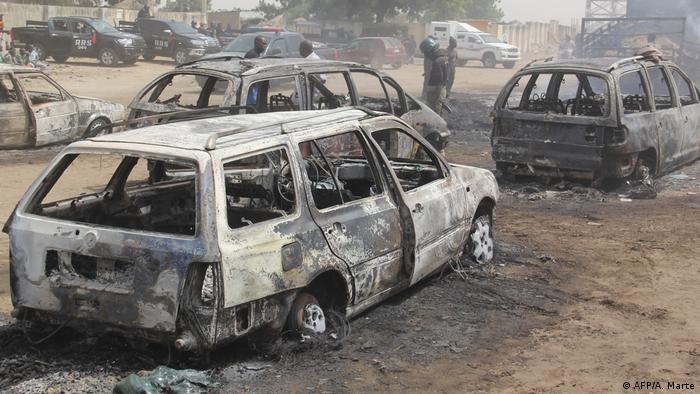
During the attack, they set fire to two patrol vehicles and utilized another patrol vehicle to transport food from nearby villages.


DSC Muhammad Abdara, a spokeswoman for the NSCDC in the state, verified the attack and the number of people killed.


According to reports, the officers who were shot died instantaneously, while those who sustained gunshot wounds were being treated at an unidentified hospital.


“The terrorists attacked the military base located within Government Day Secondary School Shinfida last Tuesday. They killed one soldier and one NSCDC officer on the spot and left many others injured.


“They attacked the military base on their motorcycles. Despite the efforts of the military personnel, the terrorists killed the two victims and set ablaze two patrol vehicles and drove away one with food items stolen from neighbouring villages,” the source was quoted as saying.

Osinbajo describes Sardauna as man of peace at memorial lecture

By Hussaina Sufyan Ahmed


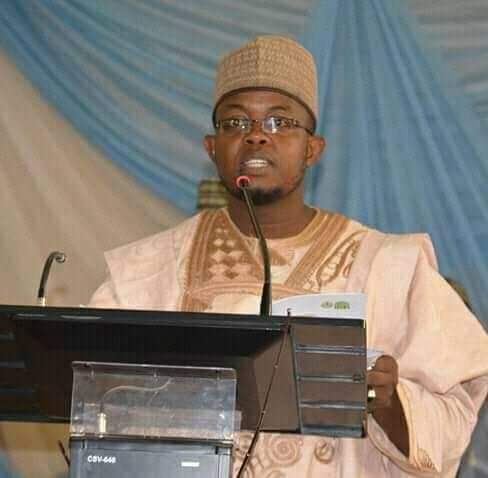
The Ahmadu Bello Memorial Leadership and Governance 2022 event hosted in Kano state government house earlier today was themed “Reviving the Northern Traditional Institutions: Imperative for Peace and Security in Northern Nigeria”. 


The Ahmadu Bello Memorial Foundation organized the event in collaboration with the Kano state government on January 18, 2022. 


During the occasion, Vice president Yemi Osinbajo (SAN) commended Sir Ahmadu Bello Sardauna, adding that “[He] was a man of peace and courage, as well as a nurturer of traditional institutions, who demonstrated fairness and justice.”


Concerning insecurity bedevilling the North, the Vice President said that the federal government would employ technology in surveillance to fight the increased terrorism and insurgency in the country effectively.


He said: “We will also continue to ensure collaboration between the Federal Ministry of Justice, state counterparts and law enforcement agencies – to ensure that those apprehended for terrorism and violent crimes are effectively and speedily prosecuted.”


“This is a fight for this nation, and we are determined to win by the grace of God. All these evil forces will be eliminated.”

Insecurity and food insecurity In Nigeria

By Safiyanu Ladan

Banditry and kidnapping for ransom have created a sense of fear in many farming communities in North-Western and Central parts of the country. Alas, thousands of farmers are left with no other options than to leave and abandon their farmland uncultivated for some years now for safer and more secure environments, mainly as refugees, in urban areas.

The displacement of farming communities by bandits as a result of incessant attacks which prevented them from tilling their farmland, the abrupt cessation of rainfall, the increase in the price of farm inputs, among others, are listed as the major factors that affect food production in Northern Nigeria.

This has significantly been attributed to the hiking in the price of agricultural produce and will ultimately lead to food insecurity.

In July this year, an official of the United Nations Dr Rhoda Dia, was reported to have warned that an estimated 13 million people in northern Nigeria face the risk of acute food insecurity in the next few months.

The Project Manager, United Nations Development Program – Global Environment Facility (UNDP – GEF), in charge of the Resilient Food Security Project, said the warning had become imperative because the country is facing growing levels of acute food insecurity due to decades of insecurity across the country, saying that the insecurity had resulted in increasing poverty and economic crises.

She, however, stated that the situation had been worsened by the COVID-19 pandemic and, recently, the series of clashes between farmers and herders.

According to an agriculturist, the insecurity we’re facing now, especially in the North-Western part of Nigeria, has dramatically affected crop production and will go a long way in enabling food insecurity.

The fact that most of the agricultural activities in northern Nigeria are done by peasant farmers who live in rural areas and have been subjected to unprecedented attacks almost daily by bandits is alarming.

In many aspects, insecurity has affected food production. Naturally, this can be associated with the increase in food price, even though there are other factors like the Covid-19 pandemic, as we can see in other countries. But, still, our peculiar problem that aggravated the situation is the issue of banditry.

While lamenting the security situation, some farmers in one of the most troubled states said bandits had captured more than 30% of their farmlands.

Given the foregoing, the food insecurity is imminent, and it’s so glaring that there’s nothing the government can do about it as it has failed the country.

Safiyanu Ladan writes from Zaria via uncledoctor24@gmail.com.

Road to 2023: A race to inherit a weak system

By Nusaiba Ibrahim Na’abba

As Northern Nigeria continues to be engulfed by violent activities of terrorists by the day, the thoughts of dreadful terror acts of the famous Sunni Ali of Songhai who conquered the old, widely acknowledged historic city of Timbuktu keeps reappearing on my mind. The likes of late Muhammad Yusuf, late Abubakar Shekau and most recently Bello Turji and Dogo Gide, including some of the ‘unknown’ alleged sponsors of these activities, are no different than Sunni Ali – ‘tyrannical, cruel and merciless’.

The only probable difference is that the miniature Sunni Ali’s of our time live under the protection of a democratically elected government that vowed to protect our lives. This system we all thought would salvage us from the brink of destruction. With all the high hopes for this salvation purposely adopted to elect President Buhari into office, it is under his watch that in 2018, the Nigerian army gave an order to halt the near-arrest of late Abubakar Shekau in the depths of Sambisa Forest.

While at secondary school, it used to be quite fascinating to read and learn about the legends of some of the most powerful kings in Africa. Timbuktu’s Mensah Musa, Usmanu Bin Fodio of Sokoto, the rulers of Ghana’s Asante Kingdom and their powers on their followers, especially their strength, have always remained interesting references for their followers, especially history scholars and political leaders around the world. From leadership structure, means of sustenance, warfare and particularly military strength devoid of politicking have remained exemplary and worthy of emulation as legends have primarily documented.

Inherent in today’s Nigeria, a ravaging systemic corruption, unambitious leadership, lack of education prospects contributing to a staggering number of unemployed youths (some even throwing their hats in the ring and retiring from the state of being called youths), poor security apparatuses and myopic economic vision that continues to increase our foreign debt figures without pans of paying back. Not even the vibrancy of our historic leadership structure is being inculcated in the ‘democratic system’ we (African countries) borrowed from our colonial bosses.

Nigerians are already hopeless as the nation races towards the 2023 general elections. About two months back, I went shopping in Abubakar Rimi market (alias Sabon Gari market). All I could hear filling up the sky were words of hopelessness about the state of our dear Nigeria. “I would rather lose my voter’s card than to elect anyone in 2023”, “Our leaders will not make heaven, I tell you,” and “I’m just hoping to make it to next year alive; we are not celebrating anything” among many unending agonies. 

It is no coincidence that the President himself vindicated these agonies in an interview NTA aired on January 8, 2022. He warned his political party that “the opposition Peoples Democratic Party (PDP) could win the 2023 presidential election and return to power, if the All Progressives Congress (APC), does not settle crises that have stymied the party”. Of course, a speech of such nature and coming from the President is subject to multiple interpretations from analysts, experts, particularly politicians and lay-Nigerians. However, the President has undoubtedly depicted a lack of confidence in his party to exacerbate an already hopeless situation. His first thought is PDP winning elections to continue from where they stopped – over a decade of misrule.

Indeed, it is pretty late that Nigerians realize that both APC and PDP are birds of a feather that flock together. During an interview with Talk to Aljazeera on February 15 2015, then-presidential candidate General Buhari highlighted the weakness of PDP’s 16-year-misrule. He, specifically, lamented on the rising insecurity and the deteriorating economy as oil prices dropped significantly. A year later, when he had a similar discussion with the same Aljazeera on his visit to Qatar in early 2016, he tried to admit that he hasn’t failed Nigerians – as Boko Haram held some strategic places in the outskirts of Maiduguri. Over the years of his administration, we now fully understand who has failed Nigerians the most.

Like every race to a general election in Nigeria, we all scale through hurdles and hitches. However, what is particular about the 2023 general elections is that it showcases the real wielders of the entire Nigerian system – the elites. Indeed aspiring candidates are fully aware of problems they will undoubtedly inherit from their predecessors. They also know that they may worsen existing situations in most cases. Thus, they shall race through rising insecurity than ever before, calls for secession from the Eastern part of the country, deteriorating economy, a staggering number of unemployed youths and out of school children, dilapidated schools, bloodshed, brain drain of medical personnel, weak security apparatuses, widely acknowledged electoral violence and, to cap it all, systemic corruption.

Since Nigeria’s return to democracy in 1999, every political aspirant has been fully aware of the problems ahead of them, but they always divert followers’ attention by being optimistic. This is why it was pretty easy for most Nigerians to succumb to President Buhari’s change agenda.

Be it as it may and with almost nothing to redeem ourselves, expectations are meagre as the race to 2023 heats up. It’s no longer news that the country’s entire political economy continues to suffer in the hands of the few ‘powerful’. The masses do not wield enormous influence in the system that steers the affairs of Nigeria. So, we absolutely cannot change the country’s political structure without owning the system. Therefore, there is no confidence or trust in the election processes with ‘inconclusive elections’ that have come to stay with us since they favour the wielders of the system. 

Nonetheless, we will remain optimistic that Nigeria will prosper as a united and incorruptible country no matter what it takes. This storm shall pass. Borrowing from the words of South Africa’s Apartheid icon Nelson Mandela, “I am fundamentally an optimist. Whether that comes from nature or nurture, I cannot say. Part of being optimistic is keeping one’s head pointed towards the sun, one’s feet moving forward. There were many dark moments when my faith in humanity was sorely tested, but I could not give myself up to despair. That way lays defeat and death”.

Nusaiba Ibrahim Na’abba is a master’s student from the Department of Mass Communication, BUK. She is a freelance writer and researcher. She can be reached via nusaibaibrahim66@gmail.com.                                     

The drama that is 2023 general elections

By Idris Yana

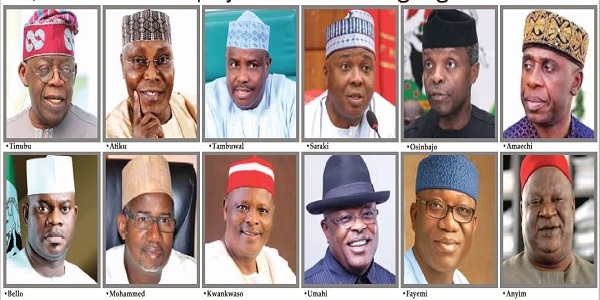
Bola Ahmed Tinubu’s declaration of interest to contest for Nigeria’s presidency in 2023 is a prologue to the array of drama that we are going to witness in the next couple of months.

The 2023 presidential election will defy many political and analytical rationales.

Tinubu’s candidacy poses a challenge to both Tinubu himself and the Nigerian political philosophy. Currently, the unsigned sacred pact is that Nigeria cannot afford a president and his vice who belong to the same faith. Thus, Tinubu, being a Muslim, cannot have a Muslim vice-presidential candidate. Another “gentleman agreement” is that the president and his vice cannot come from the same part of the country. Therefore, this means that Tinubu’s running mate must come from the North and be a Christian. Though we must define where is North, at some point.

This is the epitome of the complexity (you can call it confusion) of Nigeria’s democracy. I will tell you why shortly.

The Northern Nigeria I know and live in can hardly support Christian to become Tinubu’s running mate. This, whether we say it out loud or not, is the mentality of an average Northern Muslim: A fact we all pretend does not exist.

While I cannot foresee an enduring strategy that Tinubu can use to navigate through this maze, I believe two parties stand a chance to benefit from his quagmire. The first is the current vice-President, Yemi Osinbajo. Although the witty professor-cum-pastor did not come out yet to declare his intention to run for the number one office, his body language and some events that have unfolded have already shown that he is in the race.

Osinbajo, being a Christian from the South, is very much aware that Tinubu’s dilemma is to his advantage. Many people in the North will prefer to have him as the presidential candidate so that they can field a Muslim running mate for him.

The other party that stands a chance to benefit from this is PDP. Like Osinbajo, I am sure PDP monitors the unfolding of Tinubu’s candidature and waits for the right time to make their move. They have many options to explore. One of such options is appealing the sentiment of the North by fielding a Muslim candidate from the part, most likely Atiku, and a Christian running mate from either South-South or South-East with Nyesom Wike as the most likely candidate. They have the option of reversing this and trying their luck.

Whatever happens in 2023, Nigerians will have multiple lessons to learn from. For me, the most important lesson is the dire and urgent need for the country to move away from the political ideology that favours primordial sentiments over competence. Instead, Nigerians must learn to elect a leader that is capable of saving us from us.

Idris Yana writes from Exeter, United Kingdom. He can be reached via idrishyana@gmail.com.

How I started my own business with zero naira

By Zainab Ahmad Dantsoho

Most people believe that one cannot start a business without huge capital, but that is absolutely wrong. So let me first define what capital means according to economics.

Capital is anything that increases one’s ability to generate value. It can be used to increase value across a wide range of categories, such as financial, social, physical, intellectual, etc. In business and economics, the two most common types of capital are financial and human.

But I will like to give my definition because the most neglected is the Human Intellectual faculty.

In the 21st century, capital is the ability of an individual to think using the intellectual capacity to make money in the absence of little or no resources.

I want to stick to my definition because based on analysis, our economic index can be weighed by the standard of living and income expenditures, but I come from the North where according to the average statistics of people living in poverty as of 2020 holds 87% of Nigeria’s poverty rate – World Bank

So, are there resources in the North? Of course, YES! But the problem is intellectual capital.

In a community where people can’t even feed properly and begging seems to be a way out, how do we end poverty in families and our communities? I have asked this question to myself a lot of times.

Our northern community would be great if only our brains can think about starting a business with zero naira or little or no capital. And this makes me think that in the absence of money and basic resources, the only value any society could have is thinking skill because that’s the best way to beat poverty!

Let me take you through my journey of 1 kobo.

At a point in my life, I just decided to start my own business, make money in a halal way, take care of myself, and help the people close to me and my community at large. So I asked myself, “Zainabu, what about the capital? Where will you get the required amount to start the business?” Of course, this immediately came to mind, but then I remembered capital doesn’t necessarily have to be money.

Thus, I started going to some perfume shops, taking pictures and samples of the perfumes, showing friends, advertising on my social media platforms. Then, when someone asks for it, I’ll quickly go back to the shop and get what they wanted while adding a little profit for myself. This continued for months, and I was able to save some money!

So, I realised that the only capital I have in the absence of resources is my intellect, the ability to think and make money. So, these are a few basic things I had my eyes out for when starting my one kobo business.

  • Location – Where can I sell this product?
  • Demands – Is the product highly consumables, highly used in my environment?
  • Standard of living – this is where I have to think critically. Can they afford it? If they can, at what cost, and what’s my profit because nobody wants to start a business losing. It’s a win-win goal.

Then when it comes to branding – since I have no resources and capital of my own, whenever I want to make more profits, I usually meet the producers and negotiate with them. They make it, but then it carries my business name and agrees on percentage without losing anything but gaining. Most traders into cosmetic products typically agree with this since it offers mutual benefits.

Now, let’s talk about mind poverty, also known as mentality poverty. Mentality poverty is not the absence of cash and resources. It’s simply our way of thinking and behavioural pattern.

And I also think our average mentality is poor, and that’s why poverty in African societies seems to be inherited. We have resources, yet we are poor. It’s time to shift from the cash flow method of capital and currency to its intellectual flow because, that way, our community will grow.

If we were to cut down the amount we spend on our phones, clothing, accessories, cosmetics, etc., we would be surprised at how much we will save.

One may wish to know the advantages of this type of business. Don’t stress yourself. I will help you with some basic information.

1.  It empowers you

2. It eradicates poverty

3. It`s easy to access

4. You earn without deposit

5. You can advertise from your home using your social media handles.

If you aren’t on social media, you can do Door to Door, attend events or places where you can meet many people, and take advantage of friends to friends marketing strategies.  Especially for those that don’t go out.

But here are some of the challenges you will face with this type of business:

1. People may want to take credit from you, and you can’t give it out since the items don’t particularly belong to you; for me, it’s even risky giving and selling items on credit.

2. You may need more time and patience to get customers.

3. Sometimes such items may be out of stock, so that means you need to know or keep contact with the store, to what’s available and what’s not available

4. You may need one or more stores to patronise, if you want quick profits and if it’s worth the energy!

My advice to our young entrepreneurs is that we should always avoid perishable goods, except if the areas we live in have a high demand for those particular items.

Lastly, with the way our economic system is currently running, it is still possible to start a business with zero or little income. So don’t wait for significant capital. You can save and think, spend wisely, and Allah will certainly help you.

I hope you will find this article very helpful and join our one kobo community to start your business and get substantial information from us.

Why not make a move and be your boss with zero naira today?

Zainab Ahmad Dantsoho is a graduate of the Federal University, Gusau and an entrepreneur. She writes from Kaura-Namoda Town of Zamfara State. She can be reached at zainabahmaddantsoho@gmail.com.

The Almajirci Syndrome: A menace to our society

By Aisha Abdullahi Bello

The word “Almajiri” is derived from the Arabic word “Almuhajir”, which means an immigrant or someone who migrates from one place to another. So, originally, Almajiri is an immigrant who leaves his place of birth at a very tender age to acquire Islamic education.

It was believed by the people then that if a child received Islamic education at a very young age, he was likely to retain it throughout his lifetime. This had made many parents enrol their male children in the system.

In the ancient days, the system was so organised, and the parents were much responsible that they didn’t just dump their children at the “allo [slate]” schools the way today’s parents do. They also made it mandatory upon themselves to provide necessary food items and other provisions for the children, which would be enough for them throughout their stay with the “malams [teachers]”.

At each interval, maybe a period of three to four months, the children were readied for a return to their various homes. So, you’ll find out that each Almajiri would at least visit his parents thrice or even four times a year.

Now, the system is no longer what it used to be. Everything seems to have changed completely; the system, the parents and the children have all turned into something else. If you call the name ‘almajiri’, instead of the title to ring the bell of a child who came from a distant land to acquire knowledge, a different bell will ring. The name suggests an unlucky child whose parents gave birth to and later abandoned on the streets to fend for himself by whatever means.

I am used to asking myself, what could be the cause of this disguised child abuse in the name of almajirci”? What is the essence of bringing a child to this world if you cannot cater to his basic needs such as food, clothing, shelter, and quality education? Could this problem (almajirci) be attributed to poverty, lack of parental care, or is it a lack of adequate measures to tackle the menace by the government? These are the series of questions that are yet to be answered.

The rate at which the syndrome is growing could be checked if the parents control their birth rate through family planning measures. The government should try to enlighten parents on the benefits of family planning and its impact on society as much as possible.

To sanitise the system, the government should create a committee that will focus on the issues by standardising it to suit the present time. This could be achieved by taking the statistics of all almajirai, providing them with uniforms and building classrooms for them to have a conducive learning atmosphere. This will go a long way in curbing the extent to which they wander over the city.

The government and well-to-do individuals in the society should join hands together to create skill acquisition programmes and sponsor programs on TV and radio to educate the almajirai on how to acquire skills and make use of them for survival.  These skills could be tailoring, dyeing, soap making, blacksmithing, shoemaking, etc.

With this, I believe the rate at which the almajirci syndrome grows will hopefully reduce to some considerable level and, if carefully sustained, will someday become history.

Aisha Abdullahi Bello sent this article via aishaabdullahibello@gmail.com.

Restructuring Northern Nigerian divorces’ mindsets

By Hussaina Sufyan Ahmed

We can categorically define a divorcee as someone unlucky in a specific marriage. I know that I will be in the minority if I say divorcees are given less chance to develop themselves personally before getting pressured into remarrying in the Northern part of Nigeria.

I understand and appreciate the concern with threading carefully regarding resuscitated emotions and intimate urges. However, a ‘decent’ society like Northern Nigeria expects that you abide by the rules of decency in ensuring that you either preserve yourself for your next spouse or remarry to avoid falling into the traps of indecency.

In this aspect, indecency refers to the lack of adhering to the control of urges for every culturally and religiously conscious person. These traits are seen as the signs of responsibility, including sustaining oneself; ready to take up self-evaluation, focusing on goodness, and maintaining dignity.

The pressure that comes from the family, society and whatnot is justifiable. However, the pressure that comes with engaging these divorcees in personal development is a progressive vacuum seat.

A divorcee can either be a man or a woman. But statistics show that a woman is more affected by divorce financially while a man is affected mentally. But, of course, this assertion is opinionated, as there can exist other varying opinions.

Let’s take Kano State as a case study. In 2020, Dr Sabo Dambazau, in an interview with Kano Focus, said 45% of divorces in Kano are caused by co-wife rivalry. Other causes he highlighted include forced marriage, fake identity by the men before marriage, lack of catering for family financial affairs succinctly, and suspicion from either the man or the woman.

For Dambazau, a lack of trust causes suspicion. And this distrust is seen in wives taking their husbands’ phones. Often, both check each other’s phones.

According to Dambazau, couples need counselling, personality development, and consciousness of Islamic teachings through the actual practice of the teachings to reduce divorce. This can be supported by enrolling in Islamic schools. He ended with advice on staying genuine and honest during the courtship before marriage.

My scope will be Personal Development for the Divorcee. It is essential to know that learning and seeking knowledge are the two fundamental processes that every human should consciously and intentionally be involved in.

As a divorcee, the first focus should be personal development. And this cannot be achieved without being intentional about self-development. So, how do you achieve personal development?

As someone who might have gone through emotional downturns or physical battles in their marriage,  self-development evaluation is a facet to help you check yourself and correct the mistakes you might have made. Every human is fallible. Hence the premise of every divorce is that both parties have a role to play in the faults. However, one side usually weighed in as more wrong than the other. Still, there is never a party devoid of guilt(s). So, you use the experience of a failed marriage to build your knowledge about marriage if you wish to be in it again.

In trying times, maintaining spirituality is crucial. In the North, an epitomic feature is the presence of religious rooms to learn from – while you rule in self-development. You cannot rule out upgrading your belief. For instance, there are many Islamic schools for Muslim divorcees in various Northern states. And seeking the appropriate knowledge through such schools enhance and contribute to the upliftment of morale.

This sums up an inference of a child’s upbringing in a typical Northern Muslim home. Thus, before reaching the age of five, recitation of verses from the Quran begins, opening the ability to read and recite rhymes and books in western schools. So, who says learning has a boundary or specific scope?

Another aspect of personal development is acquiring soft skills. For some female divorcees, one of the reasons their families or society has pressured them is usually due to self-sustenance. A woman in a non-secular community like the North has to either sustain herself financially, be under her parents or a man. You do not have to rush into another marriage to develop yourself personally. Instead, go out and learn soft skills such as MS Office, graphic design, Corel Draw, Digital marketing, social media management, online journalism, etc. You can acquire most of these skills online or offline for free or pay a token, especially if you desire to get the certificate.

Personal development stretches out to unlearning, learning and relearning, and in this, we cannot rule out upgrading education level to the next stage. If you are a primary school certificate holder, secure a secondary admission. If you are a secondary school certificate holder, try and acquire a UTME form, sit for the exams, and pursue admission, even if it’s a polytechnic or college of education. And for a bachelor’s degree holder, it is easier though costlier, which makes it essential to personally develop the self so as far as there is determination and hard work.

In all of these, I suggest that families and society give premium corporations to divorcees to see that they are helped towards self-development and not pressured to remarry. Of course, marriage can come later but having productive and oriented divorcees instead of a new payroll of reproductions will push the nation’s economy forward.

“Read. Read in the name of thy Lord who created; [He] created the human being from a blood clot. Read in the name of thy Lord who taught by the pen: [He] taught the human being what he did not know” (Quran, 96: 1-5).

Hussaina Sufyan Ahmed wrote from Kano. She can be reached via sufyanhussainaahmed@gmail.com.

Nigerian military, please, don’t back down

By Mallam Musbahu Magayaki

I write to commend and appreciate the unmeasurable feats of the Nigerian military personnel and other sub-security agencies for their bid to ensure that two of the well-known wanted bandits, Alhaji Auta and Kachalla Ruga, have met their waterloo. They spent many years operating their egregious activities of the gruesome killing of innocent people without regard to the principle of natural justice.


However, they were killed by a Nigerian Air Force aircraft, under operation Hadarin Daji, at Gusami forest and Tsamre village in Birnin Magaji Local Government Area of Zamfara State. Nevertheless, at this point, as they (bandits) reach their cul-de-sac, our adventurous security personnel should not relent unless they spare them all.


Undoubtedly, the death of these two kidnap kingpins is a severe blow to their bandits’ like-minded abhorrent individuals. As such, more triumphant efforts to fish them out of their territories should now be re-engineered by both military personnel and vigilante units who work inexhaustibly day-in-day-out to safeguard the lives and personal possessions of Nigerians.


Yet, there is a need for the government of the federation, specifically the security sector, to organize orientation sessions with security agencies to be fully informed about the assigned task that they have sworn to do of protecting and upholding the country’s constitution. Because we live in a country where some of its countrymen portray sabotage as a virtuous way to satisfy their narrow-minded desires. As a result, they will devote all of their useless energy to changing the great sense of our security personnel to compromise the country’s state of peacefulness.


Moreover, security personnel should be fully equipped with sophisticated weapons techniques to finish off these ruthless humans (bandits) and frequent motivational incentives that would boost their morale to serve uncompromisingly. They should also be retrained in modern battle strategy. A famous West African proverb says, “When the music changes, so does the dance.” It is high time the government changed all its tactics against these despicable fellows.


Mallam Musbahu Magayaki Writes from Sabon Fegi, Azare.Bauchi State. He can be reached via musbahumuhammad258@gmail.com.

DG NITDA, Kashifu Inuwa, visits ENGAUSA Hub, assesses its developmental ideas

By Engr. Mustapha Habu

The Director-General, NITDA, Malam Kashifu Inuwa, paid an assessment visit to Engausa Global Tech. Hub to assess the level of development achieved by the Hub and the impacts of its initiatives after it emerged as a beneficiary of a grant from NITDA last year.

ENGAUSA had been able to train 313 young people within two years (2019-2020). However, after winning the grant, the number surges dramatically. Today ENGAUSA has successfully trained 800 young people in 2021. The NITDA, in conjunction with ENGAUSA, will therefore conduct an end-of-training event in January 2022.

Before the end-of-the-year break commenced, Malam Kashifu assessed the expertise of 50 primary and secondary school kids, who were trained under a theme titled ENGAUSA CARCH THEM YOUNG.

ENGAUSA presented to the DG what was being invented by young people and Almajiris at ENGAUSA HUB. He was also happy and surprised how they make inventions without having gone to higher schools—as some of them are dropouts with expertise in drawing and innovation of the modern time.

Others on SIWES from various universities and those that have not got the opportunity to further their education are already into robotics and the Internet of Things (IoT).

The Hub introduced other graduates out of the 60 who established their firms after getting trained at ENGAUSA Hub. The firms include THE D E-SERVICES, DASHERE ELECTRIC SERVICES, SD GLOBAL TECHNOLOGIES, and so on.

An outstanding mentee who invented a mathematics learning app called HausaMaths was also introduced to the DG. Another one also built a science and technology teaching app in the Hausa language called Bemitela.Africa.

The DG also met some young people employed by companies in Kano and Abuja, namely JETSON ENGINEERING (that deploys them to COSGROVE estate sites in Abuja), CHOSEN ONE GLOBAL TECH LTD, which has sites in Abuja, Kano, Kaduna, and other states in the northern part of the country.

ENGAUSA HUB presented some 10 Almajiris enrolled for the ENGAUSA CATCH THEM YOUNG and have followed the footsteps of the rest in areas of graphic design and innovation. One of the Almajiris has even been employed by ENGAUSA HUB for his outstanding performance. Alhaji Yahaya Yusuf Kwande (who is not from Kano) is the one who sponsored the registration of the Kano Almajiris.

The able DG of NITDA assured ENGAUSA HUB that his agency would collaborate with the Hub in promoting such developmental projects across the states in Nigeria.

As of the time of writing this, ENGAUSA is part of the Technology Incubation Center (of NBTI) established to work under the custody of the Federal Ministry of Science Technology and Innovation. We also have a branch on Rijiyar Zaki Gwarzo Road and other cities that we plan to collaborate with within Jigawa, Kaduna, and Abuja to enhance modern skills and ease learning initiatives.

Our door is open for anyone willing to collaborate with us in making this a reality.