Northern Nigeria

Tribute to Danmasanin Funtua

By Zaharadeen Muhammad

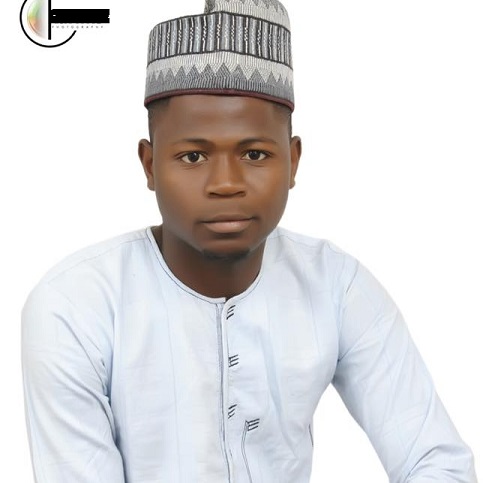
Some weeks ago, His Royal Highness, The District Head of Funtua, Sambo Idris Sambo, announced the confirmation of chieftaincy titles on some few outstanding sons of Funtua in recognition of their contributions to the town and the country as a whole. One of them is an unsung luminary in academia, and the health sector whose take off to educational journey began as Newton’s apple. But was it not William Shakespeare who likens the world to a theatre role with entrance – often by fluke, stage performance and exit? This time, Dr Umar Aminu’s entrance and performance will be profiled, and it will be quite the zinger.

Almost half a century ago, a religious scholar left Funtua for Katsina on a mission to supervise Islamic schools and carried his much younger brother with him. On a particular day, the curious lad wandered off to explore the new surrounding, and as fate would have it, he chanced upon a primary school in the neighbourhood. He surreptitiously tucked himself behind the door panel as he peeped into a class through the apertures relishing the nectar of the lesson.

He was to frequent the school many more times afterwards. Unknown to the school teachers and his brother, till the momentous day that his inert nature got the very best of him, he ventured an answer from his hideout to a puzzling question that appeared to elude the students sitting inside. Having gotten over his shock, the startled teacher identified where the voice emerged from, walked stealthily but tactfully toward the doorway and seized the kid. “he has to be enrolled,” thought the teacher. The brilliant boy in this tale was Dr Umar Aminu, and the elder brother was sheikh Aminu Liman of blessed memory. The anecdote was a watershed.

His academic sojourns would take him to Zamfara, Bauchi, Zaria culminating in him bagging a PhD in Public Health from Texila American University, USA. He gathered the mountain of knowledge and wealth of experience over the years working in public and private organizations and international agencies such as UNICEF, WHO, USAID, and FRIM. He brings to bear in solving various societal issues in Katsina state and beyond. To paraphrase sir Winston Churchill, what is the use of living if it is not to make this muddled world a better place for our posterity long after our departure.  

His first landmark contribution was to the health sector way back in 1999 when a glaring shortage of health personnel in the state was a cause of deep concern. Then, as a key member of the MSSN, he broached the idea at one of its meetings for establishing a centre for training health technicians who can, in the long run, make up for the inadequacy. The program began with only a handful of students and has metamorphosed into the world-class Muslim Community College Of Health Science and Technology, Funtua. Today, the school runs a wide range of health-related courses at ND and HND levels and draws a motley of students from every nook and corner of Nigeria.

His curiosity and a natural aversion to passivity and mediocrity made him the first to be on the ball whenever things appear to go south. That is why when there was statewide successive massive failures in SSCE between 1999 and 2003, a big blow to the quintessential reputation of the state in that regard,  instead of joining the wagon by stepping on the pedestal of lamentation, he met with stakeholders in the ministry to find out ways of ironing out the problem. He was one of the brains behind creating the refresher program, which, under the able stewardship of Malam Ilyasu Umar, has hatched hundreds of students who became medical doctors, pharmacists, engineers,  mathematicians, etc. Thus, leaving another indelible footprint in the sand of time.

His empathy and compassion dispose him to pursue numerous charitable causes, especially in education, where he has facilitated and personally offered many scholarships and grants to the less privileged. Moreover, his being a versatile and cynosure in education and business informed our decision to invite him to speak at our first (NIPES) public lecture themed ‘Our Economic Mindset’ held on February 2021. The advocate of functional education, self-development and entrepreneurship eloquently demystified our present unemployment crises that became ubiquitous clog and articulated sundry out of the box ways of putting a dent in the issue.

Dr Umar Aminu, The Danmasanin Funtua possesses most attributes our people recognize in the words of Anthony Kirk-Green as ‘Mutumin Kirki” in the book of the same title. These are truthfulness, trustworthiness, generosity, patience, good sense, bashfulness, courtesy, self-esteem, wisdom and scrupulous behaviour.  

“When a mother-cow is chewing grass,” said Chinua Achebe in Things Fall Apart, “its young watch its mouths”  We, the youngsters, have been watching from afar and up close and have drawn so much inspiration from his noble deeds. For these reasons and more, we join the joyous multitudes celebrating this well-deserved title. Allah shi tayaka riko, amin.

Zaharadeen Muhammad wrote from Abdullahi Aminci Road, Funtua, Katsina State via Zaharadeen2020@gmail.com.

Revisiting Sardauna’s northernization policy

By Abdullahi Yusuf Tela

Between 1949 to 1960, the reign of Sir Ahmadu Bello as the Premier, the Northern Nigeria environment has seen tremendous development. By October 1960, because of his super influence, Ahmadu Bello has become a mighty figure within and outside the borders of northern Nigeria.

As described by Paden in Ahmadu Bello: Sardauna of Sokoto, the main concern of the Sardauna was “northernization”. His practical approach towards developing northern Nigeria was quite exceptional. Paden further states that “the north is his family, and he must get his family on the right track so that it can play its proper role within the federation and the world at large.”

Sardauna’s love for the growth and development of the North made him pursue a series of northernization policies, all in an attempt for a balanced growth amongst the regions despite warnings from other competing regions as to the consequences of his this ideology.

Sardauna had once replied, “No…. Over my grave!” This was in response to Dr Ibiam, who urged Sardauna to abandon the northernization policy.    

During one of his visits to the North, Dr Nnamdi Azikiwe opined that the north under Ahmadu Bello’s reign was working consistently to catch up with the South in the race for progress. He added that its local government set up guarantees a stable government; its people respect and revere their emirs as a symbol of constituted authority while respecting elective representation in their local councils.    

His leadership style and dexterity made the former “Northern Cameroon” become “Sardauna Province”. Although the area called “Northern Cameroon” was part of Cameroon, Sir Ahmadu Bello lured them with a promise that if they joined Nigeria, he would grant them a separate province with lots of benefits as the Northern Nigerians. The Northern Cameroon province eventually voted to be part of the northern region through a referendum.

Ahmadu Bello, through his unreserved love for the youths, had fixed several of them in the civil service. It was found out that in 1961, out of the 41,000 employees in the federal civil service, only 400 were northerners. Due to this low turn-out of the northern people in the civil service, Sardauna developed the habit of making an appointment then sending the person on leave for a crash course at home or abroad. This created a lot of opportunities and positions for young northerners.

Abdullahi Yusuf Tela wrote via abdultela2@gmail.com.

Unification of Nigeria: Incidental blessing

By Habib Korede

Restructuring has been a topic on Nigeria’s news headlines for decades, and as the 2023 general election approaches, ‘restructuring’ is one optics for political campaigns. However, the unification of Nigeria, which has continually stirred this debate, results from the colonials’ avarice but has fortunately been a blessing.

Before the colonials, Nigeria was home to over 300 ethnic groups, with Hausa in the North, Igbo in the South-East, and Yoruba in the South-West, as the three dominant ethnic groups. These ethnic groups operate under various separate entities such as ethno-religious, geo-regional, and political nationalities under caliphate, kingdoms, and empires,

The colonials amalgamated these entities through divide and rule policy on 1 January 1914, following Frederick Lugard’s recommendation. The colonials take full advantage of their exploration of the country by sternly concentrating power at the centre to favour their political and imperial interests instead of laying a good foundation for nation-building. This has become a puzzle for Nigeria in the post-colonial era. 

Struggles for inclusion at the centre and resource allocation have resulted in many heated controversies, distrust, compromise, and violent conflicts. These include the crisis that emanated in the 1959 and 1964 federal elections, the January and July 1966 coups, the three years civil war of 1967–1970 when the Igbo region wanted to secede into Biafra, followed by several bloody coups and counter-coups.

The unity of Nigeria has also been threatened by various ethno-religious conflicts resulting from bad governance, such as the Kaduna State Zangon-Kataf crisis in 1987, 12 June 1993, Moshood Abiola’s presidential election annulment crisis, and return to the military junta in November 1993.

The return to the democratic system of government under the leadership of Gen. Abdulsalami Abubakar, which gave birth to the presidency of Obasanjo in May 1999, led to a rapid paradigm shift in Nigerian political history.

Deterioration in the governance of the country sparked several protests. Protests like the 2012 fuel subsidy removal and the 2020 #EndSARS that resulted in the death of protesters are only a few examples.

From 1999 to date, every region of the country has shown dissatisfaction with the status quo. This dissatisfaction has led to several agitations and overheating of the country’s polity, which metamorphosed to ethno-religious and inter-communal crises, such as the year 2000 Kaduna crisis, the 7–13 Sep. 2001 Jos crisis, and so on.

These crises triggered the formation of several ethno-militia groups such as the Oodua Peoples Congress, Indigenous People of Biafra, Movement for the Emancipation of the Niger Delta, Niger Delta Avengers, the Boko Haram insurgency, banditry and the coordinated Fulani/Herdsmen-Farmers conflict. These militias are agent provocateurs that simultaneously unleash terror in the country to disrupt governance, leading to several national conversations, such as restructuring, decentralisation, creation of state police, and separation. 

The rising agitation for a restructured Nigeria results from perceived marginalisation, discouraging national leadership, identity crisis, ethno-religious intolerance, the concentration of power at the centre, and lack of patriotism.

However, different scholars have interpreted the word ‘restructuring’ differently, and both the antagonists and protagonists for a restructured Nigeria dissent on its meaning. Though, I see restructuring as ‘using an efficient medium to restore a collapsing building to save everyone in the building.’  

From 1914 to 2014, eleven constitutional conferences were held to strategise the most favourable federal system and resource sharing policy to keep the regions satisfied and united. However, the 2014 national conference confirmed inequality in the demand of all the country’s parts. Each region demands a policy for their vested interest even when it disfavours the unity and progress of the country. 

The Southern region suggests the country should revert to the regionalism of the 1963 constitution. Still, this suggestion was frayed by the fear of dominance and marginalisation of the minorities from future governance of the majority in these regions. 

Besides, the founding fathers of Nigeria were more selfless and patriotic than the current group of leaders, and the country’s population is higher than it was; these will make regional governance in contemporary Nigeria impracticable. 

Decentralisation of power and the emergence of state police, as suggested by many, will aid in the production of a pool of authoritarian state governors whose misuse of power will decline the country’s democracy. But, as mentioned by the former president of Nigeria, Goodluck Jonathan, ‘the stronger the boat of (democracy), the more it is able to meet the challenges of its voyage and deliver on its promise to citizens.’

Notwithstanding, the Northern region focused on creating additional states and power rotation among the six geo-political zones. Obviously, creating more states will further deteriorate the already weak economy because of the unnecessary administration cost. 

It is noteworthy that the clamour for creating a new state is not for developmental reasons but political purposes. This will abet the emergence of unproductive parasitic state elites, lead to the agitation for creating additional states, and eventually actuate the aggressive Balkanisation of Nigeria. Like Yugoslavia, East Timor, the former Union of Soviet Socialist Republics, and South Sudan. 

The systemic restructure of Nigeria will be insurmountable. The 1999 constitution stands as a considerable constraint to the systemic and resource restructuring because of the intricate processes involved in amending the constitution. This is one of the reasons the 2014 national conference ended in a stalemate; Nigerian leaders benefit from the current state of affairs in the country. They manipulate the system for their selfish interests. These leaders capitalise on the gullibility of the average Nigerian by using ‘restructuring’ as a campaign strategy to divide Nigerians, to amass votes at the polls after every four years. 

Because Nigeria has remained an indivisible entity for over 100 years shows the unity of the country. The many challenges Nigeria is facing arises from the selfishness of the leaders and the mindset of the citizens. It is eminent that Nigerians should recognise the power in population and diversity before it is too late. Thomas Malthus explains that: ‘The power of population is indefinitely greater than the power on the Earth to produce subsistence for man’.

Nigerians yearn for a prosperous Nigeria, and Nigerians need to know that prosperity comes with unity, sacrifices, and patience. ‘The cost of disintegration (of Nigeria) is higher than the cost of being together. We have everything to gain by being united than disunited,’ as stated by the former President of Nigeria, Olusegun Obasanjo.

The perennial agitation for restructuring and separation ensues from bad governance, corruption, insecurity, nepotism, and ethnic intolerance.

Achieving two concurrent goals will solve these problems: the first will be to intensify the country’s social structure, which will aid in reconciling Nigerians and redefine the perception Nigerians perceive Nigeria. The second will be strengthening the central government by building robust institutions where no one is above the law and where meritocracy always supersedes mediocrity.

Social restructuring of Nigeria is achievable under different progressions: by prioritising civic education and history at the basic education level; refurbishment of unity primary and secondary school across the country; the national youth service corps should continue to aid the youths of the country to explore the diverse cultures and enhance pragmatic multicultural solutions to the country’s problem; there should be an effective orientation agency that will be responsible for sufficient enlightenment of the masses, particularly on peace and unity of the country; and investing in intercultural dialogue.

When there is an unarguable socially restructured Nigeria, patriotism will augment, and every other thing will fall into place.

Most of the 36 states governors are doing a lot of things wrong. Still, the centre always receives the blame because of the rising weakness in the capacity of the central government to sanction the misappropriation of resources and bad governance by the state government adequately. Building powerful autonomous institutions will strengthen the central government.

Powerful institutions will enhance check and balance in the activities of the other arm of the government, which will help filter the best candidate for the leadership position in the public sector, and will unquestionably prosecute the guilty ones.

Powerful institutions will promote democracy and credible leaders. In the words of Chinua Achebe, ‘Nigeria is what it is because its leaders are not what they should be.’

Nigeria, a country with the fastest growing economy in Africa, the highest GDP on the continent, and the sixth most populous country globally, has all the potential required to become the world superpower. Good governance will enhance an excellent economy, peace, stability, and prosperity.

According to Ibrahim Index of African Governance, good governance is ‘the provision of the political, social and economic goods that any citizen has the right to expect from his or her state, and that any state has the responsibility to deliver to its citizens’.

Therefore, when the citizens are getting all the social and economic values they are expecting from the government, no region will have the urge to clamour for restructuring or separation of the country. However, there cannot be good governance when there is no equity, equality, transparency, inclusiveness, accountability, justice and responsiveness in the country’s activities

Habib Korede is a BEng (Hons) Civil Engineering graduate and a writer. He authored Propelling Success, and The Kalahari Review has featured his work. He can be reached via habibkorede247@gmail.com.

Arewa’s potential and the Maitatsine syndrome

By A.F. Sesay

It’s difficult to fathom how a region of such numbers, resources, and beautiful cultural heritage/pedigree came to become such a scourge on national conscience in a space of forty years. What happened to the passion of the Sardauna, the native pride and dignity of your people, the welfarism that always motivated your brothers from the south or neighbouring countries to stay beyond those initial dates of return or even decide to be permanent residents?

If you were to canvas for answers,  different answers would come from different sources based on intellectual and cultural biases or leanings. That’s also the case with all matters of human endeavour. So, no shaking! And the more complex the issue the more divergent opinions and perspectives.

But in the case of recent events in northern Nigeria, with an emphasis on the Muslim hemisphere, there is something striking in the people’s unwanton love for the material side of life, contrary to the previous cultural ethos. Equally matched by this is the fear for death which naturally comes with more cravings for the transient pleasures of life. What happened to the studious efforts of the serious and sincere ulama (religious scholars)?

Let me hazard a few guesses. While some unscrupulous elements in both local and international media make it look like Arewa is Africa’s human abattoir where people are killed for the fun of it, non-northerners who have lived there before this litany of crises have fond memories of a people who are peaceful to a fault. This peace, which was largely a product of a contented heart, died with the pressure to keep up with the Joneses. And in that pressure was buried the deep fear of death. Before this, you knew people who were courageous, who stood for what they believed in no matter whose axe was gored and no matter the deadly consequence.

Crimes like kidnapping and banditry couldn’t reign supreme because criminals weren’t feared. We all remembered the courageous youths of Azare who risked their lives to confront armed bandits in 2012. Instances abound when community leaders (mai unguwas) coordinated young people to serve and defend the community within the ambit of the law. So, what happened?

How did we come to this period of life when people in a region of over 100 million people stood by and watched unknown faces and small groups of scums hack away their future and that of their children, one local government at a time?

Maybe we should look at the trends and evolution of materialism. Look at a few nations whose socio-economic progress have been meteoric in the last 50 years and look at northern Nigeria, you will see a striking lack of priority as well as a  lack of agency and urgency. And what underlies all this is the base love for material things among the elite which oozed out into the wider society rubbed off on the talakawa (proletariat) Suddenly, suddenly every Bala wants this: a luxurious house with a tall gate, a fleet of cars, tall, fair and wide-eyed women and other fine, yet fleeting things of life. Yet, neither the education nor the economy was tailored to sustain this onward rush to glitters: new trends come up annually in the design of houses, new brands of cars, new phones and so on.

Whoever is going to keep up with that has to have unrestricted access to money either through commerce or a job that pays an incredibly high salary. In the absence of this is another companion to money: stealing and everything extortion. Under this falls the myriads of problems we see today: unbridled corruption in governance, banditry, kidnapping and the rest in this nefarious family of ills.

Let’s say we flipped the conversation and say the fault is not in the people, but their enemies. It is logical to think that a region this steeped in tradition, with such great potential in numbers and unexplored resources is bound to be a target of both visible and invisible enemies, what is not logical though is when this becomes an excuse for inertia, baseless polemics, cancel culture and hurling of insults left right and centre. About enemies, who hasn’t had one? About insults, we haven’t seen one- I mean- we haven’t had an economy built solely on the foundation of the people’s ability to hurl insults at each other.

While there are certainly smithereens of enmity and animosity smothered on all of the region’s myriads of problems (a common case is a bias in data and reportage on and about the north, but let’s not digress), there is certainly a need for deep introspection. What happened? Are these manifestations of problems long foretold? Could something be wrong with the very approach to problem-solving? Or is this a huge cultural gap nobody is willing to talk about? Does it have something to do with population or outright carelessness on the part of the ruling class?

The north, in its long political sojourn as part of a nation in which it was severely disadvantaged in education, yet extremely well-positioned in Politics and Administration, has had its fair share of wins and losses. What remains to be seen is the ingenious manipulation of pluses and minuses. The world is watching and history’s pen is looming over you!

All told, the current state of affairs should remind you of the popular hadith of Prophet Muhammad (peace and blessings of Allah be upon him). And if this is a behavioural problem like it was rightly observed, then it’s going to require a behavioural solution: moderate the wanton love for material things and be courageous enough to confront death when your dignity and that of the generations unborn are at stake. 

A.F. Sesay sent this via amarasesay.amir@gmail.com.

Baba Jalingo: A loving memory of an inspirational personality 

By Aisha Ahamd Jalingo

I barely have many memories of him beyond his signature, white clothes and red cap because I was a child when he passed away, but my husband insisted that I write a tribute for him today, being 11 years since his demise. All I know is Baba was an inspirational personality which means different things to different people. A father with a great sense of humour, a mentor that gave his all irrespective of differences in ideology or creed, and a unionist who fought to protect all till his last breath.

Everyone who knows him at Bayero University will always say how he jokes around with everyone. Whether you were his students, who I heard would rush to M block for his lectures because of how educative and entertaining his classes were, or his colleagues who always ran to him to seek support, morally or otherwise. He treated everyone equally with respect.

During his lecture, he would have the theatre filled with some students not because they registered for the course but only to listen to him speak.  Baba Jalingo was very religious. It is his norm to go to the BUK Central mosque for Magrib prayer and wait till after Ishaa before returning home. A pillar in the mosque is called ‘fillar Jalingo,’ meaning Jalino’s pillar. He would sit there from Magrib till Ishaa. I once saw someone write on Twitter that no one even dares sit in that spot, as when he arrives, he jokingly asks the person to get up. 

His kindness knows no bounds. One memory of his that keeps coming to mind is that whenever we travel home to Jalingo, we normally stop at Gombe to stretch our legs, pray, and eat at a particular filling station. Baba would sit with the people there and chat. He would buy what they are selling, most of which we don’t need. I heard an incident when Baba and our Mom were returning to Kano. Unfortunately, they had a flat tire in a village, Durbunde, just after Gwaram. He met a man who helped them fix the tire. Since then, he always stops at the village to see him, till date that man still visits our family. He named his son after Baba Jalingo when he passed away, named his daughter after mother and recently named another daughter after me.

The same thing happens around Dakatsalle just before Kano. When returning from Kaduna or Abuja, Baba would stop and sit with all those selling chickens, vegetables, fish and whatnot. He usually tells them, “kaima kawo abin da kake sayarwa” (“you too bring what you sell”). He will come home with so many things. 

When it comes to supporting family, I have never seen anyone who supports his family like Baba Jalingo. I know he helped my mother up to the rank of Professor, which she earned shortly after his death.  I heard he often travelled with her to Usman Danfodiyo University, Sokoto, when pursuing her PhD. He was her biggest cheerleader through it all.

I can remember the last incident when she was the HOD of the Economics Department, Bayero University, Kano. A conference was organised in the department, and he was then the vice-chancellor of Taraba state University. I remember him coming to Kano to attend the conference, and he was among the first to arrive, sitting in front with his signature white clothes and red cap.

He often travelled back from Taraba State for the termly visits to our school. Baba never got tired. I remember his last visit passionately during our Qur’anic graduation ceremony. In the picture, I can never forget smiling when he was called to give a speech all over the place. I could not remember what the speech was all about. All I know was he talked for a while, returned to his seat at the front row, walked back on the stage, and took a group picture with all of us when we were called for our recitation.

It was after his death we realised how much he had been sponsoring and taking care of other families without the knowledge of anyone. That is the kind of man Baba was. He made all of my siblings, and I feel special, that every one of us considers ourselves to be his favourite, though I firmly believe it is me because he calls me “kingin Baba.”

Late Prof. Ahmadu Usman Jalingo, fondly called “Baba Jalingo” by everyone close to him, was a UK-trained political scientist, a veteran, a renowned scholar, a great man who played it all around. A veteran unionist and academic per excellence who raised through the rank and became one of the earliest political science professors in Northern Nigeria. Baba was the secretary to the State Government old Gongola and Vice-Chancellor of Taraba State University, a position he held until his death.

Baba was very close to Malam Aminu Kano. He was, precisely, Malam’s personal secretary. I can remember loads of Malam Aminu Kano’s personal diaries we found in his estate when he passed, which my Mom officially wrote and handed them over to the centre for Democratic Research, Mambayya house. In the tribute written by one of his students, Onoja, I read that Baba Jalingo confided in him that the one thing Malam Aminu Kano had in excess was socks. He says he never wore the same socks twice.

He was among the 49 men committee under the able leadership of Chief Rotimi Williams, Alhaji Idris Gidado, secretary, established in September 1975. This committee was the brains behind the creations of ‘CLUB NINETEEN MOVEMENT’ and the ‘NATIONAL MOVEMENT’. Malam Aminu Kano and many northern representatives created the ‘’National movement in Lagos. They later changed its face to become a political party named the National Party of Nigeria (NPN). The National Movement launched recently was originated from the work of this committee. 

Baba Jalingo was a man of the people, loved and respected by all. He passed away peacefully in his sleep on March 1, 2011. March 1, 2022, marked 11 years since his death, but his memories are still very much fresh in our hearts. We will forever live in his image and will in sha Allah continue with his legacy. 

Rest on Baba, till we meet in Jannah….where we will be reunited forever in sha Allah

Aisha Ahamd Jalingo (Mrs) sent this article via jalingoaysha@gmail.com.

Job for sale: Jobseekers recount travails in Nigeria

By Uzair Adam Imam

Jobseekers in Nigeria have narrated harrowing tales of how job offer sale decimates their chances of securing jobs in a country where the national economy has remained increasingly stagnant.

According to a recent report by Bloomberg, unemployment in Nigeria has surged to the second-highest on the global list, jumping to 33.3%.

Graduates, who took to social media to condemn the menace, decried how bribery, corruption and politics militate against the growth of institutions in the country.

They argued that buying and selling of job offers are affecting almost all the institutions in the country, as it will be at the expanse of merit and skills

Fraud in employment is believed to be the reason the standard of education in the country continues to witness a fatal decline, and unemployment rises at child’s Christmas wishes.

Graduates narrate harrowing experiences

Every year Nigerian institutions produce thousands of graduates who come out to compete for the few available job opportunities.

A graduate, Usman Bello Balarabe, said that he was once asked to pay N1.2 million for a lecturing job offer.

Immediately he returned to Nigeria from India after bagging his Master’s degree. He was greeted with an outrageous N1.2 million job offer to teach at a Federal University in northern Nigeria.

Balarabe, who was initially over-excited, said his hope was dashed upon learning that it was a give-and-take offer, as he had to break the bank if he indeed wanted to land the job. 


He said, “I was all smiling when I was told, until when I heard him saying that I have to pay N1.2 million to get that offer. The amount shocked me to the marrow”.

Auwal Mukhtar Usman, a university lecturer, said recently someone shopped her job offer for N3.5 million.

He said, “A lady recently confided in me that she bought her offer for about N3.5 million to teach in one federal government agency. It’s equally disheartening how these politicians connive with the university administrators by allocating slots for them. In the end, it is the University that suffers.”

A.S Mohammed also shared his experience, saying that a lecturing offer was advertised to him for N1.5 million in June last year.

He added, “I was asked to bring a potential buyer for a lecturing job offer at the Federal University, Dutsen-Ma, for N1.5 million; no discount whatsoever.

“And it didn’t matter what course the buyer studied or what class of degree he graduated with. That incident stroke me dumb with surprises and left me paralyzed. It took me almost a month to recover from that shock.”

Pay, get promoted

From job offer sale things are worsening to ‘promotion’ for sale, as workers at various institutions in the country pay to get promoted. 

Sa’idu Mustapha Buhari argued that it is not only job offer that is sold, but also promotions are purchased.

He said, “It is not only job offers that are sold.  Promotion, advancement, transfer, release for training, among others, have their prices in some sectors.

“Though fixing Nigeria must be a collective effort, people as individuals must change.

“The bitter part of the story is that: everyone works for himself, not for the people. The sense of nationalism is totally absent among us. That’s why I support the mantra: CHANGE BEGINS WITH ME…If any Nigerian applies this, Nigeria will be fixed,” he added.

Also commenting, a media consultant, Yahya Abdurrahman, stated that the fraud is not only rocking not only the education sector.

He said, “The deeper you dig, the more worrisome information you would come across. Unfortunately, the rot is also prevalent in the Nigerian Police, Customs Service and other Security affiliated Agencies.”

SPECIAL REPORT: How desire for materialism affects marriages and relationships

By Uzair Adam Imam 

Materialism is not limited to friendship or brotherhood; marriages and relationships also suffer greatly.

Friendship and brotherhood are gradually losing their true meaning, if not buried at all, because of this sudden shift of behaviour to materialism, The Daily Reality gathered. 

The menace led and is still leading to the breakdown of many relationships, including marriages, thereby manifesting itself into a serious problem in society – such as the increase in the number of widows and heartbreaking individuals.

The Daily Reality speaks with some people on this issue.

People like Aisha Mujitaba believe that guys pretend to be rich in life in order to woo girls.

“Nowadays, both loves and marriages are based on materialism; that is how equivocation and deception have chipped in in the process of getting married.

“Guys pretend to be wealthy in order to win girls’ hearts. Consequently, when they are joined in matrimony, the true nature of what the person is will be revealed. This leads to the breakdown of relationships,” Aisha said.

Parents were also accused of encouraging this lingering issue in society, according to Suwaiba Umar. 

She said, “Today, parents encourage their children to marry rich people. Marriages nowadays are not for the sake of Allah, the almighty. That is why guys make-believe a big life.”

Frowning at this behavioural change, Juwairiyya Aminu compared marriages in the past and marriages today.

She said, “Marriage in those days was entirely different from the marriage in these days, including the process, lefe (trousseau), ceremonies and whatnot.”

Both girls and their parents find it very exciting to have rich as their husbands or sons-in-law, making it difficult for the poor to get married.

“A poor man finds it very difficult to be loved, much less being married. But when a rich person proposes, without hesitation or any proper investigation on his religion, habit or maturity, he will be accepted,” Sa’adatu Shu’aibu.

Buhari Ahmad posited that guys fear being rejected by the girls, let alone the parents. For this, he said, “Guys make a pretence of big life out of fear of being rejected by girls and their parents.

“That is why guys now rent clothes, hats, shoes, bikes or even cars when visiting their suitors.” 

Materialism: What Brings About It?

Dr Muhammad Sulaiman Abdullahi is a lecturer at the Department of Nigerian Languages, Bayero University, Kano. He told this reporter in an interview that many reasons made our society materialistic.

“There are so many reasons which contribute to the moral decadence we are witnessing today in the Hausa society. I can summarily list them as follows:

“1. Deficiency in terms of Islamic education and pursuing more in terms of Western educational life and style.

2. Negative modernity

3. Access to the new media and multi-media stuff which led to increasing in absorbing haram items.

4. Lack of proper orientation, etc.”

The solution to materialistic life

“Having sound Islamic education and fear of Allah, pursuing what is halal in any form of education and social life; and abiding strictly to Islamic teachings are the solution,” Sulaiman added.

Goje: Sunset at dawn

By Kabiru Danladi Lawanti

After the modest stewardship of Governor Abubakar Habu Hashidu, may Allah rest his soul (1999-2003), Mohammed Danjuma Goje took over amid tremendous efforts made by patriotic Gombawa to move quicker to the mission and vision of the creation of the state. As Governor, Danjuma Goje realized early the challenges faced by the new state, especially in terms of 21st-century development.

As a Governor, Goje worked hard with his team in laying the foundation for a modern state, where critical infrastructure and development initiatives hallmarked his administration. As Governor, we have to give it to Goje because he remains an illuminating leader of modern Gombe. After his illustrious tenure, he showed the way for competitive stewardship and possibilities in Gombe State.

However, fast forward to his representation as a Senator of the Federal Republic of Nigeria representing Gombe Central. Much was expected from him as an astute politician, a political science graduate, and a two-term governor.

In August 2020, the Daily Trust newspaper listed Senator Danjuma Goje among senators who had only two bills to their names. Therefore, when he announced his retirement from active politics early last year, many thought Goje, an elder statesman, was paving the way for his mentees to replace him in the Senate Chamber. Albeit, a few months after the announcement, Goje ate his words.

According to media reports, Goje was compelled by a group of “stakeholders” to rescind his decision and threatened to take legal action if Goje refused to heed their calls to stand for future elective positions. In an article I wrote last year, I advised Goje not to allow some people, calling themselves “stakeholders”, to drag his hard-earned political reputation into the mud. However, I later learned he sponsored the movement.

Since Goje has decided to remain in elective and active politics, our responsibility as stakeholders is to call his attention to some fundamental issues he plans to do for his constituency. It’s already the 2022 fiscal year, as this may be his final tenure in the senate. It is also essential to remind Goje that he needs to be careful about his legacy to bequeath to those coming after him.

In the constituency projects I sighted, what drew my attention was his intervention in education. All the projects he listed and the amount to be spent on the projects is commendable. However, as someone who works in the educational sector, I think what was mentioned is far from the needs of his constituency. If I may come in here, and if electorates have a voice in the way projects are cited or allocated, I think what I saw in the submission made by Senator Goje is, to say the least disappointing.

For instance, Goje’s constituency project for the 2022 fiscal year included distribution, supply and provision of educational materials, textbooks, educational aids, writing materials, educational charts and fertilizer to schools and farmers across the constituency. The project will cost a whopping N3bn. But, what attracted my attention was the materials to be supplied, provided or distributed.

Since my concern is education, I did a small analysis, looking at the places these “educational materials”, “educational aids”, “textbooks”, “writing materials”, and “educational chart” are going. In that alone, Goje is to spend N2.2bn for this project. However, most of these schools receiving these do not need these interventions; instead, they need good classrooms, qualified teachers, and a conducive environment for learning.

Recently, the Punch newspaper report shocked the world when it visited a community in Akko Local Government, Goje’s constituency, where about 150 children learn under harsh conditions after a windstorm demolished their school years ago. I don’t think Goje or any of his aides is not aware of the plight of these communities. The community is a few kilometres from the NYSC temporary orientation camp at Amada, stressing that they were tired of promises.

It does not make sense for the Senator to put N200m to supply writing materials in Kembu when a whole community has children learning under the harshest conditions you can imagine. Also, even if there are no communities like Wui-wui, does it make any sense to put N2.2bn for the “distribution”, “supply”, and “provision” of educational materials (forget the repetition of one word in different synonyms) while most of our rural communities are without schools or drinking water?

As an elder statesman and a politician of repute, I think Goje ought to know better. History will not be kind to him if these are the legacies he wants to leave as a senator of the federal republic. Goje is not too late to review these constituency projects and channel our resources to where we need them.

Kabiru Danladi Lawanti wrote from the Department of Mass Communication, ABU Zaria, via kblondon2003@yahoo.com.

Governor Zulum: Restoring hope amid adversity

By Abdullahi Adamu

His name rings a bell across the landscape of Borno State and Nigeria. Yet, many Nigerians have never met him face to face. Still, his strings of achievements anchored on people-oriented projects have made Governor Babagana Umara Zulum of Borno State a household name in the country, drawing ceaseless applause for him.

But he remains a very simple and unassuming man despite the strategic work he has been doing to change the face of Borno State and restore hope to a people traumatized by ceaseless attacks unleashed by the Boko Haram fighters. Zulum came to the scene when the morale of the people and their psyche had been battered by the evil elements who have continued to distract the polity. These terrorists still steal and destroy whatever is of good report and value to the citizenry.

If the governor had not been on the side of the people, he could have chosen to resign to fate and sit back to moan the atrocities being waged against the state and its people by Boko Haram. But he has refused to act and behave like a typical Nigerian politician who seeks self-gratification over the nation and people. Instead, Zulum has chosen to make a difference in the lives of his subjects and add value to them. The governor has chosen service over propaganda and quality and verifiable projects to add value to his people instead of propaganda which many of his contemporaries deploy as a survival strategy in governance.

The 50-year-old Agricultural engineer, who himself has tasted poverty and hardship, chose to embark on projects that directly impact the people’s lives. And the projects are many and widespread across the length and breadth of the state. They are verifiable and physical for even the blind to see, touch and feel their presence. The projects touch all aspects of development, with education topping the list apparently because the governor comes from the ivory tower, where he has made a mark as a professor of agricultural engineering.

The statistics speak for themselves: “On education, Professor Babagana Umara Zulum undertook 76 capital projects in one year. He created and built 21 primary, secondary and sub-tertiary schools in 13 local government areas. These include a new 60-classroom mega primary school at Njimtilo; 30-classroom mega school at Ajilari Cross, another at Abuja-Sheraton community; yet another in Askira.

“All of these were started and delivered within one year. Six additional new schools were delivered, while 11 are at various levels. Fifty-five existing schools were completed, reconstructed or rehabilitated and equipped across the state. Beyond infrastructure, Zulum regularly appears in schools unannounced. He takes teachers roll call to instil discipline and restore the glory of the public-school system in Borno State,” a report written about him captures boldly.

In health care delivery, the governor has also left an indelible mark within the short time he has spent in the state. “In his first year, Professor Babagana Zulum accorded greater priority to primary healthcare at the grassroots level. In that sector, Zulum undertook 46 projects, from which 37 new primary healthcare centres, PHCs, were established in 17 local government areas. Twelve of these new PHCs have been completed, while 25 are at various stages.

Zulum reconstructed two primary healthcare centres in Tungushe and Walama; and rehabilitated the state’s Psychiatric and Skin Disease hospitals. Zulum rehabilitated two hospitals in Rann and Lassa; and upgraded Biu General Hospital to a specialist level. The Umaru Shehu Specialist Hospital was also remodelled. Zulum also established and funded a Contributory Healthcare Scheme to increase access to quality and affordable healthcare services by the people of Borno State.”

The governor has also extended the area of security, agriculture, and infrastructure to alleviate the suffering of the people who have come under constant attacks by terrorists in the state. Governor Zulum has, through hard work, commitment and dedication to his people, emerged as a true servant/leader.

Abdullahi Adamu sent this article via nasabooyoyo@gmail.com.

APC Northern youths call for unity, drum support for Umahi

By Sumayyah Auwal Usman

Ahead of its national convention, youths of the All Progressives Congress (APC) from the 19 northern states under the auspices of Concerned Northern APC Youth Forum has called for unity among members of the party for a hitch-free convention. 

Addressing a press conference in Abuja, the Chairman, Concerned Northern APC Youth Forum (CNAYF), Hon. Suleiman Liba said, “the All Progressive Congress must stick to the plan and ensure we get it right through internal party democracy since true democratic tenets entail that a few may have their say, but the majority should have their way”.  

On the 2023 Presidential election, Hon. Liba said, “We must commend the readiness and resolved of the masses, especially within the Northern part of the country, to participate massively in the electioneering processes through to 2023”. 

According to the group, the Governor of Ebonyi State, David Umahi, stands as the worthy successor to President Muhammadu Buhari come 2023. They said, “the man’s antecedents of excellence speak volume, and his achievements in Ebonyi state are there for everyone to see”. 

“CNAYF further throws her weights behind the candidature of Engr David Nweze Umahi for President, as it reflects the wish of the people, especially from the North,” he said.