Northern Nigeria

Nigerian lady, Halima Shuwa, awarded Student of the Year at University of Manchester

By Ahmad Deedat Zakari

A Nigerian lady, Halima Ali Shuwa, has been recognised by the reputable University of Manchester and awarded with Student of the Year Award.

Ruth Macarthy, a doctoral researcher at Salford University, announced this on LinkedIn on Wednesday. 

“Sitting in Whitworth Hall today, at the prestigious University of Manchester, was one of my proudest moments as a Nigerian. It was the moment Halima Ali Shuwa was called up [to] the podium to receive the “Student of the Year” award from the President of the university.” Ms Macarthy wrote.

While presenting the award, the President of the university stated that Halima was chosen because of her dedication and selfless commitment to research excellence.

Halima’s Student of the Year Award

The President added that Halima dedicated a huge amount of time to researching the immune response in the blood of hospitalised COVID-19 patients – and predicting which patients will further develop long-term covid complications.

She was the first to publish on the associated long-term changes with fatigue and breathlessness in patients who would subsequently develop long covid.

Halima, a recipient of the prestigious Petroleum Technology Development Fund (PTDF) scholarship, hails from Shuwa town of Madagali Local Government Area of Adamawa State. She was born, brought up and schooled in Maiduguri, Borno State.

Halima studied Bachelor of Medical Laboratory Science at the University of Maiduguri, MSc Immunology at Usmanu Danfodiyo University, Sokoto, and then got a PTDF scholarship to the University of Manchester, where she did her PhD in Immunology. 

Halima has published seven papers in high-impact journals during her studies and has four more papers under review. 

Towards the end of her PhD, Halima managed to secure multiple job offers from the University of Manchester and several pharmaceutical companies. Finally, she accepted the job offer from GSK (GlaxoSmithKline), where she’ll continue her cutting-edge research to discover an alternative cancer treatment targeting B cells in Immuno-Oncology settings.

Arewa Media Problem: Three major fundamentals

By Tijjani Muhammad Musa

Our primary problems in Northern Nigeria (Arewa) as far as the media landscape is concerned are a lack of support and patronage for our own media outlets, shallow-mindedness of our Arewa celebrities and self-centeredness of our social media influencers. Let me briefly explain these.

When a media outlet is floated, whether physically or online, many of our intelligentsia would choose to ignore it and refuse to contribute to its development, survival or sustenance. Some even find it offensive to see their writings featured on such platforms. So how can you imagine them making any effort towards reaching more people via such channels with their brilliant ideas?

This lack of encouragement by the intellectual elites of the Arewa region eventually quashes the zeal of the owners of the medium. So they end up laying their medium to rest, and nobody bothers to ask them why.

Next, our Arewa celebrities are primarily uneducated, digitally unsophisticated or advanced in thinking enough to realize the importance of their newfound status.

Instead of leveraging their popularity to drive home the concerns and aspirations of their people, their region and religion across the country or even globally, most of them just let the star status get into their heads. Thus, they end up as an ill wind that blows nobody good.

Finally, our Social Media influencers, most of them except for a minute few, are more or less acting like local champions, without any focus on using their influence to change the mindset of their followers.

These so-called influencers are constantly striving to create and upload content that only keeps the fire of attention from their followers burning, thereby getting them more and more Likes, comments, and emotes.

Very few among the influencers bother to target being a voice of the masses they represent. In contrast, their voices could be heard echoing the primary issues that concern their embattled region on a national and global scale so that something is done about it.

And they also would refuse to echo and make a trend of burning matters that affect their people, region and religion. A typical example is the acquisition of PVC for the 2023 elections. Have you seen any Arewa Social Media influencers making it a topic of importance? Almost none!

That attitude is unlike that of their counterparts across the divide and globe, who would each lend their support and credence to any trending topic of local, state, regional, national and global concern. Create and add their voices to any other SMI’s effort, so it assumes a loudness nobody can ignore.

Ours would instead choose to write or talk about what will keep their fans entertained, no matter how mundane that is.

Tijjani Muhammad Musa, alias Poetic Tee, is the Chairman of the Association of Nigerian Authors (ANA) Kano Chapter. He can be reached via mmtijjani@gmail.com.

Drug abuse and illicit trafficking

By Tajuddeen Ahmad Tijjani

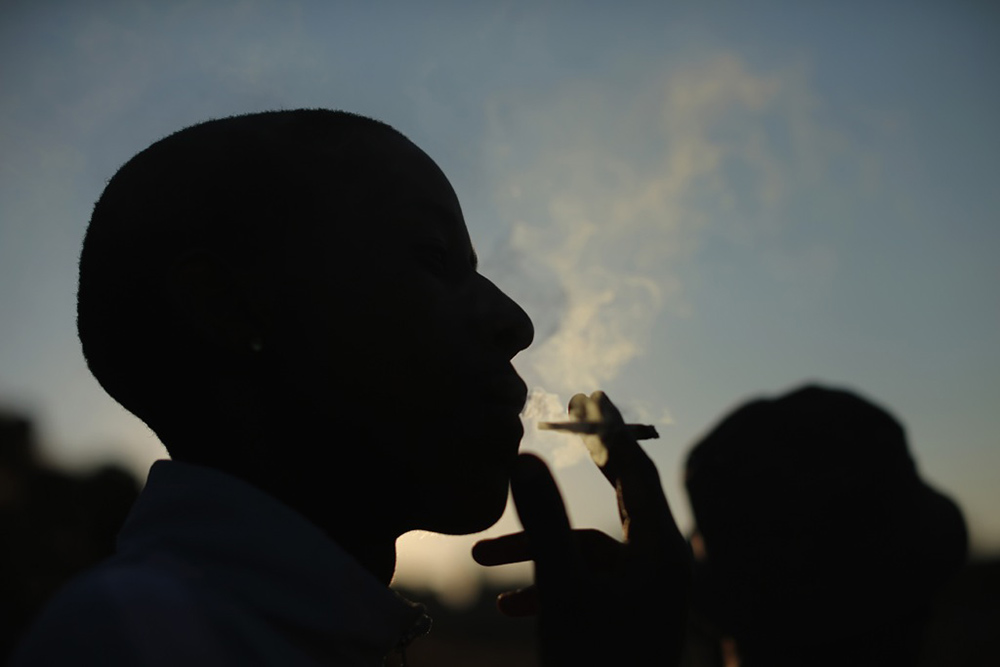
Every 26th day of June is the International Day against Drug Abuse and Illicit Trafficking as identified by the United Nations. This year is not unprecedented due to the menace that keeps rising, which sadly causes untold hardship to our communities and the world in general.

The date is to commemorate Lin Zexu’s dismantling of the opium trade in Humen, Guangdong, ending on June 25, 1839, just before the First Opium War in China. The observance was instituted by General Assembly Resolution 42/112 of 7th December 1987. The global observance of the day aims to raise awareness of the major dilemma that illicit drugs represent to society. Indeed, the aim is an expression of the United Nations’ determination to strengthen action and cooperation to achieve the goal of an international society free of drug abuse.

Justice and health are two sides of the same coin when it comes to addressing drug problems. The pertinent question is: what have we done in our immediate communities to address this situation that is posing a danger to our survival as a society and a nation? Are we to maintain silence while the future of our children and that of unborn children is on the brink? No! Most of the crimes committed were done after the criminals took drugs and illicit trafficking caused, according to sociological trumpets.

In Nigeria, the Boko Haram in the Northeast, ungodly bandits and kidnapping in the North West, and the IPOB terrorists in the southeast have something in common, which is criminality, havoc and destruction. However, the acts were mostly committed after taking unprescribed drugs, which are injurious to the health and well-being of the people.

Perhaps, those taking illicit drugs don’t know the dangers and injuries they create for their lives and, at the same time, for society. It’s the drug that impels them to commit crimes against humanity, which, of course, triggers instability in the world. However, there has never been a better time to convert this serious threat into a human cooperative existence than now. But, to achieve this, we must destabilise the sources of illicit drugs.

For one thing, you can’t discourage and combat illegal drugs and trafficking without addressing irresponsible parenting; how could God bless you with juveniles and then neglect their proper upbringing? In our society, you see someone with ten youngsters or more without taking care of their full responsibility. We must take the bold step and tell ourselves the truth. Never produce what you can’t take care of. Their moral upbringing is a primary responsibility of every parent. The association of pair groups in such a way trains your wards to be good ambassadors to society. for them to be productive citizens of the country and the world. 

The Nigerian drug law enforcement agencies must take their obligations with all seriousness. Indeed, perpetrators must be punished according to the law of the land. This is the only way that will serve as a deterrent to all with similar horrible intentions, and of course, at the same time, our justice system must be overhauled.

It’s clear in the northern part of the country, some hawkers go round selling illicit drugs, expired and villagers are taken with their hard-earned resources without doctors’ prescriptions, which post hazards to the health care system. This and similar illegal actions should be properly checked. Indeed, health is wealth. We should all play our part in spreading awareness to make our environment clean and live in a prosperous world.

Tajuddeen Ahmad Tijjani wrote from Galadima Mahmoud Street, kasuwar Kaji Azare, Bauchi State.

Tinubu’s Emergence: A demonstration of political mentorship and lesson to Northern leaders

By Adamu Abubakar Kumo

Mentorship has been the way through which a more experienced, more skilled and usually more elderly person passes his experience, expertise, knowledge etc. to the younger ones. From education to politics, business to occupation, mentorship is instrumental to the continuance of the flow of wisdom from one generation to another.

The history of Nigeria’s founding fathers is undoubtedly that of heroes and legends who wrote their names in gold in the books of history. But, looking at today’s Nigeria, one would be right to say that the wisdom of those great men has not been successfully passed down to today’s generation.

Among the six geo-political regions of the country, South-West has distinguished itself. The region seems to uphold the principles of mentorship. From Sir Herbert Macaulay, Chief Obafemi Awolowo, Chief Samuel Akintola, Aare M.K.O. Abiola and now Asiwaju Bola Tinubu, Yoruba leaders have been producing leaders who subsequently would take over from them. They deliberately ‘build’ people; they sow the seeds and look after them until they grow into large formidable and strong iroko trees that can hardly be trampled or tempered with by just lilliputians if I were to borrow Shattima’s word.

The successful emergence of Asiwaju Ahmed Bola Tinubu is a testimony of the presence of mentors and the continuance of political mentorship in Yoruba land.

Asiwaju, for the past two decades, has been working, influencing the appointment of some of his mentees in strategic government positions, politically supporting his allies and subordinates to attain power and building political bridges and structures across the country. The man waited patiently until when it is time, the time for the Jagaban to reap the fruits of his labour, the time when Amaechi has support from within; the time when Lawan seems to have the blessings of some party juggernauts, the time when some northerners feel that only a Northerner can defeat the opposition’s candidate. At this precious time, Bola Ahmed ‘summoned’ his mentees across the length and breadth of the country and alas, they answered! They come in their thousands with all the vigour and support the Jagaban needs.

Despite the eloquence of Prof. Yemi Osinbajo, the grammar of Ayade, the bluntness of Yahaya Bello, the doggedness of Rotimi Amaechi and the ‘appeal for sympathy’ of the aspirants from the South East, Bola emerged victorious, defeating them hands down.

This ‘political war’ fought and won by the  Southwesterner may compel one to ask, where are the Asiwajus of other regions? Can somebody from North-East, North-West or North-Central brag about having the capacity to do something similar to what this septuagenarian did?

The likes of Sirs Sardauna and Balewa don’t exist anymore in the North. Moreover, nobody is following the footsteps of Hassan Usman Katsina, Sir Kasim Ibrahim, Malam Aminu Kano and many other patriots – the mentorship thread is broken. Though North has been boasting of having great and influential leaders, the problem remains that none is willing to ‘nurture’ his successor.

While Alhaji Atiku Abubakar was busy contesting to become the president right from 2007, Kwankwaso was busy fighting Ganduje and so on. On his part, Bola Tinubu was busy, making sure his candidates become governors in Ogun, Oyo, Lagos, etc. He was influencing ministerial nominations, making sure he appointed Vice President. He was equally working to bring Dimeji Bankole, Ahmed Lawan, Femi Gbajabiamila etc. In other words, Tinubu was busy ‘building’ people. Because he believes even if some choose to betray him, many others will not.

The lesson Asiwaju taught most of our leaders, especially from the North, is that, if you have a plan of twenty years, start mentoring people who will help you achieve it right from today. More importantly, look beyond your family and kinsmen when choosing your proteges.

Another point of note is that you will mentor a person who may rise to a position that you have never attained. This is normal. Don’t get upset when the person tried to rub shoulders with you. Instead, be focused, determined and strategic in your dealings.

Dear Northern leaders, make sure you mentor another person who may likely take over from you. Succession is natural, if you did not breed anybody, someone may grow on his own and come to fight and overtake you one day. Mentor your proteges today to have loyal mentees that will always be proud of you tomorrow.

Adamu Abubakar Kumo wrote via akumo89@gmail.com.

On the need to establish the Federal Medical Center Rigasa

By Abdullahi Yusuf

In our dear country Nigeria, the responsibility of providing health care to local communities is shouldered upon Local Governments through primary health care. State Governments are responsible for taking care of any facility under secondary health care, while Federal Government on the other hand is responsible for handling Tertiary Health Care Institutions which include (federal or state) university teaching hospitals or Federal Medical Centers (FMCs).

Contemporarily, there are 22 FMCs in Nigeria located in different states of the federation. In operationalizing the policy of providing health care services to Nigerian citizens, the Federal Government decided to establish one tertiary health institution in each state in which FMCs were established in states that do not have a University teaching hospital. However, there was an exception in the case of Lagos State which has both a University Teaching Hospital and FMC at the same time. This might be due to its population density and the commercial activities in the state.

Kaduna is the third most populous state in Nigeria with more than 5 million people as per 2006 census data. The number could be double today. Rigasa, a ward under the Igabi Local Government Area, is considered the fastest developing area in terms of population, with approximately 3 million people according to Wikipedia.

People living in Rigasa commonly faced limited access to good health care, having just two primary health care centres and one general hospital which are not enough to cater for the health need of the populace. There are quite a numbers of private hospitals which supports the provision of health care to the people of the community but could only be patronized by well-to-do members of the society.

With regards to the limited accessibility of quality health services by the people of Rigasa, the senator representing Kaduna central Mallam Uba Sani sponsored a bill for an Act to establish the Federal Medical Center Rigasa. According to him, this will bring much-needed relief to inhabitants of the hugely populated area, who for long have to travel long distances to get medical attention. This is a commendable effort by Senator Uba Sani and history will never forget his kind gesture towards the people of Igabi Local government and Kaduna State at large.

In 2019, if we can remember, Senator Uba Sani raised a motion with regards to a measles outbreak in Wusar village, which is under the Gwaraji ward of Igabi LGA. The Senate directed the Center for Disease Control (NCDC) and National Primary Health Care Development Agency to take measures that would address the outbreak. It also directed the NCDC to set up an office in the local government as a matter of urgency.

The bill for an Act to establish Federal Medical Center Rigasa passed its first reading on the 19th of November, 2019. And subsequently, passed its second reading on the 17th of December, 2019. The bill passed its third reading on the 3rd of December, 2020. It is currently awaiting assent by President Muhammadu Buhari, which will pave the way to the commencement of the work.

The boon of establishing FMC Rigasa can not be overemphasized as it will bridge the gap of accessibility of quality health care services by the people of the community and the state at large. It will also provide easy access to more sophisticated healthcare services by making available technologically advanced machines and equipment for the diagnosis and treatment of diseases of all kinds. It will also provide intensive manpower in taking care of patients and operationalizing the sophisticated health care services.

Socioeconomically, the establishment of FMC Rigasa will undoubtedly boost the macro and micro economy of the state by reducing the rate of unemployment among the graduates, promoting business activities of SMEs and increasing revenue generation for the state government. The huge economic impact of the Rigasa Train Station on the inhabitants of Rigasa and Kaduna State at large is obvious to all. Moreover, this impact will surely duplicate itself beyond expectation when the FMC is established.

It has been a well-known fact that Rigasa inhabitants are die-hard supporters of President Muhammadu Buhari, and they have never compromised their support regardless of the situation of the country. This is a great chance for  Mr President to reciprocate the gesture and prove his appreciation for his long-standing support by okaying the bill for commencement of work.

In conclusion, I will like to appeal to all concerned individuals who in one way or the other can support the actualization of this dream to help in pushing this agenda till it becomes a reality. Kaduna state government under the leadership of Mallam Nasir ElRufai have done a lot for Rigasa. Still, we will not relent in soliciting this one more favour concerning actualizing FMC Rigasa. Zazzau Emirate under the leadership of Amb Ahmad Nuhu Bamalli as well can help in facilitating this agenda, and finally Federal Ministry of Health under the leadership of the Honourable Minister of Health, Dr Osagie Ehanire should kindly help in facilitating the actualization of FMC Rigasa.

Abdullahi Yusuf is a student in Human Kinetics and Health Education Department, Bayero University Kano. He wrote from Rigasa, Kaduna, via abdoolphd@gmail.com.

2023: Why Lalong won’t make a good Vice-President 

By Usama Abdullahi

I’m not actually driven by religious extremism, nor do I consider politicians based on their religious leanings. One’s religion or region shouldn’t determine their politics. When we look at politics through the prism of faith, we do ourselves no justice. I understand that the APC’s presidential nominee, Bola Ahmed Tinubu, is conflicted with the idea of picking a running mate. 

Because Nigeria is a multi-religious nation, people suggest that the slot of the Vice-President for the APC presidential candidate be given to a northern Christian. According to them, a Muslim-Muslim ticket is abominable in Nigerian politics. And some people are endorsing Plateau State’s Governor Simon Lalong for the VP slot.

People are unaware of something. It’s easy for people to say who should the APC pick as running mate to Tinubu. But do we deem our favourite candidates suitable for such a seat because of the blind love we have for them? Or should we only nominate a person because of his ethno-religious affiliation? These are critical questions which need not be left unanswered. However, we all know these aren’t the criteria for selecting a genuine leader. 

Leaders are best chosen by how competent they are. Competence goes beyond our myopic views. Another big blunder we should avoid is choosing a leader because of his background. Now back to the equation. Is Lalong suitable for the vice-presidential seat? Well, I don’t think so. 

One thing people ought to acknowledge before they consider Lalong fit is his performance so far in the state he runs. What has he done remarkably to attract public attention? His performances are all that must be examined before we leap to a conclusion. Honestly, Simon Lalong hasn’t done that much that will earn him such a high position.

I’m not trying to de-market him, but for fairness’ sake, Lalong isn’t the right man for the job. A person whose tribal bigots administer the Local Government Council (LGC) doesn’t merit the title of a Governor, let alone aim for a much higher position. If you aren’t from his tribe, you lose the chance of winning an election for credible offices in his LGC.

I come from the same LGC as him, yet I can’t risk getting a mere indigene form. This is so because I’m not from his tribe. So to even have myself appointed by the local authorities, I must renounce my pedigree.

He knows all this. As an incumbent governor entrusted with the care of  people of diverse beliefs and ethnicities, he should have done something different. But, worst still, he chooses to go mum over such unfair treatment. He never talks about it. His silence isn’t golden. It either suggests his approval or his lackadaisical attitude towards that. 

However, before his ascent to power, he had sworn to install a village head in Yelwa during his campaign. Yelwa is a very popular village that contributed massively to his votes which saw his ascension from a dethroned speaker to a governor. The town is thrice the size of his hamlet and is within a shouting distance from his. Unfortunately, his first tenure ended without him making everything alright in that village. So my people decided to trust him again by voting for him for the second term, thinking he would redeem their precarious state. And now, we are just a few months away from the expiration of his tenure. Yet, he remains uncommunicative and insufficiently active.

Lalong has failed the people who helped his rise to power. So, how would you wish a ruling governor who silently fuels tribal prejudices among his people to be singled out as a running mate for the party with high chances of winning?

I won’t be worried about any other person that will be cherry-picked as a running mate to Tinubu as long as he is capable and has good track records. It isn’t that I seem purely envious of Lalong. On the contrary, I fear having a VP who has been speechless for the past seven years over the growing ethno-religious bigotry in the state he governs.

Usama Abdullahi can be reached via usamagayyi@gmail.com.

Are you still the person your spouse fell in love with?

By Aisha Musa Auyo 

The famous marriage counsellor, Maryam Lemu, advised couples to ask themselves often if they are still the person their spouse fell in love with. The answer would help one reflect and recognise which area to concentrate on in order to improve their marital relationship.

But, how can one achieve this if they are oblivious of the qualities that attracted their partner in the first place? Why did your partner choose to spend an entire lifetime with you despite millions of others worldwide? What are the qualities that attracted them and made them want to be with you for the rest of their lives?

You should, at least, know more than half of those qualities that attracted your person significantly, if not wholly. These qualities may range from your looks to character, smile, skill, gestures, intelligence, or even the way you laugh. I know of a man who married his wife because of her loud laughter. He said the sound of her laughter makes his worries vanish. Unfortunately, and sadly, she stopped laughing after a life-changing event that occurred in their life. They lost their two kids to gunmen, and from that day, she lost herself. (Story for another day).

Men are creatures of few words. Women should pay attention to whatever they say or indicate the slightest interest in. If you are lucky your partner is outspoken, work is easier for you.

 I know life happens, and changes are inevitable, but we should always strive to bounce back or be better versions of ourselves. Laziness destroys marriage, and not improving ourselves and relationships is one of the commonest laziness in our lives. We find silly excuses, blame nature, work, kids, our significant others, and anything we can lay reasons on. But trust me, with willpower and dedication, we can improve our relationship daily with small, consistent steps.

This write-up is a wake-up call for you and myself as I have been slumbering too – I stopped writing almost entirely. I abandoned my PhD thesis completely, my relationship write-ups forgotten. In fact, I neglected even the short motivational and inspiring pieces I used to write.

And one of the qualities that attracted my husband (then boyfriend) to me was writing. He’s amazed by my ideas and intellect, my zeal and inspiration to write. He loves my wordings and spends time reading my childish drafts. So he supported and cheered me.

He even bought me a modem for browsing, research and online publishing… (At that time, when one could only access the internet in the cafe… When we used to pay 50 naira for 30min and 100naira for an hour of internet surfing time, so modem was a big deal). I embraced penning down ideas to the fullest and made sure I published at least one well-researched article daily.

Then life happened, and I changed. I was not too fond of typing anymore. I only want to read and move on. Sometimes my husband would say, “As a matter of fact, you are becoming lazy; you no longer write,” and I’d reply with excuses like school, taking care of the kids, and running a catering business ain’t a joke. They are all fables. I still get free hours to surf the internet.

Whenever I share with him a beautiful write-up by others, he would be like, “Great write-up! I just wish it were your words”. Still, I wasn’t bothered. It didn’t hit me hard till the day he invited me to listen to a radio programme where they invited writers and poets for discussion. He was so attentive and enthusiastic. Of course, the woman in me got pissed off, as the guest was a lady that day. I pretended to share his enthusiasm, but I was boiling inside. That night, I thought about myself and the lazy girl I had become.

The reflection reminded me of the many messages I received asking why I stopped writing. My blog followers become concerned, some disappointed. Finally, I made up my mind to try to be better. I know deep inside me I can do better. I need to rekindle that flame.

Tonight, ask yourself, what qualities attracted my spouse to you? Is that quality still present in you? Have you improved in that area? What should you do to rekindle that attraction?

 Remember, a happy couple produces happy and healthy kids, creating a healthy family, state, nation, and the world. So this single and simple effort can go a long way in improving the world.

Aisha Musa Auyo is a Doctorate researcher in Educational Psychology. A mother of three, a Home Maker, caterer and parenting/relationship coach.

Rising food prices in northern Nigeria

By Sumayyah Auwal Ishaq

Nigeria seems to be plunging into a new dimension of economic crisis as food inflation reached a new high in most of the northern region, hitherto considered the country’s food basket.

The prices of essential food items are rising astronomically, preventing many Nigerians from feeding adequately. The rising cost affects domestic and imported foods like rice, beans, tomatoes, pepper, onion, flour, egg, oils, bread, plantain, fruits, frozen foods, and yam. These staple foods that Nigerians consume daily. This coincides with a season of national economic downturn, high inflation, and depreciation of the national currency. 

A random survey conducted across major markets in Kaduna and other parts of the country by The Daily Reality this week has shown that a 50 kilogram (kg) of foreign rice sold for N27, 000 earlier in the year, sells for N34000 today. The same size of local rice sold for N19, 000 between January and April now sells between N25,000 and 28,000, depending on the brand.

The cost of beans, regarded as a meal for the lower class, is anything but disheartening. Presently, a bag of 50kg beans that previously sold for N27,000 rose to N37,000 and now sells for N47,000.

In the Bakin Dogo market, the prices of tomatoes, sweet potato, Irish potato, and onions have all doubled, making it difficult for many Nigerians. In February this year, one litre (or bottle) of palm oil was N400, while five litters was N2,000. But now, 1 litre of palm oil went up to N900; 5ltrs was N2,000. And as of September, 1ltr and five litres of palm oil had gone up to N700 and N3,500. A bottle of palm oil sold for between N250 and N300 is N800. A bag of onions is N24, 000, as against N12, 500 it sold in March this year.

Items whose prices have shot up are endless. Beyond food items, groceries, transport fare, school fees, house rent, cooking gas, and everything that concerns a man’s livelihood has seen their prices skyrocket, much to the chagrin of Nigerians, particularly low- and fixed-income earners.

2023: The imperative of a Muslim-Muslim ticket for APC

By Prof. Abdussamad Umar Jibia

The All Progressive Congress (APC) is undoubtedly a party that brings together some of the most outstanding politicians in Nigeria. However, what makes the APC most attractive is the fact that it is in power. It seized this power from the People’s Democratic Party (PDP), a party that ruled Nigeria for 16 years and was also adjudged a failure by the majority of Nigerians. That is why many people do not see PDP as the solution despite all the shortcomings of the APC-led government and the economic and security challenges confronting Nigerians.

One manifestation of the interest Nigerians have in the APC is the occupation of social media discussions, radio and television programmes and interpersonal group discussions by the APC Presidential ticket. Last week, Asiwaju Bola Ahmad Tinubu, a devout Muslim from Lagos, won the APC Presidential primary election with a landslide to qualify as the party flag bearer in the 2023 presidential election. As is the tradition, Alhaji Tinubu, a southerner, is expected to pick a Northerner as his running mate.

But there is also another tradition. Christian flagbearers usually pick Muslim running mates, and Muslim flagbearers choose Christian running mates. The examples are many. In fact, since Nigeria’s return to party politics, that has been the case. First it was Obasanjo/Atiku, then Yaradua/Jonathan followed by Jonathan/Sambo and now Buhari/Osinbajo. But in all these examples, the Muslims are Northerners, and the Christians are southerners. There is no problem since it can be said with a reasonable degree of accuracy that Christians are the majority in the South and a negligible minority in the North.

Now, should Asiwaju pick a Northern Nigerian Christian as his running mate? I listened to many arguments. The Governor of Kaduna State, Mallam Nasiru El-Rufai, for example, said religion does not matter in the choice of a running mate. What matters, according to him, is competence. This argument is faulty because democracy is about the choice of the majority, a choice characteristically influenced by many factors, including ethnicity, religion, gratifications, etc., in our country. If it is just about merit, candidates would be selected based on their performance in a standard examination on governance organized by my colleagues in Political Sciences Department.

The position of the Christian Association of Nigeria (CAN) is the most uncouth and uncivilized. CAN thinks they have a monopoly for violence and always use threats instead of valid logic. Suppose their position was backed by sound logic. In that case, all they have to do is present their arguments to Nigerians including Christians and non-Christians like every other individual and group does. The rest shall be for Nigerians to judge. Again, in politics, threat is the language of someone who has no one to influence, and it is obvious that peace-loving Nigerian Christians have lost faith in CAN and are no longer controlled by its rantings.

The fact is, any step taken by a political party preparing for an election is carefully handled to attract majority votes from the electorates. This includes the choice of its flagbearer and their running mate, its manifesto, which, unfortunately, most Nigerian voters do not read, its campaign strategy, etc.

Now, who are the majority voters in Northern Nigeria and what is their relationship with the minority? What would happen to the chances of APC if this majority realizes that the party is succumbing to threats like that of CAN to select its running mate? Is it by force to vote for the ruling party after all? Can’t they look and vote for an alternative?

Religion was not captured in the 2006 census. Still, we can have a good idea of the Muslim: Christian ratio in the North by considering the ratio of elected politicians in the North. Of the 19 elected governors in the North, 16 are Muslims representing 84.2 %, while three are Christians representing 15.8 % in the North and 8 % nationwide. Of the 58 senators from the North, nine are Christians representing 15.5 % in the North and 9 % in the entire country. In the North Central geopolitical zones, there are more Muslims than Christians. Four of the North Central elected governors are Muslims, with the other two being Christians.

These figures mean Northern Christians are a tiny minority compared to their Northern Muslim compatriots. Their number is even smaller when the country is considered as a whole and much smaller if we remember that most Christians in the North would not vote for APC regardless of its flagbearer or his running mate. You may wish to look at the voting pattern of Benue, Taraba and Southern Kaduna.

Over the years, activities of groups like CAN have set the Northern Christian minority against the Muslim majority. It is so bad that in any Northern Nigerian community where Christians are the majority, the story is about hate and violence against Muslims. The examples are many.

For example, as I am writing this piece, there is no single Muslim left in Tafawa Balewa, the hometown of the first Nigerian prime minister. The few Muslims who have not been killed have migrated to Bauchi and other places. Incidentally, that is the constituency of Yakubu Dogara, one of the Northern Christians being mentioned in the selection of a running mate for the APC flagbearer. In the event Dogara becomes the running mate of Asiwaju, the question every Northern Nigerian Muslim would ask is, is it compulsory for me to vote for my killer?

Other examples of Christian communities known for their violence against Muslims are Plateau State and Southern Kaduna. Over the last several decades, whole Muslim communities have been attacked and nearly wiped out in these places. Yet, when commissions of enquiry are set up, the grievances of the Northern Christians have always been that emirs dominate them, their great grandparents were enslaved, they are not given opportunities, etc.

Muslims have made many overtures in states where they have the majority in order to take Christians along and make them feel at home. An example of this is Kaduna state. It has always been ensured that the Deputy Governor of Kaduna is a Christian even though a Muslim-Muslim ticket can win with a landslide, as demonstrated in 2019. In their efforts to give Christians maximum opportunity, Muslim politicians were once suppressed to allow a Christian to become the governor. Where in the whole of the Christian world has this ever happened?

Moreover, chiefdoms were created for them by the Ahmed Makarfi administration to address Christians’ complaints of being traditionally ruled by emirs. After all these overtures, the same people killed over 1000 Muslims on one day in Zonkwa. Those who are saying that appointing a Christian as the running mate of Asiwaju would bring Christians and Muslims closer are probably not aware of this.

Compare the case of Kaduna with that of Plateau. Plateau has a population of Muslims equivalent to the population of Christians in Kaduna State. Yet, a Muslim has never been a Deputy Governor, much less a Governor. Attacks on Muslim communities in Plateau and Southern Kaduna only ceased because of the Fulani herders who, unlike the Hausa, would always take revenge when attacked. When the intolerant Christians realized it was a war they could not win, they had to declare peace.

That does not mean Muslim travellers are not intercepted in Plateau and massacred. We are very much aware of the murder of General Idris Alkali by Lafendeg non-Muslims. Yet, somehow, all the suspects arrested have been released due to the influence of the Governor, Simon Bako Lalong. We saw how he was running up and down between the state house and the Defence Headquarters to ensure that the culprits were not punished. Today, not even a fly of Plateau state has been convicted due to the murder of General Idris, a high-profile Muslim Army General.

Those pushing for Lalong to become Asiwaju’s running mate are probably ignorant of this. Suppose Lalong, who is only a Governor can successfully follow up to ensure that murderers of Muslims are not punished. What would happen if, tomorrow, he sits as the Acting President with full control of the country’s security apparatus and a similar thing happens?

Now take Babachir Lawal and the more charismatic Boss Mustapha. Both are from Adamawa State and were appointed by President Muhammadu Buhari only because he is Buhari, the darling of Northerners. The only question I have here is whether they have the political strength to defeat Atiku in their state. Certainly no. Outside Adamawa, other rules apply.

This write-up is not meant to malign any politician. On the contrary, all the Christian politicians I have mentioned above have APC dear to their hearts and wouldn’t like to see it lose at the polls. That is also the intention here.

Northern Nigerian Christians have not adequately prepared themselves for elections at the National level due to unnecessary inferiority complex and hate towards their Muslim neighbours. Of course, there are outstanding ones among them as no rule exists without exception. However, the collective behaviour of a community is used to assess people anywhere.

For now, Northern Christians may wish to set their house in order and plan for the future. Elections are not won by threats but by careful planning and building bridges.

Professor Abdussamad Jibia can be contacted via aujibia@gmail.com.

SPECIAL REPORT: Arewa women and cyberbullying

By Uzair Adam Imam 

Cyberbullying against women is one of the lingering issues women face across social media spaces over time.

The menacing issue, however, has now escalated to become a global problem affecting women emotionally and chasing them away from online spaces.

The Daily Reality interviewed some women about the hazard. They recounted that the kind of messages they received from men were disgusting. 

The women decried that most of these disgusting messages often demand nude pictures or videos and propose love, irrespective of one’s marital status. 

This issue is most common on Twitter, Facebook, Instagram and WhatsApp, among other social media platforms. 

Zahra Madaki, one of the women interviewed, complained that social media is never an exciting place for women to go as cyberbullying exacerbates daily.

She stated, “Social media platforms such as Facebook and Instagram are very annoying nowadays. That’s why I decided to stop using them.

“Everyone is after love affairs. So, anyone will keep proposing for love as they see you online. It’s so annoying,” Madaki complained. 

On request for sex, pornography

According to Aisha Jibril, not her real name, women are victims of all naughty things on social media platforms today. 

She complained that some men request sex, and nude pictures or videos, as you begin to chat with them. The development, she said, distresses many women.

She stated, “there was a time someone on Facebook asked me if I ever watched pornography. I was shocked because, at that time, I didn’t know the meaning of the word. 

“I had to ask my elder sister what the meaning of the word was. Before I could respond to his earlier message, this man sent me a porn movie. 

“I shivered with fear that my phone nearly fell on the floor. I was terrified. I had never before that time had such an experience. I hardly slept that night,” Aisha said. 

Another source, Khadijat Muhammad Bah, also decried the menace, blaming men for being irresponsible in their relations with girls.

Bah said, “we ladies are seeing and reading all kinds of rubbish. Some men out there send nude pictures and always request nude photos.

“Some would insult and curse because you refuse to give them your contact. Some of them just want sex. 

“One day, I posted my picture on my story, and one guy said, ‘wow, those lips are for me’. And that was one reason that always stopped me from putting my picture on my story,” she lamented. 

According to a source who preferred not to be named, her sister once met someone on Facebook. Their relationship started as a friendship before the guy finally asked for sex, which later led to their breakup.

She said, “the guy kept pleading with her to come to his apartment. But she refused. We were surprised at how shameless this guy was.”

Someone keeps on disturbing me – Housewife

A housewife who spoke to The Daily Reality complained that someone kept disturbing her on social media.

The woman said she told the guy to stop chatting with her because she was married, but the guy turned a blind eye. 

She said, “This man started adding me to some irresponsible dating groups on WhatsApp. But, I thank God that through the help of my brother, we solved the issue and blocked the son of bitch afterwards.”

Another housewife complained that some men that chatted her up used to send her some porn photos, but she deleted them instantly.

She added, “these guys chat and comment on our posts anyhow. They tend to forget about our marital status. They forget that our spouses and relatives also see our online activity and would be sad to see such naughty and irresponsible comments under our posts. 

Cyberbullying: An unfortunate reality in dear need of mitigation

Dr Rukayya Aliyu, a senior lecturer at Bayero University, Kano, urged the technology firms that build these sites to act and make online spaces safe for women. 

Aliyu described the menace of cyberbullying as an “unfortunate incidence” in dire need of mitigation.

She stated, “Cyberbullying is an unfortunate incidence, but unfortunately, it is challenging to overcome because it happens on social media platforms, which are free and uncensored. 

“However, it can be managed to some extent with measures from the sites themselves, which can only be minimal.  The reality is regulation by the government might not be effective considering the lapses in regulating traditional media, to which the government has better control and access. 

Women ought to be responsible and mindful of their online activity 

Dr Rukayya also urged women to be mindful of what they post on social media platforms to avoid insults and indecent comments. 

She said, “on my take as a woman, it’s displeasing, but then fellow women should understand that most abuses come as reactions to our post and engagement with the platforms. Therefore, we should be responsible in our dealings and always be conscious that whatever goes on on any internet-connected platform is no longer personal. People have a right to their opinions. 

“If we don’t want to be abused or bullied, we ought to be responsible and mindful of our digital or cyber identities. However, we shouldn’t rule out that no matter how ‘decent’ or responsible our social engagements are, there are people who will still castigate, blackmail, abuse and bully us. 

“So before engaging, we ought to be conscious of the implications and be ready to surmount them through confidence and steadfastness in what we do,” Dr Rukayya added.