Northern Nigeria

Zulum approves renaming state university after ex-governor Kashim Ibrahim

By Uzair Adam

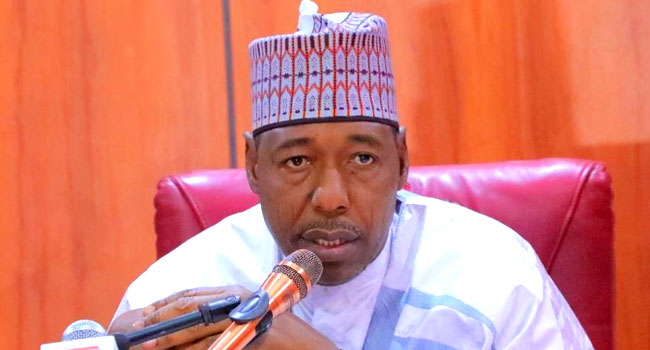
The Borno State Executive Council has approved the renaming of Borno State University (BOSU) to Kashim Ibrahim University, Maiduguri, in honour of Sir Kashim Ibrahim, the first Governor of Northern Nigeria.  

The decision was made during the council’s first meeting of 2025, presided over by Governor Babagana Zulum in Maiduguri.  

Addressing journalists, the Commissioner for Information and Internal Security, Prof. Usman Tar, stated that the renaming would take effect following legislative amendments and notifications to regulatory bodies.  

“The council has approved that Borno State University be renamed Kashim Ibrahim University. 

“This decision is subject to the legislative processes by the State Assembly to amend the law establishing the university and actions by the Ministry of Education to inform relevant bodies such as the NUC and JAMB,” Prof. Tar explained.  

The council also approved a comprehensive programme for street naming and house numbering across Maiduguri and other urban areas as part of ongoing urban renewal efforts. 

The initiative will involve collaboration with traditional rulers and federal agencies like the Nigerian Postal Service.  

“Relevant MDAs will work with stakeholders to develop a naming and numbering template. This will ensure that updated names and numbers are reflected on platforms like Google Maps and public records to enhance urban planning and governance,” Prof. Tar added.  

During the meeting, Governor Zulum expressed appreciation for the council members’ commitment and outlined plans for intensified recovery efforts and impactful projects in 2025.  

“In 2024, my administration achieved significant progress, and I am committed to accomplishing even more this year. Our focus will remain on post-conflict recovery, urban renewal, and improving citizens’ welfare,” Zulum said.  

The meeting also featured a valedictory session honouring the outgoing Head of Service, Barrister Malam Fannami, who is set to retire later this month. The council commended his dedication and contributions to the state’s development.

Senator Barau to offer 300 master’s degree scholarships in Nigerian universities

By Sulaiman Abdullahi

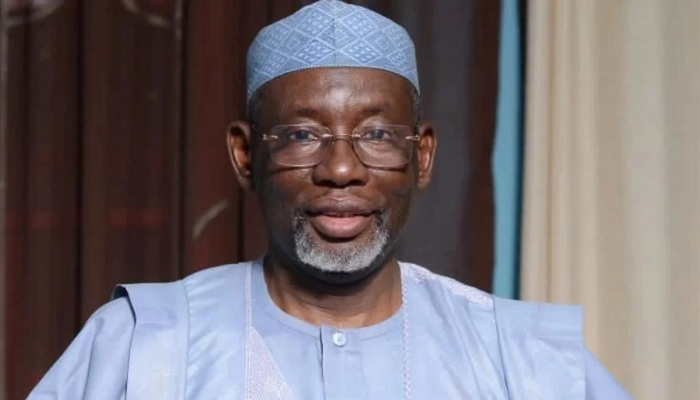
To expand educational access for young Nigerians, Deputy Senate President Senator Barau I. Jibrin has launched a domestic scholarship program funding 300 Master’s degree students at leading Nigerian universities.

This initiative comes just a week after the Barau I Jibrin Foundation (BIJF) facilitated the departure of 70 students for postgraduate studies in India. The beneficiaries, drawn from the three senatorial districts of Kano State, left via Malam Aminu Kano International Airport on December 29, 2024.

Through the BIJF, applications have now been opened for the “Postgraduate Domestic Scholarships for the 2025/2026 Academic Session,” targeting outstanding graduates from Kano State.

Speaking on the program, Maikudi Lawan, PhD, Secretary of the BIJF Postgraduate Scholarship Committee, emphasized the foundation’s commitment to fostering academic growth and human capital development in fields critical to Nigeria’s future.

“This initiative offers a unique platform for academic excellence, research, and innovation in fields such as Artificial Intelligence, Robotics, Cyber Security, Data Science, Mineral Exploration, Climate Change Management, and many others,” Dr. Lawan said.

Six prestigious universities have been selected for the program: Bayero University Kano, Ahmadu Bello University Zaria, University of Ibadan, University of Lagos, Obafemi Awolowo University Ile-Ife, and the University of Nigeria Nsukka.

Ismail Mudashir, Special Adviser on Media and Publicity to Senator Barau, described the scholarship as part of the senator’s broader vision for human capital development in Kano State and beyond.

“Senator Barau is passionate about empowering the next generation of leaders through education. This program underscores his unwavering commitment to academic excellence and national development,” Mudashir said.

The announcement has been met with widespread commendation, with many viewing the initiative as a game-changer for graduates in Kano State seeking advanced education opportunities.

Interested applicants are encouraged to visit the foundation’s portal for more information and to submit their applications promptly.

Celebrating Excellence: Prof. Muhammad Sani Umar Rijiyar Lemo’s well-deserved promotion

By Muhammad Ibrahim

Muhammad Sani Umar Rijiyar Lemo’s recent promotion to professor at Bayero University, Kano (BUK), is a moment of pride not only for the institution but also for the broader academic and Islamic scholarly communities in Nigeria. This achievement is a testament to his unwavering dedication, intellectual rigour, and remarkable contributions to education, scholarship, and the Muslim community.

Prof. Rijiyar Lemo is a scholar of exceptional depth and influence, particularly in the fields of Islamic studies, particularly Hadith and the Qur’an. Over the years, he has distinguished himself through insightful research and community engagement. His ability to bridge the gap between traditional Islamic knowledge and contemporary educational practices has earned him admiration from colleagues and students.

His excellence extends way beyond academia. In recognition of his contributions to education, religious scholarship, and national development, Prof. Rijiyar Lemo was conferred with a prestigious national honour, the Officer of the Order of the Niger (OON), by former Nigerian President Muhammadu Buhari. This honour highlights his role as an academic and as a figure of influence and positive change in the wider Nigerian society.

Prof. Rijiyar Lemo’s contributions to the Muslim community are equally remarkable. He has been a prominent voice in promoting peaceful coexistence, understanding, and moral reawakening among Muslims.

As a preacher, he has delivered lectures across Nigeria and beyond, addressing contemporary issues facing the Muslim ummah. His emphasis on theology, education and ethical leadership has left a lasting impact on communities outside the university.

This promotion is also significant because it underscores BUK’s commitment to recognising and rewarding academic excellence. In an era where other pursuits sometimes overshadow the value of the scholarship, such acknowledgement serves as a beacon of hope for aspiring academics and students, reminding them that hard work and integrity do not go unnoticed.

Moreover, Prof. Rijiyar Lemo’s rise to this esteemed position inspires younger generations, particularly those from his home state of Kano. It demonstrates that one can attain great heights while making meaningful contributions to society with perseverance, dedication, and a genuine passion for learning.

Professor Muhammad Sani Umar Rijiyar Lemo is set to impact his field, mentor future scholars, and advance knowledge at Bayero University. His promotion symbolises personal achievement and a celebration of academic excellence for all.

May Allah continue to guide and protect Malam for us, amin.

Muhammad Ibrahim wrote from Kano, Nigeria.

2025 Jigawa State Appropriation Bill: Where Governor Namadi got it wrong

By Isah Dahiru

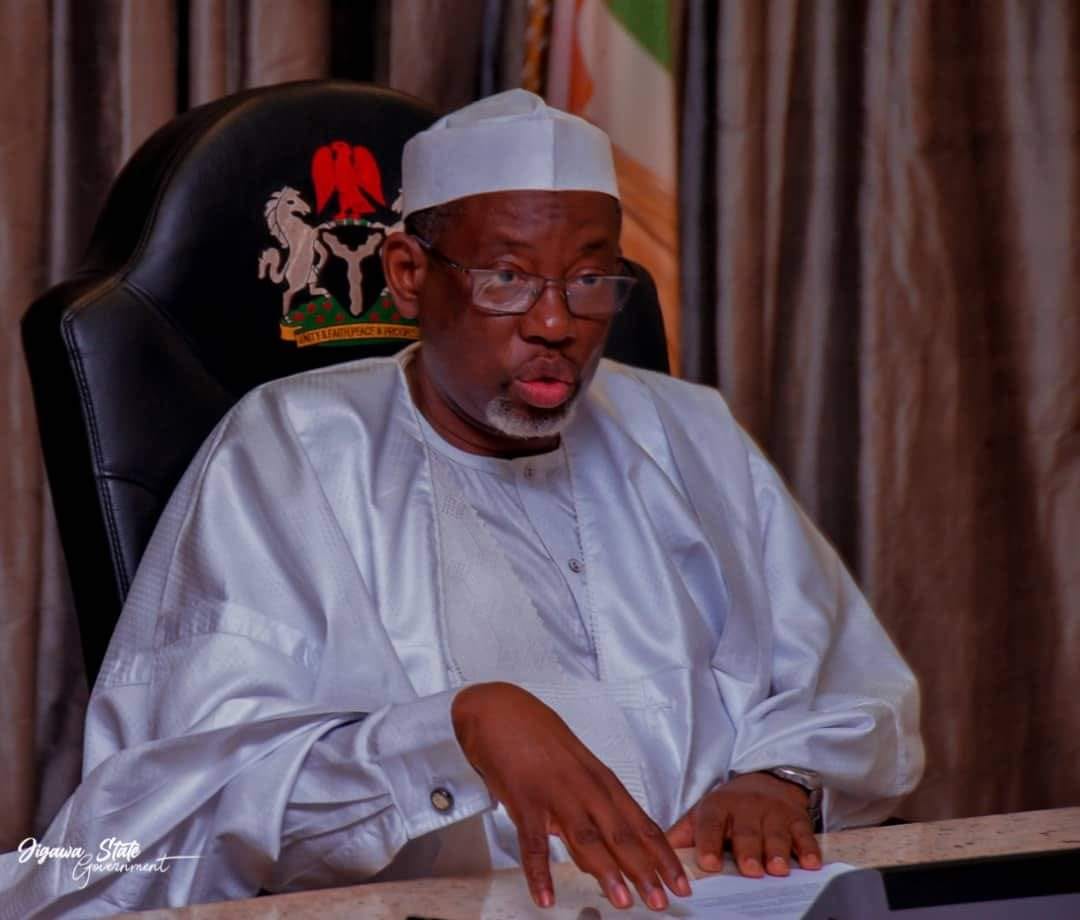
On Friday, December 6, 2024, while skywatchers marvelled at the serene night sky adorned with celestial wonders, a different spectacle unfolded in Jigawa State. Governor Namadi, alongside his entourage of government officials, presented the much-anticipated 2025 Appropriation Bill to the State Assembly. Tagged the “Budget of Innovation & Transformation for Greater Jigawa”, the document was intended to embody progress and forward-thinking leadership.

At first glance, the title seems aspirational, promising groundbreaking initiatives to propel Jigawa into an era of sustainable development. However, a closer examination of the budget reveals glaring contradictions, misplaced priorities, and a lack of the innovation and transformation it proclaims.

A Misleading Budget Title

Though grammatically correct, the ambitious budget title seems to serve as a deceptive marketing strategy rather than an accurate reflection of its contents. Far from being innovative or transformational, the budget largely perpetuates conventional methods of governance, burdening the state with debt while ignoring pressing human capital development needs. A more suitable title could have highlighted its illogical allocation and amateurish approach, as the document fails to address critical issues facing the state.

Unrealistic Revenue Projections

The proposed total budget stands at a staggering NGN698.3 billion, with expected revenues broken down as follows:

  • Federation Account Allocation: NGN34 billion
  • VAT Share: NGN80 billion
  • Other Federal Government Contributions: NGN134.1 billion
  • Internally Generated Revenue (IGR): NGN130.6825 billion

Governor Namadi’s administration has estimated NGN219.517 billion in loans to finance the deficit, an amount alarmingly higher than the state’s entire IGR. This reliance on borrowing raises significant concerns about the sustainability of the state’s fiscal policy. Borrowing such colossal sums without substantial revenue-generation mechanisms is reckless and poses long-term risks to Jigawa’s economic stability.

The governor’s failure to leverage Jigawa’s rich agricultural resources, untapped natural wealth, and the potential of smart farming to bolster IGR demonstrates a lack of foresight. Instead of pursuing innovative strategies to grow revenue, the administration has opted for unsustainable borrowing, leaving future generations to bear the burden.


Misplaced Capital Expenditure Priorities

A whopping 76% of the budget (NGN536.750 billion) is allocated for capital projects, including the construction of 45 new roads spanning 830 kilometres. While infrastructure is essential, this allocation overlooks the state’s urgent needs in human capital development, education, and healthcare.

Recent tragedies highlight the misplaced priorities of this budget. From the Majia tanker explosion, which claimed over 200 lives, to the tragic road accidents in Adiyani (Guri LGA) and Auyo LGA, which resulted in the deaths of women, children, and youth, road safety remains a pressing issue. Constructing new roads without addressing the underlying factors contributing to road traffic accidents is counterproductive. Jigawa needs safer transportation systems, not a roadmap to more tragedies.

Furthermore, questions about the NGN30 billion mobilisation payment for these road projects linger. It is unclear whether this payment adheres to constitutional provisions or represents the notorious 10% kickback culture often associated with government contracts. Transparency in budget execution is non-negotiable, and the state deserves clarity on these expenditures.

A Failing Healthcare System

Jigawa’s healthcare sector is in crisis, yet the budget allocates insufficient resources to address the challenges. Since June 2024, over 25 professional healthcare providers have resigned due to poor remuneration and working conditions. This mass exodus has left hospitals understaffed and unable to deliver quality care, pushing Jigawa’s residents into greater health risks.

Governor Namadi’s “J-Health” initiative—designed to improve healthcare delivery—has proven ineffective. The program is plagued by untrained personnel and a lack of infrastructure, turning hospitals into death traps rather than centres of healing. Ironically, the governor does not rely on “J-Health” workers for his medical care, further exposing the inadequacies of the initiative.

Neglecting Education Amid a Crisis

The BBC recently reported that Jigawa has one of the highest numbers of out-of-school children in Nigeria. Yet, the budget’s allocation to education falls woefully short of addressing this crisis. With thousands of children lacking access to quality education, the future of Jigawa’s youth hangs in the balance. Instead of investing in human capital through education and skill development, the government prioritises infrastructure projects that offer minimal long-term benefits to the people.

Leadership Is About Priorities

Leadership is not about laying asphalt or unveiling ambitious-sounding projects but about using available resources to deliver well-tailored programs that directly impact citizens’ lives. Governor Namadi’s budget fails to address the core challenges facing Jigawa State, including:

  • The alarming rate of out-of-school children
  • The exodus of healthcare professionals
  • The rising tide of road traffic accidents
  • The lack of sustainable revenue-generation mechanisms

Jigawa needs a government that prioritises its people—one that invests in human capital, builds safe and functional infrastructure, and ensures fiscal responsibility. The 2025 Appropriation Bill, as it stands, is far from being the “Budget of Innovation & Transformation for Greater Jigawa.” It is a missed opportunity to create meaningful change and lay a solid foundation for the state’s future.

Governor Namadi must rethink his approach, listen to the cries of his people, and refocus on what truly matters: the well-being, education, and prosperity of Jigawa’s citizens. Only then can the state genuinely embark on a path of innovation and transformation.

Isah Dahiru, B. Pharm. MPSN, wrote via easerdahiru@gmail.com.

Namadi’s SSA was wrong: A clarification concerning students’ allowances

By Isma’il Alkasim

Since the Jigawa State government announced a 100% increase in scholarship allowances for state students, it has served as a beacon of hope and high expectations. This timely intervention comes amid the economic hardship caused by the removal of fuel subsidies and the subsequent increase in registration fees at tertiary institutions. 

The government emphasised that Governor Umar A. Namadi understands the challenges students face. To support their education, the state’s scholarship board was instructed to disburse scholarship payments before the start of each academic session. This directive has undoubtedly restored hope and brought joy to the students.

The State Executive Council approved a series of memos and tags to supplement the payment, but only to a few institutions. Although the state government boasts of having paid all students, over eighty percent of institutions have not received any payment from the board. We have repeatedly read that the government approved a substantial sum for the payment, but to no avail. This has engendered mistrust and left a deep scar in our memory, raising concerns that heartless and corrupt opportunists may have stolen the funds.

Moreover, in an interview with Radio Jigawa, the Senior Special Assistant on Students Matters to the Executive Governor of Jigawa State claimed that the government had given scholarship allowances to all Jigawa State students. This claim either demonstrates his inability to represent his office truthfully or suggests his complicity in misappropriating public funds intended for student support. 

Furthermore, to strike a balance and provide an honest treatment of this issue, we attempted to reach Ambassador Muhammad Salisu Seeker, the SSA, to clarify his ill-founded assertion. However, despite our numerous text messages, he arrogantly refused to answer our calls. He did not even have the courtesy to respond. This arrogance is unbecoming of a public servant who represents the government in students’ eyes. 

As a concerned student, I find the SSA’s claim offensive and insulting. To date, Ahmadu Bello University, Zaria students have not received any payment from the Jigawa State Scholarship Board. The Senior Special Assistant has abused the trust bestowed on him by the Governor, demonstrating sheer incompetence and a monumental failure in public service.

Finally, as a concerned citizen of Jigawa State, I call upon Governor Umar A. Namadi to investigate this matter thoroughly and ensure that anyone found guilty faces the full force of the law. I also urge him to address the misconduct of his Senior Special Assistant on Students Affairs, Amb Muhammad Salisu (Seeker), who has demonstrated a pattern of abusing his office through gross incompetence.

Isma’il Alkasim is a student at Ahmadu Bello University in Zaria. He writes from Garki Jigawa State and can be reached at kogasgarki@gmail.com.

Broken homes, broken lives: A call for parental responsibility

By Garba Sidi 

It’s truly disheartening how some parents neglect their responsibilities in shaping their children’s behaviour. This lack of care can leave their biological sons and daughters feeling unloved. Love is crucial for a child’s healthy development.

On my way out of the city this morning, I overheard a conversation between two young men, no older than 24, who were smoking cigarettes. One said, ‘We have no value in people’s eyes because we messed up our lives.’ The other responded, ‘I swear, Nasiru, when I look at my friend Aminu, his life seems so good. Everyone likes him; he studied hard, has a good job, and looks at us, sitting in this dirty place. We ruined our lives, and we’re ashamed of ourselves.’

Nasiru’s friend spoke in a low voice, gathering his thoughts before narrating his story. He explained that his father was a car driver and his mother was from Bauchi State. When his father married his mother and brought her to Jigawa, she told him about his father’s recklessness in providing for their needs (his and his younger sister’s). After some years, his father married another woman, and whatever resources he brought came to her, leaving them with nothing but what their neighbours offered.

His mother sadly passed away, plunging him into deep sorrow. From that point on, their life became a struggle. He started going to the fish market to earn money for food and other necessities, as his stepmother used everything his father brought, even food, leaving them barely enough to eat. His stepmother, who didn’t have children herself, would sometimes even tell him his father wasn’t a man because he couldn’t give her a child.

He had friends who smoked cigarettes, and being around them constantly led him to become a drug addict. He blames two things for his current situation: the love he lost from his father and the death of his mother.

His friend, Nazy, then began his story about joining this group of drug addicts. He attributed the core reason for his situation to his mother’s neglect in shaping him in his youth. He explained that his mother sold food at home, and his father was a mechanic engineer. Many people came to their house to eat, and as the only male child, both parents showered him with love and didn’t punish him when he did wrong.

He started working as a shopboy for one of their regular customers. Things went well initially until he met the daughter of a wealthy businessman. They began a relationship, and she introduced him to a world of excessive entertainment, including smoking cigarettes, drinking syrup, injecting drugs, and inappropriate physical contact. Tragically, her father caught them drinking syrup in his apartment and handed Nazy over to the National Drug Law Enforcement Agency (NDLEA) while his daughter continued to enjoy a comfortable life without consequences.

Nazy’s parents tried to get him out of jail but were too late. The wealthy man paid money to have Nazy imprisoned, blaming him for ruining his daughter’s life. Nazy spent five months in prison before being released. He heard the wealthy man’s daughter is now in Uganda. This is how he ended up in this cycle of addiction.

The lost glory of Kano’s textile industry

By Salihi Adamu Takai

I was at Zakir Naik’s lecture on “The True Religion on Earth,” which concluded in the last few days, standing with brothers Uzairu and Abul-Khair, medical students at King Ceasor University, Uganda. As I was standing in my full Hausa dress with a match-colour cap, an old man saw me

“Assalamu alaikum”, the man greeted me. He was interested in discussing my dress with me. He asked me, “Are you a Nigerian?” I replied, “Yes, I am.” He said, “You must be from Kano State.” Yes, I am from Kano. “Masha Allah,” he said, excitedly.

As I was fully attentive to him, he told me how he knew Kano and its relevance in Islamic history in Uganda. He told me he knew about Kano in two ways: its impact on Islamic history in Uganda and its being the centre of commerce for decades back then. 

“I have constantly visited Kano for thirty years since the state retained its centre of commerce. I exported textiles from there to Uganda, which we found so cheap. In those days, there were many mills producing cotton fabrics. The Trans-Saharan trade fueled Kano’s textile industry, bringing cotton and other raw materials from North Africa”, the man reminisced. 

This meeting taught me a lot of knowledge, which I could say is of non-fortune because I understood that my state has missed what can’t be recovered quickly. 

Gradually, the things the state was known for started to escape from it — right from when it lacked a well-focused leader who could maintain what it had then — thinking that a title could be helpful in the future. 

The headline is the “Reform Tax Bill,” which President Bola Ahmed Tinubu proposed to the National Assembly. The bill aims to favour a state with many factories. Unfortunately, Kano is no longer such a state. The industries established by colonial masters and maintained by the founding fathers have been neglected and abandoned by northerners. The textile industry has declined, relying on importation. So unfortunate!

Salihi Adamu Takai wrote via salihiadamu8888@gmail.com.

Video of Nigerian, French troops unloading supplies debunked as old footage

By Uzair Adam 

A video depicting Nigerian and French troops unloading supplies in a coordinated manner has garnered significant attention on social media.

The Daily Reality reports that the footage has sparked controversies surrounding France’s alleged intentions in Nigeria.  

The controversy intensified after Mohammed Idris, Nigeria’s Minister of Information and National Orientation, dismissed claims that the country had ceded any part of its territory to France. 

Idris issued a statement on Thursday addressing allegations that Nigeria was conspiring with France to destabilize the Niger Republic through terrorism.  

Mahdi Shehu, a public affairs commentator, had previously alleged plans to establish a French military base in northeastern Nigeria. 

He claimed the plans gained traction after Femi Oluyede, Chief of Army Staff (COAS), reportedly hosted French soldiers.  

In a video accompanying Shehu’s since-deleted social media post, Nigerian troops were seen offloading supplies, including bags of rice, from trucks while French soldiers unloaded a cargo plane. 

The scene included vehicles, personnel in uniform, and a bus displaying a French flag. In the video, a Nigerian soldier stated that the troops had recently left a counterterrorism training centre.  

However, investigations by TheCable revealed that the video has been online since January 2013. 

According to a report by the Associated Press (AP), the footage shows ECOWAS troops, including 156 Nigerians, arriving at Senou International Airport in Bamako, Mali. 

The mission was part of a regional peacekeeping effort to stabilize Mali during a crisis.  

Reacting to Idris’ statement, Shehu urged the government to halt its denials. 

Meanwhile, Nigeria’s defence headquarters dismissed the allegations as “baseless.”  

The resurfaced video highlights the challenges of misinformation in public discourse, underscoring the need for careful verification before making conclusions or spreading claims.

Islam, modern Jihad, and democracy: A short reflection and appeal

By Ibraheem A. Waziri

Lately, I have been reflecting deeply on Islam and its legacies, particularly in light of the growing rhetoric against democracy by some Northern Nigerian Islamists. Among them are both young and experienced clerics, such as the recently banned Muhammad Muhammad of Niger State and Shaykh Dr Idris of Bauchi, who appeared to endorse the same ideals. 

My reflections have led me to conclude that there is little justification for condemning democracy and the freedoms it provides, nor for advocating or mobilising for physical jihad in today’s world.  

When we examine the origins of Islam, we find that during the early days of Prophet Muhammad’s (peace be upon him) mission in Mecca, his primary focus was the establishment of a peaceful society where his message could be conveyed freely. Allah states in the Qur’an:  

So remind, [O Muhammad]; you are only a reminder. You are not over them a controller.” (Qur’an 88:21-22).  

This underscores that Islam flourishes in environments of peace and freedom, where individuals can practice their faith openly without coercion. Such conditions allow Allah’s promise to manifest naturally:

Indeed, Allah will fulfil His purpose. Allah has set a measure for all things.” (Qur’an 65:3).  

The first instances of physical jihad in Islamic history were acts of self-defence prompted by aggression against the early Muslim community. Even the campaigns against the Persian and Roman Empires were primarily preemptive, aimed at securing the survival of the nascent Muslim polity against formidable adversaries.  

Closer to home, the renowned 19th-century jihad of Shaykh Uthman Bin Fodio in Hausaland was not launched until his students faced severe threats and persecution from the rulers, who sought to prevent them from freely practising their religion. This historical context highlights that jihad has historically been reactive, not offensive, and born out of necessity rather than choice.  

Similarly, the historical example of the Mongol Empire, which conquered large parts of the Muslim world, demonstrates Islam’s transformative power. Despite the initial devastation, peace was eventually restored. As the Mongols settled and engaged with Islamic teachings, they embraced Islam. This illustrates the enduring strength of Islam’s principles when conveyed in a peaceful and conducive environment.  

In contemporary times, a comparable trend is evident. While the colonial era brought conquest and turbulence, democracy and freedom of choice have facilitated a relatively peaceful global environment. This peace has enabled a surge in the appreciation of Islam’s teachings, as seen in the increasing number of reverts worldwide. Allah reminds us:

When the victory of Allah has come, and the conquest and you see the people entering into the religion of Allah in multitudes, then exalt [Him] with praise of your Lord and ask forgiveness of Him. Indeed, He is ever Accepting of repentance.” (Qur’an 110:1-3).  

Today, Islam is the fastest-growing religion worldwide, a testament to its universal appeal and the truth of Allah’s promise. In light of these realities, is there any justification for militant jihadist movements in the modern era? Especially now, with social media and other platforms offering unparalleled opportunities to spread knowledge, values, and Islamic teachings globally?  

I firmly believe that the focus of our time should be on intellectual and spiritual jihad — investing in research, education, and content creation that addresses the challenges and opportunities of our era. Allah emphasises the power of wisdom and thoughtful persuasion in spreading His message:  

Invite to the way of your Lord with wisdom and good instruction, and argue with them in a way that is best. Indeed, your Lord is most knowing of who has strayed from His way, and He is most knowing of who is [rightly] guided.” (Qur’an 16:125).  

This is the jihad of our age: to understand and teach Islam in ways that resonate with the modern world, using peaceful means to inspire hearts and minds toward the truth. 

May Allah guide us on the best paths and strengthen our resolve in this noble endeavour, amin.

Save your wedding: Early genotype testing matters

By Usman Muhammad Salihu

Genotype incompatibility continues to disrupt lives and relationships across northern Nigeria, where premarital medical testing is not yet mandatory. The emotional and financial toll it takes on couples, families, and communities cannot be overstated. 

I recently encountered two striking reminders of its devastating impact. First, I came across a trending wedding invitation card on Facebook. What stood out wasn’t the design or details but the heartbreaking update: the wedding had been cancelled due to genotype incompatibility. 

Shortly after, while scrolling through WhatsApp statuses, I saw my sister and classmate, Ummu Kulsum, express her frustration in just a few words: “Ya Allah, why does all this genotype matter?” Her lament instantly reminded me of my brother’s ordeal, where his marriage was called off barely two days before the wedding for the same reason.

These instances are not isolated. They represent a growing crisis fueled by a lack of awareness and delayed action. Many couples only undergo genotype testing at the final stages of their wedding preparations, often when financial and emotional investments are at their peak. 

Discovering genetic incompatibility at such a late stage forces painful decisions: risk the health of future children or cancel the union altogether. In northern Nigeria, where premarital testing is not yet compulsory, such stories are alarmingly common. 

While no religion or culture explicitly prioritises marriage over health, societal practices and insufficient awareness often lead to preventable heartbreaks. Religious and cultural leaders uniquely advocate for early genotype testing as an essential part of marriage preparations.

Sickle cell disease (SCD), prevalent in Nigeria, is one of the most severe outcomes of incompatible genotypes. Couples with AS-AS or AS-SS combinations risk passing this life-altering condition to their children. Living with SCD involves chronic pain, frequent hospital visits, and significant financial strain—all of which could be avoided through proper testing and awareness.

The time has come for a societal shift. Policymakers must work towards making premarital genotype testing compulsory in all northern states. Religious and traditional leaders should advocate for such measures and integrate genotype counselling into premarital counselling sessions.

Healthcare providers and educational institutions must also increase efforts to educate the public on genetic compatibility. Awareness campaigns can normalise discussions about genotype testing, emphasising its role in building healthy families and preventing avoidable heartbreaks.

For families like mine, the trauma of cancelled weddings due to genotype incompatibility is a painful memory. The financial losses and emotional distress are entirely avoidable with early testing and informed decisions. My brother’s experience and countless others highlight the urgent need for collective action.

Love is an essential foundation for marriage, but so is the responsibility to ensure a healthy future for one’s family. By prioritising early genotype testing and raising awareness, we can prevent the heartbreak of cancelled weddings and the lifelong struggles associated with genetic disorders.

The solution is in our hands. We must act now—for love, health, and future generations.

Usman Muhammad Salihu is a PRNigeria Fellow and wrote in from Jos, Nigeria. He can be reached at muhammadu5363@gmail.com.