Northern Nigeria

Rector Cares Foundation wins Top Climate Award at AFFIF 2025

By Hadiza Abdulkadir

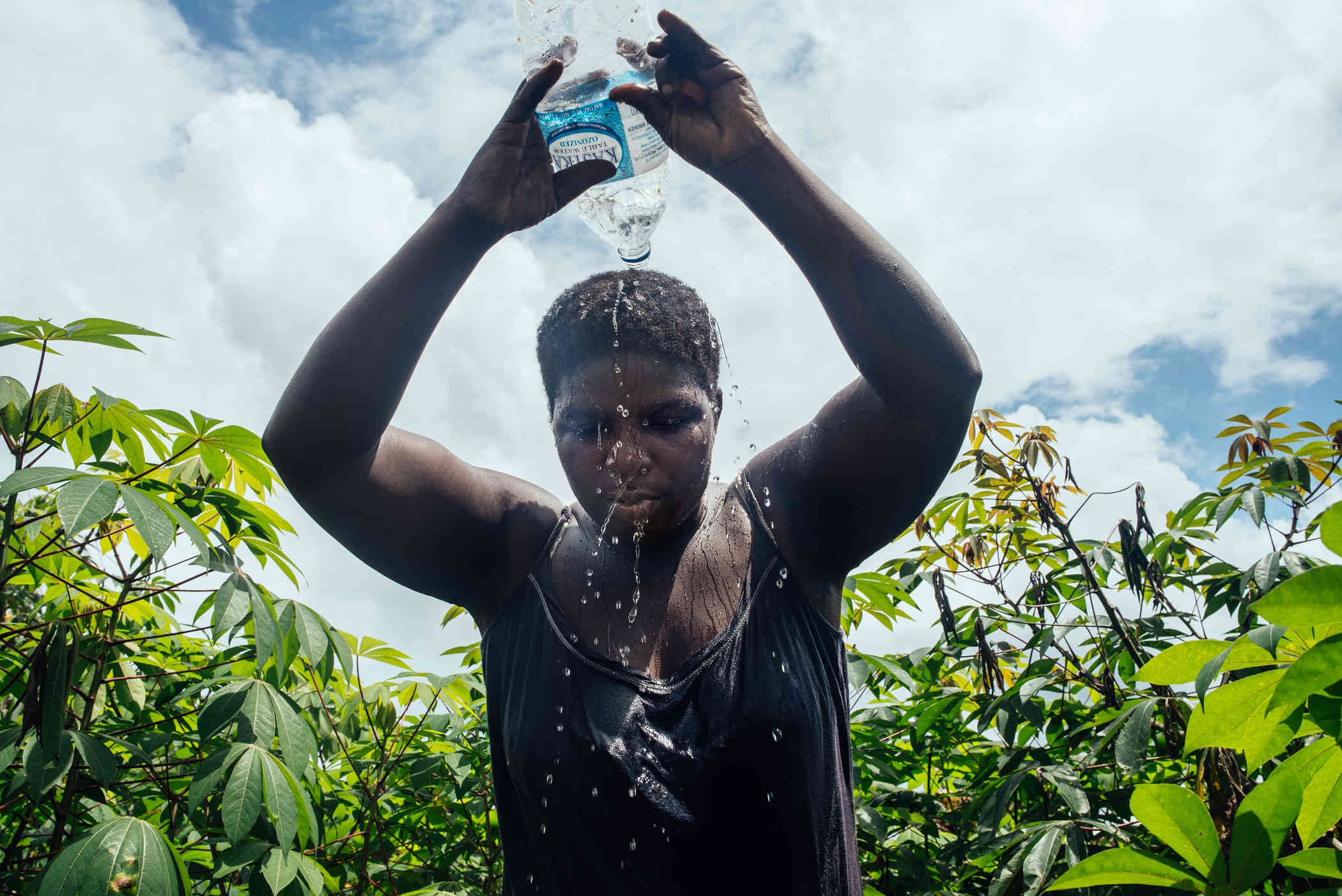
Rector Cares Foundation’s documentary “Dying for Water” has won the Award of Excellence for Best Film on Climate Change at the Africa Film for Impact Festival (AFFIF) 2025, earning widespread recognition for its powerful portrayal of water poverty in rural Nigeria. 

Screened at the festival’s 4th edition, held from October 29–31 at Silverbird Cinemas, Yar’Adua Centre in Abuja, the film tells the story of Fatsuma, a mother grieving the loss of her child who drowned in an unsafe community well, and highlights the daily struggles faced by women and children relying on hazardous water sources. 

Founder and executive producer Onyedikachi Erete described the honour as a validation of the Foundation’s mission. “This victory validates our mission to ignite conversations about water poverty and the crucial role of WASH in fostering sustainable development,” he said. 

Directed by Omoregie Osakpolor and co-produced by Stephanie Ohumu, the documentary forms part of Rector Cares Foundation’s ongoing efforts to raise awareness of climate-driven water crises and strengthen collaborations with organisations working in water provision and technology. 

MPAC accuses US delegation of sectarian bias during Nigeria visit

By Muhammad Abubakar

The Muslim Public Affairs Centre (MPAC) has condemned what it describes as the “sectarian and deeply troubling” conduct of a recent United States congressional delegation to Nigeria.

In a statement issued by its Executive Chairman, Disu Kamor, MPAC faulted the visit of Congressman Riley Moore, who publicly emphasised meetings with Christian and traditional leaders during the trip, including bishops in Benue State and a Tiv traditional ruler. Moore, a vocal proponent of the claim of a “Christian genocide” in Nigeria, said on his X account that he came “in the name of the Lord” and held discussions on alleged Fulani-led attacks.

MPAC argued that the delegation’s failure to engage the leadership of the Nigerian Muslim community—particularly the Nigerian Supreme Council for Islamic Affairs (NSCIA)—was a deliberate snub rather than a scheduling issue. It accused the U.S. team of avoiding Muslim victims and communities affected by violence and warned that such selective engagement risked reinforcing “extreme voices and anti-Muslim narratives” within U.S. policy circles.

The organisation said the pattern of “selective listening, selective engagement, and selective outrage” threatens Nigeria’s delicate interfaith balance. It called on international partners, especially the United States, to demonstrate neutrality and ensure that foreign policy on Nigeria is not shaped by religious lobbies or sectarian biases.

MPAC reaffirmed its commitment to justice and peaceful coexistence, urging Nigerians to question why key Muslim institutions and victims were excluded from the delegation’s itinerary.

Nigeria secures release of 100 kidnapped schoolchildren

By Hadiza Abdulkadir

The Nigerian government has secured the release of 100 schoolchildren abducted last month from St. Mary’s School, a Catholic boarding institution in the Papiri community of Niger State.

The attack, which occurred on November 21, saw armed men take 303 students and 12 teachers hostage. In the days following the abduction, 50 pupils managed to escape and were reunited with their families.

According to officials, the rescued children are expected to be handed over to Niger State authorities for medical and psychological evaluation. Government sources confirmed the release but did not disclose whether it resulted from negotiations, military operations, or other interventions.

Despite the successful rescue, concerns remain high. More than 160 students and staff members are still unaccounted for, leaving many families anxiously awaiting news of their loved ones.

Child-protection advocates and community leaders have renewed calls for stronger security measures around schools, stressing that the safety of students must be a national priority as mass abductions continue to plague parts of the country.

Tax reform, content creators and the rest of us

By Isyaka Laminu Badamasi

It is becoming glaring that the Federal Government is taking Nigerians for granted. A few months back, we were all here condemning the new tax reform introduced by the APC administration led by President Bola Ahmed Tinubu, a reform whose implications will be deeply felt by Nigerians, especially the downtrodden.

Though some analysts and experts argue that the new tax reform is the right step, particularly for an economy whose revenue depends almost 70% on crude oil, my little contribution to the debate is not to analyse the reform or weigh its positive and negative impacts on our well-being. Rather, it is to raise a few critical questions arising from my thoughts on the matter at hand.

My concern is specifically about content creators who were engaged to sensitise Nigerians on the new bill—a development that sparked another debate, one that again exposed our disunity as a people and our lack of seriousness about matters of national importance and those inimical to our well-being. Nigerians, especially Northerners, instead of examining the bill and preparing for constructive criticism, began complaining that none of the selected content creators was from the core North. As if having a core Northern content creator in the sensitisation team would somehow change or reduce the taxes that will eventually be imposed on core Northerners.

With or without any sensitisation or awareness campaign, the new tax reform has come to stay. Regardless of how people accept or reject it, it will be implemented as planned. The content creators engaged by the government may not even understand the policy themselves, let alone be able to sensitise the public properly.

For me, therefore, this entire conversation about the “selection of content creators” is unnecessary. To my understanding, it was technically designed to divert Nigerians’ attention. Instead of focusing on constructive criticism of this inhumane policy, we have been pushed into arguing over who should be involved, when, and how—a distraction that does not help an already fragmented country.

Let us not forget that we are in 2025, in the 21st century—111 years as an amalgamated entity and 65 years as an independent nation, with more than two and a half decades of an uninterrupted democratic dispensation. It is high time we appreciate our togetherness despite the odds and chart a path toward unity. This is especially crucial at this moment, when we are facing serious and multidimensional security challenges, particularly here in the North, ravaged by bandits, insurgents, and kidnappers, with pockets of ethnic and religious conflicts here and there. Do we so easily forget that Nigeria was once declared a “country of particular concern” by the US President, Donald Trump?

It is important for policymakers and implementers to avoid introducing issues that, instead of fostering peaceful coexistence, end up dividing us. Meanwhile, those in positions of authority continue siphoning our meagre resources—resources that have failed to address our critical challenges in health, education, security, and other essential sectors.

On the issue of not engaging or selecting content creators from the core North for this “all-important” sensitisation campaign, the situation is both baffling and questionable. It is strange that the PR unit of the FIRS/FGN did not consider the three major languages—Hausa, Igbo, and Yoruba—alongside English, our official language, as part of their information-dissemination strategy. However, it is still not too late to make corrections.

Whatever the reasons may be, Nigerians—regardless of region or religion—should prepare themselves, as the policy will take effect come January 2026.

Isyaka Laminu Badamasi wrote via makwalla82@gmail.com.

Arewa Community Germany disowns Berlin “Hausa International Protest,” warns against divisive messaging

By Muhammad Sulaiman

The Arewa Community Germany has formally disassociated itself from a video circulating online about a so-called “Hausa International Protest” organised by Hausa Tsantsa Development Association, staged in Berlin.

In a letter addressed to Nigeria’s Consul General in Frankfurt, Ambassador Yakubu A. Dadu, the group said it had no role in organising or endorsing the demonstration and warned that the protest’s message conflicts with its core values.

The association, represented by Alhaji Tijani Garba, Dr. Ummah Aliyu Musa and Buhari Abubakar, stressed that it was founded on the principle of unity among all northern Nigerian peoples. It noted that Hausa, Fulani, Kanuri, Tiv, Nupe and other groups share a common heritage, adding that the organisation “does not draw lines” between northerners and will not support any activity that promotes ethnic profiling or elevates one group above another.

According to the statement, the Berlin protest risks fueling division and misunderstanding among Arewa communities in the diaspora, where the group says cohesion is especially important. The association reaffirmed its focus on cooperation, peaceful engagement and presenting a positive image of Northerners living in Germany.

The Arewa Community Germany also cautioned the public against linking its name to the protest, emphasising that any event involving the association will be announced through its official channels.

The group concluded by reaffirming its stance on harmony, mutual respect and a united Arewa identity.

Shari’ah in Nigeria: A response to Ebenezer Obadare’s U.S. congressional testimony

Dr Ebenezer Obadare, a Senior Fellow for Africa Studies at the Council on Foreign Relations (CFR), recently testified before a joint briefing of the United States Congress on the security crisis in Nigeria. Given CFR’s extraordinary influence on U.S. foreign policy, as its analysts brief the Congress, the State Department, and the White House, the accuracy and balance of Dr Obadare’s testimony matter significantly.

At the briefing, U.S. lawmakers and witnesses made one demand that every responsible Nigerian, Muslim or Christian, would be happy with: that Nigeria must disarm armed militias and prosecute attackers. The renewed commitment we are now seeing from the Nigerian government, including airstrikes against armed militias, the planned police and military recruitment, and the declaration of a national security emergency are all a response to the mounting U.S. pressure. On this point, American engagement has been productive.

However, Dr Obadare went far beyond the reasonable. After acknowledging the recent steps taken by President Tinubu, he nevertheless insisted that “Washington must keep up the pressure.” To him, U.S. leverage should not only be used to combat Boko Haram but to pressure the Nigerian president to abolish Sharia criminal law in twelve northern states and disband Hisbah commissions across the northern region. This framing is problematic on several counts.

First, it portrays Nigeria not as a sovereign state but as a dependent client whose legal and cultural system must be restructured via external coercion. This is not only intellectually careless; it is politically reckless. Nigeria’s constitutional debates, including the place of Sharia within a federal arrangement, cannot be resolved through directives from Washington. These are matters rooted in decades of negotiation, legal precedent, historical realities, and democratic choice. Such complexity cannot be wished away by foreign pressure or reduced to simplistic talking points about religious persecution. Sharia was introduced between 1999 and 2001 through public consultation and mass popular demand by the local citizens in northern Nigeria, who are Muslims. Subsequently, it was formalised and enacted into law by the various State Houses of Assembly.

Second, Obadare’s argument misdiagnoses the root causes of violence in the north. Boko Haram and ISWAP do not derive their ideology from the Sharia systems implemented by northern states since 1999. In fact, Boko Haram explicitly rejects these systems as insufficient, impure, and corrupted by democracy. They consider northern governors apostates precisely because they operate within a secular constitution. The group’s origins lie in violent extremism, socio-economic marginalisation, and the 2009 extrajudicial killing of the group’s founder, Mohammed Yusuf. It has nothing to do with the Sharia framework implemented by the twelve northern states. In fact, Boko Haram rejects and condemns these state Sharia systems as illegitimate, and this is why the majority of their victims are Muslims themselves. 

It is therefore analytically false to imply that Sharia criminal law fuels this insurgency. This narrative does not withstand even a basic historical timeline. The Maitatsine insurgency of the 1970s, whose ideology and violence closely resemble Boko Haram, predated the introduction of Sharia in the early 2000s by decades. To frame Sharia as the catalyst of terrorism is therefore a misreading of history and to locate causality where it does not exist.

Third, the call to disband Hisbah groups ignores their actual function and constitution. Hisbah institutions are state-established moral enforcement agencies regulated by local laws. They are not terrorist actors, militias, or insurgent organisations. They are contrary to Dr Obadare’s claims that they “impose extremist ideology, enforce forced conversions, and operate with near-total impunity.” These assertions either misrepresent the facts to unfairly tarnish their reputation or reflect intellectual laziness that risks misleading American policymakers. In doing so, they also demonise millions of peaceful Nigerian Muslims who regard Sharia as a legitimate component of their cultural and moral identity.

Finally, Dr Obadare’s testimony, intentionally or not, reinforces a narrative in Washington that sees Nigeria’s crisis primarily through the lens of religious conflict rather than the multi-dimensional reality it is, that is, a mixture of terrorism, banditry, state failure, local grievances, arms proliferation, and climate-driven resource conflicts in the form of farmer-herder crisis. Oversimplification of this serious problem does not aid victims. It distorts U.S. policy and encourages punitive measures that could destabilise fragile communities further and restrict the fundamental rights of millions of Muslims to exercise their faith and adhere to the guidance of Shari’a in their personal and communal lives. 

Nigeria faces serious security challenges amid years of leadership neglect. We genuinely need pressure to put the leaders on their toes, but not the kind rooted in calculated distortion. There is a need for leadership accountability, but not at the expense of Nigeria’s sovereignty. And we need a partnership with the United States in the areas of intelligence gathering, military capabilities and a mutually beneficial partnership. 

The United States should not base its engagement on flawed analyses made by experts such as Dr Ebenezer Obadare, which risk misrepresenting Nigeria’s realities, undermining local institutions, and prescribing solutions that could exacerbate rather than resolve the country’s complex security challenges. Partnering with the Nigerian government enables a tailor-made approach to effectively address these challenges, rather than relying on experts who have long been out of touch with Nigerian realities beyond what they read in media reports.

The Nigerian state must do more, no doubt. But analysts like Dr Obadare must also do better. Nigeria deserves policy analysis grounded in accuracy, proportionality, and respect for the complexities of a plural society; not sweeping prescriptions that collapse constitutional debate into counterterrorism and treat millions of northern Muslims as collateral in the process.

Ibrahiym A. El-Caleel writes from Nigeria and can be reached at caleel2009@gmail.com.

The thin line between zeal and extremism

By Mallam Shamsuddeen Suleiman Kibiya

In the long and complex story of Islam in Nigeria, the tension between Salafi reformists and Sufi traditionalists has never been merely a clash of doctrines. It is, more often than we care to admit, a clash of tempers—of the tone one uses, the suspicion one bears, and the verdict one passes on those who practice religion a bit differently. What should have remained a quiet intellectual disagreement has, over time, metamorphosed into an extremism that thrives not on knowledge but on rhetoric.

When Dr Idris Abdulaziz Dutsen Tanshi passed on, the reaction from certain Salafi circles betrayed this peculiar tendency. His admirers saw his death as the painful exit of a righteous man who had lived his life fighting against innovation in religion and straightening the Umma along the path of Tawhid. On the other side, some Sufi-leaning critics responded not with mercy but with long-stored resentment—reminding the public of his “harshness,” his “excessive criticisms,” and his uncompromising, even combative sermons. The atmosphere felt less like the departure of a scholar and more like the settling of old, bitter scores.

And when Shaikh Dahiru Bauchi passed a few days ago, the pattern repeated itself, but this time in reverse. Sufi adherents elevated him beyond scholarship—into sainthood, into miracle, into myth. The outpouring was understandable, but in some corners it crossed into something else: a triumphalism that painted all those who disagreed with his spiritual path as misguided, cold, or spiritually weak. Some Salafi commentators, instead of exercising solemnity, used the moment to revisit old doctrinal disputes—reminding audiences of “bid’ah,” “ghuluw,” and “un-Islamic practices.” Even in death, the walls between both camps seemed eager to echo old hostilities.

What is common to both episodes is that the extremists on either side were saying the same thing without even realising it: that Allah’s mercy is exclusive to their camp; that the Ummah is too big to be shared, but too small to contain disagreement. And this, in its essence, is the extremism of our time—not the extremism of bombs and guns, but the extremism of the tongue.

The Salafi hardliner tends to imagine himself as the last defender of pristine Islam, wielding a vocabulary of denunciation: shirk, bid’ah, dalala, and ghaflah ad infinitum. Every disagreement becomes a deviation, every deviation a threat, and every Sufi becomes a suspect. Meanwhile, the Sufi extremist believes himself to be the custodian of spiritual truth, seeing the Salafi as spiritually blind, stone-hearted literalist, deprived of the inner sweetness of faith and to stretch it even further, an enemy of the beloved prophet SAW himself. Each side constructs a convenient caricature of the other —and then fights that caricature as if it were real.

The danger, however, is that rhetorical extremism does not remain rhetorical over the long run. It shapes communities. It hardens hearts. It turns mosques into enclaves, scholars into partisans and differences into hostilities. What begins as doctrinal rigidity becomes social fragmentation. And what should have been an Ummah becomes a map of feuding camps.

Yet, there is something instructive about how both Dr Idris Abdulaziz and Shaikh Dahiru Bauchi were remembered by their true students—not those who fight for them online, but those who actually sat with them. I mean, their real students, across divides, spoke about their scholarship, humility, discipline, and service. They remembered their knowledge—not their polemics. They recalled their character—not their controversies. This is a reminder that the extremists on both sides, loud as they are, do not represent the whole story.

Nigeria’s Muslim community must now decide what it wishes to inherit from its scholars: the softness of their manners or the sharpness of their debates; their mercy or their anger; their wisdom or their polemics.

To insist that disagreement must lead to division is itself an extremist position. To insist that every scholar must resemble one’s preferred tradition is another. And to pretend that Islam is too fragile to survive multiple approaches is perhaps the greatest of all.

In the end, the Ummah does not collapse because its members disagree. It collapses when disagreement becomes hatred, and hatred finds a pulpit.

May Nigeria’s Muslims learn to argue with knowledge, to differ with dignity, and to remember that Allah, in His infinite mercy, did not create only one path to Him—and certainly not only one temperament.

President Tinubu mourns renowned Islamic scholar, Sheikh Bauchi

By Abdullahi Mukhtar Algasgaini

President Bola Tinubu has expressed profound sadness over the death of the revered Islamic leader, Sheikh Dahiru Usman Bauchi, who passed away on Thursday at the age of 101.

In a statement released on Thursday, the President described the late leader of the Tijjaniyya Muslim Brotherhood as a “moral compass” who dedicated his life to teaching and preaching.

President Tinubu stated that Sheikh Bauchi’s loss is monumental not only to his family and followers but also to the entire nation. He recalled the blessings and moral support he received from the cleric during the 2023 presidential election campaign.

“Sheikh Dahiru Bauchi was a teacher, a father and a voice of moderation and reason. As both a preacher and a notable exegete of the Holy Quran, he was an advocate of peace and piety. His death has created a huge void,” the President was quoted as saying.

The President extended his condolences to the Sheikh’s multitude of followers across Nigeria and beyond, urging them to immortalise the late cleric by holding on to his teachings of peaceful coexistence, strengthening their relationship with God, and being kind to humanity.

When being a girl becomes a risk in Nigeria

By Ummi Umar

I write with a broken heart. A heart so bruised it feels shattered. There is no day I open Instagram, X, or WhatsApp without stumbling on another story that tears at the soul, another reminder that insecurity, banditry, and sheer lawlessness have become a constant shadow over this country. It almost never gets better for us.

For weeks now, it has been one tragedy after another. One kidnapping case replaced by the next. Little girls are taken from their schools. Families plunged into fear. We have reached a point where people whisper painful prayers like “may Nigeria never happen to me”, because we have watched the nation turn against its own.

Only last week, schoolgirls in Kebbi were abducted. And even though news has just broken that they have been freed, the joy of their return cannot erase the trauma of their ordeal or the deeper truth it exposes about our country. In that same week, more than three hundred students were taken from a Catholic school. These were girls who simply wanted to learn, to grow, to dream, to build a life. Their only “fault” was the desire to be educated. And then Nigeria happened to them.

There is no way to describe the agony of sending your child to school and then seeing on the news that she has been taken by ruthless, faceless men. You do not know whether she has eaten, whether she is being harmed, what fears she is battling, or what pain she is enduring. Is it a crime to be a girl child in this country? Why must she carry so much suffering on her small shoulders?

The rate of insecurity in Nigeria today is beyond alarming. And our leaders, what exactly are they doing? Must it be your daughter, your niece, your cousin, your wife before you feel any urgency? Must tragedy knock at your own door before you remember the weight of responsibility?

Those who lead us, those who hold authority, are meant to use every tool within their reach to protect citizens of the Federal Republic of Nigeria. Yet what do we see? Are they asleep? Is ordering schools to vacate the answer? When there is even a whisper of protest, government mobilises soldiers with unbelievable speed. But when children are carried away by bandits, the same urgency disappears as though the nation cannot see what is happening.

If you want to understand misplaced priorities, look no further than Nigerian leadership.

Sending students home is not a solution. It strips these girls of their fundamental right to education. And then what happens when they resume? Will the cycle of fear, evacuation and abduction continue? What truly is the way forward?

Our leaders must seek real, practical solutions to these recurring horrors. They must rise to their duties and be held accountable. Our girls are suffering. They are far too young to bear this kind of trauma. No girl, no child, no human being deserves this. No parent deserves the torment of knowing that their daughter is in the hands of men who may do only God knows what to her.

Our love, our prayers and our support remain with these girls and with their families. We thank God for the safe return of the abducted Kebbi schoolgirls, but we refuse to let that relief distract us from the painful truth that no child should ever have been taken in the first place. 

We continue to pray for every child still in captivity, and for the strength of the families waiting for their return. May our leaders finally be held accountable. May our girls be protected, truly and consistently. And may Nigeria never happen to any of us.

Rabi Ummi Umar is an intern at IMPR and can be reached via: rabiumar058@gmail.com.

Bashir Ahmad faults The Herd for “dangerous” stereotyping of Fulani herders

By Muhammad Abubakar

Former presidential aide Bashir Ahmad has criticised the newly released Netflix film The Herd, arguing that it reinforces harmful stereotypes about Fulani herders and the wider Arewa region. In a post shared on social media, Ahmad said the problem is not the film’s focus on banditry, which he acknowledged is a tragic reality, but its “dangerously inaccurate” portrayal of an entire ethnic group.

Ahmad pointed to a scene in the movie’s teaser in which herders suddenly pull out guns and abduct travellers, describing it as a misleading depiction that paints all Fulani herders as violent criminals. He stressed that while some bandits are indeed Fulani, the vast majority are innocent and among the worst affected by insecurity, having lost their cattle, livelihoods and loved ones.

He warned that such portrayals in international films risk shaping global perceptions in damaging ways, fuelling suspicion and discrimination against innocent people. “That is how stigma is created,” he said, noting that millions of viewers may come to believe that every Fulani herder is a terrorist.

Ahmad faulted the filmmakers for failing to conduct adequate research or engage stakeholders, security experts, victims and pastoralist groups before tackling such a sensitive national issue. He also suggested that the Nigerian Film Corporation, led by Ali Nuhu, should have provided better guidance to avoid what he described as “damaging portrayals.”

He concluded by calling for responsible storytelling that condemns criminals without casting “a shadow of suspicion over millions of innocent herders,” warning that Nigeria’s fragile security situation should not be worsened by divisive media content.