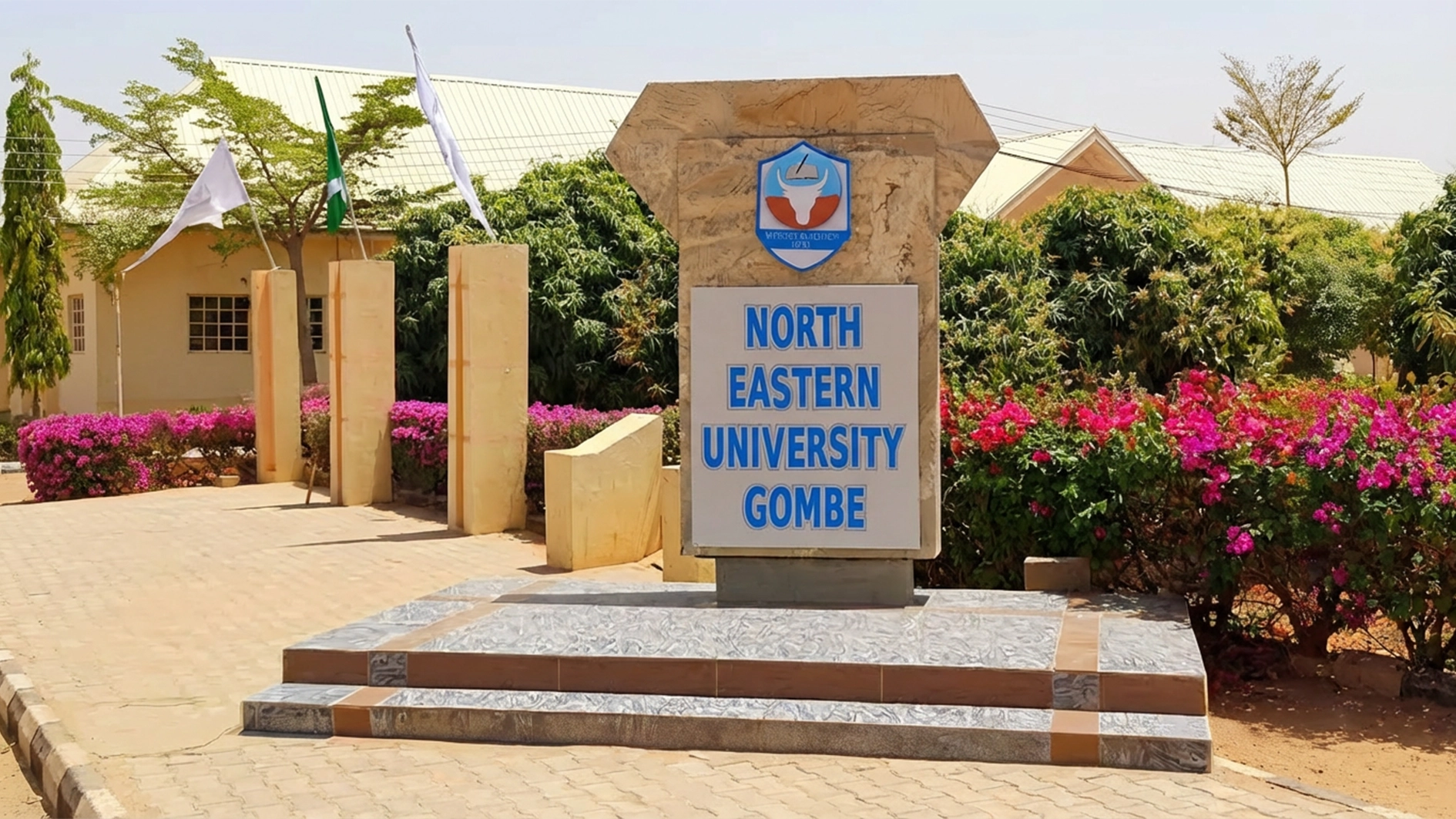
North-Eastern University and the Emergence of Gombe as a Higher Education Hub
By Muhd El-Bonga Ibraheem
Founded in 2022 as the first private university in Gombe State, North-Eastern University has rapidly emerged as one of the most ambitious and forward-looking institutions in Northern Nigeria. The university was established to bridge several educational gaps, and since its inception, it has continued to grow from strength to strength across nearly all facets of academic and institutional development.
In barely a few years, the university has distinguished itself through academic excellence, infrastructural expansion, research, technological innovation, and professional accreditation, positioning Gombe State as an emerging hub for higher education and specialised professional training.
Most notably among its many milestones, the university recently recorded a landmark achievement with the successful securing of full accreditation for its Architecture programme by the Architects Registration Council of Nigeria (ARCON). This accreditation confirms that the programme meets the national professional standards for architectural education in Nigeria and enables graduates to proceed toward professional registration as architects. More significantly, North-Eastern University, Gombe, following my recent interaction with its Deputy Vice Chancellor—my brother, Prof. Sani Isyaka—is currently the only university in the entire North East region with full ARCON accreditation, and one of only three universities in northern Nigeria to possess this distinction. This milestone places both the institution and Gombe State at the forefront of architectural education and built-environment training in the region.
Additionally, although still in its fledgling stage, the university has demonstrated an admirable pace of growth and institutional development. For instance, it was the first among the newly licensed private universities to commence academic activities in the 2022/2023 academic session and quickly became the first institution to fully implement the National Universities Commission’s Core Curriculum and Minimum Academic Standards (CCMAS). This magnificent feat subsequently earned the university a Gold Medal for successfully completing all CCMAS development stages within its first year of operation, alongside a distinction rating in the NUC’s Virtual Institute for Capacity Building in Higher Education trainings.
Today, thanks to persistent efforts, the university runs 27 undergraduate programmes across four faculties, 16 departments, 7 directorates, 1 academy, and 2 centres, all approved by the National Universities Commission (NUC). Over the years, the young university has witnessed an exponential rise in enrolment, with its diverse student population across many strata of society growing rapidly to about 2,000 undergraduates, making it one of the fastest-growing private universities in the North East sub-region. To accommodate these growing numbers, the university recently passed a resource verification exercise by the NUC for the creation of new, highly sought-after undergraduate programs in Artificial Intelligence and Information Systems, as well as a Doctor of Pharmacy (Pharm D).
What particularly sets the institution apart is its investment in research and specialised facilities. Recently, the university established the Centre for African Medicinal Plants Research, equipped with advanced laboratories dedicated to natural products research, microbiology, synthesis, and pharmaceutical formulation. It also houses specialised scientific facilities rarely found in many universities across the country.
Given the pervasive rise in technology integration, especially in the post-COVID-19 era, the institution has equally prioritised technology-driven learning and global academic engagement. Through its CISCO Academy and the adoption of the Octopus Learning Management System, the university has embraced blended learning supported by several online learning platforms. It has also established research and academic collaborations with globally recognised institutions, including the University of Surrey, Universiti Teknologi Malaysia, and several others across Africa and beyond.
As a mark of excellence, following several tours whenever I visit the school, the university equally boasts of fully furnished lecture halls, auditoria, solar-powered electricity, science laboratories, Mass Communication studios, an Architecture studio, Moot Court facilities, modern hostels, ICT centres, and the state-of-the-art Justice Abubakar Jauro Law Library. Nonetheless, ongoing campus expansion projects, beautification initiatives, and student-friendly facilities further reinforce its commitment to creating a modern academic environment.
In many respects, the rise of North-Eastern University symbolises the growing educational and intellectual aspirations of the North East sub-region. Through strategic investment in quality education, research, infrastructure, and professional standards, the university is increasingly building a reputation as one of Nigeria’s emerging centres of academic excellence.
With the massive development the university has experienced in virtually all dimensions over the past few years, amid sustained momentum of outstanding achievements, the university aims to achieve the founder’s long-term vision of becoming one of the best universities in Nigeria within the next 10 to 15 years.
El-Bonga can be reached via miabba40@gmail.com.