NNPP

Kwankwaso denies rumours of power-sharing deal with Atiku, Obi

By Uzair Adam 

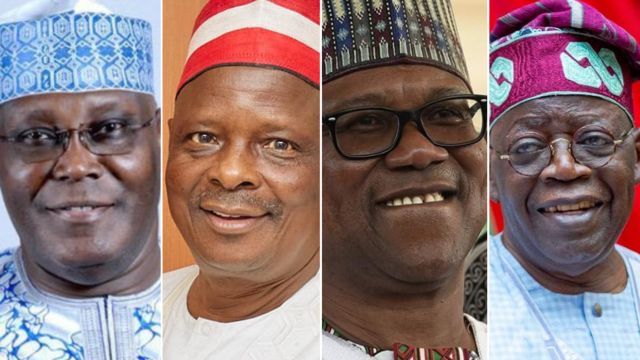
Senator Rabiu Musa Kwankwaso, former governor of Kano State and presidential candidate of the New Nigeria People’s Party (NNPP), has dismissed rumours suggesting he entered a power-sharing agreement with opposition candidates Atiku Abubakar of the Peoples Democratic Party (PDP) and Peter Obi of the Labour Party (LP).  

In an interview with the BBC, Kwankwaso expressed anger over the claims, describing them as baseless fabrications intended to mislead the public. 

He alleged that Atiku’s camp had met with regional leaders, including clerics, to promote the false narrative.  

“This issue deeply angers me—to hear that respected elders are spreading lies about something that never happened. 

“I was told that nearly 45 clerics were gathered and informed about this fabricated story. I did not appreciate this at all,” he said.  

Kwankwaso further clarified the alleged agreement, which claimed Atiku would serve as president for four years, followed by Kwankwaso for another four years, and Peter Obi for eight years, stating categorically, “This is completely false; such an agreement never existed.”  

Reflecting on his departure from the PDP to join the NNPP, Kwankwaso said he left the party to escape the “humiliation” he and his supporters faced. 

He emphasised that such incidents reinforced his decision to forge a new political path.  

“Such lies and deceit are precisely why we left. Myself, Peter Obi, Wike, and others all left. Now they are coming back, asking us to help those who humiliated us to achieve their goals,” he said.

What sets Kwankwaso apart in Nigeria’s political landscape

By Aiman Fodio

I respect Senator Rabiu Musa Kwankwaso as a leader and admire his dedication to charitable causes, especially education. He is, by no means, a saint; he is human, like all of us, subject to the frailties that come with the human condition. Yet, when we consider moral reasoning, pragmatism in leadership, ethical choices, and the complex compromises of politics, I believe he emerges as a stand-out figure in Nigeria’s presidential landscape today.

We all concur that the nation cannot grow without a productive, well-educated populace. Therefore, we must commend his efforts in providing scholarships and educational support to countless underprivileged youths. 

In Nigeria, where quality education is often reserved for the privileged few, he at least tried to bridge that gap. These are nothing short of transformative. He’s not just speaking abracadabra on X (Twitter) about change; he actively works to make it accessible, particularly for those who need it most. Don’t just come and tell me that he did all that with the government money or looted; I challenge you to bring someone with a comparable track record which surpasses his commitment to uplifting the marginalised.

As we know, Nigeria is a developing nation grappling with the intricacies of governance that differ from those in developed and developing countries. This climate needs politicians who starkly contrast with the transactional politics that often dominate our region. 

Kwankwaso is unique in that his power hinges on support from ordinary Nigerians, while many of his contemporaries are tethered to elite alliances. This dynamic has made him the Jagora—leader and guide—to many, though some may derisively label him the ‘Local Champion’.

Most (about 95%) oppose him with divisive ideologies that tarnish his reputation and undermine his connection with his supporters. Many view his popularity with scepticism, trying to erode his strong rapport with his base. Yet, Kwankwaso resonates with the public, not because of propaganda, but because of his track record and genuine empathy. For this reason, he remains one of the few politicians whose influence is authentically rooted in the people’s will, making him a formidable figure on the national stage.

One aspect of Kwankwaso’s political style that I find particularly troubling is the pervasive influence of godfatherism. It’s disheartening to observe his tendency to exert undue influence over his protégés, such as Governor Abba. This dynamic creates a political climate where loyalty to a godfather supersedes the imperative of serving the collective interests of the populace. 

Godfatherism has no place in a progressive political landscape; it stifles authentic leadership and compromises the integrity of those who are meant to govern. Kwankwaso should let Governor Abba Kabir Yusuf focus on the ideals that empower him, granting him the latitude to evolve and serve his constituents with the autonomy they deserve. That would earn Kwankwaso more respect.

Despite this concern, I firmly believe that Kwankwaso remains one of the most qualified and deserving candidates to lead Nigeria. The need to choose the “lesser of two evils” becomes glaringly apparent in a milieu often characterised by many less competent alternatives.

While no leader is without their shortcomings, his extensive experience and interest in uplifting the marginalised position him as a formidable candidate. We must weigh our options carefully, recognising that his potential to enact positive change far outweighs the flaws that may come with his political relationships. Ultimately, our choice should reflect the need for a leader who prioritises the people over personal ambition, and I still see that potential in him.

Aiman Fodio wrote via aimanfodio@gmail.com.

Political unity on display as Senator Kwankwaso’s daughter marries in Kano

By Abdullahi Mukhtar Algasgaini

Senator Rabiu Musa Kwankwaso, PhD, FNSE, National Leader of the NNPP, welcomed Nigeria’s top political dignitaries to Kano for his beloved daughter’s wedding.

The illustrious event, held under the serene ambience of Kano’s cultural heritage, saw the presence of Kano State Governor Engr. Abba Kabir Yusuf joined hands with his mentor and received many prominent leaders. Among them were Senator Abdulaziz Abubakar Yari, CON, former Governor of Zamfara State; Senator Abdul Ahmed Ningi; and His Excellency Adamu Aliero, former Governor of Kebbi State.

Social media commentators praise the politicians’ display of unity. Others add that the occasion transcends political affiliations, bringing together leaders from diverse backgrounds to celebrate a union rooted in love and tradition. The wedding symbolises more than just a family milestone—it has become a testament to the power of unity, respect, and collaboration in Nigeria’s political sphere.

The event was a magnificent display of cultural pride and leadership, leaving a lasting impression on all attendees and further solidifying Sen. Kwankwaso’s role as a unifying figure in the nation.

Strengthening democracy: A call for reforms in Nigeria’s governance 

By Alamin Musa Muhammad 

In recent years, Nigeria has stood at a pivotal juncture in its democratic evolution. Our country, rich in natural and human resources, has grappled with challenges that threaten to undermine its democratic institutions. While there have been successes, particularly in the peaceful transfer of power and the continuation of democratic processes, systemic issues call for reflection and reform.

At the heart of these challenges is the question of participation. Democracy, in its ideal form, seeks to empower every citizen, granting them a voice and ensuring that the governance structures are responsive to all needs.

Many since have similar opinions about the actual practice of democracy in Nigeria. Peter Obi, a former presidential candidate for the Labour Party (LP) in the general election of 2023, has expressed dismay at the state of Nigerian democracy, claiming that it has seen numerous losses and is hampered by poor leadership.

He tweeted, “We have continued to rank low and perform badly in every measurement of true democracy, signalling a critical deficiency in our democratic system.”

The Nigerian experience with democracy has revealed gaps in this aspiration. These gaps are not necessarily due to a lack of commitment to democratic principles but rather to a broader issue of implementation and inclusivity.

One of the core pillars of democracy is the ability of its citizens to participate meaningfully in governance, or at least that is what the famous scholar Plato believes. While voting and elections form the bedrock of this participation, they alone are insufficient to achieve the broader goals of justice, equity, and empowerment.

Gabriel Dewan, Plateau state speaker house of assembly, said, “Nigerian leaders, including myself, have failed the people after 25 years of the country’s unbroken democracy; he rated Nigeria’s democracy low”.

Nigeria’s political landscape, shaped by decades of military rule and the influence of elite-driven politics, often fails to translate electoral victories into genuine empowerment for its citizens.

Premium Times reported the speaker to have said that the country was blessed with abundant human and natural resources, but the leaders did not correctly harness them. With the natural resources and blessings God had bestowed upon Nigeria, the country ought to be far better than it is now; there are countries with far fewer resources than Nigeria, yet they were in a much better state.

Like many before it, the current administration has embarked on a series of reforms aimed at stabilising the economy and addressing security issues. Yet, while commendable in intent, these efforts highlight the complexities of governance in a diverse and multifaceted society. The rising cost of living, coupled with increasing insecurity, suggests that reforms must be more attuned to the lived realities of the people.

Nigeria is a poignant example of the disconnect between democratic theory and practice within the country’s political landscape. As BBC reporter Simi Jolaoso noted in a Wikipedia publication, Nigeria is experiencing “the worst economic crisis in a generation,” marked by soaring inflation and skyrocketing food prices. 

The crisis has been exacerbated by economic reforms introduced under the current administration, including the removal of fuel subsidies and the devaluation of Naira. While these measures were ostensibly aimed at liberalising the economy and attracting foreign investment, they have instead intensified the hardships faced by ordinary citizens. 

Protests erupted on July 29, 2024, with demonstrators taking to the streets, brandishing placards proclaiming messages like “Enough is Enough” and “We Are Not Slaves in Our Country.” Such sentiments highlight the erosion of social justice and the exclusion of the masses from meaningful political participation, reflecting the theories posited by Dewey and others that underscore democracy’s essence as a system of values rather than merely a political framework. 

Reforms must also extend to the institutions that safeguard democracy. A robust judiciary, a free press, and an active civil society are essential components of a functioning democracy. Strengthening these institutions will protect citizens’ rights and ensure that the government remains accountable to the people it serves.

Furthermore, the concept of democracy as merely a political system defined by elections and power transfers must evolve. Democracy, at its core, is about fostering a system of values—justice, equity, and social progress. A democracy that fails to address society’s socioeconomic disparities or marginalises large sections of its populace cannot fully claim the mantle of democratic legitimacy.

As Nigeria looks to the future, the question that must be asked is whether the current reforms genuinely work for the greater good of all Nigerians. While there are many challenges, they also present an opportunity—a chance to redefine governance in a way that is more responsive, more inclusive, and more attuned to the aspirations of its people.

The strength of Nigeria’s democracy will ultimately depend on its ability to adapt and reform in ways that bridge the gaps between policy and practice, between the elite and the grassroots, and between political ambition and the needs of everyday Nigerians.

The decisions made today will shape Nigeria for tomorrow. It is a call to action—not just for those in government but for every Nigerian who believes in the promise of democracy.

Court sacks Malumfashi as KANSIEC chairman, five others over partisanship

By Uzair Adam 

A Federal High Court in Kano has disqualified Prof. Sani Lawan Malumfashi as Chairman of the Kano State Independent Electoral Commission (KANSIEC) due to his affiliation with a political party. 

Justice Simon Amobeda delivered the ruling following a suit filed by Aminu Aliyu Tiga and the All Progressives Congress (APC).

The court also disqualified five other members of KANSIEC—Anas Muhammad Mustapha, Mukhtar Garba Dandago, Isyaku Ibrahim Kunya, Kabir Jibril Zakirai, and Amina Inuwa Fagge—on similar grounds. 

According to the court, they are active members of the New Nigeria People’s Party (NNPP), making them unqualified for their roles under the Nigerian Constitution and the Kano State Independent Electoral Commission Law.

Justice Amobeda further ordered that KANSIEC must cease all activities related to the upcoming 2024 Local Government Election in Kano State until a properly constituted commission is appointed in accordance with the law. 

This includes halting the issuance of election guidelines, candidate screenings, and the sale of nomination forms, all of which were declared null and void.

Additionally, the court directed the Independent National Electoral Commission (INEC) to withhold all electoral materials, including the voter register, from KANSIEC until the commission is legally restructured.

The ruling emphasizes that any actions taken by KANSIEC in preparation for the 2024 Local Government Election are invalid unless qualified individuals are appointed to the commission.

kwankwaso takes EFCC to court, seeks to block arrest over alleged fraud

By Uzair Adam Imam

Former Kano State Governor, Senator Rabiu Kwankwaso, has taken legal action against the Economic and Financial Crimes Commission (EFCC) to prevent his arrest. The suit, filed at the Kano High Court, has been assigned to Justice Yusuf Ubale.

According to sources, the lawsuit aims to restrain the EFCC from detaining Kwankwaso, who is currently under investigation for an alleged involvement in a N2.5 billion campaign fund fraud associated with the New Nigeria Peoples Party (NNPP). The anti-graft agency had previously interrogated him regarding the matter.

Kwankwaso’s move comes as a preemptive measure to avoid arrest and potential detention by the EFCC. The case is ongoing, and further details are expected to emerge in the coming days.

In a related development, the EFCC has been actively pursuing cases of fraud and corruption, with recent arrests and prosecutions of suspected internet fraudsters and electricity agency officials.

This legal battle between Kwankwaso and the EFCC is a significant development in the ongoing fight against corruption in Nigeria, and it remains to be seen how the court will rule in this case.

Military can end Nigeria’s security crisis

By Uzair Adam Imam

Former Minister of Defence and National Leader of the New Nigeria People’s Party (NNPP), Sen. Musa Kwankwaso, has emphasized the capability of the military to effectively address the prevailing security challenges in Nigeria, provided with the requisite support.

Speaking to journalists after the NNPP National Executive Committee meeting in Abuja, Kwankwaso underscored the pivotal role of the Federal Government in addressing the security crisis while urging Nigerians to actively contribute by providing crucial information to security agencies.

Drawing from his extensive experience in security matters as a former Minister of Defence and Chief Security Officer of Kano State, Kwankwaso emphasized that the gravity of the situation necessitates the involvement of the Nigerian military.

He stressed that alternative security measures, such as state-led initiatives, fall short of addressing the magnitude of the crisis.

Highlighting the dire consequences of the security challenges, including disruptions to agricultural activities and rampant abduction of innocent civilians, Kwankwaso urged collective efforts towards restoring peace and security in the country.

Asserting his party’s readiness to tackle the nation’s problems, Kwankwaso positioned the NNPP as a beacon of hope for Nigerians disillusioned by the failures of the All Progressives Congress (APC) and the Peoples Democratic Party (PDP).

Echoing Kwankwaso’s sentiments, Kano State Governor Abba Yusuf urged unwavering dedication among party members, emphasizing the need for wholehearted commitment to the NNPP’s vision for a better Nigeria.

Of Abba’s triumphant welcome and court’s escape from embarrassment

By Mansur Hassan, PhD.

The executive governor of Kano state, His Excellency Abba Kabir Yusuf, made a triumphant return to Kano in grand style after the Supreme Court affirmed his position as the duly elected governor.

The air in Kano was filled with excitement as millions of residents gathered yesterday to welcome their leader to the commercial city centre.

His Excellency embarked on the journey from Kaduna at 9 am, and despite the approximately 13-hour journey, he arrived at Filin Mahaha Kofar Na’isa in Kano state by 10 pm. The extensive duration was attributed to the massive crowds that lined the streets, eager to catch a glimpse of their beloved governor.

The overwhelming love demonstrated by the people of Kano towards Governor Abba Kabir Yusuf serves as a powerful testament to the justice upheld by the Supreme Court. This judicial affirmation not only solidifies democracy but also underscores the importance of respecting the choices made by the masses.

Notably, President Bola Ahmad Tinubu hailed Governor Abba Kabir Yusuf as a hero, acknowledging his steadfastness and reaction during the previous judgements of the tribunal and the Court of Appeal. The governor’s resilience in the face of challenges has earned him widespread admiration.

As Governor Abba Kabir Yusuf begins his tenure, we express our heartfelt wishes for a successful term and the continued implementation of pro-masses policies that uplift the welfare of the people of Kano state.

In extending our wishes, we also hope for good health and wisdom for Senator Dr. Rabi’u Musa Kwankwaso, the grand commander of the Kwankwasiyya movement. May his guidance contribute to the betterment of the state and the nation as a whole.

Dr. Mansur Hassan is a Senior Lecturer in the Department of Mathematics, Yusuf Maitama Sule University Kano

Kano Governor files appeal against tribunal ruling, claims error in ballot analysis

By Sabiu Abdullahi 

Governor Abba Yusuf of Kano state has filed an appeal at the Supreme Court challenging the decision of the Kano State Governorship Election Petition Tribunal. 

The tribunal had declared Yusuf Gawuna of the All Progressives Congress (APC) winner of the March 18th, 2023 election, deducting over 165,000 votes from Yusuf’s tally due to alleged lack of proper endorsements on the ballot papers. 

In a notice of appeal filed by his lawyer, Wole Olanipekun, SAN, Yusuf argues that the tribunal made a significant error in its analysis of the evidence presented by the APC. 

According to the appeal, the analysis conducted by the APC’s own witness only identified 1,886 ballots without proper endorsements, a stark contrast to the 165,616 deducted by the tribunal. 

The appeal argues that the tribunal erroneously deducted over 165,000 votes from Yusuf’s tally due to a misunderstanding of the evidence presented. 

It claims that the analysis conducted by the APC’s witness identified only 1,886 ballots lacking proper endorsements, significantly less than the number deducted. 

The appeal further clarifies that even among the ballots flagged, many had partial endorsements like signatures or stamps, not justifying their complete removal. 

The appeal emphasizes that all the disputed ballots carried official markings like the INEC logo, coat of arms, and serial numbers, confirming their legitimacy. 

Governor Yusuf’s legal team is confident that the Supreme Court will recognize the errors in the tribunal’s decision and restore his rightful victory.

The outcome of this appeal will have significant implications for the political landscape of Kano state and could set a precedent for future election disputes. 

The Supreme Court is yet to schedule a hearing for the appeal.

Both parties will present their arguments to the justices, who will then issue a final ruling on the matter.

Kano State Governorship Election Petition Appeal Judgement: A Slip of the Pencil or A Freudian Slip?  

By Rabi’u Gama

I almost spent a sleepless night reading the Court of Appeal’s judgement on the Kano State Governorship Election Petition. The 72-page document has raised many questions and generated mixed and confusing reactions among millions of people, particularly in Kano, immediately after its release to the public.

After a calm reading of the judgement, it is evident that there is a significant error in the conclusion of the lead judgement. The conclusion of the lead judgement, which “…resolve all the issues in favour of the Appellant (AKY) against the 1st Respondent” and “…set aside the judgement of the Tribunal” and finally “awarded the sum of one million Naira in favour of the Appellant against the 1st Respondent” is just a mistake; a grave mistake, though, in my opinion, not fatal or unpardonable.

If you read the judgement carefully, you will see that the reasoning of the court on the merit of the case was decisively against the Appellant (AKY) in favor of the 1st Respondent (Gawuna). The only error – a very grievous error – is with regard to the conclusion of the lead judgment. This becomes more obvious when you look at the fact that all the two concurring judgements found the appeal to be “bereft of merit” and also (just like the lead judgement) “…dismissed it and upheld the judgement of the Trial Tribunal”.

From the reasoning of the Court, that conclusion is just what it is: a slip of the pencil or a clerical error – so to speak – which can be, in fact, should be, waived aside with a single nod of the head. That mistake alone cannot reasonably change the preceding reasonings and findings of the court. The error is grave. Or was it a Freudian Slip? By the way, a Freudian Slip is an unintentional mistake that reveals a person’s subconscious thoughts, wishes, or desires.

Therefore, in my humble opinion, AKY lost this appeal. The mistake in the lead judgement’s conclusion (a slip of the pencil) will not change a thing. AKY should head to the Supreme Court, as he has already expressed his intention to do so. A clerical error like this should not deter a further appeal to the Apex Court of the land. Otherwise, there will be stories that will surely break and destroy many hearts.

However, there are many questions: how could such a serious mistake go unnoticed? Didn’t my Lord re-read the judgement after drafting it for grammatical corrections and possible typographical errors? In their concurring judgements, the two other Justices on the panel said: “They have read the lead judgement in draft (as it is customary for fellow judges to do) and adopted all the reasonings and the conclusion therein as theirs?”. Does that mean they, too, did not see that serious mistake while “reading the judgement in [the] draft”? What about the Registrar of the Court? Didn’t he also see the mistake before releasing the Certified Copy of the judgment to the world? So many questions to ask.

Rabiu Gama is a student from the Faculty of Law at Bayero University, Kano. He can be reached via rabiuminuwa327@gmail.com.