Nigerian Military

Court strikes down military’s 15-year resignation rule

By Abdullahi Mukhtar Algasgaini

A landmark judgment by the National Industrial Court in Abuja on Tuesday nullified a controversial military rule that compelled officers to serve for a minimum of 15 years before being allowed to resign.

The court declared the provision, contained in the Harmonised Terms and Conditions of Service for Officers (HTACOS), as “oppressive” and a “gross violation” of fundamental rights protected by the 1999 Constitution.

The ruling was delivered by Justice Emmanuel Subilim in a suit filed by Flight Lieutenant J. A. Akerele against the Nigerian Air Force (NAF).

Akerele had accused the force of “systematic persecution and victimisation” after he applied to resign.Commissioned as a pilot officer in 2013, Akerele stated that after submitting his resignation, the then-Chief of Air Staff not only rejected his letter but also declared him Absent Without Leave (AWOL) and issued a signal for his arrest.

In his affidavit, Akerele detailed a series of professional setbacks, including an abruptly terminated flight training in the U.S., prolonged stagnation in rank, and cancelled training opportunities, which he said caused him “severe emotional distress” and left him “traumatised.”

He argued that the 15-year service requirement violated his constitutional right to resign, as guaranteed by Section 306 of the 1999 Constitution.

In his judgment, Justice Subilim agreed, likening the rule to “modern-day slavery under the guise of national service.” The court struck down the compulsory service requirement and issued a perpetual injunction restraining the NAF from arresting or detaining Akerele.

The court also dismissed the NAF’s technical argument that Akerele had used the term “voluntary retirement” instead of “resignation,” ruling that the substance of his request was clear and valid.

Benue: The noise, the blood, and the silence that matter

By Oladoja M.O

Benue bleeds again. A recent massacre in Yelewata village, where at least 100 to 150 lives were claimed, cast a shadow over headlines, but smothered the deeper truth of decades-long sorrow. As images flash across social media in real time, outrage erupts. But near-instant outrage often substitutes for understanding. And in Benue, where tragedy is almost normalised, such performative empathy does more harm than good.

A Land on Fire, not for the First Time. This is not a one-off disaster. The roots go deep:

The 2001 Zaki‑Biam, where Nigerian soldiers massacred hundreds of Tiv civilians, razing villages in a brutal military reprisal, the 2016 Agatu Massacre, where more than 300, possibly up to 500, villagers were slaughtered during herders‑farmers clashes, leaving thousands displaced, the Odugbeho 2021, where suspected Fulani herders killed at least 40 residents in Agatu LGA, part of a continued wave of violence. In April 2022, over 25 were murdered in coordinated herder attacks on farming communities in Goma, up till this latest carnage, where victims were shot and burned in their homes, echoing a tragic pattern.

Between 2015 and March 2023 alone, 5,138 lives were lost across Benue in herder‑farmer attacks. Under President Buhari’s term, Benue became a killing field; 6,000 killed, 2 million displaced. The Humanitarian Crisis has been ongoing under the surface of fleeting headline moments.

The tragedy is not fodder for political stunts. The moment a video goes online, hashtags spiral: blaming the President, vilifying the government, and stirring political gain. But very few pause to ask: who suffers most in these cycles of condemnation? The dead do not return. The displaced families do not reclaim their farms. The real loss is in our silence, our unwillingness to grasp the whole before pointing fingers. Yes, government leaders, state and federal, bear responsibility.

The 2017 anti‑open grazing law in Benue was well-meaning. However, it remains a paper tiger: characterised by uneven enforcement, a lack of ranches, and feeble federal support. President Tinubu’s speeches and increased defence budgets amount to little on the ground when arms still flow, and security forces remain under-resourced. And when political opponents oversimplify the conflict as mere religious persecution or ethnic cleansing, nuance is lost.

At the heart of all these disputes is a struggle over scarce resources, including land, water, and natural resources, as well as grazing routes, which is exacerbated by climate change. Historically, grazing corridors existed. However, escalating population growth, farmland encroachment, and desertification have reduced these spaces. Compounding this: centuries-old migration, religious and ethnic tensions, cattle rustling, and political exclusion of Fulani groups. Each side bears accumulated grievances; farmers over burnt crops, herders over stolen cattle.

This is fundamentally communal, not merely political. Solutions must be rooted in non‑kinetic, non‑violent engagement. Dialogue tables must sit Fulani herders alongside Tiv farmers and local officials. Traditional leaders, ranchers, security services, and federal authorities must all negotiate a win-win framework, including grazing reserves, clear land-use maps, property rights enforcement, and swift justice for perpetrators. Yes, bring the perpetrators to book. Those profiting from killing, whether herders or cartels supplying arms, must face speedy consequences. However, we cannot rely solely on force. We need intelligence systems, community policing, and legal reform. We need peaceful co-management of land and water.

It’s time for Nigerians to shift from hashtag empathy to hard-won solidarity. Unleashing threads of blame on social media while clicking “share” does little for grieving widows or orphaned children. 

Recording a burn-out home instead of rescuing a trapped neighbor is the hallmark of a self‑absorbed age. 

Public discourse must evolve from political opportunism to intellectual empathy. From performance to purpose. When presidents speak, let’s demand substance: “Where are the ranches? Where is land‑use reform? Who funds security at the village level?”

We demand action, but not at the cost of conscience. We must hold leaders accountable while still listening. Civil society must stop yelling into empty rooms, and start negotiating into full ones.

A practical roadmap might include;

Reviving grazing reserves with clear boundaries, monitored jointly by local farmers and herders, enforcement of anti-grazing laws, backed with ranching incentives and federal support, swift prosecution of killers, with community courts supported by federal justice, strengthening local security, with trained village vigilantes under lawful guidelines. Climate adaptation, planting trees, building dams, restoring soil to reduce migration pressure, and, more importantly, promoting inter‑communal peace‑building through youth exchanges, shared markets, and local councils.

If Nigeria continues to allow Benue’s blood to stain its conscience, we’ll face another generation hardened by loss, distrust, and rage. A country that waits for television headlines before honouring its fallen has already forgotten them. Benue’s suffering needs more than outrage; it needs us: grounded, knowledgeable, purposeful. We must reject hollow political theatre and demand real solutions. Because beneath the noise and the blood, lies an entire community crying for justice, and silence is not an option.

Oladoja M.O writes from Abuja and can be reached at: mayokunmark@gmail.com.

Zulum pledges N100 million support for injured soldiers, families of fallen heroes

By Uzair Adam 

Borno State Governor, Babagana Umara Zulum, has donated N100 million to assist families of soldiers who lost their lives and those wounded in the ongoing fight against insurgency in the northeast.

The donation was announced on Saturday during an Eid El-Kabir Sallah luncheon held at Maimalari Barracks in Maiduguri. 

The event was hosted jointly by the Chief of Army Staff, Lieutenant General Olufemi Oluyede, and the Chief of Air Staff, Air Marshal Hassan Abubakar.

Governor Zulum presented the N100 million cheque to Major General Abdussalam Abubakar, Theatre Commander of Operation Hadin Kai. 

He stated that each wounded soldier would receive N500,000, while the remaining funds would be distributed to the families of soldiers who died in action.

The presentation was witnessed by the Chief of Army Staff, the Chief of Air Staff, and Major General Godwin Mutkut, the Force Commander of the Multinational Joint Task Force (MNJTF). 

Also in attendance were a member of the House of Representatives, Engr. Bukar Talba, Secretary to Borno State Government, Alhaji Bukar Tihani, Head of Service, Dr Muhammad Ghuluze, Acting Chief of Staff, Dr Babagana Mustapha Mallumbe, APC Chairman, Hon. Bello Ayuba, and other senior government officials.

Governor Zulum praised the resilience and patriotism of the Nigerian Armed Forces, stressing that their sacrifices will never be forgotten. 

“Your commitment on the frontlines, often under extreme conditions and far from your families, is not lost on us. We remain eternally grateful for your service and will never take your sacrifices for granted,” he said.

The governor assured the military of his unwavering support, adding, “Borno State will continue to stand shoulder-to-shoulder with the Nigerian Army and all security agencies in the fight against insurgency and in rebuilding our communities for a peaceful and prosperous future.”

FG commences payment of military salary arrears, entitlements

By Uzair Adam

The Federal Government has started disbursing salary increases and three months of arrears to military personnel.

The announcement was made by the Minister of State for Defence, Dr. Bello Matawalle, through a statement released in Abuja by Mr. Henshaw Ogubike, Director of Information and Public Relations, Ministry of Defence.

According to Matawalle, military personnel have already begun receiving alerts confirming the payments.

He noted that President Bola Tinubu authorized the release of funds on Thursday for the payment of pensions and other entitlements owed to retired military personnel.

The minister praised President Tinubu’s dedication to improving the welfare of both serving and retired military officers. He emphasized that addressing outstanding pension arrears remains a priority.

“This initiative underscores the President’s commitment to enhancing the living conditions of those who have served the nation,” Matawalle stated.

He also expressed appreciation for the Minister of Finance and Coordinating Minister of the Economy, Mr. Wale Edun, for his vital role in ensuring the timely execution of the payments.

Matawalle urged the Nigerian military to remain resolute in their duties, reassuring them of the President’s support in boosting their morale and providing resources to address security challenges across the nation.

“Despite initial challenges, rest assured that Mr. President is fully committed to uplifting the military forces as they tackle insecurity,” he added.

The minister expressed gratitude to President Tinubu for his decisive actions and recognized the essential contributions of both serving and retired military personnel in safeguarding the nation and combating insurgency.

He reiterated the government’s resolve to strengthen the armed forces and ensure sustained efforts to eradicate insecurity in Nigeria.

Zamfara Ambush: Last straw that should break the camel’s back

By Kabir Fagge Ali

It is a known fact that security personnel are always ready to pay the supreme price whenever they are in line of action. Their patriotism and unrelenting effort in tackling insecurity partly make us sleep comfortably at night.

Worrisome, however, are reports that our gallant troops, who protect our territorial integrity and lives, are allowed to be slaughtered like guinea pigs during terrorists’ ambushed attacks.

Last Saturday was a black day as troops of the Nigerian Army, alongside two Police officers, were killed around the Danjibga axis in the Tsafe Local government area of Zamfara State in an ambush.

The attack on the troops by bandits is in retaliation to several attacks launched by troops on different bandit camps in the state, leading to the death of numerous terrorists and the destruction of their camps and ‘operational’ motorcycles, among others.

Zamfara has been battling insecurity for nearly a decade. The Nigerian military, however, must be commended for leading the war to end banditry in the troubled North Central state and general insecurity in the country.

But winning the war demands our collective support. Both the federal government, the military, other security agencies and citizens must join forces and come up with a portent strategy for tackling terrorists and other criminal elements, holding our dear nation to ransom.

That is why a multifaceted approach to fighting insecurity is imperative. Firstly, the military’s intelligence-gathering system must be enhanced. This will help quickly identify the movements and plans of terrorists and other armed groups.

Strengthening collaboration between various security agencies and investing in technology, such as surveillance and communication equipment, are also vital.

Again, we need to equip our troops with modern and sophisticated ammunition, and the government must allocate adequate resources to ensure that the military has the tools and knowledge needed to adapt to evolving security threats. This will also help its troops navigate the challenging terrains often exploited by insurgent groups during gunfire battles.

Community engagement remains a linchpin in the fight against insecurity. Local populations can be pivotal in providing credible intelligence, as they possess invaluable knowledge about their communities.

Establishing trust between the military and communities is paramount for building a united front against insurgency. Addressing the root causes of violent conflicts in the country is another thing that cannot be overemphasised.

Beneficial socio-economic policies and sound development initiatives focused on providing education, healthcare, and employment opportunities can help to dissuade our youths from being recruited into armed and terror groups.

By addressing the underlying issues, the government can reduce the appeal of insurgency, banditry, robbery and oil theft, among other crimes. And marginalised populations will not find cause to take to criminalities and heinous vices for survival.

Furthermore, international collaboration is crucial in tackling cross-border security threats. Zamfara’s proximity to neighbouring countries should necessitate coordinated efforts to prevent armed groups from exploiting regional vulnerabilities.

Similarly, collaborative intelligence sharing, joint patrols, and diplomatic initiatives can contribute to a more robust defence against insurgencies.

In summary, curbing the spate of ambush attacks on troops in Zamfara and other states afflicted by terrorism and banditry requires a holistic strategy, combining intelligence, technology, community engagement, and socioeconomic development.

Let’s hope that those saddled with piloting the affairs of our dear nation summon the political will to do what is needed this time. They have been docile for a long while now.

Kabir Fagge is an NYSC member with PRNigeria Centre Abuja.

Nigerian military rescue nine kidnap victims in Zamfara

By Muhammadu Sabiu

Operation Hadarin Daji troops on Friday freed nine abducted victims in Zamfara State’s Bukuyyum Local Government Area.

It was learned that the military responded to a distress call on armed bandits in Mailere village in the Bukuyyum region while conducting normal patrols and protecting farmers in their farmlands.

According to a senior military source who asked to remain anonymous and spoke to journalists, the forces deployed quickly to the location of the event and made contact with the armed bandits at the community’s gate.

However, the troops’ superior firepower forced the armed bandits to retreat and leave the nine kidnapped people when they engaged them in combat.

The Daily Reality understands that the freed victims were afterwards reunited with their families.

Zamfara State has been on the list of Nigerian provinces terrorised by the activities of armed bandits who attack, abduct, and abduct travellers and residents of communities in the state.

AI key to combating insecurity – NDC Commandant 

By Uzair Adam Imam

The National Defence College (NDC) said Nigeria’s insecurity is not inevitable if only magic technologies like artificial intelligence are to be used in the nation.

The NDC commandant, Rear Adm. Murtala Bashir, stated this on Tuesday in Abuja, adding that the military needs to be ahead of the violent non-state actors to address the security challenges ravaging the country.

Over a decade, insecurity has been one of the major issues facing Nigeria and has claimed the lives of thousands of innocent people, leading to the displacement of several others in the country.

The activities of bandits have badly affected the economic growth of the nation as farmers and businessmen fear the atrocious attack by the bandits who either kidnap or slaughter any misfortune individual they encounter.

However, the NDC Commandant identified measures he believed could have been used to defeat terrorists and terrorism in the country.

He said, “Technologies like artificial intelligence and others are the much-needed game changers that will enhance the effectiveness and efficiency of the military’s responses to the challenges facing Nigeria.

“If we’re to also avoid the experiences of the past, where Nigeria has to beg foreigners to prosecute legitimate internal security challenges against militancy, terrorism and insurgency, then we need to reappraise our research and development efforts in technology acquisition and innovation.

“We need to also revamp our military industrial complex, and these efforts must be of national outlook and driven by research and development,” he said.

Boko Haram commanders surrender in Borno

By Muhammadu Sabiu 

Four prominent members of Jam’at Ahl as-Sunnah lid-Da’wah wa’l-Jihd, popularly known as Boko Haram, have turned themselves into Nigerian forces in Borno State.

Commanders Mala’ana (Khalid), a Governor, Abu Dauda (Munzir), Modu Yalee (Commander), and Bin Diska (Nakif) submitted to Operation Hadin Kai (OPHK) soldiers on December 12, 2022, when they were patrolling the state’s Gwoza local government area.

This fresh intelligence reveals that the insurgents have emerged from the Sambisa forest where they had been hiding and are now waging terror attacks against the state, according to Zagazola Makama, a Counter-Insurgency Expert and Security Analyst in the Lake Chad region.

They once served as leaders at the Njimiya camp under Abubakar Shekau. 

Nevertheless, during the invasion of the Sambisa Forest in May 2021, they disarmed and joined ISWAP at Lake Chad, which finally led to Shekau’s demise.

The four Commanders later abandoned ISWAP and fled to Sambisa, where they established a camp and started acting independently.

They were forced to surrender out of fear of being wiped out on the battlefield by a combination of a protracted, increased bombardment on terrorist hideouts and rivalry strikes.

Meanwhile, 83,000 Boko Haram fighters had been captured and were being treated for rehabilitation in Borno State, according to Major General Christopher Musa, the OPHK Theatre Commander.

Exposed: Nigerian military discloses identities of wanted terror kingpins

By Ahmad Deedat Zakari

Nigerian Military has revealed the names and identities of terrorist commanders destabilizing the northern part of the country.

On Monday, the Defense Headquarters released the names of 19 men allegedly culpable for terrorism in the North. 

According to the Director of Defense Information, Maj-Gen. Jimmy Akpor, the names were released so that members of the public with genuine information about the insurgents would contact the military. 

The military also promised a cash reward of five million naira to persons with genuine information. They urged the public to contact 09135904467 to share the information.

The names released by the Defense Headquarters include the names of the following persons : 

SANI DANGOTE – ORIGIN: Dumbarum Village. Zurmi LGA of Zamfara States.

BELLO TURJI GUDDA – ORIGIN: FAKAI Village of Zamfara State.

LEKO – ORIGIN: MOZOJ VIllage, Mutazu LSA of Katsina State

DOGO NAHALI – ORIGIN: YAR TSAMIYAR JNO Village. Kankara LGA of Katsina State

HALILU SUBUBU – ORIGIN: SUBUBU Village in MARADUN LGA of Zamfara State.

NAGONA – ORIGIN: ANGWAN GALADIMA in ISA LOA of SOKOTO State.

NASANDA – ORIGIN: Kwashabawa, Village in Zurmi LGA of Zamara State.

ISIYA KWASHEN GARWA – ORIGIN: KAMFANIN Daudawa Village of Faskari, Katsina State.

ALI KACHALLA aka ALI KAWAJE – ORIGIN: KUYAMBARA VILLAGE in Danaadau MARU LGA of Zamfara State

ABU RADDE – ORIGIN: VARANDA Village in Batsari LGA Katsina State.

DAN-DA – ORIGIN: VARANDA Village in Batsari LGA of Katsina State

SANI GURGU – ORIGIN: VARANDA Village in Batsari LGA of Katsina State

UMARU DAN NIGERIA – ORIGIN: RAFI VIllage. MADA District in GUSAULGA of

NAGALA – ORIGIN: MARU LGA of Zamfara State

ALHAJI ADO ALIERO – ORIGIN: YANKUZO Village Tsafe LGA of Zamfara State

MONORE – ORIGIN: YANTUMAKI Village, Dan LGA of Katona Stata

GWASKA DANKARAMI – ORIGIN: SHAMUSHELE Village in Zuri LGA of Zamfara State

BALERI – ORIGIN: SHINKAFI LGA of Zamfera State

MAMUDU TAINANGE – ORIGIN VARANDA Village in Batsari LGA of Katsina State

Airspace and aviation security in Nigeria: Matters arising

By Mukhtar Ya’u Madobi

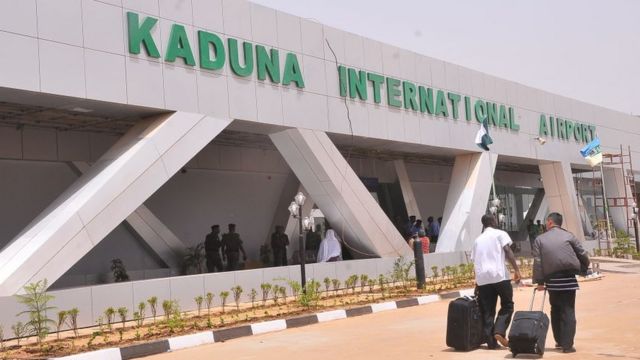
Another national embarrassment almost happened over the weekend. But alas, it wasn’t fated. Reports indicated that a group of bandit-terrorists, about 200 swarmed the Kaduna International Airport located in Igabi Local Government Area of the State.

The incident temporarily led to the disruption of activities, including the grounding of an Azman Air Lagos-bound aircraft. In addition, a security officer attached to the Nigerian Airspace Management Agency (NAMA) also lost his life.

It was learnt that the terrorists were on a revenge mission after some Nigerian military troops neutralized scores of them and equally retrieved some rustled cattle in their possession.

However, this unfortunate development is coming after another security breach had occurred last year, when the same category of criminal elements–bandits–invaded the country’s highest defence and security training hub, the Nigerian Defence Academy, NDA, in Kaduna.

Aside from killing some soldiers, reports claimed that the bandits abducted a senior military officer.

Nevertheless, the level at which these non-state actors are resurging and unleashing violence at will is something that needs to be treated with the adequate attention it deserves. Government and security agencies should live up to their expectations to surmount these lingering security challenges that disturb our nation’s peace.

It has been noted that an efficient transport system is part and parcel of national security as it entails the movement of people and goods from one place to another across the length and breadth of a particular geographical location. But in today’s Nigeria, it is disheartening to learn that people no longer travel comfortably with peace of mind due to uncertainties associated with our entire transport system.

For example, looking at the land transport system, the roads are in bad shape caused by numerous potholes that can easily plunge a motorist into an accident. Apart from that, the roads are also not safe as bandits, kidnappers and armed robbers are always having a field day launching attacks on commuters, robbing them of their hard-earned properties, abducting or even killing them.

Even the trains are no longer safe as terrorists have since devised a means of exploding rail tracks, thereby forcefully bringing them to a halt to pave the way for them to carry out their nefarious activities on passengers.

The recent bombing of the Kaduna-Abuja rail track by bandits is one of the worst attacks on the Nigerian transport system. Several passengers were killed, others got injured, while scores were equally abducted and yet to be accounted for.

Similarly, Nigeria’s waterways are also dangerous because they are swarmed by pirates who rob ships and sometimes abduct the entire crew only to release them upon payment of ransom. With the recent attack on the airport, it is right to deduct that the entire Nigerian transport system is compromised and has lost its calibre to serve the functions it is known to deliver.

The time is long overdue for Nigeria to rise to the challenge of safeguarding airspace and other transport sectors from the menace of criminal elements.

The importance of airspace and aviation security has been captured effectively in Nigeria’s National Security Strategy (NNSS 2019), a document published by the Office of the National Security Adviser (ONSA), Babagana Monguno, a retired Major General.

According to the document, “Efforts to secure the Nigerian airspace will be led by the Nigerian Air Force (NAF) in collaboration with other relevant agencies. Considering the vulnerability of the airspace, the NAF will employ preventive and protective measures to guard against airspace violations through [the] enforcement of international and national air laws.

“In addition, the NAF will deploy its resources to ensure the integrity of Nigerian airspace is maintained at all times. This will include [the] conduct of aerial surveys and delineation of security zones and liaison with appropriate agencies towards the completion of the Total Radar Coverage of Nigeria (TRACON) project to ensure effective monitoring and airspace security.

The primary stakeholders principally concerned with safety and security in the aviation sector include the Nigerian Civil Aviation Authority (NCAA), Nigerian Airspace Management Agency (NAMA), the Federal Airports Authority of Nigeria (FAAN) and the Nigerian Air Force (NAF), among others.

The role of these agencies is expected to be coordinated and enhanced in line with extant legislation and policy on Nigerian Aviation Security.

Nevertheless, another evolving phenomenon in airspace security is the preponderance of drones which constitutes safety challenges such as air misses and mid-air collisions with manned aircraft and security challenges such as air space violation, penetration of prohibited airspaces, a threat to VIP security, terrorism and espionage. Others are law enforcement challenges such as drug trafficking and proliferation, all inimical to national security.

To properly secure airspace and the aviation industry, the government must ensure the continuous provision of modern and up-to-date equipment and the promotion of adequate training and professionalism of various agencies handling different aspects of aviation security.

Additionally, Standard Operation Procedures must be developed to streamline the roles and responsibilities of the various agencies to optimize their performance and enhance the cohesion of their personnel.

Furthermore, it is imperative to ensure the development of standard safety protocols and resilience to protect critical aviation information infrastructure against cyber-attacks to enhance aviation security.

Mukhtar wrote from Kano via ymukhtar944@gmail.com.