Nigeria

Professor Abubakar Roko passes away

By Muhammad Abubakar

The academic community is mourning the passing of Professor Abubakar Roko, a respected lecturer in the Department of Computer Science, Faculty of Physical and Computing. He died after a period of illness, despite efforts made to secure advanced medical treatment abroad.

Professor Roko had been battling a critical health condition that required specialist care, prompting a crowdfunding campaign to support his medical trip to Cairo, Egypt. The campaign received overwhelming support from colleagues, students, friends, and well-wishers.

Notably, the Governor of Kano State, Engineer Abba Kabir Yusuf, contributed ₦5,000,000 to the cause, a gesture that was widely appreciated by the family and academic community.

In a message announcing his passing, the department expressed deep sorrow and extended heartfelt thanks to everyone who supported him during his time of need. “We are saddened to announce the demise of Professor Abubakar Roko… May Allah SWT reward you abundantly,” the statement read.

Prayers are being offered across the campus and beyond for the repose of his soul. “May Allah bestow His grace on him,” the department added.

Professor Roko is remembered not only for his academic excellence but also for his humility and dedication to the advancement of computer science education in Nigeria.

Elder statesman Jibril Aminu dies at 85

By Uzair Adam

Renowned academic and former Minister of Education and Petroleum, Professor Jubril Aminu, died at the age of 85.

The Daily Reality gathered that Professor Aminu passed away on Thursday in Abuja after a prolonged illness.

A prominent diplomat, medical doctor, and politician, Professor Aminu will be laid to rest in his hometown of Song Local Government Area, Adamawa State, following funeral prayers at 2:00 p.m. today at the Abuja National Mosque.

Professor Aminu’s career spanned decades of public service. He graduated from the University of Ibadan in 1965 as the best student from the University College Hospital (UCH), Ibadan.

He earned a PhD in Medicine from the Royal Postgraduate Medical School, London, in 1972.

He served as Minister of Education and later as Minister of Petroleum and Mineral Resources between 1989 and 1992. Professor Aminu was Nigeria’s Ambassador to the United States from 1999 to 2003 and represented Adamawa Central as a senator from 2003 to 2011.

He also participated as a delegate in the National Constitutional Conference from 1994 to 1995.

While leading the Petroleum Ministry, he was elected President of the African Petroleum Producers’ Organisation in 1991 and later served as President of the OPEC Conference from 1991 to 1992.

A letter to all Nigerians

Dear Nigerians,


May God have mercy on you! Your country’s name reminds me of abundance — the ceaseless and abundant flow of the River Niger. The great resource that is ever willing to serve Nigerians and non-Nigerians, like me, and countless others. It does not stop there; myriad resources – human, natural, and other— are scattered all over the “Niger-aria” that force the envy and admiration of many people who were not blessed with Nigerian citizenship.


Yet, here we are shedding tears in recognition of the waste it has suffered in the hands of those who have mismanaged it. The teardrops force their way out even more when we consider how ignorant the Nigerian youth is of the resources around him. Who are the successors to this great wealth called Nigeria?


The aspiration, needs, values and beliefs of the young ones are the key focus of every effective national curriculum. Youths should be more useful to their societies than mere patient seekers of white collar jobs. When values and character escape the curriculum, how will dignity and progress not escape the people? The hope of Nigeria is in its curriculum. If Nigeria is to present to the world those great nation-builders it once won the world’s attention with, it should be reflected in what is happening in the schools presently. The worst kind of slavery a country will ever suffer is to leave its abundant resources in the hands of ignorant successors.


What wrong could the people of Nigeria do to their blessed nation if they restrain themselves from those destructive desires that will ruin their owners and the country? Will Nigeria lose anything if it loses all its corrupt citizens? It is common knowledge to the corrupt and those who are not that nobody gains from harming fellow human beings. Surely, the criminals are running from the evil consequences of their crimes. What do we gain when all we have toiled and killed for is left in the hands of our enemies, and the only thing left with us is our graves? If we turn our backs on all opportunities for reform, what use will an enormous and deformed nation have in our modern world?


Despite the problems and conflicts Nigeria endures as a nation, no sane mind can deny that Nigeria holds great potential if its people cooperate in development and nation-building. When people become good neighbours to one another, they won’t suffer and perish in the midst of abundance.


I dream of a Nigeria that will no longer be Nigeria (in the sense that the word Nigeria is synonymous with crime and corruption) I dream of a Nigeria that will ever be Nigeria (in the sense of its blessings and beauty) When the people beautify their beliefs and character, they will achieve their aims, by God’s permission. Let the brave ones among the good-doers come forward wherever they are. Let the people’s hope reflect in the young ones’ willingness to embrace reform. There is great hope for Nigeria, and nobody should say there is no hope for Nigeria. Let it not be a cause of despondency to those sincere and diligent Nigerians that things are not going well in their beloved nation. Let them rejoice that nations with more problems than Nigeria have risen to great heights in the past. Let this awareness motivate them to start work at once. 

Weak minds say: “There is no hope”. The strong and wise minds reply, “We have been appointed to a new office, and there is a lot of work to do” Nigeria is the office of every Nigerian. Its progress should be the concern of every worker, and whoever has good intentions for Nigeria has already entered his office; instead, he has begun receiving his remuneration. Why should we shed tears when we have all the resources to avert the pain and frustration? Is it not this same Nigeria that has served as the nourishing mother of many great minds in diverse fields and life endeavours?


I have spent what I consider to be the best of my life on earth in Nigeria. During this period, I have seen many things that signify hope for the future of Nigeria. As a student, I have encountered many young, intelligent, and morally upright Nigerians. As a neighbour, I have never encountered a situation that makes me feel like returning home; rather, everyone around me has done their best to make Nigeria a home away from home for me. 

As a member of society, I have seen men with vision and energy to reform Nigeria. As a friend, I have met very kind and sincere Nigerians. As a teacher, I have seen students who have the potential of being nation builders, if provided with aconducive environment. In brief, there is a lot of good locked within the Nigerians we see around. All they need is somebody to awaken them and tell them, “Yes, you can”. Somebody to inspire and motivate. Are you the one?

If you are the one, then be patient about proving your worth. Do not let anger or frustration lead you to violence, lest you destroy the very lives you stood up to defend. Do not cry even when you feel powerless to reform society, and do good things for your people. Keep the good dream, and one day, you shall wipe away the tears of your people with your utility and services to them. Praise Him who made you a Nigerian, reform yourself, and be patient about bringing reform to society. Don’t let up, just go on! 

It may take a long time to see the desired change, but your efforts will never be wasted, even if all the circumstances point to that effect. If you can change a single Nigerian, then we can’t quantify the benefit you would have brought to the world through that change. If you can’t change anybody and find people who are obstinate in crime and corruption, never give up.


Your goodwill, endurance, kindness and sacrifices are inspiring to the very people that have caused you so much pain. Also, your efforts are a strong foundation for those who will tread the path of reform after you. No doubt! You did not lose anything. Instead, you gained a lot and left a lot for others to gain from. So don’t give up! Continue to educate your people on what they stand to lose by not being upright nation builders. The people are not as bad as you think; they are just ignorant of the consequences of their evil actions. So educate them.


Mass Quality Education/Awareness, not violence, indifference, or migration, is the answer. If the people are enlightened, they will learn lessons from all the war-torn countries around them. Look around Africa and see where violence has led nations. In the end, somebody like me, born and bred in Sierra Leone, a war-torn country, realised that war, in most cases, means wasting All Resources.


Also, you can’t run away from what you have. You run, run and run, yet one day you will realise the need to return home. Take note and ACT NOW.

Amara Sessay can be reached via femohsesay@googlemail.com.

Bill Gates receives Nigeria’s prestigious CFR honour

By Abdullahi Mukhtar Algasgaini

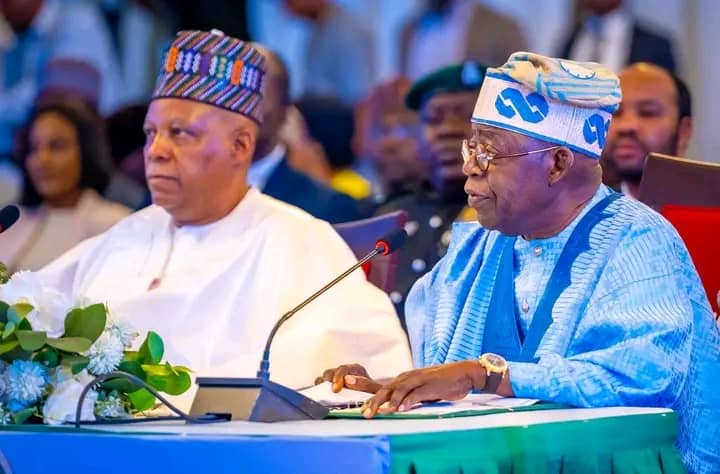
President Bola Ahmed Tinubu on Tuesday night awarded Microsoft co-founder and philanthropist Bill Gates the prestigious Commander of the Order of the Federal Republic (CFR), Nigeria’s second-highest national honour.

The ceremony took place in Lagos in recognition of Gates’ contributions to global health and development through the Bill & Melinda Gates Foundation.

The CFR is reserved for individuals who have made exceptional contributions to Nigeria and humanity at large.

Gates has long supported initiatives in Nigeria, particularly in healthcare, polio eradication, and economic development.

President Tinubu praised Gates for his dedication to improving lives worldwide and reaffirmed Nigeria’s commitment to partnering with global leaders in advancing sustainable development.

NCC directs banks to shift USSD charges to customers’ airtime

By Anas Abbas

Nigerian Communications Commission (NCC) has mandated that deposit money banks (DMBs) cease the direct deduction of charges from customers’ accounts.

Instead, these fees will now be deducted from users’ mobile airtime.This change, effective June 3, 2025, was communicated to customers via an email from the United Bank for Africa (UBA) on Tuesday.

The bank outlined that, in compliance with the NCC’s directive, charges for USSD banking services will no longer be taken from bank accounts but will instead be billed directly to mobile airtime.

According to the UBA’s statement, each USSD session will incur a fee of ₦6.98 for every 120 seconds, a charge that will be processed by the user’s mobile network operator.

Customers will receive a consent prompt at the beginning of each session, and airtime will only be deducted after they confirm their willingness to proceed, provided the bank is available to complete the transaction.

For those who prefer not to use USSD banking under this new billing structure, UBA has indicated that customers can opt out of this service.

Additionally, they can continue to utilize other digital banking options and internet banking platforms for their transactions.

This latest directive appears to be a strategic effort by the NCC to address the long-standing conflict surrounding USSD payments between commercial banks and mobile network operators (MNOs).

In December 2024, the Central Bank of Nigeria (CBN) and NCC had instructed MNOs and DMBs to settle an outstanding USSD debt estimated at ₦250 billion.

The situation escalated in January when telecommunications companies threatened to withdraw USSD services due to unpaid debts owed by banks.

In response, the NCC warned it would suspend USSD services and publish a list of banks that were still in arrears.

On January 15, the regulator ordered telcos to disconnect USSD codes assigned to nine banks by January 27 due to these outstanding debts.

On February 28, MTN Nigeria reported receiving ₦32 billion of the ₦72 billion owed by banks as part of the resolution of this USSD debt issue.

This recent directive marks a pivotal shift in how USSD banking services will operate in Nigeria, potentially benefiting both consumers and service providers in the long run.

FG declares June 6 and 9 public holidays for Eid-el-Kabir

By Maryam Ahmad

The Federal Government of Nigeria has declared Friday, June 6, and Monday, June 9, 2025, as public holidays to commemorate this year’s Eid-el-Kabir celebration.

Announcing the holidays on behalf of the government, Minister of Interior Dr. Olubunmi Tunji-Ojo extended congratulations to the Muslim Ummah both within Nigeria and in the diaspora. 

Dr Tunji-Ojo urged Muslims to embody the spirit of sacrifice and faith exemplified by Prophet Ibrahim (Peace be upon Him) and to use the period to pray for a peaceful and prosperous Nigeria.

In a statement signed by the ministry’s Permanent Secretary, Dr. Magdalene Ajani, the minister assured Nigerians that the people-oriented reforms and initiatives carried out under President Bola Tinubu’s administration’s Renewed Hope Agendaare aimed at restoring Nigeria to progress.

Eid-el-Kabir, also known as Eid al-Adha, is one of the most significant festivals in Islam. It commemorates Prophet Ibrahim’s willingness to sacrifice his son in obedience to Allah’s command. In Nigeria, the festival is marked by prayers, animal sacrifices, and sharing meals with family, friends, and the less privileged.

The declaration of these public holidays allows Muslims across the country to observe the religious rites and festivities associated with Eid al-Kabir.

2027: A gale of defections, eroding opposition and quest for power

By Emeka Blaise Okpara

As the 2027 general elections draw closer, the gale of defections that has rocked the People’s Democratic Party in recent times has thrown those in the current ruling All Progressives Congress (APC) into wild ecstasy. Once the largest political party in Africa, the PDP ran out of luck in 2015 when it lost the presidency to the APC. Before then, the party held power for sixteen years. 

In fact, at the peak of the party’s stronghold in power, the national chairman, Chief Vincent Ogbulafor, boasted in 2008 that the PDP would rule Nigeria for another sixty years. Perhaps lost in the effervescent aplomb of public office, he forgot that the future cannot always be assured. His boisterous vituperation was perceived as the height of braggadocio, a trait synonymous with most Nigerian political elites. 

Many were not surprised when, a few years after this declaration was made, the party started witnessing some implosion within its ranks. The fall of the PDP was masterminded by members of the party who formed an alliance with the opposition, which eventually led to its calamitous loss in the 2015 general elections.

Sadly, the party that once reigned monstrously in Africa’s most populous black nation has become a shadow of itself. Unfortunately for the PDP, since they found themselves out of power, they have not been able to play the role of the opposition because it is not in their DNA to do so, unlike the APC, which was birthed through opposition. 

In fact, it would not be out of place to say that the APC has so mastered the art of opposition that it has even devised means of creating its own opposition within and outside the party to keep any real opposition party at bay through controlled opposition.

With the open declaration of support for Tinubu’s presidency from governors of supposed opposition parties, and the defection of notable figures like the current Governor of Delta State, Mr. Sheriff Oborevwori, and Senator Ifeanyi Okowa, the immediate past governor of Delta State and running mate to Alhaji Atiku Abubakar in the 2023 presidential elections, many in the President’s camp have picked up a trumpet to sound it to whoever cares to listen that President Tinubu is a master political strategist.

As far as those in the President’s camp are concerned, the 2027 presidential election is already in the bag, awaiting to be transported home. In their assessment and assertiveness, nobody can defeat the chief political strategist of our time in the forthcoming elections.

It would be simplistic for anybody to assume that the mere fact that opposition members are trooping into the President’s camp is enough reason to believe that he will have an easy ride into his second term – far from it! If anything, Nigerians should be worried, as such actions only indicate state capture.

Nigerians are well aware of the politics their political office holders play. With the nature of politics played in Nigeria,where stomach infrastructure and personal interest supersede national interest, this junketing shouldn’t be a surprise.  What do you expect from politicians in a land where political parties lack ideologies apart from grabbing power? 

Interestingly, these massive defections should teach Nigerians that there is obviously no difference between the APC and the PDP. These political elites only care about themselves and not the welfare of Nigerians! At a time when Nigerians’ living standards are at an all-time low due to ill-thought-out policies by the Tinubu-led administration, politicians are falling over themselves to dance owambe in the APC. 

To keen observers of the Nigerian political landscape, these mass defections to the APC are nothing short of a defense mechanism employed by the party to give the impression that it is in total control, and for the defectors – whose priority should be governing and serving the people – to have a haven when the chips are down.  Unless on paper, there is no clear evidence that this administration has performed well enough to warrant admiration from the supposed opposition,who now join them in troops.

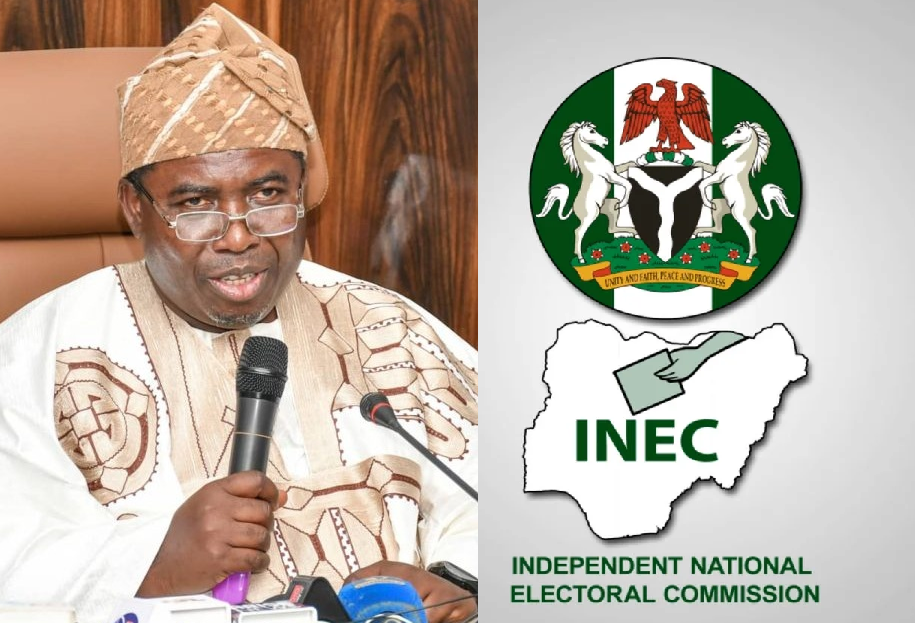
Moreover, the only reason political elites are decamping is that Nigeria has a flawed electoral process where the votes of the electorate do not count. If the so-called independent electoral umpire, INEC, were living up to its mandate, political office holders would learn to be disciplined and understand that only performance can guarantee their election or re-election.

While those who believe that the President is a political strategist continue to bask in his political mastery, one is compelled to ask why he has not been able to apply his strategy effectively in governance. Politics, according to Plato, should be for the common good. Nigerians would love to see and benefit from President Tinubu’s acclaimed strategy. 

Political strategy should not begin and end with seizing power. Where is his strategy for overhauling the economy since he assumed the presidency? Are Nigerians better off today than they were three years ago? Why hasn’t he employed his renowned strategy to tackle the nation’s insecurity? Or has the security of lives and property ceased to be the government’s primary responsibility? Where is his plan for reliable power, and why must Nigerians pay excessively for unstable electricity? Don’t we need his strategy for quality healthcare facilities? These vital sectors urgently require his strategic attention!

It would be ludicrous for anyone to believe that the future of Nigeria is solely in the hands of the political officeholders. Whether or not anyone wants to believe it, 2027 is still a long time off. Though Nigerian politicians are always thinking of the next elections, and not how to better the lives of their citizens, they must realise that the political dynamics can change anytime. 

General Sani Abacha was almost certain of becoming a civilian president in 1996. He had convinced all the key political actors of the time to endorse his presidency, and everything was working for his good, but fate had other plans. 

The only thing that will guarantee any political office holder a re-election in a constitutional democracy like ours is performance! A second term in office is like a referendum on an individual’s first term. The power to elect still rests with the people and not with politicians, except that we are no longer a democracy. 

If President Bola Ahmed Tinubu is keen on his second term, he should up his game. If he is unaware, someone should inform the President that Nigerians are not having it easy. Instead of focusing on the 2027 reelection in 2025, he should take advantage of the remaining two years of his first term in office to show his work. PR without performance is pure propaganda!  

A working Nigeria benefits all, irrespective of religion or tribe. Nigerians are groaning under his knee-jerk policies, which have plunged a vast majority of citizens into penury. More than ever, this is when Nigerians expect to feel the impact of his much-trumpeted strategy. Nigerians want to see evidence beyond the rhetoric.

Blaise Emeka Okpara, a student at the International Institute of Journalism, writes from Abuja and can be contacted at: emyokparaoo1@gmail.com

Crashing food prices the wrong way

By Zayyad I. Muhammad

In 2024, President Bola Ahmed Tinubu granted duty waivers for the importation of key food items such as rice, maize, wheat, sorghum, and others. This decision was intended to tackle soaring food prices and has indeed led to a significant drop in the prices of food commodities.

Yesterday, Friday May 15th 2025, the Chairman of BUA Group, Abdul Samad Rabiu, announced that his company is intensifying efforts to further reduce the prices of rice and other essential commodities. While this gesture may appear patriotic and commendable, it raises critical questions: Is Abdul Samad a farmer? Shouldn’t such statements about food pricing and availability come from actual farmers and those directly involved in food production?

To be fair, the massive and often irrational hoarding of food items by middlemen has created artificial scarcity and price hikes, which may have prompted  the  government intervention and Abdul Samad’s statement . However, these  efforts, though well-intentioned, highlight a deeper, systemic problem that cannot be solved by importation alone. 

The government’s current approach, focused on crashing food prices through imports, is hurting local farmers and ultimately unsustainable.

While reducing food prices is essential for national food security and the wellbeing of ordinary Nigerians, the pathway to achieving this goal must be rooted in empowering local producers. Farmers are the real drivers of food affordability. Without supporting them, any temporary relief brought by food imports will ‘collapse’ the local economy under the weight of neglected domestic agriculture.

President Tinubu should prioritize policies that strengthen local agricultural capacity. This includes granting duty waivers not just for imported food, but more importantly for farm inputs, such as seeds, fertilizers, equipment, and agrochemicals. Supporting local agrochemical manufacturers and agromerchant firms will boost productivity and reduce dependence on foreign inputs.

Moreover, providing farmers with easy access to affordable loans is critical. Many smallholder farmers lack the capital to invest in modern tools or expand their operations. Through targeted financing and robust extension services, the government can unleash the full potential of Nigeria’s agricultural sector. Though many farmers and officials have abused several well-intentioned government incentives for agribusinesses. 

If current policies continue to favor food importation over local production, the consequences could be dire. The economy may suffer, and Nigeria’s food security will become dangerously dependent on foreign nations. This dependency not only undermines national sovereignty but also exposes the country to global agricultural market shocks.

Agriculture remains an important sector of Nigeria’s economy. Farmers contribute roughly 25% to the nation’s GDP. It is also the largest employer of labor, with over 25 million people, about 30.1% of the total workforce engaged in the sector. According to the Food and Agriculture Organization (FAO), more than 70% of Nigerians participate in agriculture in some form. 

Clearly, supporting local farming is not just about food, it is about livelihoods, national development, and economic stability.

Cheaper food prices are indeed crucial for Nigeria’s survival, but they must be achieved the right way, through robust, self-reliant, and locally-driven food production. Supporting and scaling small, medium large-scale farming across the country will naturally lead to lower prices, eliminate hoarding, increase food exports, and align with the Tinubu administration’s stated “Nigeria First” policy.

Food imports is a short-term fixes, now is the time to shift from to long-term solutions,

by putting farmers at the center of President Tinubu’s government food policies and programs 

Zayyad I. Muhammad writes from Abuja via zaymohd@yahoo.com.

Does “live” matter more than lives?

By Firdausi Abubakar

On Friday, May 10th, 2025, Abuja witnessed a tragic accident involving a fire truck and a car carrying four young boys. The scene was devastating, bodies sprawled, metal crushed, and flames smouldering. But even more disturbing was the crowd that quickly gathered, not with medical kits or a sense of urgency to save the lives of the victims, but with phones raised, recording, streaming, and snapping pictures. “Live on the scene”, some captioned, while actual lives slipped away.

This isn’t just an Abuja problem. It’s a moral crisis growing across Nigeria. From Lagos to Kano, Enugu to Port Harcourt, and others, a familiar sight follows whenever an accident or violent incident occurs: dozens, sometimes hundreds of people filming rather than helping.

In March 2025, during a brutal fight between cult groups at a university in the South-West, students stood around with their phones in hand. No one intervened. No one called for help. But the footage of the fight went to TikTok, Instagram, and X within minutes.

The question is haunting: has going live become more important than saving lives?

Moreover, it’s easy to point fingers at bystanders. But Nigeria’s systemic failures have created a dangerous environment where compassion is punished and apathy is rewarded.

In most parts of the country, there’s no reliable emergency line. Calling for help is often futile, lines don’t go through, operators are untrained, or help arrives late. Even the trauma centres, where they exist, are few, underfunded, and poorly equipped. Worst of all, those who try to assist victims often find themselves entangled with law enforcement.

In Nigeria, it’s a common habit for a Good Samaritan to be detained as a suspect, harassed, or extorted by the police. This fear is compounded by a lack of trust in the justice system and has led many to do nothing. Or worse, to choose content creation over human compassion.

We now live in a time where everything is content. People rush to be the first to post, the first to trend, the first to go viral. But this obsession with clout has come at the cost of our humanity.

The Abuja fire truck accident is a painful example. Witnesses say the four young men may have survived had they been pulled from the wreckage sooner. But instead of taking action, people stood by, filming, posting and watching. Their final moments were broadcast to the world while help was delayed.

Nigeria urgently needs to fix its broken emergency response system. We need working, responsive hotlines, trained emergency responders, and functioning trauma centres. The government must also create and enforce laws that protect those who help, so citizens won’t be afraid to do the right thing.

But beyond policy, we must confront a cultural shift. We must remind ourselves and our communities that no number of likes, shares, or views is worth more than a human life. Helping someone in need shouldn’t be optional; rather, it should be instinct.

Before you press record, ask yourself: Would I rather save a life or capture a moment?

Firdausi Abubakar, is a student of Information and Media Studies, Bayero University Kano. She can be reached via fizzyabubakar@gmail.com.

Renewed hope in motion: Tracking the NHF impact

By Oladoja M.O

In a country where bold promises often fade into political noise, something refreshingly different is happening. A movement that started quietly, with little fanfare, is now humming with purpose, momentum, and an energy that cannot be ignored. The 774 National Health Fellows programme (NHF) initiative, launched a few months ago by President Bola Ahmed Tinubu, is not just another government announcement lost in the pages of bureaucracy but a living force, a symbol of action, and a spark rapidly becoming a flame.

At its core, the programme is a strategic investment in youth leadership for health, designed to place one young, vibrant fellow in every local government area across the federation. But what sounded like a brilliant idea on paper has quickly become bigger, bolder, and beautifully human. Under the coordination of the Sector-Wide Approach Secretariat, the NHF initiative is reshaping what grassroots health intervention looks like. 

The young professionals are not just observing the system but are being immersed in it and studying the core concepts of public health, data analytics, and leadership. As of April 30th, it was made public that they had already completed over 73 per cent of their assigned learning modules. That is such a fantastic feat, Signalling that these young Nigerians are hungry to learn, ready to lead, and prepared to deliver.

Beyond the e-learning, every fellow has been paired with an experienced health sector mentor, creating powerful bridges between knowledge and action. Available information showed that over 2,100 structured mentorship engagements have taken place, alongside more than 6,000 follow-up calls to troubleshoot, guide, and refine their experience in real time. This showcases what mentorship with muscle and real grooming looks like.

Moving forward, another exciting phase is here. The Capstone projects. Showing that these fellows are not just learning and listening. They are launching. They are mapping the real health challenges in their communities and crafting innovative, locally tailored solutions. This is outlined as far from the usual cut-and-paste interventions. Indeed, these are not just symbolic gestures. Rather, seeds of lasting change. A blueprint for the kind of youth engagement that works, and not just a flash in the pan.

Much credit must go to the Honourable Minister of Health, Professor Muhammad Ali Pate, who has done more than supervise. He has inspired. With every update, he speaks with authority and visible passion for the possibilities this programme unlocks. His hands-on leadership reminds us that good governance is not about policies alone, but people. Not about titles, but tangible results. The collaboration with local government leaders, traditional rulers, and State Commissioners for Health has ensured the programme’s success. Together, they have ensured that the fellows are not strangers in their host communities. They have been welcomed, embraced, and empowered to act. Their presence has been described as transformative, and rightly so.

As we hail progress so far, a big focus on sustainability must be the centre of thought. The NHF programme must not end as a one-time experiment. It must become institutionalised. The structure is already in place. The model is working. The results are rolling in. The political and budgetary will to scale this from pilot to permanent remains. The impact of new cohorts of fellows being trained yearly would be tremendous. The ripple effect of turning these 774 fellows into thousands over the next decade will be epic. Nigeria would not just be training health professionals. It would generate problem solvers, data warriors, and service-driven leaders. 

More importantly, the data collected by these fellows across LGAs must be treated as a goldmine. All the information must be analysed, shared, and applied to shape more innovative and targeted policies, responsive budgeting, and real-time decision-making. As time goes on and more capstone projects unfold, we will witness a subtle but decisive shift in our health governance story. 

When young people are not just beneficiaries of change, but creators of it, the shift cannot be undervalued. When they are not just consulted, but trusted. When they are not just inspired, but given the steering wheel.

Even though Nigeria’s health system still has other challenges, even though the journey is long, this initiative is proof that with the right strategy and the right people, progress will not just be a possibility in the abstract. It will become a happening event—something visible, something contagious.

Renewed Hope in Motion is not just a slogan but a movement. A youth-led revolution quietly takes shape in every LGA, one fellow at a time. It is the sound of a country remembering how to believe again. 

And best of all, it is only just getting started.

Oladoja M.O writes from Abuja and can be reached at: mayokunmark@gmail.com