Nigeria

Troops foil bandits’ attack, neutralise one terrorist in Kaduna

By Sabiu Abdullahi

Troops of 1 Division, Sector 1 of Operation FANSAN YAMMA, have foiled a bandit attack and neutralised one suspected terrorist during an operation in the Maraban Rido area of Kaduna State.

The operation followed a distress call received late on January 22, 2026, which reported the presence of armed bandits who had rustled livestock in Anguwan Fulan village within the Rido axis.

Acting on the information, troops moved quickly to the area to set up a snap ambush.On arrival, the troops encountered the fleeing bandits and engaged them with superior firepower.

This forced the attackers to retreat in disarray, with several sustaining gunshot wounds. The troops later extended the operation to nearby forested areas, including the Kankomi forest.

Another encounter occurred around Anguwan Sarki, which was identified as a suspected crossing point.

During the clash, the troops again overwhelmed the terrorists with heavy fire. The criminals abandoned the stolen livestock and fled the area. Some of the rustled animals were recovered during the operation.

Further exploitation of the ambush location in the early hours of January 23, 2026, led to the neutralisation of one terrorist. Troops also recovered two AK-47 rifles, four magazines, and fifteen rounds of 7.62mm special ammunition.

The General Officer Commanding 1 Division of the Nigerian Army and Commander of Sector 1, Operation FANSAN YAMMA, Major General Abubakar Sadiq Mohammed Wase, commended the troops for their bravery and professionalism during the encounter.

He urged them to maintain the momentum of operations against criminal elements and their hideouts.

The GOC reassured members of the public of the military’s unwavering commitment to protecting lives and property. He also called on citizens to continue providing timely and credible information to security agencies.

The update was signed by Bello Nuradeen, Captain and Acting Staff Officer Grade 2, Community Relations, Army Public Relations, 1 Division Nigerian Army, Sector 1, Operation FANSAN YAMMA.

Niger detains DW Hausa correspondent

By Muhammad Abubakar

Authorities in Niger have detained DW Hausa journalist Gazali Abdou Tasawa and placed him in Niamey Central Prison following a court summons on Thursday, January 22, 2026. The journalist appeared before the public prosecutor at the Niamey High Court for questioning related to a video report he produced.

The report highlighted the difficult living conditions of refugees from Katsina State in northern Nigeria who have sought refuge in Niger. However, no official statement has yet been issued detailing the specific charges against the journalist.

The detention has raised concerns among media observers and press freedom advocates, particularly regarding the treatment of journalists reporting on humanitarian and refugee issues in the region.

Kano court remands cleric over alleged land document forgery

By Sabiu Abdullahi

A Magistrate Court in Kano State has ordered the remand of a popular Islamic cleric, Ibrahim Makwarari, over allegations of forgery linked to land ownership documents.

Mr Makwarari appeared before Magistrate Court No. 53, sitting at Normansland, Kano, on Wednesday. He is facing charges bordering on illegal possession of land and forgery of land documents in connection with two properties located along Ahmadu Bello Way in the Kano metropolis.

The charges were filed by the police after a petition submitted by the Kano State Ministry of Land. The ministry alleged that the cleric forged title documents that were originally issued in the names of Kassim Usman Baba and Audu Yaro Fagge.

According to investigators, the disputed documents were recovered from the defendant. The police stated that Mr Makwarari failed to give a satisfactory explanation concerning the authenticity of the documents.

When the charges were read in court, the defendant pleaded not guilty.Counsel to the defendant, A. T. Shehu, applied for bail and assured the court that his client would be available for trial. The prosecution counsel, Nura Salisu, opposed the request.

Mr Salisu told the court that the defendant had previously ignored police invitations and was arrested only after a specific court order was issued.

In his ruling, the magistrate, Mustapha Datti, granted bail to the defendant in the sum of ₦20 million with two sureties. The court directed that the sureties must include a district head from any local government area in the state, supported by an official letter from the relevant Emirate Council, and a Kano-based businessman with verifiable property.

The magistrate also ordered the defendant to submit his international passport to the court. Both sureties are required to provide recent passport photographs.

Mr Datti further ruled that the defendant should be remanded in a correctional facility until all bail conditions are met.

The case was adjourned to 12 February for hearing.

Major Al-Mustapha cleared as supreme court dismisses Lagos murder case

By Abdullahi Mukhtar Algasgaini

The Supreme Court has definitively ended the murder trial of former Chief Security Officer, Major Hamza Al-Mustapha (rtd), over the 1996 killing of Kudirat Abiola, wife of the acclaimed winner of the June 12, 1993 presidential election, MKO Abiola.

In a unanimous ruling on Friday, the apex court dismissed the case, citing Lagos State’s complete abandonment of the appeal.

Justice Uwani Aba-Aji, presiding, noted that the state had failed to take any legal steps for over nine years despite being granted permission in 2014 to challenge an appellate court’s decision.

Lagos State, which had sought to overturn Al-Mustapha’s 2013 acquittal by the Court of Appeal, was absent from the proceedings and had filed no documents since the Supreme Court’s 2014 order gave it a 30-day window to act.

Al-Mustapha’s counsel, Paul Daudu, successfully argued that the state had lost all interest, urging the court to dismiss the matter entirely.

“The appellant has abandoned the case,” Justice Aba-Aji declared, stating that nine years was more than sufficient for Lagos to pursue the appeal.

The court also expressed displeasure that the state offered no representation or explanation despite receiving hearing notices since 2020.

This ruling seals the legal saga that began with Al-Mustapha’s 2012 death sentence by a Lagos High Court for his alleged role in Kudirat Abiola’s murder, a sentence overturned on appeal in 2013 due to insufficient evidence.

The Supreme Court’s dismissal closes the final chapter, affirming Al-Mustapha’s acquittal.

NERDC debunks claims of religious exclusion in revised school curriculum

By Uzair Adam

The Nigerian Educational Research and Development Council (NERDC) has dismissed claims circulating on social media that the newly revised Basic and Senior Secondary Education Curriculum excludes religious subjects, describing the information as false and misleading.

In a statement signed by its Executive Secretary, Professor Salisu Shehu, the Council said it was responding to allegations by “some people” who claimed that the new curriculum made provision for Christian Religious Studies (CRS) alone, with no space for Islamic Studies (IS), while others alleged the reverse.

According to NERDC, both claims amount to disinformation and do not reflect the approved curriculum.

The Council clarified that the revised curriculum, developed under the Federal Ministry of Education’s National Education Sector Initiatives (NESRI), clearly provides for both CRS and Islamic Studies at all relevant levels of basic and senior secondary education.

It explained that the subjects are offered on the basis of pupils’ religious affiliation, with CRS designated for Christian pupils and Islamic Studies for Muslim pupils.

Contrary to previous practice where religious studies were largely optional, NERDC said the revised curriculum accords greater importance to religious education by making it a consistent component of learning from Primary One through Senior Secondary School Three.

“The claim that either CRS or Islamic Studies has been removed from the curriculum is completely false,” the Council said, noting that the approved subject offerings comprehensively accommodate both religions in line with Nigeria’s plural society.

According to the Council, the curriculum review was designed to streamline content, reduce overload and improve learning outcomes, while still ensuring balance across sciences, humanities, vocational studies and religious education.

It added that the Federal Ministry of Education has officially released the list of approved subjects for all levels, and that any other versions in circulation are unauthentic.

NERDC explained that at the basic education level, pupils are required to study a broad mix of core subjects alongside either CRS or Islamic Studies, while at the senior secondary level, both subjects are clearly listed among the humanities offerings.

However, science, technology and commercial students that are interested in offering CRS and IRS can pick them as elective.

This, it said, demonstrates that the curriculum council adopted an inclusive and comprehensive approach rather than favouring one religious subject over another.

Professor Shehu urged parents, teachers and other stakeholders to ignore “fake and unauthorised” subject lists circulating online, warning that such misinformation could cause unnecessary confusion and tension.

He said the Council is already planning nationwide sensitisation and teacher capacity-building programmes to support smooth implementation of the revised curriculum.

He further explained that implementation will begin at the start of each three-year education cycle—Primary One, Primary Four, JSS One and SS One—whenever the revised curriculum is introduced.

NERDC assured the public that the revised curriculum reflects national values, respects religious diversity and remains focused on improving the quality and relevance of education across the country.

FG moves to end HND–B.Sc divide, grants polytechnics degree-awarding powers

By Uzair Adam

The Federal Government has announced plans to abolish the long-standing dichotomy between Higher National Diploma (HND) and university degrees by empowering polytechnics to award degrees, a reform aimed at repositioning technical and vocational education as a key driver of national development.

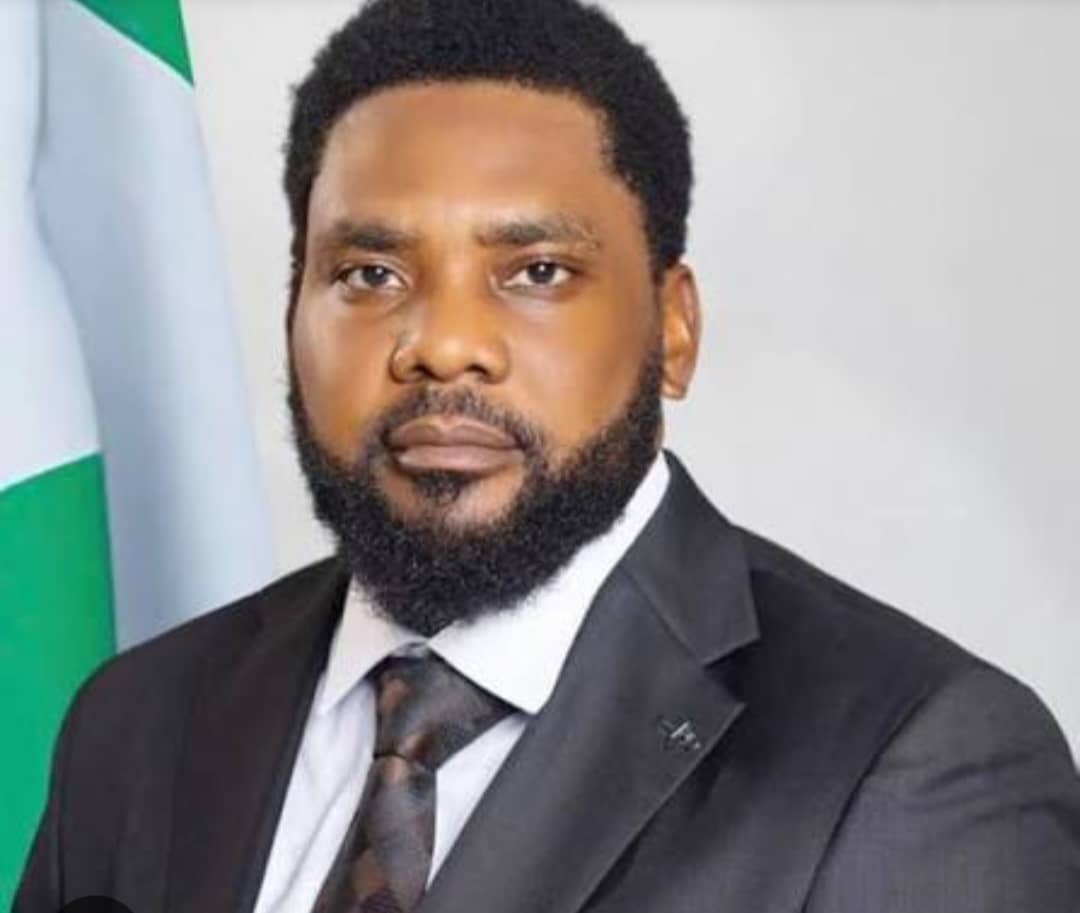
The Minister of Education, Dr. Tunji Alausa, disclosed this on Wednesday in Abuja while addressing a high-level retreat of council chairmen, commissioners of education, rectors, registrars and bursars of polytechnics across the country.

Describing the move as a landmark policy shift, the minister said the reform would end decades of discrimination against polytechnic graduates and reposition the institutions as centres of excellence within Nigeria’s higher education system.

He explained that the initiative would strengthen polytechnic education while preserving its core advantage of hands-on, industry-oriented training.

According to Dr. Alausa, Nigeria’s future competitiveness depends largely on a workforce capable of creating, building and solving real-world problems.

He added that the policy was in line with President Bola Ahmed Tinubu’s Renewed Hope Agenda, which prioritises job creation, industrial growth and human capital development.

With the new degree-awarding status, polytechnics are expected to attract stronger industry partnerships, improved funding opportunities and increased public confidence.

The minister assured stakeholders that the transition would be guided by clear standards, strong regulation and robust quality assurance mechanisms to ensure global competitiveness.

Speaking on the theme, “Transforming Polytechnic Education in Nigeria: Innovation, Good Governance and Sustainability for National Development,” Dr. Alausa noted that polytechnics remain critical to building a skills-driven economy.

He said the ministry had placed priority on Technical and Vocational Education and Training (TVET) to ensure graduates are industry-ready, innovative and capable of driving economic growth.

He urged polytechnic leaders to promote innovation through entrepreneurship centres, research hubs and strong industry linkages, identifying renewable energy, agri-technology, digital manufacturing and climate-resilient solutions as key priority areas.

On governance, the minister warned that transparency, accountability and ethical leadership must define the new era of polytechnic administration.

He called for fiscal discipline, timely audits, prudent management of resources and zero tolerance for corruption.

Dr. Alausa also emphasised sustainability, encouraging institutions to boost internally generated revenue through production and services, develop eco-friendly campuses and build resilient infrastructure.

Polytechnics, he said, should aim to produce what they consume and contribute to reducing Nigeria’s dependence on imports.While acknowledging challenges such as funding gaps, outdated facilities and societal bias in favour of university degrees, the minister maintained that the opportunities ahead were far greater.

He reaffirmed the federal government’s commitment to supporting polytechnics through policy reforms, infrastructure upgrades and strategic partnerships.

He further announced a special TETFund intervention this year to upgrade engineering schools in polytechnics with modern equipment, following a similar intervention for 12 medical colleges last year.

Charging participants to return to their institutions as agents of change, Dr. Alausa said, “The future of our youth, our economy and our nation depends on the transformation we ignite here today.”

Education experts at the retreat described the announcement as a turning point, noting that it would boost enrolment, motivate students and staff, and enhance the contribution of polytechnics to sectors such as manufacturing, technology, agriculture and renewable energy.

Neighborhood residents who spread false claims about murdered mother, six children exposed by police

By Abdullahi Mukhtar Algasgaini

The Kano State Police Command has finally identified and exposed individuals from the local community who failed to assist Fatima Abubakar and her six children while they were alive, but later took to social media to spread fabricated stories after the family was tragically murdered.

The police spokesperson, Abdullahi Haruna Kiyawa, revealed this development in a short video posted on his official Facebook page.

The video featured the implicated individuals, alongside a stark caption that translates to: “It’s easy to be brave after the deed! You refused to help the woman and her children, only to come and weave lies.”

This statement directly contradicts earlier sensational claims made by these residents, who had given conflicting accounts to the police before presenting a different narrative on social media.

The police action aims to set the record straight and condemn the exploitation of the tragedy for attention.

The case of Fatima Abubakar and her six children, who were all killed, has shocked the state.

The police have reiterated their commitment to the investigation and warned against the circulation of unverified information that can hinder justice and cause further pain to the bereaved.

Truck rollaway in Gombe leaves two dead, six injured

By Abdullahi Mukhtar Algasgaini

A fatal road crash claimed two lives and left six others seriously injured on Tuesday night along the Gombe–Yola Road.

The incident occurred around 10:20 pm at New Mile 3, near the entrance to the main dual carriageway. Preliminary investigation by authorities points to negligence by the driver of a heavy-duty truck loaded with rice.

Ambassador Yusuf Danbayo, Senior Special Assistant on Security Matters, confirmed that the truck was improperly parked with its handbrake not fully engaged. It subsequently rolled uncontrollably, colliding with a Toyota Hilux and striking several individuals at the scene.

The two deceased victims were pronounced dead on arrival and deposited at the Specialist Hospital, Gombe. Six injured persons received emergency care at the Federal Teaching Hospital.

Police have arrested the truck driver, who is currently held at the Tumfure Police Division pending transfer for further investigation and prosecution.

Authorities have advised motorists, especially drivers of heavy vehicles, to exercise utmost caution when parking on major highways to avoid similar tragedies.

When silence kills: Lessons from Kano’s daylight tragedy

By Ibrahim Aliyu Gurin

What is more terrifying than violence? It is the sound of someone calling for help, with no one responding. That cry, unanswered, is the quiet horror that haunts our communities.

Last week in Kano, a family was killed in broad daylight. Neighbours reportedly heard the screams but stayed indoors. Outrage spread on social media. How could people hear such suffering and do nothing? How could an entire community remain silent while lives were being taken right next door?

At first, the silence felt unforgivable. Then I remembered something my Media and Society lecturer, Binta Suleiman Gaya, once said: crime is rarely about criminals alone. It is often a mirror of the society that allows it. Suddenly, the tragedy began to make painful sense.

I thought of my own experience. We grew up in a different Nigeria. Then, whenever discipline crossed into anger in our house, our neighbour was always the first to intervene. Once her name was mentioned,  “Hajja Mamma Yidam! Yidam!” (Rescue me), she would rush out immediately, pleading on our behalf. Sometimes we would deliberately call her name, knowing she would come to our rescue. That was how our society functioned. Not because everyone was perfect, but because everyone was involved.

We grew up in Nigeria, where even if a neighbour was beating a child, people would rush out to ask questions. Elders would intervene. Women would shout across fences. Youths would gather instinctively. No cry was ignored. No pain was considered private. That society shaped our humanity.

Today, a person can scream until their voice disappears into death, and doors remain locked. People now live only metres apart, yet are emotionally separated by fear. In Media and Society,  this condition is described as “alienation”, which is the gradual breakdown of social connection and communal responsibility.

Modern media culture has accelerated this separation. Through phones, television and social platforms, we are exposed to violence such as daily killings, kidnappings, and accidents, which are endlessly replayed. Human suffering now competes for attention in timelines and headlines.

Over time, this constant exposure creates “desensitisation”. What once shocked us now barely interrupts our scrolling. Tragedy becomes routine. Death becomes familiar. Media and Society argues that when violence becomes normalised in the media, society unconsciously absorbs that normalisation.

Alongside this is the rise of individualism. Survival has become personal. Safety has become private. The collective spirit that once defined African communities has been replaced with the logic of “mind your business.”  So when danger appears, people retreat indoors, but not always out of wickedness, but because society has trained them to think first of self, not community.

The course also explains the bystander effect, a psychological phenomenon in which individuals fail to act in emergencies because responsibility feels shared. Everyone assumes someone else will intervene. In moments like the Kano tragedy, everyone heard, and everyone waited.

Fear worsens this silence. Media reports of mob justice, wrongful arrests and police brutality have created deep public distrust. Many citizens now fear becoming suspects more than becoming helpers. The result is a society paralysed.

Media and Society helped me understand that insecurity is not only about criminals and weapons. It is also about broken trust, weakened communal values and a media environment that has reshaped human behaviour.

Our old society relied on communal vigilance. When danger came, the community itself became the first responder. Today, citizens wait for institutions that often arrive too late. The killers in Kano did not act alone. They were aided by fear and protected by our silence. 

The government must rebuild trust between citizens and security agencies. Community policing must be strengthened. Media institutions must go beyond reporting bloodshed and begin promoting empathy, social responsibility and communal vigilance. Religious and traditional leaders must revive the values that once made indifference shameful.

Beyond policies lies humanity. Every life lost affects us all. Speak up, protect your neighbours, and restore the community we once had.

We pray for the souls of those who lost their lives in Kano. May their families find strength, and may we as a society learn to act before it is too late. Let their cries not be in vain.

Ibrahim Aliyu Gurin wrote via ibrahimaliyu5023@yahoo.com.

Zamfara ambush claims six security forces in clash with terrorists

By Abdullahi Mukhtar Algasgaini

Troops in Zamfara State demonstrated “exceptional bravery” but suffered significant losses during a terrorist ambush over the weekend, military authorities confirmed.

The incident occurred on January 19, 2026, along the Bingi–Kekun Waje–Gusau Road. Soldiers from Operation FANSAN YAMMA (OPFY) were returning from a series of successful offensives and responding to a distress call when they were attacked at Gidan Wagni.

Despite the surprise assault, the troops fought back, preventing the attackers from reaching nearby communities. The engagement, however, came at a high cost, with five soldiers and one police officer killed.

Reinforcements, including a Mobile Strike Team and a Quick Reaction Force personally led by a Brigade Commander, swiftly mobilized to the scene. A counter-ambush forced the terrorists to withdraw.

Credible intelligence suggests the fleeing terrorists suffered heavy casualties, with notorious kingpins JANWUYA and ALHAJI BELLO—a top lieutenant to bandit leader KACHALLA SOJA—seriously injured.

The ambush followed a major three-day operation from January 17-19, where troops raided terrorist enclaves in Birnin Magaji and Anka. Those earlier operations led to three arrests, four terrorists killed, and the recovery of a cache of weapons, including a PKT machine gun, five AK-47 rifles, and communication radios.

The Theatre Commander has condoled with the forces and commended their courage. Operation FANSAN YAMMA assures the public that the situation is under control and has urged citizens to continue supporting security efforts with timely information.