Nigeria

Tinubu vows to proceed with new tax laws despite public opposition

By Anas Abbas

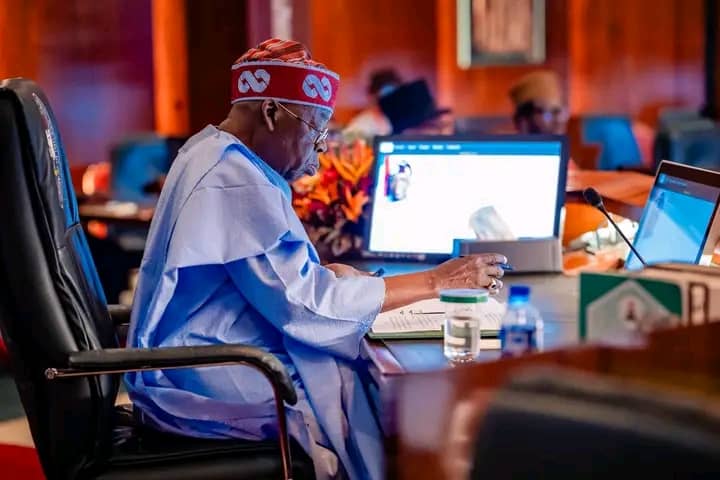
President Bola Ahmed Tinubu has maintained that the federal government will go ahead with the enforcement of the newly enacted tax laws legislation as scheduled, dismissing calls for a delay amid widespread debate and criticism.

In a statement issued from the State House on Tuesday, December 30, 2025, the President made clear that the new tax framework which includes measures that already took effect on June 26, 2025 and others set to begin on January 1, 2026 will be implemented in full and on time.

Describing the reforms as a “once-in-a-generation opportunity” to strengthen Nigeria’s fiscal architecture, Tinubu stressed that the laws are intended to reset the country’s revenue system, promote fairness, and enhance economic competitiveness. He rejected claims that they are designed to raise the overall tax burden on citizens.

The Presidency acknowledged the ongoing public discourse surrounding allegations that the officially gazetted versions of the tax laws differ from those passed by the National Assembly, but maintained that no substantial legal flaw has been established that would justify halting the roll-out.

Tinubu urged Nigerians and all stakeholders to support the implementation phase, which he said is now firmly underway, and emphasized his administration’s commitment to due process and the integrity of duly enacted laws. He also pledged to work closely with the National Assembly to resolve any issues that may arise during implementation.

The announcement comes amid growing pressure from various groups including student associations and opposition voices who have called for suspension of the commencement date pending thorough review and public sensitization.

The lie called “One Nigeria”

By Oladoja M.O

There comes a point in every nation’s existence when it must interrogate the very myths that forged its being, and it appears Nigeria has reached that juncture. “One Nigeria”, a slogan as old as our independence, repeated in classrooms, parliaments and pulpits alike, has gradually morphed from a patriotic creed into a hollow incantation that adorns speeches, but no convictions. A rhetoric that unites in sound but not in substance. And yet, like an overused balm, it is still generously applied to wounds that have long become septic.

When the British, in their cartographic arrogance, decided that the roaring rivers of the Niger and Benue could somehow dissolve the ancestral boundaries of a hundred nations into a single name, they planted both a promise and a peril. The promise was the strength of size, the illusion that numerical vastness equals greatness. The peril, however, lay in presuming that different civilisations, with their own gods, economies, memories, and destinies, could be hammered into a coherent polity without a shared philosophy of being. What emerged was less a federation of equals than a fragile patchwork held together by coercion and cliché.

History is replete with examples of states that mistook enforced coexistence for genuine unity. The Soviet Union once imagined that the subjugation of difference equalled solidarity until it collapsed under the weight of its own contradictions. Yugoslavia thought nationalism could be suppressed by ideology until ethnic passions burned Sarajevo into ash. Even Sudan, our continental cousin, insisted on an indivisible state until the centre could no longer contain the centrifugal cries for dignity and recognition, and the South tore itself free in a baptism of blood. Each of these polities preached “oneness,” but none could manufacture mutual trust. Unfortunately, Nigeria’s situation, though cloaked in democratic pretensions, bears an unnerving resemblance.

Decades after independence, we continue to stagger under the illusion of unity while exhibiting every symptom of division. Our politics remains a theatre of tribal anxieties. Our economy, a contest of regional grievance. Our institutions, battlegrounds of exclusion and suspicion. Every census, every election, every policy debate collapses into the arithmetic of ethnicity. We have created a federation in name, but a feud in practice. The Nigerian state, like a badly tuned orchestra, plays the anthem of unity while each instrument screams in its own discordant key.

What has deepened the tragedy is not merely that we are divided, but that we have learned to romanticise our dysfunction. The myth of “One Nigeria” has been elevated to the level of moral blackmail, as though questioning it were heresy. Yet, the facts are unflinching. From the coups and counter-coups of the 1960s, to the Biafran war that drenched this soil in youthful blood; from the endless agitations of the Niger Delta, to the violent insurgencies of the North, and the secessionist murmurs of the East, we have been a nation perpetually negotiating its own existence.

Even now, in the twenty-first century, the markers of mistrust remain, only deepened by new forms of betrayal. We have witnessed, time and again, how national security efforts are quietly sabotaged by regional sympathies where the pursuit of peace against terror becomes a political chessboard, and those who menace the state are garlanded as champions in their communities. In some quarters, it has almost become an identity to excuse barbarity in the name of kinship, to embrace those who burn the nation’s fabric as heroes rather than outlaws.

There are regions where individuals, through their character and conduct, have dragged the nation’s image into global disrepute, staining the diplomatic standing of millions, and forcing the country to spend years rebuilding bridges of trust with the international community. Elsewhere, the spirit of entitlement fosters a belief that governance is a turn-by-turn inheritance, that “it is our time now,” and so positions of influence must rotate along bloodlines and geography rather than merit. Even the recent rumblings of military adventurism, the whisper of coup sympathies and their architects seem disturbingly traceable to predictable corners of the polity, confirming that our divisions have not merely survived time; they have evolved.

Thus, we remain a country trapped in its contradictions: differential justice, uneven development, selective outrage, and an ever-widening gulf between the governors and the governed.

How then do we continue to recite the catechism of unity with straight faces? When the “one” in “One Nigeria” has become a question rather than a statement. For unity cannot be decreed by constitutions nor enforced by soldiers; it must be earned by fairness, equity, and mutual respect. When a nation’s prosperity is monopolised by a few, when power circulates within predictable bloodlines, when regions are treated not as partners but as provinces, the rhetoric of unity becomes an insult to intelligence.

We deceive ourselves with patriotic songs while ignoring the dissonance in our reality. The world is changing; nations are redefining themselves in pursuit of justice and balance. Ethiopia, after decades of internal conflict, restructured its governance to reflect its ethnic federalism. The United Kingdom, once rigidly centralised, conceded autonomy to Scotland, Wales, and Northern Ireland to preserve its union. Even Belgium, split by language and identity, discovered that devolution was the price of stability. In each case, political maturity triumphed over sentimental unity. Why then should Nigeria, with its far deeper pluralities, cling to a system that has neither delivered prosperity nor peace?

It is at this critical juncture that Nigeria must summon the courage to confront itself, not with nostalgia or denial, but with truth and pragmatism. The time has come for an honest national conversation, a sober rethinking of our structure, values, and vision. We must ask: What truly binds us, and on what terms should we continue this union? This is not a call to disintegration, but to redefinition. 

If genuine unity is to be sustained, it must be built on a framework that reflects our peculiarities rather than suppresses them. Perhaps it is time to revisit the foundations of our federalism to decide, through dialogue and consensus, whether the present centralised model still serves our collective good.

If what we need is a restructured federation that grants greater autonomy to regions, then let us pursue it with sincerity. If what we require is a return to a confederation that allows each region to govern according to its social and economic realities, then let the people decide it freely. And if, after exhaustive dialogue, it becomes clear that coexistence itself has become unsustainable, then perhaps peaceful dissolution negotiated with maturity and justice may be the truest form of unity left to us.

Whatever the outcome, silence and pretense can no longer suffice. We must choose between a future defined by courage or a decline defined by denial.

It is time to stop pretending that unity is sacred when it has become suffocating.

If we refuse to confront this reckoning, we risk learning, as others have, that when unity becomes a prison, freedom will break the walls. For now, the cracks are visible in our rhetoric, our regions, our republic. Whether they widen into collapse or are sealed with courage depends on our collective honesty. But one thing is certain: the chant of “One Nigeria” will not save us if it continues to mean nothing more than silence in the face of inequality.

Until we replace illusion with justice, and ideology with sincerity, we will remain what we are, a country yoked together by history, but not joined by purpose.

Oladoja M.O writes from Abuja and can be reached via mayokunmark@gmail.com.

Two dead as Anthony Joshua survives motor accident in Nigeria

By Muhammad Abubakar

British/Nigerian-born professional boxer Anthony Joshua has survived a fatal road accident on the Lagos-Ibadan Expressway that claimed two lives.

The accident occurred on Monday along the Shagamu Interchange axis of the busy expressway. Confirming the incident, Lagos State Commissioner for Information, Gbenga Omotosho, said the crash involved multiple vehicles, resulting in the deaths of two persons at the scene.

Joshua was reportedly involved in the accident but escaped unhurt. Details surrounding the circumstances of the crash and the identities of the victims were yet to be fully disclosed as of press time.

Emergency responders were said to have arrived promptly, while traffic was temporarily disrupted as authorities cleared the scene and commenced investigations into the cause of the accident.

Digital transfers boost FG revenue as EMTL gives way to stamp duty

By Abdullahi Mukhtar Algasgaini

The Federal Government generated a total of N8.09 trillion from Value Added Tax (VAT) and the Electronic Money Transfer Levy (EMTL) between January and November 2025, analysis of documents from the Federal Account Allocation Committee (FAAC) has shown.

Of the amount, N7.69 trillion came from VAT collections, while N403.68 billion was realised from EMTL during the 11-month period.VAT receipts opened the year at N771.86 billion in January but declined to N654.46 billion in February and N637.61 billion in March. Collections rose slightly to N642.26 billion in April and climbed further to N742.82 billion in May before falling again to N678.16 billion in June.

Revenue improved in the second half of the year, with N687.9 billion recorded in July and N722.61 billion in August. September saw a peak of N872.63 billion, before dropping to N719.82 billion in October and N563.04 billion in November.

EMTL collections followed a similar fluctuating pattern. Revenue stood at N21.40 billion in January, rose to N36.63 billion in February, and fell to N26.01 billion in March. April recorded N40.48 billion, while N28.82 billion was collected in May.

Collections increased to N30 billion in June and N39.16 billion in July before declining to N33.68 billion in August. September recorded the highest EMTL revenue at N53.83 billion, followed by N49.86 billion in October and N43.4 billion in November.

Meanwhile, EMTL will be replaced by stamp duties from January 1, 2026, in line with the Nigeria Tax Act (NTA) 2025. Under the new regime, a N50 stamp duty will be charged on transfers of N10,000 and above, with the sender bearing the cost, as mandated by the Federal Inland Revenue Service (FIRS).

Digital payment firm PalmPay, in a notice to customers, said the charge would not apply to transfers between a customer’s own accounts where names and BVN or NIN match, stressing that the duty is remitted directly to the Federal Government.

Daily Trust reports that EMTL has become a growing source of non-oil revenue, generating N219.11 billion in 2024, exceeding its N174.24 billion projection. The growth was driven largely by the extension of the levy to fintech platforms such as OPay, PalmPay and Moniepoint.

Under the new stamp duty regime, government revenue is projected to rise to N456.07 billion in 2026, N579.82 billion in 2027 and N752.45 billion in 2028, figures already factored into the Medium-Term Expenditure Framework (MTEF).

While officials insist no new tax has been introduced, analysts note that the N50 charge, though small individually, could generate hundreds of billions of naira annually due to the high volume of digital transactions, even as concerns persist over its impact on small businesses and POS operators.

Fayose releases evidence accusing Makinde of diverting ₦50bn FG funds for Ibadan explosion victims

By Anwar Usman

Former Ekiti State Governor, Ayodele Fayose, has shared evidence proving that Oyo State Governor, Seyi Makinde, received N50 billion from the federal government led by President Bola Tinubu.

According to Fayose, the money was approved as emergency support after the deadly explosion that occurred in Ibadan in January 2024.

Governor Makinde had earlier denied this accusation and challenged Fayose to provide proof.

Sequel to that, Fayose released the documents and claimed that only N4.5 billion from the funds was given to people affected by the explosion.

He alleged that the remaining money was used to support Makinde’s alleged plan to run for president.

In a statement signed by Fayose said, he made the documents available to public so Nigerians could decide for themselves whether the Oyo State Government has been truthful.

Fayose also dared Makinde to take legal action against him, while insisting that there are records showing that other financial support sent to Oyo State by Tinubu’s administration was never disclosed to the public.

More over, Fayose claimed he has documents revealing the true Internally Generated Revenue (IGR) of Oyo State, which he said is different from what the governor has publicly stated.

The statement in part reads, “Meanwhile, only N4.5bn was released to victims of the Ibadan Explosion. Rather, he diverted this fund and many others to his Presidential ambition, which is the reason for the crisis in the PDP and his attacks on President Bola Ahmed Tinubu and his government.‎‎

“Also, there are documentary evidences on the actual Internally Generated Revenue (IGR) of Oyo State, as against Governor Makinde’s claim, but we will keep our gunpowder dry for now. My name is still Ayo Fayose, I don’t say what I can’t prove.”

Zamfara police repel armed bandits’ plotted attack on Maru

By Sabiu Abdullahi

Zamfara State Police Command has successfully thwarted an attempted invasion of Maru metropolis by armed bandits who reportedly planned a mass abduction in the early hours of Sunday.

The Command’s Public Relations Officer, DSP Yazid Abubakar, disclosed this in a statement on Sunday.

“Acting on timely intelligence, a joint security team comprising the Police, Military, Community Protection Guards, and Vigilante Groups swiftly engaged the attackers, forcing them to retreat with suspected gunshot injuries. No casualties or abductions were recorded,” the statement read.

It added, “However, Security has since been reinforced in Maru and the surrounding areas.”

The State Police Commissioner, Ibrahim Maikaba, commended the professionalism of the operatives and assured residents of the Command’s dedication to protecting lives and property.

He also called for continued public cooperation to enhance security.

On the infringement of Nigeria’s sovereignty

By Zayyad I. Muhammad 

Bandits, Lakurawa, Ansaru (Jama’atu Ansarul Muslimina Fi Biladis Sudan) and other terrorist groups have been terrorising Nigerians through killings, kidnappings, and rape. They have displaced thousands of people, carved out territories for themselves, collected taxes, and effectively governed parts of the North-West and North-Central regions.

For 13 years, the violent separatist group IPOB/ESN, designated a terrorist organisation by the Federal Government, has been operating in southeast Nigeria, terrorising the region through armed attacks on security forces, the enforcement of sit-at-home orders, and the killing and coercion of citizens to obey its directives.

For over 15 years, Boko Haram and ISWAP have established their authority on soft targets in some parts of the North-East, as well as attacking military formations, killing and kidnapping civilians, and carrying out suicide bombings against innocent people.

From the North-East to the North-West and North-Central regions, both local and foreign terrorist groups have carved out territories within Nigeria, killing and kidnapping innocent citizens, collecting taxes, imposing their own laws, displacing hundreds of people and brazenly displaying their weapons in public and on social media platforms.

On December 25, 2025, the United States, with the coordination and approval of the Nigerian government, launched 16 GPS-guided missiles at terrorist targets in parts of Sokoto State. As a result, some debris fell in Jabo and Offa. In Jabo, the debris fell on open fields, while in Offa, two hotels were hit.

Nigeria’s failure to eliminate these terrorists has brought the country to this point. No nation welcomes foreign military intervention on its soil. 

However, which constitutes a greater infringement on Nigeria’s sovereignty: the existence of local and foreign terrorist groups operating freely, killing, kidnapping, conducting suicide bombings, collecting taxes, and displacing innocent citizens from their lands, homes and places of business for nearly two decades, or a few hours of a U.S. missile strike authorised by the Nigerian government?

 Zayyad I. Muhammad writes from Abuja via zaymohd@yahoo.com.
Kebbi, Zamfara and the burden of a country failing its rural citizens

By Abdulhamid Abdullahi Aliyu

Nigeria has fallen into a bitter cycle of violence, with communities caught in a war they neither invited nor comprehend. In four days, at least 145 Nigerians were abducted in Kebbi, Zamfara, and Niger. This included 25 schoolgirls kidnapped in Kebbi, three villagers killed, 64 seized in Zamfara, 16 vigilantes murdered, and 42 abducted in Niger. The headlines are shocking, but the stories are more troubling: rural areas are dissolving under fear, abandonment, and rising criminal violence.

For many Nigerians, these incidents are not isolated tragedies; they are part of a vicious pattern stretching back years. In 2023, during the tense pre-election months, at least 792 Nigerians were abducted in only the first quarter, according to verified data. Today, as political parties warm up again for the 2027 contest, the shadows are lengthening once more. Insecurity rises, rhetoric rises, promises rise, but communities continue to fall.

The Kebbi school attack is particularly symbolic. Once again, the targets were schoolgirls. Once again, a perimeter fence proved more ceremonial than protective. Once again, armed men walked into a public school as though strolling through an unguarded market. According to the police, the bandits arrived at about 4:00 a.m., firing into the air and overpowering the school’s security before escaping with 25 children. A staff member, Hassan Makuku, was killed. A guard was shot. And the students vanished into the vast, unregulated forests that now function as safe havens for armed groups.

The Federal Government has condemned the attack as governments always do, calling it “reprehensible,” promising swift rescue, and directing security agencies to “locate, rescue and ensure justice.” The Minister of Defence described the incident as “totally unacceptable.” These statements are necessary, but they do little for the parents who now spend their days staring at empty bunks and silent uniforms.

Zamfara’s case is no less alarming. Entire families were carted away from Tsafe and Maru LGAs, with reports confirming three deaths and at least 64 abducted in one attack alone. Communities such as Zurmi, Shinkafi, Maradun, Maru and Bungudu have lived under this shadow for years. They pay levies. They negotiate to farm. They bury loved ones. They flee at night. Banditry in Zamfara has evolved into a parallel economy, one that thrives because the state’s presence has weakened, and criminal syndicates now operate with cold confidence.

Niger State’s tragedy further complicates the picture. Sixteen vigilantes were killed, and dozens were kidnapped. These vigilantes are ordinary residents who step in where the state has failed with torches, dane guns and courage as their only armour. They are outmatched, outgunned and overstretched. Yet they stand in the gap because the alternative is abandonment.

What links Kebbi, Zamfara and Niger is not geography but the silence that follows after promises fade and attention shifts elsewhere. Rural Nigeria has become the theatre of a slow, grinding war of attrition. Schools, farms, highways and markets have become targets. Parents now enrol children in schools not by distance or quality, but by safety. Communities now make security decisions based on rumours, not signals from the government.

Reactions from political figures capture a growing national frustration. Former Vice President Atiku Abubakar condemned the attacks as “a reminder of worsening insecurity,” pointing also to killings in Plateau, Benue and Kano. The PDP accused the Federal Government of “preferring politicisation to protection.” Security experts have raised deeper worries. Former CP Emmanuel Ojukwu warned that abductions often spike ahead of elections, becoming tools of disruption and intimidation. Another retired CP, Ladodo Rabiu, countered that insecurity has now become permanent, not seasonal, and politicians merely exploit it when convenient.

Both views reveal a brutal truth: Nigeria’s insecurity is no longer episodic; it is structural. It feeds on weak governance, fragile policing, porous borders, fragmented jurisdictions, and an overstretched military deployed incessantly for internal duties it was never designed to handle.

But beyond statistics and politics lies the real crisis, a moral one. Rural Nigerians are bearing the brunt of the state’s slow decay. They pay for security with money they don’t have. They live in fear; they didn’t create. They bury victims they cannot protect. Nigeria is failing them not because officials do not speak loudly, but because institutions do not act deeply.

So where does the problem lie, and what must be done?

First, the country’s security response remains reactive. Troops are deployed after attacks, not before them. Intelligence is gathered after kidnappings, not to prevent them. This cycle guarantees repetition. Nigeria must invest in village-level intelligence networks, not just forest-level firepower.

Second, the state is fragmented. Federal, state and local security efforts exist in parallel but rarely intersect meaningfully. Community policing remains a slogan instead of a functional architecture. Insecurity requires a coordinated chain; currently, Nigeria operates with scattered links.

Third, governance in the North-West has become inconsistent. Some states negotiate with bandits; others fight them; others allow communities to fend for themselves. Criminals easily read these patterns and exploit them.

Fourth, poverty and governance failure feed bandit armies. Unemployed youths become foot soldiers. Unprotected forests become camps. Unregulated mining corridors become revenue lines. No amount of military operations can defeat a criminal economy unless the incentives are dismantled.

Finally, transparency is missing. Nigerians rarely know what works or fails. Operations are announced, but outcomes are not documented. Without accountability, improvement is impossible.

The solutions are not mysterious. Deploy intelligence-driven operations; rebuild local policing; integrate vigilantes into formal security structures with training; secure forests with drone surveillance; regulate mining corridors; strengthen border patrols; ensure swift prosecution of captured bandits; and most importantly, ensure that victims are rescued quickly and consistently.

But no solution will matter unless Nigeria is honest with itself: the country has abandoned its rural citizens, leaving millions to bargain daily with terror. Kebbi, Zamfara and Niger are not just news items; they are warning lights for a nation whose peripheries are collapsing inward.

The question now is not whether the government will condemn the attacks it already has. The question is whether Nigerians will see meaningful change, or whether new tragedies will replace these before this week ends.

Until the state reclaims every inch of its territory physically, administratively and morally, rural Nigerians will continue to live on borrowed certainty, waiting for the next sound of gunshots in the night.

Abdulhamid Abdullahi Aliyu is a journalist and syndicated commentator based in Abuja.

Police nab wanted kidnapping kingpins in Kwara, recover arms, ransom cash

By Abdullahi Mukhtar Algasgaini

Kwara State police, in a coordinated operation, have arrested two notorious bandits linked to a spate of kidnappings and violent crimes across multiple states in Northern Nigeria.

The suspects, identified as Abubakar Usman (26), alias Siddi, and Shehu Mohammadu (30), alias Gide, were intercepted on Friday along the Komen–Masallaci axis in Kaiama Local Government Area. The arrest was conducted by operatives of the Force Intelligence Department–Intelligence Response Team (FID–IRT) alongside the Kwara State Police Command.

Authorities recovered significant items from the duo, including an AK-47 rifle loaded with 20 rounds of ammunition, ₦500,000 in cash described as unspent ransom money, and a brand new Honda motorcycle valued at ₦1.85 million. Investigators confirmed the motorcycle was purchased with proceeds from ransom payments.

Police investigations reveal the suspects are key figures in a dangerous gang responsible for terrorizing communities in Zamfara, Katsina, Niger, and Kwara States. The gang also allegedly supplies arms and ammunition to other criminal elements.

One of the arrested men, Abubakar Usman (Siddi), was recently identified as the individual seen in a viral social media video brazenly flaunting firearms and large sums of cash.

The Inspector-General of Police, IGP Kayode Egbetokun, praised the operatives for their professionalism and reiterated the Force’s commitment to dismantling criminal networks. The suspects are reportedly cooperating with the police to apprehend other gang members and recover more weapons.

The public is urged to continue providing timely information to support security operations.

On the gazetted tax laws: What if Dasuki was indifferent?

By Isah Kamisu Madachi

For over a week now, flipping through the pages of Nigerian newspapers, social media, and other media platforms, the dominant issue trending nationwide has been the discovery of significant discrepancies between the gazetted version of the Tax Laws made available to the public and what was actually passed by the Nigerian legislature. Since this shocking discovery by a member of the House of Representatives, opinions from tax experts, public affairs analysts, activists, civil society organisations, opposition politicians, and professional bodies have been pouring in.

Many interesting events that could disrupt the pace of the debate have recently surfaced in the media. Yet the Tax Law discussion persists because public interest is deeply entrenched in the contested laws. However, while many view the issue from angles such as a breach of public trust, a violation of legislative privilege by the executive council, the passage of an ill-prepared law and so on, I see it from a different, narrower, and governance-centred perspective.

What brought this issue to public attention was an alarm raised by Hon. Abdulsammad Dasuki, a Member of the House of Representatives from Sokoto State, during a House plenary on 17 December 2025. He called the attention of the House to what he identified as discrepancies between the gazetted version of the Tax Laws he obtained from the Federal Ministry of Information and what was actually debated, agreed upon, and passed on the floor of both the House and the Senate. He requested that the Speaker ensure all relevant documents, including the harmonised versions, the Votes and Proceedings of both chambers, and the gazetted copies, are brought before the Committee of the Whole for scrutiny. The lawmaker expressed concern over what he described as a serious breach of his legislative privilege.

Beyond that, however, my concern is about how safe and protected Nigerians’ interests are in the hands of our lawmakers at the National Assembly. This ongoing discussion raises a critical question about representation in Nigeria. Does this mean that if Dasuki had also been indifferent and had not bothered to utilise the Freedom of Information Act 2011 to obtain the gazetted version of the laws from the Federal Ministry of Information, take time to study it, and make comparisons, there would have been no cause for alarm from any of Nigeria’s 360 House of Representatives members and 109 senators? Do lawmakers discard the confidence we reposed in them immediately after the election results are declared?

This debate serves a latent function of waking us up to the reality of the glaring disconnect between public interest and the interests of our representatives. The legislature in a democratic setting is a critical institution that goes beyond routine plenaries that are often uninteresting and sparsely attended by the lawmakers. It is meant to be a space for scrutiny, deliberation, and the protection of public interest, especially when complex laws with wide social consequences are involved. 

We saw Sen. Ali Ndume in a short video clip that recently swept the media, furiously saying during a verbal altercation with Sen. Adams Oshiomhole over ambassadorial screening that “the Senate is not a joke.” The Senate is, of course, not a joke, and neither should the entire National Assembly be. Ideally, it should not be a joke to the legislators themselves or to us. Therefore, we should not shy away from discussing how disinterested those entrusted with the task of representing us, and primarily protecting our interests, appear to be in our collective affairs.

It is not a coincidence that, even before the current debate over the tax reform law, it has continued to generate controversy since its inception. It also does not take quantum mechanics to understand that something is fundamentally wrong when almost nobody truly understands the law. Thanks to social media, I have come across numerous skits, write-ups, and commentaries attempting to explain it, but often followed by opposing responses saying that the authors either did not understand the law themselves or did not take sufficient time to study it.

The controversy around the gazetted Tax Reform Laws should not end with public outrage or media debates alone. It should prompt deeper reflection on how laws are made, scrutinised, and defended in Nigeria’s democracy. A system that relies on the alertness of a single lawmaker to prevent serious legislative discrepancies is neither resilient nor reliable. Representation cannot be occasional, and vigilance cannot be optional. 

Nigerians deserve a legislature that safeguards their interests, not one that notices breaches only when a few individuals choose to be different and look closely. If this ongoing debate does not lead to formidable internal checks and a renewed sense of responsibility among lawmakers, then the problem is far bigger than a flawed gazette. When legislative processes fail, it is ordinary Nigerians who bear the cost through policies they did not scrutinise and consequences they did not consent to.

Isah Kamisu Madachi is a public policy enthusiast and development practitioner. He writes from Abuja and can be reached via: isahkamisumadachi@gmail.com.