Nigeria

Popular Nigerian university dismisses lecturer over ‘sexual misconduct’

By Muhammad Sabiu

Authorities of the Obafemi Awolowo University (OAU), Ile-Ife, have dismissed a senior lecture, Adebayo Mosobalaje, from the institution over alleged sexual misconduct.

The senior lecturer was from the Department of English in the Faculty of Arts.

The dismissal was announced in a statement by the university’s public relations officer, Abiodun Olarewaju.

Mr Olarewaju said, “In its avowed determination to rid the University of any form of sexual intimidation, harassment and, or coercion, the Governing Council of Obafemi Awolowo University, Ile-Ife, has dismissed another lecturer who was found guilty of sexual demeanour against a female student.

“The decision to dismiss Dr. Adebayo Mosobalaje of the Department of English Language in the Faculty of Arts was taken by the University Council at its last sitting on Tuesday, September 7th, 2021.

“Having exhaustively deliberated on the report of the Joint Committee of Council and Senate, which investigated the case of sexual harassment against Mosobalaje, the University Council, unambiguously declared its zero tolerance to sexual harassment in any form or guise and, accordingly, applied the appropriate University sanctions for such an offence as contained in the University regulation.”

This is not the first time the OAU got enmeshed in the scandal of sexual misconduct between lecturers and students.

In 2018, a professor of accounting at the institution, Richard Akindele, was also found to have been involved in a sex-for-marks scandal, which got him fired from the institution.

Prof. Akindele demanded five-round sex from a student before he would pass her in a course he took. 

The news went viral after the student exposed him through their recordings in the course of their engagement.

Since 2018 when the story of sexual harassment allegations against a professor of accounting at the university’s Faculty of Administration, Richard Akindele, went viral, the institution has regularly been in the news for similar reasons.

Akindele, who the university dismissed, was also found guilty and sentenced to two years imprisonment following his prosecution by the Independent Corrupt Practices and Other Related Offences Commission (ICPC). He has since been released.

There is also the unresolved case of a lecturer of International Relations, Bisi Olaleye, and another at the school’s Centre for Distance Learning, Monday Omo-Etan.

Can Sheikh Pantami be a professor now?

By Idris Hamza Yana

Allah knows I love and revere Shiekh Isa Ali Ibrahim Pantami – I prefer addressing him as Sheikh than Dr. I am not sure if the Sheikh can remember me or the encounter that brought our paths together. That encounter, however, left a lasting impression on me about him. Most of my friends, online and offline, know that I support and defend him in many issues, especially since he became a minister. This does not, in any way, mean I am looking for validation, acceptance or favour, from the learned Sheikh. I am also not a blind supporter.

Besides, I want to say a few words regarding the news of his promotion to the rank of professor, which has generated a lot of controversies. However, before dwelling on that, I want to unequivocally state that Sheikh Pantami’s academic excellence is beyond a reasonable doubt. He is an academic par excellence, just as he is an Islamic scholar. There is no doubt about that. Being promoted to the rank of professor, however, goes a bit beyond academic excellence. Some things (have to) complement one’s academic excellence to guarantee one’s chances of becoming a professor. I will mention the crucial ones.

Specific criteria qualify one to be a professor in Nigeria. They include obtaining a certain level of education, engagement in teaching, research and community service, and scholarship assessment. A doctorate is mostly a requirement, except for medical sciences who recognise a professional fellowship. According to each university’s Condition of Service, teaching for some years, including engagement in other academic activities such as supervision, are part of the process.

Community services refer to both academic and non-academic positions held (such as Head of Department, Dean, Director, etc.). A professorial candidate must also present his scholarly works, which relevant scholars in the field will assess. Candidate’s works are usually submitted to three people, and they can only be promoted to the professor rank if at least two out of the three recommend that.

Active service is another crucial component for promotion to the rank of professor. One must be actively teaching in a university at the time of their promotion. Another option is at the point of appointment from one university to another. If a person presents proof indicating he meets the requirement for a professorial chair in a university they are applying for a job, the committee responsible for his appointment has the prerogative to appoint him with a rank of professor even if he was not a professor in the previous institution he was working.

Therefore, looking at the above criteria, it is improbable for Sheikh Pantami to become a professor in his current circumstances. He is currently a minister of the Federal Republic of Nigeria. Part of the conditions of his appointment as the minister is that he had to take an unpaid leave from the university he was working for in KSA. This shows that he is not in “active service” with an institution of learning.

The purported reports about his promotion to the rank of professor say that it is a university in Nigeria (Owerri to be specific) that promoted him. This is very unlikely because the university cannot promote someone that is not its staff. Obviously, Sheikh Pantami is not a staff of that university. Since there is no “honourary professorship,” like a doctorate, we can conclude that the university has no power to do that. Though in Nigeria, anything is possible.

This, however, does mean Sheikh Pantami will not be a professor in the future. There are countless examples of academics who joined public service at some point in their lives and later went back to academia to become professors.

For now, we can only wish Sheikh Pantami more enviable successes as a minister, a safe landing and a prosperous academic future.

Idris Hamza Yana is a Doctoral Researcher at the University of Exeter, United Kingdom. His social media handles are:

Facebook: https://www.facebook.com/idris.yana/

Twitter: https://twitter.com/Idrisyana

The leaders we need in Nigeria

By Muhammad Auwal Ibrahim

This article is an attempt to highlight the leaders we need in our society. This becomes more relevant as election season comes and goes. We ought to know the leaders that are the best for us if we only want to succeed. This article, thus, would go a long way in addressing some of our major problems.

I am a Nigerian, and I am part of her in every situation, no matter how it may be. Be it good or bad; we share the feelings altogether. It is unfortunate that at this age of Nigeria, things are still happening upside down. Things are still falling apart. It is shameful.

Today, in Nigeria, any person can aspire to be a leader and be chosen either legitimately or illegitimately. But, mostly illegitimately, as asserted by Dr Usman Bugaje said in a paper he presented during Dr Sulaiman Kumo Memorial lecture at Gombe High School in 2018. This is one of the reasons that made me pen this.

However, Prof. Salisu Shehu, sometimes back, stated in his book Social Justice Leadership Responsibility in Islam that “It is because of the so-called democracy…”. I agree with him because even as young as I am, I still observed that some of our leaders are not competent or just, but they are still there to lead us. Some don’t even know where to start. Some still need to be trained and disciplined.

Dear Nigerians, do you vote for good leaders or looters with your eyes widely opened? Do you vote for competence or richness? Do you vote for your future wellbeing or for your present wellbeing that can perish in less than a day? Do you vote for the prosperity of your children: for them to enjoy the dividends of democracy, i.e. one who, if voted, would build schools, hospitals, construct roads, develop our infrastructures? Do you give somebody the mandate to rule you without paying particular attention to his qualities? Is it somebody that kills our economy, offers stimulants to our youth, destroys our society that you want to represent us?

Do you vote because you can or because it is an obligation and a right at the same time? Should we sit and fold our arms and watch them continue with their ruination, plundering, looting/embezzlement and squandering of public funds? What can we do, and how can we start? Think carefully about these questions.

The need for good leadership has been stressed earlier on. It is our fault since we failed to learn and implement the Islamic teachings, some of which the Sokoto jihad leaders deliberated on. Like the qualities of a leader. We cannot just stop on those mere democratic qualities.

Another critical point is that our people today seemed not to know their roles and obligations. This is not only in the case of the ruled but also the rulers. Why? The answer is very apparent. We need no further consultations. Sadly, most of them are not educated enough on leadership, not to mention their followers. This is indeed painful.

If I may ask some of our leaders, how many read books written on this topic of discussion ‘leadership’ by Sokoto jihadists like Shehu Usman Danfodio, his brother, Abdullahi Fodio, his son, Sultan Muhammad Bello and the rest of them? I think only a few would boast answering yes if any.

We, the subjects or more preferably the ruled or the led, have our various contributions to good governance at multiple levels of life. Aside from obedience and compliance with rules, so long as they are not evil and terrible. There are other positive contributions, like constructive criticisms, advising the government on good things and warning against evil and prayer, as asserted by Prof. Salisu Shehu in his book (Social Justice Leadership Responsibility in Islam). But today, we are relentless to all of these. Not all, but only a few of us are doing that.

Justice is an essential aspect of any given society. A leader, therefore, must be just. Consequently, we should pay special attention to this quality before selecting any leader.

Knowledge should be considered. Knowledgeable can be found in our learning institutions. Therefore, institutions should be put in place to teach our younger ones leadership traits before it becomes too late to overcome the present challenges. 

Competence is another most appealing quality. A leader’s ability to overcome situations and handle matters mattered a lot. But do we care? We should not just go ahead and select a person to represent us, knowing that that person is not competent.

These are the few characteristics of a leader. Some books address such issues. These include: Social Justice Leadership Responsibility in Islam and Shugabanci a Mahangar Musulunci: Yadda Al’amarin Yake A Nijeriya. I hope they will serve as a guideline to aspiring leaders.

In the end, I hope our young leaders will take heed of all these. Further, I pray that all aspiring leaders learn what leadership is all about before clinching any position of power.

Muhammad Auwal Ibrahim is an award-winning journalist, fellow African Investigative Journalism Conference (AIJC) 2020, Wits University, Johannesburg, South Africa. He can be reached via awwalbinibrahim@gmail.com.

Nigerian photographer, Safiyya Daba, wins Agenda 2063 Photojournalism Award

By Muhammad Auwal Ibrahim

A Kano based Nigerian writer and photographer, Safiyya Muhammad Daba, has been announced as the winner of the Agenda 2063 women photojournalism award organised by African Women In Media (AWiM) in collaboration with the African Union and German Agency for International Cooperation (GIZ).

This announcement was made by African Women in Media (AWiM)  during the Agenda 2063 Women’s Photojournalism Awards virtual award ceremony held on July 28, 2021.

According to the organisers, the award was organised to “recognise and celebrate outstanding female photojournalists whose submission of African images will be defined by categories defined by the Goals and Aspirations of Agenda 2063.” All of the winners in each category will get the sum of $2000 each.

The amateur photographer won the award for her photo under the agriculture and rural environment, land rights and skills development category.

The hijab-wearing Muslimah took her time to travel around Kano State documenting the beauty of Africa through photography. She revealed that the award-winning photo was taken during her tour to Takai in 2019 after having intensive training by Equal Access International and National Geographic Photographers.

Nigeria’s Daba is the only Nigerian who won the award alongside three winners from Africa: Vanessa Chebet from Kenya; Fardosa Hussein from Somalia; and Arlette Bashizi from DRC under the various categories of the competition.

Reacting to winning the award during the ceremony, Mrs Daba said “my picture represents agriculture and rural environment and it shows how agricultural we are in Africa and how the rural environment looks like” 

Similarly, while speaking with the newspaper on the award, she expressed her excitement for winning the award.

“When I got the email from them, telling me to get prepared and set up my Microsoft Teams app, that It’ll be required to speak should I win the competition in the category I entered to compete in, I was so happy and I couldn’t believe my eyes and ears on the day of the award ceremony. It is really a great pleasure competing alongside professional photographers and photojournalists, and I am really humbled”

Commenting on how the award has impacted her journalism career, she stated that “the award is really a great achievement for me. It has inspired me to take pictures, especially those that will bring positive change to my society. Also want to encourage more women from the north to break this barrier of not having women in the so-called ‘men’s profession'”

The 61-year-old Nigeria I want

By Adamu Usman Garko

The 61-year celebration of independence by Nigeria in 2021 will be a celebration of faux independence as Nigeria has yet to emancipate herself from the shackles of slavery fully. This slavery, however, isn’t covert but overt; it isn’t manifest but subliminal. Before the independence in 1960, that slavery was manifest. However, the contemporary form of slavery is reflective in the abysmal display of patriotism on all fronts and regards. 

If, in 61 years of existence as an independent nation, Nigeria has yet to boast of policies that favour her citizens confidently and can only boast of policies copied from her colonialists hook, line and sinker, then what independence is there to celebrate? If we have yet to absolve plagues like ethnic rivalry, corruption, the proliferation of theft, among other issues, then these calls for recourse in our actions. These are calls for a pictorial representation of the kind of Nigeria we want and deserve. Maybe that way, we would be able to plan towards the actualisation of our dream Nigeria.  

As a millennial, the first archetype I nurse is a Nigeria that appreciates creativity and innovation; there is no gainsaying that we are people blessed with talents, innovative and creative abilities, clarity of vision, resilience, and other virtues. Yet, the sickening reality is that these virtues are not duly apportioned the appreciation and support they deserve. Because of this, hordes of talents have been silenced and/or lost to countries where they are well appreciated. But, if schemes geared towards supporting and motivating the innovative abilities of young minds are instituted by the Federal Government of Nigeria, I believe that this subtle form of intellectual slavery will be absolved. 

Second, a Nigeria controlled by leaders who nurse a burning desire for recourse and restitution is what I desire. Young minds like myself have, over the years, witnessed so many transitions in government, but these transitions influence nothing; there is a continuum of hunger and pain despite the transitions. 

Leaders elected into public offices are elected on the grounds of financial strength, not on the grounds of shown community service, not on displayed prestige and honour, not on the grounds of brilliance and zeal for change.

During election periods, contestants for public offices litter our streets with faux promises only to be elected and trail the path of their predecessors. So, I want a Nigeria controlled by patriotic, sane, brave leaders who are not afraid to take the bulls of change by the horn. 

Also, a peaceful Nigeria is everything; a Nigeria devoid of violence, one where the insurgency is a word found in the pages of history, not on the daily newspapers, one where the safety of lives and properties is guaranteed. I am honestly tired of embodying fear in the crevices of my body, fear of being kidnapped, fear of leaving home whole and getting back unwhole, fear of losing all I’ve gathered as properties to the hands of thieves or the hands of ruins because this fear cripples the creativity of young minds like myself and this conversely affects our individual contribution to the development of the country. 

A peaceful Nigeria is not the only key to development but also key to the solidification of whatever changes occur. So I want a Nigeria devoid of favouritism, one other cankerworm that has eaten deep into the sinews of all fronts, even the healthcare system, even the judiciary. 

I want a Nigeria I can call home, and a home is a place of respite. I want a Nigeria that is kind. A Nigeria brimmed with people who are open and ready to embrace diversity in culture and language, choked with humane, open-minded people who see life as a commonplace for collaboration and not one for unhealthy competition. 

I want a Nigeria that can boast of being a giant, a Nigeria that isn’t a phoney or paperish giant but one that is living up to the giant tag by being the cheerleader of progress and development on the continent. A Nigeria that is clever in her use of raw materials, one that wouldn’t be exporting crude oil to other countries and rebuy. 

Until the Nigeria I described above is actuated, we would continue celebrating decades of independence without knowing that we are still enslaved in regards stated above; intellectual slavery, financial slavery, mental slavery and even developmental crippling.

Until we have a structured model out in place to actualize the kind of Nigeria stated above, I am afraid we shouldn’t be celebrating independence. And, we need not wait any further, for the future is now. 

Adamu Usman Garko writes from Gombe. He can be reached through poetadamu@gmail.com.

Nigeria Jubilee Fellows Programme: Buhari announces application date Tuesday

By Ishaka Mohammed

President Muhammadu Buhari is set to announce the commencement of applications for the Nigeria Jubilee Fellows Programme (NJFP) on Tuesday, August 31, 2021. 

According to UNDP in Nigeria, the federal government will make the announcement at 10 a.m.

The statement urged interested and qualified graduates and organisations to follow the page (facebook.com/UNDPNigeria) for more details on how to watch the announcement and apply.

Recall that the NJFP was launched in June with the aim of placing 20,000 graduates in 12-month fully paid employment.

For eligibility criteria, read: https://dailyrealityng.com/2021/08/25/nigeria-jubilee-fellows-programme-why-you-should-apply/

FG approves DISCOS’ electricity tariff increase

By Aliyu Nuhu

The federal government of Nigeria has approved DISCOS to increase the price of electricity in September. It could be as early as Monday. Already Lagos DISCOS had issued notices to that effect. It will interest you also to know that NNPC will increase the price of petroleum anytime. It could be in a matter of weeks.

The implications are so many. Inflation that is hovering around 100% will be on the rooftop. About 90% of Nigerians are already finding it difficult to feed. Salary earners will turn to beggars as inflation without a commensurate salary increase will see them working for peanuts. Life will be worse off for those that earn nothing. Businesses will be running at a loss. Even before the electricity price increase, most companies said they were working for DISCOS. This is because electricity prices by far outstrip their net profit.

The government said it wants to reduce poverty, but the major component of poverty is hunger. No man with an empty stomach can claim to be rich. The government wants to revive the economy and restore the strength of the Naira. There is no faster way to kill the Naira than allowing inflation to run unchecked.

Prices of cooking gas, kerosene and diesel have long been increased. Poor Nigerians will surely be in a sorry state by the time the government completes its increments in energy prices.

With his harsh economic policies, President Buhari is becoming the undertaker of the poor Nigerians that helped put him in power. Some of them used their last savings to buy his campaign cards that gave him the money to spend on his election, and this is how he is paying them. It is so bad.

We are all guilty of the state of the nation

By Abdelghaffar Amoka Abdelmalik

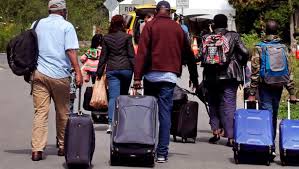
The trending news/video of the over 500 doctors that turned up in Abuja at the Saudi health ministry organised recruitment meeting to pick Nigerian doctors for work in Saudi Arabia reminded me of a comment by a Nigerian Professor in a university in the UK sometime in 2008 or so. There was a discussion on the management of PTDF oversee scholarship scheme, the scholars in the UK, their future, Nigeria, and capacity building. He said Nigeria is perhaps the only country in the world that spends a lot of money to train scholars and doesn’t care what becomes of the scholars after the training.

This scenario is common to all the scholars funded with government money. We send scholars to the UK and other countries under PTDF, TETFund,  NEEDS Assessment, NITTDA, etc., and we do not care if they return home or not. As a matter of fact, there is no provision at the home institutions to utilise the knowledge acquired by the scholars during the training on their return. It’s like you were trained for yourself and not for the system. Those who return are not better than they were before they left as no laboratory to train others. They most times become more frustrated.

Then, how do you expect a system that makes no provision for scholars sent abroad for training to make provision for those we managed to train at home? This is the case with our Medical Doctors moving to other countries to practice. Even though we do not have enough medical personnel, medical doctors sometimes find it challenging to get a job as Consultants after their residency. So, why they should not move to the UK, Canada, Dubai, Saudi Arabia, etc., to practice?

We need to deal with the lack of respect and value for our universities, professionals, and intellectuals. It worsened when our leaders abandoned our institutions while taking their families abroad for education and medical care. They are not even ashamed to post their graduation pictures on social media and shamelessly requesting us to celebrate with them. I thought COVID-19 and the lockdown would teach us lessons, especially our leaders, but it seems we have not learned any lesson from experience.

I read a comment sometime back that during the slave trade, our people were forced into slavery, but if it is now, Nigerians will give themselves up to be taken away. They believe that whatever the challenges are in those countries, it will still be better than Nigeria.

The gathering of over 500 professionals (Consultants and Resident Doctors), both Muslims and Christians, for a recruitment exercise to Saudi Arabia called for sober reflection and not throwing insults. These guys do not care about the Shariah law and the stories of racism in Saudi Arabia from those that have worked there. They just want to leave. So we need to sit down and reflect and ask ourselves questions. What future do we want to create for Nigeria and Nigerians?

Our leaders don’t believe in the country. They instead take our money to London, Dubai, and Saudi Arabia, etc., to secure the life of their family members. They patronise medical care in first-class state-of-the-art hospitals established by the leaders of those countries since they can’t make our health sector desirable. And they are not ashamed of that as leaders. On the contrary, they travel for medical tourism with pride and class.

You will not blame our doctors who were trained nearly for free in our “ASUU Strike” public universities by our “ill-equipped” professors to move to London, Canada, Dubai, Saudi Arabia, etc., to help those countries treat our politicians. But, of course, they want a better life too, and they will be paid better there. So, why should they be ashamed of running away when our leaders are not? Why should they endure and MILT (manage it like that) when our leaders aren’t prepared to MANAGE our hospitals and schools LIKE THAT for their kids?

It is unfair to expect the people to be patriotic when the leaders are not — and don’t even seem to believe that Nigeria can work. The president, Vice President, the Governor, the Senators, others that are supposed to make our schools work have their kids in schools in the UK. The president and other political leaders that are supposed to make our hospitals work receive medical care in the UK, Dubai, Saudi Arabia, etc. How will they make a system they don’t patronise to work? They will just think the system is OK for us as they are, and we can MILT.

Come to think of it. How can our doctors be on strike and hospitals shut for patients for over three weeks? It is not surprising. After all, they allowed the ASUU strike to last for nine months and public universities closed for that nine months. They would not have let that happen if they and their immediate families patronised the system that was and is on strike.

The leaders don’t believe that the country can be fixed, and the led also don’t believe the country can work. So let all of us just run away, even to Niger, Cotonou, Rwanda, etc., and let Nigeria fix itself before we return.  

While I am in solidarity with our Medical Doctors on strike, I only wish that the strike is not just about salaries and allowance but also on the proper funding of the healthcare sector so that we can have hospitals similar to the ones they patronise in the UK, Dubai, and Saudi Arabia.

The question now is: Do you want Nigeria to work? Just be the change that you desire—both the leaders and the led.

Meanwhile, the Punch newspaper has reported that the organisers have suspended Saudi Arabia recruitment as DSS disperses doctors, arrests journalists. Is that the way to fix the problem?

It is relieving that despite the ASUU strikes, the breaks, and all the insults on lecturers, our graduate doctors can still pass International examinations and are qualified to work in the UK, Canada, Dubai, and Saudi Arabia. To God be the Glory.

Kudos to our “ill-equipped” professors who have helped train this Nigerian workforce from 100 Level till graduation for the UK, Canada, Saudi Arabia, Dubai, etc.

Maybe I need to run too. Meanwhile, I am still thinking of the country to run to. 

Abdelghaffar Amoka Abdelmalik writes from zaria can be reached via aaabdelmalik@gmail.com.

China’s Reward of Enlightenment: A lesson for Nigeria

By Najib Ahmad, PhD.

Beyond doubt, you may have by now discerned that nearly everything you are using in your households, offices, and places of worship were made-in-China. A few weeks ago, I had a conversion with my friend and confidant, who told me that this China-made domination is manifested worldwide, even in Europe, where he lives. Hence, he no longer blames Nigeria for clinging to China-made products.

On another occasion, some German professors visited our research group (in China) two years ago. During lunch, one humorously told my former program supervisor that he thought even his shirt was made-in-China. We all laughed and continued eating. Unless you don’t know Germany, the European economic powerhouse, and the history of its industrialisation, this will startle you. Indeed, Germany is still technically capable and well industrialised, but Chinese products are ubiquitous there.

The question you may ask is: How did China achieve all this? I guess you are curious to have an insight into their progress. And how they catch up – sometimes even overtake or compete – with the most industrially advanced countries whose supremacy in this area was matchless within a short time? Their quest for financial power started ages ago, after the country’s opening-up in the 1970s by the then leader, Deng Xiaoping, otherwise known as the principal architect of China’s reform and significant foreign policy changes.

A former Emeritus Professor of Social Sciences at Harvard, Ezra F. Vogel, described the leader in his book, Deng Xiaoping and the Transformation of China, as the “man who most influenced China’s modern trajectory.” The central idea of his reform plans was nothing extraterrestrial. He only ensured that the ordinary Chinese population was enlightened (or educated) to the level they could create their path in a lifetime. He also superbly promoted China from “an agrarian society to the industrial powerhouse” (or manufacturing hub of the world). Beyond the shadow of a doubt, his projections have prospered in making China where it is today. The most important resolution was massive enlightenment. These resolutions have markedly shaped the trajectory of his policies to where they are today.

Provision of adequate and essential reading, writing, and good numeracy skills was the quintessence of the primary phase in their development journey. Thus, presently, you hardly encounter an older person who can neither read nor write or consider using a calculator for basic arithmetic summation (remarkable, right?). Although some reports show a few others are illiterates, especially in villages, it is a small percentage compared to the over a billion people who can. Moreover, there are all-women-operated shopping centres as the reform structure targeted women to prepare them for exceptional jobs. Many women work in hospitals now, especially in women-related matters.

The government of China sponsored children of low-income farmers and city workers to study in elite American and European universities. Some of these students specialised in sciences, applied sciences, technology, and other critical areas for China’s development. This scheme shaped the education development in China. At the same time, some of them remained in their newfound home. Today, five out of ten research papers from the European and American universities will have Chinese-sounding names. They are also in many places working on state-of-the-art science and technology. This was part of the product of the policies made on education about a century ago.

Many others joined various newly founded public universities and colleges all over China to teach and train young students. According to Statista, as of 2019, China has the largest education system globally, with 2688 public universities and colleges, a mixture of central (or federal), provincial (or state), and local government-owned institutions. Out of these institutions, 1,423 are higher vocational colleges. According to reports from the Chinese Ministry of Education, privately owned vocational colleges reached about 300 in 2021. Yet, they looked for more to provide jobs and ultimately boost the country’s economy.

In retrospect, you can see that China’s quest for economic supremacy started with excellent policies favouring education. It continues to this day. New policies were implemented and sustained in educating the society, for example, policies like a free nine-year compulsory quality education for primary and junior secondary schools.

Again, one of China’s leading, perhaps secret, ingredients for unprecedented technological developments is its total commitment to vocational education training at all levels. Vocational colleges (higher institutions) and vocational schools (secondary schools) have undoubtedly contributed to the record economic growth in China. They are the fundamental and out of sight driver and catalyst of their economy. They have produced craftspersons with skills that supported the country in job specialisations such as electrician, mechanic, computer technician, carpenter, tailor, beautician, chef, welder, fabricator, product designer, bus driver, and electric train driver, among others.

The government’s commitment to funding and sustaining vocational training schools have vastly invigorated the manufacturing capacity you see in China today. Subsequently, most foreign brands like Apple, Unilever, Nike, Zara, Mercedes-Benz, General Motors, and many more produce China-made products. The availability of highly-skilled workforce is another reason those brands go to China, among other benefits. Unfortunately, time and space will not permit me to mention them here. However, the reward of sound policies on enlightenment to a society and its propensity is ostensibly enormous. And above all, the government has significantly reduced poverty among its people and improved their livelihoods.

We can learn from the above that enlightening everyone, at least, to the level that they can read and write and get numeracy skills, even if it is in their native language. So doing is vital for the prosperity of society and the country at large. Sometimes, not everyone could have profound education. Suppose everyone you meet in the market, other places in Nigeria could read and write in their native languages. Undoubtedly, our growth and development as a society would be in a better direction than our current condition. Lack of these skills for everybody contributes to our lack of progress, absence of skilled workers, failure of industries, among other ills bedevilling our societies in Nigeria.

As the government is founding new universities year-round, they should consider establishing vocational colleges. As I see these days, the National University Commission (NUC) issue license to many private universities nationwide. Individuals can similarly step in to establish private vocational training colleges. It is not always that everything rests on the shoulder of the government. We need to take these few but critical steps to reset the collective societal future of Nigeria. Implementing them could set a new stage for self-directed youths equipped with the required skills to assist Nigeria’s economic growth, particularly at one of the worst phases of the country’s financial crisis, thanks to the coronavirus pandemic and poor governance.

Dr Najib Ahmad is a Postdoctoral Researcher at Shandong University, China. He can be contacted via namuhammad03@gmail.com.