Nigeria

NDLEA asks political parties to make drug test part of screening for aspirants

By Nasidi ibrahim Saaal

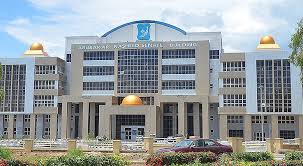
Chairman/Chief Executive of the National Drug Law Enforcement Agency, NDLEA, Brig. Gen. Mohamed Buba Marwa (Retd) has urged political parties to make drug integrity test part of the screening requirements for aspirants seeking to contest political offices in the 2023 elections on their platforms.

Marwa stated this while responding to questions from journalists at the 2022 First Quarter Best Performing Commands Awards ceremony at the Agency’s national headquarters in Abuja on Wednesday 27th 2022. 

According to him, for politicians, we have long advocated and I take the opportunity again to repeat the advocacy that when they run for public office it demands a lot of responsibility from the person and we need to be certain if he’s a person that is already a drug addict/user who will spend all the money he’s given for public service to consume cocaine and his head will not be in a stable condition to handle the affairs he has been entrusted with. For this reason, we have advocated and will continue to advocate that drug test be conducted for politicians; some state governments like Kano state is already doing this.

“Not just politicians, but government appointees, and I’ve just sent a letter this morning to the National Chairman of APC, who will be the first of the national working committee I wish to pay an advocacy visit on this issue. I recommended that drug tests be incorporated in the screening process for all those interested in running for public office; we’ll do the same to the PDP and other important parties.”

While addressing officers and men of the Agency present at the event, Gen. Marwa said the ceremony has become part and parcel of our corporate culture. Recognizing and rewarding hard work and excellence has always been a pragmatic way of stimulating productivity and enhancing the attainment of organisational goals; making it a tradition for the Agency is our way of enshrining meritocracy in the system.

“Statistics from the first quarter (Q1) report, indicated that our performance level has not dropped off. Indeed, achieving 3, 539 arrests, 677 convictions and seizures of 65, 916 kg of drugs in three months is no mean feat. Little wonder our performance continually earns the Agency deserved accolades from the right quarters within the country as well as from abroad, especially from international partners and peers. While we have not yet achieved the utopia of a drug-free society, the results showed that we are getting it right.”  

He told the officers that the awards and commendations are expected to will spur them to surpass their current feats at the next awards ceremony. The ceremony should be a poignant reminder for us not to forget where we are coming from. And there is no better way to say it other than for us to be mindful of the saying that success has a hundred fathers, but failure is always an orphan. No organisation would understand this adage better than NDLEA in the light of our past rock bottom experience. Therefore, we should all be mindful that we hold the fate of NDLEA in our hands, and that fate will be determined by our patriotism and dedication to duty, as well as our collective resolve to work towards the attainment of the Agency’s mandate. 

“Let me also seize this occasion to remind you about the importance of propagating the War Against Drug Abuse (WADA) programme in your various commands. There is much we can achieve when our communities are working hand-in-hand with us. That is why our roadmap, the NDCMP 2021-2025, strongly emphasises collaboration with all the stakeholders in society. We have to woo members of society to work with us on this very important assignment. Therefore, I charge you to ensure that WADA is correctly and deeply entrenched in the spheres of operation of your respective commands, he stated. 

While assuring the officers that the Agency is proud of them, he said the sacrifice of a narcotic officer cannot be quantified in gold or silver, for he is fulfilling a higher calling. As we go about our duty of securing our society against the corrosion of illicit drugs, we should be aware that we are the direct beneficiaries of our work because for every kilo of drugs seized, we are making our streets and society safer for our children, family and kinsmen.

NDLEA is proud of its workforce; the Agency treasures the effort of its officers and men; the management shall continue to look out for their best interest. We shall continue to reward hard work and excellence.”

ASUU Strike: KASU opts out, announces resumption date

By Sumayyah Auwal Ishaq

The management of Kaduna State University (KASU), Kaduna, has decided to back out of the ongoing strike embarked upon by the Association of Staff of Universities Union (ASUU) as the resumption date for academic activities is announced.

The resumption notice, which is contained in a statement by the institution’s Academic Secretary, Barrister Abdullahi Zubairu, said that “the University will continue its academic activities for the Second Semester, 2020/2021 Academic Session on Monday 9th May 2022”. 

The Daily Reality learnt that the management has decided to resume in order to avoid stoppage of salary from the Kaduna State Government. The ASUU Chapter in KASU may likely clash with the management about the new development in the institution. 

Recall that ASUU has condemned the Federal Government’s handling of the negotiation on its demands and nonchalant attitude towards the ongoing strike.

Malaria: ‘Kano recorded over 2m hospital visits in 2021’ says commissioner

By Uzair Adam Imam 

Kano State has recorded more than 2.8 million hospital visits due to the menace of malaria in 2021, the Commissioner for Health, Aminu Tsanyawa, said.

Tsanyawa spoke yesterday at a press briefing to commemorate 2022 World Malaria Day.

This, according to Tsanyawa, made the disease the single most common reason for about 60 per cent of outpatient visitations and consultations in Kano state. 

However, Tsanyawa recalled that the Kano state government, in collaboration with its partners, did its best to mitigate the menace.

He said, “between July and October 202, the state government, in collaboration with its partners, administered more than 13,110,365 doses of malaria prevention drugs (sulfadoxine-pyrimethamine and Amodiaquine SP+AQ) with a view to preventing malaria and deaths in children under the age of five.”

Furthermore, Tsanyawa sounded a clarion call on residents to avail their children aged 3-59 months for the forthcoming 4-day cycles of mass distribution of malaria prevention drugs. 

Despite rising insecurity, Nigeria deploys over 100 troops in Guinea Bissau

By Uzair Adam Imam

 As part of the contribution toward global peace, Nigeria has deployed about 173 soldiers to keep peace in Guinea Bissau despite rising insecurity in the country. 

The Chief of Operations, Army Headquarters, Major General Oluwafemi Akinjobi, made the disclosure at the pre-deployment training graduation of the Nigerian contingent to the ECOWAS Mission in Guinea Bissau.

He stated that since independence Nigeria has contributed over 100,000 troops to over 40 countries on peacekeeping missions.

Akinjobi, who was reportedly represented by the Chief of Operations, Major General Zakari Abubakar, noted that Nigeria remains the beacon of peace and the gatekeeper of the ECOWAS sub-region.

He added that Nigeria has helped restore peace in many conflict areas around the world.

Akinjobi was quoted as saying: “The nation continues to strive to ensure security and stability in Africa through collective security by contributing to international peace and security, which is essential to Nigeria’s defence policy.”

Controversial Easter Flyer: CAN demands dismissal of Sterling Bank CEO

By Muhammadu Sabiu

The Christian Association of Nigeria (CAN) has demanded the firing of the Chief Executive officer (CEO) of Sterling Bank, Mr Abubakar Sulaiman, after the financial institution made a debatable Easter flyer.

The Christian body accused the bank of likening the Resurrection of Jesus to Agege bread, in response to which the CEO apologised.

A statement released by the CAN has described the comparison as “ungodly, wicked, insensitive and deliberately provocative.”

“The attention of the leadership of the Christian Association of Nigeria has been drawn to an ungodly, wicked, insensitive and deliberately provocative advertisement of Sterling Bank, comparing the Resurrection of our Lord and Saviour, Jesus Christ to ‘Agege bread’ amidst the Easter celebration.

“In case the management of Sterling Bank is not aware, the Resurrection of Jesus witnesses to the immense power of God Himself. To believe in the Resurrection is to believe in God. If God exists, and if He created the universe and has power over it, then He has power to raise the dead. If He does not have such power, He is not worthy of our faith and worship.

“Only He who created life can resurrect it after death; only He can reverse the mystery that is death itself, and only He can remove the sting and gain the victory over the grave (1 Corinthians 15:54–55). In resurrecting Jesus from the grave, God reminds us of His absolute sovereignty over life and death,” the statement read partly.

Osinbajo: The face of national unity

By Ahmad Abdullahi

About eight years ago, the All Progressives Congress (APC) appeared to be in a huge dilemma over the selection of a Presidential Running Mate who will fly the flag of the party alongside its candidate General Muhammadu Buhari who just won the party’s primary election. APC’s dilemma was justifiable as they were trying to bring on someone credible that will balance the ticket and make it acceptable enough to stand a strong chance against the mighty PDP.

After so much intrigue within some intense and eventful 48 hours, Professor Yemi Osinbajo got the Vice-presidential ticket to the surprise of many Nigerians. Many expressed fears about whether he carries the political capital strong enough to help the ticket deliver. Little did many know of the Professors’ charming simplicity and intelligent technicality alongside his mass appeal that saw the ticket going all the way. The rest is now history.

Like in 2015, today, we are again witnessing a period when Presidential candidates are being profiled based on their ethnic affiliations instead of their pedigrees. We are having candidates getting attacked desperately on sentiments and arguments that bring nothing to the table except confusion and division. Being a front-runner for Nigeria’s number one job, the Vice President is one of the most prominent victims of these ethnoreligious motivated attacks

As expected, the build-up to Osinbajo’s presidential declaration has been greeted by so many criticisms, many of whom are targeted towards tarnishing his image and rubbishing his candidacy through lies, character assassination and carefully tailored misinformation. Osinbajo’s attackers are hell-bent on bringing down his candidacy even before it gets started. This goes to tell how significant he is in the political equation of 2023 despite many trying hard to dismiss his impacts over the last seven years.

The Vice President has been accused of being a religious and ethnic bigot. Some have gone as far back as his pre-political life to try to convince people of what many facts have proven him not to be. If we are to be fair to Osinbajo, the man is solely building his presidential campaign on the strength of his adventures of the last seven years in which opportunity has entrusted him with a national assignment that requires him to be fair to all Nigerians. As such you cannot use any other criteria to judge him.

In his first five years in office, he has supervised and presided over the initiation and implementation of the largest Social Investment Programme in the history of Contemporary Africa. A program that has been transparent, just and detribalized. Nobody can prove that he has used his position to skew the benefits of the social investment programme towards favouring any religion or region. It is one of the rarest programmes that tricked down to the doorsteps of the poor and downtrodden across all states of the federation.

In mid-2017, Nigeria almost plunged into a national ethno-religious crisis when the Biafran agitators were at the peak of their renewed call for separation. The Federal Government under the wisdom and initiative of the then Acting President Professor Yemi Osinbajo conducted a series of consultative meetings with various groups of leaders and people of societal influence across the country to make sure that the situation is tamed and controlled. Osinbajo tirelessly interacted separately with leaders of thought from the North and the South East, traditional and religious leaders from the same regions as well as all 36 state governors. This was no doubt a big positive step that even the opposition Peoples Democratic Party commended.

In their first tenure, Osinbajo’s same Christian constituency which some believe he is favouring accused him of working with President Buhari to Islamize Nigeria. The outcries became so worrisome that Osinbajo made a public clarification. He said that one day, he woke up around 6:00 am in the morning and saw a text message on his phone sent by a renowned Christian leader who said to him that one day he will account for his actions of allowing Muslims to dominate and take over the government of Nigeria. The Vice President has passed through all this only now to be labelled a Christian bigot.

He further said that he wondered what informed that sort of message while statistics show that there are two more Christians than Muslims in Buhari’s cabinet as of then. He cited an example of a time when a Northern Senator visited President Buhari in his presence and complained bitterly about the marginalization of his people. He however left with the embarrassing information that North West, his zone was leading in the number of heads of government parastatals with 47, followed by South West, South-South, South East, North East and then North Central. Why didn’t this senator do his homework before complaining? Misinformation.

I remember in one of our interactions with him in the last two years, he said if Nigeria disintegrates into smaller countries that can be run over at will by powerful ones, every region will be disadvantaged in different proportions. He, therefore, said our strengths lie in our diversities, number and size. He gave the example of Lagos State’s economy being six times bigger than that of Rwanda despite all the so-called giant strides recorded by Paul Kagame over the years. He emphasized that the country needs not to disintegrate into smaller parts for people to have the opportunity of holding public office and if it is his face or that of President Buhari you dislike that you want secession, then know that, their days in office are numbered but Nigeria can live forever.

As Acting President, he made one of the most diplomatic and yet authoritative efforts to save Nigeria from untimely disintegration in 2017. He brought together all political, traditional and professional stakeholders in Aso Rock to further boost their confidence in the Nigerian Project. Therefore, no one can question his resolve for national unity and integration.

I think the Vice President can be accused of anything but not religious, regional or ethnic bigotry. If anything, he is perhaps the most qualified Nigerian among those seeking the Presidency. He is the first and only Professor to become President or Vice President in Nigeria and has so far adequately demonstrated why the most educated among us need to be allowed to serve at the highest level. He is the most adequately educated and professionally inclined Presidential hopeful among the very top living Nigerians today.

The Vice President has delivered within the limit of authority, opportunity and responsibility at his disposal. He has spent seven solid years serving Nigerians and the President with uncommon patience, dedication and humility. He has never been disappointed in any task assigned to him. Unlike many Presidential hopefuls who are planning to run from regional, religious, political and selfish motivations, the VP plans to become a true Nigerian candidate and a president for all Nigerians.

That he has been to almost every Local Government in Nigeria is not and cannot be an exaggeration. His long-life push for justice reform in Nigeria has taken him to so many nooks and crannies in the country, The trader and market Moni social investment programmes have seen him monitor and visit rural and remote areas that even ward councillors may not fancy going. The same people who accused him of show-off and pretence when he was making such visits are now the ones denying he ever embarked on such visits.

That he has declared to continue from where the President Buhari has stopped is a diplomatic way of saying that he is the man who understands all the successes of this administration and is in a better position to build on them, and also the man who understands all its shortcomings and is in a better position to make up for them. However, some are hell-bent on twisting the narrative.

Those accusing him of political betrayal are tactically telling Nigerians that the Presidency is the birthright of some mighty individuals and it is, therefore, a crime for ordinary people like Osinbajo to make an attempt on it. What some people are having very difficulty swallowing is why will an ordinary teacher and lawyer who is not even a former governor or ex-minister and has become Vice president just become President? Who is he? But they forget, that power belongs to God.

The 2023 presidential election would have been won and lost by this time next year. It may be Osinbajo or anyone else. However, it is clear even to his worst enemies that the Vice President has all the required credentials to make a good President. Deploying arsenals of calumny campaigns to stop him will not work, only divine destiny can do that.

The writer is the Team Lead of the Osinbajo-Face of Hope Project. He can be contacted via info@ofaceofhope.com.

Towards fighting drug and substance abuse

By Kabir Fagge Ali

The rate of drug and illicit substances abuse among Nigerian youths is alarming. It is heading towards a national emergency, which should be considered and treated appropriately with the kind of attention it deserves in our today’s modern society.

According to the United Nations Office on Drugs and Crime (UNODC), in the last 24 years, cannabis potency has increased by as much as four times in parts of the world, even as the percentage of adolescents who perceived the drug as harmful fell by as much as 40 per cent.

This is despite the evidence that cannabis use is associated with various health issues and other harms, especially among regular long-term users.

Meanwhile, a worrisome development that should not be treated with levity is that there are 11 million cannabis users in Nigeria, a third of whom seem to be regular users needing drug counselling.

Similarly, the world drug report further noted that “Between 2010 and 2019, the number of people using drugs increased by 22 per cent, owing to global population growth. Based on demographic changes alone, current projections suggest an 11 per cent rise in the number of people who use drugs globally by 2030 – and a marked increase of 40 per cent in Africa due to its rapidly growing and young population. In Nigeria, this would signify that the country will have to grapple with approximately 20 million drug users by 2030, further deepening the public health and public security challenge”.

Recall that the Chairman of the National Drug and Law Enforcement Agency (NDLEA), Buba Marwa, a retired major general, while reeling out some statistics, said Nigeria was not only the highest user of cannabis worldwide but that revelations from kidnapped victims had corroborated the facts that illicit substances were enablers of insecurity currently plaguing the country.

He noted, “it is not difficult to conclude that drugs have been catalysts of terrorism, kidnapping, banditry, armed robbery and various violent conflicts currently troubling the country.

The consequences of drug abuse can never be overemphasized, as it has birthed a lot of problems not only in the family but in the nation and the international community. Medical issues associated with drug abuse include mental disorders, liver cirrhosis, lethargy, irritability, and heart disorders. Studies also reveal that drug addiction contributes largely to social consequences such as internet fraud, gang formation, disruption of normal educational activities, cultism, violence, armed robbery, kidnapping, rape, sexual abuse, and reduced productivity.

Experts asserted that so many factors are responsible for indulging youths in drug and substances abuse worldwide. These include but are not limited to reasons such as; Parental abuse, depression, peer pressure, peer group influence, the proliferation of quacks in the drug trade, early childhood and adult trauma, and environmental circumstances.

Drug and alcohol abuse in Nigeria are serious problems and has mainly contributed to the sorry state of our dear nation. Therefore, we can no longer continue to ignore the implication of such action as it poses a threat to our lives and that of the upcoming generations.

Talking about the way out – the government alone cannot eradicate this social menace. It is a joint task involving every individual, community, family, school, civil society, religious organization, the media, business entities, and traditional leaders to halt the ugly trend.

Most of these drug abusers are jobless individuals roaming about the streets. Thus, the government should step up an effort to provide them with jobs, while others could be empowered with the necessary skills and tools to start their own business to carter for themselves and their family.

Again, the government should remember that stemming the tide of drug abuse is akin to solving the security challenges currently bedevilling the country. The time to take action is long overdue.

Fagge is a Student of Mass Communication at Skyline University Nigeria. He sent this article via faggekabir29@gmail.com.

Should Muslims go dialoguing? The roadmap to understanding ‘interfaith’ in Nigeria

By Sadiya Abubakar Isa, PhD

It appals me to see the Muslim North divided on a trivial yet substantial religious issue like ‘interfaith’. I have for long heard Muslim clerics discrediting the whole idea of interfaith since the establishment of its centre in Bayero University Kano – one of North’s prestigious universities, something which was otherwise not their business. Still, thanks to this institution, interfaith is now localized enough to get such stimulating clerical attention in Northern Nigeria.

Having had the opportunity to study Islamophobia exploringly, I would say interfaith is significantly relevant where the identity of Islam is greatly contested. By definition, interfaith, whether as a dialogue in research or academic discourse, revolves around the peaceful, complaisant, and constructive interaction between people of different faiths for mutual benefit. It involves striking balance, a tolerable understanding of such interrelationships and beneficial engagements through dialogues, academic events, and activities aimed at peaceful coexistence. To say all these aren’t relevant for a Muslim community is a dismal misunderstanding of the whole concept and reasoning of interfaith.

The world witnessed an unprecedented rise in Islamophobia shortly after 9/11; statistics show that Islamophobia reached its peak in 2016. If you reside in the Western world in the decade after 9/11, you will understand the intricacy of the threat Islamophobia puts Muslims into. Especially for Muslim women who are more obviously identified than their male counterparts. Muslim women were subjected to hate speech, discrimination, and abuse, thanks to the incessant misrepresentation of Islam and Muslims in the Western media. Since the Muslims are a minority in such Western countries, their religious identity was at stake. As such, the results were provocative political discourses, foreign policies and the whole activities of the Islamophobia industry vigorously tarnished the image of Islam beyond doubt.

Islam was always portrayed as an intolerant and backward religion that advocates terrorism. Muslim men are seen as utter misogynists, violent, barbaric, and bloodthirsty fanatics, while Muslim women are said to be oppressed, voiceless, helpless, and subordinate in dire need of immediate liberation. Now, this has been the case centuries before 9/11, but the Orientalism surged after 9/11 because there was an agenda to create fear of Muslims and control the world using that purported fear—New World Order?

Consequently, 9/11, subjugation of women in Afghanistan, terrorist activities by ISIS, Boko Haram etc., were leveraged as justifications for those claims. The average Westerner believes every accusation about Islam and has little or no interest in discerning the images. One may ask, so what if they believed?

The consequences are bigotry against Muslims, vandalism of religious places, hate speeches, discrimination, loss of jobs (or other vital opportunities), rejection in the community they ought to belong to, and the worst is loss of lives. We have seen so many Islamophobic attacks on the Muslims, the New Zealand mosque shootings, for example. This misconception renders the Muslim communities in the West vulnerable. It puts them in constant fear of perceived danger and, consequently, loss of faith. Yes, look at it from the perspective of younger generations struggling to fit in.

Among many other factors, I acknowledge the efforts of Yaqeen Institute by Sheikh Omar Suleiman, a Palestinian American scholar. He has taken the lead in fighting Islamophobia through interfaith dialogues, among other methods. Why shouldn’t the Muslims engage in interfaith dialogue when it has been an avenue for discussing the Muslims’ predicaments? It has given Muslims a platform to talk about their real lives and share their religious practices contrary to the media’s narrative.

Interfaith dialogue has helped quell the flame of hate. It has given Muslims the room to openly operate as an inclusive religion – with lots of global moves to ascertain cultural harmony. It has opened laypeople’s minds about Islam which they would otherwise have remained unaware of. It has opened the door for discussion of religious differences politely and positively, which pushed many non-Muslims toward studying Islam.

Do you know the result of this increased curiosity about Islam? Acceptance of Islam, the Christian West has seen rapid growth in conversion to Islam. So, where is that extreme hate of Islam/Muslims today? Alhamdulillah, there is a significant improvement in the situation, thanks to interfaith dialogue, among other efforts taken by anti-Islamophobes.


So is interfaith precarious to Muslims in Nigeria? Why all the debates?

Would Nigerians understand the need for an interfaith dialogue without foreknowledge of Islamophobia, global diplomacy and religious inclusiveness? It’s a fact that Muslims aren’t a minority in Nigeria, but ethno-religious crises are still ravaging, in the North especially; crises in Jos and Kaduna would have been addressed amicably if the interfaith dialogue was well embraced. It is utterly disconcerting to say that, in this age, people are having religious disputes.

Similarly, Boko haram has been synonymous with Islam in Nigeria in that it is always referred to as an ‘Islamic terrorist group’. Don’t we need to dispel the myth of Islam advocating terror in Nigeria? Are Muslims too big to have a peaceful inter-religious conversation in Nigeria? Are we blind to the fact that Islam is under attack in Nigeria? When professor Farooq Kperogi wrote on Islamophobia in Yorubaland, I was bemused because I never expected that of all the tribes in Nigeria, Yorubas would discriminate against their tribespeople based on religion. The rapidity at which Islamophobia is manifesting in Nigeria is quite alarming. Nigerian Christain’s support for Donald Trump in the last election spells out their desperation for Muslims’ continued exclusion.

Religious harmony is still farfetched in most regions of Nigeria. We are just pretending to be harmonious and tolerant. Little wonder how minuscule events easily trigger provocation. We need to talk about our differences positively and engage in healthy interactions to progress as a nation. Colonialists already bond us together, so unity in diversity becomes a necessity. Or do we wait until our children begin to ask us questions before we get to talk about our differences nicely? If not for anything, interfaith in Nigeria will allow non-Muslims to learn about your faith – Islam. Isn’t that a form of da’awa?

My research acknowledges how interfaith dialogue in the US, Europe and other parts of the world contributed to the curbing of Islamophobia by promoting peaceful coexistence. So to use religion to relegate the whole idea is quite imprudent. To quote Shafiq, Muhammad, and Mohammed Abu-Nimer, the authors of Interfaith Dialogue: A Guide for Muslims, “although a relatively modern term, interfaith dialogue has, in fact, had a long and enduring history for Muslims, underscored by a spirit of genuine inquiry and respectful exchange. The primary role of interfaith dialogue is to remove misunderstanding and accept difference….”

Some Ulamas in Nigeria have taken a critical stance on this matter. I listened to one yesterday opening that interfaith is an extension of secularism. While I appreciate his disposition, I beg to disagree that ‘we don’t need interfaith’ due to his stated reasons. It should be at the participant’s discretion to know the aim of every dialogue before engaging in one. My focal point is that whoever participates in interfaith dialogue should be cognizant of their religious jurisdiction and wary of their intentions. I kindly advise our Ulama to focus on ways to religiously liberate the Northerners from the abject poverty that has infested this region instead of the debates surrounding the appropriateness of interfaith – which is long overdue.

Dr Sadiya Abubakar Isa is interested in research related to Islamophobia. She can be contacted via sadeeyaa@yahoo.com.

Bandits deny pregnant woman freedom despite labour pains

By Uzair Adam Imam 

The bandits who abducted a pregnant woman in Jalingo, Taraba State, have refused to release her despite being in labour.

The Daily Reality gathered that the bandits kept demanding for ransom to release the woman.

The woman who fell into labour in captivity was said to have visited her parents for maternity leave from Kano.

However, the bandits called the father of the abducted pregnant woman and demanded immediate ransom.

It was gathered that the shooters, who targeted three houses in the area, operated for about forty minutes without any interruption.

DSP Usman Abdullahi, the police spokesperson of Taraba Command, confirmed the abduction of the pregnant woman and six others.

Banditry and kidnapping are the significant security challenges bedevilling the country over the years. 

The menacing security challenge lingers despite the threats and promises by the federal government to mitigate the issue.

The vulnerability of nomadic Fulani to police extortion: A personal experience 

By Zakariyya Shu’aib Adam 

About two months ago, I took a commercial vehicle from Sokoto to Minna. As usual, I wore a kaftan and sat in the front seat. Although I had my headphones on, we exchanged a few words with the driver. He never knew I was “ɗan boko” until I communicated with someone on the phone in English. He said: “Mallam,na zaci kai ma duk mu ne[I thought you were like us – uneducated].” I laughed it off and said, “Ai dole sai a na raba ƙafa [One must diversify].”

The driver told me that he knew many police officers on the way. That is why he is not frequently stopped at checkpoints. However, before we reached Tegina, we were stopped at a checkpoint. When the police came, they greeted and cracked jokes. He asked the driver: “Babu kayanmu a motar nan[Are there our goods in the car]?” The driver said, “Eh, babu kayanku [Ye, there’s none].” I wasn’t interested in their discussion until I saw the police pointing at me, saying, “Wannan ba kayanmu ba ne[Is this not ours]?” The driver said, “A’a, wannan ɗan gari ne [No, he’s not].”

When we were allowed to pass, I asked the driver what “kaya [goods]” meant and why the police thought I was their “kaya[goods].” He said the police thought I was nomadic Fulani. A typical Fulani who did not attend school. Whenever a car is stopped at the checkpoint, they single out a Fulani man or woman and ask him or her to alight. They will be charged between 5k and 10k. If they fail to give, they will be framed as kidnappers or their informants. He said if only he had told the police that I was their “kaya”, I would have been made to give that amount of money.

By Allah, if it were someone who informed me of this, I wouldn’t have believed it. But Wallahi, it happened to me. I was just saved by Allah, who prompted the driver to intervene promptly. I just can’t imagine myself refusing to give them that sum of money. I would have been left alone, and the network wasn’t friendly for calls. I would have been framed up as a kidnapper or their informant. Only Allah knows what would have happened to me. My sin was just that I am Fulani.

Indeed, there are criminals among the Fulani. There are kidnappers and their informants among them as well. Many of these undesirable elements have committed heinous acts against innocent people and subjected sackless individuals to unnecessary throes and severe distress. They have successfully sacked many villages and murdered countless innocent souls, thanks to the I-don’t-care attitude of the government. May these barbarous beasts get caught and euthanised. 

This piece is not, in any way, intended to strip them of their crimes. Even though there are bad eggs among them, there are also good ones. There are many responsible and peace-loving individuals among them. Imagine how many innocent Fulanis are stopped on a daily basis and robbed. How many of them are falsely charged as kidnappers without conviction? Some of them are even victims of kidnapping and cattle rustling. What kind of justice is served?

This type of unjust profiling and more paved the way for these innocent people to join the malignant kidnapping infection. Many of these unethical practices and professional misconducts committed by a few greedy Ekuke parading themselves as police are not only detrimental to the Nigeria Police Force but also a threat to the country’s peaceful coexistence. The perpetrators of these heinous acts amongst the police must be investigated and brought to book.

Zakariyya Shu’aib Adam wrote from Sokoto.