Nigeria

Why you should take advantage of free tuition to study in Germany

By Aminu Mohammed

I nurtured my desire to study abroad during my undergraduate days at the Department of Political Science and International Studies, Ahmadu Bello University, Zaria. It was the era when ABU was the hotbed of Marxism and radical thinking in the North, led by the late Marxist historian Dr Bala Usman and others like Dr Bako, Prof. Sadiq and Prof. Ayo Dunmoye. I was fascinated by the writings of Karl Marx and Max Weber, which prompted my desire to study in Germany.

Germany is the wealthiest country in Europe and a global leader in education and research. It is the land of scientists like Albert Einstein, Max Plank and philosophers such as Immanuel Kant, Arthur Schopenhauer, Georg Wilhelm Friedrich Hegel, Friedrich Nietzsche, Karl Marx, Max Weber, and Goethe, among others. The education in Germany is top-notch, especially in medical sciences, natural science and engineering. Studying in Germany is also cheaper and more cost-effective compared to other countries such as the United States, United Kingdom, Canada and Australia.

Many of you may wonder why I choose to write on this topic, considering the high cost of studying abroad. Many of you may still think that only the elite can afford to send their children to foreign universities and others from a humble background are not capable of doing so, probably due to their circumstances.

I want to tell you today that you should perish such thoughts that have limited our people, especially in the northern part of the country, making them doubt their abilities. I want to tell you that there are no limits to where you can go and what you can achieve if you believe in your dreams and work towards them. We live in an era of information technology where you can use your smartphone to search for information that will aid you in improving your life and career. There are many Nigerian students from the Southern part of the country; most do not have wealthy parents and are thriving in this environment.

Studying in German universities is tuition-free for both local and international students. There are two options: you can either study through scholarship or self-sponsorship by taking care of your living expenses on your own through a system called blocked account. The first option is highly competitive and more tedious than the second one. Therefore, I suggest that people without solid financial capacity focus on the first option by applying for a scholarship. You can check the universities’ websites offering your courses and see the requirements for obtaining the scholarship.

The German Academic Exchange Service (DAAD) currently offers scholarships to students from developing countries for the 2023 academic session. The scholarship covers everything, including a monthly stipend of 861 euros for master’s students and 1200 euros for doctorate students. So, you should apply as soon as possible before the deadline. It would help if you had an outstanding grade in your first degree, a minimum of two years of work experience, a good motivation letter, and volunteering experience, among others, to be accepted for the scholarship programme.

The second option, through a blocked account, requires a lot of money, which means that you are on self- sponsorship, hence will cater for your living expenses which include payment for accommodation, health insurance and other costs in Germany. This option is for those who can afford the blocked account stipulated by the German authorities, which is currently 10,332 euros approximately (N6.7 million). You must deposit this money in a German bank after getting admission before securing a study visa. Most students who arrived in Germany for studies used Fintiba bank, a financial institution based in Frankfurt, Germany.

Once you get admission, you can check the website of the German embassy in Abuja or Lagos, look for the requirements for the study visa, and then apply for a visa appointment. I will advise that after getting admission, you check the official website of the German embassy in Nigeria or visit the embassy in Abuja or Lagos to get information on how to deposit the money in Fintiba bank. Don’t give your money to anybody.

You can go to any Nigerian bank to do the international transfer to Fintiba bank once you get the details on how to go about it from the German embassy. The money belongs to you and is for your living expenses here. Once you arrive in Germany and go through a system referred to as legitimization at the bank, Fintiba bank will then transfer 848 Euro monthly to your account for 12 months. The money will not be transferred in bulk to your account but bit by bit.

.Of course, you can work here and earn money to support your living expenses. Students are entitled to 20 hours per week and can work more than 20 hours during holidays, especially when the university is on break. Most international students work here and earn good money. An hourly wage depends on cities, but it is mainly between 10.45 to 16 Euro per hour (N6, 500 to N10, 000) depending on the city and company you work for. Wages in bigger cities like Munich, Frankfurt, Berlin, Hamburg, Cologne and Dusseldorf are higher than in smaller cities like Kiel, Flensburg, Cottbus, Magdeburg, etc.

Public universities do not charge tuition fees in Germany. Depending on the University, you only pay a semester fee (alias social fee) ranging from 200 euros to 380 euros per semester. For instance, students in my university pay 264 Euros per semester. This covers dues for the student union and transportation. In other words, students do not pay whenever they board a bus or train, as the semester ticket covers the fare for buses and trains within the city of Kiel and up to Hamburg. So, our semester ticket covers movement throughout the state of Schleswig Holstein and Hamburg.

Most Nigerian and international students I have met here are on self-sponsorship. Theystudy and also work to take care of their living expenses. There is always a part-time job available for students, especially in big and smaller cities, and you can take advantage of that to earn money for your upkeep. Some students focus on studies only during the semester and only work during holidays, while some attend lectures on weekdays and only work part-time during the weekend. The choice is yours.

I must emphasize that studying in Germany is tough, and you must put much effort to succeed. People fail here quickly, especially students who focus on work without paying much attention to their studies. But the main thing is to strike a balance between your studies and part-time work, if you want to achieve your goals. Of course, many students have been able to secure jobs after their studies here. A lot of Nigerians that I know here work after completing their studies.

Moreover, for those apprehensive about their religion, there is a large population of Muslims in Germany, mainly from Turkey, Syria, and Egypt, among others. There are mosques everywhere. At least we have six mosques in my city, with even a mosque mainly for Africans to perform their prayer.

I still reiterate that you can do everything independently with your computer or laptop. You do not need the help of anybody or an agent to assist you in applying for admission, scholarship or the visa process. Don’t fall for any scammer. You can do this from beginning to end on your own until you find yourself in Germany. You don’t need to know anybody to be able to secure admission, scholarship or visa to Germany. I arrived in Germany in 2018 without knowing anybody or even a friend. My communication was with the University strictly. If I can do it, you too can do it. So, believe in your abilities and go after your goals. I wish you all the best in your endeavour.

Aminu Mohammed is at the School of Sustainability, Christian-Albrechts Universität zu Kiel, Schleswig Holstein, Germany. He can be reached at gravity23n@gmail.com or 219013@mail.uni-kiel.de.

Reflections on inflation and our ineffective population

By Nusaiba Ibrahim Na’abba

The ongoing unexpected outrageous hike in prices of goods and services stringed by inflation is not all new to our survival in Nigeria as we’ve learnt the hard way to navigate through hurdles and thorns to manage our lives. Simply put, things are at the moment not falling apart but in their right places – exactly where we want them to be. And by extension, we are reaping the seeds our predecessors sowed.

Contextualizing the global outrage on inflation unveils how our population crises are highly influential to the inflation catastrophe we are recently experiencing in Nigeria. Conversations around our incapacitated population have always been cumbersome. People keep reproducing to demonstrate their selfish reasons and associating them with religion, even when they’re fully aware of their inability to cater for their needs – a lifetime debate. Due to cultural and religious reasons, overpopulation is always quite a sensitive issue. Religious gatherings, cultural discussions and even governmental activities deliberately skip them to avoid chaotic scenes.

For reasons best known to the Nigerian government, the census that was supposed to take place a year after President Buhari assumed office in 2016 was unfortunately not prioritized in the list of essential development activities. There wasn’t even a convincing explanation for why it did not occur. I buy that the President was out of office as he severely fought to regain sound health. Still, his deputy, Prof. Yemi Osibanjo, was acting President until he recovered. He also didn’t give it the much significance it deserves. The worth of a National Census isn’t that shabby to escape their radar, as it assumes an unchallenged role in catalyzing the development of every society and nation-building.

Well, as it stands, many international sources now place the Nigerian population to have surpassed 200 million. But, referring to our precedents, the past administrations were unwilling to manage rapid population increase by corroborating it with needed economic, financial and health opportunities, among others. Instead, they were more or less obsessed with starting gigantic projects to leave them halfway done when leaving offices. Regrettably, from budgets, policies and programs among myriad activities, the population is often not carefully factored in.

At this point, explaining the statistical representations of our ailing population is almost unnecessary, especially since we are gradually failing to comprehend the magnitude of our plight in statistical terms. Presently, there exists a colossal number of youths that are desperately seeking jobs. Not only that, they are unemployed. Some are drug addicts, miscreants, and even kidnappers and whatnot. Their realm also includes people still hopeful for job opportunities, including a handful employed but in deep struggles, as they continue to shoulder countless responsibilities. This fraction is the largest among the demography of our country and, sadly, the most ineffective.

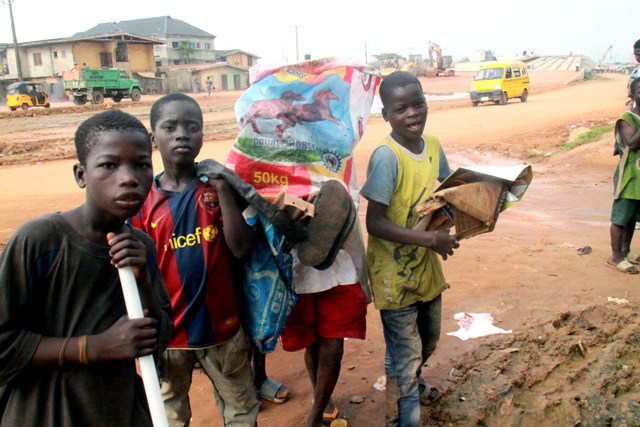
Then we have children, who contribute a fair share to the general population. A disturbing figure is that of out-of-school children due to their being part of the lower class and a lot who are quadrupling in number as insecurity is not slowing down in forcing them out of their communities. Visibly, most of them embrace street hawking and begging while others aimlessly litter the streets and little girls into forced labour. Picturing our population from a pie sketch, we also have the elderly, many of whom have delivered relentless service to the nation but have only been rewarded unkempt wretched feet as they search for their legitimate hard-earned pensions. And I don’t forget that we have People Living with Disabilities (PLWDs) who wallow in poverty. This is a fair elucidation of Nigeria’s population pie sketch.

Indeed, how inflation is ripping us apart in this country is an incredibly devastating experience. Development activities here have always journeyed long, and even more terrifying is that slow processes in everything aren’t much valued in today’s fast-paced world. As frightening as it appears, the race to the 2023 general elections is already painting a horrible scene for us. The primary elections recently concluded with alleged countless irregularities and corruption aren’t appealing. Hence, it becomes challenging to collate one’s thoughts regarding how life will likely be as we fight to forge ahead.

In a way, this current plight provokes the young minds who are already out of viable options to embark on deadly voyages to Europe. They risk their lives in search of a better life there. It is terrifying to know that the number of youths clamoring for these voyages includes graduates and those earning petty stipends and are well conscious of the dangers involved. However, they aren’t blameworthy for viewing their lives from angles of their responsibilities.

Many optimists, including myself, are hopeful about Nigeria’s transformation for the best. But, until alternative routes to utilizing our teeming population for efficient development are incurred, we’ll keep chasing the uncertain light at the end of the tunnel. Nigeria is behind schedule on capitalizing on effective strategies to breed an efficient population, opposing its self-anointed maxim of “no dey carry last”. We must reinvent this unfortunate wheel of inefficiency by adopting a knowledge-based economy model to harness the enormous potential of our massive population for the best.

Nusaiba Ibrahim Na’abba is a master’s student from the Department of Mass Communication, BUK. She is a freelance writer and researcher. She can be reached via nusaibaibrahim66@gmail.com.

ASUU Strike: Should students blame the Government or ASUU?

By Aliyu Idris

Anyone aware of the lingering strike in Nigeria’s public universities nationwide will sympathise with us students. Now it’s clear that students understand the government’s negligence and I-don’t-care-attitude towards the education sector because none of their sons and daughters goes to public universities.

The government that is supposed to take the necessary actions regarding the strike is showing a lackadaisical attitude towards it as if the education system is normal. Thus, the ASUU strike is not the topic of discussion today.

The government is hellbent on political affairs more than returning the students to their classes. Unfortunately, the issue of the ASUU strike has become a secondary matter to the government in national affairs, sad.

The strike has shattered the dreams of public university students. As a result, The graduation period of million students has been extended to another subsequent year(s) (I do not pray for that occurrence).

It’s an arduous task for public university students to graduate within the stipulated period allocated for their studies. Hence, almost every student’s ID card expires before they graduate.

The victims (students) of the ASUU strike have lost hope in learning and scholarship. Thus, since the government has failed to save their future, they have shifted their focus from education to other life activities such as businesses and learning skills to build their lives.

The statistics of students called up for NYSC in the camps nationwide is low compared to when public universities are not on strike.

The NYSC camps are filled with HND students, students from universities abroad, students from private universities in Nigeria and students from affiliated universities (FCE/CEO/Polytechnic graduates).

There may be the hope of fulfilling the ASUU demands soon (I pray) because I know the Nigerian politicians and INEC will need serving corps members to work for them in the 2023 general elections. However, until the strike is called off, the current corps members are insufficient for the election’s tasks.

The (our) striking lectures are not the problem but the government. May Allah put an end to this strike menace, amin.

Aliyu Idris is an undergraduate at Bayero University, Kano. He can be reached via aliyuidris063@gmail.com.

Were you mocked because of your English in school?

By Lawan Bukar Maigana

 I was spoofed when my father changed my school from a public school to a private school. I remember the first class I had. Our teacher, a lady, asked me a question, and I answered it. She asked me again where I got the answer, and I told her that I got it from my brain. She laughed at me, and everyone laughed at me because I spoke poorly. Our school fee was 16,650.

My friends were always laughing at my spoken English because I didn’t know how to speak good English. I still can’t speak good English, but I am working hard to perfect it. That same lady—my teacher—forced me to start reading a novel in class every day, and she mostly asked me to explain what I understood from the book. She corrected me as I explained it to the class, and that was how I started speaking gradually.

My proprietor had always told me that I would become a perfect English speaker one day and encouraged me to ignore my classmates and teachers who made jest of my English. With His mercy on me, I started speaking well with confidence until our graduation. Right now, I speak better English than some of my friends who laughed at me because of my English.

Today, she is proud of me anywhere she sees or hears about me. Had I worried about what my friends did to me then, I wouldn’t have become who I am today because they mocked me well. Some of them are on this platform. They will read this post and laugh at themselves because they know they have done many bad things to me.

Honestly, those days were difficult for me because there were days I didn’t talk from morning to the closing time in school. I didn’t know how to speak good English; English was our school’s only means of communication. So I chose to keep quiet because I didn’t want to be laughed at or mocked by my classmates.

Don’t taunt people with English and don’t laugh at people’s spoken and written English because everyone makes mistakes. No one has a monopoly on English knowledge, including native speakers. Don’t stop learning English because of what people think about you or what they do to you. Continue learning. You will perfect it one day; they can’t laugh or mock you anymore.

The world reads me today. I want to read your articles and watch you talking to a large audience one day. So, don’t stop speaking in public. Those who condemn you today can’t do so tomorrow. They won’t have the opportunity.

Lawan Bukar Maigana writes from Abuja and can be reached via lawanbukarmaigana@gmail.com.

MURIC calls for adjustment of NECO timetable for Sallah celebration

By Ahmad Deedat Zakari

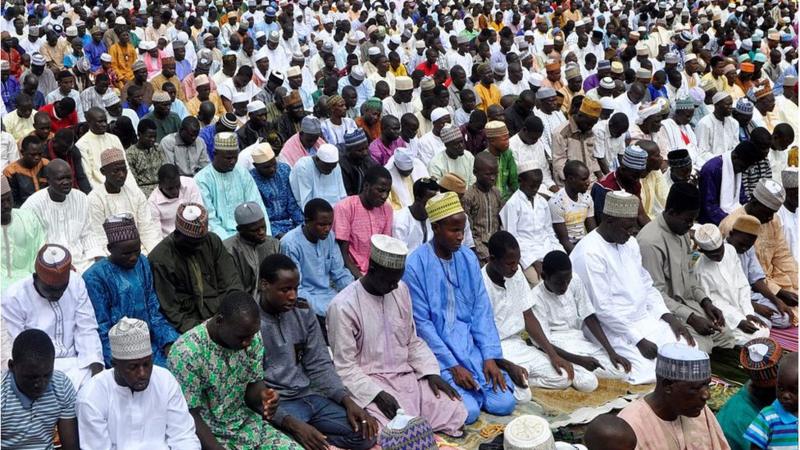
The Muslim Rights Concern, MURIC, has called on the National Examinations Council, NECO, to adjust its examination timetable to accommodate Muslims who would be celebrating Eid-el-Adha, aka Sallah.  

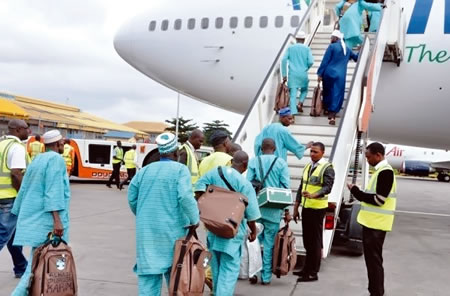
NECO has scheduled Data Processing (Practical) from 10 am to 1 pm on July 9, which clashes with the first day of Eid.

MURIC Director and Founder, Professor Ishaq Akintola, made the call on Sunday, July 3, 2022, in a statement.

“We are fully aware that the clash was not deliberate as NECO had actually demonstrated goodwill by setting aside a whole week for Sallah celebrations (Monday, 11th July to Friday 15th July), and this reflected in its timetable.

“We, therefore, appeal to the NECO authorities to kindly shift the examination of that day alone (Saturday 9th July 2022) to another date in order to enable its teeming Muslim candidates [to] sit for their examinations.” Part of the statement reads.

ASUU Strike: Between extravagant hopes and exaggerated disappointment

By Nura Jibo

Let me start by saying that I am not holding any brief for the Academic Staff Union of Nigerian Universities(ASUU) because I was its victim of strike for three (3) years. I am not holding any brief for Nigeria’s Federal Ministry of Education and government either, as I very seriously hate their mishandling of Nigeria’s education sector. 

Today, I write as a concerned individual who believes in teaching and providing free education to Nigerian and global citizens. 

Hence, I write this as a classroom teacher that taught in a Nigerian State’s Polytechnic for three (3) years as a volunteer lecturer. I did not collect a single Kobo or Naira from that college throughout my volunteerism teaching at the College of Business Management. I only wanted to pay back what I had taken from the excellent teachers that made me who I am today. 

Therefore, it is very pleasing whenever I reflect and have a flashback over certain moments that contributed to my making, particular via the teaching and mentorship of my amazing teachers. 

Indeed, I sometimes feel very disgruntled whenever I see a certain Minister of Education who once upon a time advocated through his long essays in Daily Trust stable a 30% allocation of Nigeria’s budgetary provision to the education sector. However, that Nigerian Minister now develops a thick skin on resolving this simple yet terrible antecedent by hiding under his Ministerial gown to suffer and implicate an already ailing system! 

The issue is simple: It is either the likes of our laconic and apt Prof. Farooq Kperogi amplified that Minister’s writing prowess beyond or above what he is, or he’s exaggerated as someone with firsthand knowledge of Nigeria’s education system. I am unsure whether writing long pieces of literature in the name of Friday columns and reeling towards power qualifies one as an expert to lead a very large and delicate African educational system. 

Therefore, I believe mastery of achievement so-called via writing newspaper columns or “Definitions in Humour” does not preclude one from being considered a novice and a toddler in leading an education system that is deliberately beleaguered in the name of politics. The way the Minister portrays himself as a man of God by writing all sorts of educational polemics in Nigeria, one would not have expected less from Nigeria’s presidency that offered and entrusted such a complex Ministry in the hands of a chronic accountant who never had a clue or better put never practised and excelled in his profession – Accountancy! But that’s Nigeria, where many people get away with its sensitive positions provided they can write pep and glib talks and share with the dull and ignorant. 

To quickly put the record straight, Nigerian leaders should refrain from allowing people to assume public office because of their writing prowess or mastery of oratory language. The duo are clearly very different and distinctive in acquiring or having a practical knowledge of teaching and education. 

I shall come back to this point later if time permits!

Indeed, three things made me raise my concern about ASUU Strike and the exaggerated disappointment from the Federal Government. First, the ASUU’s demands on an improved education system in the country. Second, the students’ extravagant hopes of acquiring a Nigerian education that is today by far less and very low in quality. The third is the bastardizing of the education sector by political leaders in Nigeria. 

Indeed, there are three global measurable indicators in gauging an education, whether it is qualitative or not. One is the availability of state-of-the-art teaching facilities. Two, stability in academic programmes. Three, quality of teaching staff. 

In Nigeria, none of the three(3) is available at the moment because the teachers and all university lecturers are already frustrated by the Nigerian political leaders, that are mostly half-baked or uneducated. 

The level of frustration is deliberate, though! And the way things are going, it is better and advisable for all Nigerian students to come out and demonstrate en masse by matching to Aso Rock villa to express their displeasure on the denial of their rights to education by Mr President and his education cabinet. As they do that, they should make the Nigerian government aware that the monthly salary of a Nigerian professor is not more than a primary school teacher’s salary in the UAE and other serious countries that left Nigeria far behind.

A professor in Nigeria today earns an average salary of N400,000 to N500, 000 per month. His yearly earnings are approximately N5-6 million. This is equivalent to what is being paid to an Engineer engaged as project manager (PM) every month in the UAE. 

This is not to talk of a primary school teacher in Nigeria who lives a typical hand-to-mouth life by surviving on a N23,000-N37,000 monthly salary with many family demands at their disposal. And considering the chaotic nature of a Nigerian state with no end in sight! 

Truth is: the Nigerian State can more than afford to pay its teachers and university lecturers global standard salary(s) the way COUNTRIES and regions in the UAE, such as Dubai, Bahrain, Oman, etc., are paying their teachers competent and befitting salaries because Nigeria is ten (10) times richer than Dubai, Oman, Qatar, Bahrain etc. 

How can one expect any good to come out of Nigeria’s education system that is not ready to discharge this global standard? 

The irony is that: the Nigerian education system is one that shamelessly cannot afford to recruit, engage and pay teachers global standard salary(s). It prefers to absorb graduates under Npower and pay them a stipend of N23,000 per month. At the same time, the political leaders steal the public funds and waste away the Nigerian nation by burying it in global shame. Therefore, the corrupt tendencies of Nigerian political leaders and their timid behaviour(s) of stealing public funds in the name of democracy will continue to put the country’s education system in untold hardship by killing it ultimately. And as the country continues along this path, it should be ready for more Boko Haram and kidnappers ad infinitum. 

Nura Jibo, MRICS, PQS, MNIQS, RQS, was a volunteer visiting teacher at a Polytechnic in Nigeria for three years. He can be reached via nurajibo@yahoo.com.

Academic Travails: 17 hours for 20 minutes!

By Prof. Abdalla Uba Adamu

The academic world will never cease to amaze me. Let us look at just one example. Take an invitation to present a paper at an international event, as I was in June 2022. This particular event was the 90th commemoration of the establishment of Oriental Studies at the University of Warsaw, Poland. About 30 of us were invited, mainly from Europe and Asia, to share experiences on our various studies on orientalism from 29th to 30th June 2022. 

The trip was daunting for me, to begin with. It started with an hour flight on Qatar Airways to Abuja from Kano (my base). I spent another hour or so on the ground at Abuja before taking off for the six-hour flight to Doha, Qatar. I spent over four hours meandering around the terminal at Doha, waiting for the connecting flight to Warsaw. Eventually boarded the five-hour flight from Doha to Warsaw. All told, about 17 hours journey time. Arrived at the hotel jetlagged, weary and disoriented.

Off the following day to the University of Warsaw for the two-day conference scheduled at 9.00 p.m. each day. And it was right on the dot, with welcoming remarks by Prof. Piotr Taracha, the Dean of the Faculty of Oriental Studies UW, followed by an address to the conference by Prof. Alojzy Z. Nowak, the Rector of UW. These were followed by two keynote addresses, then appreciation of retiring members of the university community who had been there for over 50 years, including my host, Prof. dr. hab. Nina Pawlak (that’s how distinguished academic titles are labelled in most Eastern European universities). Let’s see what the letters mean; prof stands for professor, while dr is the doctor. To be a hab, however, requires extra efforts.  

To be awarded the academic degree of doktor habilitowany (habilitation), the candidate must have remarkable scientific or artistic achievements; submit a habilitation book which contributes to the development of a given scientific discipline; receive a favourable assessment of their output, pass a habilitation examination and deliver a favourably assessed habilitation lecture. It is after all this that they become professors.  

Nina Pawlak received her PhD in 1983 (Constructions expressing spatial relations in the Hausa language), habilitation in 1995 (Syntactic Markers in Chadic) and professorship in 2007. Thus entitled to prof. dr. hab. status. The habilitation is a post-doctoral experience that is highly formalized, represented by a separate thesis or a compendium of outstanding work in the area that can be evaluated as making an original contribution to knowledge. It takes between four to ten years to complete. Its public presentation is something like an inaugural lecture before a professorship. In most cases, the habilitation is the qualification needed for someone to supervise doctoral students. So far, in Africa, only Al-Azhar University in Cairo seems to offer this route to university scholarship.  

It is the habilitation qualification that will determine one’s path to professorship, but the publications required for skipping it to become a professor directly have to be more outstanding than the habilitation publication. This process shows rigorous respect for original contribution to knowledge in European scholarship. One can still be referred to as prof. dr. in recognition of their scholarship, without the hab. For instance, I was recognized as so by the European Union award of a grant to teach at the University of Warsaw in 2012. The prof. dr. title, used in mainland Europe and some Asian universities, acknowledges scholarship, even without the region-specific hab.  

Now back to the Conference. No ‘Chairman of the Occasion’, or Lead Paper presenter, nor ‘Royal Father of the Day’, etc. Just presentations. Now that brings me to my wonderment about the academic process. After over 17 hours of flight time (and same hours returning back), like everyone else, I was given 20 minutes (which included being harassed five minutes to the end by the moderator) to present my paper titled The Trans-Oriental Express: Receptivity and Cinematic Contraflows in African Popular Culture, and 10 minutes allowed for discussions – and that’s it! 

Thus, you spend weeks on fieldwork and data synthesis, spend hours being ferried from one location to another, and stay for days cooped up in a dingy hotel room (wistfully thinking about your own spacious personal living space!) eat some unusual and often very expensive food. All for 20 minutes of fame! This has been a recurring pattern in all the conferences I had attended.  

So, what is it about, at least international scholarship, that people would rather read what you wrote than listen to you? In Nigeria, paper presenters tend to ramble way beyond their allocated time. Often, the moderator of your session is worried about stopping you because you are a ‘big’ man, even if you are talking out of point. I remember one case in which the ‘Guest Speaker’ was reminded that his time was up as per the ‘program of event’ (sic). He adamantly refused to heed the time and insisted that since he was the main ‘event’, he would only stop when he finished reading the booklet of his lecture, which was 32 pages! Thank God for Smartphones – people just ignored him and shifted their attention to their WhatsApp messenger and came back to earth only after someone started clapping to signal their relief at the conclusion of the presentation! 

Perhaps it is time for us as Nigerian academics to move from this dense didactic approach to presenting papers – where you are often expected to give ‘theoretical framework’, ‘research questions’, ‘methodology’ (to appear ‘Scientific’ even if there is no Science in your conclusions) before you get to the actual data itself. And most annoying, you are also expected to give totally useless ‘recommendations.’ I had arguments with moderators and participants in Nigeria on the last point where I am asked about my ‘recommendations’ after my presentations. I often reply that I don’t have any recommendations – I present my data and my interpretation. How it goes is up to you. For instance, what can I recommend to a person who based their own narrative creativity on intertextual appropriation, thus creating a meta-narrative? That it has happened is fascinating enough. That I brought it to your attention is sufficient enough in knowledge discourses. In wider international scholarship, participants are more interested in exploring other aspects of your data.  

I think our approach to conference presentations in Nigeria has vestiges of the didactic educational experiences we were grilled through. Under such an academic ecosystem, all research is geared toward policy and governance. It is time for a paradigm shift – cut down the number of minutes on presentation, and focus on the epistemological virtues of the presentation! Oh, and cut-off the prof’s microphone when he seems about to torture his audience beyond his allocated 15 to 20 minutes!

Prof. Abdalla Uba Adamu is the former Vice-Chancellor of the National Open University of Nigeria (NOUN). He can be reached via auadamu@yahoo.com.

Youths tasked on eschewing hate speech, constructive use of new media 

By Muhammad Aminu 

Youths have been advised to eschew hate speech and use new media constructively for peacebuilding and sustaining peace and peaceful coexistence in their communities.

A communication expert and media scholar, Dr Ruqayya Yusuf Aliyu, gave the advice while engaging youths in a Critical Knowledge Production Dialogue Organised by the Center for Information Technology and Development (CITAD) on Wednesday.

Dr Ruqayya, who discussed the Roles of Youths in Peace Building From a Communication Perspective, said youths play active roles in conflict and peacebuilding situations due to their agility and activeness.

She reminded the youths that peace and peaceful coexistence are the bedrock for the development of any society.

“Youths can be used for good or bad, peace or violence; hence it’s imperative that they know the importance of their roles in peacebuilding in their communities.

“Although conflict is inevitable in any society, managing it matters most in escalating or de-escalating the situation, ” she added.

“You can be partisan, but avoid hate speech and use new media positively.

According to her, communication is relevant in peace building through mobilisation, advocacy, persuasion and behaviour change among the youths.

In another development, CITAD, in collaboration with eTrash2Cash, has trained 220 low-income women on plastic waste entrepreneurship in Bauchi.

Chief Executive Officer (CEO) of eTrash2Cash Abdullahi Salisu said the participants were trained to convert plastic waste into weaved bags, shoes, bangles, and flower vases, among others.

He said:” Items made from these wastes seem so original and authentic that one cannot tell if they are made from the “wastes” we improperly dispose of. Perhaps, one of the main reasons why so much keen interest is evident in the faces of the women beneficiaries.”

Some of the beneficiaries expressed their appreciation for the opportunity. 

Amina Bello and Hafsat Adamu said their newly acquired skills would enhance their living standard.

Hafsatu Adamu, while thanking the training organisers, said she benefitted greatly and had never known wastes could become useful in this way. “I’m proud to be a waste champion, and I will step down the training to my siblings, friends and immediate dependents,” she added.

According to Abdullahi Salisu, plans are underway to ensure that the trained women are continuously engaged and supported to keep cleaning the environment and support others to improve their lives and livelihoods.

Salisu said: “This social responsibility is continuous. It is non-stop. Other stakeholders have already expressed their interest to keep the impact going. We hope to keep engaging these beneficiaries through an innovation centre that will further help them in other areas of business development and entrepreneurship”.

Illegal Migration to Europe:  Think before you embark on a journey of no return

By Aminu Mohammed

This article was inspired by a post that I read on the Facebook page of Dr Muhsin Ibrahim, where he cautioned our youth against embarking on a perilous journey that may lead to their untimely death. However, while going through the comments, I was actually shocked by a statement made by someone who insisted on travelling to Europe through the Sahara Desert, despite warnings by the writer.

Of course, I know that life is tough in Nigeria, and many youths are jobless and hopeless. The high level of insecurity is worrisome in the North, as people are being hacked down to death daily without any concrete intervention from the security agencies. The deprivation is glaring on the streets all over the North, and people are looking for a way out. However, I will always advise people to travel legally anywhere or otherwise stay at home if they do not have the financial capacity to do so.

During my stint as a journalist in Sokoto a few years ago, I have written many articles about human trafficking and illegal migration. Unfortunately, this is a big business for many people in villages around the Illela local government area of Sokoto. Illela is a border town between Sokoto and Qoni in the Niger Republic. People are trafficked through these villages with the connivance of some youth in the villages. These nefarious people in the villages assist these illegal migrants by transporting them with motorcycles to the Niger Republic in order to evade immigration officers at the Illela border, who may likely prevent them from entering the Niger Republic en route to Libya and finally to Italy and other European countries.

Let me make it clear that life is not a bed of roses here, and the streets of Europe are not paved with gold. People don’t pick money on the streets. You have to work very hard to earn money. Although the government makes efforts to ensure a good life for the citizens, there are homeless people and beggars in Germany, the wealthiest European country. It is not a paradise as many of you may think or imagine in your dreams.

Life in Europe is akin to slavery for people without legal documents. First, life is tough here without legal documents. You cannot get accommodation, open a bank account, work, or visit the hospital without a resident permit. My first time at a clinic to see the doctor in my city, I was asked to present my residence permit and health insurance card; otherwise, I won’t be able to receive treatment. Thus, I presented my documents, which they quickly confirmed before treating me.

Many young men are being lured by the success stories of those who travelled illegally to Europe through the Sahara Desert in the past and believed they too could achieve success if they endure tribulation and go through pains. Although not all those who follow the pathway of illegal migration end up in agony, most live as enslaved people here.

Of course, I know and have met some of them who came to Europe through the Sahara Desert and Libya and are doing well here. For example, I know a Hausa guy from Kano State who lives in my city with his family and owns a clothing shop. He told me gory tales about his movement from Sokoto to Agadez in the Niger Republic and the perilous journey through the Sahara Desert to Libya, which lasted eight days. He spent about one year in Libya doing menial jobs before he summoned the courage to cross the Mediterranean with a boat carrying many people to the island of Lampedusa, Italy, 11 years ago.

According to this Kano guy, they took the boat early in the morning from Libya and were rescued at noon by coast guards who later ferried them in their boats to Lampedusa. He subsequently left Italy for Germany eight years ago and is now a legal resident here. He speaks fluent German and carries out his business diligently.

A few of them in my city came through that perilous route and are now established in Germany, doing meaningful jobs while contributing to the country’s economy. But their trajectory may not be the same as yours as everybody has his own destiny and luck. So many people have died in the Sahara Desert even before reaching Libya, while some have died trying to cross the Mediterranean Sea, yet our youth are still not deterred despite such deaths.

The fact of the matter is that many people who came through the illegal route are wallowing in misery and deprivation. Most of them are trapped in refugee camps scattered in most cities across Germany. I have been to the refugee camp in my city twice and witnessed how these people live. It is a kind of glorified prison, though they can still go out and even work illegally without the knowledge of the authorities. They do “black jobs”, which are very low-paid jobs that do not require documents and are usually paid directly after their labour but not through the banks.

I met a Ghanaian last year whose name is Idrissa. He left the refugee camp in Munich, the southern part of Germany and is now hiding in my city doing menial jobs. According to him, he feels terrified whenever he sees the police and usually gets scared of commuting by public bus or train for fear of being arrested. Unfortunately, this is the type of life those with illegal documents live here. In fact, at the peak of the Corona pandemic last year, this Ghanaian could not get vaccinated because no hospital would vaccinate him due to a lack of legal documents.

Some of these illegal immigrants, desperate to get legal documents for them to be able to work, get entangled with old German women that are old enough to be their grandparents under the guise of marriage and are treated as slaves. Of course, the German women are aware that they want them only because of their residence permit and make sure they go through excruciating pains.

I decided to write this article in order to alert our youths on the dangers of travelling to Europe through the Sahara Desert and the Mediterranean Sea. If your dream is to travel to Europe, then try to go through the legal way. You can go either through the study route, a scholarship or a job based on your skills. I know that many people get jobs with the skills they acquired in Nigeria, such as doctors, nurses, engineers, and those in data science and information technology, among others. Travelling legally is the only way to move freely without humiliation abroad due to a lack of legal documents. May Allah make things easy for all of us, amin.

Aminu Mohammed is at the School of Sustainability, Chrtistan Albrechts Universität zu Kiel, Schleswig Holstein, Germany. He can be reached via gravity23n@gmail.com or 219013@mail.uni-Kiel.de.

Businesses should make digital rights and inclusion a priority in Nigeria

By Isa Ali Musa

Digital rights and inclusion is an issue that doesn’t get discussed enough. Yet, with the way things are currently going, it has the potential to become a much bigger problem in the future. And as someone who is passionate about technology and its ability to help people and businesses, this concerns me. There are many ways that digital rights and inclusion can be addressed in business, but there is also something special about doing so when you’re operating in Nigeria. The country has been hit with many unfair reputations that have held it back for too long. So, by addressing this topic from a Nigerian perspective, companies will not only be doing something good but also taking advantage of a unique opportunity to grow their businesses.

Below are five reasons your business should prioritise digital rights and inclusion in Africa if you’re operating there or plan to expand into the region soon.

Digital Rights and Inclusion is Complimentary for Business

It’s important to understand that digital rights and inclusion are not just something you should do because it’s the right thing. It’s something that you should do because it is complimentary for business. There are many reasons why this is true, but one of the most important is that digital inclusion can help you better understand your customers’ needs. This can lead to more effective management, targeted products and services, and more data for strategy. Therefore, the more you know about what people in your community need, the better your company will be able to meet those needs and, thus, increase its bottom line.

Furthermore, the more you can encourage people and organisations to use technology, the more you’ll see it become an integral part of life and business in Nigeria. This will, in turn, lead to more and better business opportunities. By being at the forefront of digital inclusion, your company will be better equipped to take advantage of these opportunities because it will have better insight into them. This can, therefore, lead to more growth and success for your business.

An Opportunity to Grow Your Company’s Reputation

As mentioned above, there are many reasons why digital rights and inclusion are good for business. Yet, there’s also a significant amount of reputational benefit that can come from the. By promoting digital rights, you are putting yourself in a position to take control of the narrative around your industry and the role your company plays in it. This is particularly important if you’re operating in Nigeria because you’ll have the chance to break many unfair stereotypes plaguing the nation’s digital ecosystem. In addition, by promoting digital rights and inclusion, you can show the world that your company is committed to serving the needs of all people and helping Nigeria catch up with the rest of the world. This can, in turn, lead to greater trust from prospective global customers and clients and, subsequently, more business opportunities in the form of partnerships for expansion.

 Commitment to Having an Equal Footing in Nigeria

While it might seem as though digital rights and inclusion are things that only global partners and governments need to be aware of, the reality is that your clients and competitors should be aware too. Nigerians need access to the same technologies, services, and opportunities that people in the rest of the world have. If your company doesn’t provide digital rights, equalities and equities, your employees are negatively impacted, and you’re missing out on talent that could otherwise be available to you. By addressing digital gender equality and including people with disabilities and special abilities, you can show prospective employees and investors that you are committed to having an equal footing in Nigeria, Africa and globally.

By Promoting Inclusion, You Can Help More People Become Employable

In addition to helping Nigerians get the technology they need and allowing them to get jobs and start businesses, digital rights and inclusion can also enable more people to become employable. Promoting digital rights and inclusion can help more people get the education they need to become computer literate and learn new skills. By promoting digital rights and inclusion, you can help to close the digital divide. This is the gap between those who have access to and proficiency in using technology and those who don’t. Closing the gap is important because it can help Nigerians get the education they need to get jobs in the 21st century. Including as many people as possible in the digital space can help Nigerians continue leading Africa’s Tech ecosystem.

Digital Rights and Inclusion can Help Increase the Quality of Life of Nigerians

There are many ways that digital rights and inclusion can help increase the quality of life for Nigerians. For starters, by promoting digital rights and inclusion, you can help people get the healthcare services they need and deserve. You can also help people better communicate with loved ones through video and audio communication. You can also help people travel more efficiently by using online transportation booking services and other technologies. By promoting digital rights and inclusion, you can also help Nigerians learn about and protect the environment. In addition, you can help people become more financially secure, thus improving the economy. Finally, you can also help improve education and access to information.

Isa Ali Musa is a Policy Fellow, Nigerian Global Affairs Council, Abuja, Nigeria.