Nigeria

Nigeria must turn to modern technology to defeat insecurity

By Aminu Babayo Shehu

Nigeria is facing one of its toughest internal security battles in decades. From the kidnapping of schoolchildren in Kebbi and Niger states to the killing of senior military officers, including a Brigadier General, criminal groups continue to operate with increasing boldness. Bandits, kidnappers and terror cells now openly upload videos on platforms like TikTok and WhatsApp, displaying weapons, hostages and propaganda with little fear of consequences.

This is no longer an era where outdated tactics can secure the nation. Criminal groups are becoming more technologically aware, while the state still relies heavily on manual intelligence and slow-response systems. Countries facing similar threats have adopted advanced tools and strategies. Nigeria must follow the same path.

The United States and Israel use drones, satellite intelligence and geolocation trackers to disrupt hostile organisations long before they strike. Rwanda has established a modern drone command system to enhance surveillance and national security. India employs mobile tracing, SIM mapping and digital pattern analysis to dismantle kidnapping networks. These examples show that even in challenging environments, technology can expose criminal movements, reduce their operational freedom and strengthen national response.

Nigeria can apply the same approach effectively.

Real-time aerial surveillance remains one of the most critical gaps in Nigeria’s security architecture. High-altitude drones equipped with night-vision cameras and thermal sensors can monitor large forest areas where bandits hide. Such drones transmit live data to command centres, enabling tracking of movements and coordination of precision strikes. In many cases, soldiers need not be deployed on foot into ambush-prone areas; operations can be guided or executed remotely.

Mobile intelligence is another powerful asset. Every phone, even when switched off, leaves digital traces. With firm collaboration between telecom operators and security agencies, criminals can be located through cell-site analysis, call patterns and movement anomalies. India has successfully used these tools to reduce large-scale kidnapping syndicates.

Satellite imaging, when paired with artificial intelligence, can detect camps, vehicles, and human movement in remote areas. Modern software can analyse thousands of images within minutes and flag suspicious activity such as heat signatures, makeshift shelters, or recently cleared land. This drastically improves early detection and reduces operational delays.

State governments can also invest in early-warning technologies. Community CCTV networks, automated alarm systems and remote-sensor alerts can shorten response times. Local initiatives that once existed in a few states need consistent funding and national integration.

At the federal level, the Presidency should coordinate a national security technology blueprint. This would bring together drones, cyber-intelligence tools, biometric systems, satellite monitoring, and geospatial-analysis platforms into a single central command. Strategic partnerships with technologically advanced nations can reduce costs and strengthen capacity.

Nigeria’s security forces have courage and dedication, but courage alone cannot defeat modern criminals who rely on speed, shock and terrain mastery. Technology is the equaliser. It exposes hideouts, cuts communication lines and allows the state to strike before criminals mobilise.

The tools exist. They are affordable. They have worked in other nations. What Nigeria needs now is clear political will, long-term investment and an understanding that 21st-century threats demand 21st-century solutions.

If embraced, technology can save lives, disrupt kidnappers and terrorists, and restore the confidence of millions of Nigerians who deserve safety.

Aminu Babayo Shehu is a Software Engineer and Mobile Developer with experience building technology-driven solutions, including systems for logistics, telecommunications, e-commerce, and security-focused applications. He writes on technology, national development and digital transformation.

Large weapons cache seized in northeast security operation

By Abdullahi Mukhtar Algasgaini

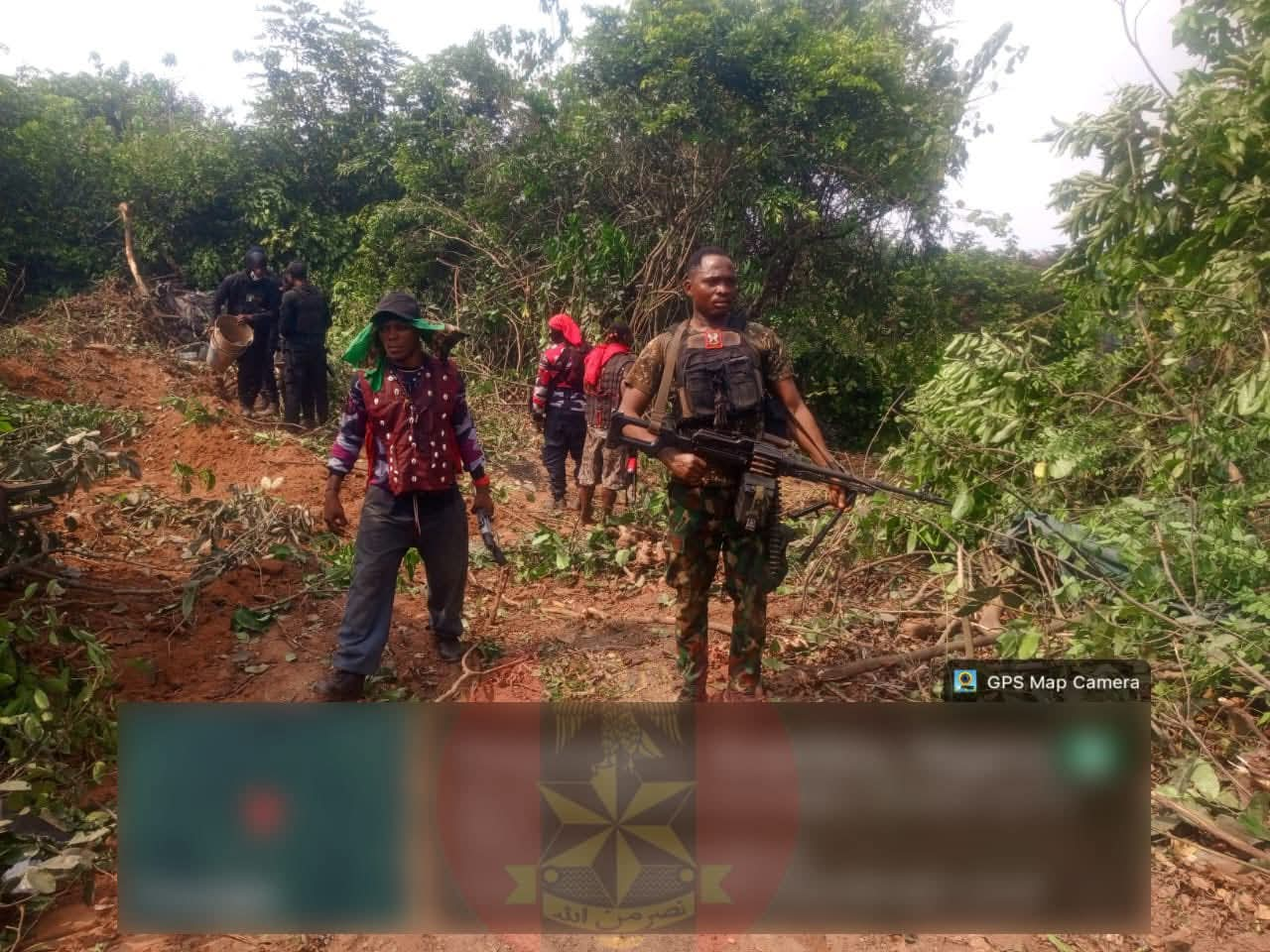
Troops of the Nigerian Army in northeast Nigeria have recovered a major stockpile of heavy ammunition, security forces announced.

Acting on a tip, soldiers from Operation HADIN KAI, alongside police bomb disposal experts, responded to the Bulumkutu Railway area on Friday afternoon.

A search of a concealed drainage channel uncovered 1,270 rounds of 12.7mm ammunition warheads, including live rounds, and power banks.The discovery followed recent, sustained military activity and operations against suicide bombers in the region.

The military stated the find was a result of “actionable intelligence” aimed at restricting terrorist movements.

The site has been secured and efforts are underway to drain the channel for a further search. No casualties were reported during the operation, and the area remains calm under heightened security.

Authorities praised the public’s role in providing the initial tip, urging continued vigilance and reporting of suspicious activity to maintain security.

Groups call on Kwankwaso to join ADC

By Ibrahim Yunusa

Amid tensions in the Kwankwasiyya movement and Kano NNPP, fueled by speculation that Governor Abba Kabir Yusuf might defect to APC, the ADC Youth Mandate, with ADC Waziran Waziri, urged Senator Rabi’u Musa Kwankwaso to join other national stakeholders under ADC to help rescue Nigeria from worsening socio-economic and security crises under the APC-led government.

The coalition pointed to worsening economic hardship, insecurity, and governance failures, expressing fears over the ruling party’s push toward a one-party state. They emphasised the need for a united front of progressive leaders to offer Nigerians a credible and people-oriented alternative.

Speaking on behalf of both groups, Engr. Ammar Hamisu Dandago, the Coordinator of ADC Youth Mandate, stressed the political value of Kwankwaso’s experience and mass grassroots appeal. He expressed confidence that Kwankwaso, in collaboration with other prominent figures like Atiku Abubakar, Peter Obi, Rotimi Amaechi, and Nasir El-Rufai, could form a formidable force capable of unseating President Bola Tinubu.

The statement concluded with a renewed commitment to youth mobilisation, national unity, and support for genuine efforts to provide competent leadership and restore hope across the country.

‘Die Empty’: Prof. Adamu on philosophy that defined Kano youth honours

By Muhammad Sulaiman

A New Year’s Day community gathering in Daneji took an unexpected philosophical turn when a sponsor’s closing remarks sparked deep reflection on knowledge stewardship and mortality, Professor Abdalla Uba Adamu has revealed.

The January 1st townhall meeting, organized to honor ten outstanding youth from the Kano neighborhood, became memorable not just for the celebrations but for a pointed challenge issued to the honorees, Professor Adamu recounted in a Facebook post that has drawn significant attention.

The young achievers, recognized for accomplishments spanning Artificial Intelligence, Mathematics, Nursing Sciences, and Qur’anic studies, were urged by event sponsor Alhaji Ahmed Idris to “die empty”—a statement that initially puzzled attendees before its meaning was revealed.

Idris, a prominent community pillar, was invoking Todd Henry’s motivational concept that individuals should pour out their knowledge and talents during their lifetime rather than take untapped potential to the grave. “You enter your grave empty—all the knowledge has been left outside for other people to use,” Professor Adamu explained.

The academic noted that at least three of the honorees hold doctorates or specialized training in Artificial Intelligence, achieved before AI became a consumer phenomenon, while others excelled in diverse fields—showcasing what the community hopes will inspire younger residents.

Writing on his experience, Professor Adamu drew connections between Henry’s secular philosophy and Islamic teachings on amanah—the sacred trust of knowledge. “Discharging your knowledge—sharing it and imparting it on others—is therefore one of the highest acts of Islamic piety,” he wrote, adding that both the Qur’an and Hadith contain warnings against hoarding knowledge.

The professor described the event as a community response to concerns about youth engagement with “consumer communication technology” at the expense of career focus and future planning.

Exercise as a therapy for progressive diseases

By Mujahid Nasir Hussain

On 14 November 2025, the world marked World Diabetes Day, and a familiar message rang out across hospitals, communities, and workplaces: Africa must “know more and do more” to confront the rising tide of chronic diseases. It is a message that feels especially urgent here in Nigeria, and in cities like Kano, where the realities of modern life have dramatically reshaped how people live, move, work, and stay healthy. For many families, this year’s theme was not merely a global campaign. It reflected what they witness daily—more people living with diabetes, hypertension, kidney disease, stroke, obesity, and joint disorders than ever before.

The World Health Organisation has warned that Africa will soon face a dramatic shift in its health landscape. By 2030, deaths from non-communicable diseases are projected to surpass those from infectious diseases. This is a striking transformation for a continent historically burdened by malaria, tuberculosis, and HIV. Nigeria, Africa’s most populous nation, is at the centre of this shift, with cities such as Kano experiencing a rapid rise in chronic and progressive conditions. The reasons are both complex and straightforward: changing diets, prolonged sitting, stressful work environments, reduced physical activity, environmental pollution, and limited access to preventive healthcare.

Yet amid these alarming trends, one therapeutic tool stands out: exercise. For many years, exercise has been treated merely as a wellness activity or an optional lifestyle choice. But in reality, it is one of the most powerful and scientifically proven therapies for slowing the progression of chronic diseases. When the body moves consistently, it undergoes profound biological changes: insulin works better, blood vessels become healthier, the heart becomes stronger, inflammation decreases, and harmful fat around organs begins to shrink. These benefits are not cosmetic; they are therapeutic.

However, there is a critical truth that the public often misunderstands: exercise is powerful medicine, and like any medicine, it must be prescribed correctly. It is not something people with chronic diseases should “start doing” without guidance. The mode, frequency, intensity, and duration of exercise must be tailored to the individual’s medical condition, age, fitness level, and risk factors. What is safe and effective for one person may be dangerous for another. This is why professional guidance is so essential. For instance, a person living with uncontrolled hypertension should not begin intense aerobic workouts without clearance from a doctor, because sudden spikes in blood pressure could lead to complications.

Someone with diabetic neuropathy may not feel injuries in their feet, making certain activities unsafe without supervision. Individuals with chronic kidney disease need specific exercise prescriptions that do not strain the cardiovascular system or accelerate fatigue. People recovering from stroke require structured rehabilitation overseen by physiotherapists to prevent falls or further damage. Even patients with obesity, osteoarthritis, or long-standing back pain need tailored, gradual programs to avoid joint overload. This is why exercise should not be approached casually, especially in a context like Africa, where many chronic conditions are undiagnosed or poorly monitored. Before starting an exercise program, individuals living with progressive diseases should consult qualified professionals. Doctors provide medical clearance and identify risks. Physiotherapists design safe movements that protect joints and nerves. Exercise physiologists prescribe evidence-based routines that align with the patient’s goals and limitations. Their role is to ensure that exercise becomes therapy, not a trigger for complications.

In Kano State, this issue is especially relevant. The city has undergone a rapid transition from physically demanding lifestyles to sedentary routines. Many residents now spend long hours sitting in shops, riding motorcycles, or working in offices. Combined with high consumption of energy-dense foods and limited awareness of disease symptoms, progressive illnesses have become deeply entrenched. Yet awareness of safe, guided exercise therapy remains low. Many people begin rigorous routines abruptly, driven by social pressure or misinformation, only to injure themselves or exacerbate their conditions. Others avoid exercise entirely because they fear doing the wrong thing. Both extremes are harmful.

To confront this, a cultural shift is needed, one that recognises exercise as a vital part of medical care. Hospitals and clinics across Nigeria must integrate exercise counselling into routine visits, especially for patients with diabetes, hypertension, kidney issues, and obesity. Something as simple as a doctor explaining which movements are safe, or a physiotherapist demonstrating gentle routines, could prevent years of complications. Exercise physiologists, though still few in number, should be incorporated into more healthcare teams to design personalised programs grounded in scientific evidence.

At the community level, awareness must grow that exercise therapy is not a one-size-fits-all approach. It is a carefully structured health intervention. Encouraging early-morning walking groups, promoting workplace movement breaks, and organising community fitness sessions are valuable, but they must be paired with safety education. Leaders—traditional, religious, and educational—can play a vital role by emphasising the importance of seeking professional guidance before starting any intense routine, especially for those already living with chronic diseases.

It is also worth acknowledging the emotional dimension. People battling progressive diseases often feel overwhelmed, frightened, or uncertain. Exercise offers not just physical healing but a sense of agency. It improves mood, relieves anxiety, supports sleep, and helps people feel that they are actively shaping their health. This psychological benefit is powerful, especially in societies where chronic diseases still carry stigma. But again, confidence grows stronger when people know they are exercising safely and correctly under the guidance of trained professionals.

Nigeria’s future health outcomes depend on coordinated action. Families must embrace a culture of safe movement. Workplaces must reduce prolonged sitting and encourage healthy routines. Schools must restore physical activity as a normal part of the day, not an afterthought. Healthcare institutions must treat exercise as a formal therapy, not a casual suggestion. And individuals must understand that professional guidance is the foundation of safe and effective exercise therapy. The WHO’s projections are indeed alarming, but they are not destiny. Africa still has the opportunity to change its trajectory. But to do so, we must shift how we view health, how we integrate movement into daily life, and how we approach treatment of chronic diseases. Exercise will play a central role in this transformation, but only if it is approached with the same seriousness and medical supervision as any other form of therapy.

In the markets of Kano, the offices of Abuja, the streets of Lagos, and the rural communities of northern and southern Nigeria, the message must be clear: movement heals, but only when guided, intentional, and safe. The global call to “know more and do more” continues beyond 14 November. This is a reminder that Africans must not only embrace exercise as therapy but also do so with professional guidance to protect the body and preserve long-term health. Our path forward lies not just in treating disease, but in transforming lifestyles with knowledge, with care, and with the understanding that the right kind of movement, at the right intensity, prescribed by the right professional, can change the story of health for a generation.

Mujahid Nasir Hussain is an exploratory researcher in biomedicine, deeply passionate about public health, chronic disease prevention, and evidence-based community health interventions.

EFCC dismisses Bala Mohammed’s persecution claims, defends Bauchi investigations

By Sabiu Abdullahi

The Economic and Financial Crimes Commission has strongly rejected allegations by Bauchi State Governor, Bala Mohammed, that it is being manipulated by political figures to harass him and officials of his administration.

In a statement released on its official Facebook page today, the anti-graft agency said it regarded the governor’s claims as unfounded and misleading.

The Commission described the allegations as “wild” and “far-fetched,” insisting that it remains a neutral institution that carries out its mandate without political influence.

EFCC stated that it was “an independent agency created to fight economic and financial crimes” and maintained that it operates in a non-partisan manner.

The Commission criticised attempts to portray it as an agency that bends to political pressure. It described such portrayal as “mischievous and condemnable.”

EFCC also faulted the governor for linking its activities in Bauchi State to the Minister of the Federal Capital Territory, Nyesom Wike. It stressed that “no political office holder is in a position to influence the investigative activities of the Commission.”

The agency further stated that Governor Mohammed was previously standing trial for alleged money laundering before becoming governor. It said the case was suspended only because of the constitutional immunity attached to his office.

It queried who influenced the Commission to investigate and prosecute him in 2016.

EFCC disclosed that charges relating to some Bauchi State Government officials have already been filed before the court. It stated that the public could examine the court documents and determine whether the case is motivated by vendetta or by professional investigation.

The Commission explained that Governor Mohammed was named in the charge because he serves as the approving authority in the state.

Reacting to the governor’s claim of terrorism financing persecution, EFCC said such allegations amounted to “clutching at straws.” It stated that it did not create the law and would fail in its responsibility if it refused to act where offences are established by law.

The agency urged politicians across party lines to make public accountability their priority. It described it as “the height of hypocrisy” for politicians to allege persecution when opposition figures are investigated while remaining silent when members of the ruling party face similar legal action.

EFCC recalled that it recently arraigned a senior member of the ruling party over alleged corruption, without any outcry of persecution from any political bloc.

The Commission advised Governor Mohammed to concentrate on governance in Bauchi State and allow it to continue its statutory responsibility of addressing financial crimes nationwide.

Enzo Maresca parts ways with Chelsea

By Ibrahim Yunusa

Enzo Maresca has officially stepped down as head coach of Chelsea Football Club after 18 months at the helm.

The Italian tactician parted ways with the club on January 1, 2026, following a poor run of form that saw Chelsea win just one of their last seven matches, a slump that triggered unrest within the club and among fans.

Sources close to the club revealed that internal disagreements with the board, coupled with mounting frustrations over performance and tactical direction, contributed to Maresca’s exit.

Chelsea are expected to announce a replacement soon, with Liam Rosenior emerging as a strong contender to succeed Maresca.

NRS unveils new logo, marks transition from FIRS

By Muhammad Abubakar

The Nigeria Revenue Service (NRS) has officially unveiled its new institutional logo, formally marking its transition from the Federal Inland Revenue Service (FIRS) to a newly established revenue authority.

The unveiling ceremony took place in Abuja on Wednesday and was announced in a statement by Dare Adekanmbi, special adviser to the chairman of the NRS.

Speaking at the event, Zacch Adedeji, executive chairman of the NRS, described the new brand identity as a major milestone in the ongoing reform of Nigeria’s revenue administration framework, reflecting a renewed mandate and institutional vision.

Adekanmbi noted that the service became operational after President Bola Tinubu signed the Nigeria Revenue Service Establishment Act 2025 in June, paving the way for the transition from FIRS to NRS.

The new logo, officials said, symbolises efficiency, accountability, and a modernised approach to revenue generation in Nigeria.

Rivers lawmakers return Fubara’s N100,000 Christmas gift as Wike warns against “automatic tickets”

By Sabiu Abdullahi

Members of the Rivers State House of Assembly have rejected a N100,000 Christmas payment that was paid into their personal bank accounts on the directive of Governor Siminalayi Fubara, stating that the transfer did not follow due process and lacked legislative approval.

In a statement issued on Tuesday and signed by the Chairman of the House Committee on Information, Petitions and Complaints, Enemi George, the lawmakers described the funds as unauthorised and confirmed that the money had been returned.

The statement, titled “Return of Unsolicited and Unapproved N100,000 Transferred to the Personal Accounts of Honourable Members of the Rivers State House of Assembly by the Executive Governor of Rivers State,” explained that each member received a credit alert on December 30, 2025.

“Today, 30th December 2025, honourable members of the 10th Rivers State House of Assembly received bank credit alerts of the sum of N100,000 each. The said unsolicited and unapproved amount was transferred on the instructions of the governor,” the statement read.

The House insisted that public funds must pass through established legal and legislative procedures. George further accused the governor of repeatedly withdrawing money from the state’s consolidated revenue account without the consent of the Assembly since assuming office in 2023.

“We are aware of staff who connive with the governor to contravene the constitution and laws of Rivers State. Their actions are unlawful. We assure the good people of Rivers State that we will not relent in performing our constitutional duties,” he said.

The lawmakers noted that while civil servants in the state received similar Christmas bonuses, those payments followed standard approval processes, unlike the transfer made to members of the Assembly.

Plenary sittings of the House have been adjourned until January 26, 2026. Governor Fubara has yet to submit the 2026 appropriation bill or forward the names of commissioner-nominees to the Assembly.

Since returning from suspension, he has been operating with eight commissioners whose positions were not affected by the Supreme Court ruling that recognised Martin Amaewhule as Speaker.

In a related development, the Minister of the Federal Capital Territory, Nyesom Wike, addressed residents of Khana in Khana Local Government Area on Tuesday, urging them to be cautious about future political choices. His comments were widely interpreted as a reference to the leadership dispute in Rivers State.

“As for the state, we will talk about that later. We will not make a mistake again,” Wike said.

“If you make another mistake, that means they will drive you out. Your ticket is not automatic. You have to earn it for you to present to your people.”

Wike also spoke on political alignment in the state and stressed his support for President Bola Tinubu’s administration.

“For us, there’s nothing like APC or PDP; what we have is Renewed Hope. We’re not voting based on party but on the fact that we belong to one political family. Just follow your leaders. Anywhere you see them going, that is where we are going,” he stated.

He attributed several projects in Rivers communities to President Tinubu’s intervention, mentioning road construction, the establishment of the Federal University of Environment, and the presidential pardon granted to the Ogoni Nine.

“During the turbulent period, Khana stood with us and now you have benefited—from good roads to the University of Environment among other benefits because of the love of Mr. President,” Wike said.

The National Vice Chairman of the All Progressives Congress for the South-South zone, Victor Giadom, declared Gokana Local Government Area a “no-go area” for Governor Fubara.“For him to win anything in Gokana, he must pass through Wike,” Giadom said.

A former senator for Rivers South-East, Magnus Abe, expressed similar views while pledging support for Wike and President Tinubu.

“Wike is a leader who unites, and that is why we are united. The Ogoni people are with you, and we will not go home empty-handed. Please tell Tinubu not to bother coming to Gokana to campaign. We are for him,” Abe said.

NNPP names Abiya acting Kano chairman as leadership crisis deepens

By Uzair Adam

The leadership crisis rocking the Kano State chapter of the New Nigeria Peoples Party (NNPP) has intensified following the appointment of Abdullahi Zubairu Abiya as Acting State Chairman after the removal of the former chairman, Hashimu Dungurawa.

The Daily Reality reports that the decision was announced after an emergency meeting of the NNPP State Executive Committee held at the party’s secretariat in Kano, where members endorsed Abiya’s appointment in line with the party’s constitution.

Speaking on the development, the party’s Assistant Legal Adviser, Barrister Yusuf Mukhtar, said the emergence of Abiya followed due process and was consistent with the provisions of the NNPP constitution.

He explained that the move came after Dungurawa was rejected and removed at the ward level.

Party sources disclosed that the action was based on a formal resolution submitted by the Dawakin Tofa Local Government Executive Committee, which recommended the sack and expulsion of Dungurawa over alleged anti-party activities.

It was gathered that the resolution originated from the Gargari Ward Executive Committee in Dawakin Tofa Local Government Area and was forwarded to the state leadership by the local government executive, led by Hon. Abdullahi Ali Uban Iya Dawanau.

The ward-level decision was reportedly adopted at the second executive meeting of the Gargari Ward, held about two weeks after the general election, where Dungurawa was accused of actions deemed inimical to the party’s interests.

After reviewing the report, the State Executive Committee ratified the resolution and approved Abiya’s emergence as Acting State Chairman, party officials said.

NNPP officials described the move as part of efforts to restore internal discipline, strengthen party unity and reposition the party for future political engagements in Kano State.

Reacting to his appointment, the Acting Chairman, Hon. Abdullahi Zubairu Abiya, said the party would ensure fairness and justice for all members.

He added that the Kano NNPP would remain loyal to the party’s national leader, Senator Rabiu Musa Kwankwaso, as well as the Kano State Governor, Engr. Abba Kabir Yusuf.