Nigeria

Seeking sustainable solutions in Kano

By Mukhtar Jarmajo

The new administration in Kano has embarked on a commendable mission to reclaim the lands around schools that were allegedly wrongly sold out by the past government. Such action is important for the protection of public resources and the promotion of quality education. However, demolishing the shops built around the schools may not be the best approach to solving the environmental crisis created by the encroachment.

While it is understandable that the new government wants to send a strong message to potential land grabbers and illegal developers, demolishing the shops may cause unintended consequences that could hurt both the affected traders and the government. For example, many shops were legally acquired by small business owners who may have invested their life savings and borrowed money from banks to establish their businesses. Destroying their livelihoods without proper compensation or alternatives could lead to social and economic unrest.

Furthermore, destroying the shops may not solve the problem of encroachment. Once the shops are gone, the empty spaces may attract new forms of illegal settlements or waste dumping, further depleting the environment and posing health hazards to students and residents. Therefore, a more strategic and holistic approach to Kano’s environmental and economic challenges is needed.

One possible solution is to engage architectural and environmental experts to design sustainable solutions that could improve the safety, aesthetics, and functionality of the schools and the commercial spaces around them. For example, the shops could be redesigned to allow more natural ventilation, lighting, and greenery, enhancing the microclimate and reducing the need for air conditioning and artificial lighting. The shops could also be integrated with the schools’ curricula and activities to promote entrepreneurship and civic engagement among students and teachers.

Another solution is for the government to acquire the shops and lease them out to qualified and responsible entrepreneurs who could operate them under certain conditions, such as payment of rent, taxes, and adherence to environmental and safety standards. Such an approach could generate revenue for the government, support small businesses, and foster a culture of responsible commercial activity in Kano.

Preserving our schools and small businesses requires a collaborative and creative effort from all stakeholders, including government officials, planners, architects, investors, traders, and residents. We must resist the temptation to resort to destructive means of solving complex problems and instead seek sustainable and inclusive solutions that benefit our communities and environment.

The demolition of shops around schools in Kano may seem like a quick fix to the encroachment problem, but it is not a wise or ethical solution. Instead, we should explore innovative and sustainable ways to protect our public resources, promote quality education, and support responsible entrepreneurship. Let us preserve our schools, our small businesses, and our dignity.

Jarmajo wrote from Wuse, Zone 2, Abuja. 

Tinubu receives APC governors in Aso Rock

By Ahmad Deedat Zakari

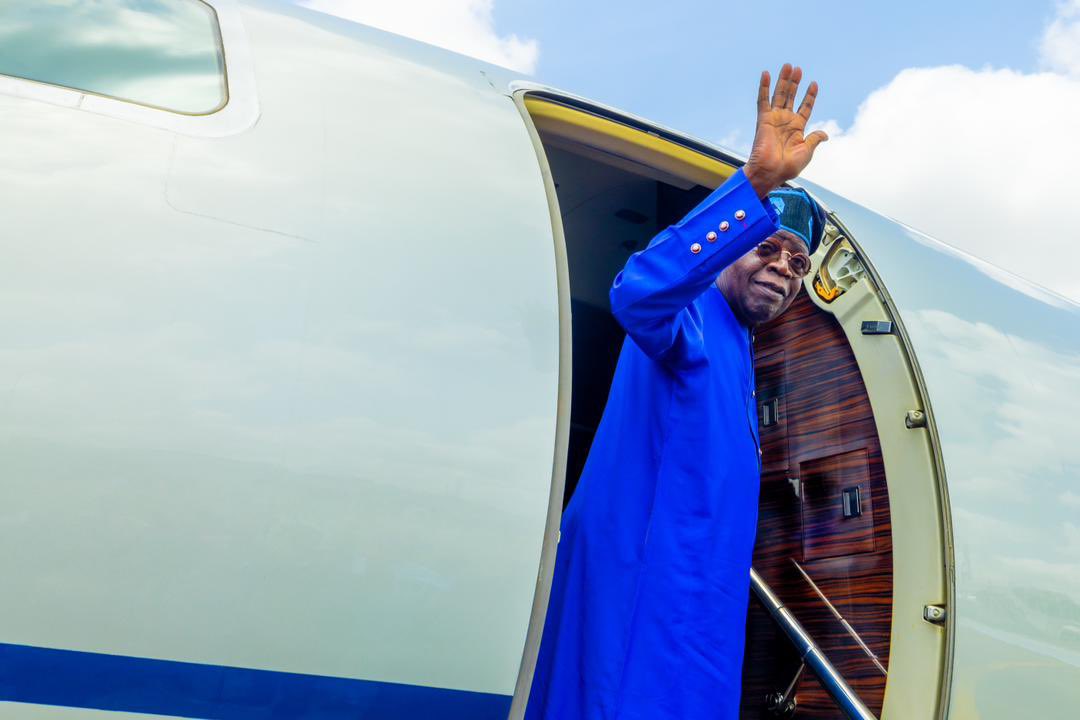
President Bola Ahmad Tinubu, on Friday, had a meeting behind closed doors with governors of the All Progressives Congress, APC.

President Tinubu, in a Facebook post, posted about the meeting with the governors at the Presidential Villa, Abuja.

“Today, I had the delight of welcoming distinguished Governors from our great party, the APC, to the State House.

“Together, we reaffirmed our commitment and united efforts in realizing our cherished vision for Nigeria. With every hand on deck, We are resolute in our pursuit of a prosperous nation.” the post says.

The governors were led to the State House by Imo State Governor, Hope Uzodinma, who recently assumed the role of Chairman of the Progressives Governors Forum, PGF.

Seventeen of the twenty APC governors were in attendance. However, conspicuously absent from the meeting were Governor Oluwarotimi Akeredolu of Ondo State, Abiodun Abayomi Oyebanji of Ekiti State and Dr Nasir Idris of Kebbi State.

“Subsidy is gone”: A simple explainer


By Abdulhaleem Ishaq Ringim

The enactment of the Petroleum Industry Act 2021 was intended to mark a significant shift in the regulation of the downstream petroleum sector. The act aimed to align petrol prices with market dynamics, phasing out the fuel subsidy regime. However, despite the planned full deregulation in February 2022, the government continued to allocate funds for subsidies, leading to financial strain and mounting debts.

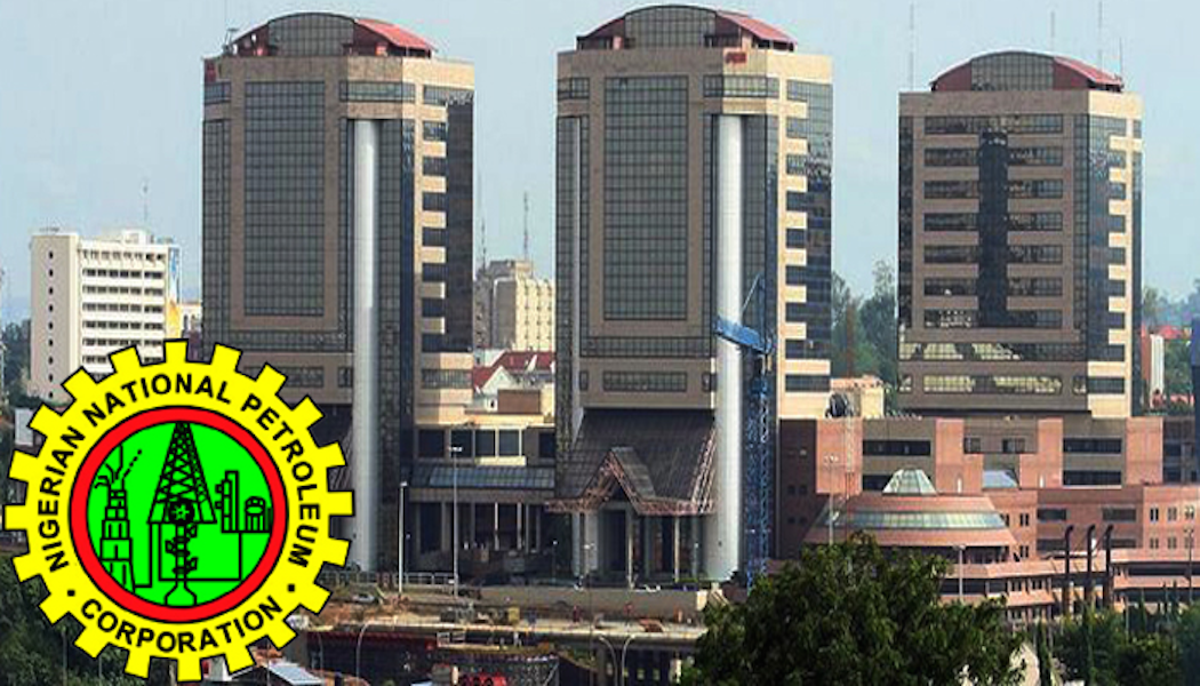
Under the Petroleum Industry Act, the government ought to have terminated fuel subsidies and allow petrol prices to reflect the general market rates six months after its enactment. However, the government continued to provide for subsidy costs in its budget. Due to financial constraints, the government could not back the subsidy provisions in the 2022 and 2023 budgets with financing, resulting in unpaid subsidy costs. The Nigerian National Petroleum Company Limited (NNPCL), acting as the supplier of last resort, offset these costs. This resulted in the accumulation of debt of N2.8 trillion for the government in the process.

The new President, Bola Ahmed Tinubu, has pronounced the termination of the subsidy regime. This is in line with the law and is further necessitated by the inability to finance subsidy commitments since February 2022. The removal of subsidies means that petrol prices will now fluctuate based on market dynamics rather than being fixed. 

While the arguments continue on whether the announcement approach was systematic or not, it has to a certain extent, saved the country from the intense speculative buying activities that would have resulted from scheduling the announcement and other implications that would have marred such gradualism. I consider it a welcome development and commend the President for such uncommon courage, which has been missing in the governance space for long. 

However, the repercussions extend beyond price adjustments. The rise in price will naturally raise the costs of transportation, which will, in turn, further pressurise the country’s inflation rate. The government’s lack of resources to offset subsidy liabilities since February and the outstanding debt to NNPCL means there will hardly be any room for reinvestment, including allocating funds for palliatives or post-subsidy shock alleviation. Moreover, it is crucial to note that even when the government was able to offset the subsidy costs, it relied on borrowing rather than revenue to cover the costs, exacerbating the financial burden.

With the subsidy officially and finally gone, the government must prioritise strategies to repay NNPCL’s debt of N2.8 trillion and other subsidy-related debts while refocusing on the productive sectors of the economy and social welfare. This commitment demands immediate attention, as the accumulated debt poses a significant liability and might impede the effective utilisation of government revenues.

An encouraging prospect arises from the current situation as we grapple with outstanding subsidy debts. Once the government’s financial circumstances improve, its focus will permanently shift away from the subsidy regime and towards prioritising crucial areas such as education, health, infrastructure, and other significant sectors. This shift is anticipated and underscores the government’s intention to allocate resources towards enhancing public value and renewing national hope. 

Meanwhile, the government should advisably prioritise the enhancement of public transport systems and collaborate with state governments to improve mass transit systems and infrastructure, especially by incorporating more diesel-based buses into the stock of public transport vehicles in their various states. The situation should also serve as an incentive for state governments to renew focus on developing Bus and Light Rail Transit systems. 

To consolidate this hard decision, the government should consider the privatisation of state-owned refineries to enhance efficiency and promote private sector participation in the downstream sector. By opening up the refineries to private investment, the government can improve their operational performance, output and overall local refining capacity. As the Dangote refinery gets ready to begin operations, the government should also support other private oil-refining projects like the BUA refinery in Akwa Ibom.

Additionally, the Nigerian National Petroleum Company Limited (NNPCL) should explore the possibility of an initial public offering (IPO) to raise capital and expand its operations. Emphasising the development of the gas sector could also be beneficial, considering its potential for revenue generation and reducing dependency on imported fuels.

Abdulhaleem Ishaq Ringim is a political/policy/public affairs analyst. He writes from Zaria and can be reached via haleemabdul1999@gmail.com.

 At the mercy of delegates: The imperative of breaking free

By Mohammad Qaddam Sidq Isa (Daddy)

Regardless of the expectation and anticipation with which the new administration in Nigeria is being greeted, there is no better time than now to embark on efforts to address the underlying challenges that have always undermined the credibility of primaries, hopefully by the 2027 election season, relevant legislation and methods will have been duly reformed.

Towards every election season, people lament the scarcity of suitable candidates for elective positions, which they also rightly attribute to the systematic manipulation of the party nomination process by powerful vested interests within the parties, who impose candidates on the electorate via charades in the name of party consensus or primaries by some hand-picked party delegates.

Public officeholders and other party elites use the instruments of power and public resources at their disposal to ensure the emergence of their political associates, in addition to themselves, of course, as party delegates with a mandate to elect party candidates, on occasion typically characterised by systematic vote buying deals between delegates offering their consciences (if any) for sale. Deep-pocketed politicians jostle to outbid one another.

That has discouraged many conscientious individuals with the potential to turn things around in their respective jurisdictions given the mandate from getting into politics, for they rightly wouldn’t bootlick any so-called political godfather or bribe any greed-motivated delegate. After all, many like-minded individuals have ventured into politics but ended up frustrated at the hands of party manipulators. In contrast, many others of similar calibre have compromised their moral principles to join the corrupt elite they have previously often castigated.

Consequently, the electorate is left with the dilemma of choosing amongst candidates with notorious pasts for gross incompetence, massive corruption cases, and even court convictions against many of them. The average voter, therefore, betrays his underlying frustration by voting for the highest bidder amongst the candidates or voting for whoever his immediate political master endorses, with some hope that the candidate will win. His master will be rewarded with some political appointment or other privileges, for him (voter) to be occasionally rewarded with peanuts by the master throughout his stay in office or continuation of his privileges.

Only a few votes with a conviction may still not be in order anyway, for it might be influenced by one manipulative tactic or another.

Ironically also, there is general indifference in all segments of society. Even democratic activists and advocates for good governance, who are supposed to be particularly committed to demanding, among other things, the reform of the party nomination process, have been largely and inexcusably indifferent. They only rant in futility when it’s too late, i.e. when birds of a feather flock together have emerged as their respective parties’ candidates. Many have become mere attention-seeking opportunists hiding behind activism to extort political appointments and other privileges from the politicians they have criticised in return for their loyalty.

Even the few voices of reason in society only urge the electorate to vote for the so-called best of a bad bunch among the candidates, if any.

Now, until relevant legislation governing the party nomination process and the methods of conducting it are reformed in such a way that it guarantees maximum transparency in the process, the kind of change Nigerians wish for under democracy will never be achieved.

Instead of chasing shadows, therefore, it’s high time that genuine advocates for good governance and other concerned groups and associations embarked on a concerted campaign to demand the reform of relevant legislation to abolish the current corruption-laden delegate primaries and consensus and adopt a direct and transparent primary where all party members are eligible to vote, as the only legal method of nominating party candidates at all levels.

The imperative of demanding such reform represents a challenge that puts Nigerians’ yearning for good governance to the test. If the next general election doesn’t achieve the reform, then the yearning is simply not genuine enough. 

However, even when realised, it’s naive to assume it’s unmanipulable. Vested interests within parties will keep trying to manipulate it. Yet, when sustained, it will undoubtedly make the quest for good governance more achievable, enabling people at various levels to push for and secure the emergence of the best amongst them as parties’ candidates for various elective offices.

That way, Nigerians will be able to break free from the grip of party delegates to freely elect the calibre of people with the capacity, credibility, inventiveness, and passion necessary to turn things around in the country.

Though the beneficiaries of the status quo will vehemently resist and undermine any attempt to reform it, they will eventually succumb to the collective willpower of the people, provided they remain passionate, resilient, and determined enough.

Mohammad Qaddam Sidq Isa can be contacted via mohammadsidq@gmail.com.

Kashim Shettima: Unveiling the next chairman of NEC 

By Lawan Bukar Maigana 

An expert in agricultural economics will soon be chairing the National Economic Council, NEC. Kashim Shettima is an economic strategist whose skills in profit and wealth maximization earned him accelerated promotions in the banking industry. 

Apart from the inimitable Jim Ovia, the founder of Zenith Bank, nobody professionally grew faster than the Vice President-Elect, who championed the cause of Zenith Bank’s growth.

Shettima’s eye-catching performance in the banking system endeared him to the then Governor of Borno State, Dr Ali Modu Sharif, who first appointed him as Commissioner of Finance and Economic Development in 2007. He would later become Commissioner of Agriculture as well as Commissioner of Health, and Local Government and Chieftaincy Affairs.

Every transition in Shettima’s life is merit-based. He doesn’t get things on a platter of gold.

The former banking guru is known for his honey badger courage, who never hesitates to attack animals much larger than itself, including lions and crocodiles.

Shettima knew the consequences of standing with his boss, President-elect Asiwaju Bola Ahmed Tinubu, at the time, all abandoned him, but the lion’s bravery in him motivated him to stand by what he firmly believed in. His bravery is worthy of emulation because he always hunts big and gets them. 

The former Governor, in his campaign, has explicitly spoken about the issues affecting this country and extensively suggested realistic mechanisms with which the problems of unemployment and insecurity would be addressed. His focus is largely on the youth, the leaders of tomorrow. 

Like Tinubu, who used his global-certified skills in profit and wealth maximization and management to transform a super slum Lagos into Shangri-la, Shettima similarly rehabilitated Borno when he was governor. The state was overwhelmed by insurgents, but he never feared rebuilding and reforming every facility they destroyed. 

Even strategic attacks on his convoy didn’t stop him from travelling to LGAs to give them hope, reconstruct their houses, and sympathize with them. 

Nigeria is suffering from massive unemployment, insecurity, and a poor road network, among other developmental challenges. I am confident Shettima and Tinubu will rewrite Nigeria’s story in the most brilliant way.

Lawan Bukar Maigana writes from Maiduguri and can be reached via email: lawanbukarmaigana@gmail.com.

Bauchi: Government must promote basic education by rewarding excellence

By Umar Sani Yakubu

“In a few weeks from now, we shall be done with the junior secondary school certificate examination, and from then on, I am done with Western education.”

Above is what my ears brought to me as it was uttered in the Hausa language after I walked past some probably junior secondary school students in the Bauchi metropolis.

This statement by a young lad disturbed me. It proves to me how true it is that Bauchi State is counted as one of the states in the country with a high rate of out-of-school children.

However, proving that Bauchi State forms part of the state in Nigeria with a high rate of out-of-school children, this development has led to much criticism from concerned citizens as to why the state would join such a demeaning but objective reality. First, some critics blame the decade-long insurgency in the Northeast, where the state emerges. While some blame the root cause on parents’ lackadaisical attitude in enrolling the children in school, political opponents of the government accuse it of not providing the needed atmosphere for learning.

 Albeit, whatever it is that led our dear state into such a situation, the state government must be at its feet to make sure things are done well.

Relatively, it was against that backdrop that I was amazed at the government’s inattentiveness to the course in encouraging the students to do better in their studies. I point out the recent remarkable performance of some students who emerged from and represented the state in a national competition and were victorious above all the remaining participating states in the country.

Those students have been celebrated and recognised by many concerned individuals in Bauchi State and beyond; unfortunately, the state government has yet to say a word about the development.

 Is it this way that the government plans to make their youngsters remain on the course of changing the blackmailing narratives?

 I don’t believe all is right. But, of course, something must be wrong somewhere.

Suffice it to say; we are all witnesses to when the government in the state recognised and rewarded mere social media actors, etc. If political and social media actors can be recognised and even rewarded, why not a best-performing student who earned respect not only for themselves and the school but also for the state in the eyes of the world?

These students from Government College (Special School) Toro who participated in the recent National Inter-secondary Schools Quiz competition organised by the Raw Materials Research and Development Council and came out first must be recognised and celebrated by every serious state government where they emerged, especially as they are trained in a government-owned school as opposed to any proud private schools.

As Bauchi State is in a dangerous situation as its youth quit education for other heinous acts like Sara Suka, the state government must be reminded that giving such recognition and even awarding scholarships is vital in encouraging children to see the light in the path of their education.

Consequently, celebrating students of the state with remarkable performance in school and even rewarding them with scholarships stands to draw the attention of the wayward to education and encourage those already in the system to put in more effort.

Finally, with my confidence in the present administration of His Excellency Governor Bala Abdulkadir Muhammed, I hope the best brains from Government College Toro will be identified and rewarded for making the state proud in the competition above.

Gone were the days in Bauchi when international scholarships were given to the best brains, many of whom are now professionals in their respective careers.

 Sani is a concerned citizen from Bauchi State and can be reached at saniumaryakubu@gmail.com.

ABU wins Huawei ICT Competition in China

By Ahmad Deedat Zakari

The Ahmadu Bello University (ABU), Zaria, has emerged winner at the Huawei ICT Competition for the 2022-2023 Global Final held in Shenzhen, China.  

The management of Huawei disclosed on their website that the competition was the first to be held physically since 2019, and about 80 universities worldwide participated.

“Today, the Huawei ICT Competition 2022-2023 Global Final concluded in Shenzhen, drawing to a close the seventh instalment of this competition. The first to be held in person since 2019, the event’s culmination was a competition between finalists in 146 teams from 36 countries. Before the Final, more than 120,000 students from more than 2000 universities in 74 countries and regions around the world took part in the ICT Competition,” the statement reads.

Maryam Jimoh Olalade, Haruna Anas, Ahmad Abdullahi and Elayo Aliyu Isah represented the institution that won the prize.

Abolishing Nigerian godfatherism mentality

By Usman Muhammad Salihu

Nigeria has long been known for its political culture of godfatherism, which refers to a system in which a powerful politician or group of politicians wield significant control over the political fortunes of others. The practice of godfatherism has been a defining feature of Nigerian politics for decades, and it has been blamed for perpetuating corruption, stifling democratic participation, and hindering economic growth and development.

Godfatherism in Nigeria is typically characterised by a system in which a powerful politician, usually an incumbent governor or party leader, sponsors and funds the candidacy of a less-established politician or aspirant for an elected office. In exchange, the godfather expects loyalty and a significant portion of the proceeds from the office once the candidate is elected.

This system has become deeply entrenched in Nigerian politics, and it has produced a political class that is more interested in personal gain and self-preservation than in serving the needs and interests of the people. The consequences of godfatherism are numerous and far-reaching, and they include:

Corruption: Godfatherism promotes corruption in the political system, as the godfather expects a significant return on their investment in the candidate. This often leads to a cycle of corruption, where the candidate engages in corrupt practices to satisfy the demands of the godfather.

Lack of accountability: The godfather system creates a culture of impunity in which elected officials feel less accountable to the people they represent. This lack of accountability undermines the credibility of the democratic process and perpetuates a culture of political apathy among citizens.

Stifling of democracy: Godfatherism stifles the growth of democracy by limiting the ability of independent-minded candidates to contest for political office. This limits the choices available to voters and undermines the democratic process.

Economic stagnation: The godfather system discourages economic growth and development by favouring candidates more interested in their gain than in implementing policies that will benefit the economy.

Social inequality: The godfather system reinforces social inequality by favouring candidates from privileged backgrounds or with access to financial resources. This leaves many citizens without a voice in the political process and perpetuates a system of elitism.

Given the many negative consequences of godfatherism, it is clear that this practice must be abolished if Nigeria is to realise its full potential as a democratic and prosperous nation. This will require a concerted effort from all stakeholders, including politicians, civil society organisations, the media, and the general public.

To achieve this goal, Nigeria must strengthen its democratic institutions, including the judiciary and the electoral system, to ensure they are more independent and less susceptible to external influence. Additionally, there must be greater awareness and mobilisation of the public to demand accountability and transparency from elected officials.

In conclusion, the mentality of godfatherism in Nigeria must be abolished if the country is to achieve its full potential. This will require a long-term commitment to strengthening democratic institutions, promoting accountability and transparency, and mobilising the public to demand change. With a concerted effort from all stakeholders, Nigeria can move beyond the politics of godfatherism and towards a more democratic and prosperous future.

Usman Muhammad Salihu wrote from the Mass Communication department, Abubakar Tatari Ali Polytechnic, Bauchi State. He can be contacted via muhammadu5363@gmail.com.

Will Dangote Refinery be a monopoly?

By Zayyad I. Muhammad

One entity that will benefit most from the Petroleum Industry Act (PIA ) is Aliko Dangote, with his 650,000 barrels per day integrated refinery, which is Africa’s biggest and the world’s biggest single-train facility. The refinery has 1,100 kilometres of pipeline to handle three billion Standard Cubic feet of gas per day. In addition, it has power plants with a combined capacity of about 400MW.

Section 317 (8) of the Senate version of the PIA noted that petrol importation license would be restricted “only to companies with active local refining licenses”. This clause and the unmatched prowess occasioned by the refinery is a formidable edge for Dangote. However, some report state that the federal government has reversed these exclusive petrol importation rights.

Dangote can have absolute control of the petroleum industry’s downstream and midstream sectors. How? Dangote can acquire the numerous idle fuel stations scattered nationwide or take over one of the established major retail marketers, though most idle stations are not strategically located. However, Dangote can revive and utilise them using the price advantage- by setting an unbeatable price, and a litre is a litre strategy, employing the best domestic workforce in the downstream sector and optimising modern technology for service delivery in these stations.

The petroleum retail industry is growing in Nigeria. The growing number of fuel stations across corners of the country is proof of this. But operational and logistical gaps remain in the blooming industry, like bad roads coupled with the use of old trucks, poor remuneration of drivers, and lack of modern technology. Thus the industry is losing billions of Naira due to shortages when truck discharge petroleum products at fuel stations and the rising disputes between drivers and station managers.

Furthermore, some marketers have poor welfare systems for staff and have not put in place some feasible plans for the realities that will accompany the arrival of the Dangote Refinery in the PIA regime. As a result, many of them may end up operating in the dark. For any marketer to survive the new regime, they must set up a strong think-tank or a special unit in their R&D departments to ‘look’ at the future, opportunities and threats and opportunities that Dangote Refinery will come with.

With his current economic capacity, Dangote can exploit oblivious lapses to implement backward integration in the petroleum industry. The $100 million Dangote-Sinotruck plant in Lagos will give Dangote an advantage in the logistics and operations sector. The plant assembles trucks and cars in Nigeria for local use and export; it is 65 per cent owned by Dangote and 35 per cent by Sinotruck. Therefore, having new petroleum distribution trucks and well-trained and well-paid drivers will not be difficult for Dangote.

The Dangote Refinery will give him the required volume of products and enough loading bay for trucks to load. The refinery covers 2,635 hectares of land, six times the size of Victoria Island, Lagos. Scarcity will not be challenging for Dangote if he ventures into retail. Dangote can tap the domestic workforce to employ the best hands in the downstream sector. With access to funding and resources, Dangote can deploy massive Liquefied Petroleum Gas (LPG) and Compressed Natural Gas (CNG) skids at once in as many stations as possible to also prepare for the future.

As mentioned, if Dangote acquires these thousands of idle fuel stations or any of the established major marketers, the brand can offer mouth-watering prices at these stations, making customers travel even 5km just to purchase petroleum products at a Dangote station. Furthermore, these prices can knock many competitors out of the market. However, some of them can still survive as third-party partners to Dangote. However, the NNPC can take advantage of its $2.76 billion stake in the Dangote Refinery and boast its retail business.

With this colossal refinery, Dangote has the advantage in the midstream and downstream of the oil and oil gas industry. Anyone coming in will need the next ten years to catch up. The bigger, the more advantageous, it seems!

Zayyad I. Muhammad writes from Abuja via zaymohd@yahoo.mom.

A scorecard for Buhari 

By Mukhtar Jarmajo 

As President Buhari prepares to leave office the following Monday, reflecting on his tenure and his impact on Nigeria is important. When he assumed office in 2015, he came with the promise of improving security, revamping the economy and tackling corruption. While much is still desired, it is clear that he has made significant strides in achieving these goals.

On security, President Buhari’s administration has made considerable progress in the fight against insurgency, particularly in the country’s northeast region. The Boko Haram terrorist group has been significantly weakened, and the government has also made gains in the fight against banditry and kidnapping in other parts of the country. Although much work still needs to be done, it is clear that the foundations for a more secure Nigeria have been laid.

In terms of the economy, President Buhari inherited a challenging economic situation, with falling oil prices and a depreciating currency. His administration implemented a series of economic policies, including a diversification drive, the implementation of the Treasury Single Account, and the launch of the Economic Recovery and Growth Plan. These policies have helped to stabilise the economy and put it on the path to growth. While there is still much work to be done, the next administration will have a more solid foundation to build upon.

President Buhari’s administration also significantly tackled corruption, a major challenge for Nigeria for many years. The government implemented various anti-corruption measures, including establishing the Presidential Advisory Committee Against Corruption, launching the Whistleblower Policy, and prosecuting high-profile corruption cases. While corruption remains a major issue, it is clear that the government’s efforts have had a positive impact and set the stage for further progress.

Many challenges have characterised President Buhari’s tenure, but also significant achievements. As he prepares to leave office, it is clear that he has laid the groundwork for a more secure, prosperous, and corruption-free Nigeria. The incoming president will undoubtedly find things easier, given that many of the difficult decisions needed to make Nigeria great have already been taken. President Buhari will go down in history as one of the most tolerated presidents in the annals of Nigeria, and his contributions to the country will be remembered for years.

Jarmajo wrote from Wuse Zone 2, Abuja.