Nigeria

We need in-depth understanding of oil sector—Speaker Abbas

By Abdullahi Mukhtar Algasgaini 

The leadership of the House of Representatives, led by Speaker Abbas Tajudeen, Ph.D., paid a familiarisation tour to the Dangote Refinery and Petrochemicals Company in Lagos on Saturday. 

The familiarisation visit, which was at the invitation of the Dangote Group, was initially planned to take place jointly with the leadership of the Senate on June 3, 2024.

However, the leadership of the National Assembly had to put the visit on hold to meet with the leadership of the organised labour on the strike it embarked on at the time. 

The Senate leadership has since embarked on the visit separately, while the House leadership has slated July 20 for its own. 

The House leadership arrived in Lagos on Friday ahead of the familiarisation visit. Speaking when the leadership was conducted around the facility by the President of the Dangote Group, Alhaji Aliko Dangote, Speaker Abbas noted that the tour was part of the continuous efforts to understand and support key industries within our nation’s economy. 

“The purpose of this visit is to provide the House Leadership and the relevant oil and gas committees with an in-depth understanding of the nature, scope, and activities of the Dangote Refinery. This initiative aligns with our legislative agenda, which aims to support the President’s Renewed Hope agenda, focusing on economic transformation, growth, and development. 

“This familiarisation tour underscores our commitment to engaging with and supporting critical sectors that drive our economy. Also, this visit provides valuable insights that will inform our legislative measures and decisions. 

“We remain dedicated to fostering an environment conducive to economic growth and development, ensuring that our legislative actions align with the broader goals of national progress as articulated by President Bola Ahmed Tinubu, GCFR.  

He said, “We are acutely aware of the challenges facing the private sector in Nigeria, including regulatory hurdles, infrastructure deficits, and access to finance. The House of Representatives is committed to addressing these issues and improving the ease of doing business in our country. 

“We are working diligently to create a more business-friendly environment through legislative reforms that streamline processes, reduce bureaucracy, and enhance transparency. Our goal is to make Nigeria an attractive destination for both local and international investors. 

“Together, we can drive Nigeria forward, harnessing the full potential of our resources and talents. I look forward to continued collaboration and a prosperous future for our great nation.” 

He said the Dangote refinery “symbolizes not only the strength and potential of Nigerian industry but also the dedication and vision of one of our most esteemed business leaders, Mr. Aliko Dangote.

“However, the journey does not end here. There is always more we can do together to bolster our economy. I encourage Dangote Group to continue exploring avenues to complement government initiatives. By investing in renewable energy, enhancing corporate social responsibility programs, and fostering innovation through research and development, Dangote can further solidify its role as a key player in our economic landscape.” 

The Speaker was in company of the Deputy Speaker, Rt. Hon. Benjamin Okezie Kalu; House Leader, Hon. Julius Ihonvbere; Chief Whip, Hon. Usman Bello Kumo; Deputy House Leader, Hon. Abdullahi Ibrahim Halims; Deputy Whip, Hon. Adewumi Onanuga; Minority Leader, Hon. Kingsley Chinda; Minority Whip, Hon. Ali Isa; Deputy Minority Leader, Hon. Aliyu Sani Madaki, and Deputy Minority Whip, Hon. George Ozodinobi. 

Also in the delegation were the chairmen of relevant oil and gas committees and their deputies.

Economic woes may lead to national collapse – Coalition of Northern Groups warns Tinubu 

By Uzair Adam Imam

The Coalition of Northern Groups (CNG) has expressed concern over the severe economic hardship currently affecting Nigeria and has cautioned President Bola Ahmed Tinubu about the potential collapse of the nation. 

Comrade Jamilu Aliyu Charanchi, the National Coordinator of CNG, voiced these concerns during a press briefing in Abuja, warning that the situation “portends imminent danger.”

Charanchi emphasized the importance of addressing the escalating hardship that has permeated every segment of Nigerian society, noting that life has become highly unbearable for the majority of citizens. 

He stressed that the CNG felt obligated to bring this alarming danger to President Tinubu’s attention, pointing to the potential for a massive revolt against the government.

Charanchi also criticized former President Muhammadu Buhari and President Tinubu for worsening the country’s economic situation, making life even more difficult for the vast majority of Nigerians, especially the poor.

He stated, “The suffering of Nigerians is palpable across every stratum. The CNG holds the present and previous governments responsible for creating this dire situation for Nigerians.”

He stated that the current economic indices and data from the Nigeria Bureau of Statistics (NBS) indicate that 133 million Nigerians are living in multidimensional poverty, with 20 million people, mostly young and within the productive age bracket, either completely unemployed or underemployed. 

Charanchi highlighted the growing disillusionment among the populace with the government’s economic policies and institutions, which poses a significant danger to the country.

He noted that inflation has had severe economic consequences, including substantial investment losses, business disruptions, increased poverty, and unemployment. 

He added that the insecurity has led to displacement, loss of lives and properties, and psychological trauma, adding, “The widespread hardship has eroded trust in the current government and threatens national unity, peace, and security.”

Charanchi pointed out that overall inflation has risen to 34.19% from 22.41%, a 52.6% increase, while food inflation has surged from 24.82% to 40.66%, a 64% increase within a year—the highest recorded in decades. 

He also criticized the significant rise in electricity tariffs, despite no improvement in power supply, noting that the electricity tariff has increased by an average of ₦71.59 to ₦225, a rise of over 200% for band A. Nigeria has experienced multiple national power grid collapses in the past six months, including the most recent on July 6, 2024. 

Charanchi also criticized the government’s recent announcement to distribute 880,020 bags of rice nationwide to alleviate hardship, stating that these measures are inadequate to address mass hunger affecting millions of Nigerians. 

He added that the president’s cosmetic measures are insufficient to contain the anger of the people, particularly when they are faced with economic hardships, massive hunger, and rampant poverty, while the political class lives in opulence.

Winner to get 500k, laptop as Da’wah Institute launches online quiz

By Ishaka Mohammed

The Da’wah Institute (DIN) has launched an online quiz for Nigerian Muslims to deepen their understanding of Islam and win cash prizes and laptops.

According to the Institute’s director of digital media, Teslim Adeyemo, 20 winners will emerge, with the least prizewinner receiving N50,000. Part of the statement details the prizes as follows:

“Awards await the top 20 performers as follows: 1st place (laptop + N500,000), 2nd place (laptop + N350,000), 3rd place (laptop + N150,000), 4th – 10th places (N100,000 each), and 11th – 20th places (N50,000 each).”

The top ten winners will be invited in person to the prize-giving at the Islamic Education Trust (IET) headquarters in Minna, the Niger State capital, while the rest of the winners will join virtually.

The maiden “Know Your Deen Online Quiz” is scheduled for August 25, 2024 and will be based on a book titled “Authenticity of the Qur’an: A concise analysis of arguments regarding the divine authorship and authenticity of the Muslim sacred scripture.”

Interested Muslim residents in Nigeria can register for free at https://dawahinstitute.org/online-quiz-registration/ before August 15 and download the electronic (PDF) version of the book, which has fewer than 100 pages.

The Da’wah Institute (DIN) is the research and public enlightenment department of the Islamic Education Trust (IET), a non-governmental organisation established in Nigeria in 1969.

Investments in key sectors assessed based on impact on citizens—Tinubu

By Abdullahi Mukhtar Algasgaini 

President Bola Tinubu said on Friday in Abuja that the federal government would ensure that investments in key sectors of the economy follow clear timelines and are impactful on the lives of citizens.  

President Tinubu, who received the management of the Aluminium Smelter Company of Nigeria (ALSCON) led by the Chairman, Alexey Arnautov, at the State House, said the government was keen on reviving the smelter company in Ikot Abasi, Akwa Ibom State.  

“It is good to have you at this meeting. Smelter is necessary for the development of the country,’’ the President stated.  

President Tinubu reiterated the need for clear vision and detailed plans in the steel and energy sector, adding that “there must be timelines’’. 

In his remarks, the Chairman of ALSCON assured the President of the preparedness of the management to turn around the fortunes of the company within a given period by injecting $500 million.  

Arnautov said the management was aware of the centrality of aluminium in modern development, particularly for Nigeria, and would continue to support the growth of the country.  

President Tinubu directed the Minister of Steel Development, Prince Shuaibu Audu, and the Special Adviser to the President on Energy, Ms. Olu Verheijen, to review and provide an update on the status of ALSCON.

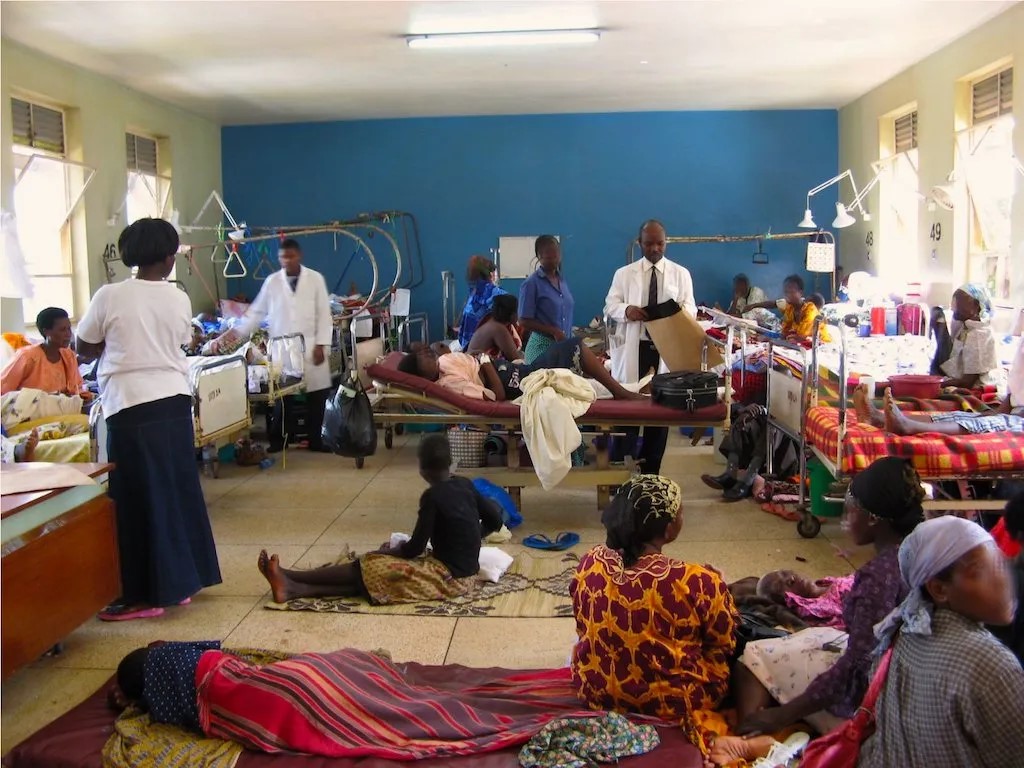
GCC, government fight maternal mortality in Borno 

By Lawan Bukar Maigana 

According to a report by the World Health Organization, Nigeria, after India, has the highest number of maternal mortality in the world. The report shows 788 women and children deaths per hundred thousand’ in India, and 540 women and children ‘per thousand’ died in Nigeria.

Other countries with high maternal, neonatal, and stillbirth rates are Pakistan, the Democratic Republic of the Congo, Ethiopia, Bangladesh, China, Indonesia, Afghanistan, and the United Republic of Tanzania.

‘About 57,000 mothers died from pregnancy and complications during childbirth in 2023 alone,’ said Nigeria’s Minister of Health and Social Welfare, Muhammad Pate, at a public health function.

Unfortunately, the frequent loss of lives among pregnant women in Nigeria, particularly Northern Nigeria, remains an issue of concern. This gives Nigeria a poor global ranking.

Pate explained that the Federal Government was committed to drastically reducing maternal mortality through the new Safe Motherhood Strategy. He noted that the central government will take actionable steps and cascade the strategies to state and local governments, targeting at least seven million pregnant women.

“The aim is to ease six million new births by activating the Decentralised Facility Financing package, establishing robust collaboration with health NGOs, community leaders, and media to boost awareness campaigns.” 

Sequel to the Health Minister’s lamentation, the Girl Child Concerns (GCC), in collaboration with the Borno State Government through the Multi-Sectoral Crisis Recovery Project (MCRP), has trained 300 Community Health Extension Workers (CHEWs) on Basic Emergency Obstetric Care and Early Neonatal Care in Borno State.

The Chief Adviser and Coordinator for Sustainable Development, Partnerships, and Humanitarian Support to the Governor of Borno State, Dr. Mairo Mandara, stated that the training aimed to improve maternal and child health services across the state. The training was conducted in three zones of the state. Each zone underwent one week of theoretical training followed by one week of clinical training. 

The training for Borno Central was held on May 27, 2024, for Borno North on June 3rd, and for Borno South on July 1st, with each zone being exposed to theoretical and clinical aspects of the training.

Dr. Mandara emphasized the governor’s commitment to ensuring quality health services for the resilient people of Borno State, especially the locals, given the magnitude of the challenges they face due to the terrorist activities of Boko Haram insurgents in their communities.

Dr. Mina Endeley from the Namu Project in the UK and Oluwaseyi Akinlaja from Princes Alexandra Hospital Trust in the UK have also joined the training, leading a practical session on successful delivery and universal approaches to handling emergency cases.

Endeley at MCH Biu Local Government Area practically taught non-medical attendants the concepts of basic life support, including managing catastrophic bleeding in the community.

The participants practised approaching the scene safely, calling for help, managing catastrophic bleeding, and reviewing the patient’s airway, breathing, and circulation using a mnemonic we created.

Oluwaseyi Akinlaja from Princess Alexandra Hospital Trust, UK, explained the labour mechanism: how a baby is delivered as it passes through the pelvis into the birth canal and is born by expulsion. This was done to enable CHEWs to visualize the birth process so that they could make early referrals when necessary.

She exposed the participants to the seven steps/processes that a baby passes through before delivery, namely engagement, descent, flexion, internal rotation, extension, external rotation, and extension.

On his part, the Emir of Biu, Maidala Mustapha Umar Aliyu II, described the combined efforts of the organization—GCC—and Borno State Government as a “timely homily” and expressed readiness to support the effort in every way possible.

The lead facilitator of the training, Hadiza Yahaya, has expressed satisfaction with the performance of the participants during the training and expressed hope that the CHEWs will help greatly in the fight against maternal mortality. 

The training offered to Community Health Extension Workers (CHEWs) in Borno State is expected to result in each participant putting the knowledge into practice and witnessing a drastic reduction in maternal mortality in the state.

Lawan Bukar Maigana is the Communication Officer for Girl Child Concerns, GCC, and can be reached via email at lawanbukarmaigana@gmail.com.

Lawmakers slash salaries to address high cost of food

By Uzair Adam Imam

The House of Representatives has resolved to support the Federal Government by cutting down its salaries by 50% for six months to address the high cost of food and support food sufficiency across the country.

This decision was made on Thursday during the plenary session in Abuja, and the lawmakers also appealed to Nigerians to exercise patience with President Ahmed Tinubu’s administration as it addresses the challenges and hardships faced by citizens.

The House mandated its Committee on Appropriation, Humanitarian Affairs, Finance, and Budget to ensure compliance with the resolution. The motion was moved by Hon. Ibrahim Isiaka (APC-Ogun State) and adopted by the House.

Additionally, the House of Representatives has pledged to support the Federal Government with ₦648 million for six months to address food sufficiency and the high cost of food.

Details later….

FG reverses decision, sets 16 as minimum age for tertiary institution admission

By Uzair Adam Imam

The Federal Government has reversed its earlier decision, announcing that 16-year-olds can now be admitted into tertiary institutions.

Education Minister Prof. Tahir Mamman had initially directed the Joint Admissions and Matriculation Board (JAMB) to only admit candidates who are 18 years or older.

However, stakeholders at a policy meeting organized by JAMB in Abuja objected to this decision, arguing that it is illogical to deny admission to 16-year-old students who have passed the West African Examinations Council (WAEC) and JAMB exams.

Following this feedback, the minister accepted the stakeholders’ suggestions and announced that candidates aged 16 and above would be eligible for admission this year, while the new policy would take effect from next year.

Number of asylum seekers unprecedentedly over 660,000 under Buhari—Report

By Sabiu Abdullahi

A recent report by Statisense, a data collection organisation, reveals that a staggering 664,384 Nigerians sought asylum in other countries between 2016 and 2023.

This significant increase occurred during the administration of former President Muhammadu Buhari. 

The report, which cites the United Nations Refugee Agency, shows a steady rise in asylum seekers.

In 2016, 66,862 Nigerians sought asylum, increasing to 91,924 in 2017, 84,624 in 2018, 112,382 in 2019, 73,233 in 2020, 83,105 in 2021, 83,402 in 2022, and 68,852 in 2023. 

The Republic of Niger hosted the largest number of Nigerian refugees in 2023, with 200,497 individuals.

This brings the total number of Nigerian refugees in Niger between 2015 and 2023 to 1,268,464. 

Nigeria also topped the list of African countries whose citizens sought asylum in Canada in 2023, with 10,111 individuals.

Additionally, 1,345 Nigerians sought asylum in the United Kingdom, and 5,136 in the United States. 

This trend highlights the need for policymakers to address the underlying factors driving Nigerian citizens to seek asylum abroad.

Nigerian lawmakers consider single 6-year term for president, governors, chairmen

By Sabiu Abdullahi

A proposed constitutional amendment aimed at introducing a single six-year term for the President, state governors, and Local Government Area chairmen has passed its first reading in the House of Representatives.

The bill, sponsored by Representative Ikenga Ugochinyere and 50 other lawmakers, seeks to reduce election costs and promote stability in government. 

If enacted, the amendment would extend the tenure of these offices from four to six years, commencing from the date of their election.

The bill also provides for the extension of the term in cases of war or election annulments. 

The proposed amendment has sparked debate among political analysts, with some arguing that it could lead to a concentration of power and undermine democratic principles.

However, proponents of the bill argue that it would reduce the financial burden of frequent elections and promote continuity in governance. 

The bill will undergo further debate and scrutiny before a final vote.

Lawmakers to make INEC responsibe for LG elections

By Sabiu Abdullahi

Senator Sunday Karimi, Chairman of the Senate Services Committee, has announced that the National Assembly plans to pass legislation transferring the responsibility of conducting local government elections from state electoral bodies to the Independent National Electoral Commission (INEC). 

Senator Karimi commended President Tinubu for his courage in returning power to the people, stating, “Since 1999, the third tier of government has been nonexistent. State governments treated them as appendages. No president has been able to change that, but President Tinubu has returned the local government to the owners – the masses.” 

He lamented potential resistance from state governors but expressed confidence in the President’s commitment to ensuring the judiciary’s independence.

Senator Karimi aligned himself with the President’s stance, praising his courage and understanding of the people’s needs. 

The Senator said it good if capable individuals manage local government funds effectively and prioritise grassroots development. He also highlighted the need for proper allocation of funds, citing past instances of mismanagement or embezzlement. Senator Karimi concluded by assuring that the National Assembly will ensure the legislation is passed and that President Tinubu’s achievement will be remembered, securing his second term.