Nigeria

Doctors threaten to shut down hospitals nationwide

By Ahmad Deedat Zakari

Doctors, under the auspices of the Nigerian Association of Resident Doctors (NARD), have threatened to embark on a nationwide strike if the Federal Government refuses to meet their demands. 

This was disclosed in a letter signed by NARD president, Dr Emeka Innocent Orji, on Monday. The letter, which was addressed to the Minister of Health, Dr Osagie Enahire, gave the Federal Government an ultimatum of two weeks to meet the demands of the union. 

Dr Orji said the strike would commence if the issues are not resolved before the union’s National Executive Council (NEC) meeting slated for January 24th to 28th. 

The letter read in part, “Sir, our January 2023 National Executive Council meeting has been scheduled for January 24th to 28th, 2023, and we can confirm very clearly feelers that if these issues are not sorted out before that meeting, our members will likely give us a mandate to immediately kick-start processes that will lead to a nationwide industrial disharmony in the health sector.”

The Daily Reality has observed that Nigeria is witnessing its worst brain drain among doctors recently; the poor working condition is mainly responsible for the situation.

Nigeria and its challenges: The need for competent leadership

By Muhammad Nazif Abubakar

Nigeria is facing several challenges that threaten its stability and prosperity. From economic struggles to political corruption, the country is at a crossroads and, come February, must take to the ballot and vote for competent leadership that can take actions to address these issues to secure its future.

Nigeria’s numerous economic challenges can be overwhelming in recent years, including declining oil prices and organised oil theft. The latter has significantly impacted the country’s economy, leading to billions of dollars in lost revenue for the government and oil companies and lost profits for businesses operating in the oil industry. This lost revenue could have been used to fund critical public services and infrastructure projects, exacerbating the adverse economic effects of crude oil theft. Moreover, the financial struggles in Nigeria have led to high levels of unemployment, particularly among young people, and have contributed to widespread poverty. In addition, the country has struggled with high inflation levels and a weak currency, making it difficult for people to afford necessities.

Political corruption is another major issue in Nigeria. Politicians and government officials are frequently accused of embezzlement and misusing public funds. Examples of this corruption, most of which were documented by Dr Nura Alkali in his book entitled When Stealing is Not Corruption: Nigeria Under President Jonathan, include the 2015 elections, which were marred by allegations of vote buying and the use of government resources to support certain candidates; the 2012 fuel subsidy scandal, in which billions of dollars in subsidies were embezzled by government officials; the 2010 Halliburton scandal, in which the company paid bribes to Nigerian officials to secure contracts; and the 2015 DasukiGate scandal, in which former National Security Adviser, Colonel Sambo Dasuki embezzled public funds meant for military equipment. More recently, a former Accountant General of the federation was involved in over a 100-billion-naira scandal. Corruption has contributed to a lack of trust in successive governments. It has made it difficult for the country to address its many challenges.

In addition to these economic and political challenges, Nigeria is also facing several security threats. Before 2015, the country was plagued by violence and terrorism, with groups like Boko Haram carrying out attacks on civilians and government targets. This has destabilised the country and made it difficult for citizens, especially in the northeast, to go about their everyday lives. Attacks by members of Boko Haram have drastically subsided in recent years. However, Nigeria is struggling with increasing levels of banditry in its northwest region. This has included armed robberies, kidnappings, and attacks on communities and security personnel. These bands of criminals have caused widespread fear and insecurity in the region, especially in Katsina and Zamfara. In addition, they have made it difficult for people to go about their daily lives.

The root causes of this banditry are complex and multifaceted. Poverty and unemployment are major contributing factors, as many of these bandits are driven by the desire to make a quick profit. In addition, the lack of effective law enforcement and security in the region has made it easier for these criminal groups to operate with impunity. The government has attempted to address this issue by deploying security forces and implementing programs to address poverty, but these efforts have had limited success. It will require a more comprehensive and coordinated approach to effectively address the problem of banditry in Nigeria’s northwest region.

Nigeria has a large and diverse population and a rich history and culture. With exemplary leadership and policies, Nigeria has the potential to become a thriving and prosperous nation. However, this will require a concerted effort to address the issues holding the country back. This will require tackling corruption, improving the economy, and managing security threats. It will also require working to build a more inclusive and just society where all citizens have the opportunity to succeed and thrive.

Despite Nigeria’s many challenges, there is hope for the country’s future. This hope lies in the decisions made during the next election cycle. The person chosen to lead Nigeria must be capable of addressing the country’s problems. As former US Senator Daniel Patrick Moynihan once said, “The single most exciting thing you encounter in government is competence because it is so rare.” Competence is a rare quality in the Nigerian political landscape. Still, it is essential for the success and prosperity of the country. Therefore, we must choose a competent leader to navigate Nigeria’s challenges.

Muhammad Nazif Abubakar from Kaduna via muhd.abubakar@hotmail.com.

Edo train attack: Gunmen demand 620 million as ransom

By Ahmad Deedat Zakari

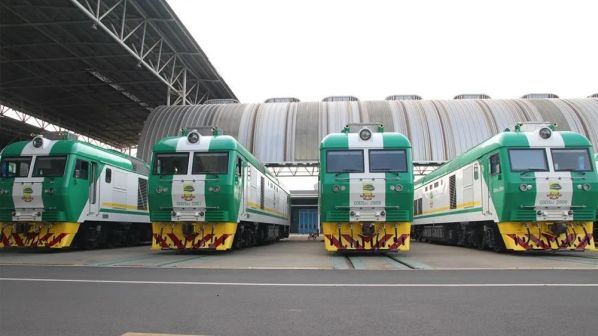
Masterminders of the attack and abduction of not fewer than 31 people from the Tom Ikimi Train Station in Igbueben in Edo State have reached out to some families of the abductees and made demands.

The Executive Director of Esan Youth for Good Governance on Social Justice, Benson Odia, on Monday, disclosed that the kidnappers demanded the sum of 20 million naira from each of the victims.

Odia described the demand as absurd and called on the government to intensify efforts in securing the release of the abductees.

He also disclosed that the Minister of Transportation and the Nigeria Railway Corporation boss visited Igueben to personally assess the situation.

He said, “I can tell you that the kidnappers have demanded N20 million, totalling N620 million. This is absurd and I don’t know where poor people will be able to raise that amount of money.”

Aftermath of ASUU strike and the hike of university fees

By Safiyanu Ladan

The Academic Staff Union of the Universities (ASUU) embarked on an indefinite strike on the 14th February 2022, following years of unresolved issues with the federal government. During the period of the strike, the union had on several occasions met with the federal government representatives headed by the labor and employment minister Chris Ngige with a clear mandate to find a long and lasting solution to the lingering problems but to no avail as the meetings have always ended in deadlock.

Tired and frustrated with that, In September last year, the federal government through the ministry of labor and employment took the union to an industrial court, praying to the court among other things to order the varsity teachers to resume classes with immediate effect. The outcome of the court’s judgement favored the federal government. Paradoxically, the appellant court refused to entertain ASUU’s appeal, saying that until and unless they obey the lower court’s judgement of going back to classes.

The intervention of the speaker, house of representatives Right Hon. Femi Gbajabiamila has paved the way for the varsity workers to get a soft landing in what seems like an unending fracas with the Federal government.

Prolonged and incessant ASUU strikes were this time around followed by a heavy price as the federal government reiterated that, the no work no pay policy has been duly applied to the striking workers. The federal government decision to withhold their salary has generated heated debates and threats from ASUU, but the government remains adamant. Closing down of Universities is at the detriment of students because they are always at the receiving end.

Having been tried but failed to convince the FG to pay the arrears of the past eight months of ASUU members, the management of some universities have decided to compensate that with an increment of students’ school fees. It’s no longer news that some universities have deliberately increased their fees to more than 100%.

It’s now crystal clear that this increment will affect many students because their parents cannot afford to pay such whopping amount of money as school fees. In the meantime, the mass exodus of students dropping out of the universities most especially in the North is imminent. Leaders and everyone should know this. Many students have expressed their worries on the trend and their final resolve to quit.

Safiyanu Ladan wrote from Zariya City and can be reached via uncledoctor24@gmail.com.

Bishop Oyedepo warns youth against Japa, says nation-building should be priority

By Muhammadu Sabiu 

Bishop David Oyedepo has warned young people about the “japa syndrome” (vacating Nigeria for greener pastures).

To rebuild the nation’s lost respect, Oyedepo encouraged the government to invest heavily in its people.

The cleric highlighted that investing more in education is necessary since it is the cornerstone of sustained national development, adding that a conducive atmosphere for youngsters will lessen the rate of Japa.

He was quoted as saying, “Parents need to reorientate their children. We all need to stay in Nigeria to rebuild.

“Everyone has a part to play in the recovery of his nation.”

The North and 2023: Honor and truth, or lies and deceit?

By Tahir Ibrahim Tahir Talban Bauchi

In the 21st century of global villages, democracy, and westernisation of ideals and even beliefs, it is certainly difficult to comprehend what Northern Nigeria is, let alone what it stands for. The massively Islamised North, where peace and religious scholarship reigned supreme, has become a savannah of religious extremism and terrorism and almost a ground for legitimised banditry and bloodshed.

Life has become almost worthless, and tens of thousands of lives are lost to terrorism from Boko Haram in the east and kidnappings and banditry from the west yearly. Its traditional institutions of legendary valour and glorious kinship remain emasculated by State Governors who neither know the value and importance of these institutions nor have an iota of respect for them. Its political leadership is so partisan and fragmented, with every ‘Kingpin’ in bed with one political party or the other, or worst still, belonging to one candidate or the other. The North has remained in name and geography but fortuitously in almost all other ramifications. 

This is what has become of the behemoth The North since the democratisation of the Republic in 1999. For the few years that power has resided in the hands of Northerners, what good was it, and what did it bring since 1999? A large following of the North did mortgage the North’s future turn in power and campaigned for the continuity of Southern power. Only providence saved the day from the bastardisation of our nascent democracy. And perhaps a fall off from that pitiful nuance was another truncated term of a Northerner in power.

Present day 2015 to 2023 Northern Presidency has also been continually challenged by Northerners largely, and even though it has survived that onslaught, a moment of truth has come upon the North, where power arguably, and reasonably, is supposed to move to the South. It may not have been constitutionalised, and it perhaps may not be carried by the statutes of Federal Character, but no sane mind would oppose the notion of a power rotation for the peace and unity of the supposed federating units.

The raging debate is as to whether democracy remains whole when elections are based on ideas like rotation and, in other quarters, if the North has been shortchanged in this dispensation and power can be retained Northwards as a balancing equation. But what is a democracy, if not a phenomenon where the people are to decide how they want to be democratic? And what amount of tenure would strike a balance enough if other parts of the Federation are wont to run back the clock to cover previous republics or even military regimes?

While those debates are waged by the elite and the political strategists, The North, in the last eight years of power, has not been cured of poverty nor its un-educatedness. The reigns of power resident in the North as against the gains of power, be the reins resident in the North or not, seem to be mutually exclusive events. 

The North must learn how not to be in power and yet, record economic growth and development. Development that seeks to bridge the gap of education, infrastructure and disposition. Northerners behaving like expectant infants, to be fed and bred by the government, is sorely a thing of the past. Communist ideals are rarely ideal in the 21st century, where techies are building worlds that are driven by knowledge and technology.

Embracing a new world order, where self-reliance is a burgeoning business, is the new deal. The North must cut deals with the ruling party, where it stands to gain agriculturally and infrastructurally. Its size and population make it unbelievably powerful in the say-so of what happens to Nigeria’s politics. The last 8 years have seen so many Northerners in positions of power, but alas, they have not been able to affect the lives of Northerners, not even in simple small ways. The groaning populace, under the clutches of poverty, is miraculously Northern, while their brothers fill the corridors of power. To what use is this power? The North surely needs more lessons of utility in power. 

The history of the North is not borne out of vain glory. The reputation of integrity, honour and glory was carved into the annals of our history by hardworking, honest men who believed they were leaving a legacy of honour. If the North was hitherto shortchanged, it is not in its place to shortchange others and perpetuate a cycle of vengeance and unfair play. For posterity’s sake, the North must honour its political agreements, either written or not. Murmurings of betrayals by Northern leaders/ governors must be dispelled and should not be entertained, not even by the evilest amongst us. 

In the final analysis, PMB is honouring himself and the North by leaving in 2023, just like Jonathan did himself and the South in 2015. The writer is an advocate of justice and fair play, and of course, power rotation. Mistakes of the past cannot be corrected by mistakes of the future. There is no remedy for an anomaly that was created by a selfish few who were not thinking of their regions or their country but of themselves only. We have survived the Nigeria 2015 apocalypse by a far stretch of another 8 years. Plunging our nation into unnecessary crises is selfish and barbaric. Keeping Nigeria one and sane is what our leaders should be thinking of before their separate agendas. May God bless Nigeria.

Tahir is Talban Bauchi

2023: Does Obasanjo still have any electoral value?

By Mubarak Shu’aibu

With the 2023 general election close at hand, the former President of Nigeria, Chief Olusegun Obasanjo, has released a six-page letter of appeal to Nigerians, targeting the youths in particular.

In the letter, Obasanjo eschewed the likes of Alhaji Atiku Abubakar, his former deputy, Bola Ahmed Tinubu, and his mentee, Engineer Dr Rabiu Musa Kwankwaso and settled for Mr Peter Obi of the Labour Party. The choice has lent credence to those who believed Obasanjo is on a mission to scuffle Atiku’s presidential ambition comes February 2023. It’s in the public domain that former President Obasanjo is embroiled in a conflict with his former Vice,  and that is a good reason to disagree less with those that held such views. 

But, the good news for Atiku and his fanbase is the fact that the letter of his former boss, when placed in brackets with the 2023 presidential election, is a political featherweight. And here’s why.

Regardless of his exaggerated shortcomings, his broad political war chest, vast experience, and first name recognition have put him in the best stead to blitzkrieg the ruling All Progressive Congress (“APC”), a party which is currently battling for its existence. 

Exploring the more contentious articles against Atiku, either from his former boss or any other individual, it only emanates from a phobia that revolves around Atiku’s tendency to resuscitate Nigeria and rewrite his name in the book of history from the bad opinions sold publicly about him, to what he really is.

Another bullet point, unlike Buhari in 2015, the ruling party candidate, Bola Ahmed Tinubu, does not have the overwhelming support of his people. Some of his rebellious allies, such as Professor Yemi Osibanjo, Babachir Lawal, Akinwunmi Ambode, Rotimi Amaechi, and Rauf Aregbesola, are seriously plotting to ambush his ambition. 

These, and a wealth of other reasons, have unsettled  Obasanjo and the G-5 camp, who now looked marooned. However, Atiku’s victory is eminent (by the  Grace of the Almighty). Meanwhile, he’s one Nigerian [Obasanjo] whose opinion, whether right or wrong, doesn’t mean anything to Nigerian youths. As a former military officer, he, along with others, created problems for the country. When we revolted against them, they went through the back door. They’re the chief reason why our democracy is built in such a way that only the interest of the “elites” is protected. And it’s no wonder the last Military Head of State is the political ombudsman of Nigeria. They feel that they’re the power brokers, and anyone seeking a political office must lick their shoes.

And by his assertion that Obi has people who can pull his ears if and when necessary, he’s just trying to muffle the fact that Atiku won’t listen to the cabals. But that’s the sort of President Nigeria needed at this material time.

So, how much electoral value does his letter brings? Zero, I guessed!

Mubarak Shu’aib writes from Hardawa, Misau LGA, Bauchi State, Nigeria. He can be reached via naisabur83@gmail.com.

The Kano of my dream

By Rukayya Abdulhadi

A dream has always been a glimpse of the future—yet to happen and fragments of the past or what we thought to be. But, the Kano of my dream is a Salad of both; past and present.

It has always been hard to differentiate between my dreams and fantasies. What I have always dreamt as Kano, my past, present and future, was just a hallucination. The surest way to make your dreams a reality is to live them.

I dream of Kano to be the peaceful city that it once was – where people slept outside the walls of their rooms undaunted.

A Kano where humans are as safe as birds, swirling inside streets ‘Lunguna’ with no phone snatchers or intimidating drinkers.

A Kano where there is no imposing but tolerant of religion and cultures. Where marriage is bound by love, not ethnicity or race. Where schools outnumbered business centres branded as mosques. Where sect ‘Dariqah’ is not a prerequisite for relationships.

I yearn for Kano to be where nobody has to know someone to get their children educated. Where the rich and the poor eat in the same bowl without distinction. A Kano where anyone sitting on the throne of Emir is respected, their counsel duly noted. A Kano where elders are leaders.

I want Kano to be where every father is a father to all, and every child is a child to society. A Kano, which will not only be the centre of commerce but it is also the portrait that speaks the values of Hausa and Islam. A clustered society that doesn’t discriminate.

A Kano with a unique voice of respected command, youngsters, scared to dare elders. A Kano where respect is bounded by deserving.

A Kano where politics and religion will no longer be an instrument of coercion and manipulation.

A Kano free from the insalubrious dependence of pseudo-clerics, religious entrepreneurs and miracles.

A Kano where religion will not take the place of good governance.

A Kano with critical thinking youth, not human—machines for winning elections.

I dream of a Kano without all the cacophony of the ill-mannered and bastardised semi-illiterate politicians.

A Kano where every girl-child deserves an education, her dreams not shattered by the pretence of street hawking and child marriage. A Kano where female nurses and doctors are welcomed, not accused. Where motherhood and carrier peacefully coexist; accepted. Where a woman’s place is beyond the ‘oza room’.

A Kano where givers give without being asked, where takers take without asking. A Kano free from child labour camouflaged as ‘Almajiranci’.

I would love Kano to be a place wallowing in technology and accelerating towards the future, with a promising economy and fertile land. A Kano where poverty is dying while commerce is thriving.

Where leaders are readers, not a collection of nincompoops monopolising power.

A city where for kids, night tales will replace the abracadabra of TV series and an avalanche of technology with no use.

A Kano of my dream is possible.

As Eleanor Roosevelt said, “The future belongs to those who believe in the beauty of their dreams.”

Rukayya Abdulhadi is among the runners-up in the 2022 “The Kano of my dream” writing competition jointly organised by Muhsin Ibrahim, PhD, and The Daily Reality online newspaper. He can be reached via rukayyaabdulhaddi@gmail.com.

The Kano of my dream

By Abdulmajid Mudassir

I dreamt a good dream, a perfect dream about Kano. I consider Kano the best part of myself. Words are indeed scantier than dreams. The Kano of my dream is nearly impossible to describe. It is the Kano that cannot be found elsewhere in a hurry. Dear reader, I will describe it to you. 

The Kano of my dream is a society where education is the most valued treasure. It is where primary and secondary education is free, compulsory and easily accessible in the real—not political—sense of the word. The Kano from whose territories illiteracy has entirely vanished. The Kano, where tertiary education is affordable and accessible by anyone who wishes to pursue it. Education is the bedrock of any thriving society. Education is to a society what fresh water is to thirsty lips. 

People often say: “health is wealth”. In the Kano of my dream, there is the required number of doctors, nurses, midwives, paediatricians, obstetricians and public health officers who are patriotic and caring. There is also an adequate number of hospitals and materials. Listening to people begging for money via radio stations for medical care is horrific. 

Kano has been blessed with seductive fertile lands: there is virtually no farm produce we cannot grow. I dream of Kano growing food in excess. 

Is a just society not the best society? I dream of Kano, where injustice of any kind is zero-tolerated. Where the weak can successfully seek redress with ease. 

I dream of Kano, where good road networks and potable water in rural areas are available. 

I dream of Kano, where there is respect for the values and dignity of women and where the youth are considered the engine of growth. 

It has been said that every limit is a beginning as well as an ending. All that you read above are hopes. How can we achieve all our hopes? George Elliott, the author of the Middlemarch, said: “hopes are often delusive.” But is hope not delusive only when the wrong remedies are applied? If we carefully observe, understand and plan for the solutions to our problems, they are surmountable. 

Although there is a concentration of pupils in rural areas, primary schools in rural areas give very little or no consideration to knowledge, skills and new ideas needed by these pupils to function effectively in their environment (e.g. farming practice and management, community development, fishing, sheep and goat rearing, hygiene, nutrition etc.). Moreover, the teaching focuses more on recitation and repetition instead of thinking and problem-solving. 

The curricula shall be radically reformed. It should incorporate the subjects needed in rural areas. Our primary and secondary schools should not only focus on general but also a family improvement, community development, and occupational education. Failure to do this will cause the youth to drift away from rural areas, eventually leading to more crimes and job lottery in the Kano metropolitan area. 

To achieve the above, the government shall reopen teachers’ training colleges. Furthermore, primary schools should observe and prepare pupils who distinguish themselves in terms of sharp thinking, problem-solving and creativity for those schools. 

Research shows that not more than 35% of the potentially cultivable lands are used in Kano. Therefore, the government shall revivify our dams, provide more irrigation channels, construct road networks, and provide materials for land improvement in preparation for intensive farming by the teeming unemployed labour force willing to participate in farming. 

As a state estimated to have over 15 million people, it is horrific to learn that no manufacturing company produces merely distilled water in the whole state. Government should concentrate more on providing the sophisticated and expensive machines and other materials desperately needed in our hospitals instead of focusing on building new blocks in the existing hospitals where it is unnecessary. 

It is now the time for Kano City to develop vertically instead of horizontally in building construction. What if we have multiple twenty-and-above-storey buildings in Kantin Kwari Market? The urban planning authority should help with ways to encourage people to build multiple storeys instead of making several buildings with one level. 

Waste materials shall be adequately recycled. In addition, there shall be a widespread plantation of trees. 

What seems a foreboding is the emergence of the modern Almajiri system of education. The situation must be handled properly, for it is a time bomb. The system should be reshuffled and incorporated into the modern education system. 

Our lack of trusted leaders pains me the most. But, with good governance, we can achieve something meaningful. It is, therefore, a collective responsibility to make sure we go out en masse on election days to vote for suitable candidates. 

The leaders know everything except what the followers know better. Therefore, public opinion shall matter in all governmental policies. 

All forms of productive competition, such as agricultural produces and writings (such as this), shall be encouraged. 

Happiness and sports are always hands in gloves. The Kano Pillars should utilise the legacy of Golden Stars—a founding member club of Kano Pillars. Golden Stars used to select only players who were squarely passionate about football, not money, fame or anything else. That action made them win 32 out of 36 matches in a football tour they took in the late 1980s across West Africa. 

If we keep it right, other things will keep it right. If we brave all the difficulties, it may cause to make this state great: a thrice-blessed Kano is attainable. But it is an accumulation of trouble to think that making Kano great is not a collective responsibility. We have no right to urge greater change until we have tried as much as possible to alter the wrongs beneath our hands. Let us work together to make Kano a smaller edition of the terrestrial paradise.

Abdulmajid Musassir is among the winners of the 2022 “The Kano of my dream” writing competition jointly organised by Muhsin Ibrahim, PhD, and The Daily Reality online newspaper. He can be reached via abdulmajidmudassir@gmail.com.

EFCC recovers N13bn illegal fuel subsidy funds

By Muhammadu Sabiu 

The Economic and Financial Crimes Commission, or EFCC, was able to retrieve over N13 billion that was earmarked illegally.

The funds are the profits of unauthorised payments made between 2017 and 2021 under the subsidy regime.

Recall that this was reported in a recent paper on the National Inherent Risk Assessment of Money Laundering in the Nigerian Extractive Sector that was obtained from the website of the Nigeria Financial Intelligence Unit, or NFIU.

The document stated: “The Economic and Financial Crimes Commission, the agency responsible for the investigation and prosecution of corrupt subsidies in the oil and gas in Nigeria, recovered N12,998,963,178.29 as proceeds of illegal payment made within the subsidy regime between 2017 and 2021.”

Corruption involving fuel subsidies has raised concerns in Nigeria. For instance, according to the World Bank, increased gasoline subsidies put the Nigerian economy at high risk.

This is because the payments might have a major impact on public finances and raise questions about the sustainability of the country’s debt.