Nigeria

House of Representatives approves tax reform bills, awaits Senate approval

By Abdullahi Mukhtar Algasgaini

The House of Representatives has approved four crucial tax reform bills during its session on Thursday in Abuja. 

The bills, which are now awaiting Senate concurrence, include the Nigerian Tax Bill, the Tax Administration Bill, the Revenue Tax Board Bill, and the Nigerian Revenue Service Establishment Bill.

James Abiodun Faleke, Chairman of the House Committee on Finance, highlighted the thorough process that led to the bills’ adoption. Over 80 key stakeholders participated in public hearings, and an eight-day retreat was held to debate the clauses. 

Faleke expressed confidence that the tax reforms would result in widely accepted laws and thanked lawmakers and House leadership for their support.

“We cannot continue using outdated tax laws that no longer meet our business, survival, and revenue needs,” Faleke emphasized, referring to the existing tax laws, some of which date back to 1959.

Deputy Committee Chairman Saidu Abdullahi praised Speaker Tajudeen Abbas for fostering consensus among stakeholders and ensuring that input from all geopolitical zones was considered. 

He added that the recommendations reflect the contributions of various groups and that the final version resulted from extensive consultation.

Ikeagwuonu Ugochinyere, an opposition member, also lauded the reform process, highlighting its transparency and the adjustments made to reflect public interests better. He assured the reforms would expand the tax base, enhance revenue collection, and protect small businesses.

Benson Babajimi, a lawmaker from Lagos, noted that all concerns from various stakeholders, including issues like inheritance tax and VAT, were carefully addressed during the legislative process.

With the House’s approval now secured, the tax reform bills await the Senate’s concurrence.

President Tinubu appoints new ambassadors after 18-month diplomatic hiatus

By Hadiza Abdulkadir

President Bola Ahmed Tinubu has approved the appointment of new ambassadors to represent Nigeria in its foreign missions. This ends an 18-month diplomatic vacuum that began after all ambassadors were recalled in September 2023.

The recall, which impacted both career and non-career ambassadors, was due to funding constraints and a wider restructuring of Nigeria’s diplomatic engagements. However, sources within the presidency confirm that the financial issues have now been resolved, clearing the path for new appointments.

The selection process for the new envoys is already underway, with security agencies conducting background checks on nominees before their formal announcement and confirmation. The move is expected to restore Nigeria’s diplomatic presence globally and strengthen bilateral relations with key partners.

Nigeria currently operates over 100 embassies and high commissions worldwide, and the prolonged absence of ambassadors has raised concerns about the country’s foreign policy direction. Despite these challenges, President Tinubu’s administration has prioritized economic recovery, allocating N302.4 billion ($198.3 million) in the 2025 budget for Nigeria’s foreign missions.

During meetings with foreign leaders, President Tinubu assured that vacancies would be filled soon, recognizing the need for a strong diplomatic corps to advance Nigeria’s global interests. The new appointments are expected to refresh Nigeria’s foreign policy and enhance its influence internationally.

Observers note that the new ambassadors will foster economic partnerships, attract foreign investments, and promoteNigeria’s image abroad. With their deployment approaching, stakeholders are watching how the diplomatic team navigates the global landscape to advance Nigeria’s interests.

From despair to hope: How Kashifu Inuwa transformed my life

By Umar Jahun

As a young graduate emerging from university, I found myself adrift in a sea of uncertainty. Despite my academic achievements, the harsh realities of the job market left me feeling despondent and questioning my future. 

I grew up in a community where there is a glaring gap between the older and younger generations. Despite having somany individuals in positions of power and influence, they lack the willingness to mentor and guide the younger ones. This absence of mentorship has had far-reaching consequences, contributing to the high rate of unemployment among young people in our community.

Although I thought that the presence of numerous individuals from our town in high-ranking positions, both within and outside the state, should theoretically provide us with a wealth of opportunities, the reality is that many of these individuals seem disconnected, leaving us to navigate the challenges of career development and personal growth on our own.

Many young people in our community are struggling to find jobs, despite possessing the necessary qualifications and skills. This leaves them stuck in a cycle of unemployment, uncertainty, and self-doubt.

It was during this tumultuous period that I crossed paths with Kashifu Inuwa Abdullahi, a man whose intervention altered the course of my life. My encounter with him was serendipitous yet transformative.

Kashifu Inuwa Abdullahi, a prominent Nigerian technocrat, currently holds the position of Director-General of the National Information Technology Development Agency (NITDA). With over twenty years of experience in both the public and private sectors, Kashifu has played a key role in advancing Nigeria’s digital transformation.

But then, when DG Kashif Inuwa entered my life, everything changed. His kindness, guidance, and unwavering support not only secured me a job in one of Nigeria’s top agencies, but also instilled in me a sense of purpose and direction.

DG Kashifu’s impact on my life cannot be overstated. At a time when I had lost hope, he saw potential in me that I didn’t even recognize in myself. He took me under his wing and connected me with opportunities I wouldn’t have had access to otherwise. His influence helped shape me into the person I am today.

The job he secured for me was more than just a source of financial stability; it was a springboard for personal growth and development, exposing me to new challenges, skills, and experiences that have been invaluable in shaping my career. 

What I admire most about Kashif Inuwa is his selflessness and generosity. He didn’t have to help me, but he chose to. He invested time, effort, and resources in me. This kindness has left an indelible mark on my life. He is more than just a benefactor; he is a role model, a mentor, and a constant source of inspiration.

Reflecting on DG Kashifu’s transformative impact on my life, I am filled with gratitude and a deep sense of responsibility. I owe him a debt of gratitude that I can never fully repay.

His influence on me has been nothing short of profound. He gave me purpose, direction, and a chance to succeed. I will forever be grateful for his kindness, guidance, and support. Kashifu is a shining example of the impact one person can have on another’s life.

His selflessness, kindness, and dedication have inspired countless people. Unfortunately, individuals like him are rare, and I often think, “I truly wish we had more like him, or someone like him, in our midsts.”

This is not just a fleeting thought; it is a heartfelt desire that stems from the realization that exceptional individuals have the power to transform communities. When someone with a strong sense of social responsibility and a willingness to serve others is present, it can have a ripple effect, inspiring others to follow in their footsteps.

May Allah’s blessings be upon Kashifu Inuwa. I extend my heartfelt wishes for his continued success, growth, and prosperity.

Umar writes from Jigawa State via daddyjahun@gmail.com.

Insecurity: Senate summons NSA, security chiefs over insecurity

By Anwar Usman

The Nigerian Senate has again summoned all security chiefs to appear before the house next week over the rising insecurity bedeviling the country.

Those summoned include the National Security Adviser, Nuhu Ribadu; Chief of Defence Staff, General Christopher Musa; Chief of Army Staff, General Olufemi Oluyede; Chief of Naval Staff, Vice Admiral Emmanuel Ogalla; and Chief of Air Staff, Air Marshal Hasan Abubakar.

Other security agencies are the Inspector General of Police, Kayode Egbetokun, Director General of National Intelligence Agency, Mohammed Mohammed, and the Director General of Department of State Services Adeola Ajayi.

The president of the Senate Godswill Akpabio, while speaking during Wednesday’s plenary, said the service chiefs were initially invited but could not attend due to scheduling conflicts.

He stated that the rescheduled meeting next week will centered on deliberating on critical security issues inorder to proffer urgent solutions.

The Senate also raised serious concerns over allegations that certain international agencies may be financing the Boko Haram insurgency.

On February 19, security chiefs were summoned to explain allegations that the United States Agency for International Development was linked to funding Boko Haram and other terrorist groups in Nigeria.

The meeting will look into these claims among others, address Nigeria’s broader security challenges, and shape policy responses.

Hey, Nigerian Christians, it’s time to stop the bigotry

By Ammar M. Rajab

The recent uproar among some Nigerian Christians over the decision by the states of Katsina, Kebbi, and Bauchi to close schools for the holy month of Ramadan serves as yet another reminder of the deep-seated prejudice that certain Christians in Nigeria have toward anything associated with Islam and Muslims. This decision to observe the holiday is neither new nor illegal; it is well within the rights of these states, just as Christian-majority states regularly declare holidays during Christian celebrations.

Let me be clear — the schools are not closing arbitrarily. This decision is part of the officially approved academic calendar and coincides with the globally recognized Islamic holy month. Ramadan is not just about fasting; it is a profoundly spiritual time when Muslims dedicate themselves to prayer, charity, and community service. In a region where the vast majority are Muslims, it is reasonable to make space for religious observance. Why, then, does this simple act provoke such unnecessary outrage from some Christian voices?

This hypocrisy becomes even more pronounced when one considers that Christian-majority states have done the same, if not more. Just a few months ago, in December 2024, the Governor of Benue State, Hyacinth Alia, declared a two-week holiday for civil servants to celebrate Christmas and New Year. Nobody raised an eyebrow. This is not unusual.

Cross River State has also been declaring extended holidays for Christmas and the famous Calabar Carnival since 2004. These are Christian holidays observed in Christian-majority states, and nobody labels it religious bigotry. But when Muslim states exercise the same right, it suddenly becomes a national scandal. Why the double standard?

This selective outrage reflects the deep-seated bigotry that some Nigerian Christians have toward Muslims. Any policy, tradition, or cultural expression associated with Islam is instantly deemed backward, oppressive, or indicative of religious dominance. In contrast, similar practices from Christian communities are regarded as cultural pride and religious freedom. Why this hypocrisy? Why the persistent anger whenever Muslim states make decisions that align with their people’s beliefs? What exactly is the issue?

Enough is enough. Nigerian Muslims are not second-class citizens. The constitution guarantees freedom of religion and allows states to make decisions that reflect their people’s cultural and religious identities. If Christian states can observe Christian holidays without controversy, then Muslim states can observe Islamic holidays without needing to apologize to anyone. No group has a monopoly on public holidays, religious expression, or cultural identity.

It’s time for Nigerian Christians who participate in this unnecessary provocation to cease this religious bigotry. Live and let live. Respect the rights of others just as you expect your own rights to be respected. Nigeria is a multi-religious, multi-ethnic country, and it can only thrive when we all honour each other’s beliefs and traditions.

If you can celebrate Christmas and Easter with state-backed holidays in Benue, Cross River, and many other Christian-majority states, then Muslims can celebrate Ramadan in their own way as well. Anything less is not just hypocrisy—it’s outright bigotry. And it’s time for all of us to say: enough is enough.

Ammar M. Rajab wrote from Kaduna, Nigeria.

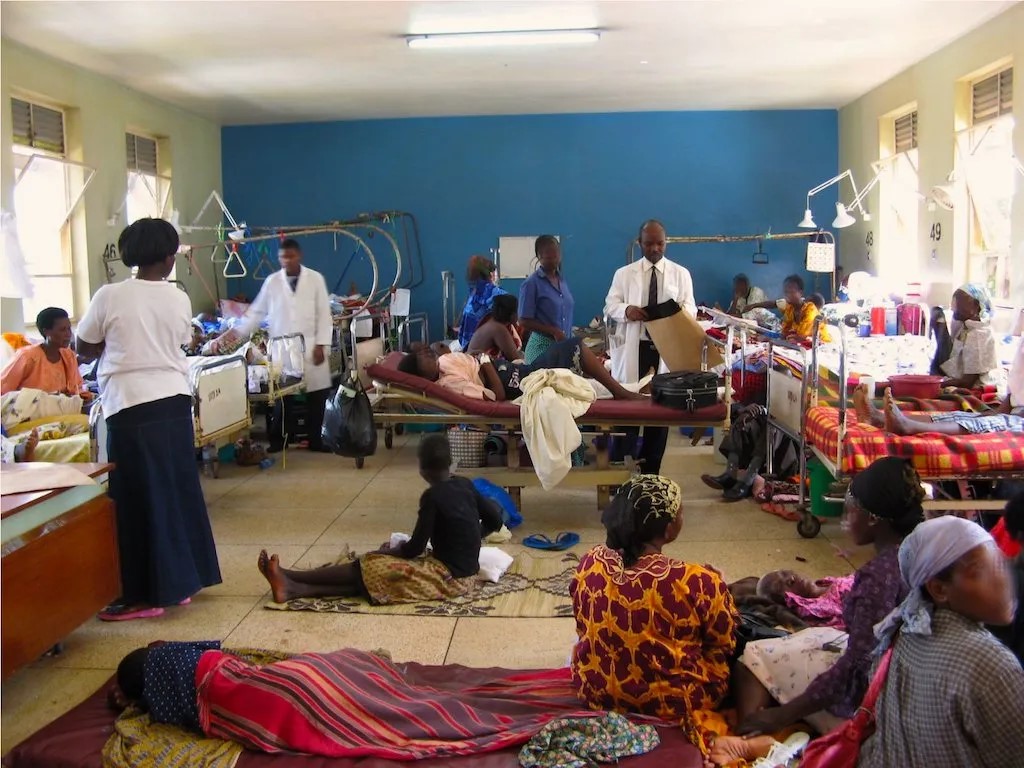
Meningitis outbreak claims 26 lives in Kebbi

By Uzair Adam

The Kebbi State Government has confirmed the death of 26 people following a suspected outbreak of cerebrospinal meningitis in three local government areas—Aliero, Gwandu, and Jega.

Addressing journalists in Birnin Kebbi on Tuesday, the Commissioner for Health, Alhaji Musa Ismaila, said the outbreak had led to an unusual rise in cases, with symptoms including fever, severe headache, neck stiffness, stomach pain, vomiting, diarrhea, and sensitivity to light.

“In week seven, we recorded a surge in cases, prompting investigations. A total of 248 suspected cases were identified, and 11 samples were sent to the National Reference Laboratory in Abuja for confirmation. While two samples—one from Jega and another from Gwandu—tested negative, results for nine others are still pending,” he said.

The commissioner provided a breakdown of fatalities, stating that Gwandu recorded 15 deaths, Jega had six, Aliero reported four, while one person died in Argungu.

He further disclosed that advocacy efforts had been carried out in collaboration with the World Health Organization (WHO), Médecins Sans Frontières (MSF), and the United Nations International Children’s Emergency Fund (UNICEF).

To contain the outbreak, the state government has allocated N30 million for the purchase of drugs and other medical supplies. Isolation centers have been set up in the affected areas, and essential medical commodities have been distributed to support treatment efforts.

Ismaila urged the public to adhere to health guidelines and report any suspected cases to the nearest health facility for prompt intervention.

Minister opposes closure of schools for Ramadan fasting

By Sabiu Abdullahi

The Minister of State for Education, Suwaiba Ahmad, has called on the governments of Bauchi, Katsina, Kebbi, and Kano states to reconsider their decision to close public schools during Ramadan.

She stated that no Muslim-majority nation follows such a practice.

Speaking on Channels Television’s Political Paradigm, Ahmad emphasized that even in countries where Islam is the dominant religion, schools remain open during the fasting period.

“In each state, the education system is under the state level, and they have the right to make decisions. However, we can only engage them and present our position on the matter,” she said.

She further argued that Islamic teachings do not require schools to be closed for fasting.

“Even in countries recognized as Muslim nations, like Saudi Arabia, schools remain open during Ramadan. There is nowhere it is written that you must shut down schools because of fasting,” she stressed.

To support her argument, she referenced Islamic history.

“The Prophet (S.A.W) even went to war during Ramadan, so it is not something that should hinder education,” she noted.

Ahmad expressed concern over the academic time lost due to the closures.

She also revealed that the Federal Ministry of Education is engaging with the affected states to address the issue.

“What about the period that will be lost? This is something we are looking into as we continue discussions with the state governments,” she said.

The decision to close schools for Ramadan has sparked debates among education stakeholders.

Some argue that it is unnecessary, especially in regions already struggling with high levels of poverty and illiteracy.

The Christian Association of Nigeria (CAN) has criticized the move, describing it as discriminatory and a violation of the rights of non-Muslim students in the affected states.

Similarly, the National Association of Nigerian Students (NANS), through its National Public Relations Officer, Samson Adeyemi, has condemned the decision, calling it an infringement on students’ right to uninterrupted education.

However, the Supreme Council for Shariah in Nigeria (SCSN) has defended the action taken by some northern state governments.

Al-Azhar at 1085: Celebrating its global legacy and services to Northern Nigeria

By Umar Sheikh Tahir

Al-Azhar was commissioned on the 9th of Ramadan 361H/ 972AD by the Fatimids in Cairo, Egypt. The name is derived from the holy Prophet’s (PBUH) daughter’s name, Fatimah al-Zahrā alayha al-Salam. The institution is one of the most prominent centers of Sunni Islam in the Muslim world. It serves as both a mosque and a university, and it is recognized as the world’s first university operating initially inside the grand mosque of al-Azhar. 

The institution is a beacon of our enduring legacy and tradition, showcasing our continuous connection and shared heritage. Its services extend not only to educational, spiritual, and theosophical but also humanitarian services to mankind around the globe. It is followed by Zaytuna in Tunisia and Qarawiyin in Morocco. 

As we celebrate the 1085th anniversary of Al-Azhar’s establishment, this article recognizes the significant contributions of Nigerians in the past and Al-Azhar’s contributions to our educational system in contemporary northern Nigeria. Finally, it highlights Al-Azhar alumni who have been instrumental in providing valuable services and whose excellence has made our nation proud. 

1.     Royal Contributions to Al-Azhar in the Past

Classical Azhar constituted several Ruwaq or Arwiqah Corridors/Hostels. These Corridors were named to symbolize the strong ties to some nations worldwide. A few of these names were dedicated to West African communities, such as “Ruwāq al-Barnāwī,” “Ruwaq Dakarinah Darfur,” “Ruwaq al-Barābirah,” and “Ruwaq al-Dakārinah Salih.” These names primarily related to precolonial Saharan and Sub-Saharan empire states, currently representing West African nation states. The closest to Nigeria is Ruwāq al-Barnawi, honoring Black African students from the Kanem Borno subregion in modern-day Northern Nigeria. This medieval hostel now serves as a lecture hall. This recognition stemmed from the strong relationships between Al-Azhar’s leadership and the Kanem Borno royal family. 

Mai Idris b. ‘Alī (1564-1596) spent tons of gold in Cairo, some of which went to endowing the Al-Azhar institution alongside other expenses such as hostels for Borno students and lodges for Kanem-Borno pilgrims to Hajj. This gesture echoes the famous history of Mansa Musa, who made gold depreciate by 25% in Cairo during his famous Hajj travel and stayover. 

Another substantial endowment was the Ibn al-Rashiq School, founded with support from Kanem Borno during the Ayyubi regime in 567-648/around the 12th AD. The institution served as a school and provided services to Hajj travelers from the Kanem-Borno area. In the 18th century, Muhammad bn Muhammad al-Fullānī Al-Kashnāwī’s impactful visit and teaching at Al-Azhar Mosque showcased the enduring influence he had on the institution and its scholars. He was so esteemed that they pursued him to stay until the end of his life, and he was buried in the Graveyard called Bustān al-Ulamā. 

 2. Al-Azhar’s Global Services

Since its inception, Al-Azhar has connected with the world, including our locality, in many ways. Al-Azhar sends teachers to the United States of America, Europe, Asian nations, African countries, and remote rural places. They were sent to the elementary and high schools worldwide, including Nigeria, to teach Islamic studies, the Arabic language, Basic Sciences, and Technology. Nigeria received more than a hundred teachers before, but the number recently decreased to less than 40 teachers due to insurgencies, as I inquired through the Embassy last year. 

However, in May 2016, the Grand Imam of Al-Azhar, Shaykh Ahmad al-Tayyib, visited Nigeria. During his visit, he announced increased scholarships for Nigerian students to Al-Azhar University, covering not only Islamic sciences and humanities but also natural sciences, technology, engineering, and medical schools.

3. Celebrating Excellent Nigerian Alumni in the Past and the Present

I cannot celebrate this milestone without acknowledging some Azhar alumni who have made Nigerians proud. This section highlights the achievements of selected Nigerian students, both past and present, who have excelled there, showcasing their academic prowess and impact on Nigerian society, especially those in prominent national positions.

Among the notable contemporary alums, Ambassador Abdullahi Yalleman and Dr. Hadi Sheikh Tahir graduated at the top of their classes. The former had the honor of receiving his award from former Egyptian President Hosni Mubarak, while the latter was accepted as a Ph.D. student directly from Al-Azhar to the University of Glasgow in Scotland. 

I apologize for not listing more excellent names here, as many deserving individuals come to mind among the outstanding alums I know personally. I will briefly mention a few sectors where Azhar alumni contribute to our society. For instance, most university lecturers, especially in the linguistics and Islamic studies departments, and leaders of colleges of education, are Azhar graduates. The leading Imam of the National Mosque and the founder of the first female-only university in Nigeria is also an Al-Azhar alumnus. Indeed, in the late 1940s, Nigerians celebrated the first female student admitted to the University of Ibadan, and now look at where we are with the contributions of Azharis. 

The leadership of the Sheikh Tahir Bauchi Islamic Center for Quranic Memorization and Islamic Studies consists of Azharis, including the Chairman, Vice Chairman, Secretary, and several directors, all of whom are graduates of al-Azhar. In fact, the Director of Education and School Services for this foundation oversees over 1,500 schools across West African countries and is also an Azhari. The world’s wealthiest Black person is Nigerian and among the alums of al-Azhar. Additionally, the former world champion of Arabic poetry in Abu Dhabi in 2022 is a Nigerian Azhari from Kano. You can also find them in mosques, performing well and serving local communities everywhere. The list can go on and on. 

This brief exploration has inspired me to write in detail in the future to celebrate our local leaders who are Azhar alumni and provide services to our beloved nation through various mediums.  

4. Hausa Language in Al-Azhar Media

Hausa was selected among other languages to serve as a medium of broadcast on Azhar Media TV for educational, intellectual, and spiritual enrichment, as well as to promote peace, featuring standard Islamic texts that cover all sciences in local languages worldwide. Nigerian students were among the qualified scholars leading these teachings for the benefit of Hausa-speaking communities in West Africa. This initiative was part of the office of former Mufti Prof. Emeritus Shaykh Ali Jum`ah, aiming to advocate for Al-Azhar’s methodology of moderate Islam in opposition to extremist views that fuel insurgencies. It was planned that the audio and video content of these teachings would be distributed to local Hausa-speaking communities. 

Today, I extend my congratulations to our Grand Imam, the alumni, and the wider Muslim community on this anniversary. As I reflect on my graduation from Al-Azhar 15 years ago, I appreciate the significance of 1,085 years of intellectual pursuit, the creation of a lasting legacy, engagement with global intellectual institutions, and the dissemination of knowledge throughout the world. 

I join the parents of our children in these urban and rural communities, along with Nigerian students in Azhar receiving full scholarships with free accommodations, in expressing our gratitude to the leadership and administration of Azhar and those Azhar teachers. The Egyptian embassies process the teachers’ paperwork, manage their placements, and report to the leadership above them—our dear Grand Imam. 

Thank you, Azhar, with our spirits before our tongues, and may God preserve you for the Ummah of Islam!

Umar Sheikh Tahir is a PhD Candidate at Columbia University, New York, USA. He can be reached via ust2102@columbia.edu.

Nasir El-Rufai dumps APC, joins SDP

By Anas Abbas

Nasir Ahmad El-Rufai, the former governor of Kaduna State, has officially announced his resignation from the All Progressives Congress (APC) and his decision to join the Social Democratic Party (SDP).

In a resignation letter submitted to his local ward in Kaduna State on Monday, El-Rufai cited irreconcilable differences with the ruling party’s leadership and expressed disappointment with the APC’s recent direction.

“I have served the APC diligently and have contributed significantly to its viability as a political platform,” he stated. “However, recent developments have revealed a concerning disregard for democratic principles and progressive values that I hold dear.

”As a founding member of the APC, El-Rufai played a pivotal role in securing electoral victories for the party in 2015, 2019, and 2023.

Reflecting on his tenure as governor, he emphasized his administration’s commitment to human development, education, healthcare, infrastructure, job creation, and investment.

He explained that his departure from the APC was motivated by growing concerns regarding governance and internal party dynamics.

“At this juncture in my political journey, I must seek a different political platform that aligns with the progressive values I cherish,” he remarked.

Upon joining the SDP, El-Rufai expressed his gratitude to mentors, colleagues, and supporters, reaffirming his dedication to advancing democratic principles.

“As a member of the SDP, I am committed to building a unified democratic front to challenge the APC in the upcoming elections,” he concluded.

Kano govt begins reconstruction of dilapidated roads

By Anwar Usman

The Kano State Governor, Abba Kabir Yusuf, has announced the reconstruction of 17 dilapidated roads in the Kano metropolitan area as part of his urban renewal agenda for the city to meet a mega city status.

The governor said the effort is to make Kano state “one of the finest mega cities in Nigeria.”

This is contained in a statement released by the Spokesperson to the governor Sanusi Bature DawakinTofa and distributed to journalists on Saturday.

The statement in part read that, “The Governor flagged off the reconstruction of Club Road as part of 17 Urban Renewal Projects in Kano Metropolis held at Nassarawa Local Government Area on Saturday”.

“I feel highly delighted, I feel happy and I feel fulfilled, as your governor who made a promise during our NNPP electioneering campaign, especially in the metropolis, we made a promise when elected, by the Grace of Almighty Allah we are going to make Kano in terms of infrastructural development as one of the best cities in Nigeria,” Yusuf was quoted as saying.

“Today, we are flagging one of the gigantic projects for the rehabilitation of dilapidated metropolitan roads which were deliberated and approved by the State Executive Council,” the governor hinted.

Yusuf noted to the people of the state that any project under his administration would meet global standards before being handed over.

He expressed satisfaction with the quality of work being executed by the contractor and appealed to him to maintain the standard.

The governor said contractors should expect his unplanned visits to the site anytime to ensure accountability.

On the other hand, the Commissioner of Works and Infrastructural Development Marwan Ahmad said the Urban Renewal Programme for Kano Metropolis was initiated by Governor Abba Kabir and approved by cabinet members.

He said this particular project begins from Club Road to Ashton Road to Airport Road to Murtala Mohammed Road respectively.