Nigeria Immigration Service

The Price of a Nigerian Passport and the Cost of Being Nigerian

BY Nazeer Baba Abdullahi

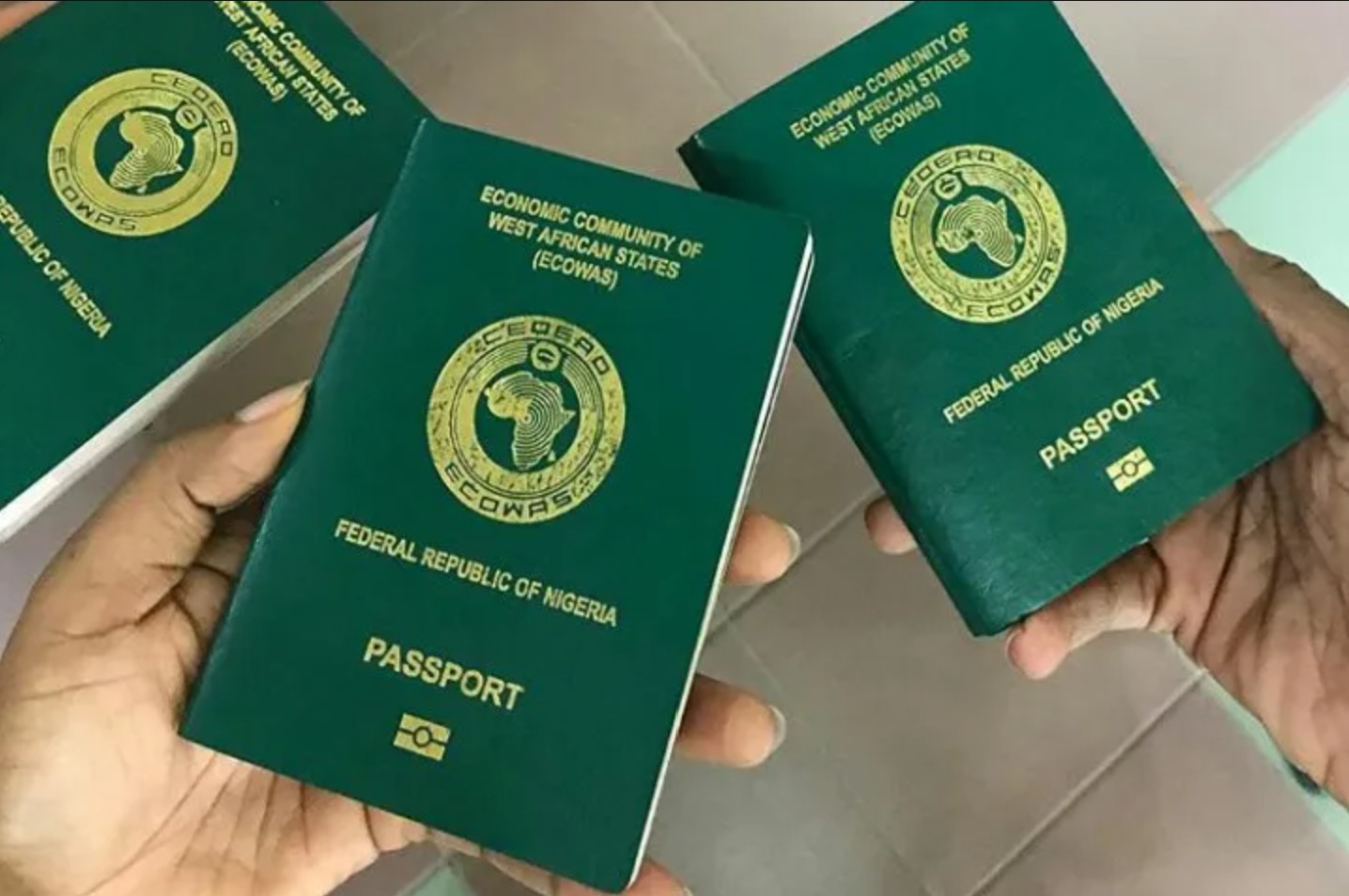
Imagine holding a Nigerian passport, symbolising pride, identity, and opportunity. However, effective September 1, 2025, the fee doubles from ₦50,000 to ₦100,000 for the 32-page version and from ₦200,000 to ₦ 400,000 for the 64-page version. This isn’t just an administrative change; it breaches the social contract.

Converting a basic identity document into an expensive luxury creates a two-tiered citizenship system, penalising ordinary Nigerians and restricting access to opportunities. A passport is a right of citizenship, like the free National ID and voter’s card, not a privilege for the wealthy. Why should a global identity extend to a commodity? 

The typical justification of ‘cost recovery’ is invalid. Essential state services should be subsidised to ensure equal access, not turned into profit centres at the people’s expense. This is especially true amid Nigeria’s economic struggles with inflation, unemployment, and rising costs. The new ₦100,000 passport costs more than the ₦70,000 minimum wage, making it unaffordable for a civil servant’s monthly salary. When a passport exceeds one month’s earnings, citizenship access is effectively priced out. This isn’t governance, but punishment. Officials say the hike maintains quality and integrity, but Nigerians only want access to a valid ID, not luxury features. Raising fees without service improvements monetises desperation. Nigeria ranks 91st globally in terms of passports, highlighting the need to improve its international standing.

The irony becomes even more glaring when compared with the voter’s card. That document is distributed free of charge, delivered to electoral wards, and made as accessible as possible. The reason is simple: it benefits the political elite by ensuring mass participation in elections. The passport, however, offers no direct political benefit. Instead, it empowers citizens to seek opportunity abroad, to level themselves in mobility and access with the very elite who govern them. Empowerment is seen not as a service to the state, but as a threat. Your vote is free because they need you. Your passport is expensive because they fear you. This is not an accident of policy; it is a deliberate strategy of control. It reveals a government more concerned with revenue extraction than with service to its people. 

A recent pattern shows the government increasing passport fees again after the August 2024 hike, indicating a trend of using vital documents for quick revenue rather than rights. Compared to neighbouring countries, Nigeria’s fees are disproportionately high. For example, a 34-page passport costs approximately ₦80,000 in Kenya, equivalent to a minimum wage of ₦ 15,000, and around ₦46,900 in Nigeria, both of which are less than the Nigerian cost. While Kenyans and Ghanaians with minimum wages can obtain passports in days or weeks, Nigerians face fees that exceed their monthly income, creating a severe financial burden.

The Nigerian passport should never be treated as a luxury item. It is a necessity in a globalised world and a symbol of national identity. To price it beyond the reach of ordinary citizens is to betray the very essence of governance, which is service, dignity, and protection of rights. What kind of nation are we building when we put a price tag on our citizens’ ability to seek a better life? What does patriotism mean if leaders measure it not by how they serve the vulnerable but by how much they can extract from them? Proper governance is not about profit; it is about fairness, opportunity, and respect for citizens.

Nazeer Baba Abdullahi wrote via babanazeer29@gmail.com.

Immigration raises passport fees

By Hadiza Abdulkadir

The Federal Government has approved an upward review of passport fees for Nigerians, effective September 1, 2025.

This was announced in a statement issued on Thursday by A.S Akinlabi, the spokesman for the Nigeria Immigration Service.

He said the increment aims to ensure the quality and integrity of the Nigerian Standard Passport, set to take effect from September.

“The review which only affect Passport Application fees made in Nigeria, now set a new fee thresholds for 32-page with 5-year validity at ₦100,000 and 64-page with 10-year validity at ₦200,000.

“Meanwhile, Nigerian Passport Application fees made by Nigerians in diaspora remain unchanged at $150 for 32-page with 5-year validity and $230 for 64-page with 10-year validity”, he said

The Service reaffirms its commitment to balancing high-quality service delivery with the necessity of ensuring Passport services are accessible to all Nigerians.

Tinubu extends Nandap’s tenure as Immigration Comptroller-General

By Hadiza Abdulkadir

President Bola Ahmed Tinubu has approved the extension of Mrs. Kemi Nanna Nandap’s tenure as Comptroller-General of the Nigeria Immigration Service (NIS) until December 31, 2026.

Nandap, who began her career in the NIS on October 9, 1989, was appointed as Comptroller-General on March 1, 2024, with an initial tenure set to expire on August 31, 2025. Under her leadership, the NIS has seen significant progress in border management, immigration modernization, and national security.

In a statement on Monday, presidential spokesperson Bayo Onanuga said President Tinubu commended Nandap’s leadership and urged her to remain committed to the Service’s strategic priorities under the administration’s Renewed Hope Agenda.

The President also reaffirmed his administration’s commitment to supporting the NIS in safeguarding Nigeria’s borders and promoting legal and orderly migration.

Immigration reinvigorates border patrol over Lakurawa

By Anwar Usman

The Nigerian Immigration Service, Sokoto State Command, has reaffirmed its commitment to strengthening border security as part of its efforts to tackle the security problems posed by the emergence of the Lakurawa sect.

On Monday in Sokoto, the state Comptroller of the NIS, Mr Yusuf Bage, announced this during a courtesy visit from the leadership of the state Council of the Nigeria Union of Journalists.

Bage said the security problem posed by the Lakurawa sect is a new and evolving threat, especially in the state.

According to him, the Lakurawa sect members often enter the country through illegal routes.

”However, I want to assure the public that security agencies are ahead of them, and their activities will soon be curbed.”

He explained that one of the significant constitutional mandates of the NIS was to ensure effective border management, including oversight at airports and seaports.

To achieve this mandate, the NIS ensures proper identification of foreigners entering the country and closely monitors their movements and activities within communities.

He explains that the NIS had expanded its offices across the 23 local government areas to maintain visibility in all the state’s nooks and crannies.

He also highlighted the collaboration between the NIS, the Army, and other state security agencies to ensure the safety of citizens.

The comptroller also emphasized the importance of the media in supporting security efforts and pledged a mutual relationship between the NIS and journalists in the state.

The NUJ state Chairman, Mr Usman Binji, said the visit was to formally introduce the new leadership of the state council.

Binji reiterated the role of journalists in fostering collaboration with security agencies, stressing that the visit would reinvigorate the collaboration between the NIS and the NUJ to make Sokoto State safer.

He further stated that, “Our members are fully committed to supporting the security agencies in ensuring the safety of Nigeria’s territory.”

NIS investigates woman for tearing husband’s passport at Lagos airport

By Uzair Adam 

The Nigeria Immigration Service (NIS) has initiated an investigation into a viral video showing a woman tearing up a Nigerian Standard Passport at Murtala Muhammed International Airport (MMIA), Lagos. 

According to NIS spokesperson Kenneth Udo, the individual involved has been identified and called in for further investigation. 

The video, widely shared on social media, shows a woman, identified as Mrs Igiebor, ripping her husband’s Nigerian passport shortly after their arrival at the Lagos Airport on Saturday, August 10, 2024. When confronted about her actions, Mrs. Igiebor responded, “Is it your passport?”

The NIS noted that the incident could be a violation of Section 10(b) of the Immigration Act 2015 (as amended), which prohibits the willful destruction of Nigerian travel documents. 

The act specifies penalties for such offences, and if the allegations are proven, the individual’s actions will breach these provisions. 

The corresponding penalties are detailed under Section 10(h) of the same Act, which includes a maximum of 10 years imprisonment and/or a fine.

Kenneth Udo emphasised the Service’s dedication to enforcing the Immigration Act to protect national security and uphold the dignity and integrity of the nation’s legal instruments.

NIS warns against patronizing touts for passports

By Muhammadu Sabiu

The Nigeria Immigration Service (NIS) has issued a warning to the general public, particularly those looking to apply for passports, to be aware of the actions of touts posing as immigration officers.

This was stated at the Command’s End-of-Year celebration and award ceremony on Saturday in Owerri by Mr. Cyril Alaje, the Deputy Comptroller of Immigration and Passport Control Officer for the command.

He gave the people of Imo his words that the Command will keep up its commitment to provide top-notch customer service while meeting all of its primary objectives.

Also, NIS Comptroller in Imo, Mrs. Nkechi Ezugwu, said that the recognition was a call to better service while recognizing outstanding officers in the state. She added that they were deemed deserving of the awards after a “rigorous selection process.”

She conveyed her sincere gratitude to the state’s governor, Sen. Hope Uzodimma, for approving the Command’s Headquarters’ move to a new location and her certainty that the required legal paperwork to support the move will be processed quickly.

Nigeria Immigration Service to employ additional 5,000 personnel — CG

By Muhammad Sabiu

Idris Jere, the Nigeria Immigration Department’s (NIS) interim comptroller general (CG), has stated that the service is now seeking to hire an additional 5,000 officers.

This, according to Mr Jere, was made to help the NIS fill a manpower shortage, he said while answering questions from reporters in Dutse on Saturday.

“With regards to inadequate personnel in the NIS, as you know, we’ve just concluded recruitment into the service, and we’re training those recruits now.

“As you’re also aware, the government has placed embargo on recruitment, but lifted that on security agencies, because security is key.

“So, we’ve written to the President and I’m very sure we will get approval to recruit about 5,000 more personnel into the NIS,” Mr Jere said.

He noted that President Muhammadu Buhari had received a memorandum from Interior Minister Rauf Aregbesola, who expressed his readiness to grant the request.

The CG travelled to Jigawa to visit hospitalized personnel and offer condolences to the family of one of its officers, who was slain on August 9 by suspected bandits.

The personnel were attacked at one of the Immigration Service’s bases in the state’s Birniwa Local Government Area, which is along the Birniwa-Galadi axis.

In Case You Missed It

THE KANO RENAISSANCE: HOW GOVERNOR ABBA KABIR YUSUF IS REWRITING THE STORY OF DEVELOPMENTBy Dr. Saifullahi Shehu ImamAs Kano State marks the third anniversary of Governor Abba Kabir Yusuf’s administration, the evidence of purposeful leadership is visible across every corner of the state from the bustling metropolitan center to the remotest rural communities. Today, the popular expression #ABBAISWORKING is no longer a mere political slogan; it has become a verified reality, supported by over 1,000 major achievements that have fundamentally reshaped the developmental trajectory of Nigeria’s most populous state.Perhaps no sector reflects Governor Yusuf’s vision for human capital development more than education. His administration has fundamentally transformed education in Kano by declaring a State of Emergency and allocating an unprecedented 30–31% of the annual budget, the highest in the nation. This historic fiscal commitment was sustained through the subsequent fiscal cycles, securing education as the primary pillar of governance. Across all 44 Local Government Areas, the administration has directed over ₦1.9 billion through the Community Re-orientation Committee (CRC) to renovate thousands of primary classrooms, plus an additional ₦2.9 billion to build new classroom complexes, decongesting urban schools and constructing modern administrative offices. Over 80,000 sets of three-seater desks have been supplied, rescuing more than 240,000 students from learning on bare floors. The government has hired and integrated over 14,000 permanent, pensionable teachers, including thousands of former BESDA volunteers. Financial barriers have been lowered by providing free textbooks and uniforms for primary students, slashing tertiary registration and tuition fees by 50% at state-owned institutions, and funding examination fees for hundreds of thousands of secondary candidates. The state’s strict targeted funding model has borne immediate fruit, propelling Kano to the top of the national performance chart in the 2025 NECO exams. Furthermore, the revival of the 1,001 Foreign and Domestic Postgraduate Scholarship Scheme has cleared multibillion-naira arrears for stranded medical and engineering scholars in Cyprus and sponsored new cohorts to India and across Nigeria. This holistic investment in infrastructure, teacher welfare, and global scholarships represents the largest commitment to public education in Kano’s recent history, ensuring today’s students become tomorrow’s leaders.In healthcare, the administration has achieved monumental, system-wide progress by matching robust institutional investment with deeply compassionate public policy. This vision is explicitly backed by an aggressive fiscal strategy; for the 2025 fiscal year, over ₦90 billion amounting to an impressive 16.5 percent of the state’s total budget has been earmarked for healthcare development. This substantial investment underscores the administration’s unwavering commitment to making healthcare a cornerstone of its governance, moving far beyond basic audits and surveys into real, well-funded structural transformation. A landmark triumph of this commitment is the recovery, comprehensive modernization, and recommissioning of the Hasiya Bayero Pediatric Hospital, a vital 86-bed facility that had been controversially sold, now restored to provide specialized care for Kano’s children. In tandem, the administration has completely remodeled and equipped the critical accident and emergency section of the Murtala Muhammad Specialist Hospital (MMSH) and extensively renovated the Bamalli Nuhu Maternity Hospital to drastically combat maternal and infant mortality rates. To institutionalize these health safeguards, the Governor signed the pioneering Kano State Centre for Disease Control and Prevention Law alongside a mandatory Premarital Health Screening Law to shield future generations from preventable illnesses. These structural transformations ensure that high-quality healthcare is no longer a luxury reserved for a privileged few, but an accessible, everyday right for all Kano citizens.In the realm of agricultural transformation and food security, the administration has shifted Kano from a reliance on subsistence farming to a powerhouse of agribusiness. Championing a multi-billion naira input initiative, Governor Yusuf flagged off the historic distribution of 79,200 bags (132 trucks) of highly subsidized fertilizers from the Al-Yuma Fertilizer plant in Madobi Local Government, slashing procurement costs by a massive 50% for local farmers across all 44 LGAs. This was bolstered by an additional ₦1 billion worth of free NPK fertilizers distributed via the Kano Agricultural Supply Company (KASCO) specifically targeting smallholder, female, and disabled farmers. To expand year-round farming capacity, the administration has expanded farmlands and successfully rehabilitated major irrigation schemes across 11 Local Governments, bringing over 1,250 hectares under active development. A crown jewel of this infrastructural strategy is the approval of ₦6.8 billion for the massive Dansoshiya Dam and Irrigation Infrastructure Project in Kiru LGA, designed with a projected storage capacity of 3.1 billion liters of water to empower up to 3,000 farmers in its initial phases alone. These deliberate investments have reduced cultivation overheads, multiplied crop yields, and fortified the regional food supply chain.Youth empowerment and self-reliance form another vibrant pillar of the Kano Renaissance. Rejecting the old paradigms of political exploitation, Governor Yusuf launched a comprehensive master plan to empower 50,000 young people. The administration began by systematically reviving eight specialized entrepreneurship and vocational institutes that had been abandoned by the previous administration. Highlighting this return to functional capacity, a single cohort of 2,260 graduates recently completed training across these institutes including the Informatics Institute, the Horticultural Institute, the Driving Institute, and the Poultry Institute. These youths left the Government House not just with certificates, but with critical operational assets ranging from laptops, tablets, and toolkits, to livestock and feed, alongside financial seed capital to seamlessly launch their commercial journeys.On the security front, proactive, intelligence-driven governance has kept Kano State remarkably peaceful and stable despite intense national security challenges. Governor Yusuf has aggressively reinforced the state’s security architecture by assenting to the law establishing the state’s independent Kano State Security Neighborhood Watch, bringing community policing directly to the grassroots. To maximize operational efficiency and response times, the administration recently boosted the Joint Task Force (JTF) operations by distributing dozens of new vehicles and motorcycles across frontline Local Government Areas. This sustained tranquility stands as an absolute testament to a leadership that deeply understands that the first, most non-negotiable duty of government is the absolute security and welfare of its people.As the people of Kano celebrate these remarkable achievements, there is a growing consensus that continuity will be essential to consolidate the gains already recorded. The transformation witnessed across the state has inspired renewed confidence in leadership and strengthened public optimism about the future. It is therefore understandable that many citizens, stakeholders, professionals, traditional institutions, and community leaders increasingly look toward 2027 with the hope that Governor Abba Kabir Yusuf will be granted another mandate to deepen ongoing reforms and complete the noble work he has begun.May Almighty Allah continue to grant His Excellency wisdom, strength, good health, and divine guidance in the service of Kano State. And may the overwhelming achievements of the past three years pave the way for a successful re-election in 2027, ensuring that the Kano Renaissance continues uninterrupted for the benefit of present and future generations.