Niger Republic

Shehu Sani condemns military coup in Niger Republic

By Uzair Adam Imam

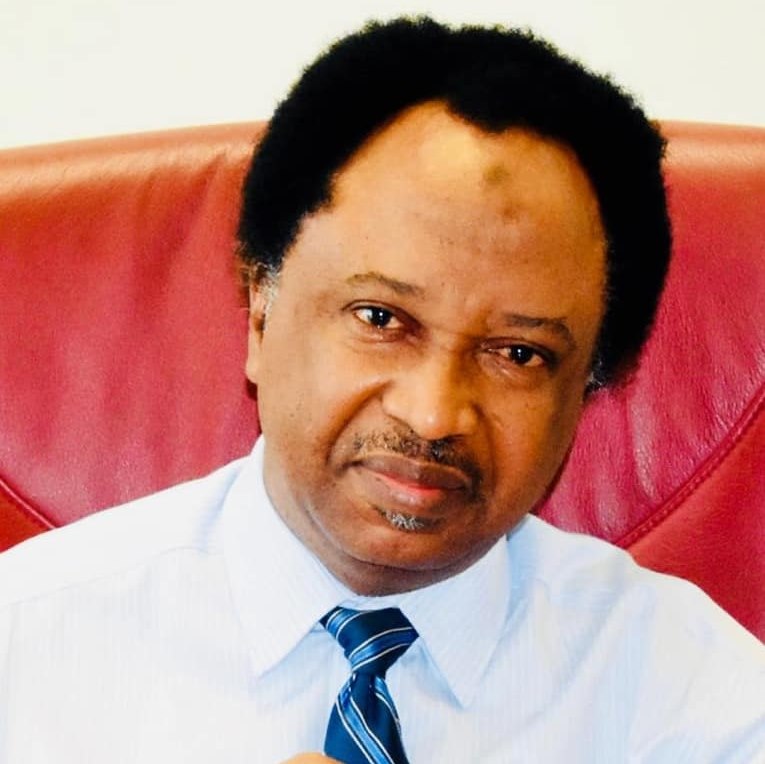
Shehu Sani, the former Kaduna State lawmaker, has condemned the military coup in the Niger Republic.

Sani stated this Thursday on Twitter, adding that “military rule can not be the solution.”

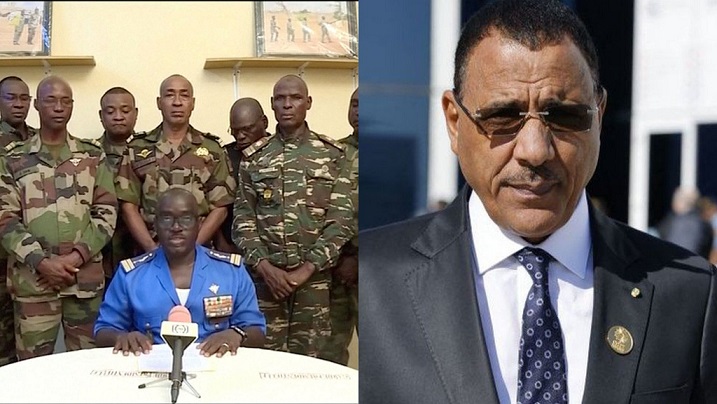
The coup took place on Wednesday when members of the Presidential Guard detained President Mohamed Bazoum.

He added that although he understood the disappointment and the political clash, the military coup could not be the alternative.

Sani stated, “Military rule must be totally rejected and resisted in West Africa. Our democracy is not perfect, and there is no perfect democracy anywhere. Military rule is not the solution.

“I’m surprised to read comments on social media, it appears that many young people are now in support of it. 

“I understand the disappointment and the frustration with the political class. It’s still better we continue to struggle to make our democracy better until we get it right,” Sani added.

Tinubu warns Niger soldiers over alleged coup

By Uzair Adam Imam

There is growing tension in Niger Republic as soldiers reportedly detain the Nigerien President, Mohamed Bazoum, and deny access to his palace on Wednesday.

President Bola Ahmed Tinubu, who is the of Economic Community of West African States (ECOWAS) Chairman, warned the soldiers that ECOWAS would not tolerate a coup.

Tinubu disclosed this in a statement on Wednesday, saying that ECOWAS would not tolerate actions that incapacitate democratically-elected government in the sub-region.

The statement read: “I wish to say that we are closely monitoring the situation and developments in Niger and we will do everything within our powers to ensure democracy is firmly planted, nurtured, well rooted and thrives in our region.

“I am in close consultation with other leaders in our region, and we shall protect our hard-earned democracy in line with the universally acceptable principle of constitutionalism.

“As the Chairperson of ECOWAS Authority of Heads of State and Government, I state without equivocation that Nigeria stands firmly with the elected government in Niger and equally conveys the absolute resolve of leaders in our sub-region that we shall not waiver or flinch on our stand to defend and preserve constitutional order.”

Jigawa State signs MOU with Zinder of Niger Republic on integrated livestock

By Muhamamad Suleiman Yobe

In her effort to protect lives and properties of its people,  Jigawa State Government has signed a Memorandum of Understanding (MOU) with Zinder State of Niger Republic on integrated and secure livestock and pastoralism in West Africa region.

Governor Umar Namadi, who signed the agreement while opening a three-day workshop on behalf of the jigawa state Government, said that the MOU will benefit the state and its people in curtailing criminal activities.

The Governor, who was represented by his Deputy, Engineer Aminu Usman Yusuf added that Nigeria has many challenges as cattle entered the country through illegal borders, by this development  there will be a control of farmers and Herders conflict.

In his remarks, the special guest and Governor of Zinder, Lawal Amadu  Madugu, thanked the Jigawa State Government for actualizing the existing cordial relation between the two state, and promised to work together to achieve the desired objectives.

Some of the boarder communities suggested the possible ways of overcoming the trans boarder problems with a view of finding of lasting solution to the menace.

Among the attendees include top Government officials and traditional rulers from both states and countries.

Kano Ministry of Education conducts entry exam into Bilingual College Niamey

By Uzair Adam Imam

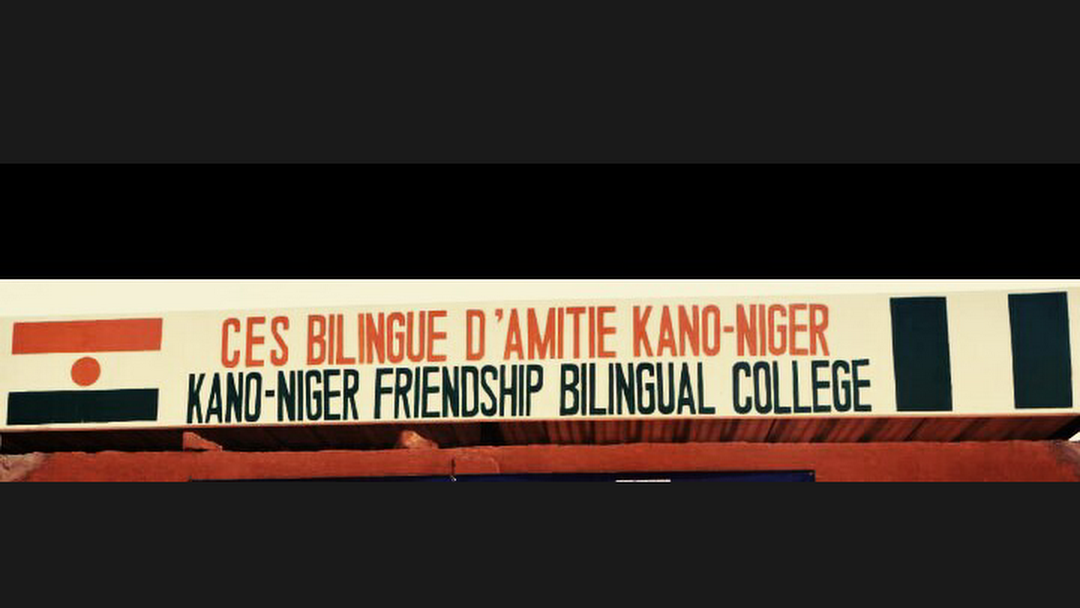
The Kano State Ministry of Education on Saturday conducted a screening test for the state’s candidates that would be sponsored to study in Bilingual College, Niamey, the capital city of the Niger Republic.

A statement Saturday by the Director Public Enlightenment, Ministry of Education Kano state, Aliyu Yusuf, said the test was in preparation for the 2021/2022 admission exercise.

Bilingual College is a joint initiative between the Kano State Government and the Government of Niger Republic to groom students in French and English languages.

The statement read in part, “The Screening test which was conducted across the 3 senatorial zones of the state was aimed at selecting 1 best candidate each from the 44 local government council areas of the state to study at the college.

“Similarly, another selection exercise will be conducted among the remaining candidates that have attended the screening test for the Bilingual College, with a view to admitting them into various Unity  Schools across 18 northern states that runs  Students exchange programme.

“In the same vein, the ministry has also facilitated the movement of another set of Kano state students that conducted an entry examination into Gifted Academy, Bamaina in Jigawa.

“The Successful students at the end of the examination will be sponsored to study at the Gifted Academy Bamaina by the Jigawa state Government,” the statement added.

Illegal Migration to Europe:  Think before you embark on a journey of no return

By Aminu Mohammed

This article was inspired by a post that I read on the Facebook page of Dr Muhsin Ibrahim, where he cautioned our youth against embarking on a perilous journey that may lead to their untimely death. However, while going through the comments, I was actually shocked by a statement made by someone who insisted on travelling to Europe through the Sahara Desert, despite warnings by the writer.

Of course, I know that life is tough in Nigeria, and many youths are jobless and hopeless. The high level of insecurity is worrisome in the North, as people are being hacked down to death daily without any concrete intervention from the security agencies. The deprivation is glaring on the streets all over the North, and people are looking for a way out. However, I will always advise people to travel legally anywhere or otherwise stay at home if they do not have the financial capacity to do so.

During my stint as a journalist in Sokoto a few years ago, I have written many articles about human trafficking and illegal migration. Unfortunately, this is a big business for many people in villages around the Illela local government area of Sokoto. Illela is a border town between Sokoto and Qoni in the Niger Republic. People are trafficked through these villages with the connivance of some youth in the villages. These nefarious people in the villages assist these illegal migrants by transporting them with motorcycles to the Niger Republic in order to evade immigration officers at the Illela border, who may likely prevent them from entering the Niger Republic en route to Libya and finally to Italy and other European countries.

Let me make it clear that life is not a bed of roses here, and the streets of Europe are not paved with gold. People don’t pick money on the streets. You have to work very hard to earn money. Although the government makes efforts to ensure a good life for the citizens, there are homeless people and beggars in Germany, the wealthiest European country. It is not a paradise as many of you may think or imagine in your dreams.

Life in Europe is akin to slavery for people without legal documents. First, life is tough here without legal documents. You cannot get accommodation, open a bank account, work, or visit the hospital without a resident permit. My first time at a clinic to see the doctor in my city, I was asked to present my residence permit and health insurance card; otherwise, I won’t be able to receive treatment. Thus, I presented my documents, which they quickly confirmed before treating me.

Many young men are being lured by the success stories of those who travelled illegally to Europe through the Sahara Desert in the past and believed they too could achieve success if they endure tribulation and go through pains. Although not all those who follow the pathway of illegal migration end up in agony, most live as enslaved people here.

Of course, I know and have met some of them who came to Europe through the Sahara Desert and Libya and are doing well here. For example, I know a Hausa guy from Kano State who lives in my city with his family and owns a clothing shop. He told me gory tales about his movement from Sokoto to Agadez in the Niger Republic and the perilous journey through the Sahara Desert to Libya, which lasted eight days. He spent about one year in Libya doing menial jobs before he summoned the courage to cross the Mediterranean with a boat carrying many people to the island of Lampedusa, Italy, 11 years ago.

According to this Kano guy, they took the boat early in the morning from Libya and were rescued at noon by coast guards who later ferried them in their boats to Lampedusa. He subsequently left Italy for Germany eight years ago and is now a legal resident here. He speaks fluent German and carries out his business diligently.

A few of them in my city came through that perilous route and are now established in Germany, doing meaningful jobs while contributing to the country’s economy. But their trajectory may not be the same as yours as everybody has his own destiny and luck. So many people have died in the Sahara Desert even before reaching Libya, while some have died trying to cross the Mediterranean Sea, yet our youth are still not deterred despite such deaths.

The fact of the matter is that many people who came through the illegal route are wallowing in misery and deprivation. Most of them are trapped in refugee camps scattered in most cities across Germany. I have been to the refugee camp in my city twice and witnessed how these people live. It is a kind of glorified prison, though they can still go out and even work illegally without the knowledge of the authorities. They do “black jobs”, which are very low-paid jobs that do not require documents and are usually paid directly after their labour but not through the banks.

I met a Ghanaian last year whose name is Idrissa. He left the refugee camp in Munich, the southern part of Germany and is now hiding in my city doing menial jobs. According to him, he feels terrified whenever he sees the police and usually gets scared of commuting by public bus or train for fear of being arrested. Unfortunately, this is the type of life those with illegal documents live here. In fact, at the peak of the Corona pandemic last year, this Ghanaian could not get vaccinated because no hospital would vaccinate him due to a lack of legal documents.

Some of these illegal immigrants, desperate to get legal documents for them to be able to work, get entangled with old German women that are old enough to be their grandparents under the guise of marriage and are treated as slaves. Of course, the German women are aware that they want them only because of their residence permit and make sure they go through excruciating pains.

I decided to write this article in order to alert our youths on the dangers of travelling to Europe through the Sahara Desert and the Mediterranean Sea. If your dream is to travel to Europe, then try to go through the legal way. You can go either through the study route, a scholarship or a job based on your skills. I know that many people get jobs with the skills they acquired in Nigeria, such as doctors, nurses, engineers, and those in data science and information technology, among others. Travelling legally is the only way to move freely without humiliation abroad due to a lack of legal documents. May Allah make things easy for all of us, amin.

Aminu Mohammed is at the School of Sustainability, Chrtistan Albrechts Universität zu Kiel, Schleswig Holstein, Germany. He can be reached via gravity23n@gmail.com or 219013@mail.uni-Kiel.de.
Is this inflation a global problem?

By Salisu Yusuf

I was discussing with a friend who’s an auto broker and an arbitrage specialising in buying and selling goods from Benin Republic, Niger Republic and Nigeria. Our topic of discourse was the so-called global inflation put forward recently by the pro-government campaigners to defend our economic limbo.

From around 2000 to date, he argued cogently, the prices of goods and services were stable and fixed in Niger, Benin and Saudi Arabia – the economic reference points and benchmarks of our so-called economic analysts. They depend blindly on the economic malfeasance that befalls our country. The only change, he argued, is the exchange rate of our Naira to any foreign monetary denominator as our Naira plunges daily in value due mainly to our poor economic managers.

For example, around 2000, the tokunbo golf car was sold at 800,000 CFA Francs. Each 1000 CFA francs was exchanged then at ₦600. So, around that time, you could buy the car brand at around ₦768,000. Today, the same car is sold at the same 800,000 CFA francs. What only changes is the rate of exchange due to the Naira depreciation. Each 1000 CFA francs is exchanged at ₦960 instead of ₦600. So, the same car sold at ₦768,000 is now sold at ₦1.7m in the Benin Republic. 

Moreover, a bag of rice that could be purchased at 18,000 CFA francs, equivalent to ₦10, 800, for the CFA francs, was sold at a lower rate. Today, the same bag of rice is sold at the same price of 18 CFA francs as two years ago, but at a high price of around ₦22,080 because of the Naira devaluation.

Some people measure this so-called global inflation theory with the price of a meal in  Saudi Arabia. A friend once told me that a meal in a Saudi Arabian restaurant could cost you ₦5000, whereas ₦1000 could buy you a meal in Nigeria. I laughed at his low-level economic analysis. The ₦5000 Saudi meal is only realised if you exchange it for our depreciated Naira. If you calculate the number of Saudi Riyals exchanged for the ₦5000 is a low amount for a  person living in Saudi Arabia. In other words, the Saudi Riyal is only valuable if, and only if it’s changed to Naira! This is the same economic scenario I explained earlier in the CFA francs/naira ratio. 

The rate of exchange between Naira and Riyal, CFA Francs/ Naira, explains the economic limbo being faced by our country. This further illustrates the Federal Government’s resolve to increase the Hajj value-added tax from 5 per cent to 15 per cent. Moreover, it also hints at the government’s Hajj subsidy removal – hence, the exponential rise in 2022 Hajj fares to nearly ₦2.5m for the participating Nigerian pilgrims.

In the Niger Republic, prices of commodities are stable and fixed, as they do not fluctuate like in Nigeria. This is because President Bazoum manages the economy well; the government implements a protectionist economic policy, where Nigeriene goods are protected against their Nigerian counterparts through restrictions against export or putting high tariffs and handicaps placed through import quotas. Though many Nigerienes export petroleum in massive quantity from Nigeria, President Bazoum has restricted exporting of gas to Nigeria and restricts its consumption internally. Defaulters are taxed. Sometimes the products and their means of transportation are confiscated by gendarmes. 

Meanwhile, the high inflation rate has affected the price of our internal commodities. For instance, the gas imported from Niger is much cheaper than ours in Nigeria. Daily, hundreds of motorcycle riders import the Nigeriene gas on a large scale without paying any import tariff. Antithetically, Nigerian petroleum products are being exported into Niger without paying for excision to the Federal Government because of the border closure. 

Therefore, smugglers from, especially Niger, play their trump cards as they usually export our products freely, sell them in CFA francs at an exponential price in Niger, come back to our border and exchange the CFA into Naira, rebuy our commodities and go back to sell at a bargain price.

While we expect Mr President to cap up his swansong with a socio-economic legacy, we are daily disappointed that the man will finally end his tenure as a colossal failure, a disappointment to a poor talaka that stood blood, toil, tears and sweat to vote for this man.

Salisu Yusuf wrote from Katsina via salisuyusuf111@gmail.com.

Nigeria’s border closure and its socio-economic hangover

By Salisu Yusuf

Since August 2019, when Nigeria decided to close its border with neighbouring Benin, Cameroon, Chad and Niger, the Nigeria-Niger border has become a boundary for smuggling of especially arms and massive adornment of corruption. Officials of the Federal Government have turned the borderline into a business venture where collecting and giving unearned rewards are the order of the day.

A haulier recently told me that from Maigatari (in Jigawa State), Babban Mutum and Kongolam (in Katsina), there are no fewer than 30 border outposts where officers wave down passing motorists to collect kickbacks. This has resulted in creating more alternate routes where hauliers circumvent border posts.

To fully understand the level of corruption in our border guards, go to the length and width of the borderline between, say, Daura and Babban Mutum. You will easily see bits of laterite earth inlets going north, where these illegal hauliers transport goods in cars and trucks to avoid sandy earth on their way to Magaria in the Niger Republic.

In the midst of this, the new Nigeriene President, Bazoum Mohammed, introduced a free trade route-policy for the teeming youth. Formerly, Niger operated a protectionist economic policy under former President Tandja Muhammadu. Then, importing goods, especially petroleum products, was prohibited, and culprits were duly punished under strict laws. But, don’t forget that Niger, like its counterpart, also exports petroleum products.

Mr Bazoum, I think, implements his free trade policy, where youth are allowed to import goods from Nigeria due mainly to socio-political issues in the neighbouring countries; the raging civil war in Libya and insurgency in Nigeria and Mali. The President wants crime-free youth. Moreover, issues surrounding his election. He was labelled a Western stooge before his election. His policy might have changed that perception.

The free trade policy has given thousands of youth free access to illegally enter Nigeria, buy these products at a subsidized price as we buy, and export them on motorbikes to sell at a higher price. It’s indeed a gain. 

You see them in our filling stations with jerricans queuing for the products daily. The spectre from the filling station to their convoy with a load of jerricans inside huge sacks, their high-velocity speed is so chaotic. They create a scene. Cases of collisions among motorcyclists, knocking down passersby, especially children, result in massive injuries and deaths. Wàllahi, there’s nothing like a border in those areas, only passages!

In addition, daily cases of traversing over the people’s farmlands by these marauding smugglers (because they don’t tread normal paths) pose a threat to possible tillage erosion. Their constant comings and goings leave no hope for agricultural sustainability. 

Recently, smuggling has reached another dimension. Gendarmes in Niger have apprehended smugglers with huge caches of armaments trying to cross the border. Villagers discovered a cache of arms near Daɗin Sarki in Niger. Those who had kept the cache were possibly waiting for the cover of night to take it into Nigeria – a dumping ground for every malfeasance.

The clip of the arms is still viral on the WhatsApp application. Now I retrospectively see sense in former President Trump’s border wall with Mexico in order to evade criminals. Likewise, it’s high time Nigeria erected a border wall with Niger because their leaders, like their French counterparts, stocked in an international conspiracy, are after their country’s survival than the stability of Nigeria.

 Nigeria misses millions of Naira in revenue from closing its borders and the hauliers’ ploys. When you tell the government this sad reality, some government economic mouthpieces put forward classroom economic theories to defend their economic policies. To understand this point, visit an excise office in the outskirts of Magaria in the Niger Republic and see lines of cars and trucks with loads of Nigerian goods. You will swear they all pass through the sky – alas, they pass through alternate routes that are discovered and explored by Nigeriene motorists and their local guides after the border closure.

The recent surge in kidnappings in Gumel and Suletankarkar in Jigawa State is a pointer to a grim future. However, there’s more to this border issue than meets the eye. It’s high time authorities in Nigeria nipped it in the bud before the Nigeria-Niger border becomes a threat not only to Nigeria but Africa. May we see a better Nigeria.

Salisu Yusuf wrote from Katsina via salisuyusuf111@gmail.com.

Niger Republic, Kano to strengthen students exchange programme

By Uzair Adam Imam

Niger Republic has sought greater cooperation through the strengthening of students’ exchange programmes and other related issues on collaborations with tertiary institutions between the country and Kano State.

The Niger Republic Minister of Vocational training, Kassoum Mamane Moctar and his counterpart of Education and Scientific research, Dr Mamadou Djibo from the same neighbouring West African country, made the proposal.

The Chief Press Secretary to the Deputy Governor of Kano State, Hassan Musa Fagge, in a statement signed Thursday, disclosed.

The minister said many years back, students from Niger Republic came to Nigeria, particularly Kano, to study in various tertiary institutions.

He said, “now we want that students exchange programme to be revived and sustained”.

“Through the partnership, we will promote quality of education and research in both our tertiary institutions, which will be of benefit to all of us,” he stated.

Responding on behalf of the Governor, his Deputy Dr Nasiru Yusuf Gawuna said Kano State is ready to collaborate with Niger Republic in areas of interest and benefit.

Gawuna thanked the delegation from Niger Republic for the visit and assured them of cooperation.

On the culture of disrespect and disregard for term limits

By Mujahid Ameen Lilo


When in 2015, the then incumbent president of Nigeria, Goodluck Jonathan, called to congratulate his opponent ahead of the announcement of the election winner, it was hailed as a heroic act. The act further cemented the country’s democratic maturation and avoided the imminent disintegration of the country had the president not accepted defeat. Moreover, it ensured a stable and successful government transition in a country on the brink of war.


The former president of the Niger Republic got the Mo Ibrahim Prize for Achievement in African Leadership because he respected term limits. Yet, nobody was found worthy of the award for eight years, which points to African leaders’  disgraceful culture of disregard for term limits and bastardising of democracy. What’s more annoying, though, is the culture of celebrating the few ones that respect the term limits.


When we understand that it’s the moral imperative of our leaders to bow to the people’s will, to respect the constitutional authority that put them there and dictate their term limits. Until then, we wouldn’t rush to make a big deal of it and lionise them, present them with awards, among other things. We tend to forget and forgive their misrule. The great disenchantment with the previous administration’s sadistic leadership style made Nigerians ready to go to any lengths to vote out that party. People were prepared for war if the election got twisted. So it’s the morally and politically correct thing to do, that is,  handover.  Most of these leaders leave behind enormous debts, worsening insecurity, cases of corruption and so on.


The recent coups in Guinea and Chad and the foiled one in Niger indicate the frightening facts that the West African countries are far from political stability. Military intervention hardly change matters. It shouldn’t be the response to a faulty democracy. The West African subregion should thoroughly shake itself off the yoke of any military powers. The democratisation of the whole subregion would go a long way in stabilising it. Not that democracy is perfect per se (what with her so-called upholders violating one of the fundamentals: periodic election), but that we can and should practice it most purely, quite distinct from the military system. There should be an atmosphere that’ll facilitate proper reforms of democracy.  A stable system of government will guarantee peace and also bring about the desired developments.


It’s on this premise that I’d now address another factor that is damaging to our democracy, threatening what little peace and stability is left in the region: electoral processes.  In my country Nigeria, once it’s time for elections, people who live away from their states of origin start rushing back to their hometowns because elections have been synonymous with violence leading to the death of many people. There should be peace for people to exercise their fundamental right of voting. Instead, thugs are paid to violate the process. Many people believe in the quote that ‘our votes do not count; otherwise, they wouldn’t let us vote’.  However, that is not where the problem lies.  I believe that we’re capable of holding free and fair elections as we’ve done in the past. We can cite many examples with Nigeria as a case study. The fourth republic election in Nigeria that put Chief Obasanjo into power was relatively free and fair. The two elections that put Buhari into power were also pretty free and fair. We cannot forget the annulled election of June 12, 1993.


I was born in the early 2000s. My generation is called the ‘golden generation’ because the Nigeria we’re born in is democratic, free from colonial and military powers. But my generation suffers from a collapsing education system (most have to attend private schools because the government ones are total craps), from frequent strikes in universities to insecurity devouring our lands like an inferno. This semester, I was looking forward to fieldwork we are supposed to go on in a literature course but have to resort to what our lecturer calls ‘mental research’ because nowhere is safe. This generation is so angry – a wave of anger manifested in the Endsars protests.


On days like this, independence day, I sit and reflect on the happenings in my nation while my fellow teenagers are out having fun, draping their bodies in the country’s colours and posting things like ‘happy independence’ on social media. Yet, the ghost of Achebe and Gimba surrounds me as I struggle to intellectualise my thoughts, building it on Achebe’s dictum (the trouble with Nigeria is simply and squarely a failure of leadership) and the Gimba’s theory that differs from Achebe’s.


I am a lover of columns. As a child, I was very socially and culturally conscious, reading my dad’s dailies. On my shelf, I have a collection of columns: Gimba’s Why am I Doing This, Tundes’s Nigeria: A Thousand Cries, A Thousand Laughs, Nda Isiah’s Nigeria: Full Disclosure, and Victor’s Excuse Me. The writings there span Nigeria from Obasanjo’s first tenure to the eventful short tenure of Yar’adua and Goodluck’s tenure. Presently, I read Kakanda, Bulama and Abubakar,  whose columns are about the present administration. All through, there is rage. There is a disappointment. These essays echo in my conscience, making it hard for me to celebrate not only Nigeria’s birthday but those supposed champions of democracy, that after much damage, step aside and respect term limits. Like Jonathan. Like Niger’s Muhammdou, winner of Ibrahim Prize for Achievement in African Leadership.


Mujahid Ameen Lilo is a winner of the Wole Soyinka Essay Competition and a student at the Department of English, Ahmadu Bello University, Zaria.