Niger Delta

20-year-old lady stoned to death in Calabar

By Muhammad Sabiu

A lady who looked to be in her early 20s was found stoned to death at the famous Eleven-Eleven junction in Calabar.

The incident is believed to have occurred early on Friday. A few stones were found next to her at the roundabout, and there were some visible wounds all over her remains.

Despite sympathizers having gathered around her motionless body in an attempt to identify her, the identity could still not be established.

At around 8 a.m., a pickup vehicle with some police officers arrived on the scene, preparing to evacuate the body.

As of the time of filing this report, The Daily Reality source has not been able to get information indicating that the police in Cross River State have reacted to the incident.

Eleven-eleven roundabout is next to The Millennium Park, where the military and the State government stage significant parades and celebrations.

Nigeria lost $1.5bn to oil theft in 3 months – NNPC GMD

By Farid Suleiman

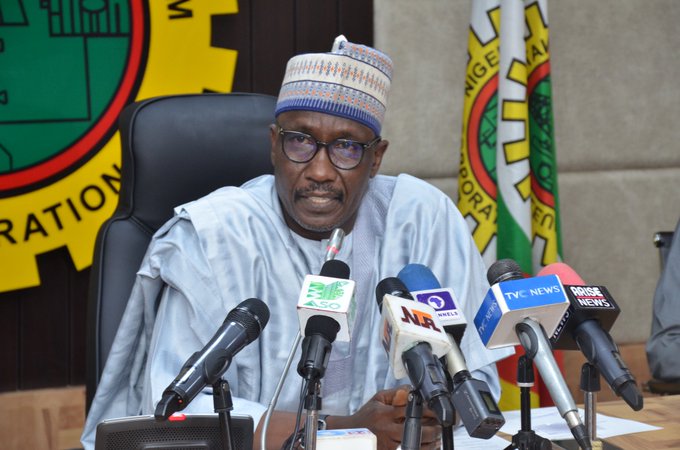
The Group Managing Director of the Nigerian National Petroleum Corporation (NNPC), Mele Kyari, has revealed that from January to date, Nigeria has lost a total of N623BN worth of crude oil to the activities of oil vandals and operators of illegal refineries.

Reports indicate that the GMD  made the revelation when he appeared before the House of Representative committee on petroleum (upstream) that invited him to ascertain the cause of Nigeria’s low crude oil output.

Kyari said oil thieves steal an average of 250,000 barrels per day. This situation has limited Nigeria’s crude oil output to only 1.49 million barrels per day, against its OPEC quota of 1.753 million barrels per day.

“What is going on has nothing to do with the PIA. It is purely an act of thieves; acts of vandals which have rendered the industry unworkable and taken us to the level where today, our production is around 1.49 million barrels per day.”

“When you lose about 200,000 barrels per day, even at an average price of 65 dollars per barrel, we lost close to 1 billion dollars between January and March. 

“From January to date, we lost an average of 250,000 barrels per day, and at the current price of about 100 dollars to the barrel, even within this short period, we have lost close to 1.5 billion dollars.

“This situation deteriorated to the extent that by March 7, 2022, it came to zero, and so, we shut down the line and declared force majeure. Even on our most reliable pipeline, which is the Forcados pipeline, we still lose about 7000 barrels per day. Needless to say that this is all coming as a result of the acts of vandals and oil thieves,” he said.

However, the GMB assured the lawmakers that massive joint security operations among agencies were ongoing to address the situation.

On the (official) division of Nigeria

By Hammed Adam

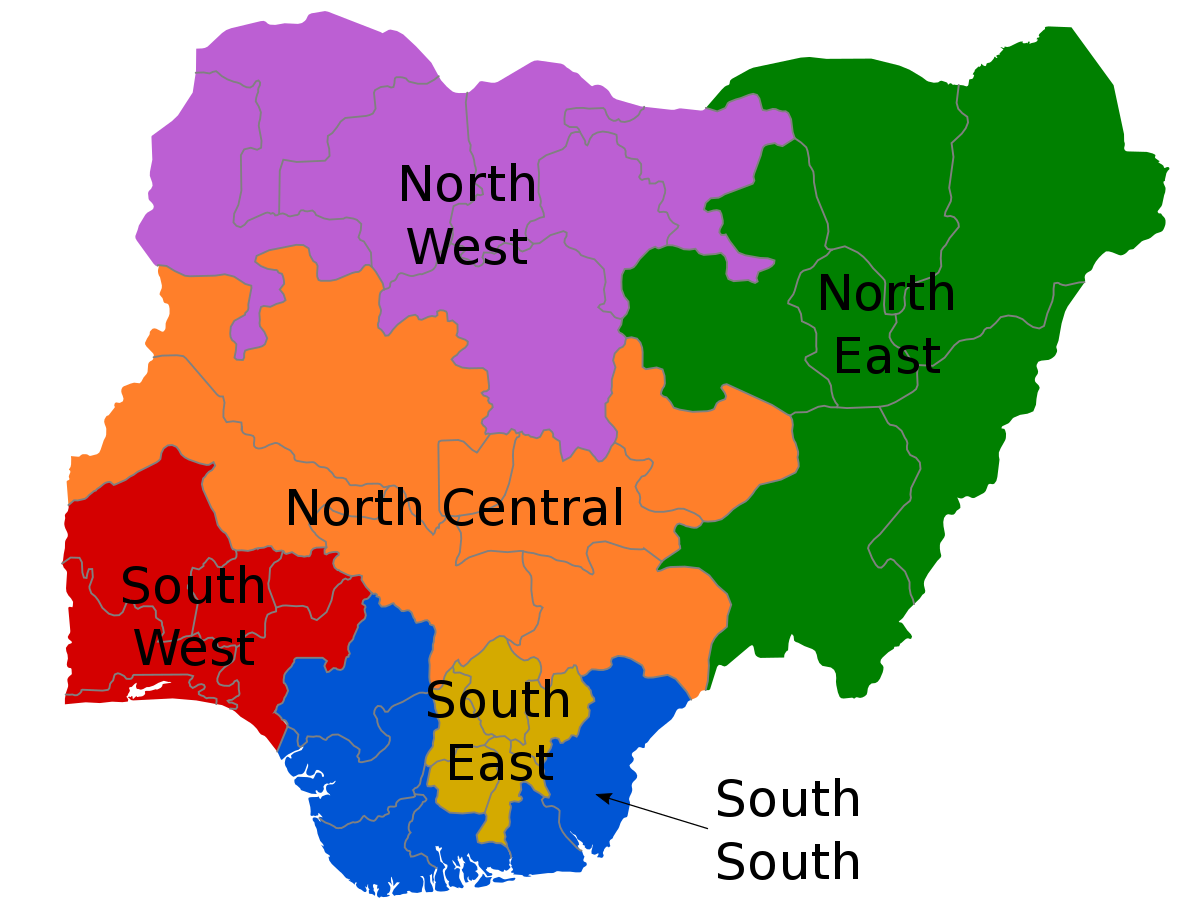
Dividing Nigeria into Oduduwa Republic, Biafra Republic, Arewa Republic, and possibly the Niger Delta Republic has been done already with the current level of hatred and mistrust between the citizens. It is just that it has yet to be officially announced.

They’re not yet officially recognised as sovereign states because there might be a physical war before any country break out from another, which is yet to be witnessed. Moreover, everyone knows it’s constitutionally treasonous and felonious to rebel against any government.

Another reason is that most of the Yorubas and Igbos who want secession aren’t fully ready (militarily wise) to weigh a war against Nigeria, a recognised country, knowing they will be resisted firmly using the might of the Nigerian armed forces.

Igbos, in particular, delay their move to go into war against Nigeria because they have first-hand experience. They also know that with the unity between Hausa and Yorubas, they won’t succeed, and the result can be disastrous, just as it was back in 1967-1970.

Now that Yorubas are fed-up, they have risen against Nigeria to actualise the Oduduwa Republic. They do so by provoking the Northerners into war by evicting Hausa-Fulanis from their regions. The Igbos will back the Yorubas to become allies as they both pursue the same interests.

Mazi Nnamdi Kanu is on air with his compatriots, trying to see how they can galvanise the Yorubas, the Christians in the Middlebelt, and other Christians of the minority tribes in the North. These include the Atyabs of Kaduna, Jukuns and Mumuye of Taraba and Benue State, Berom of Jos Plateau, Tivs of Benue State, Bachamas of Adamawa State and others. He wants them to pay allegiance to Biafra and rise against the Hausa-Fulani-Muslims in the North.

The more Yorubas and the aforementioned ethnic groups heed the calls of Nnamdi Kanu, that would be the beginning of the fight between Nigerian soldiers of Northern extractions vs Nigerian soldiers of Southern extractions mixed up with Christians vs Muslims. That could be the end of one Nigeria unless those defending the unity of Nigeria becomes victorious.

If Yorubas still prefer Nigeria over Oduduwa and Biafra, the Igbos agitating for secession are like barking dogs in chains. Half of the Igbos and most people from the South are already against the creation of Biafra. But with Yorubas by their side and the disjointed Northerners, be it on the battleground or polling units, none in Nigeria can be successful against them and is nothing but toothless.

Who knows Nnamdi Kanu his first arrest in 2015/2016? But he cunningly crawled into the limelight with his verbosity. Today, with the help of the Nigerian Govt, he’s not only controlling Igbos but mightily influencing Ijaws, Igalas, Kallabaris, Tivs and the almighty Yorubas here and abroad. They all listen to him better than they do, even to their Churche’s Pastors, Monarch, Alfas, State Governors, etc. He’s much more as an Emperor than a just leader, which is perilous as he’s becoming more powerful by the day.

This is only possible when a country is ruled by someone like today Muhammadu Buhari, or a country ruled by cabals as the amiable wife of Buhari hinted as early as 2016. Still, even some patriotic Nigerians failed to listen to her and resort to calling her petty names and politicising it in defence of APC and Buhari.

For God sake, if not because of craziness and stubbornness, what makes any Nigerian think they can love or care for Buhari better than how his only wife, Āisha, can do?

If I tell you I’m not scared of the disasters the demarcation of Nigeria into four or at least two parts would bring upon innocent people, I’m lying to you. But, still, God knows, if Nigeria can be divided into many parts without bloodshed, I have no problem with that. So, likewise, if the creation of Biafra and Oduduwa would be resisted without wasting the lives of innocent people, I have no problem too.

May God, in His infinite mercy, look into this matter and choose for us which is the best. Āmin Thumma Āmin.

Hammed Adam sent this article via hammedadam2@gmail.com.
Of rotational presidency and whatnots

By Abu Haneef 

It is true that the North and South have rotated the presidency from the inception of the Fourth Republic in 1999 until Jonathan truncated it in 2011 after the demise of Umaru Musa Yar’adua. Many have argued that it was practically challenging to stop an acting president from contesting just because of an unconstitutional gentleman agreement, which was put in place by not-so-gentle politicians to rotate the presidency between the North and the South. Although not a valid justification to scrap that agreement, the argument is not entirely incorrect; who could have stopped Jonathan if he wasn’t patriotic enough to put the country ahead of himself? No one.


All that is now history. But what isn’t history is how all the proponents of the rotational presidency during Jonathan are now speaking against rotation; in the very same manner, those that argued against the rotational presidency during Jonathan are now suddenly making a case for rotation. The way both sides exchanged arguments with the change of personalities proves that those arguments were never in favour of the reasons given in the first place. 


While there are some good arguments for and against the rotational presidency in Nigeria, there will never be a good argument for scrapping it when that benefits you, only to turn around and demand rotation when it does not. This double double-standard is against fair play. 


Now let us analyse the case. While the argument for the rotational presidency is valid on the grounds of national security and stability, there are many things wrong about how we are understanding and approaching the rotation—from its premises to our assumptions thereof and many things in between. 


Anyone who understands Nigeria’s politics knows that religion, rather than ethnogeography, is the biggest faultline, albeit with a bit of ethnogeographic connotations here and there. This explains why since 1999, almost all Northern Christians voted for Southern Christians (except where both contenders were Muslims, and even then, they preferred PDP simply for being “more Christian”), despite sharing the same geopolitical threats and opportunities with the Northern Muslims they rejected. Yet, notwithstanding this apparent reality, we chose to premise our rotation on ethnogeographical consideration rather than religion (I’m not making a case for religion here, I’m only analysing our presidential rotation). 


Now let us ask ourselves, what happens if we rotate the presidency to the South and a Muslim, backed by Northern voters, emerges as the president? He would have been a Southern president who would not give the South a sense of belonging. The same will have been the case if a Northern Christian emerges as president. So our current premise for rotation is faulty, and those responsible for it know this; they are only ashamed to premise our rotational presidency on religion because of the global stigma religion faces today. 


Another critical question we haven’t convincingly answered in Nigeria is population spread across Nigeria’s ethnogeographical constituents and religions. Doing this would have removed the heat generated on the polity by the many unrealistic demands currently put forward by all sections of the country. However, we have so many issues to solve, and the best way to start is to answer all the critical demographical questions we haven’t. Only then will every section understand its proper place in the scheme of things, as there are currently huge delusions by many country sections. 


Another problem with this rotation is our constitution, which does not recognise it. This is problematic because people at the opposite faultline can only surrender power based on trust. There is no guarantee that the other region will yield power according to agreed terms. We had seen that in 2011 when Jonathan contested against PDP’s zoning arrangement. Therefore, the question of constitutionality in rotating the presidency must be answered to address the current distrust in the polity. 


Another valid question to answer on presidential rotation is that of fairness, particularly with the way and manner we have seen many agitations for resource control, which led to the creation of 13% Derivation, Ministry of Niger Delta and Niger Delta Development Commission (NDDC). Suppose we agree that they deserve more resources only because God planted those resources in their land. In that case, the North can also argue that they deserve to retain political power because the same God that chose to bless Niger Delta with hydrocarbon decided to bless the North with a larger population. Suppose it is fair for Niger Delta to demand resource control. In that case, it is certainly reasonable for the North to require strict adherence to the democratic principle of majority retaining power at all times. That is one consistency of truth we must not skip in our national discourse. 


Conclusively, I submit that the only thing correct about the rotational presidency we argue for or against is the idea of having or not having it, but everything else has either been misunderstood, refused to be understood or deliberately misrepresented. And in these tiny details and questions we repeatedly miss lies most of the solutions we seek elsewhere. 


Abu Haneef can be reached via imabuhaneef@gmail.com.

A refresher for southern governors

By Abu Haneef


The governors of southern Nigeria held a meeting in Lagos on Monday, July 5, 2021. They, among other things, demanded the return of the presidency to the South in 2023. They also rejected two sections of the recently passed Petroleum Industry Governance Bill (PIGB). While the governors are entitled to their opinion, the return of the presidency to the South will however require much more than a demand from the governors—it will require fielding a Southerner that can win in a free contest. As for the rejection of some sections of the PIGB, their opinion on such a legislative matter is hardly any different from that of ordinary Nigerians and indeed of no legal significance to the implementation of PIGB. Perhaps they need to summon their legislators for an honest discussion. 


Between the 4th and 9th legislative assemblies in Nigeria, the PIGB was stalled for over 20 years due to unrealistic demands by many interest groups. This has led to the inefficient utilisation of our petroleum resources and the inability to open our economy to private investments. Therefore, the passage of this bill brought a huge sigh of relief to many who appreciated the impact its delay had on our development and economy. And today, PIGB is arguably the most debated bill in Nigeria’s history. 


The two sections contended by the governors are the allocation of 3% of NNPC’s profit to host communities (they need more) and 30% of the profit to exploration activities in the basins (they need less exploration elsewhere). 


Although the situation of the host communities is something every Nigerian should be sympathetic to, such sympathy should not mean giving them everything while other regions suffer deprivation. The host communities have 13% derivation, deducted from government revenues (not just oil). They also have a federal ministry dedicated to their needs and another government parastatal, the Niger Delta Development Commission (NDDC). Although these considerations will not replace what the region has lost (and is still losing) of its livelihood to oil exploration activities, particularly those illegal activities by the locals, it nonetheless does not justify the denial of the country to increase its revenue by exploring the basins. And lest they forget, the oil in Niger Delta was explored through revenues from our erstwhile groundnut pyramids. It also does not justify the disproportionate allocation of the nation’s resources to them exclusively. 


For example, in addition to sums budgeted for the Ministry of Niger Delta and the NDDC, Delta State alone received almost N190 billion in federal allocation in 2020, which roughly equates to what was received by four North-Eastern states of Bauchi, Borno, Gombe, and Adamawa during the same period. And this will be more appreciated when the difference in population and landmass is added to the analysis. 


I’m not mentioning this to suggest that the host states (which now include Bauchi and Gombe States, by the way) do not deserve this patronage. Still, I do so to disagree that the nation has neglected them as always projected when the leaders require additional resources of those communities. And looking at the resources allocated to the host communities in the last decade alone, their leaders, rather than Federal Government, are the ones guilty of this neglect. 


But all this argument and counter-argument can only be a lamentation or justification, depending on what side of the divide you find yourself, as those saddled with the constitutional responsibility of determining the matter have done so, albeit after a very long time. And any effort to undermine the National Assembly is actually a renegotiation of this country through the back door, which any reasonable person should not contemplate at this critical period of our history. 


As for the governors’ request for the presidency to be returned to the South in 2023, they, particularly those amongst them who championed the jettisoning of zoning arrangement in 2011, such as Wike, need to be reminded that if the aggressor forgets quickly, the victim does not. 


In 2011, the South, led by President Jonathan and many of those clamouring for it today, abolished zoning in defiance of all reasons and a gentleman agreement established by the North to protect the South that is unarguably the minority in Nigeria. This is true regardless of how one chooses to look at it—either by landmass or population. 

Now that zoning has been thrown into the bin of our history by the South; the presidency shall remain open to a free contest by all. And even if this zoning arrangement will be revisited in the future, not now, if you ask me; a good lesson needs to be taught and learned on the importance of the sacrosanctity of agreements, or else, we may see a repeat of the logically fallacious arguments tossed left, right and centre in the justification of abandoning zoning by the same actors calling for its return today. 


Abu Haneef can be reached via imabuhaneef@gmail.com.