NEMA

Zubaida Umar and the Slow Rebuilding of Preparedness Culture

By Abdulhamid Abdullahi Aliyu

Nigeria has become dangerously familiar with the ritual of disaster. The warnings often come early, the forecasts are circulated, vulnerable communities are identified, and officials hold preparedness meetings. Yet when the floods finally arrive, or fire tears through crowded markets, or another preventable emergency pushes families into distress, the country still reacts with the same confusion, urgency and humanitarian panic, as though tragedy appeared without notice.

It is one of the ironies of public life in Nigeria that disasters are rarely taken seriously until they become spectacles. Before then, they exist as predictions, advisories, technical reports, stakeholder meetings and public warnings. Afterwards, they become breaking news, condolence visits, emergency relief, public anger and committee recommendations. Between those two moments lies the real weakness of the system: the stubborn national habit of knowing danger in advance but failing to prepare adequately for it.

This is the difficult terrain in which the National Emergency Management Agency, NEMA, operates. To many Nigerians, the agency is most visible in moments of distress, when flood victims need support, when displaced persons require relief, when fire victims are counting losses, or when communities suddenly discover the meaning of vulnerability. But the true measure of an emergency management institution is not only what it does after a tragedy has occurred. It is also what it can prevent, reduce, coordinate, and anticipate before the situation becomes a national emergency.

That is why the two-year stewardship of Mrs Zubaida Umar as Director General of NEMA deserves a more thoughtful reading than routine anniversary praise. When President Bola Ahmed Tinubu approved her appointment in March 2024, the expectation was not merely that another public officer would occupy another office. The assignment carried the heavier burden of strengthening operational discipline, improving coordination and repositioning the agency toward a more proactive model of emergency management. Two years later, the useful question is not whether disasters have disappeared. They have not. The real question is whether there are signs that the agency is beginning to think differently about its mandate.

Perhaps the most important development under Umar is not the kind that announces itself loudly. It is not found only in relief distribution photographs, ceremonial visits or official statements. It is evident in a gradual institutional shift from reaction to anticipation, from waiting for disaster to happen before mobilising to placing greater emphasis on preparedness, early warning communication, simulation exercises, inter-agency coordination, and community-level sensitisation.

This shift may appear modest to the casual observer, but in Nigeria’s emergency management culture, it is significant. The country’s problem has never been simply the absence of warnings. Flood forecasts are issued. Meteorological advisories are released. Hydrological risks are mapped. Vulnerable states and communities are repeatedly mentioned. Environmental experts warn against blocked drainage and settlements along waterways. Yet the same cycle continues because warnings, in themselves, do not save lives. They only become useful when they are understood, trusted and acted upon.

For years, Nigeria has struggled to convert prediction into preparedness. Communities remain in danger zones long after alerts have been issued. Drainages remain blocked despite annual warnings. Buildings continue to rise where water must naturally pass. Local structures often wait for Abuja. Citizens sometimes treat evacuation advice as government disturbance until water is already at the door. By then, emergency management becomes more expensive, more chaotic and more painful.

It is within this context that NEMA’s renewed attention to grassroots sensitisation becomes important. Across several states, the agency has intensified preparedness campaigns aimed at reducing the gap between forecast and response. One of the more telling examples was the flood preparedness campaign in Ebonyi State, where the engagement moved beyond formal speeches and stakeholder protocols into direct community interaction. Emergency officials went into vulnerable communities, spoke in local languages, distributed safety information, and discussed flood risks, evacuation culture, and prevention measures with residents.

That may look ordinary on paper, but it carries a deeper meaning. A warning trapped inside a technical report is not yet a warning. A forecast discussed only in Abuja has not fully served the woman whose house sits near a riverbank, the farmer whose farmland will be submerged, the school head who must protect pupils, or the local leader whose community may need to move before danger arrives. Disaster communication becomes meaningful only when it reaches ordinary people in the language of their daily reality.

This is one of the most important lessons Nigeria must learn. Preparedness is not achieved by issuing statements alone. It requires translation, persuasion, repetition and trust. It requires taking risk information from conference halls to communities, from policy language to household action, from official alerts to behavioural change. In that sense, public communication is not an accessory to emergency management; it is one of its strongest instruments.

The same logic applies to coordination. Disasters do not respect institutional boundaries. A flood is not only a NEMA issue. It is an environmental issue, an urban planning issue, a housing issue, a public health issue, a food security issue, a security issue and, quite often, a governance issue. When water overruns a community, it affects homes, roads, schools, markets, farmlands, hospitals and livelihoods at the same time. No single institution can carry that burden alone.

This is why the increasing emphasis on multi-sectoral coordination under the current leadership is notable. The agency’s engagements with ministries, departments and agencies, state emergency structures, security agencies, humanitarian partners and technical institutions suggest a clearer understanding that NEMA’s strength lies not in behaving like a lone responder, but in making the wider emergency management ecosystem function better. In a federal system where fragmentation often weakens public response, that coordinating role is not a small matter.

There is also a growing recognition that modern emergency management must be more technical than sentimental. It must be driven by data, monitoring, logistics planning, early warning systems, communication flow and rapid decision-making. This explains the growing relevance of structures such as the National Emergency Operation Centre, which serves as the command-and-coordination infrastructure required for monitoring and responding to serious disasters. Such systems may not excite the public in the way dramatic rescue scenes do, but they are central to the quiet work of preventing confusion before it becomes costly.

Simulation exercises also belong to this quieter but more serious side of emergency management. Nigeria has never been poor in policy documents; the problem has often been what happens when real pressure arrives. Preparedness drills help institutions identify their weaknesses before a disaster exposes them. In an emergency, questions that look simple in a meeting can become decisive on the field. Who leads the evacuation? Who communicates verified information? Who coordinates medical response? Who controls movement? Who protects children, women, older persons and persons with disabilities? Who documents needs and prevents duplication? The difference between order and confusion often lies in whether such questions were answered before the crisis.

The increased emphasis on rehearsals, simulations, and preparedness drills, therefore, suggests an agency seeking to move from theoretical to practical readiness. The process may be gradual, but the direction is important. A country that waits for every disaster to teach it the same lesson again has not taken preparedness seriously.

The wider humanitarian environment also makes this change unavoidable. Flooding remains one of Nigeria’s most devastating recurring threats, but it is not the only one. Urban fires, tanker explosions, building collapses, communal displacement, food insecurity, climate shocks and other emergencies have expanded the meaning of vulnerability across the country. A serious emergency management institution can no longer think narrowly or seasonally. It must understand how climate, poverty, infrastructure failure, insecurity, public behaviour and weak local governance combine to create disasters.

This broader thinking is beginning to reflect in NEMA’s engagement with issues such as food security, climate vulnerability and community resilience. That is an important evolution. In today’s Nigeria, food insecurity is not merely an agricultural concern. Floods destroy farms. Conflict displaces farming communities. Climate shocks weaken harvests. Poor roads and insecurity disrupt supply. Once these pressures converge, they become humanitarian problems. Emergency management in the 21st century is therefore not simply about distributing rice, mattresses and blankets after tragedy. It is about understanding risk before it matures into a crisis.

Still, any honest assessment must avoid the temptation of easy celebration. Nigeria’s emergency management architecture remains burdened by serious structural weaknesses. Many state emergency management agencies are still underfunded or poorly equipped. Local emergency management committees are inactive in many places. Urban planning violations continue with impunity. Floodplains are still occupied. Drainage systems remain poor across several cities. Citizens still ignore warnings. State and local authorities too often treat disaster preparedness as a seasonal ritual rather than a governance responsibility.

These are not problems one Director General can solve alone, and it would be unfair to pretend otherwise. But leadership matters because it sets institutional tone. It determines whether preparedness becomes a culture or remains a slogan. It influences whether an agency merely reacts to tragedy or begins to organise itself around prevention, anticipation and coordinated readiness. It shapes whether the system waits for sympathy after loss or pushes harder for discipline before loss.

It is not a transformation that should be overstated. Floods have not stopped. Fire outbreaks have not disappeared. Communities still suffer avoidable losses. Operational gaps still exist. But there are visible indications that the agency is increasingly speaking, and slowly institutionalising, the language of preparedness, coordination, public education and anticipatory action. In a country where public institutions often confuse activity with progress, even this shift in emphasis is worth noting.

Some achievements in public service are loud because they are visible. Others are valuable because they prevent losses that the public may never fully count. A community that evacuates early may never become headline news. A market that takes fire safety seriously may never trend online. A state that prepares before floodwater rises may not attract national attention. Yet these quiet outcomes are often the real victories of emergency management.

As Nigeria moves through another season of environmental uncertainty and humanitarian pressure, emergency management must no longer remain an afterthought, activated only after tragedy strikes. State governments must strengthen their emergency agencies. Local governments must revive community response structures. Traditional and religious leaders must help translate warnings into action. Citizens must stop treating risk alerts as routine government grammar. The media must give preparedness the same urgency it gives to disasters.

Two years into Zubaida Umar’s leadership, the agency appears to be attempting something important: the slow rebuilding of a preparedness culture in a country too accustomed to panic after warning signs have been ignored. It is an unfinished journey, certainly. But it is also a meaningful one.

Nigeria may never fully escape disasters. No country does. But stronger institutions can prevent familiar hazards from repeatedly becoming national tragedies. That, ultimately, is the real test of emergency management, and perhaps the quiet significance of the institutional shift now taking place at NEMA.

Abdulhamid Abdullahi Aliyu is a journalist and syndicated writer based in Abuja.
NEMA and the 2026 Flood Threat: Between Warnings and Preparedness

By Abdulhamid Abdullahi Aliyu

As Nigeria edges closer to the peak of the 2026 rainy season, a familiar but troubling question resurfaces: will the country once again be caught between early warnings and late responses? With fresh projections indicating widespread vulnerability in thousands of communities nationwide, the stakes have never been higher. The challenge is no longer about the absence of forecasts, but about the nation’s readiness to translate those warnings into timely, coordinated action. In this unfolding reality, the role of the National Emergency Management Agency (NEMA) becomes not just important, but central to determining whether preparedness will finally take precedence over panic.

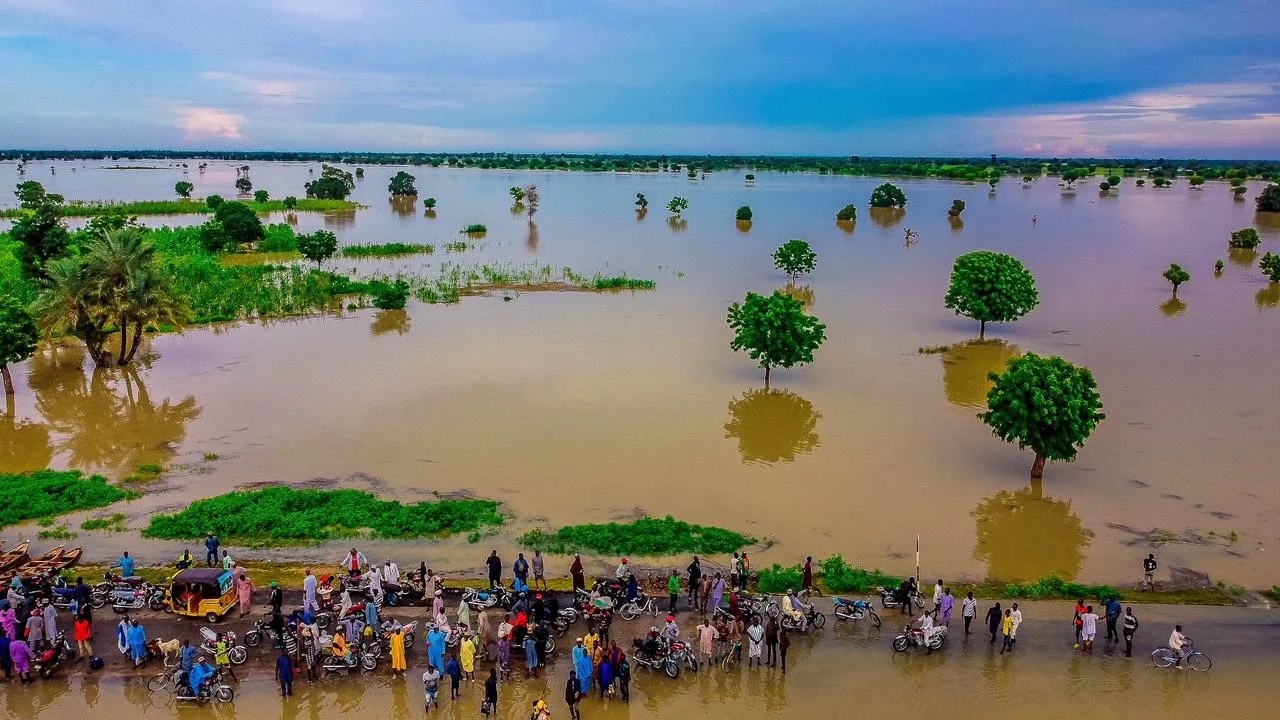
The 2026 Annual Flood Outlook has once again sounded a stark warning. Over 30,000 communities are at risk nationwide, with 14,118 classified as high-risk across 33 states and the Federal Capital Territory. A further 15,597 fall within moderate-risk zones, while 923 communities are considered low risk. These are not just statistics; they represent homes, livelihoods, and entire local economies that could be disrupted within days if proactive measures are not taken.

Flooding in Nigeria has evolved into a complex and recurring crisis, driven by a combination of climate variability and human factors. Increased rainfall intensity, rising water levels in major rivers, and the impact of climate change continue to heighten vulnerability. At the same time, rapid urbanisation, poor drainage systems, encroachment on waterways, and indiscriminate waste disposal worsen the situation. The result is a dangerous cycle where natural triggers meet human negligence, amplifying the scale of destruction.

Against this backdrop, the federal government has signalled a renewed commitment to strengthening emergency response systems. President Bola Ahmed Tinubu, represented by the Minister of Environment, Balarabe Lawal, has acknowledged existing challenges while reaffirming efforts to improve coordination among relevant ministries and agencies. The emphasis on faster, more effective response mechanisms reflects a growing recognition that disaster management must evolve alongside emerging risks.

At the centre of this evolving response is the National Emergency Management Agency (NEMA), which continues to play a pivotal role in coordinating preparedness and mitigation efforts. In recent years, the agency has shifted its focus from largely reactive interventions to a more proactive strategy anchored in early warning and early action. This approach recognises a critical reality: disasters may not always be prevented, but their impact can be significantly reduced with the right level of preparedness.

One of the most notable aspects of NEMA’s current strategy is the strengthening of early warning systems. Working closely with technical agencies such as the Nigerian Meteorological Agency (NiMet) and the Nigerian Hydrological Services Agency (NIHSA), NEMA ensures that flood forecasts are disseminated well ahead of peak rainfall periods. However, the real challenge lies not just in issuing warnings, but in ensuring that they translate into timely and effective action at the community level.

To bridge this gap, the agency has intensified its grassroots sensitisation campaigns. Across flood-prone states, communities are being educated on evacuation procedures, the dangers of ignoring flood alerts, and the importance of maintaining clear drainage systems. These engagements, often carried out in collaboration with state emergency management agencies and local authorities, are gradually fostering a culture of preparedness that has long been lacking.

Equally significant is the increasing emphasis on simulation exercises and inter-agency coordination. Recent flood response drills conducted in vulnerable areas have brought together security agencies, emergency responders, and community volunteers to rehearse real-life scenarios. These exercises are not merely symbolic; they serve as practical tests of response capacity, helping to identify gaps and improve coordination before disaster strikes.

Yet, despite these efforts, persistent challenges remain. Early warning information does not always reach remote or underserved communities. In some cases, residents underestimate the risks or delay evacuation until it is too late. There is also the issue of uneven commitment at the sub-national level, where some state governments have yet to fully prioritise local preparedness measures. These gaps highlight the need for a more integrated approach that goes beyond federal interventions to include stronger state and community ownership.

Mitigation, in the broader sense, must also address structural and environmental factors. The desilting of drainage systems, enforcement of urban planning regulations, and prevention of construction on floodplains are critical steps that require sustained political will. Long-term solutions such as afforestation, improved land management, and climate-resilient infrastructure must also be prioritised if Nigeria is to reduce its vulnerability to recurring floods.

Technology is another area with significant potential. Real-time data monitoring, predictive analytics, and digital communication platforms can enhance both preparedness and response. When effectively deployed, these tools can ensure that warnings are not only timely but actionable, reaching people in formats they understand and trust.

Ultimately, the story of flooding in Nigeria is not just about rising water levels; it is about the intersection of environment, governance, and public behaviour. While agencies like NEMA continue to strengthen institutional response, the role of citizens cannot be overlooked. Simple actions such as proper waste disposal, adherence to building regulations, and responsiveness to evacuation directives can collectively make a significant difference.

As the 2026 flood season unfolds, Nigeria stands at a critical crossroads. The warnings are clear, the risks are well documented, and the institutional frameworks led by NEMA are steadily improving. Yet, the real test lies beyond projections and policy statements; it rests on collective action. Preparedness must move from paper to practice, from government desks to vulnerable communities. If the lessons of previous floods are taken seriously and early actions are sustained, this year could mark a turning point in Nigeria’s disaster management story. But if complacency prevails, the consequences will once again be measured in avoidable losses. The choice, ultimately, is not in the hands of nature, but in the resolve of a nation determined to act before the waters rise.

Abdulhamid Abdullahi Aliyu is a journalist and syndicate writer based in Abuja.

NEMA and the fight to curb Nigeria’s recurring flood disasters

By Abdulhamid Abdullahi Aliyu

Every rainy season in Nigeria, when the skies darken and rivers swell, millions brace for the inevitable. In states like Kogi, Benue, and Bayelsa, families keep bags packed, ready to flee at the first sign of danger. Flood season has become a season of exile, not a question of if disaster will strike, but when.

The devastation of 2022 serves as a poignant reminder of what is at stake. That year, floods claimed more than 600 lives, displaced over 1.4 million people, and destroyed livelihoods on a massive scale. Croplands vanished under water, homes crumbled, and dreams were swept away. Three years later, communities still carry those scars, and the new flood alerts for 2025 have revived fears of a repeat.

It is against this grim backdrop that the National Emergency Management Agency (NEMA) is repositioning itself. For years, the agency was primarily seen as the responder of last resort, arriving with relief materials after lives and property had already been lost. Today, under the leadership of its Director General, Mrs Zubaida Umar, NEMA is making a deliberate shift: from being merely reactive to becoming a driver of foresight and prevention.

“Emergency management must no longer be about sympathy after the tragedy,” Mrs Umar insists. “It should be about preparedness that saves lives before the waters rise.”

That vision is beginning to take root. NEMA now works more closely with the Nigerian Meteorological Agency (NiMet) and the Nigerian Hydrological Services Agency (NIHSA), ensuring that seasonal forecasts and dam release alerts are translated into action at the grassroots level. Through community training, simulations, and sensitisation, the agency is attempting to close the gap between warnings and response, a gap that has cost too many lives in the past.

Yet the challenge remains daunting. Nigeria’s geography makes it naturally vulnerable, with the Niger and Benue rivers cutting across states where millions depend on farming. Poor urban planning compounds the danger, as blocked drainage and informal settlements in flood-prone areas turn cities into ticking time bombs. Climate change, with its unpredictable rainfall patterns, only worsens the threat.

In Lokoja, often referred to as the “confluence of suffering” during flood season, traders recall markets transformed into lakes, while fishermen lament the cruel irony of drowning in abundance. In Borno, families already displaced by insurgency were uprooted again when torrential rains washed away their shelters. These stories underscore a sobering truth: floods in Nigeria are not just natural disasters, but also humanitarian emergencies that exacerbate existing vulnerabilities.

Still, there are signs of progress. NEMA has strengthened partnerships with state governments and agencies, such as the Hydroelectric Power Producing Areas Development Commission (N-HYPPADEC), to broaden the response framework. The agency has also invested in early warning systems, ensuring that flood alerts do not remain stuck in Abuja press briefings but reach local leaders, town criers, and community radio stations.

For NEMA, the real battle is not only about deploying relief materials but about changing mindsets. Preparedness must become a culture. Farmers adjusting their planting calendars to forecasts, families relocating from high-risk flood plains, and local leaders treating disaster drills as seriously as security meetings. These are the shifts that make prevention real.

But as Mrs Umar acknowledges, transformation takes time. Resources remain limited, and relief supplies can only go so far in a country where millions are at risk. Disaster management will therefore continue to be a delicate balance between urgent response and long-term prevention.

What is clear, however, is that the old model of waiting until floods wreak havoc before acting is no longer sustainable. With new alerts already issued for 2025, the real task is ensuring that early warnings translate into early action. The coming seasons must not repeat the mistakes of the past.

Floods will always come. The question is whether they remain an annual tragedy or become a manageable threat. For NEMA, the answer lies in standing not just as a responder to disaster, but as a shield against it. For the millions who live in the shadow of swollen rivers, that shift could mean the difference between despair and survival.

Abdulhamid Abdullahi Aliyu writes on disaster management, humanitarian response, and national development.

NEMA and the battle for Nigeria’s food security

By Abdulhamid Abdullahi Aliyu

The fight against hunger in Nigeria has entered a critical phase. With rising food prices, climate-induced disasters, and conflicts crippling agricultural production, food security is no longer a distant policy concern but an everyday reality for millions of households. What was once viewed as a seasonal challenge has now become a national emergency, demanding a shift from reactive relief to proactive preparedness.

At the forefront of this shift is the National Emergency Management Agency (NEMA), which is redefining its role beyond post-disaster interventions. Through the newly unveiled Food and Nutrition Security Crisis Preparedness Plan (FNSCPP), NEMA is laying the groundwork for a coordinated, data-driven framework designed to detect and respond to food security threats before they spiral into full-blown crises.

For NEMA’s Director-General, Mrs. Zubaida Umar, the stakes could not be higher. “Nigeria is at a critical juncture in its food security landscape,” she observed during a recent consultative session. “We must transition from reactive to anticipatory response models. This collaboration presents a pathway toward a more structured, timely, and impactful system of intervention.”

The new preparedness plan signals a significant departure from the traditional cycle of emergency relief. It recognises that food insecurity is not an isolated problem but a complex challenge worsened by flooding, drought, armed conflicts, and economic shocks. Seasonal floods, for example, continue to devastate farmlands in states like Anambra, Benue, and Niger, erasing months of hard work and leaving rural communities vulnerable to hunger.

The FNSCPP seeks to address this challenge by integrating early warning systems with national emergency operations, setting up clear crisis escalation protocols, and ensuring that federal, state, and community-level agencies respond in unison. This aligns with NEMA’s broader strategy, which has included launching the 2025 National Preparedness and Response Campaign (NPRC) and conducting large-scale flood simulation exercises in high-risk zones such as the South East.

Experts agree that timely action is the difference between a manageable disruption and a nationwide crisis. Dr. Ritgak Tilley-Gyado, Senior Health Specialist at the World Bank and one of the key technical leads behind the FNSCPP, highlighted this during a consultative visit to NEMA’s headquarters. “This is more than just an emergency response plan,” she explained. “It is a long-term preparedness blueprint. Once indicators are triggered, every institution must understand its role and act without delay.”

The stakes are particularly high for vulnerable populations, where food crises often translate into chronic malnutrition, displacement, and loss of livelihoods. Nigeria’s recent qualification for crisis response financing underlines the urgency of establishing a clear and unified response framework. Without it, resources risk being delayed, duplicated, or mismanaged — leaving those most affected to bear the brunt of avoidable suffering.

To counter this, NEMA is also championing community-level sensitisation, ensuring that disaster preparedness is not merely a top-down directive but a collective effort. By engaging local leaders, grassroots organisations, and youth groups, the agency aims to bridge the gap between policy design and on-the-ground realities.

Yet, significant challenges remain. Adequate funding, political will, and inter-agency coordination will determine whether this bold plan succeeds or falters. Beyond the federal effort, state and local governments must embrace their roles in creating food-resilient communities. Environmentalist Mayokun Iyaomolere captured this sentiment aptly when he remarked, “Preparedness is not just about government plans. Communities must also take ownership of the process, particularly in areas where local action can prevent disasters from escalating.”

As Nigeria faces a future marked by unpredictable weather patterns and growing food demands, the real question is not whether crises will occur but how effectively the country can respond. With the FNSCPP, anchored by NEMA’s leadership and supported by multi-sector partnerships, Nigeria has an opportunity to shift from a culture of reaction to one of anticipation and prevention.

The blueprint has been laid out. What comes next is the test of execution, coordination, and the political courage to ensure that no Nigerian is left to go hungry simply because the warning signs were ignored.

Abdulhamid Abdullahi Aliyu writes on disaster management, humanitarian response, and national development.

As floodwaters rise, NEMA’s warnings face test across Nigeria

By Abdulhamid Abdullahi Aliyu


In yet another reminder of Nigeria’s vulnerability to climate shocks, the Nigerian Meteorological Agency (NiMet) has issued a fresh flood alert affecting 20 states across the country. From Sokoto to Bayelsa, Delta to Kaduna, and Lagos to Yobe, millions of residents in high-risk areas have begun fleeing or taking preventive steps. At the same time, emergency management agencies race against time to prevent a repeat of past tragedies.

The warning, coming in July at the peak of Nigeria’s rainy season, forecasts intense rainfall in the weeks ahead—an event that could trigger flash floods, landslides, and mass displacement. Already, parts of Lagos, Yobe, Ondo, Benue, and Imo states have begun witnessing early signs of flooding, raising anxiety and putting public preparedness efforts to the test.

In the eye of this looming storm is the National Emergency Management Agency (NEMA), which has intensified its pre-disaster strategy in partnership with state emergency agencies. Over the past few weeks, the agency has supported community sensitisation campaigns, mapped out temporary shelters, coordinated inter-agency response frameworks, and closely monitored vulnerable zones through real-time disaster surveillance.

Speaking during a recent stakeholder briefing, NEMA’s Director-General, Mrs Zubaida Umar, reiterated the need for state and local governments to go beyond issuing alerts and activate their flood mitigation plans. “Preparedness is not a choice. It is the only guarantee against irreversible loss,” she noted. Her message captures a reality that has plagued Nigeria for over a decade: early warnings often fail to inspire early action.

From the 2012 flood disaster that displaced over two million people, to the more recent 2022 crisis that killed over 600 and affected 4.4 million Nigerians, the patterns are familiar—and sobering. The annual flood season has become a cycle of warnings, delayed responses, avoidable deaths, and post-disaster relief efforts.

This year, however, there is cautious hope that lessons from the past are prompting swifter action. In Kaduna, for instance, the state emergency agency (KADSEMA) has launched haven centres across flood-prone LGAs, in partnership with NEMA, the Federal Fire Service, and others. Dredging of the River Kaduna has begun, and awareness campaigns are ongoing across radio and community platforms.

In Adamawa State, the government has released ₦700 million to support preemptive evacuation, warehousing of relief materials, and sensitisation in at least 15 vulnerable local government areas. “We don’t want to be caught unprepared again,” said Dr Celina Laori, Executive Secretary of the state’s emergency agency.

Elsewhere, NEMA’s field offices are working closely with state authorities to mobilise communities. In Imo, the agency has carried out public sensitisation and positioned ambulances and emergency supplies ahead of potential displacement. In Edo and Jigawa, residents in floodplains have begun self-evacuating following community engagements supported by emergency officials.

But beyond government actions, ordinary Nigerians are taking charge of their safety. In Lekki, Lagos, residents like Olumide Samuel have moved their families out ahead of expected flooding. “We do this every year—it’s not ideal, but it’s better than waiting to be rescued,” he said. In Benue, parents have relocated their children from vulnerable areas even as water levels on the River Benue slowly rise.

Despite this, concerns persist about the capacity of some states to manage what lies ahead. A 2022 report showed that over ₦620 billion in ecological funds have been allocated to state governments over the past decade, yet many states lack sustainable flood defence infrastructure. Environmentalist Mayokun Iyaomolere argues that while awareness has improved, it is not backed by adequate investment or enforcement. “Drainages are still blocked. Buildings still rise on waterways. We’re preparing with buckets when we need bulldozers,” he said.

Part of the challenge lies in the intersection between environmental degradation and urban planning failures. Deforestation, sand dredging, and the uncontrolled construction of buildings on floodplains have eroded the natural barriers that once absorbed rainfall. In many cities, rapid urbanisation has outpaced infrastructure, leaving gutters choked with refuse and floodwaters with nowhere to go.

To bridge this gap, NEMA has not only issued advisories but also strengthened its simulation exercises and inter-agency coordination. Earlier this year, mock flood drills were held in Anambra and Kano states, simulating real-time evacuations and testing communication chains. The goal is to make preparedness a routine rather than a reaction.

Nonetheless, simulation alone is not a substitute for policy reform. Experts insist that Nigeria must move beyond warnings and develop a national flood resilience plan—one that prioritises sustainable drainage, the relocation of communities in high-risk zones, and long-term investment in ecological restoration.

For now, the battle is one of time and commitment. Floods are not a surprise event in Nigeria—they are a certainty. What remains uncertain is how well-prepared the nation is to confront them.

As rivers swell and the skies darken, millions of Nigerians await what may come. But unlike in years past, there is a growing realisation—within government agencies like NEMA, state actors, and among citizens themselves—that early warnings must finally lead to early action.

Abdulhamid Abdullahi Aliyu writes on disaster management, humanitarian affairs, and national development.

NEMA: Rebuilding lives of stranded returnees

By Abdulhamid Abdullahi Aliyu

A wave of emotions swept through the Murtala Muhammed International Airport, Lagos, on Tuesday, March 4, as 144 stranded Nigerians returned home from Libya. Some wept as they stepped onto Nigerian soil, clutching their few belongings, while others sighed in relief after months of hardship in the North African country.

The returnees—mostly women and children—arrived aboard a chartered Boeing aircraft at exactly 4:45 p.m. The National Emergency Management Agency (NEMA) facilitated their homecoming in collaboration with the International Organization for Migration (IOM) and other key stakeholders. Officials swiftly processed them, ensuring they underwent the necessary procedures for reintegration into society.

Among the returnees were 100 women, 8 men, 26 children, and 10 infants—individuals who had left Nigeria seeking a better future, only to find themselves ensnared in a nightmare. Libya, once viewed as a gateway to Europe, has become a dangerous trap for migrants. Many face forced labor, sexual exploitation, kidnappings, and inhumane detentions, with little hope of escape.

NEMA and its partners have worked tirelessly for years to bring stranded Nigerians home. At the airport, officials from the Nigeria Immigration Service, the National Commission for Refugees, Migrants, and Internally Displaced Persons (NCFRMI), the Department of State Services (DSS), Port Health Services, and the Nigeria Police Force were on the ground to facilitate their return. The returnees underwent biometric registration, medical screening, and psychological counseling before being transported to the Igando IDPs Resettlement Center for reintegration programs.

Yet, for many, homecoming is bittersweet. Aisha, 27, left Nigeria two years ago with dreams of a better life. Instead, she found herself trapped in Libya, forced to work under exploitative conditions just to survive. Holding her two-year-old son close, she said, “I don’t know where to start. I sold everything to travel. Now, I’m back with nothing.”

To help returnees like Aisha, the IOM, in partnership with NEMA and other agencies, provides reintegration support, including vocational training, business grants, and psychosocial counseling. These programs are essential in helping them rebuild their lives and find new opportunities at home.

This latest evacuation is part of an ongoing effort to rescue Nigerians from Libya’s brutal realities. Over the years, thousands have been repatriated, yet the cycle of irregular migration persists. Despite continuous awareness campaigns, human traffickers still lure young Nigerians with false promises of a better life abroad.

Experts argue that while evacuation efforts are commendable, the real solution lies in addressing the root causes of migration—unemployment, poverty, and lack of opportunities. Without viable alternatives at home, many will continue to take desperate risks.

Relief and uncertainty filled the air as the returnees settled into the temporary resettlement center. Some saw their return not as a failure but as a second chance. “I just want to find a way to care for my son,” Aisha said. “I don’t regret coming back. At least I am alive.”

The mission of NEMA and its partners is clear: to help returnees rebuild their lives. But for Nigeria, the bigger challenge remains—creating a future where its youth no longer feel compelled to risk everything for an uncertain journey abroad.

Abdulhamid Abdullahi Aliyu—an NYSC serving corps member, writes from the Centre for Crisis Communication (CCC) in Abuja.

49 rescued from Benue boat mishap– NEMA

By Anwar Usman

The National Emergency Management Agency on Monday said a total of 49 persons have been rescued and three dead bodies were found from the boat accident that occurred along River Benue in Agatu Local Government Area of Benue State.

A statement by NEMA indicated that the accident involved 76 passengers in the boat, as the driver, unaware of a submerged tree in the river accidentally navigated into it, causing the boat to tip off and capsize.

“The unfortunate incident took place on Saturday, December 15th, around 7:00 PM. The passengers were said to be returning home from the Ocholonya Market, a major economic hub that draws traders from several communities in Agatu and neighbouring states, including Nasarawa State.

“Aoart from the rescued passengers, one of the victims managed to swim to safety while 23 persons are still missing. Most of the boat passengers were from Odenyi Magaji and other communities of Nasarawa State,” it stated.

The agency emphasised that it is working with the Benue State Emergency Management Agency and other stakeholders including the local authorities and divers to expedite the ongoing search and rescue operations to trace the remaining missing passengers.

“NEMA has also established contacts with the Nigerian Navy to provide more support for the search and rescue,” it added.

Two children dead, couple injured in Kano building collapse

By Uzair Adam

Two children have been confirmed dead, and a couple sustained injuries after a two-storey building collapsed at Noman’s Land in the Fagge Local Government Area of Kano.

The incident, which occurred early Thursday morning, was confirmed by Dr. Nuraddeen Abdullahi, the Coordinator of the National Emergency Management Agency (NEMA) in Kano.

According to Abdullahi, NEMA received a distress call at around 2:00 a.m. from a concerned citizen reporting the collapse. A rescue team was immediately dispatched to the site.

“Four individuals were rescued from the rubble, including a husband, wife, and their two children. Unfortunately, the two children were pronounced dead, while the parents were taken to the Armed Forces Specialist Hospital for medical treatment,” Abdullahi said.

Search and rescue operations are still ongoing, with teams from the Kano State Fire Service, Police, Red Cross, NSCDC, and SEMA working to find any remaining victims.

President Tinubu sympathizes with flood victims across Nigeria

By Abdullahi Mukhtar Algasgaini

President Bola Tinubu received the news of the devastation wreaked by floods on communities and farmlands nationwide with profound grief.

Recent data by the National Emergency Management Agency (NEMA) indicate that lives have been lost — with thousands of hectares of farmlands damaged and thousands of people displaced by floods across the country.

The President sympathizes with all victims of these ravages of nature, especially bereaved families, farmers, displaced communities, and those who have lost property.

President Tinubu re-emphasizes the need for a concerted effort to address existential environmental concerns and build a more climate-resilient and adaptive society.

The President prays for the repose of the deceased’s souls while assuring Nigerians that his administration, through the relevant agencies, will continue to provide the needed support for victims and timely warnings to mitigate the impact of environmental mishaps.

Zaria: Severe flooding displaces hundreds, cemetery damages as residents plead for aid

By Uzair Adam

Residents of Chikaji, located in the Sabon-Gari Local Government Area of Kaduna State, are urgently seeking assistance from the government and charitable individuals following a devastating flood that swept through the area.

Several media reports indicated that the flood caused extensive damage, washing away cemeteries, homes, and properties.

Triggered by a seven-hour downpour from 5:00 a.m. to 1:00 p.m. on Monday, the flood has severely impacted the community.

The Village Head of Chikaji, Alhaji Auwal Sani-Dambaba, reported on Tuesday that over 200 houses were affected.

He also mentioned that the flood caused significant destruction to the LEA Primary School and desecrated a large section of the Ojo Cemetery.

Although no lives were lost, many graves were disturbed, and residents are now taking refuge in nearby neighborhoods.

To address the immediate needs of the cemetery, Malam Suleiman Liman, the Chief Imam of Chikaji Central Mosque, has called an emergency meeting with local philanthropists to discuss relief efforts.

Among the victims is Malam Ibrahim Ahmed, whose two-bedroom home was reduced to rubble.

He expressed gratitude that the flooding occurred during daylight, which allowed residents to take swift action, although he lost all his belongings while trying to protect his children.

Community leader Alhaji Gafai Katsina highlighted the difficult situation for many flood victims, noting that some families are now staying with less affected neighbors or have returned to their parents’ homes temporarily.

Reacting to the disaster, a statement from the Office of the Speaker of the House of Representatives, Tajuddeen, emphasized the need for swift government intervention and called on the National Emergency Management Agency (NEMA) and the State Emergency Management Agency (SEMA) to provide immediate support to the affected residents.

The Speaker also urged residents to take precautionary measures and adhere to safety advice from authorities to minimize further risks associated with flooding.