National Security Adviser

Nigeria’s security budget and the reality on the ground

By Abdulhamid Abdullahi Aliyu 

To many Nigerians, the security allocations in national budgets often appear inflated. Year after year, billions are allocated to the military, defence procurement, intelligence operations, and internal security initiatives.

Yet, the level of insecurity across the country continues to raise eyebrows. The common question remains: “Where is all this money going?” It is a valid concern.

However, beyond the budget lines and official pronouncements lies a more complex reality—one that is often overlooked by the average citizen. The actual cost of warfare and intelligence operations is not just steep—it is staggering.

Take air operations as an example. Military insiders have long noted that flying an Alpha Jet for a single mission can gulp up to a million naira in aviation fuel alone.

This figure excludes routine maintenance, spare parts, logistics, or crew allowances. Multiply these flights across days and theatres of operation, and it becomes easier to understand why security efforts are financially demanding.

On the ground, the story is similar. Armoured vehicles, patrol vans, and tanks require constant fuelling, often idling for hours during missions. Soldiers deployed to remote areas require food, clothing, and equipment.

Medical support must be on standby, and when fatalities occur, families of the fallen deserve compensation. These are not occasional expenses—they are daily operational necessities.

Yet, beyond the financial weight of military engagement lies an even more fragile dimension: intelligence gathering. In parts of the country, particularly the North East, North Central, and North West, attacks by insurgents and bandits continue with frightening regularity.

People often ask: Why aren’t these attacks being preempted? Where is the intelligence? These questions are justified. Comparisons are frequently drawn to agencies like the FBI or Israel’s Mossad, known for preemptive actions.

But intelligence is no miracle tool. It relies on actionable information—gathered, processed, and relayed with accuracy. In many of Nigeria’s conflict zones, such information is scarce.

Locals often fear reprisals and refuse to share what they know. Rural and forested areas remain difficult to monitor due to the absence of surveillance infrastructure.

Moreover, intelligence work is not the sole burden of the military. It requires seamless coordination among the police, DSS, NSCDC, and even vigilante groups. Where this collaboration falters, intelligence fails.

That is not to absolve our agencies of their failings. Reports of negligence, delayed responses, and poor communication abound. However, these shortcomings, while real, are not insurmountable.

Nigeria urgently needs to rethink its approach to intelligence. There must be fresh investment in surveillance tools, inter-agency communication systems, and the training of personnel in modern techniques.

Citizens, too, must become active partners by volunteering timely and truthful information. This war cannot be won solely by the military. It requires collaboration, from the government to the grassroots.

Technology, including drone surveillance and satellite imagery, must be embraced. But more than anything else, there must be political will to treat intelligence not as a side note, but as the beating heart of our national security strategy.

Balanced expectations are also important. While it is tempting to measure Nigeria’s intelligence systems against those of global powers, such comparisons can be misleading.

Nations like the US and Israel have built theirs over decades with enormous financial commitment. Nigeria, by contrast, is still building its base. Still, quiet victories exist—many of them deliberately kept from the public domain for strategic reasons.

Terror plots have been foiled, camps dismantled, and lives saved through intelligence-led operations. These successes rarely make headlines. What are the failures, the losses, and the anguish they leave behind?

That is why we must keep asking questions—but with an understanding of the context. Accountability, yes. But also support, reform, and renewed trust. National security is not a spectator sport. It is a shared duty.

And if Nigeria is to triumph over its many threats, it must first accept that intelligence, not just guns, is its most potent weapon.

Abdulhamid Abdullahi Aliyu writes from the Centre for Crisis Communication (CCC) in Abuja.

Assessing Ribadu’s claim: Has insecurity reduced by 90% in Nigeria?

By Zayyad I. Muhammad

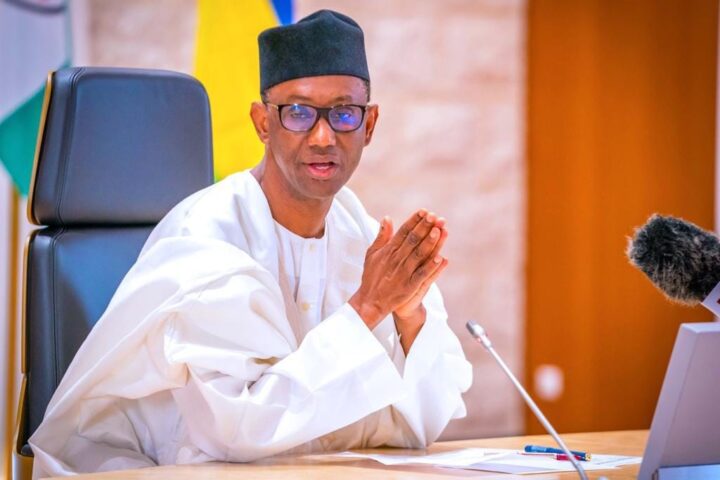
Nigeria’s National Security Adviser (NSA), Mallam Nuhu Ribadu, recently claimed that the country has recorded over 90% improvement in security under President Bola Ahmed Tinubu’s administration. He made this assertion in Jos, Plateau State, during a press briefing following a strategic meeting with the Commander of Operation Safe Haven, Major General Folusho Oyinlola. The meeting was convened after a deadly gunmen attack on the Bokkos community, which tragically claimed the lives of hundreds of residents.

Given the context of recent violence, Ribadu’s statement sparked mixed reactions from across the political spectrum. Critics argue that the NSA’s comments are aimed at shaping public perception as politicking for the 2027 general elections approaches. They view the remarks as part of a broader political narrative to build confidence in the administration. On the other hand, supporters commend Ribadu for leading an effective national security strategy, asserting that the improvements are tangible and worth acknowledging.

However, beyond partisan sentiments and political interests, it is essential to examine Ribadu’s claim from an objective standpoint grounded in verifiable data and realistic context. Security issues are too critical to be reduced to rhetoric, hey must be measured by real outcomes that affect the lives of everyday Nigerians.

Regardless of our political leanings, there have been undeniable improvements in some of Nigeria’s most dangerous zones. For example, the Birnin Gwari–Lagos highway in Kaduna State, which was shut for nearly a decade due to the menace of armed bandits, has now reopened to motorists, especially heavy-duty vehicles that previously avoided the route. The once-abandoned Birnin Gwari cattle market, inactive for over ten years, is now gradually returning to life with commercial activity.

Similarly, the Abuja–Kaduna highway, previously infamous for rampant kidnappings and ambushes, is now operational 24 hrs under constant military and police surveillance. Other major highways, such as the Kaduna–Kano expressway and the Jos–Akwanga–Lafia–Abuja corridor, now also witness 24-hour vehicular movement, marking a sharp contrast to the fear and hesitation that characterized travel in these areas just a few years ago.

Still, it’s important to remember that security is both delicate and dynamic. A full year of relative peace can be overshadowed by a single horrific incident. Groups like Boko Haram, ISWAP, and various bandit factions, such as the Lakurawa and Ansaru cells, still carry out attacks on soft targets in rural and semi-urban areas. While the overall frequency and scale of these attacks may be decreasing, their sporadic nature continues to pose serious challenges.

Between 2022 and 2024, several Nigerian security and intelligence agencies have reported significant gains. The Defence Intelligence Agency (DIA) indicated a 65% reduction in overall crime and criminality nationwide since May 2023. This figure is based on cumulative data from military operations, police reports, and inter-agency assessments.

The Department of State Services (DSS), particularly in the Federal Capital Territory (FCT), recorded a significant decline in high-profile crimes, including kidnappings, armed robberies, and terrorist threats, through 2023 and into early 2024.

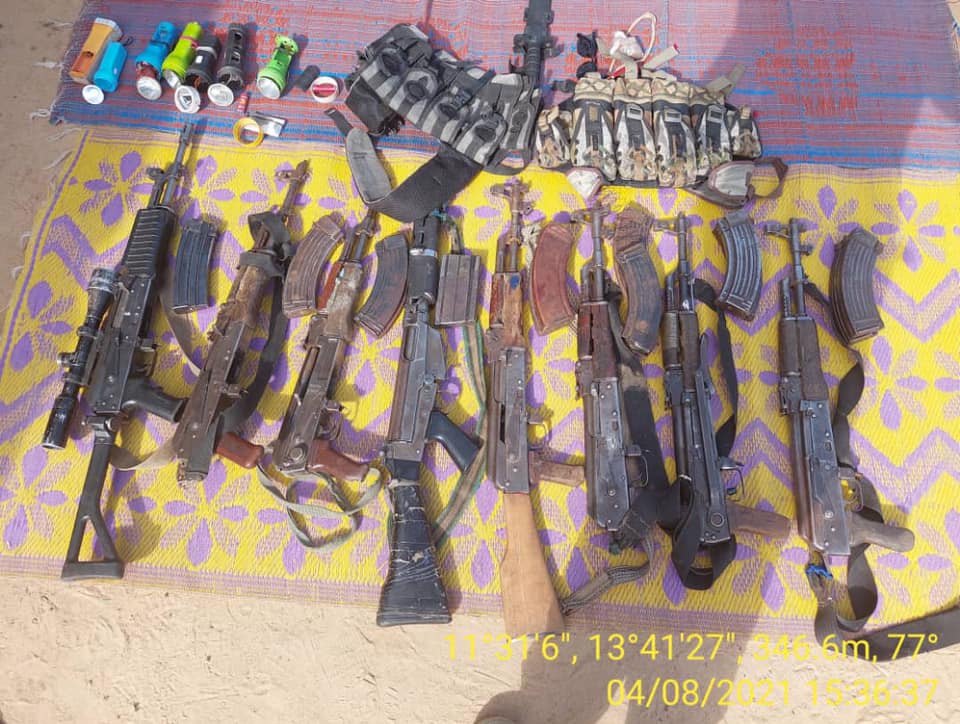
The Nigeria Police Force also published extensive data on its security efforts: between 2023 and early 2024, police operations led to the arrest of 30,313 suspects linked to serious crimes such as kidnapping, armed robbery, cultism, and banditry. In the same period, 1,984 illegal firearms were recovered, along with 23,250 rounds of ammunition. Additionally, 1,581 kidnapped victims were successfully rescued across various states.

The proliferation of small arms and light weapons has long fueled Nigeria’s insecurity. However, between 2022 and 2024, the National Centre for the Control of Small Arms and Light Weapons (NCCSALW) recorded historic achievements. In February 2023, the Centre announced that it had recovered more than 10,000 small arms and light weapons from non-state actors during nationwide disarmament operations. By February 2024, the total number of retrieved weapons had increased to 20,000 firearms and over 60,000 units of ammunition.

Furthermore, in September 2024, the NCCSALW undertook the destruction of 30,132 recovered weapons, ranging from decommissioned and unserviceable arms to illicitly owned firearms.

The Nigerian Armed Forces, particularly the Army, have achieved notable success over the past three years. Between 2022 and 2025, military operations resulted in the neutralization of more than 8,034 terrorists across various theatres of operation, including the North-East, North-West, and North-Central regions. In February 2024 alone, 105 terrorists were eliminated during targeted counterterrorism operations. and 140 capture

A total of 6,376 kidnapped victims were rescued from insurgent enclaves and bandit hideouts in 2024 alone, thanks to joint operations involving the Army, Air Force, and local vigilante groups. These successes have contributed significantly to restoring public confidence in the state’s ability to respond to threats.

Additionally, by December 2024, the Nigerian military had dismantled numerous terrorist camps and degraded the operational capabilities of insurgent groups in several flashpoints. More than 20 high-profile bandit leaders and commanders were eliminated in precision operations, including:

 1. Ali Kachalla (Ƙawaje)

 2. Kachallah Dogo Kwaddi

 3. Lawali Dodo

 4. Ɓoderi

 5. Sani Wala-birki

 6. Kachallah Hana-Zuwa

 7. Damina

 8. Kachalla Sani Dangote

 9. Kachalla Adamu

 10. Halilu Sububu

 11. Baleri

 12. Modi Modi

 13. Kachalla Mai Shayi

 14. Kachalla Tsoho Lulu

 15. Ibrahim Nagure

 16. Kachalla Makore

 17. Bulak

 18. Tukur Sharme

 19. Hassan Ɗantawaye

 20.Ɗan-Isuhu

These names had long terrorised communities, operated illegal taxation systems, and masterminded large-scale abductions. Their deaths signal a turning point in Nigeria’s war against insecurity—at least in the short to medium term.

Critics, supporters, and objective observers alike hold valid perspectives on Ribadu’s claim. Security cannot be judged solely by statistics or isolated incidents—it must be assessed holistically, with a view to sustainability. While it would be inaccurate to declare total victory over insecurity, the data and field reports suggest that Nigeria is making measurable, strategic progress.

As Nigeria continues to grapple with complex internal threats, public expectations remain high. Citizens want not just temporary relief but long-term stability. Ribadu’s statement may be politically timed, but the figures back up his assertion, at least in terms of trend and direction. Whether or not one agrees with the 90% figure, one thing is clear: the tide appears to be gradually turning in favour of the state.

The challenge now is to sustain these gains, institutionalise reforms, and ensure that security is perceived and lived by every Nigerian in every part of the country.

Zayyad I. Muhammad writes from Abuja via zaymohd@yahoo.com.

March 2025 Intelligence and Anti-Graft Report: Escalating threats, assertive crackdowns, and the battle against corruption 

By Haroon Aremu

No doubt, this outgoing month (March 2025) has witnessed a troubling escalation of banditry, kidnappings, and overall insecurity across Nigeria. Despite relentless efforts by security agencies, the wave of violence continues to rise, posing a severe threat to national stability. 

The series of abductions and deadly attacks in Zamfara, Niger, Imo, and Katsina states underscore the urgent need for more aggressive and strategic security measures. This trend is particularly concerning as the country enters a festive period, historically marked by heightened criminal activity.

While the Office of the National Security Adviser (ONSA), in collaboration with the Department of State Services (DSS) and the National Intelligence Agency (NIA), has made progress in intelligence gathering and security coordination, a more technology-driven approach is necessary. 

In the same vein, ONSA’s strategic partnerships with the Nigeria Customs Service, the National Agency for Food and Drug Administration Control (NAFDAC), and the Central Bank of Nigeria (CBN) in tracking illicit financial flows and curbing arms smuggling are commendable. However, dismantling criminal networks before they strike requires a more proactive and intelligence-led response.

On the other hand, the DSS has played a crucial role in safeguarding internal security throughout March, tackling numerous threats and reinforcing its commitment to national safety. However, its reputation has come under scrutiny following multiple reports of officer misconduct and press intimidation. 

For instance, a widely circulated incident in Abia State showed a DSS officer physically assaulting a police officer, raising concerns about discipline and inter-agency cooperation. Such conflicts highlight the need for structured conflict resolution mechanisms within security forces.

Another pressing issue is the DSS’s handling of journalists. While national security remains paramount, officers must operate within the boundaries of press freedom. The harassment of journalists in Abuja during the Nnamdi Kanu court proceedings and the controversial detention of a reporter in Jos have sparked concerns about press repression. In a democracy, the public’s right to access information must be upheld, and security agencies must balance national security interests with the protection of journalistic freedoms.

Despite these concerns, the DSS has taken commendable steps to defend its integrity. Major newspapers, including Punch, Blueprint, The Guardian, and Tribune, recently issued public apologies for misreporting the Lagos State Assembly invasion, reinforcing the agency’s stance against misinformation. 

However, while protecting its credibility, the DSS must ensure that its officers uphold professionalism in their interactions with the media, fostering a balanced relationship between security and press freedom.

Subsequently, the Economic and Financial Crimes Commission (EFCC) intensified its anti-corruption campaign throughout March, securing multiple arrests, arraignments, and asset forfeitures. The agency has cracked down on major financial crimes, exposing fraudulent schemes and recovering stolen funds. 

However, its operations have also faced criticism for alleged human rights violations. A recent raid in Lagos, which left schoolchildren stranded after EFCC operatives stormed their neighborhood, sparked national outrage. While enforcing anti-corruption laws is crucial, operations must be conducted in a way that does not unduly disrupt the lives of innocent citizens.

A growing concern is the infiltration of foreign fraud syndicates, particularly those involving Chinese and Filipino nationals, who have been implicated in elaborate financial crimes within Nigeria. The EFCC must intensify its collaboration with international anti-fraud agencies to dismantle these networks and prevent Nigeria from becoming a safe haven for global financial criminals, a concern previously raised by the EFCC chairman.

One of the most notable developments in March was the government’s decision to use recovered looted funds to finance the student loan scheme. While widely applauded, stringent accountability measures must be implemented to prevent mismanagement. As this policy offers much-needed relief to students facing financial burdens, transparency must be prioritized to avoid repeating past mistakes.

The Independent Corrupt Practices and Other Related Offences Commission (ICPC) has also been active in the fight against corruption, securing key arrests and launching several investigations into public sector fraud. Its recent probe into fraudulent procurement contracts worth billions of naira reinforces its commitment to exposing corruption at the highest levels. However, to maximize impact, the ICPC and EFCC must strengthen their partnership, ensuring a more coordinated and formidable approach to tackling corruption.

Another alarming revelation in March involved the mismanagement of public funds within government ministries, departments, and agencies (MDAs). Investigations exposed how billions meant for public projects were misappropriated, depriving citizens of critical services. While the ICPC’s swift intervention in these cases is commendable, Nigerians demand more than just arrests—they want convictions and asset recoveries that send a strong message to corrupt officials.

Notwithstanding, March 2025 has been a defining month for Nigeria’s intelligence and anti-graft agencies. As the nation moves into April, Nigerians expect these agencies to reinforce their commitments, refine their strategies, and uphold the principles of justice, transparency, and accountability. The battle against insecurity and corruption is far from over, but it must be fought with precision, fairness, and an unwavering dedication to national progress.

Haroon Aremu Abiodun is an author and a fellow of PRNigeria. He wrote via exponentumera@gmail.com.

Scorecard: What ONSA, DSS, EFCC, others won, lost in 2024

By Haroon Aremu Abiodun

Despite the turbulence of 2024, Nigeria’s intelligence and anti-graft agencies recorded significant achievements. The Department of State Services (DSS), National Intelligence Agency (NIA), Office of the National Security Adviser (ONSA), and anti-corruption bodies like the Economic and Financial Crimes Commission (EFCC) and the Independent Corrupt Practices Commission (ICPC) made notable strides in combating corruption, safeguarding national security, and upholding the rule of law.

However, Emergency Digest reports that pressing challenges persist within these institutions, threatening sustained progress and credibility. This report delves into landmark achievements, systemic lapses, and broader implications for national security, highlighting the contributions of the NSA and other agencies such as the ICPC, DSS, and NIA.

EFCC: Wins Amid Controversies

Under Olukoyede’s leadership, the EFCC made impressive progress in tackling financial crimes. Notable accomplishments include a groundbreaking operation that led to the arrest of 792 individuals involved in cryptocurrency and romance scams in Lagos and the recovery of N230 billion and $105 million within a year. A major victory was the forfeiture of a sprawling Abuja estate valued at billions, reflecting the agency’s commitment to asset recovery.

Nevertheless, high-profile cases, like the delayed arrest of former Kogi State Governor Yahaya Bello and allegations of dropped charges against crossdresser Bobrisky in exchange for bribes, raised concerns about the EFCC’s integrity. Critics have also highlighted the agency’s inaction on prosecuting high-profile figures such as Humanitarian Affairs Minister Betta Edu, despite substantial evidence of corruption.

ICPC: Quiet but Impactful

The ICPC maintained a low profile but achieved commendable results, recovering N52 billion and $966,900 in misappropriated funds in a year. The commission exposed corruption in government contracts, cracked down on job racketeering, and raised concerns about misused funds in constituency projects.

Despite these successes, the ICPC struggles with transparency challenges, understaffing, and limited resources. Addressing these gaps is essential to sustain its fight against systemic corruption.

DSS: Vigilance Amid Criticism

The DSS maintained its critical role, thwarting terrorism plots, dismantling organised crime networks, and protecting vital national assets. However, the agency was criticized for alleged overreach, unlawful detentions, and a lack of transparency.

In a notable clash with the Socio-Economic Rights and Accountability Project (SERAP), the DSS faced backlash for questioning the group’s leaders after they criticized Nigeria’s human rights record. Similarly, unresolved issues surrounding Nnamdi Kanu’s case have cast a shadow over the DSS’s otherwise commendable efforts.

NIA: Expanding Reach, Addressing Gaps

The NIA expanded its global intelligence capabilities, collaborating on transnational crime and cyber threats. However, internal mismanagement and opacity remain significant concerns. With Mohammed Mohammed’s appointment as Director-General, there is hope for renewed efficiency and accountability.

ONSA: Orchestrating National Security

Under Malam Nuhu Ribadu’s leadership, the NSA made strides in combating terrorism and reuniting kidnapping victims with their families. However, controversial policies like the Cyber Security Levy faced opposition from stakeholders, highlighting the need for transparent communication.

To enhance its impact, the NSA must foster better relationships with the media and citizens, ensuring timely and accurate dissemination of information without compromising sensitive intelligence.

Recommendations for Progress

1. Strengthen Institutional Frameworks: Leverage technology and intelligence to prevent crime and enhance efficiency.

2. Enhance Public-Agency Relations: Foster trust through targeted awareness campaigns and transparent communication strategies.

3. Improve Leadership Accountability: Ensure transparent appointments and performance evaluations for agency heads.

4. Foster International Cooperation: Strengthen ties with global intelligence and financial institutions.

5. Address Root Causes: Combat unemployment and poverty to reduce criminal recruitment.

The collective efforts of Nigeria’s intelligence and anti-graft agencies in 2024 have established a solid foundation for a corruption-free society. From the EFCC’s groundbreaking operations to the ICPC’s meticulous investigations, these achievements underscore the potential for lasting change.

Nevertheless, tackling ongoing challenges, including transparency, resource limitations, and inter-agency coordination is essential. A collaborative approach—reinforcing institutions, enhancing public trust, and promoting integrity—will secure a more stable and prosperous Nigeria.

Haroon Aremu Abiodun is a Public Affairs Analyst, Advocate for National Development and Fellow of PRNigeria. He can be reached at exponentumera@gmail.com.

Arms proliferation and the Nigerian security forces

By Zayyad I. Muhammad

Mallam Nuhu Ribadu, the Nigerian National Security Adviser, stated during an arms destruction exercise organised by the National Centre for the Control of Small Arms and Light Weapons (NCCSALW) that many of the illicit weapons currently used by terrorists and bandits originally belonged to the Federal Government of Nigeria. 

Ribadu’s revelation may not surprise those familiar with the complexities of Nigeria’s security challenges, but it is both new and alarming to the average Nigerian.  

For many, the realisation that those entrusted with their protection are selling weapons to terrorists, insurgents, and bandits is deeply unsettling. This issue demands a coordinated and strategic response. However, Mallam Nuhu assured us that steps and measures have been taken to resolve this. 

But the big questions remain: Are these measures yielding sustainable results? What motivates or drives a security agent to sell weapons to terrorists and bandits, fully aware that they may become the first target of those very weapons? 

Nuhu Ribadu stated, “The worst human being is a policeman or soldier who takes weapons from his unit and sells them or hides them for criminals to use against his colleagues.” This is true; however, additional measures are needed beyond what the NSA has mentioned to address this issue. These should include improved welfare and salaries for security personnel, enhanced training, and stronger supervision. It’s important to consider that the actions of some security officers may not be solely motivated by money but by radicalisation or frustrations. 

Nigeria must prioritise the use of technology in its fight against insurgency, terrorism, and banditry, as the world has moved beyond relying solely on boots on the ground. It is crucial to employ technology to address these challenges, including implementing chips or inbuilt devices to track and attach every weapon assigned to the officer responsible for it. 

Despite the few rogue elements within the security forces who recklessly jeopardise their lives and those of their colleagues and families by exchanging their weapons for peanuts, we must commend the majority of Nigeria’s dedicated soldiers, police officers, and other personnel who are actively working to recover illicit arms and eliminate corrupt practices within the security forces. 

On the other hand, sabotage by rogue elements within security forces is not unique to Nigeria; many countries have faced situations where insurgency, terrorism, or banditry were exacerbated by these elements selling arms to militant groups.

In Yemen, amid its civil war, there have been instances of arms diversion by corrupt individuals within the security apparatus. Weapons intended for the national army have ended up in the hands of Houthi rebels and various militant groups. 

Similarly, during the conflict with ISIS in Iraq, reports emerged of Iraqi security forces losing control of arms depots or selling weapons to militant groups. Somalia has seen similar issues in its battle against al-Shabaab, where government and security officials were accused of selling or diverting weapons to the very militants they were fighting. 

Another notable example is Libya. Following the fall of Muammar Gaddafi in 2011, the country descended into chaos, with various factions and militias vying for control. Weapons from government stockpiles, as well as arms supplied by international actors, were sold or transferred to militias and insurgent groups, further escalating the violence. In the Democratic Republic of Congo (DRC), armed groups have long been involved in the conflict, with reports indicating that elements within the military and police forces have sold weapons to these groups.

For any country grappling with the involvement of its security forces in the sale of weapons to insurgents, terrorists, and bandits, factors such as selfishness, corruption, and complicity within these forces play a significant role. Additionally, weak institutions and inadequate oversight have further exacerbated the problem. 

 Zayyad I. Muhammad writes from Abuja via zaymohd@yahoo.com.

Tinubu and efforts at addressing insecurity

By Kabir Fagge Ali

Sir, Nigeria has been plagued by various security challenges for over a decade, including insurgency, banditry, kidnapping, and separatist agitations. Despite high expectations from President Bola Ahmed Tinubu’s administration, the situation has deteriorated further, with increased abductions and ransom demands. According to a recent report, 3,707 citizens have been killed and 3,238 abducted between May 2023 and now.

The worsening security situation can be attributed to several factors, including under-resourced and poorly equipped security forces, corruption, high unemployment, poverty, weak governance structures, and a lack of political will.

However, it is encouraging to note that President Tinubu’s administration is adopting a comprehensive approach to address insecurity through the Office of the National Security Adviser (ONSA), Mallam Nuhu Ribadu. The strategy focuses on strengthening security forces, enhancing intelligence capabilities, and fostering regional and international collaboration.

According to the feeler from ONSA, the administration has increased funding and provided modern equipment and comprehensive training programs to enhance the operational capacity of the military, police, and other security forces.

Additionally, we were told that the administration has prioritised addressing economic factors contributing to insecurity, investing in education, healthcare, and job creation to mitigate the underlying causes of crime and violence. Efforts to combat corruption within the security sector have also been intensified, and regional security cooperation has been enhanced through diplomatic engagements with neighbouring countries.

I strongly believe that a comprehensive and multifaceted approach is required to effectively address Nigeria’s security challenges. This includes reforming and adequately equipping security agencies, enhancing accountability, investing in economic development programs, building trust between security forces and local communities, establishing effective mechanisms for resolving disputes, and implementing judicial reforms.

The government must also demonstrate strong political will, consistent policies, adequate funding, and transparency. Citizens must also recognise that security is a collective responsibility, not just the responsibility of security forces.

It is indisputable that President Tinubu’s administration has shown a commitment to addressing insecurity. Still, more must be done to restore public trust and confidence in the government’s ability to protect the nation. With a comprehensive approach and collective effort, Nigeria can overcome its security challenges and ensure peace and stability for its citizens.

Kabir Fagge Ali, a youth corps member with PRNigeria Centre, wrote via faggekabir29@gmail.com.

NSA Nuhu Ribadu style: A critique 

By Zayyad I. Muhammad 

For 24 years, most Nigerians were only familiar with one style of operation by their National Security Advisers (NSA)—a regimental style—because of the complete military background of the previous NSAs. Having NSAs with military experience is an excellent idea, but some critical situations require looking at things from different angles, including outside-the-book approaches.

The coming of Nuhu Ribadu as Nigeria’s National Security Adviser is a paradigm shift and a systemic and systematic approach by President Bola Ahmed Tinubu. Tinubu brought not only a person that he understood but also a person who understood his steps. It’s a kind of quality assurance.

Because for two decades, Nigerians have been used to one style, they need to be educated from a layman’s perspective. NSA Nuhu’s style will and must always be soft and hard, silent and loud, publicly and secretly, unique and ordinary because of his background, training, and experience—an excellent police officer and an anti-corruption czar who has gone through the mills of his fields.

Before his appointment and signs that he would be President Tinubu’s NSA, some people thought de-marketing and painting him black would deny him the position. They forgot that security matters; it goes beyond politics when dealing with goal-getters like Tinubu. It’s a matter of the quality of Nuhu Ribadu and Tinubu’s philosophy on exceptional human resources.

The National Security Adviser manages Nigeria’s security on behalf of the President, and he is the chief advisor on all matters vital to Nigeria’s very survival.

The big questions are: has Nuhu Ribadu brought on board something new, being a new face with different backgrounds from the previous NSAs in 24 years? Has Nuhu Ribadu been able to separate politics from policy? He has actively participated in politics before now. Has Nigerian security improved under Nuhu Ribadu?

Analysing security issues and their managers is often difficult, or rather futile because the gains achieved in a decade can be wiped away within a few minutes by one senseless act by terrorists, bandits, or common criminals. Nuhu has brought something unique: Nigerians are being informed of happenings in the fight against criminality, the NSA is now visible when required, confidence has been built, and resources are appropriately distributed while separating needs from wants. Under NSA Nuhu Ribadu, kinetic and non-kinetic approaches are being applied to tackle the security challenges in Nigeria. Inter-agency synergies are now a key in the security architecture.

Furthermore, all security agencies are being reformed and reinvigorated to play their role in internal security effectively. At the same time, the military is being freed from the burden of performing both its constitutional role and that of the police, thus allowing it to concentrate on external security fully.

Politics and man are like love and humankind—they co-exist. Human beings must always love something; the same is true of politics: once one knits tight with politics, they live together. Even his adversaries must admit that Mallam Nuhu was able to separate his office from politics, knowing fully the enormous responsibilities on his head, and Nigeria and the world are keenly watching him. Furthermore, Mallam Nuhu has been able to drive the ONSA back to its original status as a National Security Vehicle, not the sad belief that it is a kind of  ‘big pot ‘for politicians to scoop from.

Silently and interestingly, NSA Nuhu is building a strong interface among all the security agencies. Roles are being defined to allow seamless work to achieve one goal: the peace of the country and its people. Mallam Nuhu is piloting and overseeing security through the eyes of a well-trained security czar who understands both the hard and soft approaches.

Inter-agency collaboration has improved; ordinary Nigerians now view the NSA as just for security only; NSA words now not only matter but work. An example is the recent off-cycle governorship election in Bayelsa, Imo, and Kogi states. Mallam Nuhu assured Nigerians that the governorship elections would be conducted without interference. And it was. This is how NSAs work—their worlds translate into actions and results.

Zayyad I. Muhammad writes from Abuja via zaymohd@yahoo.com.

Journalists ‘urged’ to avoid stories that strike fear among people

By Uzair Adam Imam 

The Coordinator, National Counter-Terrorism Centre, Office of the National Security Adviser (NCTC-ONSA), Rear Admiral Yaminu Musa (Rtd), has called on journalists to avoid inaccurate and sensational reporting. 

Musa also urges journalists not to be used to create fear and enhance kidnappers’ evil narratives. 

He said that such stories could often be detrimental to public trust, exacerbate fear and anxiety, and even hinder counterterrorism efforts. 

Speaking on Wednesday during the `Anti-Kidnap Multi-Agency Fusion Cell Media and Communication Workshop’, organised by ONSA in collaboration with the British High Commission, Musa made this call. 

He stated, “The agenda setting role of the media cannot be over emphasised in the fight against terrorism and other associated crimes like kidnapping. 

He further said that the large volume of kidnappings taking place in the country and the proceeds generated through ransom payments are being used to fuel terrorism. 

He said, “Kidnapping for ransom has been identified as one of the means of funding terrorism. Thus, carnage unleashed by kidnappers in affiliation with terrorist groups all over the world leading to loss and disruption of lives and properties, is a major concern. 

“Evidently, the kidnapping menace requires concerted and sustained efforts by every citizen, government at all levels, international community and the media which of course is the Fourth Estate of the Realm. 

“You will agree with me that proceeds of kidnap for ransom enterprise have continued to serve as a platform for financing terrorism not only in Nigeria but across the Sahel. 

“Hence the need for collective efforts in advancing measures to check the threat,” Musa added.