National Drug Law Enforcement Agency (NDLEA)

We’ll support Nigeria in fight against illicit drugs—US

By Muhammadu Sabiu 

The government of the United States has unveiled a scheme that will help Nigeria’s fight against illegal drugs.

The National Drug Law Enforcement Agency’s (NDLEA) capacity for forensic and chemical analysis, intelligence gathering, and prosecution will be strengthened by the support.

The intervention is being coordinated by the Bureau of International Narcotics and Law Enforcement Affairs (INL) of the U.S. Department of State.

The announcement was made in a statement released on Monday by Femi Babafemi, Director of Media for NDLEA.

The chairman of the anti-drugs agency, Brig. Gen. Mohamed Buba Marwa (ret. ), made the requests after meeting with American representatives in Abuja and Washington, D.C.

The project will be carried out in Nigeria by the United Nations Office on Drugs and Crime (UNODC).

The assistance will strengthen NDLEA’s intelligence-driven inquiries using various tools, including legal texts, an e-library for prosecution, and others.

Babafemi stated that by adopting enhanced collection, handling, and custody practices, the agency would be able to prosecute cases with solid evidence.

The initiative “will be a vital step in furthering our shared objective of a united, peaceful, and stable Nigeria,” the U.S. government stated in its message.

Court sentences 9 Ghanaians to 72 years imprisonment  for smuggling cannabis into Nigeria

By Uzair Adam Imam

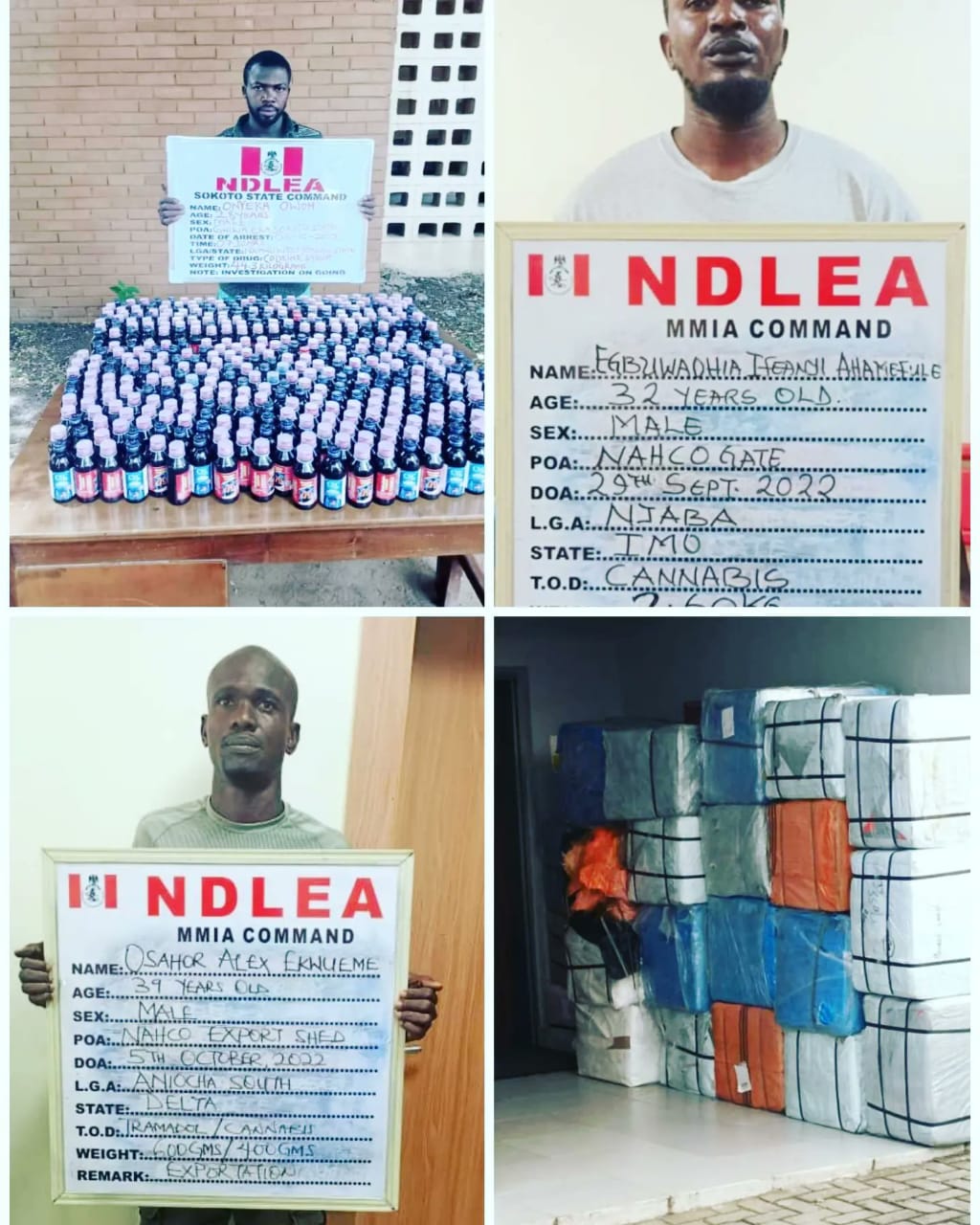
Nine Ghanaians were reportedly nabbed by National Drug Law Enforcement Agency (NDLE) for attempting to smuggle 10,843.95kgs of cannabis into Nigeria. 

Justice Akintayo Aluko of the Federal High Court, Lagos, while delivering his ruling in the matter, convicted the Ghanaians of conspiracy and dealing in cannabis.

The Ghanaians attempted to smuggle the cannabis through the sea and were sentenced to 72 years imprisonment.

Several reports indicated that they were initially arrested by men of the Civil Defence Corps and transferred to NDLEA for further investigation and prosecution. 

The Daily Reality discovered that after the investigation, they were arraigned in charge number FHC/L/292C/2021.

The convicts include; Victor Wuddah, Freeman Gazul, Adotete Joseph, Sottie Moses, Sottie Stephen, Christian Tette, Kanu Okonipa, Daniel Koyepti, and Kanu Natte.

NDLEA intercepts 2.4 million tramadol pills at Lagos airport

By Ahmad Deedat Zakari

The National Drug Law Enforcement Agency, NDLEA, disclosed that it has intercepted 2.4 million tramadol pills from Pakistan at the Murtala Muhammad International Airport in Lagos

NDLEA Spokesperson, Femi Babafemi, announced the seizure of the drug in a statement released on Sunday, October 9, 2022.

According to the spokesperson, the drugs were intercepted by the agency’s operatives at the Murtala Muhammad International Airport on Friday

He also said the drug weighs 2,356kg and the value is estimated to be 1.4 billion naira

“Desperate attempts by the tramadol drug cartel to smuggle into Nigeria over two million four hundred and sixty-five thousand (2, 465, 000) tablets of the pharmaceutical opioid in 225mg and 250mg, weighing two thousand, three hundred and fifty six kilograms (2,356kgs) with an estimated street value of one billion, forty million naira (N1, 040, 000, 000) through the Murtala Muhammed International Airport, MMIA, Ikeja Lagos have been foiled by operatives of the National Drug Law Enforcement Agency, (NDLEA),” the statement reads.

The NDLEA Chairman, Buba Marwa, commended the officers for their great works and advised them to remain “steadfast, resolute and unrelenting until the last gram of illicit drugs is taken away from the streets of Nigeria”

I smuggled drugs to raise N5m ransom for my mother’s abductors—detainee

By Muhammad Sabiu

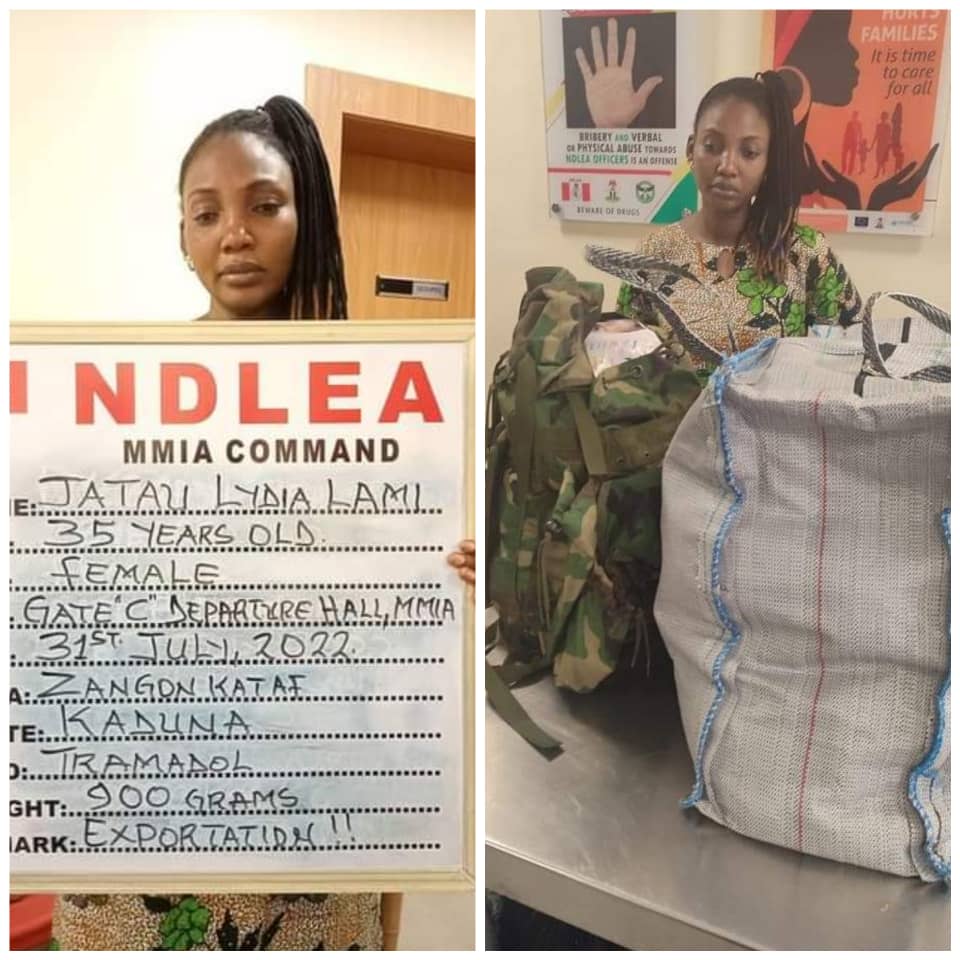
The National Drug Law Enforcement Agency (NDLEA) detained a female traveller named Jatau Lami at the Lagos Airport for attempting to export 1,700 Tramadol 225mg tablets.

Her arrest was confirmed by the director of media and advocacy at the NDLEA, Mr. Femi Babafemi, in a statement made public on Sunday.

Babafemi revealed that the package was carried undercover in her luggage on a Turkish Airlines journey to Istanbul, Turkey.

The suspect, a mother of three, is a native of Zango Kataf Local Government Area (LGA), Kaduna State, but she currently resides in Istanbul, Turkey, with her family, according to a preliminary inquiry.

She attributed her action to pressure to earn N5 million in ransom money to release her mother from the robbers’ custody.

How philanthropists support the crusade against drug abuse in Kano

By Usman Ibrahim

For a long time, Kano State has battled the enormous increase in drug abuse and trafficking of illicit drugs. Most commonly, many people directly or indirectly abuse drugs. In the past, only male youths aged 18 years and above were the major players in the business. But these days, it is more heart-aching that underage boys and girls, including married women, are into drug abuse, and it is increasing by the day and assuming top spots on the statistics.

People often see drug abusers as jobless who consume the drugs to forget their problems of unemployment and poverty. The precarious situation makes them steal from their families, friends, and even their communities.

Drug addicts are particularly vulnerable to politicians who utilize them to cause havoc during elections and protect them from the wrath of the law after their arrest. When they don’t get the opportunity to become the “boys” of the politicians, they resort to their communities and continue to cement their legacies as the greatest criminals of their time.

In addition, they sometimes make it uncomfortable for people in their communities to commute to some streets. Unfortunately, though, others see drug abuse as something one chooses to do due to peer group influence. Unfortunately, even teens living in stable and affluent homes are also into this drug addiction – many rich teens are into drug abuse despite all the care their parents have shown them.

Badawa in Kano State is one of the communities notorious for drug abuse. It is an intensely multi-ethnic setting harbouring diverse ethnicities but deeply troubled by illicit drug sales and consumption for over a decade. In an interview with a teenager into selling these intoxicants, he admitted that he couldn’t stop selling illegal drugs because he earns a lot from it, and many people from distant places come and buy from him at expensive rates. I also asked him whether he was aware of the anti-drugs agency or the vigilante groups who would arrest him, and he said he was aware. Still, he cannot stop because it is the only way to source his income.

But a philanthropist defies all odds to change existing narratives in the community. Seeing the height of the problem has made the anonymous Good Samaritan solve the menace. With his own money, he purchased three cars, walkie-talkies and uniforms to help arrest hard drug dealers and employed some men in the community’s vigilante group to assist in the fight.

According to Badar, one of the vigilante members, “At least we have arrested more than ten drug dealers in which some of them are in prison”. However, he also states that their work involves too much risk because some drug dealers walk along with knives, sharp horns and machetes, among other dangerous local weapons. So they are always cautious in handling their operations. And they work hand in hand with NDLEA to give them more information about the community.

The National Drug Law Enforcement Agency’s (NDLEA) significant role is exterminating illicit drug trafficking and consumption in Nigeria. And also, it is for the sake of protecting the country from the dangers of hard drugs. Since the agency’s establishment in 1989, the war against hard drugs has been increasing yearly. The agency tries its best to tackle drug trafficking and importation of hard drugs such as cocaine, marijuana, cough syrups and other hard substances. However, the activities of philanthropists cannot be underscored because of the rapid increase in violence, especially during elections and among drug addicts in communities.

Therefore, combating drug abuse as well as securing the lives and properties of Nigerians needs collaborative efforts between security agencies, community leaders as well as philanthropists. If there is a time when these collaborations are desperately needed, it is now.

Usman Ibrahim is a level 200 student from the Department of Information and Media Studies, Bayero University, Kano. He can be reached via usmannibrahim66@gmail.com.

Drug abuse and illicit trafficking

By Tajuddeen Ahmad Tijjani

Every 26th day of June is the International Day against Drug Abuse and Illicit Trafficking as identified by the United Nations. This year is not unprecedented due to the menace that keeps rising, which sadly causes untold hardship to our communities and the world in general.

The date is to commemorate Lin Zexu’s dismantling of the opium trade in Humen, Guangdong, ending on June 25, 1839, just before the First Opium War in China. The observance was instituted by General Assembly Resolution 42/112 of 7th December 1987. The global observance of the day aims to raise awareness of the major dilemma that illicit drugs represent to society. Indeed, the aim is an expression of the United Nations’ determination to strengthen action and cooperation to achieve the goal of an international society free of drug abuse.

Justice and health are two sides of the same coin when it comes to addressing drug problems. The pertinent question is: what have we done in our immediate communities to address this situation that is posing a danger to our survival as a society and a nation? Are we to maintain silence while the future of our children and that of unborn children is on the brink? No! Most of the crimes committed were done after the criminals took drugs and illicit trafficking caused, according to sociological trumpets.

In Nigeria, the Boko Haram in the Northeast, ungodly bandits and kidnapping in the North West, and the IPOB terrorists in the southeast have something in common, which is criminality, havoc and destruction. However, the acts were mostly committed after taking unprescribed drugs, which are injurious to the health and well-being of the people.

Perhaps, those taking illicit drugs don’t know the dangers and injuries they create for their lives and, at the same time, for society. It’s the drug that impels them to commit crimes against humanity, which, of course, triggers instability in the world. However, there has never been a better time to convert this serious threat into a human cooperative existence than now. But, to achieve this, we must destabilise the sources of illicit drugs.

For one thing, you can’t discourage and combat illegal drugs and trafficking without addressing irresponsible parenting; how could God bless you with juveniles and then neglect their proper upbringing? In our society, you see someone with ten youngsters or more without taking care of their full responsibility. We must take the bold step and tell ourselves the truth. Never produce what you can’t take care of. Their moral upbringing is a primary responsibility of every parent. The association of pair groups in such a way trains your wards to be good ambassadors to society. for them to be productive citizens of the country and the world. 

The Nigerian drug law enforcement agencies must take their obligations with all seriousness. Indeed, perpetrators must be punished according to the law of the land. This is the only way that will serve as a deterrent to all with similar horrible intentions, and of course, at the same time, our justice system must be overhauled.

It’s clear in the northern part of the country, some hawkers go round selling illicit drugs, expired and villagers are taken with their hard-earned resources without doctors’ prescriptions, which post hazards to the health care system. This and similar illegal actions should be properly checked. Indeed, health is wealth. We should all play our part in spreading awareness to make our environment clean and live in a prosperous world.

Tajuddeen Ahmad Tijjani wrote from Galadima Mahmoud Street, kasuwar Kaji Azare, Bauchi State.

Drug abuse and the future of Nigerian youth

By Usman Muhammad Salihu

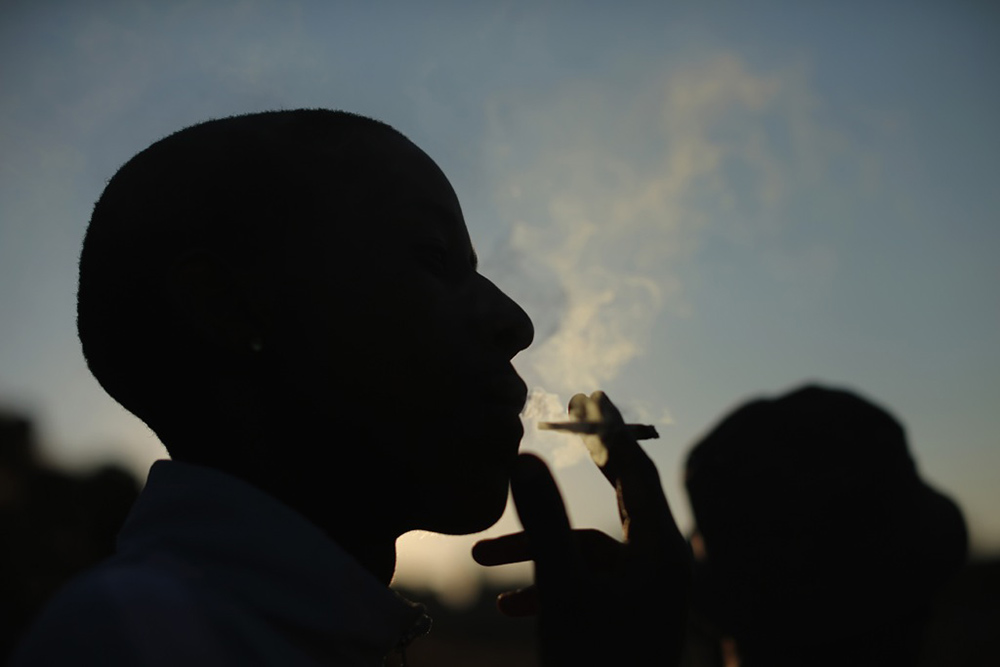
The menace of drug abuse, spreading like a wildfire in our contemporary society, is gradually or has already become rampant among many members of our society, ranging from old, young and adult and at the same time men and women, rich and the poor.

Drug abuse is in essence, the misuse of drugs or taking them without doctor’s, physician’s or pharmacy’s directives for the purpose of pleasurable effects on the brain, especially by the youths.

The problem keeps on escalating to the extent that you hardly see a group of ten to fifteen youths without finding a member or two that engage themselves in drug abuse.

Nowadays, many people tend to misunderstand why or how some people become drug abusers to the extent that some people look at those addicts as people who lack proper upbringing and thereby ridiculing them instead of counselling them.

According to the National Institute of Health Espanol, as a person continues to use drugs, the brain adapts by reducing the ability of cells in the reward circuit to respond to it. This reduces the high nature which the person feels compared to the high mood they felt when first taking the drug — an effect known as tolerance. They might take more of the drug to try and achieve the same high mood. These brain adaptations often lead to the person becoming less and less able to derive pleasure from other things they once enjoyed, like food, sex or other social activities. These changes are what lead to drug addiction.

As an addict continues taking drugs improperly, the brain adapts by reducing the number of ability cells in the brain circuit that responds. This reduces the high one enjoys when taking the drugs for the first time and thereby increases the dosage for the enjoyment of the first high. Long-term drug usage causes changes in the brain circuit as well as affects its functions.

Despite that, no one may be able to predict the exact causes of drug abuse and addiction in our society, especially among the youth but rather common factors such as the environment, which includes friends, family, peer pressure, and economic status among others.

Other contributing factors are parental guidance, early exposure to drugs, physical abuse, stress, age, gender inequality, ethnicity, genes and mental disorder, all of these contribute immensely to the phenomenon.

The consequences of drug abuse on Nigerian youth, if not properly curtailed, may result in so many social vices as we witness today. These include; poor academic performance, mental disorder,  increasing number of out of school, financial instability, sexual abuse, diseases, difficulties in decision making, depression, anxiety and rampant deaths. Others are troubled relationships, increased crime rate in society, hopeless feelings, etc.

Despite the above-mentioned effects, many youths continue engaging themselves in drug abuse how would one measure the future of our youths in Nigeria? Doom indeed!

Drug abuse is a disease whose quitting takes more than good intentions. It changes the thinking capacity of humans and as such makes quitting it very hard even for those intending to.

But the good news is that drug abuse can be prevented and the best way of resisting and preventing the drug abuse phenomenon in our society is through the creation of awareness of the dangers of the menace. By informing the public about the effects of drug abuse, especially among our youths who are the leaders of tomorrow, the problem will be drastically reduced if not eradicated entirely when teachers, parents, health care providers, media personnel and community leaders join hands together in educating the populace.

Making goodwill intention of resisting drug abuse by an addict, and also seeking God’s intervention is indeed a greater move of bringing an end to the problem.

Usman Muhammad Salihu is an HND 1 student of Mass Communication, Abubakar Tatari Ali Polytechnic Bauchi State. He can be reached via muhammadu5363@gmail.com.

Abba Kyari: NDLEA uncovers Tramadol worth N22 billion imported by Ukatu

By Ibrahim Nasidi Saal

The National Drug Law Enforcement Agency, NDLEA, has said that the ongoing investigation of a billionaire drug baron, Chief Afam Mallinson Ukatu, has led to discovering how the suspect imported into Nigeria in October 2019 two containers containing 1,284 cartons of Tramadol with a market value of over N22billion.

The Agency stated this in a statement on Tuesday, May 3, 2022, to counter insinuations by some hirelings that NDLEA has no evidence to pin a crime on Ukatu, who is the Chairman/CEO of Mallinson Group of companies.

After months of surveillance, Ukatu was eventually arrested on board a flight to Abuja at the MM2 terminal of the Lagos airport, Ikeja, on Wednesday, April 13. 

Investigations reveal that he is a major importer of large consignments of different brands and high dosages of Tramadol Hydrochloride, ranging from 120mg, 200mg, 225mg and 250mg, all of which are illicit. In addition, Ukatu owns pharmaceutical and plastic manufacturing companies, which he used as a cover to import illegal drugs into Nigeria.

The Agency said that in investigating the N3billion Tramadol saga between Ukatu and the Abba Kyaris IRT team, its operatives unearthed more evidence establishing how Ukatu has been importing large quantities of Tramadol far above the approved threshold allowed into the country.

In one instance, Ukatu, through his Mallinson Group of companies, imported into the country two-container loads of five different brands of Tramadol in October 2019 through the Apapa ports in Lagos.

All the evidence so far gathered shows that the imported Tramadol brands were far above the threshold permitted into Nigeria.

NDLEA asks political parties to make drug test part of screening for aspirants

By Nasidi ibrahim Saaal

Chairman/Chief Executive of the National Drug Law Enforcement Agency, NDLEA, Brig. Gen. Mohamed Buba Marwa (Retd) has urged political parties to make drug integrity test part of the screening requirements for aspirants seeking to contest political offices in the 2023 elections on their platforms.

Marwa stated this while responding to questions from journalists at the 2022 First Quarter Best Performing Commands Awards ceremony at the Agency’s national headquarters in Abuja on Wednesday 27th 2022. 

According to him, for politicians, we have long advocated and I take the opportunity again to repeat the advocacy that when they run for public office it demands a lot of responsibility from the person and we need to be certain if he’s a person that is already a drug addict/user who will spend all the money he’s given for public service to consume cocaine and his head will not be in a stable condition to handle the affairs he has been entrusted with. For this reason, we have advocated and will continue to advocate that drug test be conducted for politicians; some state governments like Kano state is already doing this.

“Not just politicians, but government appointees, and I’ve just sent a letter this morning to the National Chairman of APC, who will be the first of the national working committee I wish to pay an advocacy visit on this issue. I recommended that drug tests be incorporated in the screening process for all those interested in running for public office; we’ll do the same to the PDP and other important parties.”

While addressing officers and men of the Agency present at the event, Gen. Marwa said the ceremony has become part and parcel of our corporate culture. Recognizing and rewarding hard work and excellence has always been a pragmatic way of stimulating productivity and enhancing the attainment of organisational goals; making it a tradition for the Agency is our way of enshrining meritocracy in the system.

“Statistics from the first quarter (Q1) report, indicated that our performance level has not dropped off. Indeed, achieving 3, 539 arrests, 677 convictions and seizures of 65, 916 kg of drugs in three months is no mean feat. Little wonder our performance continually earns the Agency deserved accolades from the right quarters within the country as well as from abroad, especially from international partners and peers. While we have not yet achieved the utopia of a drug-free society, the results showed that we are getting it right.”  

He told the officers that the awards and commendations are expected to will spur them to surpass their current feats at the next awards ceremony. The ceremony should be a poignant reminder for us not to forget where we are coming from. And there is no better way to say it other than for us to be mindful of the saying that success has a hundred fathers, but failure is always an orphan. No organisation would understand this adage better than NDLEA in the light of our past rock bottom experience. Therefore, we should all be mindful that we hold the fate of NDLEA in our hands, and that fate will be determined by our patriotism and dedication to duty, as well as our collective resolve to work towards the attainment of the Agency’s mandate. 

“Let me also seize this occasion to remind you about the importance of propagating the War Against Drug Abuse (WADA) programme in your various commands. There is much we can achieve when our communities are working hand-in-hand with us. That is why our roadmap, the NDCMP 2021-2025, strongly emphasises collaboration with all the stakeholders in society. We have to woo members of society to work with us on this very important assignment. Therefore, I charge you to ensure that WADA is correctly and deeply entrenched in the spheres of operation of your respective commands, he stated. 

While assuring the officers that the Agency is proud of them, he said the sacrifice of a narcotic officer cannot be quantified in gold or silver, for he is fulfilling a higher calling. As we go about our duty of securing our society against the corrosion of illicit drugs, we should be aware that we are the direct beneficiaries of our work because for every kilo of drugs seized, we are making our streets and society safer for our children, family and kinsmen.

NDLEA is proud of its workforce; the Agency treasures the effort of its officers and men; the management shall continue to look out for their best interest. We shall continue to reward hard work and excellence.”

Towards fighting drug and substance abuse

By Kabir Fagge Ali

The rate of drug and illicit substances abuse among Nigerian youths is alarming. It is heading towards a national emergency, which should be considered and treated appropriately with the kind of attention it deserves in our today’s modern society.

According to the United Nations Office on Drugs and Crime (UNODC), in the last 24 years, cannabis potency has increased by as much as four times in parts of the world, even as the percentage of adolescents who perceived the drug as harmful fell by as much as 40 per cent.

This is despite the evidence that cannabis use is associated with various health issues and other harms, especially among regular long-term users.

Meanwhile, a worrisome development that should not be treated with levity is that there are 11 million cannabis users in Nigeria, a third of whom seem to be regular users needing drug counselling.

Similarly, the world drug report further noted that “Between 2010 and 2019, the number of people using drugs increased by 22 per cent, owing to global population growth. Based on demographic changes alone, current projections suggest an 11 per cent rise in the number of people who use drugs globally by 2030 – and a marked increase of 40 per cent in Africa due to its rapidly growing and young population. In Nigeria, this would signify that the country will have to grapple with approximately 20 million drug users by 2030, further deepening the public health and public security challenge”.

Recall that the Chairman of the National Drug and Law Enforcement Agency (NDLEA), Buba Marwa, a retired major general, while reeling out some statistics, said Nigeria was not only the highest user of cannabis worldwide but that revelations from kidnapped victims had corroborated the facts that illicit substances were enablers of insecurity currently plaguing the country.

He noted, “it is not difficult to conclude that drugs have been catalysts of terrorism, kidnapping, banditry, armed robbery and various violent conflicts currently troubling the country.

The consequences of drug abuse can never be overemphasized, as it has birthed a lot of problems not only in the family but in the nation and the international community. Medical issues associated with drug abuse include mental disorders, liver cirrhosis, lethargy, irritability, and heart disorders. Studies also reveal that drug addiction contributes largely to social consequences such as internet fraud, gang formation, disruption of normal educational activities, cultism, violence, armed robbery, kidnapping, rape, sexual abuse, and reduced productivity.

Experts asserted that so many factors are responsible for indulging youths in drug and substances abuse worldwide. These include but are not limited to reasons such as; Parental abuse, depression, peer pressure, peer group influence, the proliferation of quacks in the drug trade, early childhood and adult trauma, and environmental circumstances.

Drug and alcohol abuse in Nigeria are serious problems and has mainly contributed to the sorry state of our dear nation. Therefore, we can no longer continue to ignore the implication of such action as it poses a threat to our lives and that of the upcoming generations.

Talking about the way out – the government alone cannot eradicate this social menace. It is a joint task involving every individual, community, family, school, civil society, religious organization, the media, business entities, and traditional leaders to halt the ugly trend.

Most of these drug abusers are jobless individuals roaming about the streets. Thus, the government should step up an effort to provide them with jobs, while others could be empowered with the necessary skills and tools to start their own business to carter for themselves and their family.

Again, the government should remember that stemming the tide of drug abuse is akin to solving the security challenges currently bedevilling the country. The time to take action is long overdue.

Fagge is a Student of Mass Communication at Skyline University Nigeria. He sent this article via faggekabir29@gmail.com.