Muslims

Igboho is just a bloody criminal – Muslim group says

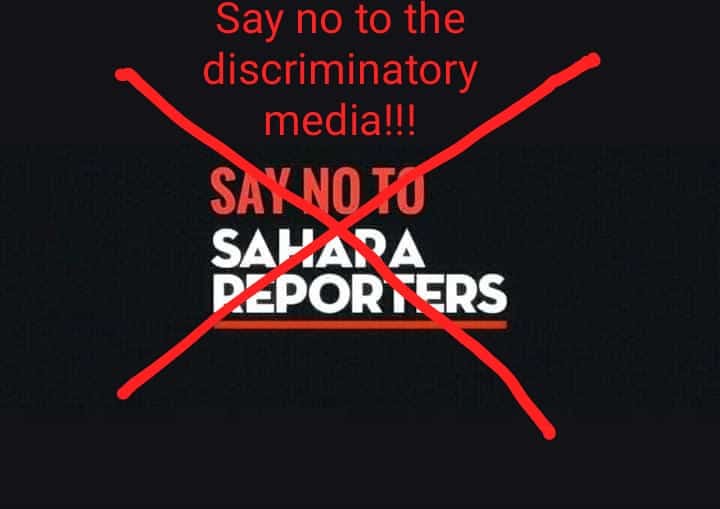
A Kano-based Muslim group, Muslim Youth Forum, describes a report by Sahara Reporters, which equates the migration of Prophet Muhammad (SAW) with that of the self-identified Yoruba activist, Sunday Igboho, as unethical, criminal and insensitive.

The controversial online news medium published a report by Afenifere, a pro-Yoruba organisation, comparing the two different journeys. In reaction to that report, the Muslim group urges all Nigerians to desist from making any utterance, which can create chaos, confusion and hamper the volatile nature of the country.

“Most Northerners have not known or care to know about Igboho and his criminal activities. However, it was on record that he spearheaded attacks on many innocent Northerners who reside in the South, just in the name of ethnicity, barbarity and criminality. He was praised and cheered by many ethnic jingoists and thugs in the country who see him as a champion of the Yoruba agenda. We didn’t mind what he was doing, though it was painful to see humans acting like animals and being applauded by other criminals”, the group says.

“We are surprised by the actions of Afenifere or whatever they are called who made the analogy. Are they representing an obnoxious, dissenting Christianization agenda? Are they representing evil Christians? Good Christians never say anything bad about any religion”, the group adds.

The group finally called on all well-meaning Nigerians and all Muslims not to take the law into their hands and call on the government and leaders to take action as this wrong move can throw the country into a state of anarchy. Muslims tolerate many things against their personality but not sacrilegious attempts to tarnish the image of their noble Prophet. This action alone can make Sahara Reporters lose value among the teaming followers it has laboured to gather over the years.

Igboho is NOTHING like Prophet Muhammad ﷺ

By Sanusi Lafiagi

The blasphemous and sacrilegious statement credited to Afenifere, a Yoruba socio-cultural group, (and published by Sahara Reporters) comparing the plight of Sunday Igboho to that suffered by the Prophet Muhammad ﷺ is a great insult to Islām and Muslims all over the world. It behoves every Muslim, especially of Yoruba extraction to publicly condemn this blatant disrespect to our religion and demand an unreserved apology from them. The ignorance exhibited by the group about the Prophet ﷺ shows how lowly the so-called Yoruba nation agitators think of Muslims. Why did the group deem it fit to travel far into the 7th century to find a comparison for a thug when I could have simply compared him to Afonja?

Sunday Igboho is NOTHING compared to Prophet Muhammad ﷺ for the following reasons:

1. Muhammad ﷺ was a Prophet and Messenger of Allāh. He was divinely anointed and heavenly guided. Sunday Igboho, by his own admission, is a political thug and hire-for-pay warlord whose conscience is sold to the highest bidder.

2. Muhammad ﷺ spent 13 years in the hostile plains of Makkah preaching Unity of Allāh and devotion to His worship. In spite of the persecution (including summary execution) that he and his followers faced, it is NOT on record that he instigated them against the system or called for secession. Sunday Igboho on the other hand resorted to self-help and terrorised innocent northerners (remember that only a court of competent jurisdiction can declare anyone guilty of crimes brought against them), leading to deaths and destruction of invaluable properties. He instigated a violent insurrection against the system.

3. Muhammad ﷺ advanced the cause of humanity and was vehemently opposed to tribal bigotry and jingoism. He abolished the class system and preached the equality of mankind before Allāh. Sunday Igboho on the other hand is a tribal bigot who advanced ethnic cause and preached the superiority of Yoruba to the Hausa and Fulani ethnic groups. He described the latter as parasites and cancer, who are feeding fat on the fortunes of the Yorubas.

4. Muhammad ﷺ belonged to all who professed faith in Allāh and submitted to His worship. Despite that, he treated even his worst enemies with fairness and justice. He never at any time supported the corrupt system that operated in Makkah.

Sunday Igboho on the other hand (by his own admission) is a bonafide member of PDP who participated actively in election malpractices that foisted insecurity and corruption in society. His last political outing with the current governor of Oyo State, Engineer Seyi Makinde, was in Kogi state, during the election that earned governor Yahya Bello for the second term in office. This, it is not far-fetched to say that Igboho’s agitation, just like his counterpart’s, Nnamdi Kanu of IPOB is LARGELY (to put it mildly) political!

5. Muhammad ﷺ migrated to Madīnah to establish an Islamic state where members will be able to live freely and practise Islām without fear of torture and persecution. As a precursor to this flight, he had earlier sent his followers in groups first to Abyssinia, and later to Madīnah to take refuge while he stayed back. Neither did he leave his followers behind, nor fly to hide from the powers that be. Muhammad ﷺ wasn’t a coward. Sunday Igboho, like Ojukwu and his mentee, Nnamdi Kanu, fled the scene after causing trouble (leading to the death and arrest of some of his followers) to enjoy the warmth of his wife and kids. He’s a coward and rabble-rouser who has no balls!

6. Muhammad ﷺ fought the Makkans ONLY after he had settled in Madīnah and established an Islamic state with all its political and administrative apparatuses. The first battle, Badr, came about a year after his settlement in Madīnah. At the time, the majority of his followers had fled Makkah. Thus, he was able to provide maximum protection and support for them in the friendly and serene terrains of Madīnah. Sunday Igboho on the other hand wants to cause an uprising that will not only destroy the lives of millions of Yorubas living across the country but will also ground the nation’s fragile economy and heap more difficulty on innocent people.

7. Muhammad ﷺ was severally persecuted and harassed on the street of Makkah, yet he remained undeterred in his mission. He didn’t run away or stockpile arms to force liberation. There were days that he was attached even while observing Salāt. Sunday Igboho on the other hand is an oppressor and lout who publicly harassed first class Obas of Yorubaland and threatened violence. He’s on tape to have threatened to kill the Ooni of Ife and Bola Ahmed Tinubu, attack the palaces of some prominent Obas, mocked pastor Adeboye over the death of his son, and traded insults with Gani Adams.

8. Muhammad ﷺ was NOT a magician. He didn’t practice magic or boast of diabolical powers. Sunday Igboho, as it turns out is a jester, a lousy idiot, a comic actor and an empty shell of nothingness. One would expect that by now, given his incessant JuJu braggadocio, the security forces that invaded his house would have turned into fowls or that he wouldn’t need to go through an airport to disappear into thin air. Alas! The acclaimed warrior of Ife-Modakeke communal clash disappointed his cheerleaders and fans by not living up to expectations!!!

Therefore, comparing the noble Prophet of Islām to a nuisance like Igboho is a great disservice to humanity and an insult to the sensibilities of Muslims all over the world. It should be retracted immediately and an apology tendered.

Sanusi Lafiagi is a lecturer of Islamic Studies at the Al-Hikmah University, Ilorin, Kwara State.

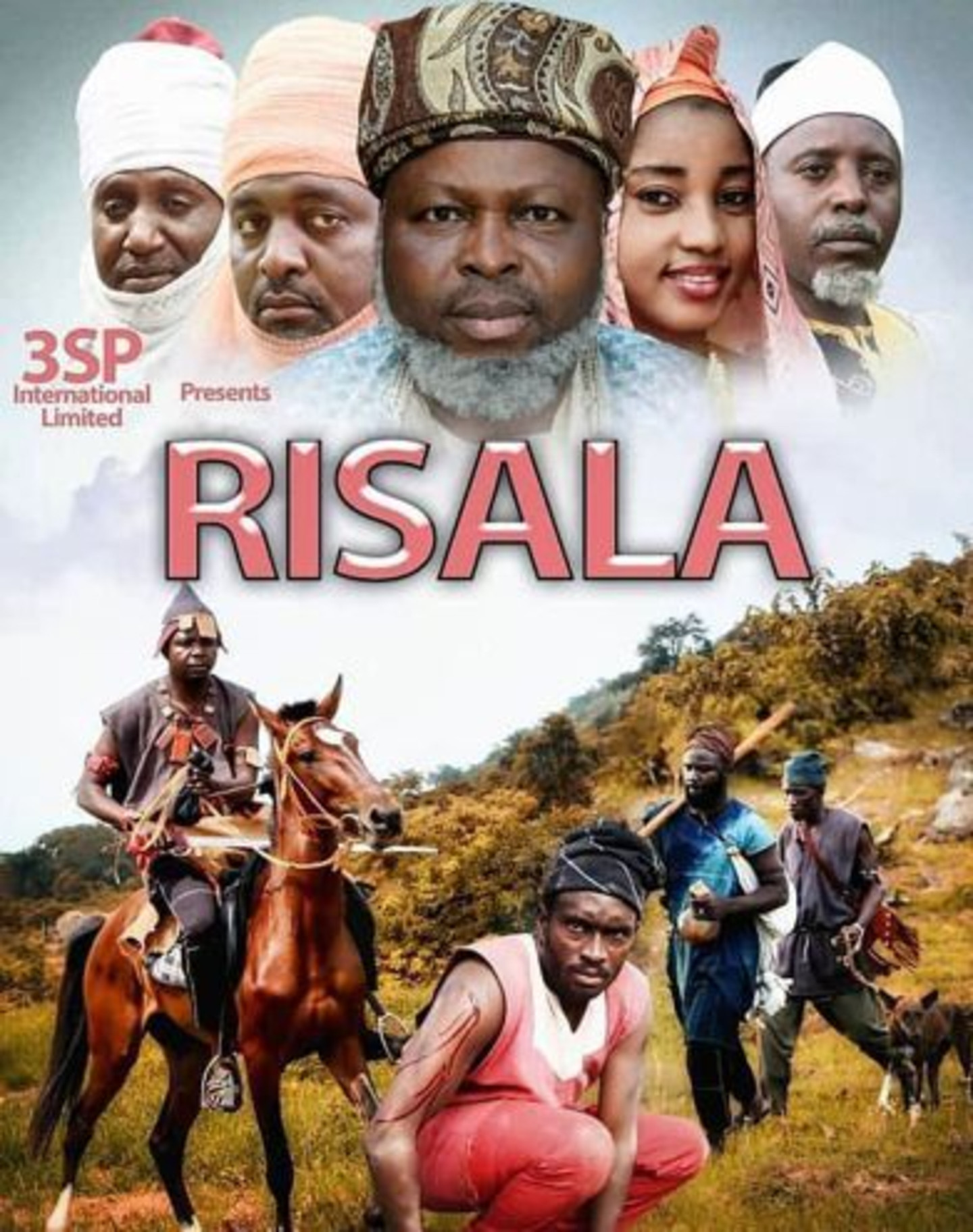
Film Review: Risala

By India Biró

How far would you go in order to be forgiven? Would you send a text message? A letter? Flowers, or a gift? Would you track down the person you hurt and beg them to forgive you, even if it required a two-month journey?

For Zakariyya, the hero of Abubakar Shehu’s Hausa-language film Risala, his desire to be forgiven for eating fruit from a stranger’s farm sends him on a week-long journey on foot to the village of Baihan to ask the farm’s owner to absolve him of his sin. Throughout this journey, he encounters unsavoury characters, is repeatedly beaten up, almost dies of thirst, finds a fortune and loses it, and ultimately meets the love of his life.

Zakariyya is the perfect hero: modest, handsome, determined, faithful, never straying from his morals. Even when he is accused of being a robber, beaten, and insulted by the village’s men, he remains calm and only defends himself by explaining the misunderstanding. When they realize their mistake, he simply forgives them and moves on without holding a grudge. His character seems so genuinely good; it makes you wonder if you would admire him or be annoyed by his constant perfection if you knew him in real life. Surely there must be something that makes him angry or tempts him to sin? However, his strength of character throughout the movie is reminiscent of noble mythical or legendary characters known to Western audiences, such as Robin Hood. This is further reinforced by the pre-colonial setting when modern amenities were not yet present in Nigeria.

When Zakariyya finally encounters the farm’s owner, he appears unwilling to forgive him at first. Yet, because Zakariyya is such a noble person, he senses the opportunity to marry off his daughter to a worthy man. So he proposes to Zakariyya that he marry his ugly, deformed daughter Ummulkhair (sometimes also referred to as Ummu Salma). Zakariya, being the modest man he is, immediately accepts Ummulkhair and promises to treat her well. However, when we see her, she turns out to be exceptionally beautiful.

We learn that the farm’s owner in Baihan has been looking for a suitable husband for his lovely daughter for quite some time, yet every man he has encountered was too enamoured with her beauty, which he considers superficial. Thus, to test Zakariyya’s good faith, he tells him his potential wife is horrendously ugly. The fact that Zakariyya still vows to marry her proves he is not a superficial man and that he is truly worthy of marrying her. In the end, he is rewarded for all his troubles with a beautiful wife. Zakariyya questioning his wife’s integrity by asking her about her relationship with her parents proves he is still not superficial and really is interested in marrying a righteous woman, not just an attractive one.

The fact that Ummulkhair’s beauty is treated as a detriment to her father, resulting in her spending most of her life indoors, as well as her treatment as a prize or commodity for a man (especially her virginity), is unsettling to feminist viewers, yet reminiscent of Western fairy-tales such as Sleeping Beauty, Rapunzel, Snow White, etc., as well as being very fitting for a story set several centuries ago. While Zakariyya’s “test” of his wife before accepting her reeks of sexism, it is probably a very realistic portrayal of the treatment women faced (and continue to face) in many societies.

Another theory about Ummulkhair with regards to the many fairy-tale and magic-like elements in Risala is that she is, in fact, not conventionally attractive and that it is Zakariyya’s reward for being a good man that she appears beautiful to him. This theory can be discounted because, after revealing herself to him, Ummulkhair tells Zakariyya she was barred from leaving the house because of her beauty, so apparently, she really is beautiful and not ugly. However, disregarding this, one could come up with a hypothesis:

Before unveiling her to see her for the first time, Zakariyya says, “everything created by God is beautiful. Only people make distinctions between the good and the ugly.” Perhaps, Ummulkhair is somehow cursed with an ugly outer appearance, and Zakariyya’s words acted as a spell that lifted the curse and made her appear beautiful to only him. So, because his heart is pure and he has good intentions, he sees a beautiful face instead of an “odd-looking” one and instead of a hunchback, he sees a striking woman. Because he is deserving, he sees the beauty in her while others do not. Had he approached the situation differently, perhaps thinking, “poor me, to be stuck with an unattractive bride”, she would have appeared ugly to him.

Ultimately, regardless of the specifics of Zakariyya’s marriage, the message is clear: Those who are good-hearted and seek forgiveness for their sins will be rewarded for it. As such, Risala is a very wholesome film worth watching for its retro charm reminiscent of fairy tale films or Bible stories and its interesting storyline. In addition, the acting and editing manage to steadily capture the viewer’s attention, something unfortunately not always a given in Kannywood cinema as it is still a developing industry and production quality is often low.

While I consider Risala to be one of the better Hausa films I have seen, do not expect a lot of character development since Zakariyya is a perfect hero right from the start and other, more sinister characters like the robber Gambo die before they get a proper chance at reform. There is also some slightly unnecessary bloodshed coupled with overly dramatic and unrealistic special effects reminiscent of low-budget Japanese anime. On the other hand, the music may not be to everyone’s taste (especially Western audiences), but I found it rather pleasant and meshed well with the action rather than distracting the viewer. Subtitles for the final song would have been helpful for non-Hausa speakers, but the song was still fascinating and enjoyable, especially the dancing and colourful Hausa clothing. Overall, while the film could have easily been condensed into one part instead of two, the storyline is gripping, and the acting is done well. I would recommend this film to anyone new to Kannywood cinema.

India Biró is a student at the Institute of African Studies and Egyptology, University of Cologne. She can be reached via ibiro@smail.uni-koeln.de.

Saudi Arabia: Conservative versus Western values

By Salisu Yusuf

Since becoming the crown prince and de facto leader in 2017, Prince Mohammed bn Salman (known as MBS) is stirring controversies in Saudi Arabia and making the country a battleground between the conservative Sunni and trendy Western values.

Immediately after assuming power, MBS declared that the return of ‘moderate Islam’ was key to his plans. MBS’s declaration is an affront to Islam because his statement gives credit to Western media, which categorises Muslim adherents as either ‘moderate Muslim’ or ‘Islamic extremism.’ Such labels are derogatory and indictment; to label somebody as either moderate or extremist Muslim is to say that extremism is an extension of Islam. Moreover, MBS’s statement is a subtle backing to America retaining Guantanamo Bay Camp, where many innocent Muslims are being held without a trial and tortured. 

In 2018, MBS lifted a ban on women drivers. Saudi, being the last country in the world where such provision existed. Many, including Muslims, commanded the move as there’s no available Qur’anic injunction or Hadith that prohibits doing so. However, shortly before the ban was lifted, many women rights activists who campaigned against the ban were rounded up and imprisoned.

Bn Salman is seen by many as a power monger. For example, he was seen in 2017 shortly after becoming the crown prince with the former crown prince, Mohammed bn Nayef, the former pledging allegiance. Bn Nayef is King Salman’s nephew. He’s, therefore, MBS’s cousin. Bn Nayef was seen kneeling and kissing his older cousin’s hand, a gesture disapproved in Sunni Islam.

Saudi annual billion-dollar US arms deal is making Saudi Arabia a laughing stock. Former US President Trump supports Saudi because of the deal, and on the other hand, US moral and financial unconditional support to Israel is a source of concern.

The latest controversy is the mosque speaker restrictions. The Saudi government asks Imams and Muezzin to lower their speakers to a third of their maximum volumes during calls to prayer and during the prayer itself. 

Opponents criticise the restrictions, saying cafes and restaurants could be heard blaring loud music all over the country. Authorities had earlier said they placed the restrictions because parents complained that the speakers disrupt their children while asleep. Even though modern means of a call to prayer, the outrageous number of mosques and airing the prayer itself could be contestable if they’re brought under strict Islamic legal spotlight, some see MBS’s attempt to give some consolation measures to Western nationals living in the Kingdom.

Prince MBS has stepped up his opposition to freedom of expression, arresting and jailing many critics. Some have paid the heavy price with their lives, like the US-based journalist Jamal Khashoggi who was extrajudicially killed in the Saudi Consulate in Istanbul. Many members of the ruling family were also arrested and imprisoned. They could only be released after paying the state some huge amounts of money, which authorities claimed was payback for alleged corrupt practices. In the past, substantial freedom of expression was allowed, especially on issues of check and balance.

Brazenly, Saudi Arabia has recently signed a 10-year professional wrestling contest show with an American World Wrestling Entertainment Company (WWE). So today, you can go to a stadium in either Jeddah or Riyadh and watch wrestling contests; Royal Rumble, Super Showdown, etc., are a daily occurrence as is seen in Texas, New York, and other cities in America.

Moreover, Hajj has been suspended since last year. The first time a Hajj was suspended since the creation of the Saudi Kingdom in 1932. Many Muslims criticise the move after watching the mammoth crowd that graced the 2020 Euro final played this month (July) at Wembley stadium. Over 60,000 spectators watched the final. Prior to kickup, thousands of Italian and English fans were shown walking en route to Wembley, overlooking the so-called Covid-19 protocols. If Europe, the epicentre of the coronavirus, could gather such huge crowds, they asked, why the international Muslim community could not be allowed to go to Hajj?

As Prince Mohammed bn Salman consolidates power and his father gets older, only time will tell for how long and which of the two contrasting values will win the battle in Saudi Arabia’s mainly Sunni, conservative community.

Eid-ul-adha: July 20 and 21 declared public holidays

The Federal Government of Nigeria has declared Tuesday, July 20, and Wednesday, July 21, 2021 as public holidays.

The declaration was made by Interior Minister, Ogbeni Rauf Aregbesola. The minister congratulates all Muslim faithful home and abroad. He also advises them to “imbibe the spirit of love, peace, kindness, and sacrifice as exemplified by the holy prophet Muhammad (peace be upon him).”

The minister also implores the Muslim faithful to pray in the period for “peace, unity, prosperity, and the stability of the country, considering the challenges of insecurity we face at the moment.”

He gives assurance on the commitment of Muhammadu Buhari’s administration on security of lives and prosperity of Nigerians, empowerment, social investment programs, and adequate security for schools.

He also states the need for all Nigerians to keep on observing the COVID-19 protocols by wearing face masks, washing hands regularly, and keeping physical distance which can help in stemming the transmission of the dreaded pandemic in the country.

Significance of the ten days of Zhul-Hijja


By Tajuddeen Ahmad Tijjani

According to the highest body saddled with the responsibility of moon sighting in Nigeria (the sultanate council), Sunday the 11th of July 2021 was declared the first day of the month of Dhul-Hijjah in Nigeria.


The first ten days of Zhull Hijja (the last month on the Islamic calendar) are observed with reverence by Muslims worldwide. Prophet Muhammad, peace and blessings of Allah be upon him (PBUH), said: There are no days on which good deeds are more beloved to Allah than the days of Hajj.


Muslim faithful globally assemble in Meccah to perform one of Islam’s fundamental principles (Hajj). Unfortunately, due to the Covid-19 pandemic, only Saudi nationals are allowed to perform the Hajj this year. However, those who cannot visit the holy land are not left behind to accomplish good actions. Those at home are admonished to thank their Lord frequently, seek forgiveness, intensify prayers and fast throughout the nine pivotal days or at least fast on the Arafat day.  Muslims are enjoined to make sacrifices on the tenth day to seek Allah’s pleasure. 


According to Islamic teachings, remembering Allah wipes away sins, cures problems, and eliminates calamities no matter how burdensome they may be. Speaking about difficulties and calamities, indeed Nigeria is a country in a critical period; now is the perfect time for our Muslim brothers and sisters to intensify prayers and seek Allah’s intervention to free the country from the shackles of Boko Haram, banditry, kidnappings, armed robbery, violent secessionists, domestic violence, and other forms of terrorism.


Sallah is in a few days, but ordinary Nigerians can no longer afford the Salla ram, thanks to inflation. So while it’s part of Sunnah to make sacrifices by slaughtering an animal at the end of the ten days, it is strongly advised that the fortunate among us should give aid to the less privileged. Doing so will increase their wealth and will please Allah, adding more blessings to their wealth.

 
Tajuddeen Ahmad Tijjani writes from Galadima Mahmud street, kasuwar-kaji Azare, Bauchi State.