Muslims

Yes-man

By Muhsin Ibrahim

Religion is one single thing Nigerians of whatever dispensations take in high esteem. Religion is often viewed as the opium of the subjugation of the masses or as their Achilles’ heel. To Rahama, the story is different; religion means nothing to her. It is simply an identifier that she’s a Muslim lady. One might think having grown up in a multi-religious house would intuitively teach her to have respect of some sort for religion, wrong. Her Imams and pastors do not use Qur’an or Bible.

A 28-year-old, stout Rahama Tsoho belongs to a disreputable family of three. Her father, an ex-serviceman, divorced their mother when she was only two. She stays with the father, and her sister with the mother. She had longed to marry since her teenage, but she couldn’t. She always attributes this to her look and family. So, she vows to live a better life in the future by hook or crook and begins to use highly effective and expensive bleaching creams to brighten her skin. She also hunts for a suitor via dubious ways such as flaunting her bosoms and derrière at the workplace and visiting the so-called Malamai, fortune-tellers and sorcerers.

After long and tedious trials and retrials, she meets a fine young man in their office, a newly transferred staff from another state. Without a doubt, she knows he’s beyond her league, but she believes it’s worth a try. But, as feared, the fine-looking new staff turned down her offer right away.

“I swear I will marry that guy by all means”, she declares. Soon after that, she starts consulting her fixers for the aid of whatever nature. “All I want”, she confesses to one of them, a mighty sorcerer who lives atop a high mountain, “is to marry him”.

“That’s easy for us as drinking water”, he assured her. “There are, however, rules, as you well know”.

“I am more than ready to abide by them. All of them, provided my wish will be granted”.

For a start, she’s instructed to visit their family house, which is far away, which is uncommon in the culture of that locality. She unhesitatingly goes. She introduces herself as his colleague. Simple. She, throughout her stay, behaves the most innocent girl-type and spreads greetings to his stepmother and siblings and everyone who cares to respond.

Oga Rabiu has been very helpful”, she warily announces. “I, therefore, felt duty-bound to visit his family as I am here for another reason, actually a relative’s wedding”.

In the evening of the same day, I saw Rabiu looking bothered and lonely. I was about to ask him what was up when he told me about Rahama. He said she was a magic-savvy lady who shamelessly told him their marriage would yield many blessings. When he asked her how she knew that, she said her Mallam told her.

I was bewildered. I quite well know that she’s neither fit for him nor his scholastic family. He halts my busy mind, which is trying hard to dissect the whole scenario: “Muhammad”, he calls my name, “marrying Rahama would be the greatest mistake in my life”. That relieved my besieged mind, for I was contemplating whether or not I should tell him not to accept her proposal. “So, rest assured; I will avoid it like the plague”.

A few days or weeks, I can’t recall exactly, passed by, and I heard nothing from my dear neighbour cum friend, Rabiu or about Rahama’s blunt, in fact, unheard-of proposal. I had just started thinking the issue was dead and buried for good when he came to me with a bombshell.

“I am getting married next week”.

Wow! I said. I know he and his younger brother have been searching for a fitting life partner for him in the neighbourhoods. I also know he’s rich enough to solemnise his marriage within a few days if both parties agree. Thus, I ask:

“Who’s the lucky girl?”

His look changed from thrilled to timidity in a split second. I wish I could retract my question. But, in this deportment, he managed to respond: “Rahama”.

After calculating the atmosphere, I feel convinced that there is no need for any further explanation on how it comes to that. Her magic, shameless pursuit and insincere insistence have ultimately worked out. Therefore, I pray for the Almighty to bless the union and call it a day.

A few years later, I began to think that we all, who earlier condemned her, were proven wrong. She seems a wife everyone would want to have: caring, loving, dutiful, and generous towards him and his family. Yet, her significant frailty remains in how she handles religion. That too, we reason that she’s from a different background. Therefore, we shouldn’t expect her to behave the way we do or as we want.

Unbeknown to us, she’s simply buying time to portray her authentic self. She’s a wolf in sheep’s cloth. She is now doing the unthinkable; Rabiu has literally been her “yes man”. He worships her; he does everything to please her and parts with everyone she doesn’t like, including his brothers and sisters. He’s, to sum it up, blanketed in her world.

Rabiu is known for much discretion, but not any longer. You dare to tell him your undisclosed secret; you would hear it spoken of in the neighbourhoods. If you ask who told them, they would say Rahama.

Uncharacteristically enough and against Islam, Rabiu has, on several instances, bequeathed his wealth to be given to her should he die, as they don’t have any children yet. He cannot even reflect or recall that his father, who should rightly get the lion’s share, is still alive.

There is a single path to get to Rabiu now, and that’s through Rahama. Rabiu is for Rahama, and Rahama is for her family and pocket. He sees, but he cannot decipher. So everyone believes that he’s conjured. And that doesn’t last forever.

Muhsin Ibrahim is a student and staff at the Institute of African Studies, University of Cologne. He can be reached via muhsin2008@gmail.com.

Official: Kano rebuts trending story on women driving ban

Press Release

Kano state government has described as fallacious a trending story on social media platforms on a purported plan to officially disallow women regardless of any faith from getting behind the wheel.

The state commissioner for Information, Malam Muhammad Garba who made the clarification in a statement issued on Thursday, said government had at no time contemplate on the matter.

He said the story, which could not be traced to any credible source, was nothing but the imaginary thinking of the authors.

“The trending story lacks any credibility and that is why it is wholly attributed to a source that cannot be substantiated,’’ it added.

Malam Garba pointed out that if at all there was such plan, the state government does not have to be involved in any secretive meeting to decide on a critical issue that has to do its teeming populace.

The commissioner stated further that even Saudi Arabia which for decades had laws that sanctioned women from driving has, after all, lifted the ban in 2018.

He said it was interesting that some of the scholars quoted to have supported the alleged ban have already dissociated themselves from the story.

MALAM MUHAMMAD GARBA

Hon. Commissioner for Information, Kano state

Sahara under the guise of Afenifere

By Sulaiman Maijama’a


Suppose there is anything more flabbergasted, more blasphemous than what Abduljabbar Kabara had committed against our noble prophet (SAW). In that case, it is the report published by Sahara Reporters comparing the “Hijrah” of our most respected prophet to the evacuation of this Yoruba secessionist leader, whom I will not dignify by calling his name. Though attributed to Afenifere (Yoruba socio-cultural organisation), truth be told, Sahara Reporters is just disguising under the group to have unleashed their long-buried malice against Islam, which they are known for.


The contentious report pricked the sensitivity and sensibility of every Muslim faithful. If a fervent believer of Islam were to be given a choice between an assault on their prophet and assault on their parents, they would, before a blink of an eye, opt for the latter because of the enormity of love we have for him.


Don’t be deceived by the fact that the media outlet removed the report, owing to the heavy pressure put on them. Taking it down alone is not enough to comfort Muslim Ummah to spare them. Suppose Abduljabbar, one of the leading Islamic clerics from the North, could be dragged to prison by the same Muslim Northers for blasphemy and sacrilege against the prophet. How, then, could any group that has people with a proper cognitive ability not take stock of their utterances? I assumed if the Abdujabbar saga did not symbolise the deep reverence Muslim Ummah have for the prophet, nothing could do.


Afenifere instead of this your illogical comparison, since Nnamdi Kanu, another secessionist group leader, was recently apprehended from a foreign street and arraigned in a courtroom and later remanded just like how Sunday Igboho was arrested in Benin City, charged and jailed, it would have made sense if you had compared Igboho and Kanu, since they are like cousins, having the same mission of tearing Nigeria apart. Moreover, both have foreign passports; if things get out of hand, they can flee the country, leaving innocent people in a disastrous situation just like they did now.


But since you have misused simile, I still find it difficult to relate the point of comparison. The most acceptable annals of history in the world attest to the fact that prophet Muhammad (SAW) brought peace and harmony among the adherents of different religions. He is the most tolerant and Noble person ever lived on earth who preached to his companions to jettison racial prejudice. So is Sunday preaching unity or disunity?


Afenifere, in your statement, you made it clear that “there is nothing wrong with Yoruba Nation activist, Sunday Adeyemo, seeking asylum in another country where his safety can be guaranteed.” 


Prophet Muhammad (SAW) left Makkah mainly because he was denied “right to religion”, and when departing Makkah for Madinah, he went along with all his companions. This indicates the concern he had for his people, meaning the safety of his people is of equal importance as his safety. It also signifies the mission was out of honesty. Why Sunday fled Nigeria alone?   If his security can be guaranteed in another country, what is the fate of the people he left in Nigeria, whom he used and who are at the forefront of the clamour for a sovereign nation?


Maijama’a writes from the Faculty of Communication, Bayero University, Kano. He can be reached via: sulaimanmaija@gmail.com.

Afenifere Article: Sahara Reporters’ editors are to blame

By Salisu Uba Kofar-Wambai

Though conflicts, for the most part, originate in the social world beyond the media, it is through the different media of journalism and circulation of news that many of them become publicly known and, often, pursued. Moreover, it is through many media lenses that the conflicts are variously defined, framed and visualized. Hence, media must always be socially responsible in its reportage not to stir up violence through its operations.

Journalism is a serious business in a multi-ethnic country like Nigeria, a country with over 400 ethnic groups, two major religious groups belonging to several sects, among other diversities. The media, especially the online newspapers, which serve as a watchdog and mirror of the society, cannot afford to be biased, lopsided and insensitive in the way they report such ethno-religious issues in the country.

Nigeria is a unique country on earth. You can hardly get a country that’s almost equally divided along two religious lines as Nigeria. Unfortunately, many studies conducted have shown the dirty hands of media in fanning the embers of hatred, animosity and conflicts they ought to have resolved among the followers of the two faiths.

The demonization of Fulani, the reportage of Sharia issues in the early 2000s, Boko Haram coverage, Niger Delta militancy reports, recent secessionists uprisings were all given oxygen by the media to survive, which seriously poses a threat to the unity and integration of the country.

However, irresponsible newspapers and so-called professionals working in the industry are to blame. The recent derogatory reportage of the unguarded utterances of the Afenifere, a Yoruba social-cultural organization, by Sahara Reporters is a textbook example of media complicity in causing violence in the country.

It looks like the Sahara Reporters had underrated and underestimated the profession’s ethics regarding such a sensitive and slippery issue. The editors haven’t done their onus professionally. Editing is a process of preparing language, images, or sound for presentation through correction, condensation, organization and other modifications. So, given the complex configuration of Nigerian society, an editor ought to be versatile and very knowledgeable of religious sensitivities. Newsroom desks must be given their cause to do their works. For instance, should the editor-in-chief be busy, the subeditors in the religious desk should handle it.

An editor is a gatekeeper who controls and sifts what will be disseminated to the enormous and varied readers, who have emanated from different social backgrounds, religious beliefs, and ethnic nuances. Therefore, an editor in a Nigerian newspaper ought to be someone with deep comparative religious knowledge who knows the sensitivities of every belief and faith. 

In a heterogeneous society like Nigeria, an editor must be Mr Know-All to escape falling into a ditch and trap of such violence invocation.

He should be aware that If Christians can compare every dimwit, imbecile character with Jesus (PBUH), Muslims don’t do it this way. In Islam, Prophet Muhammad (SAW) is sacrosanct, inviolate. Thus, no one should compare the Prophet with any being, let alone Sunday Igboho, a run-away character the Nigerian government sees as a criminal and murderer.

I thought these so-called editors would take a lesson from what Isioma Daniel did, who tried to align Prophet Muhammad SAW with the dirty beauty pageants in the early 2000s. It turned out to be the worst professional blunder by Thisday newspapers. That single act that could be corrected by almighty editing led to gigantic violence that claimed more than 200 innocent souls in Kaduna.

 I also wonder that Afenifere apologists have more Muslims than Christians in their membership; they ought to know this. Therefore, that’s why many were suspecting that what transpired was deliberately done to instigate war.

Sahara Reporters is the only newspaper that reported such an incident as such. Most media outfits have abandoned the reports for their editors knew the consequences. They look at the news items and the society at large.

No matter what, the professional interest must not be mortgaged to religious and ethnic ties. We must allow competence and expertise to overshadow those personal interests.

Salisu Uba Kofar-Wambai is a PhD student at the Department of Mass Communication, Bayero University, Kano. He can be reached via salisunews@gmail.com.

Muslims boycott Sahara Reporters in protest of publication

Following Sahara Reporters’ publication of Afenifere article wherein the famous migration of Prophet Muhammad (SAW) from Mecca to Medina was likened to that of Sunday Igboho, many Muslims on social media sever ties with the controversial online news medium.

Many Muslims describe the comparison as horrendous, awful and disrespectful. Sanusi Lafiagi, a lecturer of Islamic Studies at the Al-Hikmah University, Ilorin, Kwara State, criticises the article, adding that Sunday Igboho is “NOTHING compared to Prophet Muhammad (ﷺ)”.

The Muslims hurt by the article’s publication register their anger by “unliking” and “unfollowing” Sahara Reporters social media handles. The Daily Reality has been following the development closely and can confirm that Sahara Reporters has already lost several thousand fans.

Although the media house has tendered an apology and deleted the report from their website and all other social media handles, thousands continue to protest. Online petitions are being signed, hashtags created, and protest-themed profile photos added.

Igboho is just a bloody criminal – Muslim group says

A Kano-based Muslim group, Muslim Youth Forum, describes a report by Sahara Reporters, which equates the migration of Prophet Muhammad (SAW) with that of the self-identified Yoruba activist, Sunday Igboho, as unethical, criminal and insensitive.

The controversial online news medium published a report by Afenifere, a pro-Yoruba organisation, comparing the two different journeys. In reaction to that report, the Muslim group urges all Nigerians to desist from making any utterance, which can create chaos, confusion and hamper the volatile nature of the country.

“Most Northerners have not known or care to know about Igboho and his criminal activities. However, it was on record that he spearheaded attacks on many innocent Northerners who reside in the South, just in the name of ethnicity, barbarity and criminality. He was praised and cheered by many ethnic jingoists and thugs in the country who see him as a champion of the Yoruba agenda. We didn’t mind what he was doing, though it was painful to see humans acting like animals and being applauded by other criminals”, the group says.

“We are surprised by the actions of Afenifere or whatever they are called who made the analogy. Are they representing an obnoxious, dissenting Christianization agenda? Are they representing evil Christians? Good Christians never say anything bad about any religion”, the group adds.

The group finally called on all well-meaning Nigerians and all Muslims not to take the law into their hands and call on the government and leaders to take action as this wrong move can throw the country into a state of anarchy. Muslims tolerate many things against their personality but not sacrilegious attempts to tarnish the image of their noble Prophet. This action alone can make Sahara Reporters lose value among the teaming followers it has laboured to gather over the years.

Igboho is NOTHING like Prophet Muhammad ﷺ

By Sanusi Lafiagi

The blasphemous and sacrilegious statement credited to Afenifere, a Yoruba socio-cultural group, (and published by Sahara Reporters) comparing the plight of Sunday Igboho to that suffered by the Prophet Muhammad ﷺ is a great insult to Islām and Muslims all over the world. It behoves every Muslim, especially of Yoruba extraction to publicly condemn this blatant disrespect to our religion and demand an unreserved apology from them. The ignorance exhibited by the group about the Prophet ﷺ shows how lowly the so-called Yoruba nation agitators think of Muslims. Why did the group deem it fit to travel far into the 7th century to find a comparison for a thug when I could have simply compared him to Afonja?

Sunday Igboho is NOTHING compared to Prophet Muhammad ﷺ for the following reasons:

1. Muhammad ﷺ was a Prophet and Messenger of Allāh. He was divinely anointed and heavenly guided. Sunday Igboho, by his own admission, is a political thug and hire-for-pay warlord whose conscience is sold to the highest bidder.

2. Muhammad ﷺ spent 13 years in the hostile plains of Makkah preaching Unity of Allāh and devotion to His worship. In spite of the persecution (including summary execution) that he and his followers faced, it is NOT on record that he instigated them against the system or called for secession. Sunday Igboho on the other hand resorted to self-help and terrorised innocent northerners (remember that only a court of competent jurisdiction can declare anyone guilty of crimes brought against them), leading to deaths and destruction of invaluable properties. He instigated a violent insurrection against the system.

3. Muhammad ﷺ advanced the cause of humanity and was vehemently opposed to tribal bigotry and jingoism. He abolished the class system and preached the equality of mankind before Allāh. Sunday Igboho on the other hand is a tribal bigot who advanced ethnic cause and preached the superiority of Yoruba to the Hausa and Fulani ethnic groups. He described the latter as parasites and cancer, who are feeding fat on the fortunes of the Yorubas.

4. Muhammad ﷺ belonged to all who professed faith in Allāh and submitted to His worship. Despite that, he treated even his worst enemies with fairness and justice. He never at any time supported the corrupt system that operated in Makkah.

Sunday Igboho on the other hand (by his own admission) is a bonafide member of PDP who participated actively in election malpractices that foisted insecurity and corruption in society. His last political outing with the current governor of Oyo State, Engineer Seyi Makinde, was in Kogi state, during the election that earned governor Yahya Bello for the second term in office. This, it is not far-fetched to say that Igboho’s agitation, just like his counterpart’s, Nnamdi Kanu of IPOB is LARGELY (to put it mildly) political!

5. Muhammad ﷺ migrated to Madīnah to establish an Islamic state where members will be able to live freely and practise Islām without fear of torture and persecution. As a precursor to this flight, he had earlier sent his followers in groups first to Abyssinia, and later to Madīnah to take refuge while he stayed back. Neither did he leave his followers behind, nor fly to hide from the powers that be. Muhammad ﷺ wasn’t a coward. Sunday Igboho, like Ojukwu and his mentee, Nnamdi Kanu, fled the scene after causing trouble (leading to the death and arrest of some of his followers) to enjoy the warmth of his wife and kids. He’s a coward and rabble-rouser who has no balls!

6. Muhammad ﷺ fought the Makkans ONLY after he had settled in Madīnah and established an Islamic state with all its political and administrative apparatuses. The first battle, Badr, came about a year after his settlement in Madīnah. At the time, the majority of his followers had fled Makkah. Thus, he was able to provide maximum protection and support for them in the friendly and serene terrains of Madīnah. Sunday Igboho on the other hand wants to cause an uprising that will not only destroy the lives of millions of Yorubas living across the country but will also ground the nation’s fragile economy and heap more difficulty on innocent people.

7. Muhammad ﷺ was severally persecuted and harassed on the street of Makkah, yet he remained undeterred in his mission. He didn’t run away or stockpile arms to force liberation. There were days that he was attached even while observing Salāt. Sunday Igboho on the other hand is an oppressor and lout who publicly harassed first class Obas of Yorubaland and threatened violence. He’s on tape to have threatened to kill the Ooni of Ife and Bola Ahmed Tinubu, attack the palaces of some prominent Obas, mocked pastor Adeboye over the death of his son, and traded insults with Gani Adams.

8. Muhammad ﷺ was NOT a magician. He didn’t practice magic or boast of diabolical powers. Sunday Igboho, as it turns out is a jester, a lousy idiot, a comic actor and an empty shell of nothingness. One would expect that by now, given his incessant JuJu braggadocio, the security forces that invaded his house would have turned into fowls or that he wouldn’t need to go through an airport to disappear into thin air. Alas! The acclaimed warrior of Ife-Modakeke communal clash disappointed his cheerleaders and fans by not living up to expectations!!!

Therefore, comparing the noble Prophet of Islām to a nuisance like Igboho is a great disservice to humanity and an insult to the sensibilities of Muslims all over the world. It should be retracted immediately and an apology tendered.

Sanusi Lafiagi is a lecturer of Islamic Studies at the Al-Hikmah University, Ilorin, Kwara State.

Film Review: Risala

By India Biró

How far would you go in order to be forgiven? Would you send a text message? A letter? Flowers, or a gift? Would you track down the person you hurt and beg them to forgive you, even if it required a two-month journey?

For Zakariyya, the hero of Abubakar Shehu’s Hausa-language film Risala, his desire to be forgiven for eating fruit from a stranger’s farm sends him on a week-long journey on foot to the village of Baihan to ask the farm’s owner to absolve him of his sin. Throughout this journey, he encounters unsavoury characters, is repeatedly beaten up, almost dies of thirst, finds a fortune and loses it, and ultimately meets the love of his life.

Zakariyya is the perfect hero: modest, handsome, determined, faithful, never straying from his morals. Even when he is accused of being a robber, beaten, and insulted by the village’s men, he remains calm and only defends himself by explaining the misunderstanding. When they realize their mistake, he simply forgives them and moves on without holding a grudge. His character seems so genuinely good; it makes you wonder if you would admire him or be annoyed by his constant perfection if you knew him in real life. Surely there must be something that makes him angry or tempts him to sin? However, his strength of character throughout the movie is reminiscent of noble mythical or legendary characters known to Western audiences, such as Robin Hood. This is further reinforced by the pre-colonial setting when modern amenities were not yet present in Nigeria.

When Zakariyya finally encounters the farm’s owner, he appears unwilling to forgive him at first. Yet, because Zakariyya is such a noble person, he senses the opportunity to marry off his daughter to a worthy man. So he proposes to Zakariyya that he marry his ugly, deformed daughter Ummulkhair (sometimes also referred to as Ummu Salma). Zakariya, being the modest man he is, immediately accepts Ummulkhair and promises to treat her well. However, when we see her, she turns out to be exceptionally beautiful.

We learn that the farm’s owner in Baihan has been looking for a suitable husband for his lovely daughter for quite some time, yet every man he has encountered was too enamoured with her beauty, which he considers superficial. Thus, to test Zakariyya’s good faith, he tells him his potential wife is horrendously ugly. The fact that Zakariyya still vows to marry her proves he is not a superficial man and that he is truly worthy of marrying her. In the end, he is rewarded for all his troubles with a beautiful wife. Zakariyya questioning his wife’s integrity by asking her about her relationship with her parents proves he is still not superficial and really is interested in marrying a righteous woman, not just an attractive one.

The fact that Ummulkhair’s beauty is treated as a detriment to her father, resulting in her spending most of her life indoors, as well as her treatment as a prize or commodity for a man (especially her virginity), is unsettling to feminist viewers, yet reminiscent of Western fairy-tales such as Sleeping Beauty, Rapunzel, Snow White, etc., as well as being very fitting for a story set several centuries ago. While Zakariyya’s “test” of his wife before accepting her reeks of sexism, it is probably a very realistic portrayal of the treatment women faced (and continue to face) in many societies.

Another theory about Ummulkhair with regards to the many fairy-tale and magic-like elements in Risala is that she is, in fact, not conventionally attractive and that it is Zakariyya’s reward for being a good man that she appears beautiful to him. This theory can be discounted because, after revealing herself to him, Ummulkhair tells Zakariyya she was barred from leaving the house because of her beauty, so apparently, she really is beautiful and not ugly. However, disregarding this, one could come up with a hypothesis:

Before unveiling her to see her for the first time, Zakariyya says, “everything created by God is beautiful. Only people make distinctions between the good and the ugly.” Perhaps, Ummulkhair is somehow cursed with an ugly outer appearance, and Zakariyya’s words acted as a spell that lifted the curse and made her appear beautiful to only him. So, because his heart is pure and he has good intentions, he sees a beautiful face instead of an “odd-looking” one and instead of a hunchback, he sees a striking woman. Because he is deserving, he sees the beauty in her while others do not. Had he approached the situation differently, perhaps thinking, “poor me, to be stuck with an unattractive bride”, she would have appeared ugly to him.

Ultimately, regardless of the specifics of Zakariyya’s marriage, the message is clear: Those who are good-hearted and seek forgiveness for their sins will be rewarded for it. As such, Risala is a very wholesome film worth watching for its retro charm reminiscent of fairy tale films or Bible stories and its interesting storyline. In addition, the acting and editing manage to steadily capture the viewer’s attention, something unfortunately not always a given in Kannywood cinema as it is still a developing industry and production quality is often low.

While I consider Risala to be one of the better Hausa films I have seen, do not expect a lot of character development since Zakariyya is a perfect hero right from the start and other, more sinister characters like the robber Gambo die before they get a proper chance at reform. There is also some slightly unnecessary bloodshed coupled with overly dramatic and unrealistic special effects reminiscent of low-budget Japanese anime. On the other hand, the music may not be to everyone’s taste (especially Western audiences), but I found it rather pleasant and meshed well with the action rather than distracting the viewer. Subtitles for the final song would have been helpful for non-Hausa speakers, but the song was still fascinating and enjoyable, especially the dancing and colourful Hausa clothing. Overall, while the film could have easily been condensed into one part instead of two, the storyline is gripping, and the acting is done well. I would recommend this film to anyone new to Kannywood cinema.

India Biró is a student at the Institute of African Studies and Egyptology, University of Cologne. She can be reached via ibiro@smail.uni-koeln.de.

Saudi Arabia: Conservative versus Western values

By Salisu Yusuf

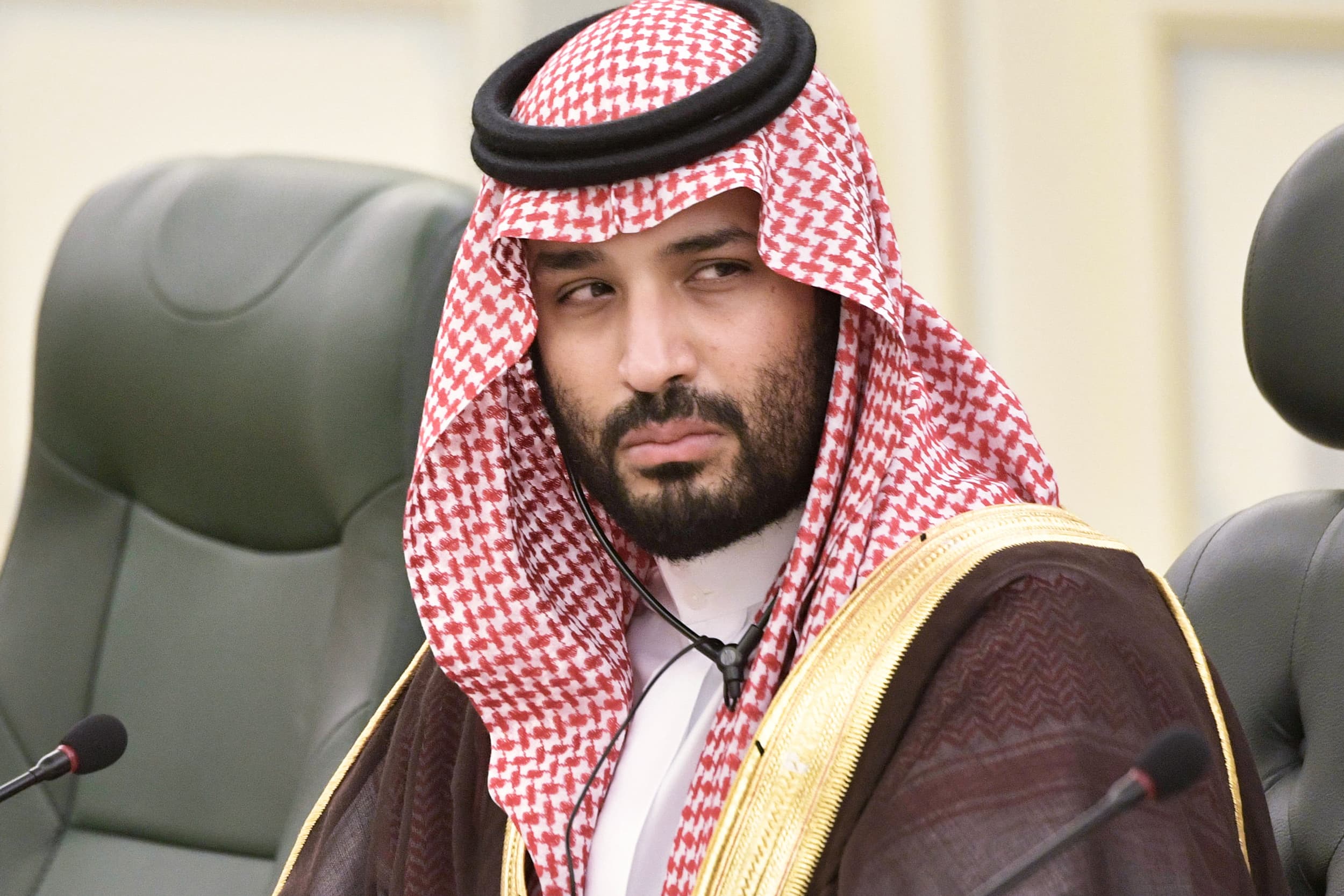
Since becoming the crown prince and de facto leader in 2017, Prince Mohammed bn Salman (known as MBS) is stirring controversies in Saudi Arabia and making the country a battleground between the conservative Sunni and trendy Western values.

Immediately after assuming power, MBS declared that the return of ‘moderate Islam’ was key to his plans. MBS’s declaration is an affront to Islam because his statement gives credit to Western media, which categorises Muslim adherents as either ‘moderate Muslim’ or ‘Islamic extremism.’ Such labels are derogatory and indictment; to label somebody as either moderate or extremist Muslim is to say that extremism is an extension of Islam. Moreover, MBS’s statement is a subtle backing to America retaining Guantanamo Bay Camp, where many innocent Muslims are being held without a trial and tortured. 

In 2018, MBS lifted a ban on women drivers. Saudi, being the last country in the world where such provision existed. Many, including Muslims, commanded the move as there’s no available Qur’anic injunction or Hadith that prohibits doing so. However, shortly before the ban was lifted, many women rights activists who campaigned against the ban were rounded up and imprisoned.

Bn Salman is seen by many as a power monger. For example, he was seen in 2017 shortly after becoming the crown prince with the former crown prince, Mohammed bn Nayef, the former pledging allegiance. Bn Nayef is King Salman’s nephew. He’s, therefore, MBS’s cousin. Bn Nayef was seen kneeling and kissing his older cousin’s hand, a gesture disapproved in Sunni Islam.

Saudi annual billion-dollar US arms deal is making Saudi Arabia a laughing stock. Former US President Trump supports Saudi because of the deal, and on the other hand, US moral and financial unconditional support to Israel is a source of concern.

The latest controversy is the mosque speaker restrictions. The Saudi government asks Imams and Muezzin to lower their speakers to a third of their maximum volumes during calls to prayer and during the prayer itself. 

Opponents criticise the restrictions, saying cafes and restaurants could be heard blaring loud music all over the country. Authorities had earlier said they placed the restrictions because parents complained that the speakers disrupt their children while asleep. Even though modern means of a call to prayer, the outrageous number of mosques and airing the prayer itself could be contestable if they’re brought under strict Islamic legal spotlight, some see MBS’s attempt to give some consolation measures to Western nationals living in the Kingdom.

Prince MBS has stepped up his opposition to freedom of expression, arresting and jailing many critics. Some have paid the heavy price with their lives, like the US-based journalist Jamal Khashoggi who was extrajudicially killed in the Saudi Consulate in Istanbul. Many members of the ruling family were also arrested and imprisoned. They could only be released after paying the state some huge amounts of money, which authorities claimed was payback for alleged corrupt practices. In the past, substantial freedom of expression was allowed, especially on issues of check and balance.

Brazenly, Saudi Arabia has recently signed a 10-year professional wrestling contest show with an American World Wrestling Entertainment Company (WWE). So today, you can go to a stadium in either Jeddah or Riyadh and watch wrestling contests; Royal Rumble, Super Showdown, etc., are a daily occurrence as is seen in Texas, New York, and other cities in America.

Moreover, Hajj has been suspended since last year. The first time a Hajj was suspended since the creation of the Saudi Kingdom in 1932. Many Muslims criticise the move after watching the mammoth crowd that graced the 2020 Euro final played this month (July) at Wembley stadium. Over 60,000 spectators watched the final. Prior to kickup, thousands of Italian and English fans were shown walking en route to Wembley, overlooking the so-called Covid-19 protocols. If Europe, the epicentre of the coronavirus, could gather such huge crowds, they asked, why the international Muslim community could not be allowed to go to Hajj?

As Prince Mohammed bn Salman consolidates power and his father gets older, only time will tell for how long and which of the two contrasting values will win the battle in Saudi Arabia’s mainly Sunni, conservative community.

Eid-ul-adha: July 20 and 21 declared public holidays

The Federal Government of Nigeria has declared Tuesday, July 20, and Wednesday, July 21, 2021 as public holidays.

The declaration was made by Interior Minister, Ogbeni Rauf Aregbesola. The minister congratulates all Muslim faithful home and abroad. He also advises them to “imbibe the spirit of love, peace, kindness, and sacrifice as exemplified by the holy prophet Muhammad (peace be upon him).”

The minister also implores the Muslim faithful to pray in the period for “peace, unity, prosperity, and the stability of the country, considering the challenges of insecurity we face at the moment.”

He gives assurance on the commitment of Muhammadu Buhari’s administration on security of lives and prosperity of Nigerians, empowerment, social investment programs, and adequate security for schools.

He also states the need for all Nigerians to keep on observing the COVID-19 protocols by wearing face masks, washing hands regularly, and keeping physical distance which can help in stemming the transmission of the dreaded pandemic in the country.