Muslims

Women’s education and socio-cultural injustice

By Ismaila Academician

Day in, day out, one will come across discriminatory remarks deadlier than plasmasonic missiles against educated women nowhere but in Northern Nigeria and, narrowly, among Hausa and Fulani people.

To begin with, every human deserves a better life that comes through development that comes through a civilisation that comes through education or knowledge. Like the solar system, our life as a system is made up of some fragments that are an integral part of the whole system syntagmatically. After existing in form and soul, education is the second most important thing. It provides us with other parts health, food, shelter etc.

In this regard, life at the superordinate level is the same as the sun, supporting the entire system. Education at the ordinate level is the same as oxygen on earth, our planet. Without life or the sun and education or the oxygen, we cannot survive. This emphasises the importance of education in human life.

However, 21st century is considered the age of information. This is to say there’s no time more prevailing for one to get educated than now. Internet brings whole lots of information to our doorstep. Thus, knowledge becomes much easier to acquire. Probably, there is no field of inquiry that is yet to be digitalised. And, it seems this is just the beginning of things.

The above picture baffles me to see people, some of whom are educated, chastising women for being educated. And that is coming in a prime time when people worldwide are benefiting from products and by-products of education.

The theatre of operation

Now, coming to the bone of contention, Western Education, it’s apparent that these pseudo-critics, feeling dissatisfied with the autonomy women achieved by attainment of knowledge, and out of their chauvinistic attitudes to over-dominate the women-dome, keep barking up the wrong tree. They draw a series of comics that only reveal their disengagement with logic. Whether one is liberal, religious or inadvertent, I don’t think any law or logic is denying and limiting women from getting an education. Education is not gender-specific; it’s for all. It’s one of our distinctive features as humans to acquire knowledge.

A woman can be described as a permanent secretary in her matrimonial home. A secretary is someone entrusted with a secret; he is a confidant to the head of a government department or household. There is nothing worth protecting and entrusting than life and property. Man risks his life and property to his wife, both in his presence and absence.

 A woman is a manager that manages all the resources needed to run the organisation, her matrimonial home. She alone knows the input and output of the house family members that drive the house’s affairs forward. A manager is a person whose job is to manage something, such as a business, a restaurant, a house etc.

A woman is a human resources manager. An HRM is a person responsible for developing employees (or children) so that they become more valuable to the organisation (or family and society in general). She manages the entire people in the house, including the husband. For example, she assigns who to cook, go shopping, tidy the home, etc. At the end of this, the house becomes a real home.

Now, come one come all. Let’s think about this: for one to have a sound and efficient secretary overseeing the activity of his home, life and property, he needs an educated wife. For instance, children return home after school with lots of homework, assignments etc. And with the increasing rate of child abuse, sexual abuse and domestic violence, the best and safest extra teacher your children can get is your wife, their first and best teacher ever.

Additionally, take this scenario as a case study: you work in Abuja, and your family live in Kano or Katsina. Definitely, your wife is in charge of the entire household, raising your children to the moral standards, making sure children attend school, and providing and taking care of their needs. She settles school fees; pays water, power, DSTV bills etc., on your behalf. Yes, that will best be carried out efficiently only if one is educated.

Clear of all doubts, we need more educated women than men since they are that vital pillar supporting our homes – by and large, our life entirely, because men move from the custody of their mothers to the custody of their wives.

Lastly, I am in no way downgrading the good image of uneducated women to the detriment of the educated ones, no and never!!!

May we get the best spouses, amen.

Ismaila Academician wrote via ismailaacademician@gmail.com.

Arrest Owo church killers now – MURIC

  • News Desk

The Muslim Rights Concern has strongly condemned the terrorist attack on worshippers inside the St. Francis Catholic Church, Owo, Ondo State. The attackers killed dozens of worshippers during service today, Sunday, 5th June 2022. MURIC has called for the immediate arrest and prosecution of the attackers.

MURIC spoke via its director, Professor Ishaq Akintola. The statement reads :

“Dozens of worshippers were killed inside the St. Francis Catholic Church, Owo, Ondo State today, Sunday, 5th June 2022. We strongly condemn this act of unprovoked aggression. It is inhuman, heinous, horrific and horrendous.

“We call for immediate arrest and prosecution of the attackers. We charge the Inspector General of Police as well as the Ondo Police Command to find the killers without delay. They must be pursued to the most remote corners of Nigeria. These murderers must have no hiding place.

“In particular, we implore President Muhammadu Buhari to order the Nigerian Army to get involved in the search for the killers. This latest attack is indubitable evidence of the existence of Boko Haram in the South West after their penetration into Niger and Kogi States.

“Going by Boko Haram modus operandi, we warn that mosques and more churches may be the next targets because this was how they started in the North. We, therefore, ask for protection for all churches and mosques in the region.

“MURIC sympathises with victims of this barbaric attack. Our hearts go to the families of the dead. Our prayers also go to the wounded and their dependants. We stand in solidarity with the state governor, Arakunrin Oluwarotimi Akeredolu in this hour of deep sadness”.

Marriage tests your character, makes you happy and matured

By Aisha Musa Auyo

Allah created marriage for lifelong pleasure and happiness. Therefore, beyond any other human relationship, marriage has the potential to make us happier. But there is a price to this happiness, which is CHARACTER. 

Marriage tests our character in every way. It tests our patience, work ethic, willingness to forgive, sensitivity to others, tolerance for those different from us, cooperation ability, endurance, and humility. Marriage is simply the biggest character test in life.

These tests integrate into our demeanour and give us a certain level of understanding, patience and maturity, and willingness to forgive. Moreover, it opens our eyes to the reality of life that unconditional love is exclusively for parents and children.

One needs to work more on his character, temperament, and personality to be able to live peacefully with others. Emotional intelligence plays a greater role in the relationship than anything else.

For most new couples, marriage was like a trip to the proverbial woodshed for the first several years. They were selfish, insensitive, angry and chauvinistic. After the first few years, many spouses were convinced that they had made a mistake in marrying their mate and that they were the cause of their misery.

But after lots of patience and endurance, when they look back at those times, they will realise that all the negatives that happened are crucial in forming their character. Many couples admit that they almost didn’t make it. They almost give up, but such circumstances forced them to decide to change and become more like Allah wants them to be… (patient, prayerful, selfless, understanding, and forgiving).

As a partner, know that your marriage will take a significant step forward every time you make a positive character change. Your spouse also will make positive character choices that will benefit your relationship, and you will have a great marriage, inshaAllah. It won’t be perfect, but you will be happier, contented, and at peace than ever before and will be glad to be committed to the lifelong journey.

Know that before marriage makes you happy, it will make you grow.

Aisha Musa Auyo is a Doctorate researcher in Educational Psychology. A mother of three, Aisha is a homemaker, caterer and parenting/relationship coach.

How to plan the prosperity of your family through Waqf  (II)

By Abdullahi Abubakar Lamido

Bleak Economic Future on Losing bread Winner

Think of it; the moment you die, the socioeconomic status of your children and wives changes. Your children (those young among them especially) become orphans, and your wives are called widows. While alive, you worked hard and earned for their feeding, clothing, shelter, education, healthcare and general wellbeing. The moment you die, they lose a breadwinner. If in your lifetime you have searched from the Islamic Sharī’ah, you would have learned the art and science of planning beyond your lifetime for these prospective widows and orphans. After relying on Allah, you would have built for them a prospect such that they would live a life of meaning, success, prosperity and contribution, insha Allah. And here comes the relevance of family waqf; waqf, in general, being the Islamic instrument for institutionalising philanthropy and ensuring perpetuity in giving!

Family Waqf as a superb socioeconomic institution enables one posthumously to maintain his parenthood and breadwinner status for his family, generates him reward permanently and preserves the dignity of his progeny everlastingly. In family waqf, you find one of the essential instruments for planning the future prosperity of your progeny.

Family Waqf as Solution

Family waqf, also called posterity waqf, is a kind of endowment created as a futuristic investment for the sustainable prosperity of the endower’s relatives or friends. It is often called a restricted waqf, distinct from a public waqf whose benefits go to an open class of beneficiaries. It can be for the immediate family; wives and children. It may also include parents. It can be made for the extended family, depending upon the financial capacity of the endower. One can make a family waqf for a child with a special need, say one with sickle-cell disease. The beneficiaries of a family waqf, in short, are those defined by the endower.    

Significantly, although the primary beneficiaries of this form of waqf are those pinpointed from the endower’s family, time may expand the scope of the recipients of its fruits. When, for example, the revenues generated from the waqf grow so large beyond the family’s need, or when the family gradually goes extinct after some long time, the waqf could be converted to a public waqf, expanding the coverage of those who enjoy its benefits. Therefore, what distinguishes a family waqf from a general public waqf is its scope of defined beneficiaries. Virtually all other rules of its governance are the same with public waqf. It can be made a direct waqf, one that creates direct benefits, on an investment waqf whose revenues are distributed to the designated recipients.   

Family waqf can be made for the provision of all forms of welfare and empowerment services for the family. It can be made for education, healthcare, feeding, clothing and other needs. It can also be made, specifically for the sponsorship of Hajj to family members. In this regard, instead of spending five million naira for two or three members of the family to perform Hajj this year, the same amount can be invested as a waqf, such that after its maturity, the proceeds from the investment waqf can be used to sponsor Hajj for a certain number of family members every year. With proper management and Allah’s barakah, instead of three family members, dozens of them can enjoy Hajj from the same seed money even long after the demise of the original donor. Waqf multiplies benefits and rewards manifold.

More often than not, you hear people complain over the demands of their family members overwhelming them even as they want to contribute. But little do they know they have a satisfactory answer in family waqf. For example, suppose you know you spend two million naira for the education of your children and extended family annually. Why not make an investment waqf so that the proceeds of the waqf relieve you of any spending in that direction in some years to come?

Form and Functioning of the Family Waqf

A person can build a rentable shopping complex, subscribe to Islamic bonds (Sukuk), buy shares of a halal company, and dedicate the same and profits thereof as a waqf for the education of his children and grandchildren. Likewise, one can build an orchard full of date trees, mango trees and other fruit-bearing trees, dedicating them as a waqf for the future specific or general financing of the needs of their children.

When the endower specifies in the waqf deed that it is only for the education of his children, then, as a rule, no part of the rentals shall be spent on other needs, just as the resources cannot be used to fund the education of children other than his, except when the yields grow far beyond the education of the designated siblings. If the endower dedicates it to education and healthcare, its proceeds cannot be diverted to feeding the family or other things except under absolute necessity. All this is to safeguard the sanctity of the waqf, ensure its sustainability, and guarantee the continuous flow of its yields in line with the overall goals and objectives for which it is created.

 The good thing is that, like all other waqfs, making it a family waqf makes the investment/asset inalienable. It prevents it from being counted among the inheritable wealth of the endower, as it will remain a separate entity that creates benefits perpetually to the entire qualified beneficiaries. The asset can neither be sold nor given as collateral. It remains a waqf asset. This way, even when the children need other things, they source them outside the waqf, allowing the waqf to maintain its defined purpose perpetually.  

The idea behind family waqf stems from Islam’s emphasis on ensuring the wellbeing of a person’s family and biological relations and the need to spend continuously on all aspects of their needs; spiritual, intellectual, biological, physiological, socio-cultural, and so on. Talking about spending, the Qur’an draws attention to prioritising spending on the family. When, for instance, the companions continued to ask the Prophet (SAW) how best to organise their spending, Allah intervened with a divine spending formula: that whatever you plan to spend for good or charity, direct it to your “parents, relatives, orphans, the needy and the traveller” (Qur’an 2: 215).

Your family, in short, occupies the first three spaces on your scale of spending preference. They are the primary beneficiaries of your giving, be it obligatory or voluntary. Now, if, as the Prophet declares, the most pleasing act in the sight of Allah is one that is perpetual and sustainable; then it becomes apparent that the most rewarding spending on the family is the “gift that keeps on giving”, that is a waqf that keeps bearing fruits to the family.

Start Early, Start Now!

It is important you begin the waqf plan early. Many people start their marital lives with moderate incomes, which, with little adjustments, a futuristic mindset and financial discipline, are sufficient to be divided into consumption, saving and little investments. However, financial shortsightedness often prevents them from allocating some portion of that “meagre income” to what would ease their financial burdens and create a sustainable flow of income – and reward- for themselves and their family in the future. Little do they realise that as their family grows, so do their financial burdens. If these are added to inflation and other economic unpredictables, the complexity of the situation worsens.

Many people do not also realise that the best immunisation from the negative socioeconomic consequences of shrinking disposable income is to begin early implementation of an effective financial plan. Many begin to regret when the regret cannot change anything; they would want to start to cry when the head is already cut off!  

So, plan for the future of your beloved wives, children and relatives. That is a Sunnah, a well-established one, for that matter. A viable and well-managed revenue-generating waqf can do that for you. You get double rewards; you safeguard your family’s future Islamically and earn rewards perpetually. Make an effective plan for their feeding, sheltering, education, medicine, and socioeconomic prosperity. Make a waqf for their Hajj, ‘umrah and general spiritual wellbeing. That is sunnatic. Do not miss the opportunity to practice this multidimensional Sunnah, the Sunnah of family waqf. Our dear mother and wife of the Noblest Prophet, Aisha, reports to us that the Prophet (peace be upon him) dedicated his seven gardens as waqf to benefit the clans of Banū Abd Muttalib and Banū Hāshim as recorded by Bayhaqi.

We also see emphasising family waqf in the guidance of the Prophet to his companions. After the revelation of the verse “By no means shall you attain righteousness/piety unless you spend of that which you love; and whatever good you spend, Allah knows it well” (3:92), Abu Talha met the Prophet and said, “This is what Allah has revealed, and the most treasured of all my wealth is this garden, Bayruhā’. I have set it aside as a adaqah to attract reward from Allah. Therefore, you should administer it the way you wish”. The Prophet was amazed by this gesture. And so he said, “Certainly your wealth is blessed. Having heard what you have said, I recommend that you dedicate it as a perpetual charity to your relatives”. Based on this Prophetic advice Abu Talhah made it a waqf for his close relatives and cousins (Bukhari and Muslim).

It is interesting also that most companions of the Prophet are reported to have implemented this Sunnah. For example, Caliph Abubakar dedicated a house as a waqf for his son, and Umar dedicated a waqf near Marwa to his son. Also, Zubayr endowed a house in Makkah, another in Egypt, and yet another in Medina as waqfs for his children. Amr b. ‘Āss endowed a house and another huge property in Mecca for his children, just as Hakīm b. Hizām also dedicated a house as a waqf in Mecca and another in Medina for his son. After reporting all of these, Ibn Qudamah says in al-Mughniy, “All this are intact till date”.

Family waqf is a Sunnah of the Prophet, his companions and generations of Muslims in the last fourteen centuries. It is a well-developed institution that grew as a robust instrument for family empowerment and societal development until it faced the orchestrated wrath of the colonial monsters. The colonialists saw it as an institution that gave families and societies independence against their mercilessness and hence officially abolished it in Muslim nations like Egypt, Morocco, and so on.

Sadly, there is hardly any evidence of its practice as enshrined in Islamic law and civilisation here in Nigeria. With the growing waqf awakening in Nigeria, one hopes that a new page would be opened for entrenching this all-important Islamic civilisational institution. The good news is that with each family doing it, we gradually build a new waqf generation. Through that, we give a big blow to poverty at family levels before we finally eject it out of our communities. The early we sow, the earlier we reap. The more we sow, the more we reap. May we begin this journey NOW.

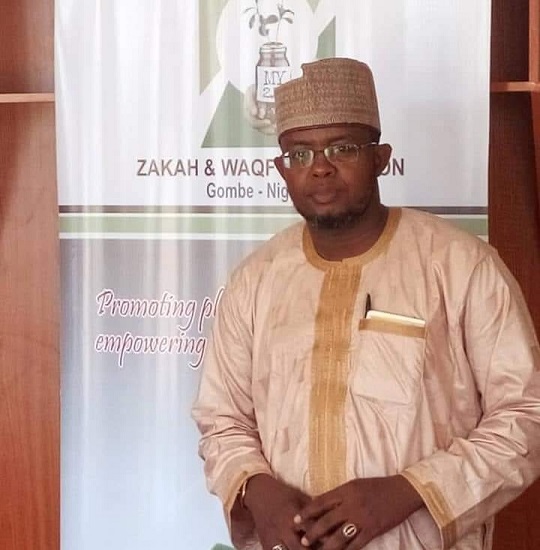
Abdullahi Abubakar Lamido, Chairman, Zakah and Waqf Foundation, Gombe . He can be reached via lamidomabudi@gmail.com.

How to plan the prosperity of your family through Waqf  (I)

By Abdullahi Abubakar Lamido

Introduction

In today’s Nigeria, we experience a rapidly growing population at an average rate of 3% per annum. We currently have about 220 million citizens and still counting. Our population is projected to reach nearly 400 million in the next 28 years. It is factual also that the population growth is much higher in the Muslim communities of Northern Nigeria than in other communities in both the North and the South.

Due to many reasons, foremost among which is the widespread practice of Islamically permissible polygyny, our population grows exponentially. At the same time, little is done to plan the expansion of infrastructure and provide alternative ways of coping with the needs of the expanding population. An average Northern Nigerian man likes and practices polygyny (i.e. marries more than one wife). In addition, family planning and birth control are generally considered taboos. Families are, therefore, mostly large.

While the population is supposed to be a blessing, it can also be a curse if not well managed. It is clear also that most of the Muslim masses and a large chunk of the Muslim leaders, intellectuals and even religious scholars are oblivious of the long term consequences of an ever-growing population that is not matched with a corresponding sharī’ah-compliant solid plan for taking care of the education, health, food and other socioeconomic and religio-spiritual needs of the expanding population.

While few are partly aware of some of the projections related to population growth vis-à-vis the socioeconomic and other realities, we are largely oblivious of the need to develop Islamic oriented ways of building the society and coping with the socioeconomic challenges associated with our growing population and exponentially changing societal dynamics. Therefore, the issue can quickly become controversial during any discussion.

But a society that accepts, based on an interpretation of religious teachings and cultural beliefs, that polygamy – rather polygyny – should be widely practised and even encouraged should also be a society that always goes back to the scripture for proper guidance on how to manage polygamous families. Since, as a religious Ummah, we have accepted what Islam has provided for us of the permissibility of having many children, is it not also Islamically incumbent upon us to go back to the Qur’an and Sunnah to learn how to organise the social, educational, economic and other needs of our families? Within this context, I intend to introduce family waqf, an almost entirely unknown Islamic institution for organising and planning the prosperity of families in Nigeria.  

Unpleasant Consequences of Life without Planning

How often have you heard stories that end with statements like: “Allahu Akbar! Late Alhaji Adamu was a wealthy person, a kind, gentle, and successful businessman. But look at how his children are suffering…”; or “Can you remember Alhaji Mai-Turare: the owner of XYZ Business at Tudun Muntsira quarters? Do you know that this hopeless drug addict is his son! He dropped out of school and joined a team of hooligans…Allah ya sa mu gama da duniya lafiya (May we have a good end in this world)”. And similar stories?!

Those are recurrent stories in Northern Nigeria. You have several successful entrepreneurs or accomplished aristocrats and professionals who reached the zenith of fortune in their chosen businesses and professions and lived lives of accomplishment and contribution. However, shortly after their demise, their estates would be shared among their 30 heirs; four wives, over 20 children, etc. After a few years, those inheritors of enormous wealth would fall from the world of prosperity to that of harsh poverty.

Many people would be rich, with an ever-expanding flow of income in the booming years of their careers. Still, they would never think of making a sustainable investment for the future prosperity of their children, not even for their life after retirement. After the family has grown large, inflation has multiplied manifold, and life has become unbearably expensive against their sources of income which have rather contracted due to age and other factors; they turn from affluence to poverty, battling to settle even the most basic of their bills. They neither invested for their retirement nor made an ever-flowing investment for their second life, the eternal life after death.

They have no passive investments that generate income for them at old age, nor a waqf (endowment) that would continue to fetch them rewards even while in their graves. They have no plan for what would sustainably finance their family’s education, health, and other essential needs. And so the worst happens. And the whistle is blown for their final, inevitable transition to the next world, leaving their family in economic and financial confusion, which often spirals into other messes in the spiritual, social and mental spheres. Soon after dearth, history forgets them as they have left nothing that continues to fetch them rewards and people’s prayers, not even for their immediate family.

The Importance of Making a Financial Plan

But why is it essential to make a financial plan for your children’s and family’s future prosperity? Does that have any place in Islam? Sa’d b. Abu Waqqas was an uncle to the Prophet (peace be upon him). He was among the ten topmost companions that received glad tiding of a direct entry ticket to Paradise in one sitting. He was rich. Actually, very rich.

One day, during the farewell pilgrimage, the Prophet visited Sa’d on his sickbed. After exchanging greetings, Sa’d told the Prophet that I am seriously ill, as you can see. He apparently was doubtful of surviving that illness. He said, “And I am a very rich person, but there is no one to inherit my wealth except a single daughter.” He then asked if he could give two-thirds of his wealth to charity, leaving one-thirds for the daughter. The Prophet instantly replied with a quick “No”. “What of half?” The Prophet again said, “NO”! What of one-thirds?” Now, here is where the Prophet reluctantly approved by saying, “One-third! Even one-third is huge and too much”. Anyway, the Prophet followed this with a statement that deserves the attention of parents at all times; “It is better to die leaving your heirs in affluence than to leave them in poverty, so they continue begging people for alms”. 

Many lessons abound in the above conversation of great personalities. One, piety and affluence are never mutually exclusive; you can be profoundly pious and superlatively prosperous. Two, connected to this, enjoying worldly opulence does not preclude enjoying everlasting other earthly felicity. In fact, worldly riches are effective instruments for attaining success in the next world. This is clear in the stories of great companions like Abubakar Siddiq, Uthman Bin Affan, Abdurrahman and, of course, Sa’ad.

Significantly also, you can plan all of these for your loved ones beginning with your children and wives. Not only you can; you have to! This is Prophetic advice, if not an order. The Prophet (may peace be upon him) made it impermissible for a person, especially while bidding farewell to the world, having no chance on sight to go to the market and earn more resources from gifting out his fortunes lest he throws them into poverty after him.

In simple terms, what the Prophet wanted from us is to plan for making our children self-reliant, self-sufficient and socio-economically empowered. With this, instead of being dependent, they will be independent. We should try making them givers, not receivers, assets rather than liabilities. Ask yourself, if not for empowering the deceased person’s posterity, why would the Sharī’ah even prescribe the inheritance laws in the first place? And in the Hadith of Sa’d above, the Prophet wants us to understand that the philosophy behind inheritance itself is to plan for the sustainable prosperity and economic independence of the deceased’s heirs; leaving them with sufficient inheritable resources to make them rich (agniya’) as against poor (alah).  

Abdullahi Abubakar Lamido, Chairman, Zakah and Waqf Foundation, Gombe . He can be reached via lamidomabudi@gmail.com.

Dear NBA, President Olumide Akpata, a pregnant woman and her four innocent children have been gruesomely murdered by IPOB

By Hussaini Hussaini

There were gruesome murders of one pregnant Muslim woman, Harira and her four innocent kids, and six other innocent Northerners killed in Anambra State. There was also arson on goods and livestock worth millions of naira belonging to Northerners in the southeast. As per Daily Trust Newspaper reports of May 24, 2022, and other sources, all the crimes were carried out by the Indigenous People of Biafra (IPOB). However, there was a habitual dead silence of other media houses. One of the victims, a Northern Christian, was said to have been killed and disfigured by the terrorist for his “offence” of being a northerner and securing a job in the southeast.

We are in a country where God in His infinite Mercies sandwiched diverse tribes and religions to live with each other. This, some may call a colonial act of 1914 in which the regions of the geographical location that was to become Nigerian were amalgamated. I see it ordinarily as a divine opportunity for success.

This amalgamation would have served a positive purpose for Nigeria post-independence if the citizens had united themselves for genuine national (not regional or personal) interest, just as the Europeans united themselves in sharing Africa as a spoil of war on the table in the Berlin Conference.

Unfortunately, Nigeria has been so divided by strives with ethnic, religious, and political colouration since its independence. We witnessed the happenings that led us to January 15 and the counter-coup of the 1960s down to the civil war. Those sad events should have served as lessons for us to think about how to live with one another in peace since divisions and strives had severally proven to be futile in solving our respective problems.

However, turns of events have shown that the gap between us has kept widening. Even the people at the helm of affairs and presumed outstanding intellectuals such as the leadership of the legal profession are taking sides and showing extreme bias in addressing issues that can touch the roots of our unity as a country. A typical example is a press release of  May 17, 2022, by the Nigerian Bar Association (NBA) president, Mr Olumide Akpata. He took time to condemn the happenings in Sokoto over the killing of Debora Samuel. She blasphemed and uttered abusive, vulgar words against the Prophet of Islam, Muhammad (Peace be upon him).

In the same statement, Mr Akpata passively mentioned some killings of innocent Nigerians, including a military couple killed in the south by the terrorist organization, IPOB. Mr President held the brief of IPOB terrorists by referring to them as “Unknown Gun Men” as the southern media hypocritically cloned them. However, the NBA President made it clear through his press release that the statement and the cancellation of the scheduled NBA-Spidel in Sokoto were in honour of Debora, not the late military couple who was in a sane environment supposed to be national heroes.

To Muslims, who form the majority inhabitants of northern Nigeria, their lives and that of their families and everything they own should go astray if that loss will prevent any slur on the honour of Prophets Muhammad and Jesus, Mary, or any other prophet of God almighty (may peace be upon them all). In order words, Debora would not have been attacked by any mob if she’s only accused of killing a Muslim in their private affairs in Sokoto, just as some Igbo kidnappers who killed a Muslim Colonel a few years ago in Kaduna; and the Christians who killed Gen. Alkali in Du village in Jos.

Blasphemy committed by Debora is one of the highest abuses and attacks on the Muslims, which was capable of putting the entire region in flames. Still, our Bar President found it very worthy to state that his statement and postponement of NBA-Spidel was in her honour without showing any concern about the root of the evil. Idolizing Deborah without equally condemning blasphemy in all its ramifications is abuse and over trivialization of the sensibilities of the Muslim community, most significantly, the members of our noble profession.

All the Muslim leaders who spoke on the Debora issue, such as the Sultan, Sheikh Sani Yahaya Jingir, and Prof. Mansur Sokoto, have condemned mob action as they equally condemned the intolerant and provocative act of blasphemy. This would have been a fairer pattern of address to be employed by our President as a leader. Four years ago, I wrote two published articles to condemn blasphemy and mob action.

Ebikebuna Augustine Aluzu Esq responded to Mr Akpata’s statement thus: “in honour” is she an NBA Member?”. He concluded: “…People get gruesomely murdered in Nigeria daily. If NBA wants to stand against jungle justice, it should not be selective”. The NBA President would have done better if he stayed within his mandate fairly. However, since Mr President has chosen to throw his hat in the ring, what goes around comes around, they say. Hence, we will patiently await the personal reaction of the NBA President on the recent killings of northerners in the southeast.

Hussaini Hussaini wrote from Abuja via hussaini4good@gmail.com.

Before a Northern woman writes

By Aisha Musa Auyo

‘If you don’t want to be criticized, do nothing, say nothing and be nothing. – Unknown

This article is inspired by a Facebook post asking why women were yet to send opinion articles to an online news medium despite sending them numerous invitations. 

Northern Nigerian (‘Hausa-Muslim’) women have peculiar characteristics that distinguish them from others. First, their personality is governed by religion and culture, with irksome societal expectations that women belong to the home, kitchen and the other room.

Thus, women are expected to keep their views to themselves. They can only talk when the matter is homemaking affairs regardless of their level of education, experience and expertise.  When a northern woman comes out to write or make her views known to the public, she should be ready to face the consequences of that action for the rest of her life.

Suppose you are active in this social media village. In that case, you will notice how women are ridiculed, dragged to the mud, abused, misunderstood, misquoted, and sometimes lies and falsehoods spread about them. These issues do not start and stop on social media. Even friends and families tend to misquote or misinterpret write-ups and then spread them to others who may have missed them. Others may take the write-up personally and assume it’s for them or about them. That has caused a lot of family conflicts and tension. 

On the other hand, one needs to have time to engage with those who made comments or reactions. One needs to spare time to reiterate and reexplain specific points, which is draining and time-consuming. Not to talk of the harsh and ridiculing responses that will make one lose their cool.

As a writer, I know one can’t force an understanding in a single direction. People understand only from their level of perception, experience, exposure and open-mindedness. A northern woman should know that her writing will be misunderstood, misinterpreted, and misquoted.

I have several stories to tell. My friend was crucified to the extent that she didn’t want to write even a single word again. The writer in her has been killed. She has logged out of Facebook altogether. And do you know what caused the rain of abuses? Because she refuses to engage in a private chat with men.

There was a time I made a public post that I don’t chat with men due to the endless ‘hi, salam’ messages I receive daily. I wrote that whatever a person wants to talk about should write under my public post or forget about it. Among the annoying comments is that I should leave the platform since I’m not willing to chat privately. As if the app is all about private chatting with the opposite gender. A coursemate sent me an abusive message that I’m now arrogant even before getting my doctorate since I have not been answering his ‘hi’ and ‘salams’.

There’s also this young fiction writer I met via Wattpad. She writes so well and has many followers. She makes readers cry, and her characters become so real in our hearts that we feel like family. But then, all of a sudden, she stops writing. So, when I asked her why she told me how her aunt reported her to her parents that she was busy influencing northern women to leave their marital homes.

The book that got her publicity is about a woman who has stayed and endured abusive marriage, then left after 20 years, started life afresh, and her new man and new home became paradise on earth.  Her point is there’s life out there for abusive victims.  Her point is it’s never too late to leave. But her parents were brainwashed, and she was prohibited from writing. She was a great writer, and I miss her.

I remember an instance when someone just tagged my name in a story with the caption “sak labarinki” [Just like your story]. And that story has no similarity whatsoever to my life. Come and see comments, people asking me how my story goes that they want to hear from me. That really scared me, and I felt like I would never write again!

Another incident that got me thinking was when a renowned world feminist got married, and a female Arewa writer or activist was tagged and grilled. That activist once wrote, ‘marriage is not an achievement’. She wrote that based on the Arewa context, marriage is the only achievement for a woman, which lead many girls and parents to marry their daughters to the wrong persons. This culture has led many women to endure hardships and other abuses just to stay married.

The activist’s point was there’s more to being a woman than just getting married, and honestly, some marriages are not an achievement. I know this will come up whenever that girl is getting married, that is, if she is lucky to get a mature suitor and brave enough to endure ridicule and insults from family and friends. This thing will also come up whenever her future daughter is getting married. The future son-in-law will be reminded that his mother-in-law doesn’t recognize marriage as an achievement. Simply put, this statement will hunt her for generations. The internet doesn’t forget.

Similarly, there are monitoring spirits waiting for you to make a mistake in the grammar, so they drag you down or ridicule you.  You never know some exist in your friend list, but they are there, waiting for one wrong move.

To be brutally honest, one has to be tough to endure all these and more. A woman is an emotional being, and one single word can crucify her to the extent that it also affects those around her.

I recall a post by a blogger that goes, ‘This is her husband writing. I want you to know your comments and reactions have affected my wife so badly that even we, her family members, are affected. I wish you people were more understanding and emphatic. This blogging is her passion, and you have killed her spirit. She has been crying for days, and we are all mourning the dead spirit. If anything, I hope this makes you feel better about yourself and what you wrote’.

So before a northern woman writes, she needs to ask herself: If she is emotionally strong and ready to tackle so many obstacles that will come her way and that may hunt her for a lifetime. Is she prepared for that commitment? Is it even worth it? 

Frankly, those who keep to themselves are more at peace than those who write. A person’s essays or write-ups will surely outlive him, and if the writer has written good, worthy articles that benefit him, here and hereafter… but at a cost!

On a final note, we need to do better in writing comments and reactions to people’s write-ups. The hadith ‘Falyaqul khaeran auliyasmut’ also applies to writing. If your comment is not constructive and will not inspire, encourage or motivate, then kindly leave it to yourself. We should also remember that we will be held accountable for what we say, write, or make others feel!

Aisha Musa Auyo is a Doctorate researcher in Educational Psychology. A mother of three, Home Maker, caterer, parenting and relationship coach.

Peace beyond religion: Issues around blasphemy and way forward 

By Lawan Bukar Maigana 

To achieve the relative peace we crave, we must respect each other’s religion and be wary of using nasty words on our “sacred belongings.” However, I wholeheartedly condemn jungle justice, burning people, and people taking laws into their hands. That is un-Islamic. Islam is organized religion. We should follow due process when it comes to issues that require capital punishment. 

For a fact, I know that any negative thing in words or drawing against Prophet Muhammad (PBUH) will not be tolerated or pardoned by any truly practising Muslims across the globe. However, Muslims should be wary of taking laws into our hands. Some people say that the justice system in Nigeria does not do the right thing at the right time. They mainly delay judgment. 

Some people gave the example of Mubarak Bala – an atheist from Kano – who was sentenced to 24 years in prison after pleading guilty to blasphemous charges against him. They said that his punishment was the death penalty, but he was sentenced to 24 years in jail, which was unjust. I told them that that should not be an excuse for them to take laws into their hands because Islam does not encourage doing that, no matter how bad our systems are. 

In the wake of Deborah’s killing by a mob, a lady named Naomi Goni was reported to the police and the Borno State Government over a blasphemous she made on Facebook. The Borno State Government aptly did the needful to avoid jungle justice on her, as in Sokoto. Jungle justice and people taking laws into their hands are un-Islamic. Everyone should respect each other’s religion for the sake of peace. We shouldn’t be influenced by press freedom or any similar freedoms to do anything that can lead to the loss of lives and properties across the country.

On May 16th, I read news published by the Punch newspaper that a Lagos engineer was killed and burnt on the road by motorcycle operators because of N100. This is condemnable and should not be accepted by any reasonable government. It is high time the Nigerian government came up with strict laws on burning people no matter what they did. 

These guys gruesomely burnt the engineer because of N100. You can’t count how many people were killed and burnt because of minor things like stealing food, goat, little money, and shoes, among others, in the South. And they happily do it. No northerner will kill anyone because of any of the things mentioned above. Yet, the northerners are called murderers. Really! Are they?

Although I am not an Islamic scholar, I know that Allah has warned and forbidden believers from punishing people with fire. Only Him does that. Insulting Prophet Muhammad (PBUH) is unacceptable and unpardonable even in a Muslim minority state or country, let alone a place like Sokoto, which is primarily the root of Islam in the North. Desisting from insulting the prophet will not cost you anything. Why can’t we live in peace? 

As Muslims, we should act with knowledge in whatever we do. Allah has asked us to know Him before we worship Him. We can’t worship Him if we don’t know Him. We should respect each other’s religion no matter what happens because none of us will take it lightly when any of us transgresses. I fear that this issue should not be metamorphosed into religious conflicts because people’s comments on the incident are scary and dangerous. 

One’s faith in Islam will not be complete until he believes and loves Jesus – Isa (AS). That is why you won’t see Muslims insulting him. Honestly, some of the comments made by some moderate Muslims and Christians are unjustifiable because such things have been happening in the South/East in the open, and no Muslim has ever attributed them to Christianity because we know what Christianity is. 

Why can’t they do the same justice as Muslims do for Christianity when things go wrong in the South? Until we start telling ourselves the truth and live by it, respect each other’s religion and censor our utterances, we will continue to get things wrong. Then, we can live together without crossing each other’s red lines. 

It is hypocritical to condemn and label the Muslims as murderers because of what happened in Sokoto while you keep mute on the killings thriving in the South and other places. All lives are sacred, and no religion has asked its followers to kill people for no reason, and no religion has asked its followers to insult or mock someone’s faith. This has to be understood by all of us. 

The only way to end this kind of incident is through the establishment of laws on blasphemy with strict punishment for whoever is found wanting. In addition, the state governors should enact laws that will protect each other’s religion in the country to avoid jungle justice, burning people, and preventing people from taking laws into their hands.

The law should clearly state that whoever insults or uses nasty words on prophets or religion publicly will be decisively dealt with. The person should blame themselves for whatever punishment is meted at them. I think this will put an end to blasphemy, which will save lives and properties in the country. 

Lawan Bukar Maigana is a writer. He can be reached at lawanbukarmaigana@gmail.com

Almajiri System: The way out of the Armageddon           

By Lawi Auwal Yusuf

I have been keenly following the recent raging altercation aroused by the hard-hitting comments of Nafisa Abdullahi. Many people have voiced their diverging opinions; some took an affirmative position while others came out against her. However, there is a consensus between the different parties that Almajiris are in a dire condition. Hence, no one would like to see his son in such a critical situation.

Though everybody has the leeway to express his mind, why are we wasting our energies on arguments that will come to nothing? These children are clamouring for justice, not a palaver over their plight. Such wrangle will never let us escape from the shackles of mutual antagonism. I believe that this issue is beyond mere accusation and counter-accusation. On the contrary, we have to go the extra mile. We have to give it our best shot to mark a turning point in this issue. Thus, we must debate matters that will help us clinch a victory over the problem. Put another way, it is more important to shift our attention from pointing accusing fingers at each other and focusing on the solution. This tendency to emphasise the problem rather than the solution is deeply entrenched in society and ravages our daily lives. Instead, it is more logical to put the solution above the issue.

Concentrating more on the problem will put us on a road that goes nowhere. It will keep us going around in circles, remain coasting and yield no helpful result. It will always go against us while our efforts remain in the doldrums. If you think this is the right way to ward off the problem. Indeed, you are living in a dream world. It is time to stop the dispute, draw a line under the issue and face reality, as this intractable desertion is getting out of hand.

Those on the same wavelength with the actress should know that not all the children they see on the street begging are actually Almajiris. Many children from impoverished homes disguise themselves as Almajiris to beg for food or scavenge through garbage, looking for valuable materials to sell for a living.

Furthermore, I want to remind those lilliputians that ridicule the Tsangaya that immensurable successes had been achieved through the system. It was the only institution that catered to the educational needs of our people before the inception of Western education. It was the bedrock of our ancient civilisation that paved the way for modern civilisation. It was the institution upon which the foundation for the development of society rested. It was attended by both the nobles and the commoners.

The Sultans of the Sokoto Caliphate, emirs of its semi-autonomous city-states and other members of the aristocratic class all went to Tsangaya. Also, they received their leadership skills training there and trained other administrators who served in different capacities. Moreover, Tsangaya scholars designed the constitution used to govern such a gigantic empire effectively. In addition to all these, it rolled out the khadis (Shari’a court judges) that administered justice, the Imams that led prayers, and Muftis that issued verdicts to guide authorities and the people on both their spiritual and worldly affairs. They also served then as the think tank.

Similarly, great scholars impart knowledge, herbalists that cure ailments, astrologists that determined praying times, crescent sighting, weather forecasts and navigation routes came from such a school system. On this basis, Northerners were proud boastfully that they were literates with a systematic way of life even before the imperialists invaded the region. So, we must be grateful for that.

On the other hand, those who take an unfavourable position from the Kannywood model should understand that the system now doesn’t go; it has a lot of issues and needs momentous changes. It is not what it used to be before. It has taken a different dimension in the last decades. We can’t keep going like that. The Tsangaya must be radically renewed, and these downtrodden children must be liberated from such bondage. Their future must be secured. They need to be under the vehement supervision of their parents, accompanied by their affection, psychological support and care. They have to enjoy the comfort of their homes and the bond of kinship ties, as we have all enjoyed. They deserve a decent life.

Lastly, politicians that have been dilatory in dealing with this problem and wash their hands on the matter must back away from such attitude. They must show genuine commitment to eradicating this menace. We must help these children to salvage the country because we have no other country than Nigeria. IT’S OURS!

Lawi Auwal Yusuf wrote from Kano, Nigeria, via laymaikanawa@gmail.com.

Islam is a religion of knowledge; learn it

By Professor Abdussamad Umar Jibia

Nigerian Muslims following discussions on the execution of a young woman by unknown youth in Sokoto would note that several obscure social media “Islamic scholars” have emerged. Some of them arrogated to themselves the right of ijtihad, a thing some of the most outstanding Islamic scholars avoided unless absolutely necessary. Unfortunately, people kept sharing such stuff as it suits their position on the matter.

When you decide to be a Muslim, you have taken a big decision to be a student of knowledge throughout your life. We all know this because the first passage of the Qur’an revealed to our Holy Prophet (Peace be upon him) is essentially an instruction to sit up and learn. After that, the Prophet lived the remaining 23 years of his life interpreting the Qur’an revealed to him piecemeal using both verbal and practical approaches. By the time he left, the religion was complete, and a whole body of knowledge was on the ground, safely transferred from generation to generation of Muslim scholars.

The knowledge is vast as it covers all aspects of life. Take the five pillars of Islam, for example. Whole books have been written on aqidah, which constitutes the first pillar of Islam. There are books on Salah (prayers), the obligatory and supererogatory aspects of it, prayer timings, adhan, iqama, the core body of prayer, etc. Same with Zakah, Fasting and Hajj.

The daily transactions of a Muslim in the market are well detailed in terms of halal and haram. In addition, there are books on rights, including rights of other Muslims, non-Muslims, neighbours, colleagues, animals, the environment, etc.

How would the sick be handled while still alive and after their death? What happens to their heritage? How is it shared? These are clearly stated.

All aspects of Islamic knowledge are available in detail, and, in sum, Islam is not a teach-yourself religion. Instead, it has to be learnt from those who know it.

Take it easy. I am not saying every Muslim must be a professional Islamic scholar, just like not everyone must be a medical doctor or an Engineer. You are probably 40, 50 or even 60 and above and have been working hard in the area Allah has placed you in. Keep working hard to earn a lawful means of livelihood for yourself and your family. That is an aspect of Jihad you are making.

I believe you would agree with me that you would not accept any quack to offer medical services to yourself and your family in the event of sickness. Most likely, you would look for the best affordable specialist to treat you and your loved ones. You would check their qualifications. You would not pick a document from an unknown specialist on the internet and begin to apply their medication and think you would be okay. When you want to build a house, you will look for the right architect to design it for you and the right engineer to supervise the work.

You are doing all of the above when it comes to Islamic knowledge. When you are going on hajj for the first time, for example, you would typically meet the scholar in your area to ask questions. You would probably attend the courses organized by the local pilgrims’ board. You are doing that to avoid wasting your money and make sure that you perform a hajj Allah would accept.

When your father dies, you would call someone you believe has a good knowledge of inheritance to help you share what has been left by the deceased. You do that for zakah, etc.

As a Muslim born to a Muslim family, you learnt to recite the Qur’an and pray from your Islamiyya days. Many thanks to your parents who took you there. Yet, you keep learning from your local Sheikh to make sure you recite the Qur’an even better and perform a prayer that is devoid of mistakes.

My brother, if you only consult an Islamic scholar you trust on all of the above, which are what you do daily and/or from time to time as a Muslim, why do you think you need a social media “scholar” to tell you the Islamic position on blasphemy, a thing not essential in your daily routine of Ibadat? I guess you are not contemplating insulting the personality of the Holy Prophet (SAW), and you are most probably not aspiring to be a Shariah court judge to know the kind of punishment you would pass on a blasphemer.

But in case you have abandoned your Sheikh and/or dropped all your Islamic books, thinking you don’t need to learn more about Islam, I am afraid that you are already preparing yourself for eternal destruction. So please go back, get an Islamic teacher you trust and continue.

As for the Sokoto case, we have shown sufficient anger, and anyone contemplating a repeat of what the young woman did would have to think many times. Let us leave the Muslim leadership to handle the rest. We should have confidence in the Sultan and his team.

May Allah forgive our shortcomings. Amin.

Professor Abdussamad Jibia can be contacted via aujibia@gmail.com.