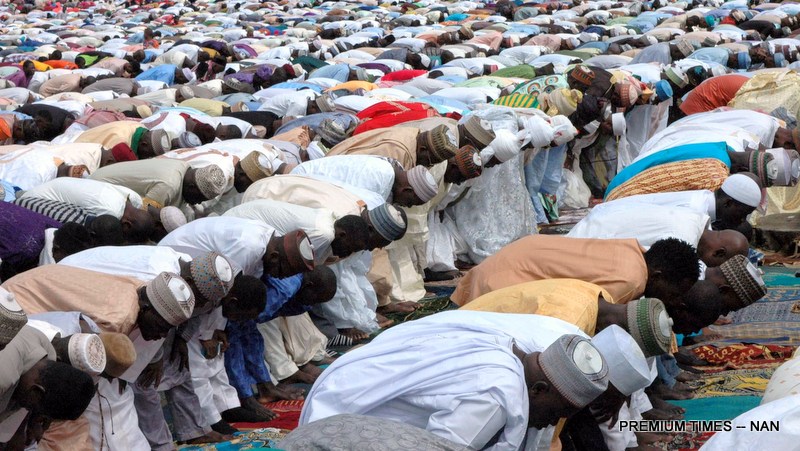
Muslims

Man arrested for deceiving worshippers, mosques demolition in Jigawa

By Muhammad Aminu 

The police have arrested a middle-aged man for deceiving Muslim worshippers and demolishing mosques in the name of reconstruction in Jigawa State.

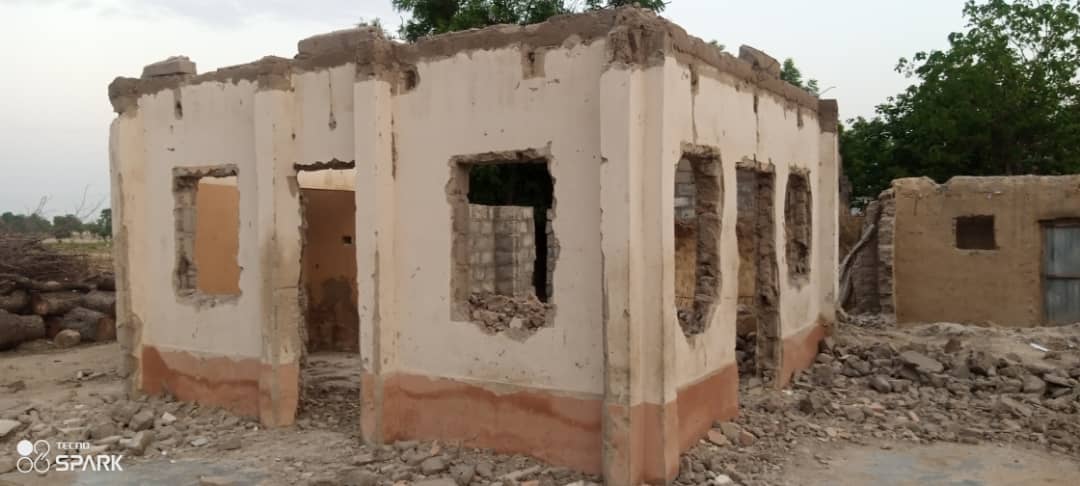
The man who is reported to have deceived many villagers and communities in remote areas of Jigawa State local governments directed demolition and stole roofing zinc from at least 14 mosques in the state.

The suspect is expected to appear in a Magistrate Court in the Kiyawa Local Government Area of Jigawa on Thursday.

A spokesman for Jigawa State Magistrate Courts, Abbas Wangara, said the man is being prosecuted for demolition and stealing properties of mosques.

The police confirmed that the suspect was arrested in Konake village of Kiyawa Local Government Area but did not disclose his identity.

Residents of Konake village said the suspect paid for the removal of roofing, doors and windows before he disappeared with the items without a trace. 

At least fourteen mosques were affected by his deceitful philanthropic gesture of trying to renovate and upgrade the mosques in Taura, Kiyawa and Jahun Local Government Areas of Jigawa State.

The village head of Konake, Malam Hussaini Iliyasu, explained that the man had earlier told them that an Arab-based NGO would construct a new mosque for the village hence the demolition of the existing one.

“After the removal of the roofing, he gathered zinc, windows, doors and borehole and moved them away. He even paid for the carpenter to remove the roof and the demolition of the outer part of the mosque,” the village head said.

Residents of Konake said they were hinted that he was sighted in a neighbouring village trying to replicate his trick against unsuspecting worshippers, which enabled them to inform the police.

Some residents of the affected villages confirmed that they now pray in their houses whenever it is raining because of his despicable acts on their mosques.

Tributes pour in as Turkish Sunni Sheikh, Mahmud Effendi, dies

By Ahmad Deedat Zakari

Influential Turkish and Sunni scholar, Sheikh Mahmud Effendi passed on at the age of 93. 

Sheikh Effendi, who was well known for his emphasis on strict adherence to the sunnah, died on Thursday after battling kidney-related problems. 

His grandson announced his demise on Twitter on Friday, June 24, 2022. 

“His Excellency Mahmud Effendi, my grandfather, has reached Allah,” he tweeted. 

The late Sheikh was buried on Friday, after a funeral at the Faith Mosque in Istanbul. The funeral which was held after the Jumu’ah prayer was attended by thousands of people. 

Turkish President, Tayyip Erdogan joined mourners in paying tributes to the late shaykh.

“May God have mercy on Mahmoud Effendi, a spiritual guide in our country. He dedicated his life to Islam. I wish patience to his family, students and all his fans. Let him rest in peace,” he tweeted. 

Other important Muslim figures around the world have also joined in praying and extolling the virtues of the late sage. 

“Innā li-Llāhi wa inna ilayhi rāji’ūn. Saddened to learn of the passing of Shaykh Mahmud Effendi of Turkey. He revived Islam & Sunnah at a challenging time, inspiring millions of people in #Turkey & around the World. A great loss for the Ummah,” said Pakistan’s former Prime Minister, Imran Khan

“Do you know how you can tell a real scholar and walī of Allah?” 

“It is the fact that Allah has written the love of this person in the hearts of millions of righteous people from different backgrounds. The death of the Turkish scholar Sheikh Effendi shows such a love والله حسيبه.” Dr Yasir Qadhi tweeted

Imam Omar Suleiman was not left out in praying for the shaykh as he also took to his verified Twitter handle to mourn his demise. 

“May Allah have mercy on Shaykh Mahmud Effendi, forgive him and elevate him. What a loss for the Ummah. A man I always felt had a secret with His Lord that was manifest in his face,” said Imam Omar Suleman.

Sheikh Mahmud Effendi was born in Turkey’s northern Trabzon, he completed the memorization of the Qur’an at the age of 10. 

He authored Tafsir of the Qur’an in the Turkish language named Rahu’l Furkan

He was ranked number 34 in the 2022 edition of “The Muslim 500”; the annual publication by the Jordan-based Royal Islamic Strategic Studies Centre, which ranks the most powerful Muslims globally.

Supreme Court allows use of Hijab in Lagos schools

By Muhammad Sabiu

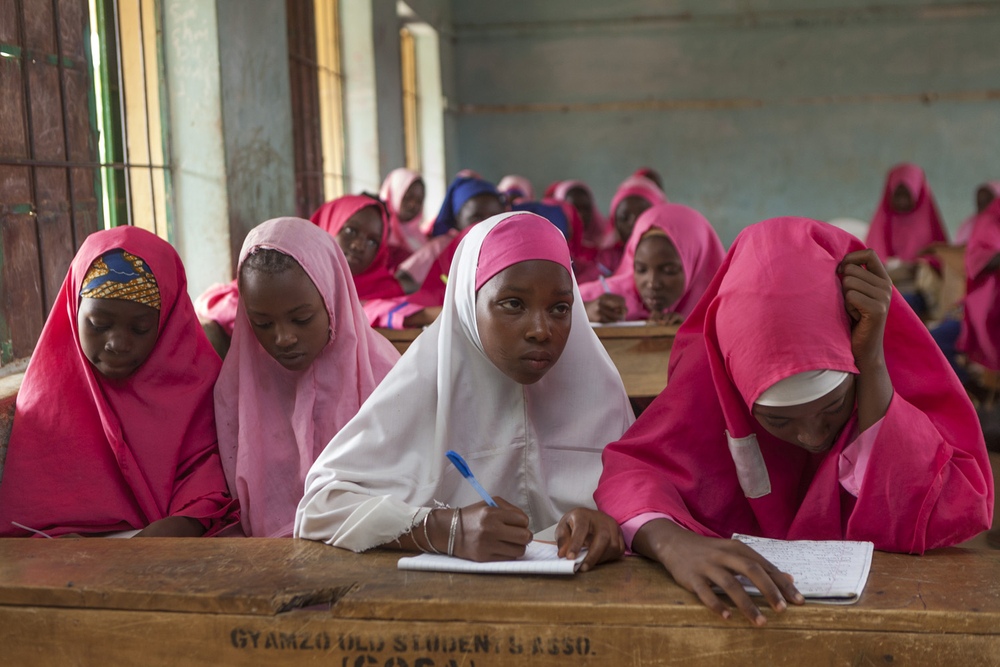
Lagos State’s ban on female Muslim pupils attending public schools in the state wearing the hijab was overturned by the Supreme Court on Friday.

In a 5–2 split ruling, the Supreme Court maintained the Court of Appeal, Lagos judgement from July 21, 2016, which overturned Justice Grace Onyeabo’s October 17, 2014 decision from the High Court of Lagos State.

The lead majority judge, Justice Kudirat Kekere-Ekun, dismissed the Lagos State appeal against the 2016 decision of the Court of Appeal, Lagos, because it lacked merit. 

Justice Tijani Abubakar read the lead majority judge’s decision on Friday.

Wearing the hijab in the Yoruba-dominated region, which is a mixture of Muslims and Christians, has been causing a lot of controversies.

2023: The imperative of a Muslim-Muslim ticket for APC

By Prof. Abdussamad Umar Jibia

The All Progressive Congress (APC) is undoubtedly a party that brings together some of the most outstanding politicians in Nigeria. However, what makes the APC most attractive is the fact that it is in power. It seized this power from the People’s Democratic Party (PDP), a party that ruled Nigeria for 16 years and was also adjudged a failure by the majority of Nigerians. That is why many people do not see PDP as the solution despite all the shortcomings of the APC-led government and the economic and security challenges confronting Nigerians.

One manifestation of the interest Nigerians have in the APC is the occupation of social media discussions, radio and television programmes and interpersonal group discussions by the APC Presidential ticket. Last week, Asiwaju Bola Ahmad Tinubu, a devout Muslim from Lagos, won the APC Presidential primary election with a landslide to qualify as the party flag bearer in the 2023 presidential election. As is the tradition, Alhaji Tinubu, a southerner, is expected to pick a Northerner as his running mate.

But there is also another tradition. Christian flagbearers usually pick Muslim running mates, and Muslim flagbearers choose Christian running mates. The examples are many. In fact, since Nigeria’s return to party politics, that has been the case. First it was Obasanjo/Atiku, then Yaradua/Jonathan followed by Jonathan/Sambo and now Buhari/Osinbajo. But in all these examples, the Muslims are Northerners, and the Christians are southerners. There is no problem since it can be said with a reasonable degree of accuracy that Christians are the majority in the South and a negligible minority in the North.

Now, should Asiwaju pick a Northern Nigerian Christian as his running mate? I listened to many arguments. The Governor of Kaduna State, Mallam Nasiru El-Rufai, for example, said religion does not matter in the choice of a running mate. What matters, according to him, is competence. This argument is faulty because democracy is about the choice of the majority, a choice characteristically influenced by many factors, including ethnicity, religion, gratifications, etc., in our country. If it is just about merit, candidates would be selected based on their performance in a standard examination on governance organized by my colleagues in Political Sciences Department.

The position of the Christian Association of Nigeria (CAN) is the most uncouth and uncivilized. CAN thinks they have a monopoly for violence and always use threats instead of valid logic. Suppose their position was backed by sound logic. In that case, all they have to do is present their arguments to Nigerians including Christians and non-Christians like every other individual and group does. The rest shall be for Nigerians to judge. Again, in politics, threat is the language of someone who has no one to influence, and it is obvious that peace-loving Nigerian Christians have lost faith in CAN and are no longer controlled by its rantings.

The fact is, any step taken by a political party preparing for an election is carefully handled to attract majority votes from the electorates. This includes the choice of its flagbearer and their running mate, its manifesto, which, unfortunately, most Nigerian voters do not read, its campaign strategy, etc.

Now, who are the majority voters in Northern Nigeria and what is their relationship with the minority? What would happen to the chances of APC if this majority realizes that the party is succumbing to threats like that of CAN to select its running mate? Is it by force to vote for the ruling party after all? Can’t they look and vote for an alternative?

Religion was not captured in the 2006 census. Still, we can have a good idea of the Muslim: Christian ratio in the North by considering the ratio of elected politicians in the North. Of the 19 elected governors in the North, 16 are Muslims representing 84.2 %, while three are Christians representing 15.8 % in the North and 8 % nationwide. Of the 58 senators from the North, nine are Christians representing 15.5 % in the North and 9 % in the entire country. In the North Central geopolitical zones, there are more Muslims than Christians. Four of the North Central elected governors are Muslims, with the other two being Christians.

These figures mean Northern Christians are a tiny minority compared to their Northern Muslim compatriots. Their number is even smaller when the country is considered as a whole and much smaller if we remember that most Christians in the North would not vote for APC regardless of its flagbearer or his running mate. You may wish to look at the voting pattern of Benue, Taraba and Southern Kaduna.

Over the years, activities of groups like CAN have set the Northern Christian minority against the Muslim majority. It is so bad that in any Northern Nigerian community where Christians are the majority, the story is about hate and violence against Muslims. The examples are many.

For example, as I am writing this piece, there is no single Muslim left in Tafawa Balewa, the hometown of the first Nigerian prime minister. The few Muslims who have not been killed have migrated to Bauchi and other places. Incidentally, that is the constituency of Yakubu Dogara, one of the Northern Christians being mentioned in the selection of a running mate for the APC flagbearer. In the event Dogara becomes the running mate of Asiwaju, the question every Northern Nigerian Muslim would ask is, is it compulsory for me to vote for my killer?

Other examples of Christian communities known for their violence against Muslims are Plateau State and Southern Kaduna. Over the last several decades, whole Muslim communities have been attacked and nearly wiped out in these places. Yet, when commissions of enquiry are set up, the grievances of the Northern Christians have always been that emirs dominate them, their great grandparents were enslaved, they are not given opportunities, etc.

Muslims have made many overtures in states where they have the majority in order to take Christians along and make them feel at home. An example of this is Kaduna state. It has always been ensured that the Deputy Governor of Kaduna is a Christian even though a Muslim-Muslim ticket can win with a landslide, as demonstrated in 2019. In their efforts to give Christians maximum opportunity, Muslim politicians were once suppressed to allow a Christian to become the governor. Where in the whole of the Christian world has this ever happened?

Moreover, chiefdoms were created for them by the Ahmed Makarfi administration to address Christians’ complaints of being traditionally ruled by emirs. After all these overtures, the same people killed over 1000 Muslims on one day in Zonkwa. Those who are saying that appointing a Christian as the running mate of Asiwaju would bring Christians and Muslims closer are probably not aware of this.

Compare the case of Kaduna with that of Plateau. Plateau has a population of Muslims equivalent to the population of Christians in Kaduna State. Yet, a Muslim has never been a Deputy Governor, much less a Governor. Attacks on Muslim communities in Plateau and Southern Kaduna only ceased because of the Fulani herders who, unlike the Hausa, would always take revenge when attacked. When the intolerant Christians realized it was a war they could not win, they had to declare peace.

That does not mean Muslim travellers are not intercepted in Plateau and massacred. We are very much aware of the murder of General Idris Alkali by Lafendeg non-Muslims. Yet, somehow, all the suspects arrested have been released due to the influence of the Governor, Simon Bako Lalong. We saw how he was running up and down between the state house and the Defence Headquarters to ensure that the culprits were not punished. Today, not even a fly of Plateau state has been convicted due to the murder of General Idris, a high-profile Muslim Army General.

Those pushing for Lalong to become Asiwaju’s running mate are probably ignorant of this. Suppose Lalong, who is only a Governor can successfully follow up to ensure that murderers of Muslims are not punished. What would happen if, tomorrow, he sits as the Acting President with full control of the country’s security apparatus and a similar thing happens?

Now take Babachir Lawal and the more charismatic Boss Mustapha. Both are from Adamawa State and were appointed by President Muhammadu Buhari only because he is Buhari, the darling of Northerners. The only question I have here is whether they have the political strength to defeat Atiku in their state. Certainly no. Outside Adamawa, other rules apply.

This write-up is not meant to malign any politician. On the contrary, all the Christian politicians I have mentioned above have APC dear to their hearts and wouldn’t like to see it lose at the polls. That is also the intention here.

Northern Nigerian Christians have not adequately prepared themselves for elections at the National level due to unnecessary inferiority complex and hate towards their Muslim neighbours. Of course, there are outstanding ones among them as no rule exists without exception. However, the collective behaviour of a community is used to assess people anywhere.

For now, Northern Christians may wish to set their house in order and plan for the future. Elections are not won by threats but by careful planning and building bridges.

Professor Abdussamad Jibia can be contacted via aujibia@gmail.com.

Tinubu’s Muslim-Muslim Ticket: A stitch in time saves nine

By Adamu Hussaini.

Since Nigeria returned to democracy in 1999, I have followed the politics and its sentiment based on region and religion for about two decades. The organic way it has been going is that whenever a southerner/Christian emerges as the presidential candidate of a particular party, his running mate will automatically be a Muslim from the northern region and vice visa. This has been the practice starting from the days of President Olusegun Obasanjo, a southwestern Christian, to his successor, late Umaru Musa Yar’adua of blessed memory. Who came from a northwestern Muslim family to Dr Goodluck Jonathan, an Ijaw Christian from the south-south Niger Delta region, down to the current President, Muhammadu Buhari of the northern extraction.

 All their running mates are from other regions and religious divides. The only time in Nigerian Democratic history where a Muslim-Muslim ticket was formed was in late MKO Abiola’s June 12, 1993, with his running mate Babagana Kingibe.

If we can recall vividly, after the 2014 presidential primary of the All Progressives Congress (APC), President Muhamadu Buhari wanted to pick Asiwaju Bola Ahmed Tinubu as his running mate. But other powerful politicians, like the former senate president and a two-term Governor of Kwara State, Senator Bukola Saraki, stood their ground and vehemently opposed it because of the fear of having a Muslim-Muslim ticket. We left it for history to judge whether they did it based on fairness or selfish political interest.

Suddenly, the political equations are trying to deviate from the known established political norms, which characterized the Nigerian politics of regional and religious sentiments; after the emergence of Senator Asiwaju Bola Tinubu, a Muslim as the APC presidential candidate and the party’s flag bearer for the 2023 general election. Tinubu was a former Southwestern Lagos State governor. Since Tinubu is a Muslim from the south, Nigerians expect him to pick a northern Christian as his running mate this time. This will be seen as fairness, equity, “JUSTICE,” and the possibility of carrying all the religious beliefs.

But considering a Christian running mate has its political consequences. Because many may argue that northern politics is based on religious sentiments, you may find that there are only three states, Taraba, Benue and Plateau state, out of the 19 northern states that have Christians as both the Governor and their deputy. So, why not the party pick a Muslim from the north as Senator Tinubu’s running mate? Since the primary reason(s) for forming a political party is to win elections.

Many believed that the opposition People Democratic Party, PDP jettisoned its zoning arrangement to field the former vice president, Alhaji Atiku Abubakar as its presidential candidate to woo northern votes. Since the northwestern state of Kano has more votes than some five small states in the south, in this case, Tinubu’s running mate should be a Muslim from the northwest, where there are a lot of votes or the northeastern part of the country, where they have never produced a Nigerian president in the last 20 years for equity sake. In my little political observation. PDP gave Alhaji Atiku Abubakar the ticket because religious politics is more pronounced in Arewa than in the southern part of Nigeria.

Lastly, I think the earlier we start looking at who has competence, vision, enviable track record, and pedigree, among other virtues, the better for us as a people. And not electing or supporting candidates because of the region they came from, or their religious beliefs are better for the country. Nigeria is the most populous black nation in the world. So anything happening there may affect other black races living on the African continent. as the saying goes, “a stitch in time saves nine.”

Hussaini wrote from Gombe state, Nigeria and can be reached through hadamugombe@gmail.com.

Women’s education and socio-cultural injustice

By Ismaila Academician

Day in, day out, one will come across discriminatory remarks deadlier than plasmasonic missiles against educated women nowhere but in Northern Nigeria and, narrowly, among Hausa and Fulani people.

To begin with, every human deserves a better life that comes through development that comes through a civilisation that comes through education or knowledge. Like the solar system, our life as a system is made up of some fragments that are an integral part of the whole system syntagmatically. After existing in form and soul, education is the second most important thing. It provides us with other parts health, food, shelter etc.

In this regard, life at the superordinate level is the same as the sun, supporting the entire system. Education at the ordinate level is the same as oxygen on earth, our planet. Without life or the sun and education or the oxygen, we cannot survive. This emphasises the importance of education in human life.

However, 21st century is considered the age of information. This is to say there’s no time more prevailing for one to get educated than now. Internet brings whole lots of information to our doorstep. Thus, knowledge becomes much easier to acquire. Probably, there is no field of inquiry that is yet to be digitalised. And, it seems this is just the beginning of things.

The above picture baffles me to see people, some of whom are educated, chastising women for being educated. And that is coming in a prime time when people worldwide are benefiting from products and by-products of education.

The theatre of operation

Now, coming to the bone of contention, Western Education, it’s apparent that these pseudo-critics, feeling dissatisfied with the autonomy women achieved by attainment of knowledge, and out of their chauvinistic attitudes to over-dominate the women-dome, keep barking up the wrong tree. They draw a series of comics that only reveal their disengagement with logic. Whether one is liberal, religious or inadvertent, I don’t think any law or logic is denying and limiting women from getting an education. Education is not gender-specific; it’s for all. It’s one of our distinctive features as humans to acquire knowledge.

A woman can be described as a permanent secretary in her matrimonial home. A secretary is someone entrusted with a secret; he is a confidant to the head of a government department or household. There is nothing worth protecting and entrusting than life and property. Man risks his life and property to his wife, both in his presence and absence.

 A woman is a manager that manages all the resources needed to run the organisation, her matrimonial home. She alone knows the input and output of the house family members that drive the house’s affairs forward. A manager is a person whose job is to manage something, such as a business, a restaurant, a house etc.

A woman is a human resources manager. An HRM is a person responsible for developing employees (or children) so that they become more valuable to the organisation (or family and society in general). She manages the entire people in the house, including the husband. For example, she assigns who to cook, go shopping, tidy the home, etc. At the end of this, the house becomes a real home.

Now, come one come all. Let’s think about this: for one to have a sound and efficient secretary overseeing the activity of his home, life and property, he needs an educated wife. For instance, children return home after school with lots of homework, assignments etc. And with the increasing rate of child abuse, sexual abuse and domestic violence, the best and safest extra teacher your children can get is your wife, their first and best teacher ever.

Additionally, take this scenario as a case study: you work in Abuja, and your family live in Kano or Katsina. Definitely, your wife is in charge of the entire household, raising your children to the moral standards, making sure children attend school, and providing and taking care of their needs. She settles school fees; pays water, power, DSTV bills etc., on your behalf. Yes, that will best be carried out efficiently only if one is educated.

Clear of all doubts, we need more educated women than men since they are that vital pillar supporting our homes – by and large, our life entirely, because men move from the custody of their mothers to the custody of their wives.

Lastly, I am in no way downgrading the good image of uneducated women to the detriment of the educated ones, no and never!!!

May we get the best spouses, amen.

Ismaila Academician wrote via ismailaacademician@gmail.com.

Arrest Owo church killers now – MURIC

  • News Desk

The Muslim Rights Concern has strongly condemned the terrorist attack on worshippers inside the St. Francis Catholic Church, Owo, Ondo State. The attackers killed dozens of worshippers during service today, Sunday, 5th June 2022. MURIC has called for the immediate arrest and prosecution of the attackers.

MURIC spoke via its director, Professor Ishaq Akintola. The statement reads :

“Dozens of worshippers were killed inside the St. Francis Catholic Church, Owo, Ondo State today, Sunday, 5th June 2022. We strongly condemn this act of unprovoked aggression. It is inhuman, heinous, horrific and horrendous.

“We call for immediate arrest and prosecution of the attackers. We charge the Inspector General of Police as well as the Ondo Police Command to find the killers without delay. They must be pursued to the most remote corners of Nigeria. These murderers must have no hiding place.

“In particular, we implore President Muhammadu Buhari to order the Nigerian Army to get involved in the search for the killers. This latest attack is indubitable evidence of the existence of Boko Haram in the South West after their penetration into Niger and Kogi States.

“Going by Boko Haram modus operandi, we warn that mosques and more churches may be the next targets because this was how they started in the North. We, therefore, ask for protection for all churches and mosques in the region.

“MURIC sympathises with victims of this barbaric attack. Our hearts go to the families of the dead. Our prayers also go to the wounded and their dependants. We stand in solidarity with the state governor, Arakunrin Oluwarotimi Akeredolu in this hour of deep sadness”.

Marriage tests your character, makes you happy and matured

By Aisha Musa Auyo

Allah created marriage for lifelong pleasure and happiness. Therefore, beyond any other human relationship, marriage has the potential to make us happier. But there is a price to this happiness, which is CHARACTER. 

Marriage tests our character in every way. It tests our patience, work ethic, willingness to forgive, sensitivity to others, tolerance for those different from us, cooperation ability, endurance, and humility. Marriage is simply the biggest character test in life.

These tests integrate into our demeanour and give us a certain level of understanding, patience and maturity, and willingness to forgive. Moreover, it opens our eyes to the reality of life that unconditional love is exclusively for parents and children.

One needs to work more on his character, temperament, and personality to be able to live peacefully with others. Emotional intelligence plays a greater role in the relationship than anything else.

For most new couples, marriage was like a trip to the proverbial woodshed for the first several years. They were selfish, insensitive, angry and chauvinistic. After the first few years, many spouses were convinced that they had made a mistake in marrying their mate and that they were the cause of their misery.

But after lots of patience and endurance, when they look back at those times, they will realise that all the negatives that happened are crucial in forming their character. Many couples admit that they almost didn’t make it. They almost give up, but such circumstances forced them to decide to change and become more like Allah wants them to be… (patient, prayerful, selfless, understanding, and forgiving).

As a partner, know that your marriage will take a significant step forward every time you make a positive character change. Your spouse also will make positive character choices that will benefit your relationship, and you will have a great marriage, inshaAllah. It won’t be perfect, but you will be happier, contented, and at peace than ever before and will be glad to be committed to the lifelong journey.

Know that before marriage makes you happy, it will make you grow.

Aisha Musa Auyo is a Doctorate researcher in Educational Psychology. A mother of three, Aisha is a homemaker, caterer and parenting/relationship coach.

How to plan the prosperity of your family through Waqf  (II)

By Abdullahi Abubakar Lamido

Bleak Economic Future on Losing bread Winner

Think of it; the moment you die, the socioeconomic status of your children and wives changes. Your children (those young among them especially) become orphans, and your wives are called widows. While alive, you worked hard and earned for their feeding, clothing, shelter, education, healthcare and general wellbeing. The moment you die, they lose a breadwinner. If in your lifetime you have searched from the Islamic Sharī’ah, you would have learned the art and science of planning beyond your lifetime for these prospective widows and orphans. After relying on Allah, you would have built for them a prospect such that they would live a life of meaning, success, prosperity and contribution, insha Allah. And here comes the relevance of family waqf; waqf, in general, being the Islamic instrument for institutionalising philanthropy and ensuring perpetuity in giving!

Family Waqf as a superb socioeconomic institution enables one posthumously to maintain his parenthood and breadwinner status for his family, generates him reward permanently and preserves the dignity of his progeny everlastingly. In family waqf, you find one of the essential instruments for planning the future prosperity of your progeny.

Family Waqf as Solution

Family waqf, also called posterity waqf, is a kind of endowment created as a futuristic investment for the sustainable prosperity of the endower’s relatives or friends. It is often called a restricted waqf, distinct from a public waqf whose benefits go to an open class of beneficiaries. It can be for the immediate family; wives and children. It may also include parents. It can be made for the extended family, depending upon the financial capacity of the endower. One can make a family waqf for a child with a special need, say one with sickle-cell disease. The beneficiaries of a family waqf, in short, are those defined by the endower.    

Significantly, although the primary beneficiaries of this form of waqf are those pinpointed from the endower’s family, time may expand the scope of the recipients of its fruits. When, for example, the revenues generated from the waqf grow so large beyond the family’s need, or when the family gradually goes extinct after some long time, the waqf could be converted to a public waqf, expanding the coverage of those who enjoy its benefits. Therefore, what distinguishes a family waqf from a general public waqf is its scope of defined beneficiaries. Virtually all other rules of its governance are the same with public waqf. It can be made a direct waqf, one that creates direct benefits, on an investment waqf whose revenues are distributed to the designated recipients.   

Family waqf can be made for the provision of all forms of welfare and empowerment services for the family. It can be made for education, healthcare, feeding, clothing and other needs. It can also be made, specifically for the sponsorship of Hajj to family members. In this regard, instead of spending five million naira for two or three members of the family to perform Hajj this year, the same amount can be invested as a waqf, such that after its maturity, the proceeds from the investment waqf can be used to sponsor Hajj for a certain number of family members every year. With proper management and Allah’s barakah, instead of three family members, dozens of them can enjoy Hajj from the same seed money even long after the demise of the original donor. Waqf multiplies benefits and rewards manifold.

More often than not, you hear people complain over the demands of their family members overwhelming them even as they want to contribute. But little do they know they have a satisfactory answer in family waqf. For example, suppose you know you spend two million naira for the education of your children and extended family annually. Why not make an investment waqf so that the proceeds of the waqf relieve you of any spending in that direction in some years to come?

Form and Functioning of the Family Waqf

A person can build a rentable shopping complex, subscribe to Islamic bonds (Sukuk), buy shares of a halal company, and dedicate the same and profits thereof as a waqf for the education of his children and grandchildren. Likewise, one can build an orchard full of date trees, mango trees and other fruit-bearing trees, dedicating them as a waqf for the future specific or general financing of the needs of their children.

When the endower specifies in the waqf deed that it is only for the education of his children, then, as a rule, no part of the rentals shall be spent on other needs, just as the resources cannot be used to fund the education of children other than his, except when the yields grow far beyond the education of the designated siblings. If the endower dedicates it to education and healthcare, its proceeds cannot be diverted to feeding the family or other things except under absolute necessity. All this is to safeguard the sanctity of the waqf, ensure its sustainability, and guarantee the continuous flow of its yields in line with the overall goals and objectives for which it is created.

 The good thing is that, like all other waqfs, making it a family waqf makes the investment/asset inalienable. It prevents it from being counted among the inheritable wealth of the endower, as it will remain a separate entity that creates benefits perpetually to the entire qualified beneficiaries. The asset can neither be sold nor given as collateral. It remains a waqf asset. This way, even when the children need other things, they source them outside the waqf, allowing the waqf to maintain its defined purpose perpetually.  

The idea behind family waqf stems from Islam’s emphasis on ensuring the wellbeing of a person’s family and biological relations and the need to spend continuously on all aspects of their needs; spiritual, intellectual, biological, physiological, socio-cultural, and so on. Talking about spending, the Qur’an draws attention to prioritising spending on the family. When, for instance, the companions continued to ask the Prophet (SAW) how best to organise their spending, Allah intervened with a divine spending formula: that whatever you plan to spend for good or charity, direct it to your “parents, relatives, orphans, the needy and the traveller” (Qur’an 2: 215).

Your family, in short, occupies the first three spaces on your scale of spending preference. They are the primary beneficiaries of your giving, be it obligatory or voluntary. Now, if, as the Prophet declares, the most pleasing act in the sight of Allah is one that is perpetual and sustainable; then it becomes apparent that the most rewarding spending on the family is the “gift that keeps on giving”, that is a waqf that keeps bearing fruits to the family.

Start Early, Start Now!

It is important you begin the waqf plan early. Many people start their marital lives with moderate incomes, which, with little adjustments, a futuristic mindset and financial discipline, are sufficient to be divided into consumption, saving and little investments. However, financial shortsightedness often prevents them from allocating some portion of that “meagre income” to what would ease their financial burdens and create a sustainable flow of income – and reward- for themselves and their family in the future. Little do they realise that as their family grows, so do their financial burdens. If these are added to inflation and other economic unpredictables, the complexity of the situation worsens.

Many people do not also realise that the best immunisation from the negative socioeconomic consequences of shrinking disposable income is to begin early implementation of an effective financial plan. Many begin to regret when the regret cannot change anything; they would want to start to cry when the head is already cut off!  

So, plan for the future of your beloved wives, children and relatives. That is a Sunnah, a well-established one, for that matter. A viable and well-managed revenue-generating waqf can do that for you. You get double rewards; you safeguard your family’s future Islamically and earn rewards perpetually. Make an effective plan for their feeding, sheltering, education, medicine, and socioeconomic prosperity. Make a waqf for their Hajj, ‘umrah and general spiritual wellbeing. That is sunnatic. Do not miss the opportunity to practice this multidimensional Sunnah, the Sunnah of family waqf. Our dear mother and wife of the Noblest Prophet, Aisha, reports to us that the Prophet (peace be upon him) dedicated his seven gardens as waqf to benefit the clans of Banū Abd Muttalib and Banū Hāshim as recorded by Bayhaqi.

We also see emphasising family waqf in the guidance of the Prophet to his companions. After the revelation of the verse “By no means shall you attain righteousness/piety unless you spend of that which you love; and whatever good you spend, Allah knows it well” (3:92), Abu Talha met the Prophet and said, “This is what Allah has revealed, and the most treasured of all my wealth is this garden, Bayruhā’. I have set it aside as a adaqah to attract reward from Allah. Therefore, you should administer it the way you wish”. The Prophet was amazed by this gesture. And so he said, “Certainly your wealth is blessed. Having heard what you have said, I recommend that you dedicate it as a perpetual charity to your relatives”. Based on this Prophetic advice Abu Talhah made it a waqf for his close relatives and cousins (Bukhari and Muslim).

It is interesting also that most companions of the Prophet are reported to have implemented this Sunnah. For example, Caliph Abubakar dedicated a house as a waqf for his son, and Umar dedicated a waqf near Marwa to his son. Also, Zubayr endowed a house in Makkah, another in Egypt, and yet another in Medina as waqfs for his children. Amr b. ‘Āss endowed a house and another huge property in Mecca for his children, just as Hakīm b. Hizām also dedicated a house as a waqf in Mecca and another in Medina for his son. After reporting all of these, Ibn Qudamah says in al-Mughniy, “All this are intact till date”.

Family waqf is a Sunnah of the Prophet, his companions and generations of Muslims in the last fourteen centuries. It is a well-developed institution that grew as a robust instrument for family empowerment and societal development until it faced the orchestrated wrath of the colonial monsters. The colonialists saw it as an institution that gave families and societies independence against their mercilessness and hence officially abolished it in Muslim nations like Egypt, Morocco, and so on.

Sadly, there is hardly any evidence of its practice as enshrined in Islamic law and civilisation here in Nigeria. With the growing waqf awakening in Nigeria, one hopes that a new page would be opened for entrenching this all-important Islamic civilisational institution. The good news is that with each family doing it, we gradually build a new waqf generation. Through that, we give a big blow to poverty at family levels before we finally eject it out of our communities. The early we sow, the earlier we reap. The more we sow, the more we reap. May we begin this journey NOW.

Abdullahi Abubakar Lamido, Chairman, Zakah and Waqf Foundation, Gombe . He can be reached via lamidomabudi@gmail.com.

How to plan the prosperity of your family through Waqf  (I)

By Abdullahi Abubakar Lamido

Introduction

In today’s Nigeria, we experience a rapidly growing population at an average rate of 3% per annum. We currently have about 220 million citizens and still counting. Our population is projected to reach nearly 400 million in the next 28 years. It is factual also that the population growth is much higher in the Muslim communities of Northern Nigeria than in other communities in both the North and the South.

Due to many reasons, foremost among which is the widespread practice of Islamically permissible polygyny, our population grows exponentially. At the same time, little is done to plan the expansion of infrastructure and provide alternative ways of coping with the needs of the expanding population. An average Northern Nigerian man likes and practices polygyny (i.e. marries more than one wife). In addition, family planning and birth control are generally considered taboos. Families are, therefore, mostly large.

While the population is supposed to be a blessing, it can also be a curse if not well managed. It is clear also that most of the Muslim masses and a large chunk of the Muslim leaders, intellectuals and even religious scholars are oblivious of the long term consequences of an ever-growing population that is not matched with a corresponding sharī’ah-compliant solid plan for taking care of the education, health, food and other socioeconomic and religio-spiritual needs of the expanding population.

While few are partly aware of some of the projections related to population growth vis-à-vis the socioeconomic and other realities, we are largely oblivious of the need to develop Islamic oriented ways of building the society and coping with the socioeconomic challenges associated with our growing population and exponentially changing societal dynamics. Therefore, the issue can quickly become controversial during any discussion.

But a society that accepts, based on an interpretation of religious teachings and cultural beliefs, that polygamy – rather polygyny – should be widely practised and even encouraged should also be a society that always goes back to the scripture for proper guidance on how to manage polygamous families. Since, as a religious Ummah, we have accepted what Islam has provided for us of the permissibility of having many children, is it not also Islamically incumbent upon us to go back to the Qur’an and Sunnah to learn how to organise the social, educational, economic and other needs of our families? Within this context, I intend to introduce family waqf, an almost entirely unknown Islamic institution for organising and planning the prosperity of families in Nigeria.  

Unpleasant Consequences of Life without Planning

How often have you heard stories that end with statements like: “Allahu Akbar! Late Alhaji Adamu was a wealthy person, a kind, gentle, and successful businessman. But look at how his children are suffering…”; or “Can you remember Alhaji Mai-Turare: the owner of XYZ Business at Tudun Muntsira quarters? Do you know that this hopeless drug addict is his son! He dropped out of school and joined a team of hooligans…Allah ya sa mu gama da duniya lafiya (May we have a good end in this world)”. And similar stories?!

Those are recurrent stories in Northern Nigeria. You have several successful entrepreneurs or accomplished aristocrats and professionals who reached the zenith of fortune in their chosen businesses and professions and lived lives of accomplishment and contribution. However, shortly after their demise, their estates would be shared among their 30 heirs; four wives, over 20 children, etc. After a few years, those inheritors of enormous wealth would fall from the world of prosperity to that of harsh poverty.

Many people would be rich, with an ever-expanding flow of income in the booming years of their careers. Still, they would never think of making a sustainable investment for the future prosperity of their children, not even for their life after retirement. After the family has grown large, inflation has multiplied manifold, and life has become unbearably expensive against their sources of income which have rather contracted due to age and other factors; they turn from affluence to poverty, battling to settle even the most basic of their bills. They neither invested for their retirement nor made an ever-flowing investment for their second life, the eternal life after death.

They have no passive investments that generate income for them at old age, nor a waqf (endowment) that would continue to fetch them rewards even while in their graves. They have no plan for what would sustainably finance their family’s education, health, and other essential needs. And so the worst happens. And the whistle is blown for their final, inevitable transition to the next world, leaving their family in economic and financial confusion, which often spirals into other messes in the spiritual, social and mental spheres. Soon after dearth, history forgets them as they have left nothing that continues to fetch them rewards and people’s prayers, not even for their immediate family.

The Importance of Making a Financial Plan

But why is it essential to make a financial plan for your children’s and family’s future prosperity? Does that have any place in Islam? Sa’d b. Abu Waqqas was an uncle to the Prophet (peace be upon him). He was among the ten topmost companions that received glad tiding of a direct entry ticket to Paradise in one sitting. He was rich. Actually, very rich.

One day, during the farewell pilgrimage, the Prophet visited Sa’d on his sickbed. After exchanging greetings, Sa’d told the Prophet that I am seriously ill, as you can see. He apparently was doubtful of surviving that illness. He said, “And I am a very rich person, but there is no one to inherit my wealth except a single daughter.” He then asked if he could give two-thirds of his wealth to charity, leaving one-thirds for the daughter. The Prophet instantly replied with a quick “No”. “What of half?” The Prophet again said, “NO”! What of one-thirds?” Now, here is where the Prophet reluctantly approved by saying, “One-third! Even one-third is huge and too much”. Anyway, the Prophet followed this with a statement that deserves the attention of parents at all times; “It is better to die leaving your heirs in affluence than to leave them in poverty, so they continue begging people for alms”. 

Many lessons abound in the above conversation of great personalities. One, piety and affluence are never mutually exclusive; you can be profoundly pious and superlatively prosperous. Two, connected to this, enjoying worldly opulence does not preclude enjoying everlasting other earthly felicity. In fact, worldly riches are effective instruments for attaining success in the next world. This is clear in the stories of great companions like Abubakar Siddiq, Uthman Bin Affan, Abdurrahman and, of course, Sa’ad.

Significantly also, you can plan all of these for your loved ones beginning with your children and wives. Not only you can; you have to! This is Prophetic advice, if not an order. The Prophet (may peace be upon him) made it impermissible for a person, especially while bidding farewell to the world, having no chance on sight to go to the market and earn more resources from gifting out his fortunes lest he throws them into poverty after him.

In simple terms, what the Prophet wanted from us is to plan for making our children self-reliant, self-sufficient and socio-economically empowered. With this, instead of being dependent, they will be independent. We should try making them givers, not receivers, assets rather than liabilities. Ask yourself, if not for empowering the deceased person’s posterity, why would the Sharī’ah even prescribe the inheritance laws in the first place? And in the Hadith of Sa’d above, the Prophet wants us to understand that the philosophy behind inheritance itself is to plan for the sustainable prosperity and economic independence of the deceased’s heirs; leaving them with sufficient inheritable resources to make them rich (agniya’) as against poor (alah).  

Abdullahi Abubakar Lamido, Chairman, Zakah and Waqf Foundation, Gombe . He can be reached via lamidomabudi@gmail.com.