Muslim-Muslim ticket

Inclusive leadership, not religious dominance, will save Nigeria

By Malam Aminu Wase

A presidential Muslim-Muslim ticket is not merely a political strategy. It is a catalyst for national instability. In a country like Nigeria, which is still grappling with deep-seated mutual distrust, such a move sends the wrong signal. 

For Nigeria to truly progress, its leadership must reflect the nation’s rich diversity. Only through inclusive governance can we assure every citizen, regardless of faith, ethnicity, or region, that they have a rightful place in the nation’s power structure.

Malam Nasir Ahmed El-Rufai played a pivotal role in promoting the idea of a Muslim-Muslim presidential ticket. While this strategy may have been politically calculated, it encouraged religious and ethnic groups to compete for power, rather than unite under a shared national vision that addresses the hardships facing all Nigerians.

Ironically, many of the architects of the Muslim-Muslim ticket are not reaping the benefits of their efforts. The lofty expectations they once championed of inclusion and representation have been dashed. Some have even defected to other political parties, disillusioned by the very system they helped establish.

Nigerians must open their eyes. The struggle among the political elite is not about improving the lives of the masses; it is a scramble for personal gain, to secure privileges for their children, families, and close associates. We must rise above the politics of religion and region and demand leadership representing all Nigerians.

I urge fellow citizens to reject the idea of a Muslim-Muslim ticket in the upcoming election. Let us vote for candidates committed to unifying Nigeria, easing economic hardship, and introducing policies that genuinely impact the lives of ordinary people.

Malam Aminu Wase, Write from Kaduna State. He can be reached via aminusaniusman3@gmail.com.

President Tinubu and his disappointing Muslim/Muslim presidency

By Prof. Abdussamad Umar Jibia

Sometime in 2023, after the APC presidential primaries, I wrote to advise the flag-bearer of APC, Alhaji Bola Ahmad Tinubu, on the need to appoint a Muslim as his running mate. The reason I gave is still valid. Northern Christians (read opportunists) are a tiny minority compared to their Muslim counterparts. 

Additionally, northern Nigerian Christians are known to unleash violence against Muslims in the few areas where they form a majority. Any presidential ticket with a Northern Christian was thus dead on arrival.

Taking Nigeria as a whole, Christians are fewer than Muslims. A Muslim-Muslim ticket is thus a winning ticket. A Christian-Christian ticket will always lose. If it could win, Nigerian Christians would never allow us access to even the most insignificant positions in Government. 

But even as we were talking about Islam and Christianity, we ignored a statement credited to former President Olusegun Obasanjo that to the Yoruba man, Yoruba culture is more important than religion. We also ignored notes from other Muslims that Tinubu was married to a pastor who had an excessive influence on him. Whereas, going by the teaching of Islam, Bola Ahmed, a Muslim male, did nothing wrong by marrying a Christian woman, the undue influence of his wife had not been established. Hence, we ignored those notes.

Now, with a Muslim as the head and another Muslim as his deputy, what are the expectations? 

Since democracy is a game of numbers in which the majority have the way, it is highly unexpected that a minority will populate a government that came to power with the votes of the majority. That is what President Tinubu has done. 

Tinubu, a Muslim who came to power with the votes of the Muslim majority, travelled to the Vatican “with a bragging right of 62% Christian appointees”. This figure was shamelessly released by the Presidency, according to the Thisdaynewspaper. 

The presidential entourage itself is Christian. There is no single Muslim name in it except the President himself. If I may ask, is the president still a Muslim? Is he practising double religion? 

Islam doesn’t allow a person to practice two religions. You are either a Muslim or something else.  Is President Tinubu going there to worship? Of course, the Vatican is a Catholic city with no single Muslim. Why can’t he send the president of the senate, if at all, Nigeria has to honour the “Pope’s invitation”?

But appointment to public offices is only secondary. What is fundamental is the right of every Nigerian Muslim to practice their religion without let or hindrance and without another religion being imposed on them. A Muslim-Muslim presidency is useless if it cannot remove, or at worst attempt to remove, the aspects of Christianity imposed on non-Christian Nigerians in our national life. 

Only a few weeks ago, the Christian Association of Nigeria (CAN) protested the closure of schools by some Northern states during Ramadan, claiming an attempt to “Islamize” the country. Instead of the Tinubu/Shettima government seizing the opportunity to conduct a total review of the influence of the colonial Christian religion in our national life, this government, like some cowards, succumbed to CAN’s position and asked the Federal Ministry of Education to “discuss” with the Muslim states that closed schools. 

A simple review of our working and work-free days would reveal that we are being forced to observe Christian holy days of Saturdays and Sundays as weekends, a total of 104 days per year. Again, our schools close twice a year for Christmas and Easter Christian celebrations. Yet, the Muslim-Muslim Government is not even looking in that direction. Is it timidity or deception? Either way, the disappointment is stinking.

Out of laughable ignorance, Nigerian Christians consider Israel a Christian country and Israelis as their brothers. Yes, the same Jews who proudly claim the murder of Jesus and consider his mother a whore. This ignorance is what led Pastor Adeboye to pray for Israel against the occupied Palestine. At the point the entire freedom-fighting nations like our own South Africa were filing a petition at the International Criminal Court, we saw the President’s wife receiving the Israeli ambassador at the state house.

Assuming the land and blood of Gazans were lawful for Israel, which is what Mrs. Tinubu seems to believe, what of the valid claim that Israel has a hand in the failure of our internal security by giving military training to Christian militia in the North Central? Why can’t President Tinubu launch an honest investigation into it? 

Mr. President, have we not made the wrong choice? 

On a final note, I still believe that it could have been worse if Tinubu had chosen a Northern Christian as his running mate. Of course, he would have lost the presidential election. 

Professor Abdussamad Umar Jibia wrote via aujibia@gmail.com.

I don’t belong to any political party for now—Dogara

By Muhammadu Sabiu 

Yakubu Dogara, a former House of Representatives speaker and representative for the Dass/Tafawa Balewa/Bogoro Federal Constituency, has declared that he is not presently a member of any political party.

In addition, he stated that he would only support individuals running for elective offices in the general elections of 2023, regardless of their political affiliation.

Dogara stated this on Wednesday while participating in the Politics Today programme on Channels Television.

Recall that Dogara left the APC for the PDP after vehemently criticising the latter’s Muslim-Muslim ticket and announcing his support for Atiku Abubakar, the PDP’s presidential candidate.

He was quoted as saying, “I am supporting candidates; I am not doing any political party for now, I am supporting candidates.

“Everybody knows that I backed Atiku Abubakar for Presidency for reasons I told the whole world but in Bauchi State before primaries were concluded, I had supported the aspiration of Air Marshal Sadique Abubakar who is the current APC governorship candidate and I have my candidates for House of Assembly in my constituency.

“I have Senatorial and House of Representatives candidates that I helped midwife into those positions, and I can’t abandon them for political stability.”

The power of same-faith tickets

By Ibrahym A. El-Caleel

First, I am neither a propagandist nor an apologist of any of the personalities mentioned in this article. I am a Nigerian with keen interest in the Nigeria project.

Gov Nasir El-Rufai is many things. I used to say Governor Hajjaj bn Yusuf Al-Thaqafiy of the Umayyad Dynasty and Governor Nasir El-Rufai of Kaduna State share some leadership traits. Both of them are efficient leaders who lead with uncommon pragmatism. They set and achieve their goals not minding whose ox is gored in the process. They made stellar achievements that haven’t been recorded by their predecessors. Both Hajjaj and El-Rufai are vicious in handling political rivalry. They fight it with mightiness, or what Robert Greene would say; crush your enemy totally. Juxtapose everything that Hajjaj did in Iraq with El-Rufai’s lockdown during Covid; mass sackings or what he calls right-sizing; demolition of houses. How El-Rufai demolished the house of his political rival and a serving senator, Suleiman Othman Hunkuyi is an example of how extreme he can handle political rivalry. So this is a man who you should ordinarily avoid when selecting a wrestling mate in the political ring. But somehow, the Kaduna Christian South establishment seemed not to have studied the personality close enough.

Their melodrama was so graphical that they presented the region as a sworn political opposition to El-Rufai. From 2015-2019, El-Rufai’s deputy, the Late Arc Barnabas Bala Bantex was from that region and a Christian himself. They have been friends from their university days and worked amicably as leaders of Kaduna State. El-Rufai would travel and give Bantex the acting governor capacity. But that hasn’t fetch El-Rufai any political capital from the region where his deputy hails from. In 2019, Bantex decided to contest for a senatorial seat in the same Kaduna Christian South but he failed the election. Thanks or no thanks to his dining with a man whose politics they are not in good terms with. On his part, El-Rufai felt he has nothing to gain politically from a people who abhor his politics. So, he decided to pick a Muslim running mate from the minority in that region. He was willing to test the depth of the river with both feet. He must be a daring researcher to experiment a Muslim-Muslim ticket in Kaduna State. No one has tried it since the return of democracy in 1999. He took the calculated risk and it eventually worked. Today, anyone can try it knowing that it flies to victory.

Kaduna State looks like Plateau State from the demographics. El-Rufai must have borrowed the template from neighbouring Plateau State, which despite having a significant Muslim population, have always fielded a Christian-Christian ticket which has always succeeded. It has never been a Christian-Muslim ticket in Plateau. We underestimate these politicians, but they are cunning. We waste so much time insulting and criticising them, while they study us carefully. Bravo to them. In this article, let’s review how they successfully study and beat the intellect of the proletariat. When did the choice of a running mate began to matter?

Five Nigerian heads of state have died while in office. Three were killed in bloody coups, while only two died from natural causes to pass the leadership mantle to their deputies. Few civilian governors died in office to give way to their deputies. In conclusion, most elected leaders complete their tenure. However, there is a developing appetite to discuss the possible death of a president or governor. The main aim is to develop some vibrancy around the offices of Deputy Governor and Vice President; to show that it matters.

These two ”assisting” offices are largely inert. When you occupy either of them, then literally, the only freedom you have is the freedom to choose the type of tea you drink in your office. The president/governor is the man who calls the shots. You don’t get to do much “to your people” unless Oga gives you the go ahead. You will be visibly absent in the news. Indigenes of your village will unconsciously forget that they have their brother in government. I explained this better in the long Hausa article I wrote in defence of VP Atiku who is constantly fired that he hasn’t done anything for the north.

If you ask my view, I would say the Vice President and Deputy Governor positions are ceremonial. Unless you have a boss like President Buhari who will gladly give you the “Acting President” for two months to show your muscle; or you have a boss like Gov El-Rufai who will give you “Acting Governor” position to swing the armchair for 3 weeks. Many ogas never give their deputies any chance to do something tangible. If a deputy is quite ambitious, then his Oga’s men (aka cabal) will easily notice it. They will set him at loggerheads with Oga. He is eyeing your seat! This is how Ogas and their deputies usually start their fight. Go and verify!

How was VP Goodluck Jonathan faring under President Yar’Adua? Was he doing anything spectacular in his native Niger-Delta region? Was Deputy Governor Ramalan Yero even in the mass media while Gov Patrick Yakowa was calling the shots in Kaduna? Deputies are not even visible, talk less of executing anything so serious. VP Yemi Osinbajo is only lucky that President Buhari is a nice Oga. Yemi Osinbajo could even use his ad-hoc “Acting President” muscle to dismiss DG SSS, Lawal Daura. He was given the opportunity as an Acting President to swear-in Justice Walter Onnoghen as Chief Justice of Nigeria after Buhari kept the judge in an acting capacity. Buhari is a soft and simple Oga. No Nigerian Vice President in the last 24 years enjoyed this opportunity and audacity. It was on this basis that I made my case saying VP Atiku was being unfairly flogged over something that was beyond his control. In his case, he was not just ambitious, he was fighting with Oga’s third term agenda. How could Oga give him any breathing space to look politically relevant in his region?

Anyway, back to my main discussion:

Today, these deputy posts have only become a discussion topic because politicians are playing to the gullibility of the fairly-conscious electorate. Religion is serious and appeals to the sensibilities of the average electorate. In a state like Plateau with a very large number of Muslim population, it has always been a Christian-Christian leadership. Currently in Kaduna, APC is hosting a Muslim-Muslim ticket, while PDP is hosting a Muslim-Christian ticket. In Plateau State, both APC and PDP are hosting Christian-Christian tickets. The same faith ticket in Plateau has become a culture in such a way that no one is even talking against it any more. Any major political party that dares host a Muslim deputy governor in Plateau State is already wearing a political disadvantage. Ditto Taraba and Benue States.

El-Rufai and Kaduna APC have understood that a Muslim-Muslim ticket in Kaduna appeals to the majority of the voters in the state as well. It worked perfectly in 2019, this is why the template is re-applied in 2023. The only reason why the success is not guaranteed this time around is because of El-Rufai’s excesses in mass layoffs, demolitions, prolonged lockdown of the major cities and markets during the pandemic and other anti-proletariat actions. This is why some voters are thinking they need to punish El-Rufai by not voting his anointed candidate in the APC. But religion is something we place above everything. When the average voter remembers the Plateau and Taraba scenarios, his mind will draw him closer to vote for the Muslim-Muslim ticket in favour of the APC. Especially since this time around, El-Rufai is not the face on the ticket. Uba Sani is largely seen as generous and will not be as socioeconomically toxic as his friend. This is why Uba Sani has better chances of coasting to victory than Isah Ashiru. 


If the APC makes it to the Kashim Ibrahim House another time, then the PDP might have no choice than to also start adopting a Muslim-Muslim ticket effective 2027. I told you that both APC and PDP are fielding Christian-Christian tickets in neighbouring Plateau State. No political party exists to appeal to your personal religious sentiments. What maters to every political party is to win elections by virtue of what majority of the electorate are okay with. This is why it was laughable watching some Islamic scholars on their pulpits explaining how the Tinubu-Shettima ticket is the next best thing to Islam since Salahuddeen Al-Ayyubiy. It is all politics!

Tinubu is a veteran politician. He knows that picking a northern Christian means he wants the PDP to defeat him as early as 8:00 am on the election day. In your right senses, do you think Tinubu believes that Yakubu Dogara or Babachir Lawal as Christian northerner will earn him the huge political capital laden in the populous Muslim North? It is said that Yoruba Muslims are a minority when you look at the entire population of Southern Nigerian. So Tinubu emerged from the so-called minority there, then he will come to the north and pick a running mate from the Christian minority again? Two minorities on a ticket? Isn’t that a recipe for defeat? This was why he picked Shettima; to tap into the political capital in the Muslim North. Not because he will launch Shari’a in Abuja. If he was that type, he wouldn’t be confidently telling you his wife is Christian. Expectedly, the average Nigerian christian electorate ran away from that ticket as if it was sponsored by ISIS; while the average Nigerian muslim electorate welcomed it as if it was formed by Shehu Usman Danfodio 200 years ago. But it was all politics! Apologies to Simon Kolawole. Tells you that Asiwaju Bola Tinubu knows his onions. A long time ago, even Chief Olusegun Obasanjo has testified that Tinubu is a great politician. 


The same faith ticket will still be a key discussion in the 2027 polls especially if Tinubu is able to get it correctly on either security or economy, or both. These two issues are the main troubles affecting the north at this time. Even if he fails every other thing, but gets these two correctly, then the north will still be so passionate about the Muslim-Muslim ticket again. The average northern electorate will only have second thoughts if he sees the same Buhari poor scorecard is what Tinubu is generating. This is when the opposition parties can have a space to gain some votes, just like we are seeing in Kaduna. Uba Sani’s strongest opponent is not Isah Ashiru. It is Gov Nasir El-Rufai. Had people not felt that El-Rufai mercilessly dealth with them, then Isah Ashiru would have been a walk over for Uba Sani. The mere mention of Muslim-Muslim ticket will command a huge voter turnout, and Uba Sani would not have so much to worry about. Especially since Uba Sani appears to be more qualified and ready for the job than Isah Ashiru.

Same-faith tickets give very little room to discuss what matters in a nation like ours. No time to discuss quality of the candidates and what they have to offer for our myriad of problems. In 2023, Nigeria that used to be richer than Singapore does not have a stable electricity; her universities could be closed for a whole academic session because of striking lecturers; her doctors are leaving its underfunded health sector. Many pressing issues. But politicians are using religion to take away the minds of the suffering electorate from all these pressing needs.

It shall be well, someday!

Ibrahiym A. El-Caleel writes from Zaria, and is reachable via caleel2009@gmail.com

2023 Elections, Muslim-Muslim Victory: A case on Nigerian Muslims’ numerical supremacy

By Isma’il Hashim Abubakar 

I was primarily not comfortable with the idea and bid of a Muslim-Muslim ticket, which the ruling party APC had issued to Bola Ahmed Tinubu and Kashim Shettima as its presidential candidate and running mate, respectively. I held this view for several reasons, some of which were equally articulated by various analysts, commentators and opinionists.  

Like many thousands of Nigerians, particularly Muslims, I also believed that the Muslim-Muslim ticket was a necessary deceptive winning strategy rather than an intrepid move toward the triumph of Islam in a pluralistic country that has been suffering from the demographic competition. In 2015 when Muhammadu Buhari became the flag-bearer of the APC, there were indications that Bola Tinubu (a major stakeholder in the political merger that culminated in the sweeping victories of the APC during the 2015 elections) had a strong zest to be picked by Buhari as the latter’s running mate. But the old general refused to do so, obviously to carry along the Christians and canvass their support and secure their votes; no farsighted politician would risk hurting the sensibilities of even a small number of voters, let alone a big population that once claimed to possess demographic supremacy in the country’s entire population. 

The Muslim-Muslim presidency was thought by the Christian population but, in fact, to many Muslims as well to be a permanent impossibility in Nigeria’s political arena. Christians, who are a Nigerian minority as it has been proven now beyond the cobwebs of doubt, had been regarding Muslim-Muslim presidency as a unique Muslim utopian vision and a fruitless attempt of flying a kite either to see how high it would go in the sky or to gauge the direction of the wind.

Thus, Nigerian Christians never hid their opposition to the development and spared no effort to fight the bid. Churches became platforms for homilies on Christian unity and mobilization of support and strong, formidable religious support and solidarity in favour of the Labour Party’s candidate, Peter Obi, the only  Christian who contested against three Muslims in the race for the highest political office in the land.

The defeat of Peter Obi, as portrayed in the milieu of Christians, was akin to the fall of the rising Christendom and the failure of the Christian cause in Nigeria. Therefore,  not minding the huge irrecoverable costs of putting their eggs in one basket, Christians unanimously gathered their voting strength on their own candidate and wholeheartedly threw their support to Peter Obi. Although, like their Christian counterparts, Muslims had also used religious infrastructure to mobilize support for Bola Ahmed Tinubu and framed casting votes for him as a “political Jihad”, it was understandably impractical since Muslim votes must be inevitably divided between the three other contenders, Atiku Abubakar of the PDP and Rabi’u Musa Kwankwaso of the NNPP and Bola Ahmed of APC.

After all, many northerners were yet sceptical of Tinubu’s nationalism and cosmopolitanism, and he was certainly viewed as an ethnic champion and a pursuer of Yoruba’s agenda. Added to this, the fact that Tinubu’s wife (and an acclaimed pastor, for that matter) and the majority (if not all) of his children are said to be Christians, some northern Muslims felt that Tinubu’s victory should in some form be considered as the triumph of Christians. As such, Muslims believed that the influence of these important organs around Tinubu must be beyond imagination. 

In the runoff to the 2023 presidential election, the Muslim society in northern Nigeria, which, as always, largely relies on the homilies of the clerical establishment in the region, became extremely divided as to which of the three candidates Muslims should support. Scholars who were loyalists to northern governors, some of whom were/are among their political appointees, had preached in favour of Tinubu and showed his election as a necessity that Muslims must wholeheartedly work for. Other scholars, most of whom were independent and largely young scholars, openly campaigned for Atiku Abubakar and warned northerners against voting for someone outside their region. The majority of scholars, however, seemed to take a neutral position and advised that Muslims could vote for any of the three candidates since each of them is a Muslim.

Despite the respected Jos-based cleric Shaykh Jingir defied this order, it was the position popularized and voiced loudly by the outspoken Izala, the proto-Salafi group which in the past used to explicitly campaign for Buhari and make it a religious obligation upon all Muslims to vote for the old general. It appeared that the group decided this time not to openly side with any of the candidates since some people had been launching attacks on the group for asking them to vote for Buhari, but then the group failed to criticize Buhari’s leadership failure. It was even argued that Izala (whose top figures are friends and loyalists to some northern governors) was inwardly supporting Tinubu’s candidature, but it was afraid of the protest and condemnation of its followers and the larger Muslim public. Thus, it decided to exhibit outward neutrality. 

Whatever the case, the Muslim-Muslim ticket has, despite these binaries, scaled through and Muslims in the North had already accepted the development as a valid testimony of their numerical supremacy in the country. And here is why.

Out of 23377466, the total valid votes cast, 17275933 represent the voting strength of Muslims who divided their votes for the three Muslim candidates. No analysis of the results of this election can ignore the possibility of overlaps of votes between Muslims and Christians in favour of each of these three candidates. But since this was very minimal, the outcomes of the elections have solidly reflected the religious affiliation and sociopolitical orientation of the voting population. After all the mobilizations in churches and social media platforms, including the voluminous circulars disseminated to all chapels and chapters by the Christian Association of Nigeria (CAN) and sister bodies, the results of the election show that Peter Obi had merely scored 6101533, fewer than 27 per cent of the whole valid votes cast. 

Of course, a case cannot be made on fixed and exact statistics on Nigeria’s population through the results of polls, but some circumstances, like elections, are yet crucial in arriving at some useful hints.  A lot of factors have combined to contribute to the rapid increase of Muslims and give them a numerical edge over their counterparts.

The Muslims, who still retain the age-old culture of growing extended families, have a prevailing polygamous lifestyle and have not, to a large extent, assimilated to the western childbearing orientation. Research has shown that Muslim women have a higher fertility rate than non-Muslim women.100 According to the data of Nigeria‘s National Population Commission, as of 2008, birthrates per woman in the North West and the North East stood at 7.3 and 7.2, respectively, while in the South, it was less than 5 children per woman (available on https://dhsprogram.com/pubs/pdf/fr222/fr222.pdf).

Although democracy is a game of numbers and it depends on the principle of “the majority carries the votes”, Nigeria’s democracy has since 1999 been characterized by zoning and rotation between the two major regions and religions  (North and South and Islam and Christianity). And although many politicians have adopted zoning and rotation in the spirit of carrying everyone along, there are places where rotation based on faith is an impossible matter. For instance, Muslims in Gombe State account for about 75 per cent, yet the state has been electing a Muslim and Christian governor and deputy governor for over two decades.

In Kaduna State,  until 2019, when Governor Nasir El-Rufai chose a Muslim deputy governor, the state has been pairing a Muslim and Christian for these two powerful ranks. Other examples can be confidently cited, and it is Muslims who make the most concession. In states like Plateau and Benue, however, which although having a sizable population of Muslims ranging from 40 per cent to above in the case of the former and about 25 per cent in respect of the latter, no Muslim has ever been selected as deputy governor since the return of the present democratic dispensation in 1999. 

Politicians do not toy with the matter of votes irrespective of who the voter is, but the 2023 presidential election will go down in history as a solid testimony establishing the fact that Muslims can determine their political fate and can win the election of the highest political office in the land without the votes of the Christians. And going by the case study of Plateau and Benue states, one may be justified if he alleges that had it been that it was Christians who possessed similar numerical strength to Muslims, no one could guarantee that they would concede the position of vice president to the Muslims.

Whatever the case, it is now clear that propaganda and powerful and frequent presence in the media is not and can never be the practical elements with which to substantiate persistent claims of being half of Nigeria’s population. 

Despite the foregoing arguments, a question that may yet beg for an answer is, does the faith of a president necessarily ensure that his coreligionists enjoy the dividends of democracy better than those with whom he does not share his faith? No clear-cut answers can be supplied to this question. But the attitudes of some presidents since 1999, starting from Olusegun Obasanjo, Umaru Musa Yar’adu’a, Goodluck Jonathan and the outgoing Muhammadu Buhari, testify that some presidents may be too partial to members of their faith to the detriment of others. 

The Muslim-Muslim presidency may benefit Nigerian Muslims through the pleasure they will derive, which is inherent in sharing the same faith with the commander-in-chief and his deputy, but also in putting an end to the fact of their disputed majority. Meanwhile, it is likely that Christians, who will henceforth restrategize to launch further onslaughts on the presidency, and of course, consistently cry wolf where there may be none at all, will, in the long run, be the greatest beneficiaries of Tinubu’s leadership. The justification for this assertion is obvious; Christians recorded bigger gains from his two terms as a governor of Lagos State and perhaps even in the succeeding years.

And despite that it is now clear that there is a wide numerical margin between Muslims and Christians, this may not be radically reflected in the constitution of the presidential cabinet; out of the 40 (or thereabout) ministers that the new president will be appointing in the next few months, it will be hard if he will summon enough courage to appoint 11 Christian ministers which is the proportionate numerical representation of Christian population supplied to us by the 2023 presidential election.

During my childhood, I used to hear Muslims say that Saudi Arabia had a diplomatic policy of raising or lowering the flag of each country according to the faith of its president. I could remember vividly when after Muslims were tired of the Obasanjo administration and Umaru Musa Yarauda, the unfavourable candidate had defeated Buhari (the saint as of then) when some people, despite the dark outcomes of the election results, expressed delight and commented that at least Nigeria’s flag would be raised in Saudi Arabia after it had been dumped on the ground for about eight years. If this diplomatic principle in Saudi Arabia is true and still valid, Tinubu’s victory will now mean that Nigeria’s flag will at least spend twelve uninterrupted years flying in the Saudi sky, and only God knows when it may be lowered. 

In a different essay I penned more than a year ago. I argued that if the situation would warrant that Tinubu’s victory would only be guaranteed if he embraced Christianity, he might end up becoming a Christian just to realize his lifetime ambition. Based on the goings-on of the present political season and the outcome of the 2023 presidential election, it is also safe to argue that despite being admittedly a nominal Muslim as shown by his self-orchestrated  Fatiha recitational suicide, Tinubu had, by picking a Muslim as his running mate, audaciously accomplished what many Muslim politicians could never mull over not to talk of giving it a try.

Ismail wrote from Souss, Southern Morocco, and can be reached at ismailiiit18@gmail.com.

CPS condemns Christian leaders for criticising Muslim-Muslim ticket

By Uzair Adam Imam

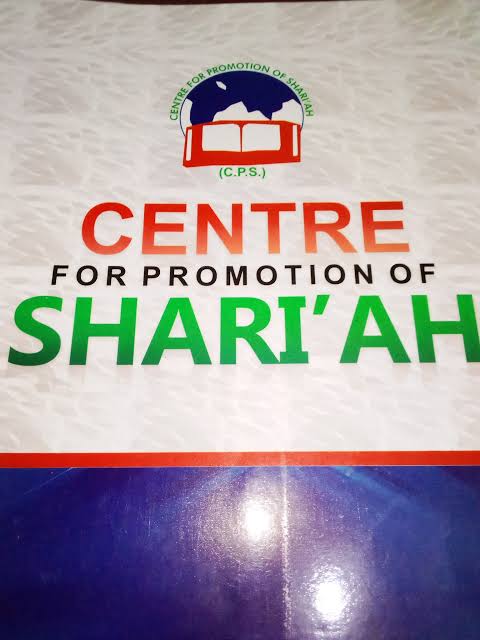
The Centre for Promotion of Shari’ah (CPS) expressed worries over the utterances of some prominent Christian political and religious leaders concerning the Muslim-Muslim ticket.

The centre was also dismayed by the numerous social, political and economic challenges bedevilling the Muslim Ummah in the country.

This was contained in a communiqué signed by Aminu Inuwa Muhammad, the centre National Coodinator, at the end of a one-day stakeholders meeting in Abuja.

It said, “Current developments in the political landscape of Nigeria have become a source of serious concern to CPS and the general Muslim Ummah in the country.

“The decision of some parties in the choice of presidential candidates and their respective running mates has attracted unguarded statements from some religious and political leaders, a development that has worsened the already tense political situation,” it added.

The centre also called on the Muslims to vote for the political parties and candidates who will ensure justice and protection of their rights and interests.

“Muslims in Nigeria need to properly organise themselves in order to take full advantage of their obvious demographic strength during the 2023 elections.

“Muslims need to pursue proactive measures towards countering the negative profiling in the media as well as the moral drift and mischief prevalent in the social media.”

We are still against Muslim-Muslim ticket, CAN reiterates

By Ahmad Deedat Zakari

The Christian Association of Nigeria, CAN, has disassociated the association from reports that it has reached a truce with the Presidential Candidate of the All Progressives Congress, APC, Bola Ahmad Tinubu, on his choice of a Muslim as his running mate.

In a statement released by CAN on Monday, September 5, 2022, CAN distanced itself from the reports that they have endorsed same-faith ticket.

CAN President, Archbishop Daniel Okoh, in a statement released on his behalf by his spokesperson, Luminous Jannamike, described the reports as untrue.

Part of the statement reads, “For the records, CAN took a position against the same-faith ticket imbroglio under the leadership of Rev. Dr Samson Ayokunle, its immediate past national president, and as a matter of fact, His Eminence Archbishop Daniel Okoh, stands on that same position.”

“While CAN may not agree with every decision taken by politicians and political parties, it respects their rights to reach conclusions on issues that affect their electoral fortunes so long as they accord with the provisions of the 1999 Constitution of the Federal Republic of Nigeria (as amended) and the Electoral Act (2022).”

Tinubu, a Muslim presidential candidate of the ruling party had chosen Senator Kashim Shettima, also a Muslim, as his running mate for the 2023 presidential election. This political decision has earned CAN’s outrage and multiple criticisms.

The problem is in the fine print

By Dr. Raji Bello

In media advertisements, the larger print that describes or promotes a product or service is often accompanied by a smaller or fine print which is less noticeable and often placed as a footnote. It usually contains the real truth about what is offered in the advert although consumers rarely read them.

Bola Tinubu has unveiled his running mate in Daura where he gave the nation a partial reading of the larger print of his advertisement. He said that he has found a competent and loyal individual to help him deliver good governance and that the person’s Muslim faith was merely accidental. It sounds good on the surface but we all know that his selection goes against the established convention of demonstrating religious and regional inclusivity on our presidential tickets. And we are all aware of the passionate debate that preceded the selection. It is clear that the main points articulated or implied by those who have insisted on a Muslim-Muslim ticket for the APC now constitutes the dark and sinister fine print in Tinubu’s advertisement of his new running mate.

There are three main postulates in the fine print which have underpinned Tinubu’s selection and which should make uncomfortable reading for anyone who is concerned about Nigeria’s future. They are:

  1. A Muslim from southern Nigeria is not Muslim enough to represent the nation’s Muslims on a presidential ticket and he must be paired with a northern Muslim before he could appeal to northern Muslim voters.
  2. Muslims in northern Nigeria will not vote for a ticket that has a northern Christian on it making any such ticket automatically unviable.
  3. A “competent and loyal” running mate for Tinubu could not be found among northern Christians and he had to go against the convention to find one from the northern Muslim community.

An acceptance of Tinubu’s selection automatically implies the acceptance and internalisation of this fine print, and this is where the problem lies. It means that we, as a nation, are on the road towards formalising and even institutionalising common prejudices and bigotry at the highest levels of our polity. Kaduna state APC is already at an advanced stage of entrenching its ominous Muslim-Muslim formula for governorship contest contrary to established convention. Is this the country that any of us would like to bequeath to his children and grandchildren? Should hard calculations regarding the chances of victory take precedence over the future survival of this country? Isn’t Nigeria more important than any politician’s ambition or chances of winning? The antecendent of Abiola’s Muslim-Muslim ticket that is often cited as justification is not applicable because it had enjoyed implied consent of the Christian community at that time, something that is absent at this time. There is a big difference between exclusion with consent and without it.

All human beings (especially the Nigerian kind) crave inclusivity. Muslims in Plateau, Taraba and some Southwestern states have also cried out for inclusivity; so it is not something that only Christians seek. In Plateau state, with its significant Muslim minority, there is a long-running problem with inclusivity. Contentious issues that concern the “settler” Muslim population in Jos North has led to the exclusion of native Muslim populations in other local government areas as well. In Taraba state, the recent nomination of Christian governorship candidates by both major parties has spiked communal tensions with one radical Muslim preacher even calling for jihad. This came against the background of complains of marginalisation in state government appointments by the Muslim community in the state. But the case for more inclusivity in the two states will surely be undermined if the bigoted fine print of Tinubu’s advertisement is institutionalised at the centre.

We are already on the slippery slope towards eventual implosion and victories for the national and Kaduna APC tickets in 2023 will most likely move us to the high-speed section of that slope.

Raji Bello writes from Yola, Adamawa State.