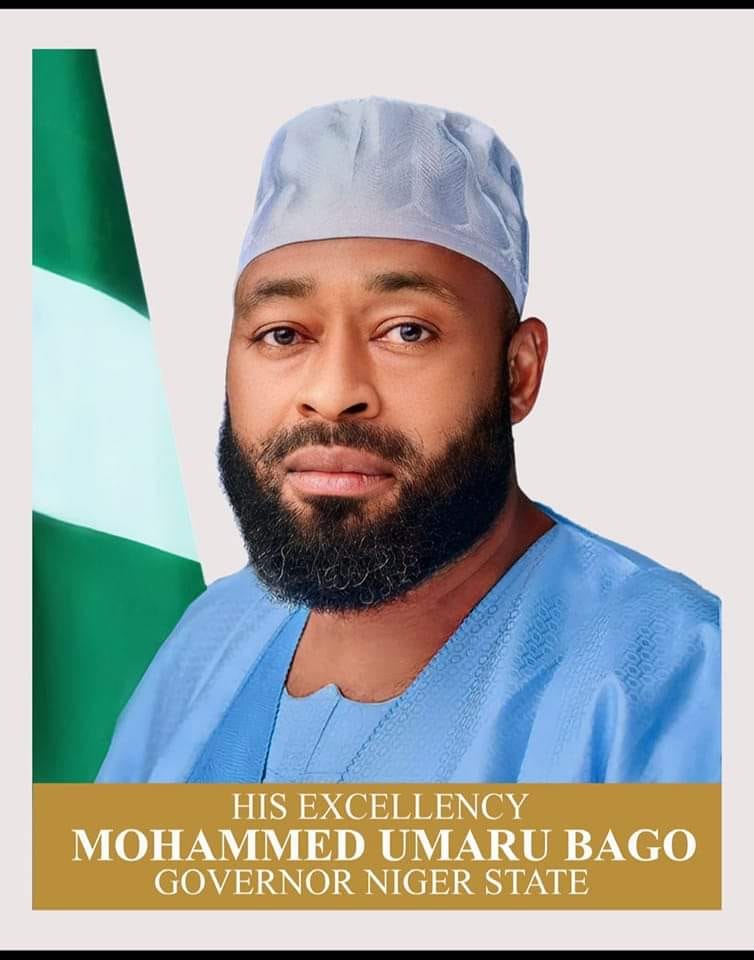
Mohammed Umar Bago

COP30 and Niger’s turn to shine on climate action

By Abdulsalam Mahmud

Across the world today, governments are recalibrating their economies to fit a green and sustainable future. From Brazil’s vast reforestation drive in the Amazon to Morocco’s solar revolution in Ouarzazate, nations are realising that the path to prosperity now runs through the low-carbon economy. 

The green transition has become more than an environmental necessity; it is the new global economy in the making — one that rewards innovation, resilience and foresight. For Africa, this transition is both an urgent challenge and a rare opportunity. 

As the continent most vulnerable to climate change, Africa stands to lose the most from inaction. Yet, it also possesses immense natural capital — sunlight, land, biodiversity and youthful human potential — that can power a sustainable transformation. Countries that act early and boldly will not only build resilience but also attract the finance, partnerships and technologies shaping the next century.

In this global context, Niger State, under the visionary leadership of His Excellency, Farmer Governor Mohammed Umaru Bago, has chosen to define its future differently. Over the last two years, the state has pursued one of the most ambitious subnational green economy transformations in Nigeria’s history. 

By linking local realities to global climate ambitions, Niger is steadily positioning itself as a hub for climate-smart agriculture, clean energy, and green industrial development. Governor Bago’s administration began by recognising an undeniable truth: climate change is not just an environmental issue but an economic one. 

Desertification, flooding and deforestation have long undermined livelihoods across the state. To confront these threats, Niger launched its “Green Economy Blueprint”, an integrated strategy designed to build resilience while creating green jobs and sustainable prosperity. From that moment, the state’s engagement with the world deepened. 

At COP28 in Dubai, Niger presented its blueprint before international partners, and by COP29 in Baku, it had become a recognisable name in subnational climate leadership. These appearances were not symbolic. They yielded partnerships that have since defined the core of Niger’s transition agenda.

One of the most transformative was the Memorandum of Understanding with Blue Carbon, a UAE-based company committed to developing sustainable climate solutions. The agreement to plant one billion economic trees across one million hectares in Niger State is among the largest private–public reforestation programmes on the African continent. 

Beyond ecological restoration, the initiative promises rural employment, carbon credit generation and long-term economic dividends from timber, fruit and non-timber forest products. Equally significant was the partnership with FutureCamp Germany, a globally renowned firm in carbon markets. This collaboration aims to unlock over ₦1 trillion in climate investments and build the technical framework for Niger’s carbon market activation.

For a subnational entity, this is pioneering work — one that could see Niger emerge as the first Nigerian state to fully participate in voluntary carbon trading, attracting new revenue streams while promoting transparency in climate finance. The MoU with the NNPC Limited extends Niger’s climate action to the energy frontier. 

It covers a suite of renewable and low-carbon projects, including a Greenfield hydroelectric power plant, mega solar parks for institutions and home solar systems targeting 250,000 households. The agreement also envisions an ethanol plant capable of producing 500 million litres annually, powered by crops cultivated across 100,000 hectares — a project that will create value chains, empower farmers and reduce dependence on fossil fuels.

Meanwhile, the collaboration with ECOWAS Bank for Development and the Environment for an $11 million Madalla Green Economic Market promises to turn commerce itself into a model of sustainability—blending trade, recycling, and renewable energy into a single modern ecosystem. Similarly, Niger’s partnership with the Turkish firm Direkci Camp is reshaping agribusiness through smart agriculture, irrigated soya cultivation and export-oriented value chains.

These developments are not isolated. They are coordinated through the Niger State Agency for Green Initiatives (NG-SAGI), the institutional anchor established two years ago and now led by Dr Habila Daniel Galadima. Beyond a doubt, NG-SAGI is more than a bureaucracy; it is a policy engine designed to harmonise the state’s environmental, agricultural, and energy programmes into a coherent climate-resilience framework.

Under this framework, Niger hosted Nigeria’s first-ever subnational Green Economy Summit in 2023, attracting investors and development partners from across the globe. The summit’s outcomes validated the Governor’s approach: local action can be globally relevant if guided by a clear vision and credible governance. The pledges and partnerships secured there continue to serve as foundations for current projects — from afforestation to renewable energy and sustainable agriculture.

Another milestone was the creation of the Niger State Agriculture Development Fund, with ₦3.5 billion in startup capital from the state and local governments. The fund is enabling 1,000 young farmers to access ₦1 million in grants, along with hectares of land for nurseries across all 25 local governments. This initiative has quietly triggered an agricultural mechanisation revolution, empowering a new generation to view farming as a business —and sustainability as a strategy.

Partnerships with the United Nations Industrial Development Organisation (UNIDO), the Energy Commission of Nigeria, and the Global World Energy Council are driving new frontiers in wind energy and industrial decarbonization. Niger’s growing alignment with UNIDO is already yielding plans for circular-economy models within the agro-processing free trade zone, blending job creation with environmental responsibility.

And while some of these projects are at different stages of implementation, the direction is unmistakable: Niger State is building a green identity anchored on innovation, inclusion and international collaboration. Even modest steps, like installing solar-powered streetlights across Minna, tell a larger story — one of a government deliberately moving toward a future powered by clean energy and driven by public safety and climate consciousness.

As the world prepares for COP30 in Brazil next month, Niger State’s delegation is expected to present these achievements not as isolated efforts, but as part of a coherent subnational climate narrative. It will highlight how a state, once challenged by deforestation and poverty, is now leading a structured march toward carbon neutrality and green prosperity. 

The focus this time will be on climate-smart agriculture, renewable energy expansion, youth inclusion, and green finance innovation—key pillars aligned with the global call for just and equitable transitions. At COP30, Niger’s voice will also speak for Nigeria’s broader subnational climate movement — demonstrating how state-level leadership can accelerate the nation’s commitments under the Paris Agreement. 

The lessons from Niger are clear: climate action must be localised, data-driven and economically beneficial. Beyond the conference halls of Brazil, Niger’s agenda carries deep human meaning. Every hectare reforested, every solar panel installed, every youth trained in sustainable agriculture is a statement of faith in a livable future. 

Climate action here is not an abstract ambition; it is a lived policy that transforms communities, restores hope and redefines governance as stewardship. If properly amplified, Niger’s story could inspire other states to view climate change not as a threat but as an opportunity—a chance to create industries, attract green finance, and protect generations unborn. 

That is the broader promise Governor Bago’s vision now represents: that sustainability is not an aspiration for rich nations alone, but a shared moral and developmental duty for all. As COP30 draws near, Niger’s turn to shine on climate action is not just about showcasing progress; it is about reinforcing possibility. 

For a state once defined by its rivers and farmlands, the journey toward a green economy may well become its most enduring legacy — one that proves that in Africa’s heartland, the seeds of a sustainable future are already being sown

Mahmud, Deputy Editor of PRNigeria and a rapporteur at the maiden Niger State Green Economy Summit, writes via  babasalam1989@gmail.com.

Niger governor orders crackdown on dreadlocks, imposes strict security measures

By Abdullahi Mukhtar Algasgaini

Governor Umar Bago has directed security agencies to arrest individuals with dreadlocks in Minna, the state capital, as part of a broader clampdown on crime.  

During a high-level security meeting on Tuesday, Governor Bago ordered that those with dreadlocks be arrested, forcibly shaved, and fined. “We will have zero tolerance for rascality. Anybody found with dreadlocks should be arrested, their hair barbed, and fined,” he declared.  

The governor also banned commercial motorcycles and tricycles from operating between 6 p.m. and 6 a.m., except in cases of medical emergencies. Additionally, he warned parents to caution their children, vowing a “fire-for-fire” approach to crime.  

Traditional rulers were instructed to document all residents in their domains, while houses harbouring criminals faced demolition. “Niger State is not for useless people,” Bago stated.

The measures aim to curb rising criminality and restore order in the state.

Niger State allocates N1.2 billion to celebrations despite security, developmental challenges

By Uzair Adam 

A review of Niger State’s budget performance report has revealed that the state government allocated N1.2 billion to celebrations and special occasions in the first nine months of 2024. 

This expenditure represents about 4% of the state’s internally generated revenue (IGR), which totalled N29.2 billion from January to September.

The spending has raised concerns, particularly as the state grapples with severe developmental and security issues. 

Recently, Niger State has faced violent attacks by bandits, resulting in the deaths of ten residents and the destruction of homes. 

Additionally, widespread flooding has devastated over 300 communities, with reports indicating eleven lives lost and 245 schools damaged.

Despite these challenges, the budget shows zero allocation for capital expenditures within the Ministry of Rural Development and the Rural Water and Sanitation Agency. 

This lack of investment comes at a time when a cholera outbreak has claimed sixteen lives and left 165 others infected. 

Due to the absence of potable water, many residents have resorted to using stagnant water sources shared with livestock.

In contrast, the Ministry of Basic and Secondary Education received only N196 million in capital funds, while the state’s basic healthcare sector saw no allocation for critical infrastructure improvements. 

Reports indicate that 71% of households in Niger lack adequate sanitary facilities, and half the population lacks access to clean drinking water, underscoring the pressing need for investment in essential services.

Amid claims of limited resources, Niger State’s spending priorities have sparked concern. 

The state currently has 1.6 million people living in poverty and an unemployment rate of 38.8%.

Cash token to corps members not right

By Abdullahi Muhammad Amir

Weeks ago, the media aides of the Niger state Governor, Umaru Mohammed Bago, were all over social media sharing stories and clips of the Governor’s promise of the sum of N200,000 to each corps member posted to the state under the Batch B stream one. 

It is commendable that the Governor allocated N5 billion to construct the National Youth Service Corps (NYSC) State Permanent Orientation Camp located at Paiko. The camp has been in a decrepit state for quite some time. 

According to the story, the Governor also gave the over one thousand corps members in batch B stream one a trailer of rice and 20 cattle as a state bonus. These are all good gestures.

However, I feel there are more important things to do than promise such a large amount of money to Corp members when the rate at which hunger escalates is beyond our imaginations, coupled with the insecurity that has bedevilled and still bedevils the state. 

We now live in a society with no other level than the grassroots. The government has failed to see or is negligent about people in need; they are the unseen hands in society, yet they are there and deserve to be seen.

I am not against what the governor did, but instead of nurturing a mature tree, it is better to turn a seed into a tree.  The government can create more opportunities for people in need to acquire skills that will make them productive and improve their living standards.

The government can increase facilities in hospitals and even set up business ventures for the indigenous youths who are wallowing in the street and unemployed. One can go on and on; there’s no shortage of what to do, and that is better than giving out cash tokens to youths, for which the federal government has already taken care of their feeding, welfare, and accommodation for this period. 

I rest my opinion on the point that Governor Bago is one of the best-performing governors so far, but I still feel they are not reaching people in need, and there are more ways to use revenue than giving it as a token.

Abdullahi Muhammad Amir wrote this article from Newgate University Minna, Niger State.

Governor Bago’s audacious demand

By Muhammad Danjuma Abubakar

For the grammar ‘lords’, the title of this piece is itself ‘audacious’ and might be erroneously perceived as undiplomatic, aggressive, and forceful.

 However, those well-schooled in journalism and those gifted with wisdom would look at it with a  different lens. This essence provokes readership and ignites curiosity about a crucial matter that demands attention.

Within the context of governance and leadership, audacious attributes often translate to courage and boldness when confronting challenges and addressing key issues head-on in ways that could better the lots of ordinary citizens.

This is in the DNA of all serious-governance-ready leaders who are always seen addressing the unaddressed and championing the cause of their people with unwavering determination.

Governor Bago’s recent statement aligns with these when he said that Niger State also deserves a 13% derivation formula that oil-producing states are being given monthly.

The governor stated this when the Federal Commissioner of the National Commission for Refugees, Migrants and Internally Displaced Persons, Tijjani Aliyu Ahmed, led other principal officials of the commission on a courtesy visit to the governor at the Government House, Minna, made headlines on various media platforms. This is an indication that such is a rare call, yet assertive.

A straightforward demand that those who governed the Power State(Niger State) before Bago couldn’t make, probably due to the ‘overwhelming’  vastness of the responsibilities of governance or because of the perceived unimportance attached to such kind of demand.

Yet, in this writer’s good knowledge, the plank of leadership embodies enormous responsibilities, a firm resolve to serve the people and a better platform for a powerful voice for the voiceless everyday citizens.

How, then, could a genuine demand that would better the lots of the electorates who stood to vote for their leaders skip the memories of successive governments in the state? 

This demand is indicative of the understanding of Niger State’s potentials and its vast contributions to Nigeria’s economy.

Of truth, during the last general governorship elections, my candidate was Khadijah Abdullahi-Iya (Audu Kwangila Bida) of the opposition All Progressives Grand Alliance (APGA), a symbol of motherhood. Khadijah Abdullahi Iya, a daughter of the first indigenous contractor in Northern Nigeria (Late Audu Kwangila Bida), also came prepared; toured all the nooks and crannies of the 25 local government areas of Niger State to campaign responsibly within the ambit of the electoral law.

Nonetheless, options of multiple choices are the cornerstone upon which democracy is hewn. The same democracy spoke, and Governor Bago now holds the reins. And it’s crucial to understand that he is the governor for all, and sincere support, prayers, and cooperation from all Nigerlites are essential for the success of the New Niger Agenda.

This is why no person of good conscience could agree less with Governor Bago, given the numerous contributions of the hydroelectric dams. From Power Supply, which power houses, businesses and institutions.

This call, when heeded and implemented, can enhance the infrastructural development of the host communities around dams and spur economic empowerment through the support of local businesses in the communities that would also translate to the economic well-being of the nation.

Governor Umar Bago’s demand echoes the need to ensure that host communities benefit substantially from the abovementioned benefits and that the people directly affected by the power production are active players in the nation’s progress.

As a matter of importance, in championing this cause, our national assembly members from Niger State and across Northern Nigeria should work assiduously with their fellow lawmakers and prove their mettle of strategic lobbying and networks to make this practicable. Sadly, the majority of the citizens do not know the enormous economic contributions of the hydroelectric dams to the country, which should warrant fair compensation through the 13% derivation.

In closing, Governor Bago’s demand is not only a call for more resources. Instead, it is a call for fairness and to recognise the significant roles that Hydroelectric power-producing states, notably Niger State, play in our nation’s economic growth and development.

 Therefore, in good conscience, whether a Nigerlite or not, we need to rally around Governor Bago’s cause because the demand for equity is lawful and a stride towards a more balanced and prosperous nation.

Muhammad Danjuma Abubakar writes from Minna, the Niger State capital and can be reached via muhammadcares4u@gmail.com.

First Class Graduates: A letter to Gov. Mohammed Umar Bago

Your Excellency Sir,  

We, the Niger State First Class Graduates (NSFCG), extend our warm regards and seek your invaluable support for employment opportunities and scholarships to further our education. This appeal is made with great respect and the utmost desire to contribute meaningfully to the growth and development of Niger State under your leadership.

It is with great pride and inspiration that I assume the role of the pioneer chairman of NSFCG, especially during a time when you have ascended to the esteemed position as one of the youngest governors in Nigeria. This convergence is both emotional and motivational, serving as a beacon of hope for young intellectuals of Niger State like us, who aspire to follow in your footsteps with the necessary guidance, mentorship, and empowerment from our esteemed leaders. Congratulations on your well-deserved election and inauguration as the Executive Governor of Niger State. We extend our best wishes and prayers for your success in the formidable tasks of leadership and governance guided by divine wisdom. 

The NSFCG comprises First Class Graduates who hail from various universities and are proud indigenes of Niger State. Our membership spans nearly all of the 25 Local Government Areas, united by a common goal – to fulfil the high expectations society places on those who achieve the pinnacle of academic excellence through hard work, exemplary character, sacrifice, determination, and brilliance. As role models, we understand the responsibility that accompanies our achievements, and we aspire to make positive contributions to our society, guided by the values we hold dear. 

We express our concern that the absence of support for some of us, despite our exceptional merits and academic achievements, may inadvertently diminish the inspiration, value, and faith in education, determination, and hard work that our society needs. It is our belief that individuals like us should not be left without the necessary support but rather should be empowered to serve as beacons of excellence, motivating others to follow in our footsteps. 

Recognizing the need to address this disparity and utilize our potential for the betterment of Niger State, the NSFCG has taken the initiative to raise awareness about our current predicament. We are keenly aware of the profound impact we could make in contributing to the growth and development of our state, inspiring the public to remain steadfast in their pursuit of education, lofty aspirations, and unwavering determination. 

In this context, we note the remarkable strides made by other states, such as Kano under the leadership of Former Governor Rabiu Kwankwaso, who championed human capital development through substantial investments in foreign scholarships for first-class graduates, alongside Governor Nasir Elrufa’i of Kaduna State who witnessed infrastructural advancements through championing Urban Renewal policy and Kashim Ibrahim Fellowship (KIF) for most brilliant and outstanding graduates in the state. Permit me, Your Excellency Sir, to say that it is this visionary approach that distinguishes leaders and leaves an indelible mark on society. 

We also commend the Talba Program, an initiative that provided gainful employment for numerous unemployed youths in Niger State, leaving a lasting legacy of empowerment and transformation for beneficiaries and their families alike. 

Your Excellency Sir, as esteemed leaders with a genuine passion for the betterment of our state, we appeal for the following: 

1. Consideration for employment opportunities within the Niger State Government for the approximately 90+ first-class graduates hailing from almost all of the 25 LGAs who are currently unemployed. Our collective skill set can contribute to filling existing job vacancies and enhancing the effectiveness of newly established ministries. 

2. Financial support or scholarships to facilitate our further education within Nigeria or abroad, thereby enabling us to acquire knowledge and expertise that can be channelled back to benefit our state. 

3. Mentorship and guidance from accomplished professionals, enabling us to evolve into exemplary citizens of whom Niger State can be justifiably proud. We aspire to possess the high level of skills and competency necessary to add significant value to our state and extend our positive impact beyond its borders. 

Your Excellency Sir, we hold steadfast belief in your dedication to uplift the youth, enhance human and infrastructural development, and curtail the challenges of crime and insecurity. By considering our appeal, you will not only empower a group of exceptional individuals but also sow the seeds for a more prosperous and vibrant future for Niger State and its citizens. 

With profound respect and anticipation, we remain committed to working diligently for the betterment of our beloved state.

Yours sincerely, 

Mukhtar Nasir, CPM        

Chairman, Niger State First-Class Graduates (NSFCG). He can be reached via nigerstatefcg@gmail.com.