Mali

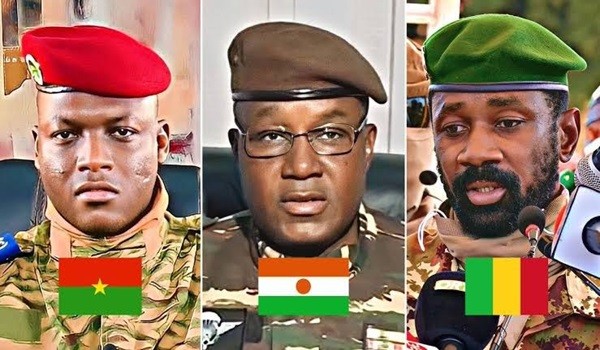
Burkina Faso criminalises homosexuality

By Muhammad Sulaiman

Burkina Faso’s military junta has unanimously passed a law criminalising homosexuality, imposing prison terms of up to five years in what rights groups describe as a major setback for civil liberties.

The legislation, part of sweeping reforms to family and citizenship laws, overturns decades of legal tolerance for same-sex relations. Until the junta seized power following two coups in 2022, homosexuality was not a crime in the West African nation.

The move places Burkina Faso among more than 30 African countries that outlaw same-sex relations. Neighbouring Mali enacted a comparable law in 2024, while Ghana and Uganda have also tightened restrictions in recent years, drawing sharp criticism from global human rights organisations.

Advocates warn the law risks fueling stigma and violence against LGBTQ+ communities already facing marginalisation. Critics say the measure reflects the junta’s growing authoritarianism and its willingness to curtail individual freedoms under the guise of traditional values.

D’Tigress clinch fifth straight afroBasket title, president Tinubu hails victory

By Abdullahi Mukhtar Algasgaini

Nigeria’s national women’s basketball team, D’Tigress, made history by securing their fifth consecutive FIBA Women’s AfroBasket championship after defeating Mali 78-64 in a thrilling final on Sunday night in Abidjan, Côte d’Ivoire.

President Bola Ahmed Tinubu praised the team for their exceptional skill, resilience, and teamwork, which led to their seventh continental title.

Despite a slow start in the match, the Coach Rena Wakama-led squad fought back to dominate and claim victory.

In a statement, President Tinubu commended the players for inspiring the nation and upholding Nigeria’s sporting excellence.

“Your superb performance has made Nigeria proud. Like the Super Falcons, you have shown the world the strength and talent of Nigerian women,” he said.

The President also applauded Coach Wakama and the Nigeria Basketball Federation for their dedication, assuring continued support as the team prepares for the FIBA Women’s World Cup qualifiers next year.

Tinubu expressed his eagerness to receive the team and the trophy in Abuja, wishing them a safe return.

The victory cements D’Tigress’ dominance in African basketball and reinforces Nigeria’s reputation as a powerhouse in women’s sports.

ECOWAS holds meeting in Ghana amid Niger, Mali and Burkina Faso withdrawal

By Anwar Usman

The Economic Community of West African States (ECOWAS) member states will meet in Ghana on Tuesday to discuss the withdrawal of Niger, Mali, and Burkina Faso.

The meeting will take two days, Tuesday and Wednesday.

In a statement released on Tuesday, the bloc said member states will discuss the modalities of the countries’ withdrawal and its implications for ECOWAS agencies in the countries.

The bloc also said it would “set up a structure to facilitate discussions on these modalities with each of the three countries.”

Furthermore, the ECOWAS member state will discuss its relationship with the three countries in Accra today.

“The session is being held to deliberate on the reasons for the withdrawal of Burkina Faso, Mali, and Niger from the regional bloc.

The statement further revealed that “Key items on the agenda include the modalities of the withdrawal process and the implications for ECOWAS Institutions and Agencies operating in the three countries. The session will also address other related matters of regional importance”.

Three weeks ago, the junta-led states, under the Alliance of Sahel States, imposed a 0.5 per cent import duty on goods from ECOWAS.

The levy applies to all goods from ECOWAS countries entering any of the three nations, except for humanitarian aid.

The policy countered ECOWAS’s intention of ensuring free movement of goods between its members and the AES countries despite their official exit from the bloc in January.

ECOWAS responds as alliance of Sahel States unveils new passport

By Sabiu Abdullahi

The Economic Community of West African States (ECOWAS) has announced that the exit of Burkina Faso, Mali, and Niger from the regional bloc officially took effect on Wednesday, January 29, 2025.

One year ago, the three Sahel nations declared their withdrawal from ECOWAS, and now they have taken a further step by introducing a common passport under the Alliance of Sahel States (ASS).

ECOWAS, however, noted that it remains open to dialogue “for the spirit of regional solidarity.”

Despite the introduction of the new passport, ECOWAS has urged authorities within and outside its member states to continue recognizing the ECOWAS-branded national passports and identity cards of citizens from Burkina Faso, Mali, and Niger.

The bloc also called for the continuation of visa-free movement, residency, and trade benefits for these countries “until further notice.”

The new Sahel passport is expected to become operational from January 29, replacing the ECOWAS passport for citizens of the three countries.

However, authorities in the Sahel states have assured that existing ECOWAS passports will remain valid until their expiration dates.On January 28, hundreds of pro-junta demonstrators in Burkina Faso, Mali, and Niger took to the streets to express support for their governments’ decision to leave ECOWAS.

In Niger, military officials led thousands of supporters to the capital, Niamey, where they chanted slogans critical of French President Emmanuel Macron and other regional leaders.

A similar demonstration occurred in Burkina Faso, where Prime Minister Rimtalba Jean-Emmanuel Ouedraogo and other government officials joined thousands of citizens in a rally in Ouagadougou.

Although no major protests were reported in Mali, observers expect further developments in the coming days.

The departure of these three countries from ECOWAS marks a significant shift in regional dynamics.

Experts warn that the move could disrupt regional integration, complicate trade, and increase travel restrictions.

“Now, the three countries will lose the duty-free trade benefits that ECOWAS members enjoy,” one analyst noted, adding that the landlocked nations of Mali, Burkina Faso, and Niger may face higher costs for accessing coastal ports in West African countries like Nigeria, Benin, and Ghana.

According to ECOWAS Trade Information Systems (ECOTIS), Mali recorded $3.91 billion in exports and $6.45 billion in imports in 2022, while Burkina Faso had $4.55 billion in exports and $5.63 billion in imports.

Niger, with a smaller economy, exported goods worth $446.14 million while importing $3.79 billion worth of goods.

With their departure from ECOWAS, these nations may face additional tariffs and trade barriers.ECOWAS introduced its regional passport in December 2000, allowing visa-free movement across member states and granting citizens the right to stay in another member country for up to three months.

With the withdrawal of Mali, Niger, and Burkina Faso, travel restrictions may now come into effect, especially for citizens of these countries and West Africans wishing to visit the Sahel region.

The bloc has given the three countries a six-month grace period, extending until July 2025, to reconsider their decision in case they wish to rejoin.

Meanwhile, ECOWAS has put structures in place to facilitate discussions with the departing nations to minimize disruptions to lives and businesses during the transition period.

Military junta in Mali appoints general to replace removed civilian PM

By Anwar Usman

The military junta in mali has appointed a military officer Major General Abdoulaye Maiga on Thursday as the new prime minister, a day after sacking civilian premier Choguel Kokalla Maiga following his criticism of the military leadership.

Abdoulaye Maiga previously served as spokesperson yo the government.

The West African nation, plagued by jihadist and separatist violence, has been under military rule since successive coups in 2020 and 2021.

“Major General Abdoulaye Maiga is appointed prime minister,” read a decree issued by junta leader General Assimi Goïta and announced by the presidency’s secretary-general on the state television station ORTM.

Although Abdoulaye Maiga was not part of the initial group of colonels who overthrew the civilian president in August 2020, he quickly related himself with them and has since been promoted to general.

His appointment to replace the civilian prime minister appears to strengthen the military’s grip on power.On Saturday, Choguel Kokalla Maiga publicly criticised the lack of transparency regarding the transition to civilian rule.

In June 2022, the junta pledged to hold elections and transfer power to a civilian government by the end of March 2024.

However, elections have since been postponed indefinitely.

The decision of Burkina Faso, Mali, and Niger on opting out of ECOWAS

By Tijani Abiola

Burkina Faso is a landlocked country located in West Africa. It shares boundaries with six countries: Mali to the north, Niger to the east, Benin to the southeast, Togo and Ghana to the south, and Côte d’Ivoire to the southwest. As of the last knowledge update in January 2022, the total population of Burkina Faso was 21 million people. The country’s official language is French, which is spoken alongside different indigenous languages.

Economically, Burkina Faso is mainly an agricultural country, though there is also a very strong presence of gold mining. However, this country is troubled by poverty, drought, and political instability.

Mali, on the other hand, also in West Africa, shares borders with Algeria to the north, Niger to the east, Burkina Faso and Ivory Coast to the south, Guinea to the southwest and Senegal and Mauritania to the west, with a population of about 20 million people. The official language is French, and Bambara is also widely spoken.

Political instability, ethnic tension, and conflicts with extremist groups positioned mostly in the northern parts of the country have also challenged Mali in the years past. It lies in the region bordered by Libya to the northeast, Chad to the east, Nigeria and Benin to the south, Burkina Faso and Mali to the west, and Algeria to the northwest. It has a population of about 24 million people. 

The official language is French, and many indigenous languages are spoken. Niger is largely an agrarian society, with subsistence farming forming a very critical part of the economy. Uranium mining is also a very important industry. The country faces challenges such as poverty, desertification, and food insecurity.

All three have diverse cultures and histories, and all have unique challenges. The Sahel region, including the northern parts of Burkina Faso, Mali, and Niger, has seen a particular outbreak of security issues, including conflicts with jihadist groups and ethnic tensions.

Meanwhile, in the years 2020, 2021 and 2023 in Mali, Burkina Faso and Niger, respectively, there were successful military coups which still reign to date.  The Economic Community of West African States (ECOWAS) turned an eye to their decision and style of new leadership of the bloc’s member-states. Efforts towards national reconciliation have been in vain. 

The Economic Community of West African States is a regional political and economic union comprising fifteen countries located in West Africa, of which the above-mentioned Countries are members.

Burkina Faso, Mali, and the Niger Republic have all in recent times expressed intention to part ways with ECOWAS bloc bodies. That decision has been a climax and a very big bottleneck for ECOWAS, as the trio of these countries are some of the most resourceful countries which shoulder a huge part of the yearly ECOWAS budget and yet one of the poorest countries on the African continent. After their decision to leave the West African regional bloc of ECOWAS, what effect will this have on ECOWAS?

This country represents almost 20% of the ECOWAS population – that is 66 million out of 420 million people. As mentioned above, cotton, gold, and uranium ore are precious resources for Burkina Faso, Mali, and Niger, respectively.

Is ECOWAS blind to these facts?

I will say no, but will they have intensified negotiations before now? Yes. Their belief may be that they will soon get tired and comply or call for help after being deprived of some amenities benefited from nearby ECOWAS countries. Yet, they still remain adamant about their decision. For such countries to make such decisions looks like a threat to other ECOWAS countries.

ECOWAS should know this is no joke. The pumping question is: what if they excel in their decisions and their leaders are able to change their countries and become the best in years to come? What will happen to other ECOWAS countries whose corruption still influences their development?

Is dumping ECOWAS best for Burkina Faso, Mali, and the Niger Republic?

This decision will not only restrict their access to large international markets for foreign exchange and development provided by ECOWAS but also international partnerships that help in country development. Also, the free visa for all ECOWAS states is another big opportunity they might be deprived of from ECOWAS countries.

Though their decision has not been formally in writing to ECOWAS, they may be nursing second thoughts in the decision or calling for attention to negotiation stylishly. The poking questions are;

Is this the best idea for these three countries?

Will they stand without ECOWAS?

Won’t they be a threat to other ECOWAS countries if their decision is granted?

Does ECOWAS need to let them be?

Africa is a blessed continent with all its natural resources, but a continent with the highest rate of poverty and a corrupt leadership style needs to be resolved.

Tijani Abiola wrote via abiolatijani001@gmail.com.

Iranian president praises African nations’ stand against ‘colonialism’

By Muhammadu Sabiu 

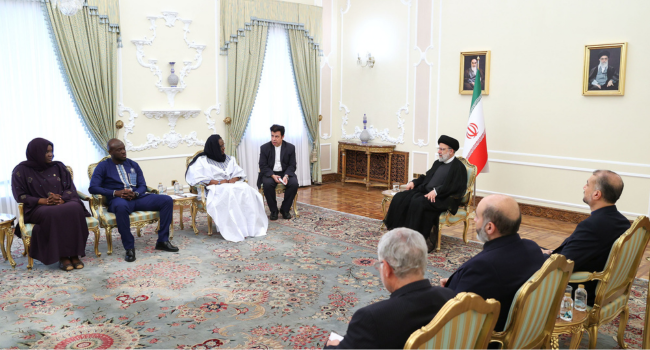
Iranian President Ebrahim Raisi applauded the steadfast resistance of African countries against colonialism and terrorism during a diplomatic meeting with Burkina Faso’s Foreign Minister Olivia Rouamba on Monday. 

While not explicitly naming France, President Raisi’s remarks were seen as a recognition of African nations’ efforts to assert their sovereignty. 

Burkina Faso and Mali, both currently under military junta rule, have notably severed military ties with France, their former colonial ruler, in favour of bolstering relations with Russia. 

Niger, which experienced a military junta takeover in July, has been marked by widespread protests demanding the withdrawal of French troops, harking back to its colonial history. 

In his meeting with Foreign Minister Rouamba, President Raisi commended the African countries for their resilience and resolve. He described their stance as a “sign of vigilance and awakening,” underscoring the importance of nations safeguarding their independence. 

The Iranian presidency’s official website published a statement quoting President Raisi’s words of appreciation for African countries’ principled stand against colonialism and terrorism. 

While diplomatic relations between Iran and the African nations were not the primary focus of the meeting, the implicit message of solidarity resonated with those advocating for self-determination and autonomy in the face of historical colonial ties. 

This meeting marks another instance of international relations being influenced by the evolving geopolitical landscape as African nations navigate their path towards sovereignty and redefine their partnerships on the global stage.

Nigerien coup amidst ECOWAS diplomatic impotence

By Muhammad Muzdaleefa

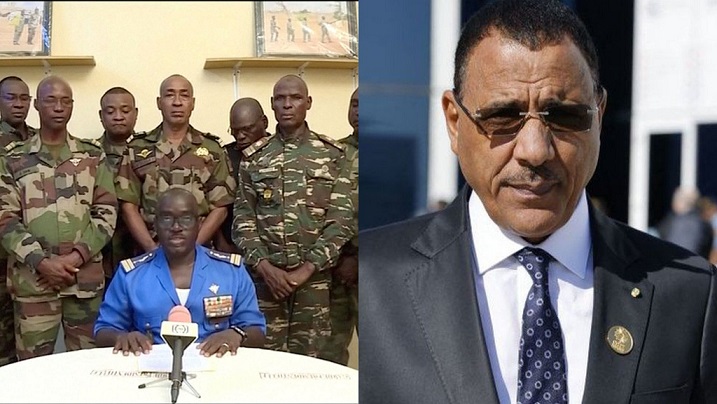
The resurgence of military coups is thwarting Africa’s democratic journey. The recent coup d’état in Niger, which saw the ousting of President Mohamed Bazoum by the military, has not only shaken the stability of the country but has also laid bare the divisions and weaknesses within the Economic Community of West African States (ECOWAS). It has also exposed a wide cleavage between citizens of member countries and their governments on ECOWAS policy on Niger. 

As far as one can read the mood without the aid of a proper poll, support for military action against Niger would probably be less than 10 per cent across the region. In Niger, news footage suggests that the public is more solidly against ECOWAS military intervention. Somewhat or otherwise, the mainstream media and social media comments show deep scepticism about ECOWAS’ direction and intentions. Many, if not most, commentators believe that the West, especially France and the US, are behind the ECOWAS drive towards a military solution in Niger.

This has led to resentment, especially in the Francophone countries, where the citizens point out that ECOWAS has been silent at draconian French exploitation of their resources continuing long after independence.

One of the glaring weaknesses exhibited by ECOWAS in response to the Niger coup is its lack of unity and consistency among member states.

While some countries strongly condemned the coup and called for a swift return to civilian rule, others remained relatively silent, seemingly hesitant to take a decisive stance. This lack of a united front weakens the regional body’s influence and diminishes its ability to address such crises effectively.

Another aspect that has been brought to the forefront is ECOWAS’s flawed diplomatic approach. Despite constituting a mediation committee to engage with the coup leaders and negotiate a resolution, ECOWAS failed to halt the coup or achieve a viable solution. The committee’s lack of leverage and the limited consequences the perpetrator’s face have raised questions about the efficacy of diplomatic efforts and the regional body’s influence over military leaders.

ECOWAS has often resorted to imposing economic sanctions to exert pressure and resolve political crises. However, the effectiveness of such measures in addressing coups has been questionable. The reliance on economic sanctions has a limited impact, particularly in countries with weak economies and high poverty levels like Niger. 

The recent example of Mali, where sanctions failed to bring about meaningful change after a military coup, highlights the need a more comprehensive and proactive approach by ECOWAS. The situation has become even grimmer, with Russia increasingly stepping in to provide short-term assistance to cushion the effects of the sanctions against coup countries, which appear to have exchanged the influence of France with that of Russia.

What is worse is the fact that the Niger crisis has also highlighted ECOWAS’s inability to identify and address underlying issues that lead to political instability. This failure to take pre-emptive measures further exposes weaknesses within the organisation. Since ECOWAS gave an ultimatum to Niger, citizens in ECOWAS countries have voiced their disapproval against any military action, mainly because ECOWAS lacks the moral authority to send troops into Niger.

Many commentators have pointed out failure within member countries as a significant contributing factor undermining ECOWAS’s intentions. Some West African governments are dynasties, flawed elections taint others, while some have repressed their countries’ media and opposition parties. 

What principles does an ECOWAS military intervention in Niger seek to establish, and are they all practised in the countries that will impose them by force of arms in Niger? If democracy is essential to ECOWAS, it has to ensure that the complete panoply of democratic principles is firmly in place in all member countries. It cannot pick and choose. Therefore, to safeguard democracy, ECOWAS should invest more proactively in conflict prevention mechanisms, addressing socio-economic disparities, and promoting good governance across member states. 

Timely intervention in electoral processes, strengthening democratic institutions, and promoting dialogue are crucial steps towards avoiding crises before they occur. In addition, ECOWAS must develop a robust apparatus to communicate with citizens across the entire subcontinent and carry out programmes that promote dialogue between citizens and between citizens and governments. 

Does public opposition to military action signal a higher tolerance for military coups in West Africa? That is a difficult question, but there is no doubt that people have generally become disenchanted with the Western democratic model, given that poverty and lack of opportunity continue to be entrenched. At the same time, politicians are seen as opportunists who are in it for themselves. However, none of this can be interpreted to mean that people in West Africa prefer military regimes.

Significantly, however, the coup in Niger has exposed the leadership vacuum within ECOWAS. While the organisation has made progress in promoting regional integration and economic development, its political leadership role has been less pronounced. ECOWAS needs robust leadership capable of decisive action in times of crisis, backed by a clear framework and mechanisms that discourage power grabs and protect democratic systems.

The coup in Niger has exposed the weaknesses, divisions, and inconsistencies within ECOWAS. The regional body’s lack of unity, ineffective diplomacy, reliance on economic sanctions, inadequate pre-emptive measures, and leadership vacuum have hindered its ability to respond effectively to political instability. The regional body’s response to the coup has showcased its challenges in effectively addressing political crises, highlighting the need for a more cohesive and proactive approach to preserving democracy in the region.

To strengthen ECOWAS and protect democracy in the region, there is an urgent need for member states to forge a unified front, strengthen conflict prevention mechanisms, explore diplomatic alternatives, and foster strong leadership committed to preserving democratic values. Without addressing these fundamental issues, the fragile democratic gains achieved in West Africa may remain at risk, allowing further regional divisions and challenges to promote peace and stability.

Muzdaleefa wrote from Kaduna via mohammedadamu736@gmail.com.

Niger Republic, Bazoum and France

By Muhammad Muhammad Salisu

In case you don’t know, the coup d’etat in the Niger Republic is not about the standard of living, as Nigerians are insinuating. It’s about France, Mali and the radical revolution in French West Africa.

French-speaking West African countries are beginning to divorce themselves from French neo-colonialism. The recent developments in Mali testify to this. The Russian mercenary Wagner Private Military Company’s persistent presence is a direct threat to French interests in West Africa and the US, EU and NATO, who are currently fighting Russia by proxy in Ukraine.

To the French and other Western powers, Russia is expanding its influence to Africa, which is a slap on their Caucasian faces. Moreover, Mali has now dropped the French language as its official language. France is not happy with this. To all these, even if President Mohamed Bazoum does not support the Malian radicals, France is afraid it may spread to Niger.

Another problem France is facing is Nigeria. Nigeria has always been a thorn in the flesh of France. France is not happy with Nigerian wealth and is openly jealous. It is not news that France supported the secessionists in the Nigerian civil war fought in the 1960s. And also, it is not news that the insecurity issues Nigeria is facing now, fingers are pointed at France as the prime culprit, at least from the illegal flow of weapons into Nigeria. Bazoum is lately trying to strengthen ties with Nigeria. This makes France more and more afraid.

History will never forget the fate of the late President of Niger, Ibrahim Baare Mainasara. His close ties with Nigeria under General Sani Abacha, who was also viewed in the West as an enemy, led to his overthrow and his subsequent tragic end.

This is the actual reason behind the coup d’etat in Niger. Niger has been an impoverished nation, and the West has no interest in the poverty-stricken populace there. All they are after is their political interests there. Some Nigerians are calling for similar development in Nigeria. It will not augur well should it happen. The West is more comfortable with the insecurity herein than a change in leadership.

Muhammad Muhammad Salisu can be contacted via muhdibnmuhd@gmail.com.