[OPINION]: The Confidence to Stand, By Maji Bappa Maina
By Maji Bappa Maina
There are moments in a child’s education that do not appear on a school report.
A child walks onto a stage.
Hundreds of eyes turn towards them.
A word is pronounced.
For a few seconds, everything becomes quiet.
Then the child speaks.
That moment may last only seconds, but the confidence gained from it can last for years.
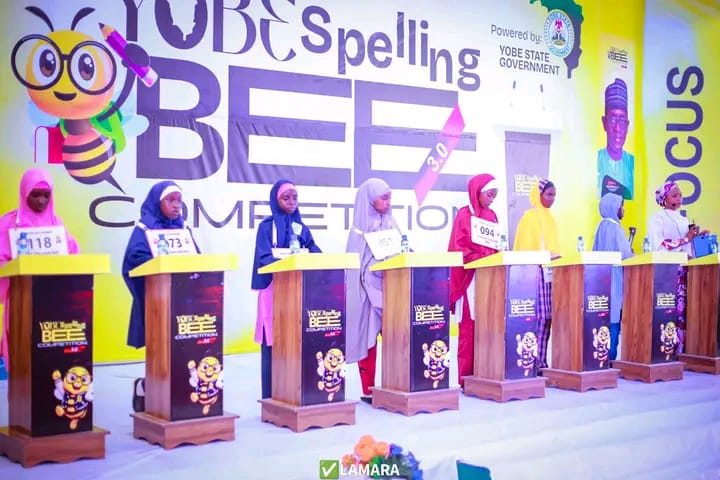
This is one of the reasons the recently concluded 3rd Yobe Spelling Bee Competition deserves more attention than the applause surrounding the event.
Students from across Yobe’s 17 Local Government Areas were brought together to learn, compete and test themselves in an environment beyond the ordinary classroom.
They had to prepare.
They had to listen.
They had to think under pressure.
And, most importantly, they had to stand up and believe that they could do it.
That experience matters.
A good education system should produce students who can remember what they have been taught. But it should also produce young people who are prepared to stand before others, express themselves and face challenges without fear.
This is where programmes such as the Spelling Bee quietly contribute to educational development.
They create healthy competition among schools.
They encourage students to read beyond examinations.
They give teachers another platform to identify talent.
They expose young people to peers from different parts of the State.
And they create memories that can shape how students see their own abilities.
The wider significance is even more important for Yobe.
A state cannot build its future entirely through physical infrastructure. It must also build the confidence, knowledge and capacity of the generation that will eventually inherit those structures.
This is why the support of the Mai Mala Buni Administration for educational initiatives that bring young people forward deserves recognition.
I also commend Dr. Mohammed Goje, Secretary to the State Government, and the organisers, teachers, schools and partners whose efforts helped bring the competition together.
The real success of such a programme may not be measured only by the names of those who carried away prizes.
It may be found in the student who discovered a new confidence.
In the teacher who discovered a promising talent.
In the child who returned home believing that perhaps the world is larger than he or she had imagined.
Today, they are spelling words.
Tomorrow, some of them may be spelling out new possibilities for Yobe.
That is why supporting young minds is one of the quietest, and most consequential, ways of building a State.
Maji Bappa Maina is a Political Writer, PhD Researcher at Voice of Development, Leadership & Public Insight.