Loan

FG seeks fresh $1.75bn World Bank loan

By Muhammad Abubakar

The Federal Government of Nigeria has approached the World Bank for a fresh loan of $1.75 billion to support its economic reform agenda.

Minister of Finance and Coordinating Minister of the Economy, Wale Edun, disclosed that the facility would help cushion the impact of recent policy adjustments, including the removal of fuel subsidy and the unification of the exchange rate, which have placed significant strain on households and businesses.

He explained that the request, if approved, would provide critical budgetary support, strengthen fiscal sustainability, and help address the nation’s infrastructural and developmental challenges.

Nigeria’s President, Bola Ahmed Tinubu, has repeatedly defended his administration’s reforms, insisting they are necessary to revive the economy and attract foreign investment.

World Bank Country Director for Nigeria, Shubham Chaudhuri, confirmed that discussions are ongoing, although no official approval has been given yet.

Nigeria, Africa’s largest economy, has in recent years relied on multilateral loans to bridge financing gaps amid rising debt obligations and dwindling revenues.

Kano government dismisses allegation of new $6.6m loan as politically motivated

By Uzair Adam 

The Kano State Government has refuted claims that it secured a new external loan of $6.6 million under the current New Nigeria People’s Party (NNPP) administration.

In a statement issued on Thursday, the Director General of the State Public Debt Management Office, Hamisu Sadi Ali, described the allegation as false and politically driven.

The claim was made by a group known as the APC Patriotic Volunteers, which alleged that Governor Abba Kabir Yusuf’s government had taken a fresh loan within two years of assuming office—an allegation earlier reported by the Daily Nigerian on June 11, 2025.

Sadi Ali dismissed the report, insisting that the present administration had not contracted any new domestic or external loans since coming into power.

“Since the inception of the NNPP-led administration till today, the Kano State Government under the leadership of His Excellency Alhaji Abba Kabir Yusuf has not taken a single fresh loan,” he said.

He clarified that the government is still servicing loans inherited from the previous All Progressives Congress (APC) administration, which he described as a “wasted” eight-year period under former Governor Abdullahi Umar Ganduje.

The debt office boss also criticised Usman Alhaji, the leader of the APC group and former Secretary to the State Government, questioning his understanding of the 2021 law that established the State Public Debt Management Office—a law signed during the APC administration.

“If he claims ignorance of the law, we must remind him of Section 4(b), which empowers the State Debt Management Office to borrow on behalf of the government—under strict procedures and documentation,” Sadi Ali said.

He challenged the group to provide verifiable evidence from the Federal Debt Management Office in Abuja to back their claims.

“They should provide the name of the creditor, the subsidiary loan agreement, the purpose of the loan, the amortisation schedule, and whether it is a multilateral or bilateral loan,” he added.

Sadi Ali emphasised that the public can now differentiate between facts and political propaganda, adding that Governor Yusuf remains committed to fulfilling his mandate without being distracted by baseless accusations.

Chinese bank approves €245m loan for Kano-Kaduna railway project

By Uzair Adam 

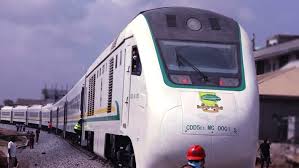
The China Development Bank (CDB) has approved a €245 million ($254.76 million) loan to fund the Kano-Kaduna railway project in Nigeria.  

In a statement released on its official website on Tuesday, the bank confirmed that the financial package is intended to ensure the smooth continuation of the railway’s construction. 

The statement read, “China Development Bank has recently granted a loan of €245 million ($254.76 million) to the Kano-Kaduna railway project in Nigeria, providing financial support for the smooth progress of the project.”  

The 203-kilometre standard-gauge railway line will connect Kano, a major commercial hub in northern Nigeria, to the federal capital, Abuja. 

Once completed, the railway will enhance regional connectivity, offering residents a safer and more efficient mode of transportation.  

In addition to improving mobility, the project is expected to drive economic growth by promoting industrial development along its corridor. 

It will also generate significant employment opportunities during its construction and subsequent operations.  

The Kano-Kaduna railway is recognized as a key cooperation project under the Third Belt and Road Forum for International Cooperation. Construction is being executed by the China Civil Engineering Construction Corporation, with financing from the CDB.  

Previously, the project was slated for funding by the China Exim Bank, which later withdrew its financial commitment. The CDB subsequently stepped in as the new financier.  

The bank reaffirmed its commitment to collaborating closely with the Nigerian government to ensure timely disbursement of funds and effective management of subsequent project phases.  

“Going forward, [the CDB] will closely coordinate with Nigerian partners to ensure the smooth disbursement of subsequent loans and effective post-loan management,” the statement added.  

President Bola Tinubu had earlier assured Nigerians that the broader Ibadan-Abuja-Kaduna-Kano railway project would be completed satisfactorily. 

The Federal Government has allocated N44.4 billion this year to complete the Abuja-Kaduna Railway project, the Lagos-Ibadan railway, and other rail infrastructure initiatives.  

Meanwhile, the Foreign Minister of China, Wang Yi, is expected in Abuja on Wednesday for an official visit. 

During his stay, Yi, a member of the Political Bureau of the Communist Party of China, will engage in discussions to further strengthen bilateral relations between Nigeria and China.

CBN suspends new loan applications under Development Finance Intervention programme

By Sabiu Abdullahi

The Central Bank of Nigeria (CBN) has announced the suspension of new loan applications under its Intervention Program.

The decision, conveyed through a circular titled “Suspension of Acceptance of New Applications under the Existing Central Bank of Nigeria, CBN Development Finance Intervention Programme,” was addressed to the Chief Executives of banks. 

Sa’ad Hamidu, the Acting Director of the Development Finance Department, signed the circular, signalling a strategic shift in the bank’s operational focus.

This suspension marks a departure from the previous central bank’s emphasis on development finance intervention funds. 

Simultaneously, the CBN has assigned commercial banks the task of recovering outstanding loans issued under these now-suspended programs.

This move raises questions about the central bank’s future approach to economic development and the role of commercial banks in facilitating financial interventions. 

The financial community awaits further details and clarification from the CBN regarding the rationale behind this decision and the anticipated impacts on economic development initiatives.

Student Loans: Good or bad?

By Kasim Isa Muhammad

In 2016, Femi Gbajabiamila, the immediate former Speaker of the 9th House of Representatives, took a bold step by introducing a bill to address the financial challenges faced by students in higher education institutions nationwide. The proposed legislation, known as the Student Loan Act, sought to provide students with access to loans from the federal government to alleviate the burden of educational expenses. After its initial introduction, the bill was later reintroduced in 2019. However, when it resurfaced in 2022, it sparked a heated debate within the National Assembly, with members expressing divergent views.

The revival of the Act triggered intense discussions and disagreements among the members of the National Assembly. On one side, some legislators strongly supported the motion, citing the potential benefits of student loans for expanding access to education and reducing financial barriers. Proponents of the bill argued that it would provide equal opportunities for students from various socio-economic backgrounds, enabling them to pursue higher education without financial constraints.

Lo and behold! On June 12, 2023, President Bola Ahmed Tinubu signed the Student Loan Bill into law, demonstrating his administration’s commitment to strengthening the country’s educational sector.

Although concerns have been raised regarding the extent of student access to these loans, considering the persistently high rate of unemployment afflicting the country, One of the key considerations surrounding the implementation of the Student Loan Act is the number of students who will benefit from the financial assistance, as it remains unclear how many students will qualify for and receive loans.

However, some suggested that providing massive job opportunities for graduates would be a more practical approach than granting them loans. This sentiment is echoed by those who believe most graduates possess the skills but lack the capital to enhance their businesses. For instance, providing them N500,000 to start a business could be a viable alternative.

Whoa! The current provision stating that loan repayment begins two years after the completion of participation in the NYSC programme is being questioned. The government should reassess this strategy with graduates struggling to secure employment for up to eight years or longer. Given the prevailing circumstances, it is doubtful that the debt collectors will be able to repay their loans within such a short timeframe.

I was also taken aback when I discovered a particular element of the loan procedure: defaulters risk being fined N500,000 or even being incarcerated for up to two years. This revelation left me astounded and raised an essential question in my mind. Is it, not a grave injustice to punish our helpless teeming youths who are already battling to secure jobs with imprisonment simply because they cannot repay their loans?

The fundamental component of the loan process that exceedingly caught my attention is the requirement for students to provide at least two guarantors who must meet specific criteria, such as being a civil servant of at least level 12, a lawyer with at least ten years of post-call experience, a judicial officer, or a justice of the peace. This provision raises concerns, particularly for individuals residing in rural areas or those without any relatives in government positions who could serve as guarantors.

Since the loan programme intends to support the financially disadvantaged, the requirement of guarantors with specific professional backgrounds seems to create a barrier for those who lack connections with people in high positions in the government. 

Another facet of the Act that appears contradictory is the provision that a student’s family must have an income of less than N500,000 to qualify for the loan. This condition seems to limit the accessibility of the loan to only a select few people, raising questions about the effectiveness and inclusivity of the loan act.

Setting an income threshold may have been intended to target students with financial constraints, ensuring that those with the greatest financial need receive the necessary support. But the specific income limit of N500,000 may inadvertently exclude many students who could benefit from the loan.

Considering the drawbacks of the Loan Act, it becomes evident that the federal government should augment its efforts to fund tertiary institutions across the country. By so doing, education can become more affordable and accessible to a broader range of students.

Likewise, the recent increase in school fees at several institutions, including UNIMAID and BUK in the northern part of the country, highlights the pressing need for government intervention. While providing student loans is one possible solution, addressing the underlying issue of inadequate budgets for public universities is essential. By allocating sufficient funds to 109 public universities—50 federal and 59 state institutions—education can become more affordable for students.

The United Nations Educational, Scientific, and Cultural Organisation (UNESCO) recommended that developing nations give up to 15–20 per cent of their annual budget to public education. Nigeria’s allocation to the Education sector has not been meeting the UNESCO standard.

Dataphyte, a media research and data analytics organisation aiming to deploy data tools and technology for Nigeria’s socio-economic development, stated that the education budget analysis between 2016 and 2022 shows that the education sector has not received the recommended 15%.

This has indicated that the government at all levels should prioritise funding for education as a necessary step before implementing student loans. By addressing infrastructure deficiencies, making education affordable for underprivileged students, and providing needed resources, the government can create an environment where all students have equal opportunities to succeed. Investing in education will yield long-term benefits for people and society, fostering development and ensuring a brighter future for future generations.

Kasim Isa Muhammad is an investigative journalist who contributes as a full-time journalist at both Kanempress and The Citizen Reports newspapers.
Senator Ndube to drag Buhari to court over $800 million loan plan

By Uzair Adam Imam

There are still debates on the Presidency`s plan to collect $800 million loan from the World Bank. The money is said to be used to succour to the poorest of the poor upon removal of the petrol subsidy in the country.

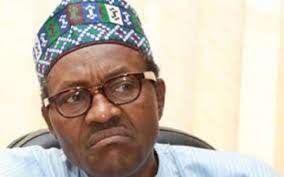
President Muhammadu Buhari had sought the Senates approval to collect the debt few days to leave office as the President of Nigeria.

Ali Ndube, the senator representing Borno South, has threatened to drag President Muhammadu Buhari to the court over this plan.

The senator stated this in an iverterview on Trust TV`s Daily Politics, describing the attempt as unfair, illegal and unconstitutional.

Ndume stated that, “I will go to court on that because it is unfair, illegal and unconstitutional. Let me give you example, we are two now in the studio and you say you are going to borrow one million and share among the two of us, how are you going to select the two?

“Beside that if you are giving to the two and they are the ones to pay that is okay but it is all Nigerians that will pay.

“If you give Nigerians today ₦4,000 randomly, how fair is that? In fact, it is unconstitutional because the constitution of Nigeria does not allow you to discriminate.

“These guys they will just use grammar to confuse this old man (Buhari) and he will just approve. He (Buhari) doesn’t understand this, they just want to steal the money, we cannot continue to allow this kind of things.

“What they are targeting is what they can get out of it not, what Nigerians can get, you can quote me on that, any of them come to challenge me on TV, I will come back to explain myself, they are misleading the President,” he stated.

Kano assembly approves fresh N10 billion loan for Ganduje

By Muhammad Aminu

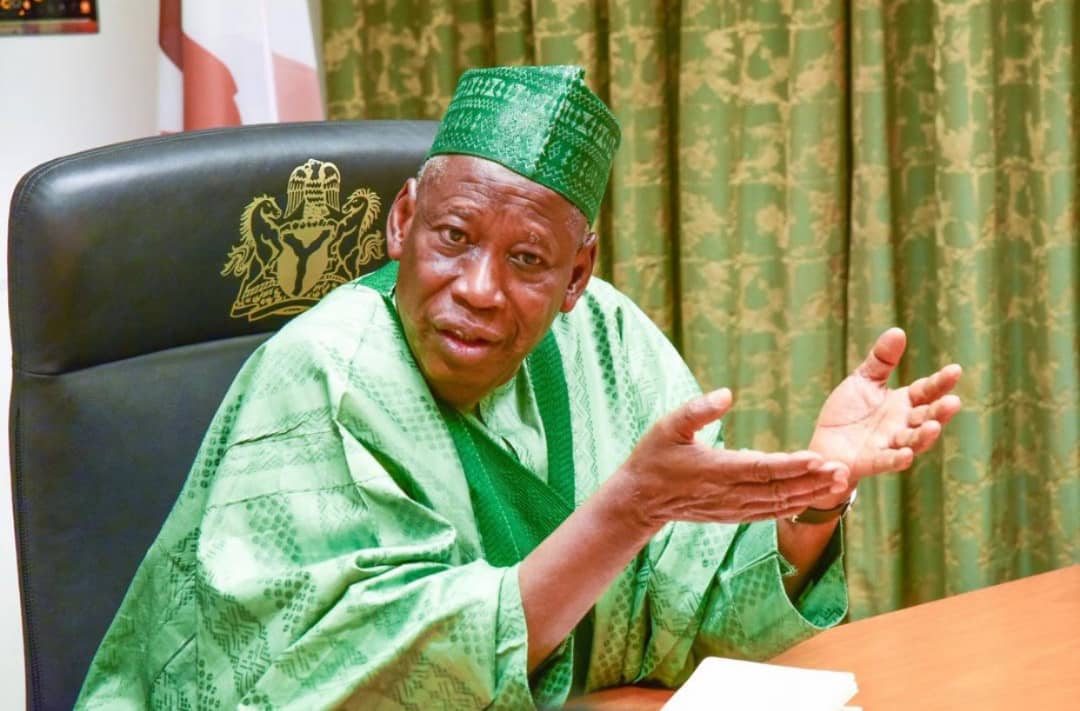
The Kano State House of Assembly has approved a loan request of ten billion naira (N10,000,000,000.00) by Governor Abdullahi Ganduje. The request was contained in a letter forwarded to the Assembly by Governor Ganduje and read by the Speaker, Hamisu Chidari.

According to the letter, the loan will be used for security infrastructure development in Kano. The Daily Reality gathered that part of the security infrastructure to be developed includes an installation of CCTV cameras in Kano to improve the security architecture.

In the letter, Gov. Ganduje said the development became necessary considering the recent security challenges facing the State.

In another development, the Kano State House of Assembly has appointed Magaji Zarewa as its deputy majority leader, following the resignation of Alhaji Abdullahi Iliyasu Yaryasa.

Yaryasa resigned his appointment after dumping the All Progressives Congress (APC) for the New Nigeria People’s Party (NNPP).

The speaker, Hamisu Chidari, who read Yaryasa’s resignation letter at a plenary, wished him well in his new party and thanked him for his numerous contributions to the house.

Zarewa, who represents the Rogo constituency, appreciated the house for finding him worthy of the new appointment.