Literature

Afflictions and Stitches

By Zee Aslam

The door slammed open to reveal a heart-touching moment of a mother struggling to discover her breath as she aimed to bring another life into the world. The birth of a baby is one of the world’s most wondrous and hazardous moments. 

Childbirth is a challenge, but it is undoubtedly one of life’s most rewarding events. As painful and fearsome as it may seem, the mother has this wonderful emotion overwhelming her as she awaits the arrival of her bundle of joy. 

Being a mother comes with lots of sacrifices. Your body figure will be altered, re-moulded, and your brain becomes addled as you are being re-programmed right from the womb swelling with pride down to experiencing the pain of labour. 

Pregnancy is exciting and scary all at the same time. Some days feel like a breeze, while others are just plain hard. However, the long nights with no sleep and mood swings are all worth it. 

Despite all the doctors, nurses, and loved ones in the room during childbirth, it is all about you, your body, and your child. It’s an incredible experience. It’s like uncovering a superpower you never realised you had. 

As she gasped for air while pushing out the baby, she looked around her and reminisced on the decision she took months back, which she never regretted once but still harboured doubts and fears. “What would become of this baby?” She asked herself. 

The cry of her little one signalled the beginning of a new life. She looked keenly as the nurse cleaned up her baby and placed him on her, wrapped in boundless passion. 

The aftermath of her decision just began. At night and when the hospital staff were distracted by an emergency, she stealthily sneaked out and walked miles away to a place where an orphanage was situated before dropping off the baby at the foot of a gate and then knocking at it. 

An elderly woman came out and was attracted to the baby’s cries. She stood halfway, staring at the innocent boy before she reduced her height and picked him up inside. The mother watching from afar, only wiped off tears as they streamed down her face. “That was the best she could do for her baby”. 

She travelled down memory lane to the path where some unknown men abducted, defiled and abused her. Then she thought she only paid the price of being an orphan roaming on the street, but now she knows better. 

Her life took a new turn and brought her to face its realities, she has just given away her soul and a piece of her heart to a total stranger, but she rests assured that her boy will grow up amidst other kids and be a better person. 

She calmly dragged her feet out of that street to what she called home and picked up the remnant from her shattered life, yearning to stitch them back together. 

If she could turn back the hands of time, she would. 

But since it’s beyond her control, she will only move on with her life and keep praying for the best to unfold into a piece. 

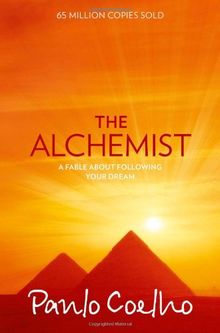
Book Review: The Alchemist

By Dansaleh Aliyu Yahya

After reading Paulo Coelho’s The Alchemist, this fictional story of a young boy created a river of tears in my gapes. The main character, Santiago, a young lad, dreams and believes that dreams come true when someone follows the way to see them awaken.

At first, he (the boy) taught us that travels were the greatest sources of knowledge, experience, and wisdom when he told his father that he wanted to become a shepherd because of the love he had for knowing the true nature of his world. Nevertheless, he sold his sheep and searched for his “Personal Legend” because he now realised it was more important than just rearing animals.

Throughout the story, we would learn that if the younger person needs to have a useful life, they must learn and believe the philosophy of their older ones. On his journey, Santiago met many good people.

In addition, each of them told him one or more essential facts about life and everything.  For example, he met a king named Melchizedek, who said, “ When you want something, all universe conspires in helping you to achieve it”. I think this is the most important sentence in the book.

The books also taught us that we shouldn’t bother ourselves with our past but instead focus on our present to build a more fantastic future. He was told that when he concentrated on the present, he would always be happy. 

In his treasure search, the boy met a young woman called Fatima. They started loving each other, and he promised her he’d be back one day to marry her. There I remembered the Hausa Proverb that says, “ Garin masoyi baya nisa”. He was about to lose his treasure because of love, but the alchemist summoned him.

The story has a lot of must-be-learned philosophies that couldn’t be mentioned here due to their meanness, but I’ll try to pen down some of them below to build eagerness to read the book in those that didn’t read it. These ideologies include:

— “If you play cards the first time, you’re almost sure to win. It’s called beginners luck.”

— “Everything that happens once can never happen again. But everything that happens twice will surely happen the third time.”

— “Every day was there to be lived or mark one’s departure on one word ‘maktub’”.

— “If you start by promising what you don’t even have yet, you’ll lose your desire to work toward getting it.”

Let me stop here. However, if you have not read the book, you should look for it. I assure you, you won’t be the same person you were before reading it.

Dansaleh Aliyu Yahya can be contacted via dansalealiyu@gmail.com.

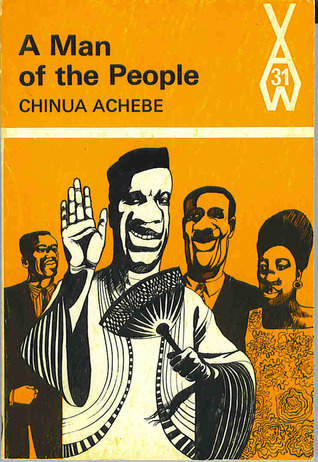
Chinua Achebe’s Man of the People: A story more than a fiction

By Saifullahi Attahir

It’s not surprising that nowadays you see my post regularly. I’m always looking forward to moments like this where  I get released from the yolk of sleep-inducing medical books. Once again, I’m lucky to be surrounded by my favourite literature I  enjoy which serves as a source of enlightenment, happiness, experience, and loyal and non-disturbing companionship.

This week I luckily came across a 362 pages novel written by a great and rare literary icon, Chinua Achebe, who needs no introduction. Dr Achebe was born around the 1930s in pre-independence Nigeria. He witnessed the early struggle of our nation with colonial amalgamation, premature political activities, and half-baked western knowledge. He was also blessed to witness the coup and the counter-coups, the civil war, the many long military juntas, and various democratic regimes. He died around 2013. what a long journey!

My respect for Achebe began when I discovered his early taste in Medicine (MBBS) at the University before switching to the Humanities. This is obvious in his surgical approach to writing and his simple use of words to convey a powerful message resembling a patient-doctor relationship in a way that no other can. Achebe is a political philosopher with all the tools to delve into politics (being famous, a great orator, experienced, a historian, and knowledgeable, of course, without the money) but decided to steer himself away from remaining a true nationalist.

The book, Man of the people, was so captivating that I couldn’t stop reading it until I was done in less than three days. How it related events in the early 1950s political arena to how it is in the present moment shows me that history is often a cyclical process with only names and dates that tend to change a little. This struck me with a reality that humans, despite our self-acclaim superior intelligence, are sometimes unfortunate gullible creatures that hardly learnt lessons from their past mistakes or the mistakes of others. This is more so true as today we rarely like to read history. Below is my take off from the book:

Chief Honourable Nanga is regarded in our settings as a wise and lucky few who was previously a low waged primary school teacher before finding his way into politics in the newly independent country. He was elected as a parliamentarian to represent his local people, who were mostly less literate in books than he was. Before his political adventure, Nanga was simple, intelligent, respectful, and friendly. All the mentioned attributes earned him the automatic approval of his people to represent them.

Of course, they weren’t wrong. Chief Nanga continues to be available to his people because he was a person you could describe as ‘let us eat together’. The main concern of his people was to bring them something to their mouths, not tangible and economically sustained programs. This automatically makes Chief Nanga the person whose main concern was to butcher the ‘national cake’ to satisfy his people and at least secure their approval for the next election round.

Chief Nanga was nominated a National Minister of Culture by the Prime Minister for his unquestionable ‘loyalty’ to the party and its leadership. The loyalty was nothing more than his ability to see wrongdoings and remains silent. Transgressions include high inflation, dashing money to party members, over-estimated contracts, sub-optimal road projects, conspicuous import duties, debt-ridden economic policies, debilitating educational reform, and countless more.

In exchange for his loyalty Chief Nanga was assured 10% of every project he was given, a 7-bedroom self-contained house, ten newly designed buses for his next election campaign, a  newly 2-storey mansion in his village hometown Anata, a new Cadillac car, and four security bodyguards. Remember that this was 1960’s politics!

In the story, there was an incident of some members of Parliaments who were not loyal to this dirty scheme of ‘party politics’ and stood their ground to expose all these scandalous affairs. Their fate was that the newspapers, magazines, and media outlets were being bought up (bribed) to write news regarding a coup plot arranged by those patriotic citizens who were later dismissed and imprisoned. At this juncture, I noticed that it’s true that news from some media outlets sometimes has some aspects of interest, either being compromised financially or for personal benefit. This required a separate article on its own.

It’s a rule of life that such activities can never continue unnoticed. Therefore a group of young, overzealous, and enlightened University graduates, some of whom were already practising in various sectors, including lawyers, doctors, teachers, and engineers led by  Max (a lawyer) and Odili (a teacher)  gathered to form a political party or rather a revolutionary movement to counter the activities of Chief Nanga’s Government. After various arrangements and meetings, they began launching their campaign. They were able to display every tactic to draw the attention of the common men and women in the country.

To cut the story short, these zealous young men were, to some level, unsuccessful in their mission; as the system began to unfold, it seemed a very complex situation where the very people they were shouting to rescue were the very culprit supporting the corruption. Those masses see the politician as saviours whose role is to go and bring them their share of the ‘national cake’ bounty because they do not view it as their right or National asset that deserves preservation up to their unborn generation.

The problem is that the same common masses are responsible for encouraging the leaders to do the vices. The common masses are the vanguards (‘yan jangaliya), the bodyguards, the local party chairman, and the man who complained of Kola-nut for his daughter’s marriage. The same masses would first laugh at him (elected politician)  after one year when he resigned from office without amassing something. Then, they would laugh at him that now he had become a  pauper, so this automatically creates the intrinsic urge to loot.

During the election campaign, Max lost his life after being attacked by those unfortunate vanguards, and  Odili sustained injuries, while his nomination paper didn’t even reach the electoral office as it was confiscated by corrupt Police. Chief Nanga’s party were ‘elected’ unopposed through massive ballot rigging and political hullabaloo. Fortunately, the country was saved by a military coup that overthrew Chief Nanga’s government.

The rest is history.

Saifullahi Attahir wrote from Dutse wrote via saifullahiattahir93@gmail.com.
End of the game

By Zee Aslam

“Bring him in and untie his eyes”, he heard a female voice snarling in the background. He tried recalling where he had heard that voice before, but it did not sound familiar to him at all. 

He looked around and saw that he was in a deserted building, there were sharp instruments everywhere, and the smell of fresh blood originated from a corner. She stood up from her chair and walked to where he was sitting with his hands tied to his feet. Before he could say a word, she had chopped off two of his fingers and whipped him severally. Then, mixed together different liquids in a bottle and handed it over to him. 

“Gulp it down, or I smash your head”, her thunderous voice echoed across the four walls. 

He couldn’t lift a finger, and his body kept trembling in fear, so she collected the bottle and emptied it down his throat. He had lost the surviving strength running through his limbs. Hence, he couldn’t retaliate nor attempt to stop her. 

“I want to watch you die slowly, shred your body into pieces and feed it to the vultures. I want the pains you inflicted on me to manifest on you before your death. That way, I will feel fulfilled”. After these words left her mouth, she picked up the knife from the table and took a few steps forward till she could hear his heart beating heavily.

“Open your mouth”, she ordered. 

“Please, have mercy on me”. He said amidst sobs. 

“Ohh wow, do you remember when I said these words too, or were you so engulfed in your selfishness that you couldn’t lend me a listening ear, you were man enough to take control notwithstanding the aftermath of your greed, right? It’s time to pay for your debt”. With this, she beckoned her boys to forcefully open his mouth while she slit part of his tongue.

“Now, swallow it, or I will proceed to slit your throat”, she bellowed dropping the piece she had cut off in his mouth. He collapsed, groaning with pain as blood streamed down his throat. 

“Get a bucket of water from the freezer and pour it all over him”. 

He dumbly opened his eyes and glimpsed at her angry figure, he wanted to speak, but words deserted his mouth, and the pain emanating from his cut couldn’t let him move his tongue. Not in a thousand years would he have imagined this happening to him. He had scaled through so many times; why is this particular victim a thorn in his flesh, does this mean his end is here after all? 

“Are you reminiscing on what had transpired between us”? Her voice jolted him back to reality. 

“After you left me almost lifeless on the street that day, I swore to make you pay for what you did. I had my boys trace your whereabouts and even gathered some information about you. That was when I learnt that society doesn’t need people like you; rapists deserve to rot in hell. But wait, don’t you have a conscience at all, how can you knock down random girls just to rape them, how on earth? I mean, why do we have to share the same earth with you all?”. She spoke in great anger. 

“Make him stand”, she ordered. 

The boys unfastened his hands and feet, then held him side by side till he was up. Staring at the sharp edge of the blade, his heart sank. 

“Why do I smell fear, are you curious to know what I intend to do with the blade?”. She asked with bittered smiles written all over her face. He only nodded. 

“Strip him off his clothes. Let’s get started”. She uttered quickly and authoritatively. His body sensated to every move she made, but he couldn’t help it. 

With tears in his eyes, he watched as she cut off his sexual organ. His wails were arrested by tying a gag around his mouth. It was a dreadful and sickening sight to behold. After going through severe agony, he was whipped to death and thrown out. His bloodied body was found in a public toilet the next day. 

That morning, her attention was called to the awful scene by a large number of a crowd she had seen along her way to the office. Many people who have seen or heard of what had befallen him had mixed feelings. Among the crowd were some of his victims. Seeing this predator lying in the pool of his own blood in this state made them feel gratified. 

She curved the corners of her mouth and flashed her most winning smile. She has finally put an end to the game he started. 

Zee Aslam can be reached via zeeaslam19059@gmail.com.

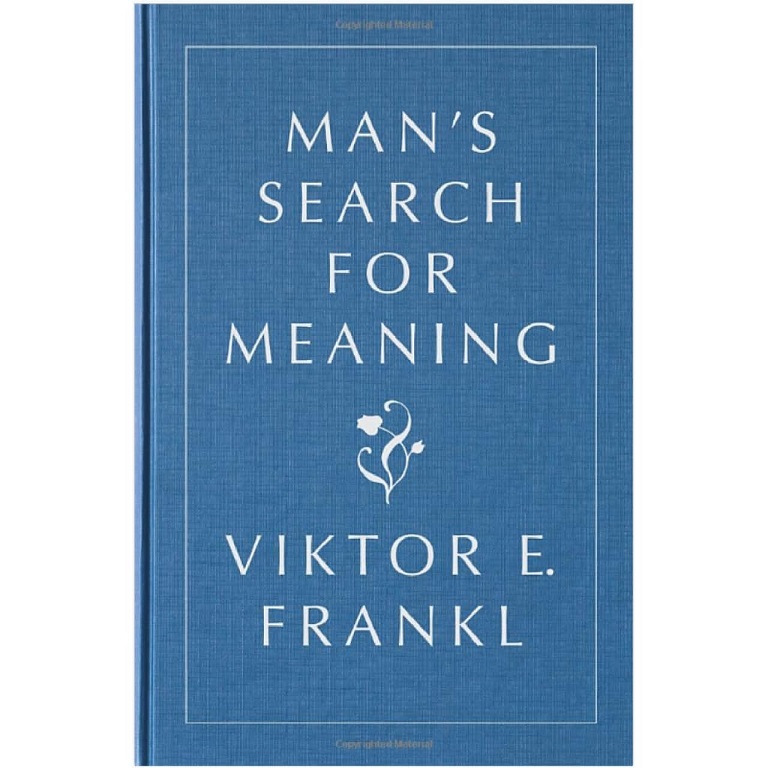
Book Review: Man’s Search for Meaning

By Muhammad Muzzammil Bashir

Think of a moment when you once found yourself in a situation where you were either physically, spiritually, or emotionally stressed, or both, where you could not help but give in and submit to your predicament, and all of a sudden, a flash of thought crossed your mind of the consequences of your choices, inspiring you to become decisive in your fate and bear with the situation while looking forward to its end until you are free from it.

The book, Man’s Search for Meaning, is the story of a psychiatrist, Victor E. Frankl, and his life at the Nazi concentration camp, envisioning and inspiring his colleagues to find meaning for life ahead while enduring the horrendous experiences of the camp.

The book accounts his experiences together with those of his colleagues’ lives at the camp, the sacrifices, the crucifixion, and the deaths of the great army of unknown and unrecorded victims, and of course, those who gave up on life and hope for a future; thus, they died less of lack of medicine or food than of lack of finding meaning or purpose to live for.

Frankl likened the experiences to assert that while we cannot avoid suffering, we can choose to learn how to cope with it, find meaning in it, and move our lives towards a renewed purpose.

The author asserts that life is not primarily a quest for pleasure, wealth, or power but rather a quest to find meaning in one’s life. He coined his ideas in theory called “logotherapy,” meaning that striving to find meaning in one’s life is the primary motivational force. The force usually comes from three possible sources: work, love, and in courage during difficult times.

A purpose-driven life is one that is enveloped in finding meaning that the mind holds subconsciously to pursue no matter the circumstances one is in. Obstacles may delay I but cannot deter that mind from pursuing its course. Fankl’s Man’s Search for Meaning is a masterpiece in this field, written in simple terms to comprehend its message easily.

Muhammad Muzzammil Bashir can be contacted via mbashir199@yahoo.com.

Reading

By Salisu Yusuf

Reading is the interpretation of some signs, symbols and codes into meaning for intellectual consumption. Reading is the third skill in the order of the four language skills behind writing, for one can only write when he knows how to read. The significance of reading can be viewed in the context of the world being a global village; reading has today made our world a unipolar entity where communities understand each other and realise their diversity.

In Islam, reading is the most crucial skill in seeking knowledge and understanding God. The first verse of revelation is “Iqra’a”, or read, for it’s through the pen(writing) that the Lord teaches man some knowledge.

Reading has been the highest source of joy for man. It emancipates and frees man from the shackles of servitude. People have read to escape from the deception of the perverts, the so-called clerics who misinterpret divine injunctions according to their caprices. Reading can wrench you from the grips and chicanery of postmodern politicians. Read and be free from the bog of tradition, the tyranny of the oppressor, the darkness of illiteracy and the glibness of the scammers. 

In fact, reading can make you a gentleman/lady; men/women have become milder, sober and more empathetic through years of excessive reading. When you read, you will understand yourself, your immediate environment, and your world. When you don’t read, you suffer from a lack of effective education. That’s called illiteracy.

 Reading can take you to places you’ve never been. I was once with the notorious Adolf Hitler in a ditch shortly before his infamous suicide. I was once in a Bagdad prison, witnessing the despicable hanging of dictator Saddam Hussein. I have been to Elysse Palace with the powerful Charles de Gaulle during his assassination attempt. Asare Konadu has given me an imaginative ride to cultural Ghana. James Hardly Chase has numerously chauffeured me to an underworld, taught me criminology, spying and espionage. Achebe has taught me some aspects of Igbo culture; in fact, he was the one who told me that “breaking cola” wasn’t only a Hausa culture.

I once read a fable with a combination of animal, bird and spirit characters. I melted into the sky, and became a spirit. I perched on branches of trees as a brood, hatching and nestling. I had become a spirit and mutated into a bird the next moment, flying on a vast, blue and cold sky, feeling acrophobic. I still remember with nostalgia those imaginative, daring escapades. A reader can go directly to a character’s mind and discover his inner thought. He can scale a river and be on war fronts. 

Reading can be your route to escape, add to your knowledge experience, and can polish your language, open you to new vistas and give you aesthetic joy.

 As an advanced reader, you shouldn’t read excessively at night (learn to rest for your mental well-being), or in sunny spots (you should go under a shade). Preferably, don’t read from a white paper; the best paper to read from is either a light yellow or light blue.

 The best thing in your reading is to protect and harness your eyes from being strained. Your eyes aren’t only your sighting treasure. They’re your intellectual and economic assets. By using the best and appropriate paper, you take a long-term measure that’s best for your eyes in later life.

The uncomfortable truth is that, you’ll reach a stage in your life when you lose that flexibility in and around your eyes. So, you must compensate them with reading glasses. But using the right paper will sustain the tempo and rhythm of your sight. You should harness your eyes at this crucial stage of your life. To quote from the famous English poet, Oliver Goldsmith, “husband out life tapers at the close. And keep the flames from wasting by repose.”

At an advanced level of our reading, we read when we’re in the mood, when we’re in the best mental state. This is why it’s crucial to coordinate your eyes and mind together during your reading; otherwise, you’ll only say the alphabet, not the semantic words. There’s a difference between saying and reading. In saying, you don’t understand; in reading, you get the gist.

During our personal/independent reading, we should avoid vocalisation and sub-vocalization because they’re diversionary; we employ the use of silent reading, where the eyes and mind do the bidding. We move the eyes but not the head.

 As an advanced reader, you should devise a contextual reading. A context reading is when a reader utilises all those syntactic, semantic, and discourse markers as well as the surrounding information, use an appropriate analytical approach to the vocabulary, and use the historical and cultural backgrounds in his quest for meaning. 

A reader should digest both the content and form. Reading is twofold; he digests the content for the message and the form or language where he learns some contextual expressions. 

Reading should be a lifetime endeavour. However, reading cannot be an obstacle to my midday siesta, my routine physical exercise, or my light walk. It cannot hinder my other religious obligations.

Reading is my morning tea, my late morning cake and drink, my heavy lunch, my afternoon dessert, and my evening supper. Reading is my light dinner. I will read until I can read no more until I feel numb and dark.

 Salisu Yusuf wrote from Katsina via salisuyusuf111@gmail.com.

Writing

By Salisu Yusuf

Writing is the act of inscribing some signs, symbols and codes which a reader absorbs, encodes and interprets to act on, connect to, or change an attitude towards something. Writing is the fourth of the four basic language skills: listening, speaking, reading and writing. This, however, does not make writing the least important; in fact, writing is the most critical language skill in the current global context due to its perceived wider, heterogeneous and scattered audience and its permanence.

Speaking is also instant and irretrievable (at least before the invention of modern communication and broadcasting systems). You can only apologise after saying something. Writing can be edited and is retrievable. In other words, writing has some measure of revisability or verifiability. Every other form of communication is ephemeral. Only writing survives time because of its encryption. Moreover, the purpose of reading is defeated if there’s no writing. Writing has preserved divine scriptures.

Writing can make you happy because when you write, you instantly release a pent-up feeling. When you unburden, you feel you’ve got rid of something. Writing makes your day. It makes you great, famous and successful. Writers are known to have defied time and become immortals. Writers are immortals because their names defy times: Chinua Achebe, Khaled Hossein, Nuruddeen Farah, Newal Elsadawy, etc., are timeless names. The power of the pen has bound people and made the world better.

Good writing skills, the ability to convince, and the ability to communicate with a good command of language will likely attract a mass audience. These make public relations and propaganda tools for controlling narratives and persuasion.

One secret to writing is that writing widens your horizon and increases your critical thinking and sense of reasoning. It broadens your analytical skills. Writing makes you more sensible. It opens new vistas and can lead you to explore lands and thoughts that men have never explored. So, write, write, rewrite until you write the right.

Writing is, however, a slippery slope. Lest you forget, writing reveals you- it lets your audience know your personality, character traits, likes and dislikes, troubles, etc. This is because, when you write, you leave out gaps, aporias which the reader fills.

Though writing is a joyful venture, it can be a self-destructive escapade. So, know your subject matter well and write on what’s verifiable. Avoid defamatory, slanderous materials. You should know that laws of defamation cover writing, so don’t bring an issue that will likely injure the reputation of an innocent one. Men are dignified creatures. Don’t dare denigrate them.

Moreover, while writing, do not infringe on others’ copyright. Make your copy the right one. Copyright laws strictly bind writing; when you quote, acknowledge your source correctly.

As a writer, you should know that writing is fluid; it has no fixed shape. Therefore, it yields explications, expositions and interpretations. So, when you write, as Roland Barthes said, you’re a dead author. People rightly interpret your write-ups and derive multiple meanings. Therefore, when you write, you’re no longer in control of your text. You’re a dead author. Only the readers are alive and in control of the meaning.

As a writer, the sensibility of your audience is respected. Writing always goes with its moral appeal. I have not seen a fool as one who writes to level old scores, which hurts feelings. That’s the definition of a fool. 

For some, writing is a profession. For others, writing is a skill, while some look at writing as an escapement. Whatever it’s to you, write and rewrite until you write the right.

Salisu Yusuf wrote from Katsina via salisuyusuf111@gmail.com.

On writing business

By Sulaiman Maijama’a

A barrage of questions troop into my inbox daily from people outside the writing circle, declaring their interest to come in. Some questions are worthy enough, while some are funny and crazy. For example, a young lady asked me to teach her “Article Writing” via WhatsApp. Another once asked, “can I become a writer in one week?”  Somebody told me “kai kam rubutu bayi maka wahala“. What a wrongful assumption!

Let me, in order not to give a wrong impression of myself, humbly submit that I’m just a fledgling writer aspiring to be a pen wizard one day. My decision to write on “writing” this time was prompted by the fact that those who excelled are too busy to avail themselves and become beast of burden for aspiring writers. Be that as it may, a dot in the circle (like me?) may have something to offer. And as the saying goes, “there is love in sharing”. Thus, I will share the following tips for aspiring writers:

1. BE PASSIONATE AND AMBITIOUS. This, in my view, is the first step to becoming a writer. Writing is daunting, time-consuming, attention-demanding and a continuous learning process.  Whoever tells you the contrary is leading you astray. But your passion and ambition are the driving force that will keep propelling you to defy all odds and cross the blocks on your way to the promised land. I believe that one (1) inspiration can overcome ninety-nine (99) perspiration.

Haven’t you ever asked yourself why some people who read English or Mass Communication write poorly or don’t write? But others who are trained scientists are writing professionally standard _Medical Doctors, Zoologists, Agriculturalists among others write well. This is to tell you that writing is a product of passion and ambition. Regardless of what you read, you can be a writer per excellence.

2. MASTER YOUR LANGUAGE. Reasonable proficiency in a language is a prerequisite for any writer who wants to be taken seriously by his readers. Not necessarily English Language, but any language you write in. Master the language to the level that the native speaker will appreciate you. Nobody can afford to devote his time to reading trash in the name of writing. Nobody will take you seriously when your essay contains grammatical errors, sentence fragments, dangling modifiers, and incoherent and incohesive sentences and paragraphs.

3. READ. I do not know a better way a writer can improve than by taking an avid interest in reading. Reading good writings is what makes good writers. And the volume of the text you read must supersede the magnitude of your writing. For instance, you need to read and analyse at least ten articles when writing a single piece. Before you write a single book, read and review one hundred books. Do you know that when a writer stops reading, it reflects in their writings?

4. HAVE MODEL(S) AND MENTOR(S). In any profession one wants to excel in, they must have people they look up to. Different writers have different styles of writing. As a young aspiring writer, identify your hero(s), look up to them and read them more. While having a model(s) will help you raise the bar of your success by dreaming bigger, having a mentor(s) will, on the other hand, help you be on the rightful terrain to the promised land. Mentors are a blessing; they show you the way, and when you feel like giving up, they reinvigorate your confidence.

5. WRITE FREQUENTLY. It is impossible to learn writing by theory; it is learnt by the practical application of theoretical ideas. But, like a muscle getting stronger by exertion, writing improves through frequent practice. If you write frequently, you will discover that today’s writing is better than yesterday’s. Your writings this week are better than those of previous weeks. That’s one magic about it. So, never get tired of writing if you want to become a good writer.

6. HAVE AN AREA OF INTEREST.  A writer should specialise in a given area, preferably the area they are more interested in. For instance, some people are sport-loving, some follow every trend in politics, some on entertainment, some on terrorism etc. The wisdom behind identifying an area of interest is that whatever you are interested in, you will not find it too daunting but rather fun that will push you to break the glass ceiling. But this does not mean limiting yourself to a single area; a good writer should be able to write on every topic under the sun.

7. DON’T BE DECEIVED BY ENCOMIUMS: Writers carried away by flattering are likely to feel complacent. Most of the encomiums coming from people are not genuine. Regrettably, this has led to the downfall of many writers. Some people will overrate you; some will send you positive responses even without reading you. However, positive responses are motivating, but be relaxed, know your level and keep improving.

8. ACCEPT CORRECTIONS AND KEEP LEARNING. Nobody has a monopoly in this business. There is no level of professionalism a writer can attain where they are above mistakes. Even globally recognised writers make mistakes. Always keep your doors open for corrections, learn from them, and keep learning every day.

Maijama’a is a student at the Faculty of Communication, Bayero University, Kano and wrote via sulaimanmaija@gmail.com.

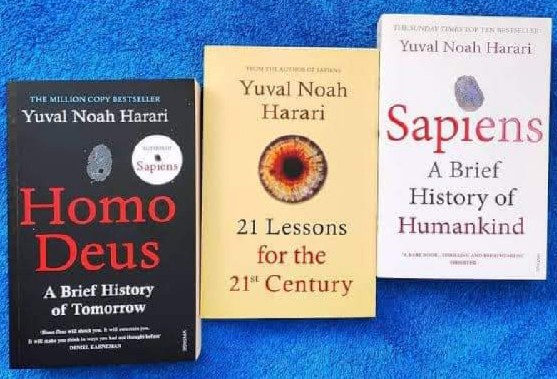
In defence of Professor Yuval N. Harari

By Rabiu Muhammad Gama

Prof. Yuval N. Harari might be a fake scholar, as some critics are desperately “begging” us to accept and believe. Some critics also imply that he might be the most grossly over-hyped and rigorously marketed scholar in the West. Harari might be basking in unearned attention. He might even be an irritating know-it-all or an intellectual nuisance.

The scientific community might have debunked most of his claims. His works might be riddled with some historical and scientific errors here and there. He might not deserve the wide global acclaim he is receiving today. His works might be replete with idle speculations and groundless generalizations that many scholars find annoying.

However, you cannot dismiss the fact that Harari always asks the big questions – the earthshaking questions that every intellectual worth his salt should be obsessed with. And there’s some “indismissable” magic that seems to clothe his books: when you read his books, you can’t help but feel a bit smarter and/or more informed than anyone who hasn’t read them.

To say Harari is highbrow is a sheer understatement. He is a perfect definition of a polymath. He is blessed with an unusual brain, a razor-sharp brain. His grasp of the esoteric world of science and the humanities is as baffling as it is admirable. Very few scholars can merge science and the humanities as Harari does.

If anything, the torrent of bashings and roastings that Harari is receiving lately from some of the finest critics in the world is a testimony that he has come up with something fascinating that makes his readers curious and his critics restless. Of course, some people might like to dismiss him as a mere talented storyteller. Nonetheless, and at the risk of sounding hyperbolic, he is one of the greatest intellectuals around!

Rabiu Gama wrote from Kano, Nigeria via rabiumuhammadgama0@gmail.com.

Book Review: Nearly All The Men in Lagos Are Mad

  • Title: Nearly All The Men in Lagos Are Mad
  • Author: Damilare Kuku
  • Genre: Fiction
  • Date of Publication: 2021
  • Page: 198
  • Publisher: Masobe Books
  • Reviewer: Aliyu Idris

It is the author’s debut. It entails twelve short stories narrated in cooperative narration; almost every story revolves around a subject regarding the woman or feminine gender.

From the book title, you may sense that it’s questionable, derogatory and disrespectful to men. However, the book exposes the sufferings of women and how the men of Lagos behave, especially towards women. It involves the story of sacrifice, endurance, rape, patriarchy and phallocentric, deceit and betrayal. Women are presented as saints. But, as it happens in reality, some characters found in some stories are the reason for their suffering.

Another crucial issue highlighted and promoted in the book is the concept of feminism. Just like contemporary feminists, I am not flabbergasted to find out that one of the author’s inspirations to produce the book is a feminist (Ngozi Chimamanda Adichie).

Almost every female writer who writes in any genre of literature promotes feminism right from the 19th and 20th-century feminists such as Virginia Woolf, Simone de Beauvoir, and Kate Millet down to the present-day feminists.

Because contemporary feminist writers do not stick to one feminist ideology but many subcategories. For instance, every story in the book has a different class of feminist ideology. For example, the first story titled “Cuck-Up” uses Amazon feminism to potray how defiant women are despite appearing weak and passive.

The last story in the book, “Independence Day,”  uses cultural feminism, showing women’s kindness and gentility.

Eco-feminism in the story “Anointed Wife” emphasises that patriarchial societies are detrimental to women.

Charles E Brazzler, in his book Literary Criticism An Introduction to Theory and Practice Fifth Edition, asserts that it’s the view of contemporary feminists that subjugation of women still exists worldwide. Issues such as rape, prostitution, social injustice, early marriages, polygamy etc., the feminist writers continue to add their voices to protest through their pens and papers.

It should be noted that feminism has been broadly international in scope, and many local and general factors dictate its disposition. For example, writers from Arab traditions such as Fatima Mernissi and Leila Ahmed have attempted to articulate a feminist vision distinctly marked by their specific cultural concerns. The same is true of African-American feminists such as Alice Walker and feminists of Asian heritage such as Gayatri Spivak (Habib 2005:669).