Library

A call for a presidential library in memory of Alhaji Shehu Shagari

By Bilyamin Abdulmumin, PhD

On the 25th of February, the former president Mallam Alhaji Shehu Shagari posthumously celebrated his 100th birthday. To honor this significant occasion, his grandchild, Bello Shagari, wrote him a letter in heaven, where he now resides, inshallah.

In the letter, Shagari told his grandfather the entire story he had missed during the seven years since he left. He perhaps started with what would have concerned him the most: Muhammadu Buhari completed his eight-year tenure but never fulfilled the promise to honor him, even though a similar gesture was extended to MKO Abiola for recognizing June 12 and renaming the Abuja stadium after him, as well as completing a mausoleum for Dr. Nnamdi Azikiwe.

The letter continued: Bola Ahmed Tinubu has become the President of Nigeria, but surprisingly, Nigerians are now more patient with the burden of reforms than they were before when they celebrated coups.

Another piece of information shared in the letter was the launch of General Ibrahim Badamasi Babangida’s autobiography, a book surrounded by controversies on all sides. Interestingly, the book cleared Shagari of corruption.

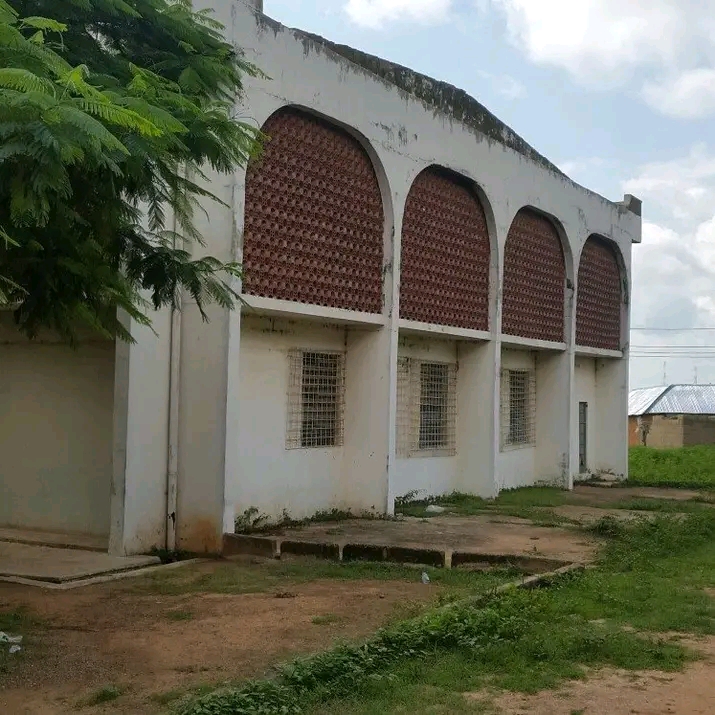
The objective of this article was the Presidential Library the Shagari family is considering, as mentioned in the letter. The family hopes to achieve that by converting his decaying house into a historical monument.

Just before that birthday, a fatherly figure sent me a viral video of an old house belonging to Shehu Shagari, which had fallen into disrepair. The video was interestingly captioned with a suggestion: converting the house into a presidential library. The viral video may have already reached the Shagari family, who might have already contemplated it.

I think that so far, the only official presidential library we have in Nigeria is the Olusegun Obasanjo Presidential Library (OOPL). The complex is described as a mini village, featuring an open-air amphitheater, an auditorium, a hotel, an amusement park, a wildlife park, an observation point, restaurants and bars, a Jumu’at mosque, and of course, a church.

I was surprised to learn that OOPL has a Jumu’at mosque. This highlights not only the size of the village surrounding the library but also the diverse local and international users.

Ultimately, a promising archive of this significance—a repository of presidential documents, a tourist attraction, and an academic center—stands as a proud monument not only for a specific state or region but for all of Nigeria.

As the only democratically elected president of Nigeria’s Second Republic, the call to preserve his legacy for future generations cannot be overstated. Dear Nigerians, in memory of Alhaji Shehu Shagari, let’s make this dream a reality.

If wishes were horses: Tribute to Prof. Musa Auyo

By Khaleed Suleiman Abdul

We thank Allah for a life well spent. Indeed, from Allah we come, and to him we shall return. Professor Musa Abdu Auyo’s death is undoubtedly one of the few transitions that shocked Bayero University Kano and the entire academic circle within and outside Nigeria. 

The Comrade, as we fondly called him, was an unrepentant freedom fighter and social justice crusader. His uncommon spirit of tolerance and forgiveness earned him popularity among different classes of people. In fact, he is a man of the people, and the turnout of people from all walks of life who paid their last respects during his internment testified to that.

My first close encounter with him was when he and a few other individuals helped me secure admission into Bayero University. That was about three decades ago, 1993 – 1994, to be precise. From then on, the relationship knew no boundary and continued to wax stronger until his death.

I always recall with joy how he facilitated the securing of admission for ten qualified candidates in different departments and faculties whose credentials were forwarded to him by my humble self.

His simplicity and sense of accommodation enabled him to act or respond with dispatch to any request I put before him, particularly on student admission or counselling issues.

He once said, “As a lecturer, I don’t have much financially to give, but when it comes to securing admission or imparting knowledge to people, I must do my best”.

Comrade was always ready and willing to help you irrespective of your tribe, religion, class, or age. He believed that society must change positively through education and the creation of public awareness. 

His exemplary, simple lifestyle contributed immensely to our conduct. 

He taught us the spirit of accountability, answerability, patriotism, and sympathy in the common person.

The late academic guru was bereaved by two wives and nine blessed and educated children. One of them is completing her PhD, and others have or are doing their master’s degree and undergraduate programs in different fields of human endeavour. May God Almighty protect and guide them, ameen.

Professor Musa Auyo graduated in library and information sciences from the prestigious Bayero University Kano, received a master’s degree in the same field from Ahmadu Bello University Zaria, and received a PhD from BUK. He has also been a professor from the same institution lately.

He was the Head of the Department of Library and Information Sciences, Dean of the faculty of education, Bayero University librarian, one-time pioneer librarian at Federal University Kafin Hausa, and, very recently, chairman of the Board College of Education, Gumel, Jigawa State.

Despite all these academic responsibilities, the late professor still found time to belong to associations within and outside the university walls. 

I remember as a student, whenever a symposium was organised, and comrade Auyo and the likes of Prof. Ibrahim Bello-Kano (IBK), late Auwalu Umar, and Auwalu Kawu of sociology were to make a presentation, the theatre always appeared too small to accommodate the mammoth crowd of students anxious to hear words of wisdom from the effervescent cum erudite scholar.

His belief in public education and enlightenment led him to champion the establishment of the Auyo Youth Association (AYA), Hadejia Youth Organization, and Literacy Club Society of Bayero University (LICSOBUK) in which I worked closely with him to champion the cause but was short-lived immediately after we graduated.

He was a great pillar, a beacon who nurtured and groomed students and intellectuals within and outside the campus. Some of his students today are professors doing well in their chosen professions. They include professors Abbas Mai Dabino and Baffa Abubakar, to mention a few.

I recall with pride how the late Professor Auyo, as a crusader of social justice and other sound-minded intellectuals in the Senate, saved many students from rustication for merely embarking on a lack of electricity and water protest in the new campus, where the Vice Chancellor insisted that the students must be punished. 

However, these noblemen, including the late professor, stood their ground to ensure no student fell prey to victimisation.

In conclusion, filling the vacuum created by your demise will be very difficult. Your contribution to education, community development, social justice, mentoring, and nurturing within the university perimeter and across society will remain indelible in our memory.

We pray to almighty God to grant you the highest level of Jannah, peace, and everlasting Rahma in your grave until we meet and part no more. Alhamdulillahi!

Khaleed Suleiman Abdul (Sardauna of Gwagwarwa) wrote via akhaleed431@gmail.com.

Zaria public library or a shattered bed of bats and rats? A call upon the government

By Maryam Shehu

I write with a heavy heart and bleeding eyes to the extent that my sights are closed, and I can’t catch a glimpse of the words that percolate through my pen.

Zaria is known as the heartbeat of its state, moving from its social amenities and the acuity of its residents and advocates. It won the best award for breeding leaders and world scientists with excellent records of surveillance and stateliness.

Its leaders have incentives for every eclipse and malady, but I am yet to have a vision of the sad situation of its library. Does that spell another prestige or a paralyzing facet of its artistry and reading culture? Only God knows how much a lack of a library plays in the eruption of the educational sector and traditions.

 ‘Mostly students within Zaria from the 1980s used the Public Library, but now it remains only the building’; this was what I saw as a description of a group named ZARIA PUBLIC LIBRARY FRIENDS on Facebook… A very disheartening description, indeed! Does that mean education ended in Zaria after those days, or is it only for those in the 1980s? Oops, I can’t uphold the irritation!

Everyone that often visits the place is a bystander to how barren and malodorous the place is, the books are outdated, and the shelves are scanty and scattered to the magnitude that one can not confidently point to a visitor or a person who has been reading about or watching notable libraries.

I write for the government or any other personnel responsible for the library to reminisce, if forgotten, about the virtues and diamonds behind refurbishing the library and its roles in developing a state/LG with few ravines of mine. These are:

First, it supports the educational sector: Education is the bedrock of every progressive state. It soothes every rough wall for governance. Whenever/ wherever a state owns a gear of education and capitalize its residents with the necessities, that administration is said to have grappled with every hole of unemployment, insurgency, and other suppressed deed that might lead to the tumult of any governance. It can contribute to nation-building and reconciliation. As said by Nelson Mandela, “Education is the most powerful weapon you can use to change the world”.

Second, it preserves the cultural heritage of the society: A rich cultural heritage defends how the residents maintain its distinctiveness and sets it as a mirror to look at by young ones. We have different skin colours, languages, and marks, and our clans mingle with others (good/bad), but the pictures we sow in their hearts and books are those that could reflect and defend their susceptibilities. The library is the only place where those scrapbooks and photographs could be carefully salvaged.

Third is the provision of useful textual materials: The availability of a standard and substantial library provides advantageous scripts and materials for self-development and implementation of a basic constitution… It helps especially those from underprivileged backgrounds.

Fourth, it also provides an avenue for recreation and relaxation. Libraries are one of the most significant factors that lead to the development of arts and crafts; they create seats for all crawling and professional clubs and carve stages. It composes words for artists and other microphones partners.

Furthermore, it also provides and enhances reading culture. As the slogan says, ‘Readers are leaders’; likewise, writers and other mellow people, we succeed by reading from the served letters of our antecedents. And many people strive to be voracious readers but the lack of money to buy books drag their necks back and turn their faces from the papers by furnishing the library; that surely could be a buzzer to the sleeping readers.

With the above few ravines of mine, I hope the government and other related personnel are persuaded and forecast how much renovation of the public library could make their governance suitable and memorable and how lack of it will keep draining the administration. We hope you listen to our dried throats and reconstruct our shattered floors.

Maryam Shehu wrote from Zaria via maryamshehu6354@gmail.com.

Dubai opens 9-in-1 hybrid library

By Muhammad Aminu

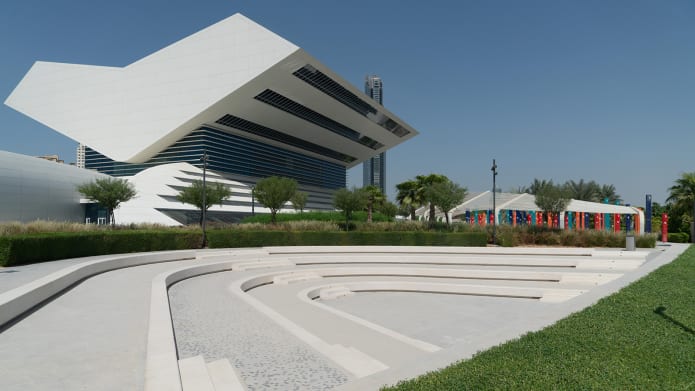
Dubai authorities have opened a unique modern nine-in-one library that gulped over $272 million to establish.

The library named after Dubai’s ruler ‘Mohammed Bin Rashid AlMaktoum Library’ is at par with the pantheon of world-class book repositories such as London’s British Library and Egypt’s Bibliotheca Alexandrina.

Al Maktoum announced the construction of the new library in 2016, which now houses more than 1.1 million print and digital books in its 54,000 square-meter facility.

CNN reports that the library has a beautiful oasis of calm contemplation, where visitors can curl up with a good book, plug in laptops for study or work, or marvel at the rare manuscripts and first-edition books displayed in the exhibition space.

The library reportedly houses nine separate libraries containing almost all areas of expertise, from sciences to arts and entertainment.

“The facility is home to nine separate libraries, dedicated to everything from media and the arts to business titles, international periodicals, maps and atlases, books for children and young adults, and a collection of precious archival treasures,” it said.

“The collection of works is still being built, but it already boasts some impressive numbers. Alongside its multilingual print and digital books, visitors can access more than six million dissertations, 73,000 musical scores, 75,000 videos, 35,000 printed and digital international journals, and over 5,000 historical periodicals spanning 325 years.

The library, which has a cafe for a break, also contains a database of thousands of digital titles that can be downloaded from machines in each of the nine libraries.

There are books in braille for visually impaired readers and a quiet space with reading pods for visitors with special needs.

It also has an Auto Book Store, a subterranean storeroom for the 400,000 titles that don’t appear on the library’s shelves, but members can request a book via the library’s app.