Leadership

A closer look at Nigeria’s leadership crisis

By Ahmad Muhammad Mijinyawa

The Root of Nigeria’s Leadership Crisis?

“As within, so without.”

The (above) ancient adage, the Law of Correspondence, offers a profound lens through which to examine Nigeria’s enduring leadership challenges. Our leaders aren’t from Mars; they are products of our very own society, having navigated the same systems as the rest of us.

To truly understand the quagmire of leadership in Nigeria, we must look beyond what is happening at the higher levels and examine the very foundation of how leaders are formed.

If you examine the structures that produce our leaders from the ground up, a stark reality emerges. We often encounter the same pervasive issues that plague the highest echelons of power: a lack of vision, mediocrity, and disheartening mismanagement of resources. 

This isn’t a coincidence. More often than not, individuals who ascend to higher positions of authority are those who have been leaders at lower levels. This cyclical pattern underscores a fundamental truth: a flawed system inevitably produces flawed leaders, and vice versa.

A significant reason for Nigeria’s current predicament lies in our collective disregard for the Law of Cause and Effect. Every single effect we witness, every challenge we face, has a preceding cause.

Crucially, you cannot change an effect with another effect. The intelligent approach, therefore, is to identify the underlying causes, deconstruct them to understand their intricate interplay with the impact, and from there, a clear blueprint for change and problem-solving will effortlessly emerge.

Nigeria’s leadership landscape is, undeniably, in a dire state, with dysfunction evident across multiple levels. So, what precisely are we getting wrong in the fundamental process of producing our leaders? The answer isn’t always at the higher levels.

The most crucial insights often lie at the bottom. We must return to the very genesis of leadership to diagnose the root causes of the widespread effects we are experiencing. By doing so, we can finally begin to discern the right direction forward.

Ahmad Muhammad Mijinyawa wrote via ahmadmijinyawa833@gmail.com.

Today’s students’ union and future Nigerian politics

By Nasiru Tijjani

Human society is intricate, comprising individuals from diverse backgrounds and social classes who interact. For society to thrive, it is essential to maintain peace, order, transparency, unity, teamwork, discipline, accountability, sanity, tranquillity, and justice.

However, when corruption, injustice, and criminal activities become rampant, society is bound to collapse. Good leadership, followership, a sense of togetherness, and patriotism are crucial to addressing these issues. 

Established in 1956, the National Association of Nigerian Students (NANS) has played a significant role in Nigerian politics. It advocates for students’ rights and participates in protests for educational growth.

To ensure a brighter future for Nigerian politics, it is essential to revive the spirit of patriotism and collective responsibility among students, leaders, and citizens. We can build a more prosperous and equitable society by promoting transparency, accountability, and justice.

Frequent student demonstrations and unrest have plagued Nigerian universities and other tertiary institutions for years. These protests have often turned violent, destroying public property and resulting in arrests, injuries, expulsions, suspensions, and even the loss of lives. Despite these efforts, students usually return to the same conditions that sparked the protests, with their demands left unaddressed.

Students must form associations and unite under a common banner to address these issues effectively. By doing so, they can discover their strengths and attributes and develop resilience and assertiveness. A well-organized student union allows students to express their opinions, take independent positions, and ask questions on critical issues.

As Jega (2003) aptly noted, students’ unions play a vital role in helping students develop essential organisational skills and strength of character. These skills prepare students for greater responsibilities in their future endeavours.

In its heyday, students’ unionism in Nigeria commanded respect and inspired awe in governments, students, and institution administrators alike. These unions were built on strong ideologies, fostering a culture of intellectual debates and resistance against oppressive government policies and institutional administrators. They fearlessly expressed dissenting views to authorities when necessary, enjoying broad support from the student community.

The primary objective of these unions was to promote and defend the welfare needs of their members. To achieve this, they engaged in constructive dialogue with governments on policy matters and with institutional authorities to secure essential services. These efforts aimed to create a conducive environment for teaching and learning, ultimately enhancing the academic experience.

A Students’ Union is an organised association of students within an educational institution governed by established rules and regulations that guide its operations. According to Isah (1991), the primary objective of a Students’ Union is to promote and defend the collective interests of its members, aligning with the broader societal context.

This underscores the intrinsic connection between education, students, and society. Students can be viewed as raw materials, shaped and refined by institutions of learning. Through this process, they transform, ultimately emerging as finished products, equipped to contribute positively to society.

Students’ union and the future of Nigerian politics

The state of students’ unions in Nigeria is alarming. The desire for leadership positions is no longer driven by a passion for public service but rather by personal gains and fame. This trend is worrying, as it suggests that Nigeria’s future leaders are more interested in self-aggrandisement than in serving the people.

The situation is further compounded by the fact that some student leaders have become professional beggars, presenting awards to undeserving individuals based on their financial contributions rather than merit. The embezzlement of funds generated from such programs is also common.

This decay in students’ unionism poses a significant threat to Nigeria’s future, as many of these leaders will eventually become politicians. If they already exhibit corrupt tendencies, these habits will likely continue in their future careers, perpetuating a cycle of corruption and poor governance ¹.

To break this cycle, students’ unions must return to their core values of promoting the welfare of their members and advocating for positive change. Student leaders must be selfless, transparent, and accountable, demonstrating the moral values and character essential for effective leadership.

The future of Nigerian politics hinges on the quality of leaders from students’ unions. If these leaders prioritize personal interests over service, the country will struggle. Revitalizing students’ unions for their original purpose offers hope for a brighter Nigeria.

Nasiru Tijjani writes from Gwaram Tsohuwa, Jigawa state and can be contacted via tijjaninasiru@gmail.com.

Leadership potential: Master these 6 essential skills

By Yakubu Sani Wudil, PhD

1. Leading by example and upholding integrity: An effective manager walks the talk and leads by example. They are seen as a role model for the team and instil trust and confidence in their employees by being honest, transparent, and fair in their actions. By being a person of integrity, managers can gain the respect and loyalty of their team, which is essential for creating a positive and productive work environment.

2. Building a diverse and inclusive team: Managers must recognise the importance of diversity and inclusivity in the workplace. They should strive to create a team representative of the community and customers they serve. This includes selecting people for the job based on their skills and qualifications, regardless of gender, ethnicity, or other differences. A good leader can build an inclusive workforce where everyone feels valued and respected.

3. Being a positive and supportive advocate for the organisation: A manager should be a positive and enthusiastic advocate for their company. They should believe in the company’s mission and follow its direction. They should also be able to communicate this enthusiasm and support to their team, which helps to create a sense of purpose and belonging among employees.

4. Communicating effectively and setting clear goals and expectations: Clear communication is essential for a manager to get the most out of their team. They should be able to clearly communicate their goals and expectations for the team’s performance and what is expected of each employee. Setting clear goals and expectations helps to keep employees engaged and motivated to achieve them.

5. Active listening and understanding the needs of employees: Managers need to be good listeners and actively seek feedback from their employees. They should be open to new ideas and suggestions and be willing to make changes in response to the needs of their team. By listening and understanding the needs of their employees, managers can create an environment that fosters collaboration and creativity.

6. Being emotionally intelligent, taking responsibility and learning from mistakes, and effectively delegating tasks: Emotional intelligence is an essential skill for managers. They should be able to recognise and manage their own emotions and those of their team. They should also be able to take responsibility for their actions and learn from their mistakes. Effective delegation is also essential for managers, as it allows them to focus on their key responsibilities and trust their team members to handle their tasks effectively.

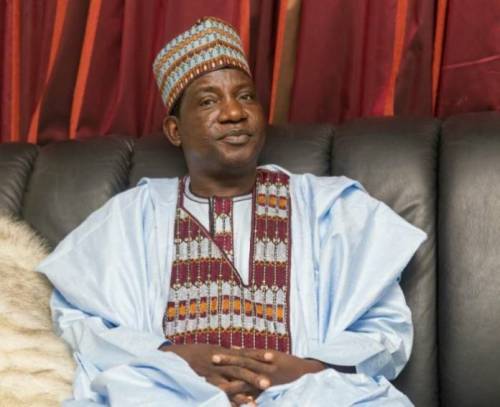
An open letter to Plateau State Governor, His Excellency Barr. Simon Bako Lalong

Your excellency sir,

The people of the Yelwa community have recently received soothing news of your plan to re-install a head for them, who will help revive and fight for the development of the community and beyond. The community had a joyous celebration at hearing this good news because they had long been waiting, praying for such action. Sadly, however, the tribalism-influenced reactions from some of your tribesmen (Goima people) show how envious they are about this long-awaited development.

Three to four days after the news reached every nook and cranny of the community, some rioters from your tribe were all over the streets of Yelwa Shendam protesting against the re-instalment of the new community chief. Their protest didn’t stop there; it got to a point where they violently defaced many cars, attacked innocent passers-by and set some places afire. My dear Governor, what are we going to call this? Terrorism or what?

According to their unreasonable, selfish statements, the people of the Yelwa community must have been under the control of the Nsher community head, which is impossible if Justice is considered. My dear Governor, how on earth can a 30-year-old village be a mother to a 200-year-old community? Is this something to agree with? No. Nsher is a 30-year-old village, while Yelwa is a 200-year-old community. There’s 170 years interval between the two. Therefore, Yelwa is, whether they like it or not, a grandmother to a mother of Nsher.

Since November 26, 1992, when the community head, chief Adamu Othman died, Yelwa has been without a leader to date (almost 30 years today). The previous administrations, at some point, vowed to re-install a new head for the community but didn’t keep their promises. It is surprising and questionable for a populous community like Yelwa to be left this long without a ruler. Many more villages in Plateau State have less population, businesses and other developmental things than Yelwa, but none is without a head. Why Yelwa?

Truthfully, Yelwa deserves to be upgraded to the status of Local Government, not only chieftaincy, for it has all it takes to be one.

Finally, my dear governor, the people of the Yelwa community really appreciate your tremendous support and care towards them. You are indeed a true definition of a good leader. Yelwa people have no words to thank you enough. But there is one thing you seem to forget. I have already demystified it above.

Thank you, sir.

Muhammad Abubakar

The “Umar Model”: A solution to the recurrent failure of leadership

By Ubaidullah Alhassan

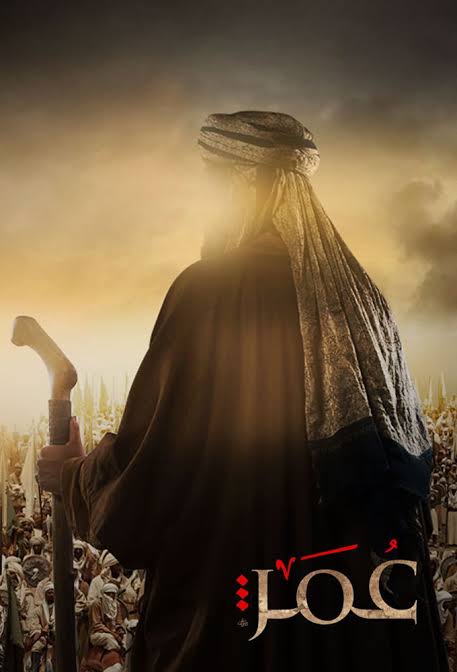
In this modern era, we mostly complain about the failure and inefficiency of our leaders. This is true as most of them have failed to measure up to our standards and expectations. It has become worse to a point that our ideologies and perception of leadership have been influenced; we feel that all things are the same and the recurrent pattern of failure will remain forever. It is sad enough that little or nothing has been done to make us feel better. Whenever I reflect on the present state of our leadership system, I compare everything to a great man who lived many centuries ago. He is the Muslim hero, Umar ‘Al-Faruq’ the son of Al-Khattab, and also the second successor (Caliph) of the holy prophet Muhammad (peace be upon him). I always say to myself: “If only our leaders possess one percent of the character of Umar, we would all feel safe and happy.” Our focus should not be on the religion, class, race or tribe of our leaders, but we need to make sure they are able to follow a praiseworthy example which is clearly evident in the beautiful model of the renowned great Caliph Umar.

Before embracing Islam, Umar was a typical figure during the age of ignorance, with a ruthless and savage character. After being blessed with faith, he became altruistic, self-controlled, and meticulous about the law. His harsh and brutal nature metamorphosed  into a merciful and tender one. This even increased when he was appointed as the leader of the Muslims. He became more God-fearing, conscious and affectionate towards his affairs, people and jurisdiction.

As caliph, he was a highly responsible person who always maintained the peace of his community. He would say, “I fear that Allah may ask me about if a sheep is lost by the Euphrates river.” This is such a wonderful statement that shows how much a compassionate leader he was. It is interesting to note that the distance between the river and the Muslim headquarters in Madinah is over 1600 kilometers.

In the evenings, he used to go around the neighborhoods of the city carrying supplies on his shoulders to help the orphans and the needy. He was never satisfied in spirit until he consoles broken hearts, wipes tears from eyes, and makes the downcast to smile. He was much aware of what he had been entrusted with that he worked hard, day and night, to fulfill his task. Yet he was never contented with the services he rendered. He was never at ease. He followed the noble footsteps of his predecessors and he forever remains renowned as a just and praiseworthy leader, for he was in awe of his responsibility.

The basic goal of this venerable man was to ensure the wellbeing of his community. He forgot his own problems and he took on the community’s problems, turning them into his constant concern. He strictly followed the examples set by the Prophet who led before him. He never forgot how much the Prophet suffered and struggled to succeed, and he followed in the Prophet’s sacred track and managed to find the right way.

The most notable of Umar’s caliphate was the vast expansion of Islam. Along with the Arabian Peninsula to Egypt, Iraq, Palestine, and what is today Iran also came under the protection of his government. The wealth of the Byzantine and Persian empires began to flow into Madinah, and the standard of living of the Muslim community began to improve. Yet Umar maintained the same lifestyle that he had followed before. Though his state grew in splendor and its treasuries were overflowing, he kept on giving the Friday sermon in patched clothes. He lived a humble life to protect himself from the seduction of his lower self.

In a famous incident, when Umar traveled to Damascus to put the new Islamic government on a firm footing after the conquest of Syria, he was accompanied by only a single attendant, and rode only a single camel. He suggested to his attendant that the two of them ride the camel by turns. The attendant rejected the offer, saying that the people would be confused. Yet Umar insisted, and made the man get on the camel. As the turns fell out, when the two of them entered Damascus, the servant was riding and the ruler was walking.

He was also known as “Al-Faruq” which means the distinguisher between truth and falsehood. He served as a staunch advocate for justice. He kept all measures in place to avoid any form of corruption, nepotism or mismanagement.

Though he governed an empire, he kept its public funds separate from his private funds. He personally fall into debts and faced difficulties in life. He accepted only a small allowance from the treasury, and living on that amount, led a hand-to-mouth existence. He lived so humble a life that many visitors did not grasp that he was, indeed, the great Caliph Umar. When the people insisted that he increased his allowances, Umar beautifully said: “My two friends and I are like three travelers. The first (the Prophet) reached his place. The second (Abu Bakr, the immediate leader after the Prophet) reunited with the first by following the same path. And I, as the third, wants to join them. If I go over-laden, I won’t be able to catch them! Don’t you want me to be the third traveler on this path?”

The following are beautiful statements made by the great Caliph Umar:

“The one I love most is the one who tells me my faults.”

“Among people whom I do not know, the most beloved to me is the one who has a good name. Among people whom I do know, the most beloved to me is the one who has a good manner. Among people who I am examining, the most beloved to me is the one who speaks the truth.”

“Once a task is postponed, it is difficult to move it forward again.”

“If you do not live what you believe, you will begin to believe what you live.”

“The hidden witness of an evil act is our conscience.”

Indeed there are countless lessons left for us to derive from the exemplary leadership and character of the great Caliph Umar. He is not only an example for all Muslims but also for every leader in the world. If only our leaders could follow the “Umar Model,” we would move from a society filled with selfish, incompetent, irresponsible and inefficient leaders to a one mainly characterised with overall growth and development in every sector.

Ubaidullah Alhassan is from Kogi State, Nigeria. He is a student of Ahmadu Bello University, Zaria.

Greedy Nigerian leaders lack intellectual capacity to lead – Prof. Jega

By Uzair Adam Imam

Former Chairman of the Independent National Electoral Commission (INEC), Prof. Attahiru Jega, has described Nigerian leaders as greedy who lack the intellectual capacity and vision in terms of how to usher in developmental projects.

Jega stated this on Monday, 15th November 2021, at the Maitama Sule Leadership Lecture Series, organised by the Students Wing of Coalition of Northern Groups (SW-CNG), in Katsina.

He also added that the insecurity and economic challenges that have been bedeviling the country for a long time are as a result of the country’s bad leadership.

Jega said: “The major indices of these crises manifested themselves from the Northern part of this country, whether it is poverty, youth unemployment, security challenges, maternal mortality, out-of-school children, lack of girl-child education and early marriage as well as the challenge of reproduction of our females.

“Anything you can think of, the terrible statistics come from the Northern part of this country. And why is it so? That is the key question. Today, we remember the Maitama Sule, the Amadu Bellos, Isa Katais and many others.

“These were people who led and protected the North and ensured that the North developed in accordance with its ability and their own abilities as leaders. While we cherish the memories of what had happened in the past, what kind of leadership have we got from the Northern part of this country?

“We have so-called leaders who are selfish, who are not selfless, greedy, who have a narrow vision in terms of how this country can develop not to talk about the region where they come from. They really lack intellectual capacity to be classified as leaders,” he said.

Are we the leaders of tomorrow?

By MA Iliasu


This question has grown into a full-blown critical question among Nigerian youths. And from the way it exudes the aura of anger and despair, it’s evident that generational frustration and offence seem to take over at the mere mention of the question. The anger and grief are mainly directed at the core of the established ruling class, who aren’t growing any younger, whose incompetence also seem to grow with their age.

“We were scammed. I don’t believe we’ll be the leaders of tomorrow. Obasanjo was the president when I was born. Today it’s Buhari. Both are older than my grandfather. And tomorrow it’ll be another older man in the villa. How does that show any trustworthy sequential line of succession?” a very vibrant, 22-year-old young man who loves to discuss national politics tod me. Clear as the sun, he was angry.

I murmured. To an extent, the young man had a valid point – after all, who doesn’t want positive, fresh energy and change in the leadership capacity. Meanwhile, if there’s another thing to be exploited from the frustration of our youths that often warrants utterances, such as that is the plentiful poverty of imagination and painful obsession with literalism. And that alone can explain why young blood is absent in the establishment of the highest political echelon.

“Is the definition of leadership really that narrow?” – I asked the young man.

Indeed, if what is leadership and who is a leader is restricted to presidential, gubernatorial or representative chairs and who gets to sit on them, then it’s only expected that we don’t care to responsibly fulfil the vacuums of class captains and school prefects, students union governments and community initiatives, let alone develop the ambition of leading the pack in trillion-dollar conglomerates, become the CEO’s of medium and small enterprises and head of profit and nonprofit organizations. That, too, is leadership and perhaps even a more fulfilling one. But, sadly, it’s so vivid that in the mind of Nigerian youths, politics is the only method of the ladder to, and only acceptable definition of, leadership.

Meanwhile, if leadership is really that narrow, in any country of a hundred million population, only less than 0.01% would be leaders over the course of a century. Did the person who first said that never knew this? Far from that. The issue is on us and us alone. Today, in Nigeria, we develop the habits of taking phenomena out of context and converting positivity into negativity. Overwhelming positivity does indeed cause a crushing crisis. But one thing history teaches us is that prosperity has never blossomed in a negative mindset.

With over a billion population, the Chinese wake up every day to tell their children they’re the leaders of tomorrow. Do you know how many people led China in its 76 years of official declaration? The US, the arena of blockbuster politics and democracy, with a population of over three hundred million, was ruled by less than fifty people of its official existence. And any other person outside of the presidential list was once told they would be the leader of tomorrow. The Soviet had significantly lower, as does Russia and Saudi Arabia and Japan and any muscly country.

So maybe the frustration isn’t in the saying but in our interpretation of it. Perhaps we simply lack imagination. Perhaps we’re just lazy. Because if we think as the forward-thinking do, we may have enough to realize leadership begins by being a good husband to your wife, excellent father to your child, a kind friend to your neighbours, a just leader to your community, an empathetic and responsible Godfather to your employees, an excellent teacher to your students, a good HOD to your department, a good dean to your faculty, good examination officer to your school and even a trustworthy representative to the wealthy man who assigns you to distribute occasional stimulus.

That your grandmother called you a leader so that you’ll make the name proud and raise children who’ll change the world. That one day, you may become influential and inspire lives forever and not necessarily a political leader if you become that too brilliant. But there are other prerequisites. And if alive, every sane and healthy human must pass through. If you reach there, you’ve fulfilled your inevitable destiny of becoming a leader. And how you exercise the right defines you even in the sight of your Lord (SWT). It’s not a consolation, neither a justification of a rotten system—only consolidation of reality and highlighting the fallacies engraved in our sorry definition of leadership.

So again, one may ask, “are we the leaders of tomorrow?”. We must “yes” to that question even with an overwhelming affirmation. It’s a natural order that we were all born to be leaders. We were, we are, and we’ll be. The best wish is to ask Allah to make us the best our generation will ever see.

MA Iliasu writes from Kano. He can be reached via his email muhada102@gmail.com.

The leaders we need in Nigeria

By Muhammad Auwal Ibrahim

This article is an attempt to highlight the leaders we need in our society. This becomes more relevant as election season comes and goes. We ought to know the leaders that are the best for us if we only want to succeed. This article, thus, would go a long way in addressing some of our major problems.

I am a Nigerian, and I am part of her in every situation, no matter how it may be. Be it good or bad; we share the feelings altogether. It is unfortunate that at this age of Nigeria, things are still happening upside down. Things are still falling apart. It is shameful.

Today, in Nigeria, any person can aspire to be a leader and be chosen either legitimately or illegitimately. But, mostly illegitimately, as asserted by Dr Usman Bugaje said in a paper he presented during Dr Sulaiman Kumo Memorial lecture at Gombe High School in 2018. This is one of the reasons that made me pen this.

However, Prof. Salisu Shehu, sometimes back, stated in his book Social Justice Leadership Responsibility in Islam that “It is because of the so-called democracy…”. I agree with him because even as young as I am, I still observed that some of our leaders are not competent or just, but they are still there to lead us. Some don’t even know where to start. Some still need to be trained and disciplined.

Dear Nigerians, do you vote for good leaders or looters with your eyes widely opened? Do you vote for competence or richness? Do you vote for your future wellbeing or for your present wellbeing that can perish in less than a day? Do you vote for the prosperity of your children: for them to enjoy the dividends of democracy, i.e. one who, if voted, would build schools, hospitals, construct roads, develop our infrastructures? Do you give somebody the mandate to rule you without paying particular attention to his qualities? Is it somebody that kills our economy, offers stimulants to our youth, destroys our society that you want to represent us?

Do you vote because you can or because it is an obligation and a right at the same time? Should we sit and fold our arms and watch them continue with their ruination, plundering, looting/embezzlement and squandering of public funds? What can we do, and how can we start? Think carefully about these questions.

The need for good leadership has been stressed earlier on. It is our fault since we failed to learn and implement the Islamic teachings, some of which the Sokoto jihad leaders deliberated on. Like the qualities of a leader. We cannot just stop on those mere democratic qualities.

Another critical point is that our people today seemed not to know their roles and obligations. This is not only in the case of the ruled but also the rulers. Why? The answer is very apparent. We need no further consultations. Sadly, most of them are not educated enough on leadership, not to mention their followers. This is indeed painful.

If I may ask some of our leaders, how many read books written on this topic of discussion ‘leadership’ by Sokoto jihadists like Shehu Usman Danfodio, his brother, Abdullahi Fodio, his son, Sultan Muhammad Bello and the rest of them? I think only a few would boast answering yes if any.

We, the subjects or more preferably the ruled or the led, have our various contributions to good governance at multiple levels of life. Aside from obedience and compliance with rules, so long as they are not evil and terrible. There are other positive contributions, like constructive criticisms, advising the government on good things and warning against evil and prayer, as asserted by Prof. Salisu Shehu in his book (Social Justice Leadership Responsibility in Islam). But today, we are relentless to all of these. Not all, but only a few of us are doing that.

Justice is an essential aspect of any given society. A leader, therefore, must be just. Consequently, we should pay special attention to this quality before selecting any leader.

Knowledge should be considered. Knowledgeable can be found in our learning institutions. Therefore, institutions should be put in place to teach our younger ones leadership traits before it becomes too late to overcome the present challenges. 

Competence is another most appealing quality. A leader’s ability to overcome situations and handle matters mattered a lot. But do we care? We should not just go ahead and select a person to represent us, knowing that that person is not competent.

These are the few characteristics of a leader. Some books address such issues. These include: Social Justice Leadership Responsibility in Islam and Shugabanci a Mahangar Musulunci: Yadda Al’amarin Yake A Nijeriya. I hope they will serve as a guideline to aspiring leaders.

In the end, I hope our young leaders will take heed of all these. Further, I pray that all aspiring leaders learn what leadership is all about before clinching any position of power.

Muhammad Auwal Ibrahim is an award-winning journalist, fellow African Investigative Journalism Conference (AIJC) 2020, Wits University, Johannesburg, South Africa. He can be reached via awwalbinibrahim@gmail.com.