Law Ethics

Judge bars lawyers from granting media interviews

By Abdullahi Mukhtar Algasgaini

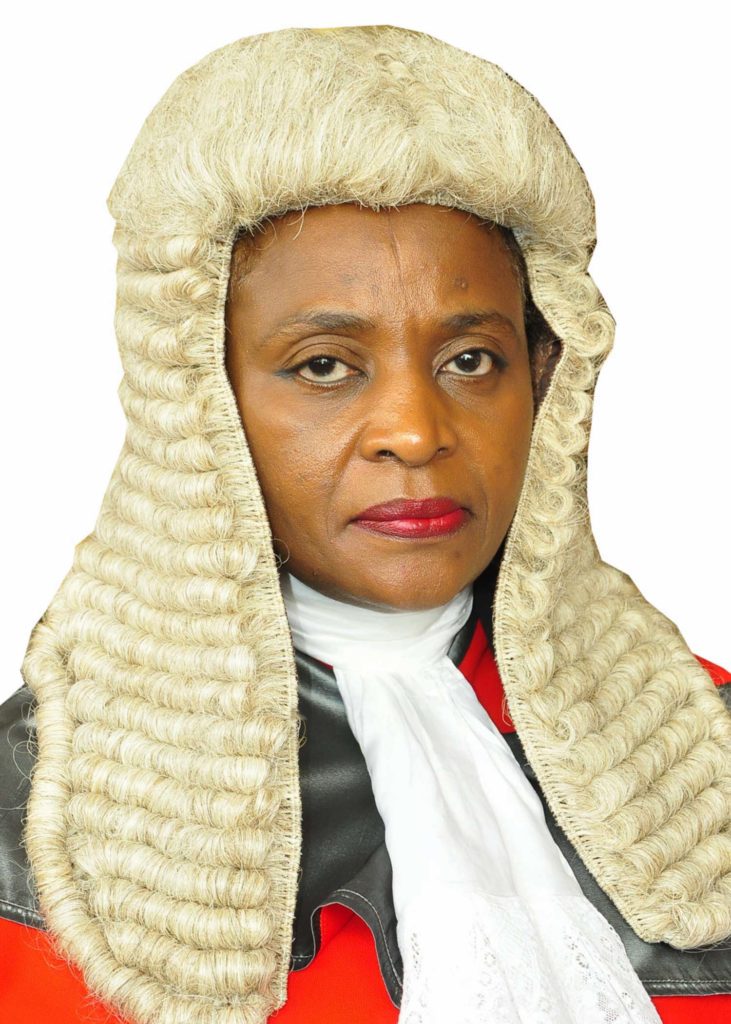
A Kano State High Court presided over by Justice Amina Aliyu, has restrained lawyers from granting reporters interviews in the ongoing Kano Emirates Tussle case.

Justice Aliyu gave the order on Thursday during the court proceedings.

“I am giving an order to lawyers not to grant any interview with journalists before and even after my ruling on the respondent stay of proceedings application pending the hearing and determination of the appeal,” the Judge said

The applicants in the case are the Attorney General and Commissioner of Justice of Kano State, Speaker Kano State House of Assembly, and Kano State House of Assembly, through their counsel Ibrahim Isah-Wangida filed a motion exparte dated May 27.

The applicants are seeking the court to restrain the deposed Emir, Aminu Ado Bayero, and four other dethroned emirs of Bichi, Rano, Gaya, and Karaye from parading themselves as emirs.

The respondents in the suit are Alhaji Aminu Ado-Bayero, Alhaji Nasiru Ado-Bayero Bichi emir, Dr Ibrahim Abubakar ll, Emir of Karaye, Alhaji Kabiru Muhammad-Inuwa, Emir of Rano and Alhaji Aliyu Ibrahim-Gaya, Emir of Gaya.

Others are the Inspector General of Police, Director of State Security Service, Nigeria Security and Civil Defence Corps, and Nigeria Army.

Does bail mean acquittal? 

By Abba Kyari Mohammed

In the Nigerian legal system, terms such as bail, discharge, conviction, acquittal etc., have always confused the non-lawyers, leading them to take erroneous stands over some issues. Anytime there is a high-profile trial before our courts and bail is granted to the accused person, Nigerians will curse the entire justice system describing it as weak, ineffective and a system that rigs itself to favour the rich – all because the courts exercise powers vested in them in a constitutional way to preserve the rule of law. 

I, therefore, find it pertinent to clarify some of these terms so Nigerians will stop bashing the judiciary and can redirect their anger to the right quarters while recognising their rights in the event they come in contact with the justice system, which for all intent and purposes is there to dispense justice in the best possible way. 

Let’s start with Bail, which is what always sparks the uproar in Nigeria, especially on social media, where you expect people to have become conversant with this term yet have somehow been misconstrued to mean absolute discharge and even exculpation from the charges for which the person on bail is being tried. 

Bail simply means a temporary or conditional release of a person arrested, charged or convicted of a crime. It’s granted by the police pending the investigation of a matter before it, by the court when the case is pending determination, and by the court pending an appeal when a person must have been convicted (Which is rare and only under compelling circumstances).

When bail is granted, it doesn’t mean the person is exonerated of the charges; it only means that he is released on the condition that he attends his trial until the end. In the end, the court may find him guilty, then sentence him(punish) or not guilty, and discharge and acquit him(release and exonerate) of the charges. 

Why grant bail? 

Some may ask why grant bail to people who have done despicable things. Why not convict them outright since all the facts are as clear as crystal, such as having video evidence, a confession etc? There are so many whys on our minds; perhaps, this may explain. 

To start with, under Nigerian Law, there is the Presumption of Innocence under section 36(6) of the Constitution of the Federal Republic of Nigeria 1999 as amended. It means every person charged with a criminal offence shall be presumed innocent until proven guilty by a court. To prove a case before the court in Nigeria, there are procedures and requirements laid down by the law which must be complied with. It’s not enough for the media or anyone to believe the accused person is guilty or the amount of evidence people think there is. This means that the presumption of innocence can only be rebutted when a person is convicted for the offence charged by the court. 

Premised on the above, persons charged with an offence (since they are innocent) are entitled to the right to personal liberty generously guaranteed by section 35 of the Constitution and cannot be derogated except in the circumstances justified by the Constitution or other extant laws. This means bail is a constitutional right enjoyed by persons accused of committing crimes, just like all of us do.

The courts, therefore, grant bail not because they are paid off or have regard for the criminals because of their status or offices but because it’s their constitutional right which cannot be trampled upon unless it is legally justifiable. However, bail is only granted upon an application made to the Police or the Court by the accused or his surety(s). It means you must ask the court to release you and explain why it should release you. Some may wonder why many low-profile criminals rot in a dungeon while others are released even though the crimes differ in gravity. The simple explanation is that “They don’t ask”. 

Then discharge. It is similar to discharging a person from the hospital but not entirely the same. Suppose a man has cancer and he was taken to a hospital for treatment, but the family does not have enough money to proceed with the surgery prescribed by doctors; the man is discharged, perhaps, to be brought later when the money is realised or may not be brought depending on the circumstances.

To discharge an accused person by the court doesn’t mean the court finds him innocent, but it means the court is letting him go because there is not enough evidence on the part of the prosecution to ground his trial or the prosecution withdraws the case etc. In these circumstances, the person can be rearrested and brought to court when the prosecution gathers enough evidence, just like in the case of the cancer patient when the family raised enough funds.  

Acquittal means that the court has found the accused person innocent of all the charges preferred against him after carefully looking at the facts and evidence presented by the prosecution. In a criminal trial, the case is said to have been unsuccessful and failed because the prosecution is unable to prove his case beyond all reasonable doubts.  Once the accused is acquitted, the doctrine of autre fois acquits is activated under Section 36 (9) of the Constitution of the Federal Republic of Nigeria [as amended] 1999, which means the person cannot be arrested or tried again for the same offence. It is similar to removing the cancer in the patient. Once it is removed, he is free from it. 

The Take-home therefore are:

Bail is a temporary and conditional release of an accused person pending when his trial is concluded. The accused goes home and always comes to court during his trial. In the end, the court may jail him or set him free. 

Discharge is the release of the accused person by the court but not a declaration of innocence. The person can be rearrested and brought to court again. 

Acquittal is the complete and total exoneration of the accused from the charges after the conclusion of a trial and the evaluation of evidence. 

Abba Kyari Mohammed can be reached via abbakyari2013@yahoo.com. 

Advocacy, ethics and the trial of Abduljabbar Nasiru Kabara (I)

By Ibrahim Ahmad Kala, LL.M

The one-time Attorney General of the Federation and Minister for Justice in the Second Republic, Late Chief Richard Akinjede, SAN once asserted that oral Advocacy is a special science and art skill of good courtroom lawyers which is likened to the scene in Julius Caeser that took the form of funeral orations by Brutus and Antony over Ceaser’s corpse. Having just killed Ceaser, the conspirators wanted Brutus to assure the Romans that all was well and that Ceaser’s death was necessary to prevent tyranny. Antony, Ceaser’s close friend, feigned solidarity with the conspirators and persuaded them that he too should say a few words over Ceaser’s body.

In comparing Brutus and Antony as orators, we should remember two other classical orators: Cicero and Demosthenes. When Cicero finished an oration, the people would say: “How well he spoke”.  But when Demosthenes finished speaking, the people would say: “Let us March”. Brutus was like Cicero and Antony like Demosthenes. Brutus won respect, but Antony started a riot.

The funeral orations which exemplify an extraordinary example of how Shakespeare can bear on the law, underscore the effectiveness of oral Advocacy which a lawyer should read before addressing the court in a major trial.

Regrettably, like Antony, Bar Shehu Usman Dalhatu on 7/7/2022 in his appearance while defending Sheikh Abduljabbar Nasiru Kabara before a Sharia Court of Kano State, caused stirred on social media and openly accused the trial judge of being unlike Ceaser’s wife of not sitting above board in the case. As seen in a viral video, the counsel was heard castigating the court for allowing the prosecution to ask “all sorts of questions such as asking the defendant when his father died? Which he argued, is not contained in the charge,” during cross-examination,  and “denying his client right to make a no-case submission”, saying no prima facie case was established against him. According to the Daily Trust report, the mild drama led the defence counsel, Dalhatu Shehu-Usman to walk out on the judge.

The Kano State Government had charged Kabara with four counts, bordering on blasphemous comments against Prophet Muhammad (PBUH) on Aug.10, Oct. 25 and Dec 20, 2019.

With due respect to all, the entire scenario that played out in the court is, to say the least, highly nauseating and totally against the professional ethics required of players in the administration of justice in this country. In one of my previous articles on the relationship between the Bar and the Bench, I penned down as follows:

In R. vs. O’Connell (1844) p261 at 312-313 lifted from Oputa JSC’s book “OUR TEMPLE OF JUSTICE” p.14, Crampton J. said thus:

“This court in which we sit is a Temple of Justice, and the Advocate at the Bar as well as the Judge on the Bench are equally ministers in that Temple. The object of all, equally, would be the attainment of justice…”

Oputa JSC further distilled some guiding principles on the relationship between the Bench and the Bar as follows:

 “Lawyers and Judges being instruments of justice are honoured and honourable.

Such honourable men should not allow ‘the infirmity of human nature and the strength of human passion’ to lead them astray, let alone lead them to perpetuate an outright injustice.

The Legal profession is not just another avenue for quick money-making by hook or crook. To so conceive the profession, is to degrade it.”

Similarly, Richard Du Cann in his book: “The Art of the Advocate” speaking on the duty of the Advocate while quoting Lord MacMillan, a Lord Advocate-General in Scotland and a member of the Judicial Committee of the House of Lord’s declared the duty in fivefold as follows:

“In the discharge of his office, the Advocate has a duty to his client, a duty to his opponent, a duty to the court, a duty to himself, and a duty to the state. The duties, in fact, begin long before he rises to his feet resplendent in horsehair wig and stuff gown”.

Hence, it is not part of the duties of a Lawyer to win at all costs or at any cost. There is rather a heavy cost to winning at all costs and that cost is disdain and dishonour and the desecration of the sacred temple of justice. Judges and Lawyers have a prior and perpetual retainer on behalf of the truth.

All these, therefore, reflect very much the tradition of the legal profession on the relationship between the Bar and the Bench, and which is one of reciprocity. The smooth administration of justice envisages the existence of courageous, efficient, honest and fearless Bar and Bench.

The Bench is entitled to unqualified respect from the Bar and so expects it. The least Magistrate Court, Area, Sharia or Customary Court and the highest court of the land are equally entitled to this respect. Members of the Bar stand up when they address or are addressed by the Bench.

The counsel who easily picks up quarrels with the Bench acts in contravention of this important duty. The duty of respect which is as old as the profession itself is highlighted under Rule 1(a) of Rules of Professional Conduct as follows:

It is the duty of the Lawyer to maintain toward the Court, a respectful attitude, not for the sake of the temporary incumbent of the judicial office, but for the maintenance of its supreme importance. Judges not being wholly free to defend themselves against criticism and clamour. Whenever there is a proper ground for a serious complaint of a judicial officer, it is the duty of the Lawyer to submit his grievances to the proper authority. In such cases, but not otherwise, such charges should be encouraged and the person making them should be protected.

This aged-long tradition of respect has crystallized into a solid cornerstone in the edifice of the Bar-and-Bench relationship. You alone cannot change the position overnight. The tradition is so well established at the Bar that, even when counsel has nothing but rude remarks to make, by tradition he is expected to start by saying: “With respect”.

These ethics demanded the best of Man: obedience and decency, as it was demanded that Adam (A.S) should keep his own part of the bargain, and he did not; that was unethical and there came his fall.

The court is where counsel will spend the rest of his years at the Bar trying to persuade to his view. One cannot carry it along with him if, by lack of manners, one alienates its feelings beyond recall or consistently.

To be continued

Ibrahim Muhammad Kala Esq is the Head of Litigation Department, Court of Appeal Gombe division and can be reached via ibrokalaesq@gmail.com