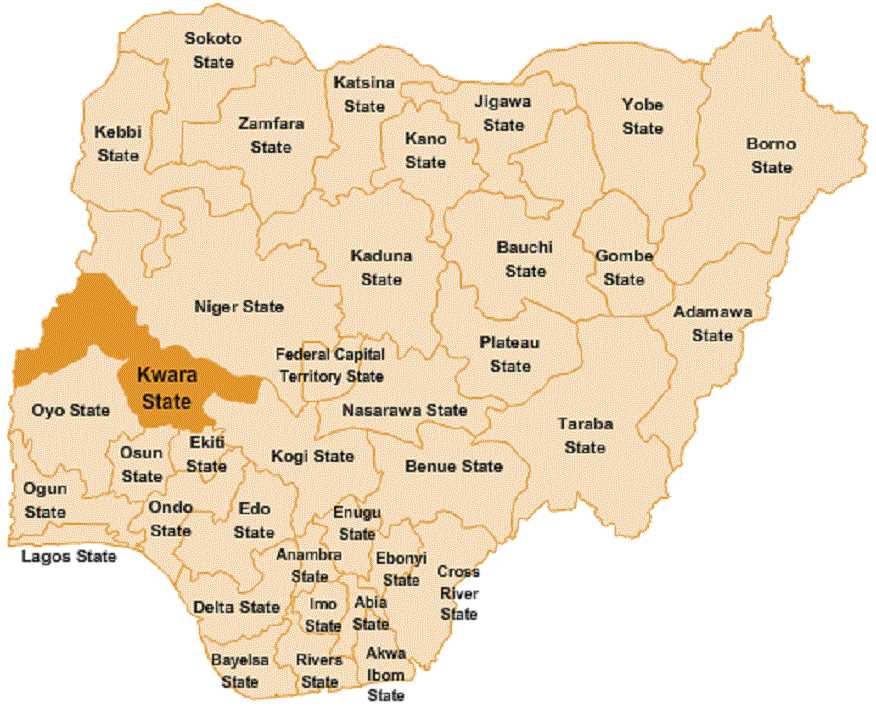
Kwara State

Midnight blasts damage buildings in Kwara after Trump announces U.S. strikes on parts of Nigeria

By Sabiu Abdullahi

Residents of Offa in Kwara State were gripped by fear late Thursday night after powerful explosions tore through parts of the town, leaving several homes and shops damaged.

The incident came hours after United States President Donald Trump announced that American forces had carried out airstrikes against ISIS positions in some parts of Nigeria.

It has not been confirmed whether the explosions in Offa were connected to the reported U.S. military operations or whether they were the result of an action carried out solely by Nigerian security forces.

Witnesses said fragments fell from the sky shortly after the blasts. This development raised suspicions that the explosions may have resulted from bombs delivered by unmanned aerial vehicles.

A large piece believed to be part of a drone bomb was seen on the ground near the affected area.

Information gathered indicated that at least five houses and several shops were damaged. Rubble spread across the neighbourhoods that were hit by the explosions.

Video clips also showed frightened residents appealing to the Kwara State Government to step in and assess the situation.

Some residents expressed confusion over why Offa, known as a peaceful community, would experience such an incident.“Why would they launch a bomb here?” one visibly shaken resident asked. Another added, “We saw the drone remnants after it destroyed a house.”

A member of the local vigilante group who visited the affected areas confirmed that the first explosion occurred around midnight.“I got there after 12 a.m. I called the Balogun (war chief), and he came immediately. We went to the hotel where one of the explosions occurred, but I won’t mention the hotel’s name. The hotel was damaged. Another explosion happened around the prayer ground near Ijagbo in Offa,” he said.

Saliu Mustapha: The echo Ilorin cannot ignore

By Haroon Aremu Abiodun

There are mornings in Ilorin when silence feels heavier than sound. The call from the mosques echoes through the still air, the streets breathe quietly, and the city wears its memories like scars. Old voices recall leaders who once came with grand promises of tomorrow, only for those promises to collapse into dust. Over time, people have learned to wait with folded arms, half-expecting betrayal, half-resigned to it. In such silence, names either fade away or return as stubborn echoes. For Ilorin, one such echo is Saliu Mustapha.

Ironically, his story does not begin with privilege or inherited power. Born on September 25, 1972, he followed ordinary paths: Bartholomew Primary School in Zaria, Command Secondary School in Kaduna, then Kaduna Polytechnic, where he studied Mineral Resources Engineering. His foundation was not gilded, but shaped by discipline and a technical education that sharpened his instinct for problem-solving, a skill he would later carry into politics.

Politics did not come to him as an inheritance. He carved his own space, first as the National Publicity Secretary of the Progressive Action Congress, and later as the National Deputy Chairman of the Congress for Progressive Change. These were not glamorous titles but challenging, foundational roles in party-building, long before the APC became the political behemoth it is today. His fingerprints are etched into the DNA of Nigeria’s political evolution, even before his name became widely recognised on the Senate floor.

In 2021, Ilorin’s political and traditional calculus shifted when Mustapha was turbaned as Turaki of Ilorin. What many saw as a mere ceremony was, in fact, a rupture of entrenched political alignments. For the first time, a politician already known for grassroots philanthropy was formally woven into the traditional fabric of Ilorin. That title would become part of his political identity, following him into every campaign, every negotiation, every conversation.

Today, he serves as the Senator representing Kwara Central and chairs the Senate Committee on Agriculture Production, Services, and Rural Development. This portfolio is not symbolic; it is central to Nigeria’s survival. In a country where food crises threaten households and livelihoods, the committee he leads touches what matters most: food on tables and jobs in villages.

But Abuja titles mean little without ground truth. On the streets of Ilorin and across Kwara Central, his presence is felt through the quiet but steady work of the Saliu Mustapha Foundation. From funding scholarships and refurbishing classrooms to constructing the Al-HikmahOnimalu road, his interventions blend education, infrastructure, and empowerment. His scholarship program for Arabic and Islamic Studies students, under the NBAIS framework, reflects cultural sensitivity that is often absent from mainstream politics.

Even his empowerment programs carry an unusual personal stamp. With ₦100 million branded as Turaki Cash, artisans and traders were lifted into small but meaningful stability. Unlike many politicians who shy away from direct ownership of initiatives, Mustapha attached his name to the initiative, underscoring his responsibility and intent.

There is also philanthropy done quietly, beyond the glare of headlines — clearing hospital bills for indigent patients, including children whose stories might otherwise never be heard. These gestures rarely make it into campaign flyers, but they build a loyalty deeper than billboards ever could.

Perhaps most striking is his approach to accountability. Unlike most of his peers, Mustapha documented his first year in the Senate with a public scorecard, published on his official website. Every project, every intervention, is laid out for public scrutiny. This transparency may not make him the loudest voice in the chamber, but it makes him one of the most accountable to the people he represents.

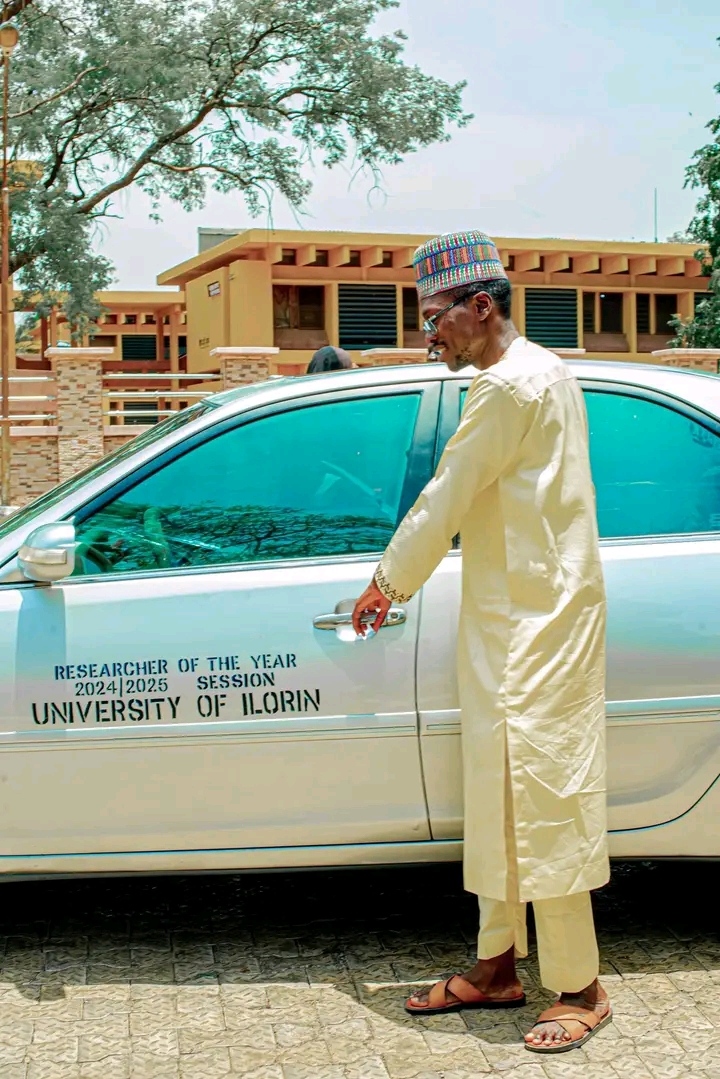
Recognition has followed. In 2025, the University of Ilorin hosted him as a Distinguished Personality, a rare academic acknowledgement that demonstrated his relevance had extended beyond politics into civic and intellectual spheres.

So what does all this mean on his birthday? It means that, unlike many whose legacies are written in lofty speeches, Saliu Mustapha’s is being written in roads, scholarships, markets, and farms. It means that, in a society addicted to noise, he has chosen the language of implementation. And it means his name has become that stubborn echo Ilorin cannot ignore.

Happy birthday to Senator Saliu Mustapha, Turaki of Ilorin. History has not given you a free pass; it has given you a challenge: to turn your uncommon record into an indelible legacy.

Haroon Aremu Abiodun is an Associate Member of the Nigerian Institute of Public Relations (NIPR).

Kwara’s false sense of security: How complacency risks a regional catastrophe

By Iranloye Sofiu Taiye

The crackle of gunfire shattered the night’s calm in Patigi Local Government Area last August. For hours, residents hid in terror as militants believed to be linked to the Mahmuda terrorist faction ransacked homes and farms, leaving behind a trail of displacement and despair. This wasn’t in conflict-ridden Zamfara or Borno. This was Kwara State, Nigeria’s so-called “State of Harmony”, now facing the brutal reality of spillover violence from neighbouring conflicts.

For years, Kwara has been regarded as an oasis of peace. While northern states battled insurgencies and northwestern states negotiated with bandits, Kwara’s security strategy primarily relied on these measures. This complacency is now our greatest vulnerability. As armed groups face increasing pressure in Nigeria’s northwest and the Sahel, they are seeking new territories and routes, and Kwara’s under-protected border communities present the perfect opportunity.

The data reveals an alarming trend: while Kwara recorded 70 violent incidents in 2024, representing a sharp increase from previous years, with ACLED data showing 21 fatalities signalling emerging threats. Meanwhile, neighbouring Niger State suffered 179 incidents with 514 deaths, over 2.5 times Kwara’s rate. This disparity highlights both Kwara’s relative peace and its growing exposure. Nigeria’s overall security situation has deteriorated dramatically, with the country dropping to 148th on the 2025 Global Peace Index and suffering over 2,266 deaths from banditry and insurgency in just the first half of 2025, exceeding the entire 2024 total.

The False Comfort of “Relative Peace”

Kwara’s peaceful reputation has created a dangerous paradox: the state appears secure compared to Nigeria’s raging conflicts, yet this very perception has led to critical underinvestment in security preparedness. With a meagre ₦350 million (approximately $230,000) security vote in its 2025 budget, Kwara has insufficient resources for basic border surveillance, let alone comprehensive counterinsurgency measures. This budgetary neglect reflects a fundamental misreading of the evolving threat landscape.

The nature of modern conflict doesn’t respect artificial boundaries. Militant groups operate across porous borders, exploiting governance vacuums and ethnic kinship. The emergence of groups like Mahmuda around the Kainji Lake area demonstrates how terrorist organisations establish footholds in perceived “safe havens” before expanding their operations. As security reports have noted, there have been at least 13 ISIS-Sahel-linked attacks in central Nigeria in 2025 alone, indicating a strategic southward expansion.

The situation mirrors concerning patterns elsewhere in West Africa, where jihadist insurgency has spread from the Sahel toward coastal states. The southward spillover alarmingly threatens countries like Benin, Togo, Ghana, and Côte d’Ivoire, which until recently had been mostly spared jihadist violence. Kwara now faces precisely this dynamic, compounded by the added vulnerability of having dismissed the threat until it arrived at its doorstep.

Recommendation: A Community-Based Solution

Some advocate for a traditional security response: deploying additional military forces along border areas, establishing checkpoints, and implementing drone surveillance. While these measures have short-term deterrent effects, they come with significant tradeoffs: escalating tensions with communities, straining federal-state relations, and diverting scarce resources from development needs.

A more effective approach combines strategic security presence with community empowerment. I recommend that Kwara State immediately establish a Community-Led Early Warning and Resilience Program (CLEWRP) to train and equip more than 5,000 local volunteers in conflict mediation, digital reporting, and response coordination. This approach recognises that security is not merely about repelling attacks but about building resilient communities capable of preventing, withstanding, and recovering from violence.

The evidence supporting community-based security is compelling. When local populations are empowered as first responders, they provide hyperlocal intelligence that external forces cannot access. They understand the terrain, recognise outsiders, and can distinguish between legitimate herders and criminal elements. As the tragic incidents in Kwara’s south communities have shown, top-down security responses often arrive too late after attacks have occurred and perpetrators have vanished into the forest corridors connecting Kwara, Niger, and Kogi states.

The proposed CLEWRP program would unfold in three phases: planning and stakeholder consultations across Kwara’s 16 LGAs; pilot implementation in high-risk areas; and statewide scaling, with continuous evaluation. The Kwara State Ministry of Homeland Security and Vigilante Affairs would lead implementation, partnering with the National Emergency Management Agency for federal coordination, local governments for ground implementation, and international organisations for training expertise.

Financing the $3-5 million USD program would require a blended approach: 60% from the state budget and 40% from federal security grants and humanitarian NGO partnerships.

A National Security Imperative

Kwara’s security crisis represents a microcosm of Nigeria’s broader challenges. The federal government’s 2025 budget allocated ₦4.91 trillion to defence and security, about 8.9% of total expenditure, recognising that without security, economic development is impossible.

The national security strategy must therefore prioritise preventing the southward spread of violence in states such as Kwara. This requires both regional cooperation and smarter resource allocation. The Accra Initiative, which promotes intelligence-sharing among coastal West African states, offers a promising model that should be expanded to include central Nigerian states facing spillover threats.

Furthermore, security funding should incentivise preventive approaches rather than merely funding reactive measures. The federal government could establish a matching-grant program for states that develop community-based security initiatives, thereby encouraging locally adapted solutions rather than one-size-fits-all approaches.

The Time for Action Is Now

Kwara stands at a precipice. The state can continue its complacent approach, hoping that violence will spare its territories, or it can acknowledge the changing threat environment and build resilient systems before the crisis becomes a catastrophe. The choice is stark: invest modestly in prevention now, or pay enormously for response later.

The CLEWRP program offers a practical, cost-effective solution that aligns with Kwara’s cultural traditions of community cooperation while incorporating modern technology and coordination methods. It acknowledges that security is not solely the government’s responsibility but a shared undertaking between authorities and citizens.

History shows that complacency amid spreading instability is a recipe for disaster. West Africa’s security landscape has deteriorated dramatically in recent years, with jihadist groups expanding their operations. Kwara cannot assume it will remain immune.

The phrase “State of Harmony” should not be a relic of Kwara’s past but a promise for its future. Preserving this harmony requires honest acknowledgement of emerging threats, courageous investment in preventive measures, and collaborative implementation across government and communities. The time for action is now, before the next attack becomes a full-blown crisis.

Iranloye Sofiu Taiye is a Policy Analyst specialising in Peace Building and Conflict Resolution, Digital Governance, and Service Delivery, and can be contacted via iranloye100@gmail.com.
Nigerian Army rescues 21 kidnap victims, Chinese nationals

By Abdullahi Mukhtar Algasgaini

Troops of the Nigerian Army have rescued 21 individuals who were held captive by bandits, some for more than four months.

The group of freed hostages includes four Chinese nationals.The rescue was carried out on October 17 by a combined force from the 12 Brigade in Lokoja and the 22 Armoured Brigade in Ilorin, operating under the 2 Division/Sector 3 of Operation FANSAN YAMA.

According to an army press release signed by Lieutenant Colonel Polycarp Okoye, the victims—comprising 14 men, 5 women, 1 infant, and the four Chinese citizens—were abducted from various locations across Kwara and Kogi States.

The military stated that its “intensified offensive” pressure forced the bandits to abandon their captives, leading to their rescue.

Following their release, the victims received immediate first aid and were evacuated to a military medical facility for treatment.

Officials reported that many were physically weak and unable to walk without assistance due to extreme exhaustion but are now responding positively to medical care.

Major General CR Nnebeife, the General Officer Commanding the 2 Division, sympathized with the victims and reassured the public of the army’s commitment to its ongoing campaign.

“The Division remains committed to sustaining the ongoing onslaught against all criminal elements,” Major General Nnebeife stated.

“There will be no hiding place for bandits and other criminals within the Division’s Area of Responsibility.”

The GOC also acknowledged the support of the Nigerian Air Force and other security agencies in the successful operation, directing his troops to “maintain the tempo” to restore peace and security in the region.

The rescued victims are expected to be reunited with their families after making a full recovery.

Governors meet with NSA, defence minister over rising insecurity

By Uzair Adam 

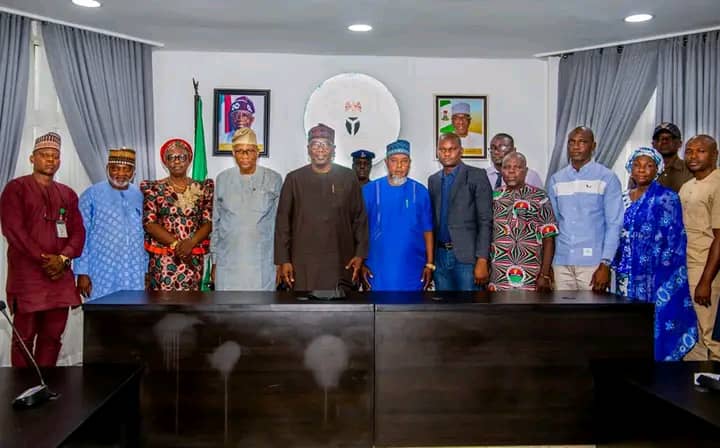
Amid growing security concerns across the country, members of the Nigeria Governors’ Forum (NGF) on Wednesday held a closed-door meeting in Abuja with the National Security Adviser, Nuhu Ribadu, and Minister of Defence, Mohammed Abubakar.

The meeting, chaired by the NGF Chairman and Kwara State Governor AbdulRahman AbdulRazaq, took place at the NGF Secretariat. 

Among the governors in attendance were those of Anambra, Akwa Ibom, Oyo, Kwara, Osun, Plateau, Lagos, Nasarawa, Ekiti, Ebonyi, Kogi, Ondo, Imo, Cross River, Ogun, and Edo states.

Although the agenda was not officially disclosed, the gathering is believed to be connected to the escalating insecurity in parts of the country, particularly the recent deadly attack in Yelewata, Benue State.

Earlier in the day, President Bola Tinubu visited Benue and met with stakeholders at the Government House in Makurdi, where he condemned the killing of over 100 residents in Yelewata. 

He directed the Inspector General of Police, Kayode Egbetokun, and the Chief of Defence Staff, Christopher Musa, to apprehend those responsible.

Sources confirmed that the Abuja meeting involved briefings from the NSA and the Minister of Defence. 

The Secretary to the Government of the Federation, George Akume, traditional rulers, and former state governors were also present at the Makurdi meeting.

President Tinubu queried the lack of arrests and urged the heads of the Department of State Services (DSS) and the National Intelligence Agency (NIA) to ramp up intelligence efforts to bring the perpetrators to justice.

27 people die in Kwara boat accident

By Uzair Adam 

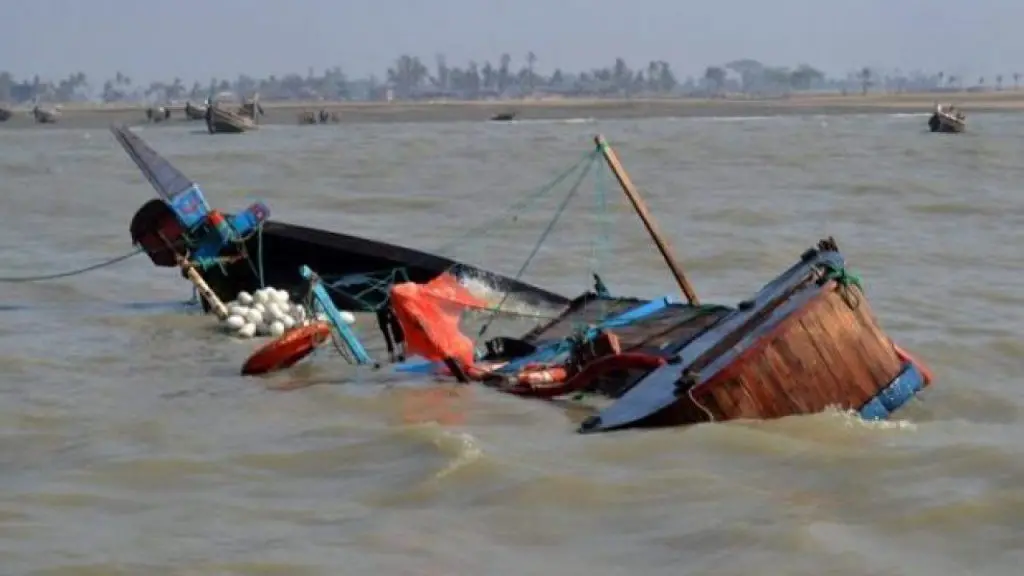
A devastating boat accident has reportedly claimed the lives of 27 passengers in Kwara State. 

The victims were said to be returning from a market trip in neighbouring Niger State when the incident occurred three days ago.

Eyewitnesses and a survivor of the mishap blamed the tragedy on overloading and a sudden heavy storm that struck at night. 

The boat, according to sources, was built to carry about 100 people but often ferries up to 300 passengers during both dry and rainy seasons.

This latest mishap comes just seven months after over 100 villagers died in a similar incident in the Gbajibo community, Kaiama Local Government Area.

Chairman of Kaiama LGA, Abdullah Danladi, confirmed the incident and led a government delegation to sympathise with the bereaved families. 

He warned that the government would no longer tolerate the recurring loss of lives on local waterways and revealed plans to establish a committee to enforce the use of life jackets and ban nighttime boat operations.

Also responding to the tragedy, the Emir of Kaiama, His Royal Highness Muazu Umar, vowed to step up awareness campaigns aimed at promoting safe practices among boat operators and passengers.

EFCC arrests 13 Chinese citizens over alleged illegal mining activities in Kwara

By Muhammadu Sabiu
 
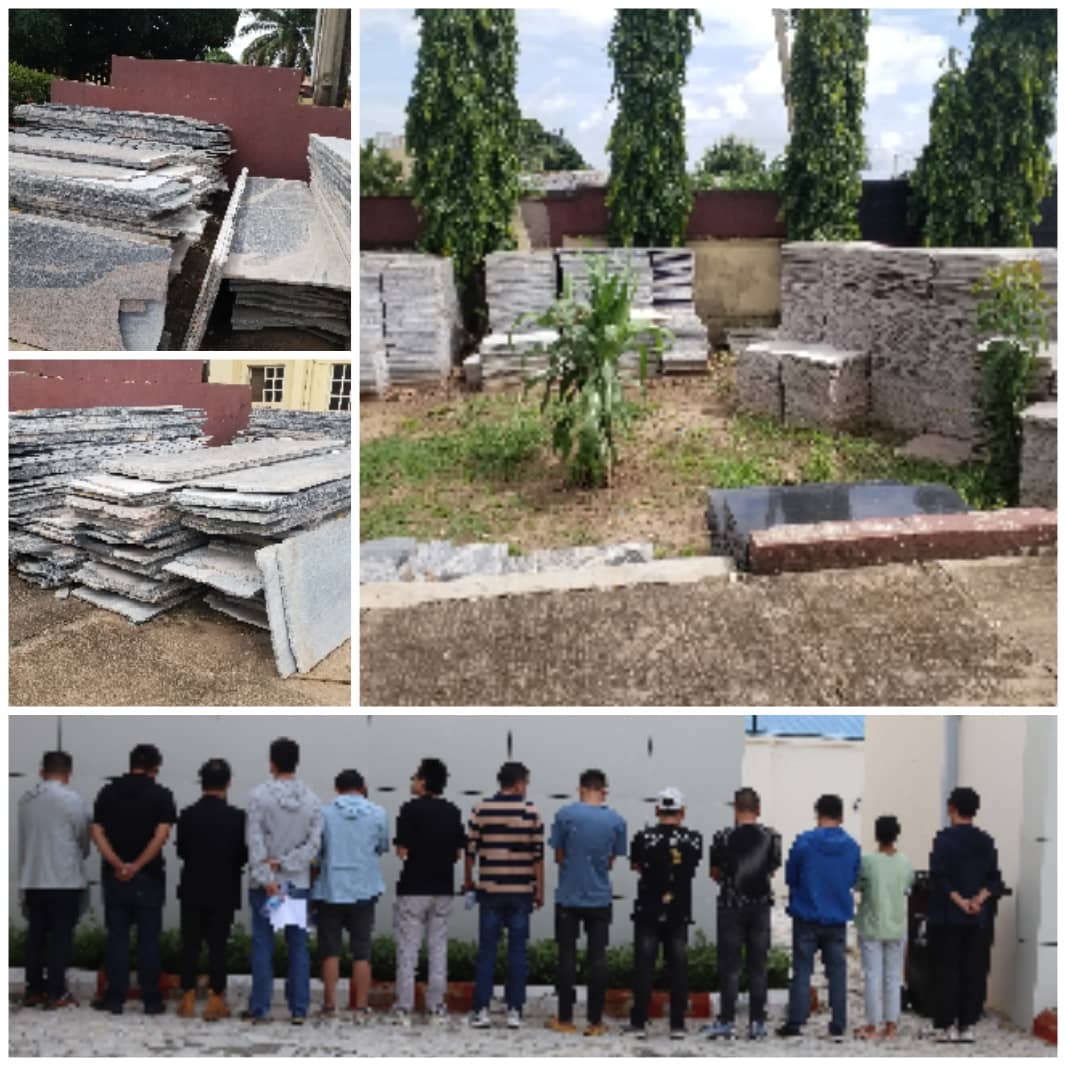
Operatives of the Economic and Financial Crimes Commission (EFCC) in Ilorin have apprehended 13 Chinese nationals for illegal mining activities in Kwara State.
 
The EFCC revealed this via a statement on its social media handles on Friday evening.
 
According to the anti-graft body, “the offence is contrary to and punishable under Section 1(8) (b) of the Miscellaneous Offences Act Cap M17, 1983.”
 
This paper understands that the suspects, who include a female and 12 males, were detained on Wednesday, July 12, 2023, at the Government Reserved Area, G.R.A. Ilorin, after obtaining reliable information about their unlawful activities, which included illegal mining and failure to pay royalties to the Federal Government as required by law.
 
The EFFC’s statement further reads, “Prior to their arrest, discrete investigations on the activities of illegal mining operators in Kwara State revealed that the operators have different illegal mining sites in almost all the 16 Local Government Areas of the state.”

Subsidy removal: Kwara announces three-day workweek

By Ahmad Deedat Zakari

Kwara State Government has reduced workdays to three days for the state public servants. 

The Chief Press Security, Office of the Head of Service, Murtala Atoyebi, revealed the development in a press statement on Monday. 

According to Mr Atoyebi, the action became necessary owing to the need to put measures in place to cushion the effect of the removal of fuel subsidy on workers in the state.

Part of the statement reads:

“The State Head of Service, Mrs Susan Modupe Oluwole announced today that the State Governor, Mallam Abdulrahman Abdulrazaq, has directed that the workdays be reduced from five days to three days per week for every worker.

“Mrs Oluwole directed all Heads of Ministries, Departments and Agencies (MDAs) in the State to immediately work out a format indicating the alternating work days for each worker under them.

The Head of Service however, warned the workers not to abuse the magnanimity of the Governor, stressing that the regular monitoring of MDAs by her office would be intensified to ensure strict compliance.”

Doctor arraigned for sedating, raping patient in Ilorin

By Uzair Adam Imam

A patient in Ilorin has met with a sad fate when one Ayodele Joseph, the Chief Medical Director of Ayodele Hospital, sedated and raped her iside the hopital.

A police report revealed that Dr. Ayodele sedated the patient and eventually raped her without her consent.

It added that the doctor sedated the patient and raped her when she went to the hospital for medical treatment.

Ayodele was arraigned on a two-count charge of act of gross indecency and rape, contrary to sections 285 and 283 of the penal code.

The Daily Reality, through the police report, learned that the victim, who fell under the doctor’s trap, is also a professional nurse.

“Investigation into the matter however led to the recovery of the video recording containing sexual action of the defendant on the victim while medical text also confirmed that the said nurse was assaulted and raped”, the charge sheet disclosed.

Gbenga Ayeni, the prosecutor, informed the court of the gravity of the offence and the motion attached to the police report, which sought to remand the suspect.

The court granted Ayeni’s prayer for remand while the matter was adjourned to May 18th, 2023.

Kwara doctor arrested for alleged killing of girlfriend, one other

By Uzair Adam Imam and Muhammad Sabi’u

A Chief Medical Director of Kaiama General Hospital, Dr. Adio Adebowale, was arrested for allegedly killing his girlfriend and one other lady in Kwara State.

A statement issued and signed by the state police command PRO, Ajayi Okasanmi, disclosed this on Sunday in Ilorin.

The suspect was arrested in Edo and had confessed the killing of his girlfriend, Ifeoluwa, who declared missing in Table area of Ilorin in 2021.

”The investigation led the team to Kaiama general hospital where the suspect worked as the Chief Medical Director.

“The suspect’s office was forced opened and a decomposing corpse of an unidentified female body was found buried in a shallow grave,” the spokesperson said.

Further search to his office led to the discovery of another decomposing corpse of missing Nafisat Halidu in a trash can.

“Based on the commissioner’s directive, investigation into the case began and that the Police worked on an information based on the arrest of one Dr Adio Adebowale in Edo,” the statement added.