Kidnapping

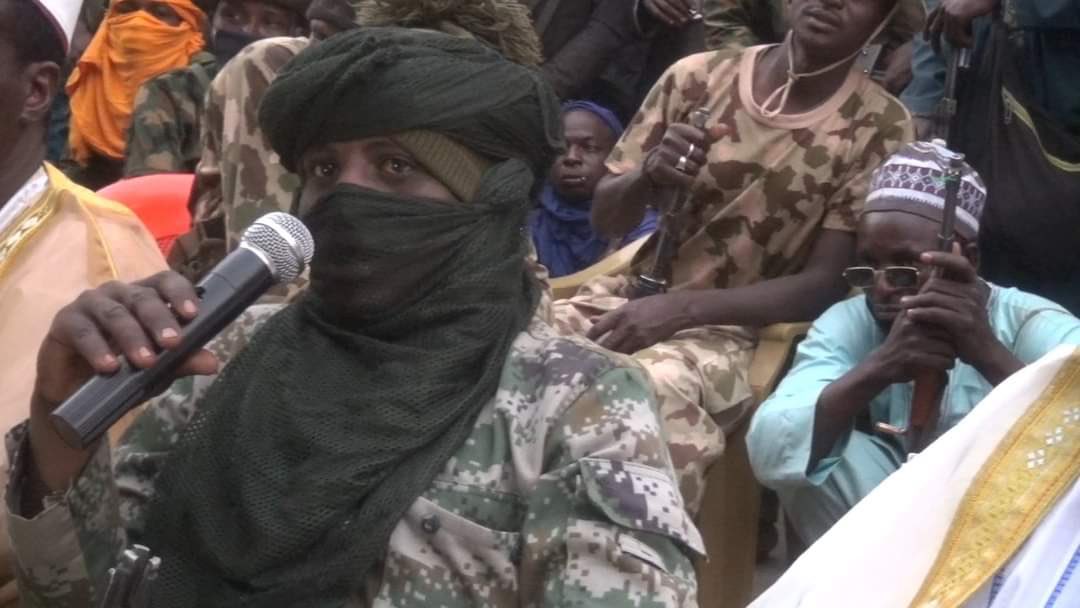
Banditry and Kidnapping: Dangers academics in Zaria face

By Abdelghaffar Amoka Abdelmalik

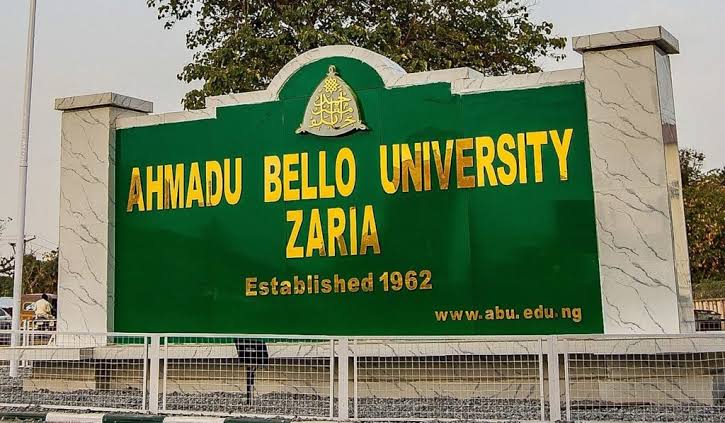
I love ABU and the used-to-be lovely Zaria; But is it time to run away?

After submitting the final copies of my PhD thesis in March 2012, a friend and I conversed about my plans after the PhD program. “I am leaving back to Nigeria in few days, resume my job, get married, and start living the Nigerian life”, I told her. And she was like, it appeared I had got everything planned out. And I said I couldn’t find anything to keep me back in the UK. Then about a year later, I got a postdoc research fellowship in Norway.

Immediately after my postdoc in 2015, I was looking forward to coming back home. I had this picture of a laboratory I want to set up in my university to perform impactful research from this part of the world. Maybe I was crazy. But for the five years three months that I spent in Europe, I never saw myself living there for long, but how I could use the experience of the few years to add value to the world of research from my country.

But after the kidnapping of my friend’s family last month, for the first, I started to ask myself if my decision to return to the country was the right one. And last night, I heard gunshots from my room before midnight. I knew something was wrong, but I could not figure out what it was and where. So I could not sleep well. Then, after waking up in the morning, I got a call that the same terrorists they choose to call bandits strike in Zaria again, but this time at Zango-Shanu and went away with four victims.

Criminals use to operate while hidden. But these terrorists take their time to break into houses and abduct their victims unchallenged. The police can’t dare do anything to them because they have superior arms and unlimited ammunition. One would expect special forces capable of repelling these terrorists to be put in Zaria due to these frequent occurrences, but nothing like that.

The government seems to have given up, and we are left on our own. The Governor insists no one should pay a ransom but no provision to prevent the kidnapping of anyone. So you have two choices when you have a victim with them; either you pay ransom to get them released after torture, or you leave the victim to die with them.

I closed my eyes, and I still see the picture of the state of my friend’s wife and kids when the bandits released them, and I cried. I am still wondering why these innocent young children and their mother should pass through that horrible experience. The system has failed them. The country has failed them. Now we live in fear. The government has failed us.

A distant cousin in Canada called me a few weeks ago and asked about my plans for my family with this insecurity that is getting worse by the day. I was dribbling around, and he said: how can you make an impact in an environment you are not safe? You can only make an impact if you are alive and free. That statement refused to leave my head.

You can’t sleep well at night for fear of the terrorists. So, how do you concentrate during the day to be productive to make your dream impact? Our children can’t go to school. The state government has closed down all the state-controlled schools for fear of kidnapping but no structure to prevent kidnapping the same children from their houses. So, what has he done?

The kids are living a caged life. You can’t even allow them to play outside talk less of sending them on an errand outside the house for fear of insecurity. We got President Goodluck Jonathan out for Boko Haram; President Buhari came in, and kidnapping was added to the list of the insecurity challenges. It has become a big business. The business CEOs sit in their houses while getting sophisticated arms for their boys for the kidnapping operation. They are ruthless, and of course, the informants are among us. There seems to be no much intelligent service to get rid of this challenge. At least not from the kidnapping of my friend’s wife and kids.

With all these challenges, the political leaders, including those claiming to be fighting corruption, are getting richer while the people are getting poorer. For example, a former recharge card seller, now an aide, has billions of naira in his accounts that he claimed are “gifts” from people. But he didn’t get such “gifts” when he was a  recharge card seller. Aside from workers at CBN, NNPC, DPR, etc., other workers struggle to survive with that thing called salary. And unfortunately, most of the victims are from families struggling to survive, but the informants perceive them as rich.

People are shouting why the Doctors that the country spent a lot to train are leaving. But, with the level of unemployment, economic hardship, and insecurity, will you stay and submit your life to banditry if you have a choice to leave the country?

The political leaders surround themselves with security personnel. They can run to any country of their choice if they think their lives and immediate family are unsafe while we are left for the bandits.

I had so much optimism in this country, but I am not sure any longer. Should we continue to live this life of fear and uncertainty? I never thought of the idea of relocating to another country till last month when those poor little kids and their mother were abducted for 40 days.

I had two chances and came back because I believed in Nigeria and wanted to make an impact. Will I return if I have the 3rd chance?

I still remember that prominent MKO Abiola’s interview on TV during the June 12 crisis, where he stated this famous quote: he who fights and runs away lives to fight another day.

Don’t hesitate to run if you have the slightest opportunity.

Abdelghaffar Amoka Abdelmalik writes from Zaria and can be reached through aaabdelmalik@gmail.com.
Matawalle advises FG to declare state of emergency on security

By Muhammad Sabiu

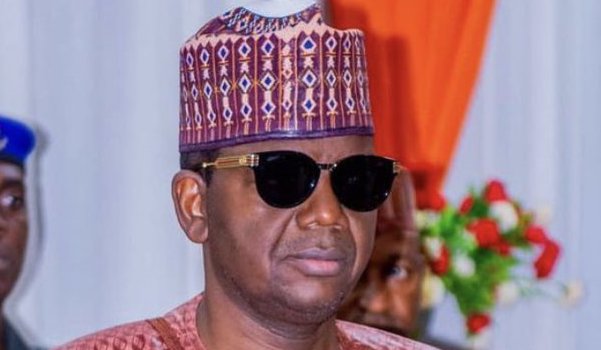
The governor of Zamfara State, Muhammad Bello Matawalle, has advised the Federal Government to declare a state of emergency on security.

Mr Matawalle made the recommendation when he hosted Ali Janga, the Assistant Inspector-General of Police, in charge of Zamfara, Sokoto and Kebbi on Wednesday.

The governor also expressed his concern over the incessant attacks of bandits on communities in the northwestern part of the country, which, according to him, are what call for the declaration of a state of emergency on security.

A statement made available by Zailani Bappa, Special Adviser, Public Enlightenment, Media and Communications, indicates that the governor said: “No one feels safe anymore, and the only way to return the country on the path of sanity is to act out of the box.”

He also praised the federal government and security personnel for their diligence in the fight against killings in the region.

Nevertheless, he said, “extra effort is required to contain the growing security problems that are mounting by the day.

“The problem in Zamfara State is quite unique from those in other places and therefore require very careful and constructive solutions to control it.”

The state has, over the years, suffered killings and kidnappings, which lead to the death and displacement of countless people.

NDA deadly attack: Abducted officer found dead

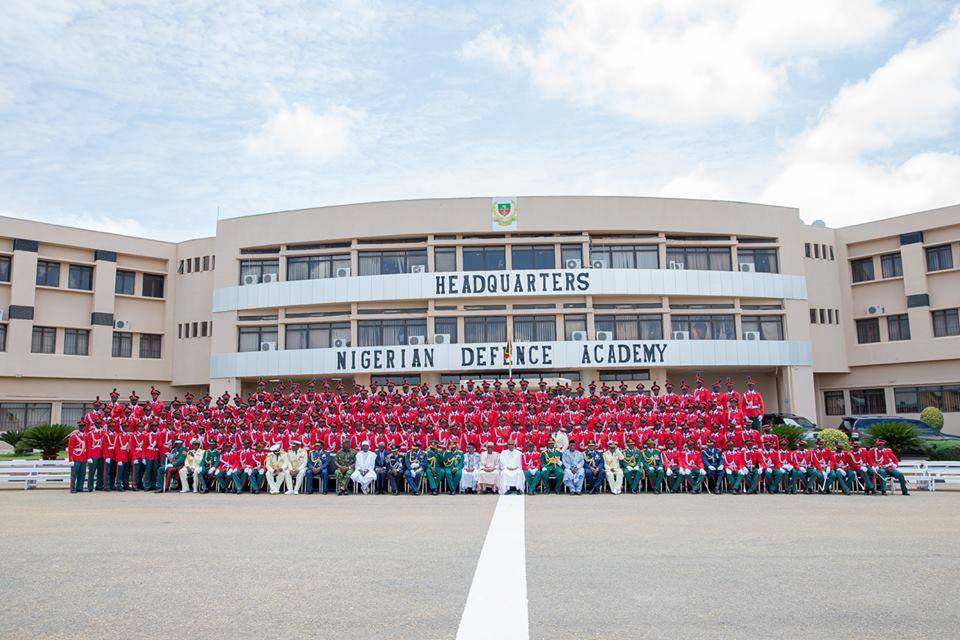
The military officer identified as Major Dalung abducted Tuesday at the Nigerian Defence Academy, Kaduna, was reportedly found dead.

The officials of the Academy or the Army Headquarters, Abuja, have yet to confirm the murder of the officer.

The Chronicle, among other news channels, reports that other victims of the daring attack include a Lieutenant Commander, Wulah and a Flying Lieutenant, CM Okoronwo. They were shot dead during the invasion of Afaka barracks of the NDA. Another victim, 2nd Lieutenant Onah, sustained is currently at the NDA hospital with injuries from gunshots.

Recall that the Defence Academy earlier promised to track the shooters and rescue the kidnapped officer after the attack.

The attack was the first of its kind, which the Arewa Consultative Forum (ACF) described as “embarrassing” to the nation.

Nigerian Defence Academy confirms deadly attack at facility

By Muhammad Abdurrahman

A statement signed by the Academy Public Relations Officer, Major Bashir Muhd Jajira, confirmed the early morning reports of the deadly attack at the Kaduna facility.

It states that “the security architecture of the Nigerian Defence Academy was compromised early this morning by unknown gunmen who gained access into the residential area within the Academy in Afaka. During the unfortunate incident, we lost two personnel and one was abducted.

“The Academy in collaboration with the 1Division Nigerian Army and Air Training Command as well as other security agencies in Kaduna state has since commenced pursuit of the unknown gunmen within the general area with a view to tracking them and rescue the abducted personnel.”

The statement adds that the community and the cadets undergoing training at the military school are safe. It finally assures the public that the shooters will be arrested and the abducted officer rescued.

The security situation continues to deteriorate in especially parts of Kaduna and other northwestern states of Nigeria. However, the government and its security operative claim to be doing everything to tackle the situation.

4 killed, 50 abducted as terrorists invade Maradun

By Muhammadu Sabiu

Reports coming from Zamfara State have indicated that suspected terrorists operating in northwestern Nigeria have killed four persons and abducted 50 others in an attack they launched on Goran Namaye in Maradun Local Government Area of the state.

Confirming the attack in Gusau on Monday, Muhammad Shehu, the Police Public Relations Officer in the state, said the attackers came in their large number, raided the town around midnight on Sunday, and afterwards killed four persons and kidnapped 50 others.

However, he noted that the police tactical operatives had been deployed to the affected area.

According to him, CP Yakubu Elkana has ordered his men to embark on a search-and-rescue operation for the abducted persons immediately.

He added that the CP had assured residents that they would do everything possible and collaborate with other sister security agencies to maintain peace and order in the state.

Zamfara State has over the years been ravaged by the activities of kidnappers and gunmen who incessantly attack communities regularly.

Governor Muhammad Bello Matawalle has vowed to curb the menace on several occasions, but it seems all is to no avail.

11 abducted persons rescued in Zamfara

Eleven abducted persons have been rescued by men of the Nigeria Police Force in Zamfara State.

The kidnap victims were taken away by their abductors on Thursday, 12 August.

Zamfara State police public relations officer, SP Mohammed Shehu, said, “The effort that led to the unconditional rescue was sequel to the report of abduction of 11 persons by some group of hoodlums suspected to be bandits at Yarkofoji community in Bakura Local Government Area of the state on 12th August, 2021.”

Also, in yet another rescue effort, the Chief Security Officer of the College of Health Technology, Tsafein, regained his freedom.

SP Shehu said, “The report of his abduction was reported to the police at the early hours of 18th August, 2021, when a group of hoodlums went to his house at around 0040hrs and abducted him. The police search and rescue team swung into action by combing the surrounding forest. Luckily enough, the victim was rescued safely.

“The search and rescue strategies employed by the Commissioner of Police Zamfara State Command, Mr. Ayuba Elkana, led to the successful rescue of the abducted victims without any ransom paid by the relations of the victims.

“The Commissioner congratulated the victims for regaining their freedom and urged them to always be conscious of their security and report any suspicious person to the Police or any nearest security outfit for the prompt response. All the victims have been taken to the hospital for medical checks. Later debriefed by the Police and reunited with their families.”

The police spokesperson further reiterated their readiness to protect the lives and property of people.

Zamfara is one of the northwestern states suffering from the activities of bandits and kidnappers, despite security agencies’ efforts and Governor Matawalle’s vow to bring an end to it.

Protest against insecurity in Katsina towns

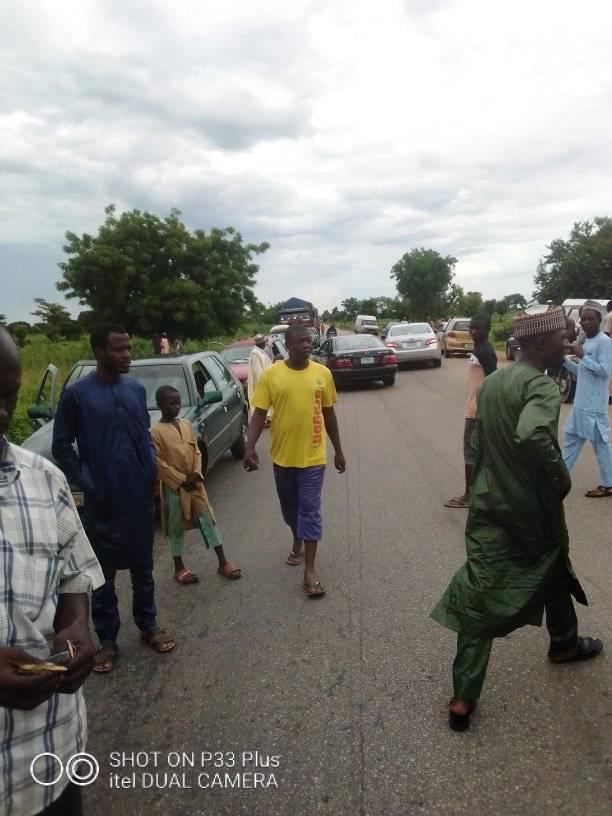
A traveller, Sadiq Tijjani Inuwa Bakori, wrote on his Facebook page that angry youths in Yantumaki town of Katsina State had blocked Kankara – Dutsinma federal highway in protest against insecurity in their areas.


Mr Bakori added that they tried to go back, but the next village also blocked the road. “We can’t proceed, and we can’t go back.”


Reports show that some of the irate youths have set tires on fire. Plumes of smoke could be seen from a distance.


According to Mr Bakori, military personnel and police have arrived at the chaotic scene, but they couldn’t do anything. Commuters were stranded.

There have been several kidnapping and bandit activities in the towns and villages of Katsina and other neighbouring states in the region. However, government and security personnel claim to have been doing their best to restore peace.

Are Funtua communities this vulnerable?

By Umar Haruna Tami

We have already lost count of how many times kidnappers came and abducted people from different locations in Funtua. Still, the ease with which they carry out their operations day by day is alarming. The two successful kidnappings that occurred in the past weekend – Saturday’s in a single house near GRA, Sunday’s in mass in Sabuwar Abuja – symbolise the fragility of the security agents that are meant to protect the town and its people from these monsters.

The security agents and the residents of almost every community have already been defeated through fear. Even a rumour of kidnappers’ presence sends fear around the town and that with a single gunshot, everyone would end up running for their life. Even the “‘Yan Karota” volunteers’ confidence to confront the monsters has since been defeated upon realising that the machine guns the kidnappers carry cannot, in any way, match the plug-bulleted ones they have. Thus, they too run for their lives, even though what they do defines good citizenship.

So a city as big as Funtua, with routes linking it to many towns and villages from East, West, South and North, is under security threat. These links make it easier for the kidnappers to make away with whoever they have successfully carried with little chance of being tracked and attacked. This also makes their operations tricky to thwart in poor-populated areas.

They failed to conduct only two operations that targeted Rabe Sale’s children and that of NAK’s family. But the abortions of these two kidnap attempts have anything to do with the connection between the would-have-been victims and the reserved soldiers brought to the town for special operations simply because they are aristocrats.

But what would be the fate of community members that have already been defeated by the fear of being potential victims of kidnappers even when they shut and lock their doors but have no connection to the soldiers for emergency aid and one of those elites happens to not live among them? The latest kidnap of over ten people in Sabuwar Abuja at only 10 pm — thank God that the captors released them — signifies nothing bolder than the community’s vulnerability and the limited chances the sophisticated security agents have to abort their operations or exchange fire with them. But, on the other hand, they now have the assurance that it wouldn’t cost them much to do whatever they want and at any time!

What Funtua communities need now, just as the other Northern communities need, is making available the reachable lines of those special forces for emergencies. Second is the provision of more of these agents—both the soldiers and policemen — with weapons they can use to repel the kidnappers’ attacks in areas not far from where their help could be needed in time. Third we, the community members, need to reduce the extent of our collective fear for the kidnappers that we can stand up to them, not always run away. It is time for us to start being responsible for where our political choice has landed us.

Umar Haruna Tami wrote from Funtua, Katsina State. He can be reached via umartami1996@gmail.com.

Niger State confirms abduction of commissioner for information

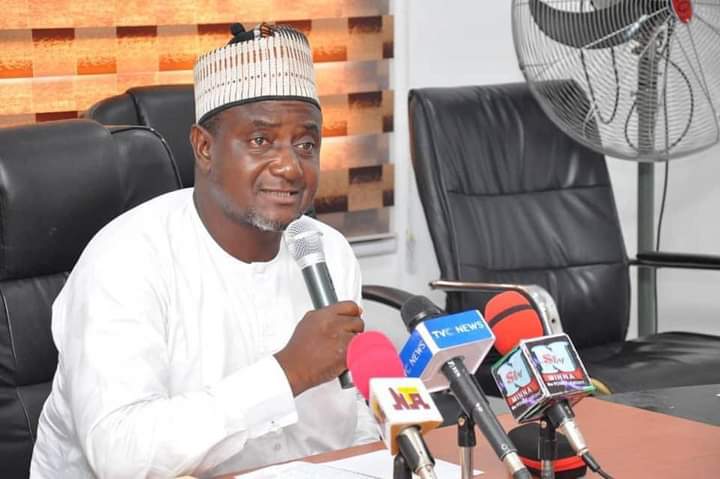
Niger State Government has confirmed the kidnap of the Commissioner for Information, Mohammed Sani Idris.

The Commissioner was said to have been kidnaped by bandits at about one o’clock in the early hours of today from his home at Baban Tunga village in Tafa local government of the State.

Security agencies are however already on the trail of the bandits to hoping to apprehend them.

Mary Noel-Berje
Chief Press Secretary
to the Governor of Niger State.

Massive extortion on Nigerian highways: A travelogue

By Tordue Simon Targema

Although extortion by security agents mounting roadblocks on Nigerian highways is not a new phenomenon, the trend has assumed an alarmingly worrisome dimension recently. A foreigner plying Nigerian roads in a commercial vehicle would think Nigerian security agents are double-tasked to be collecting taxes as well from drivers! Perhaps, the confidence which the officers demonstrate while collecting the illegal money and the coercive techniques which they deploy in doing so will dispel any doubt from the foreigner that such money is illegal and extortionist in nature. Sadly, this is the situation motorists and commuters on Nigerian highways have found themselves in.

I have extensively travelled across Nigeria. As an academic staff of a university, I have the privilege of travelling across the country. For instance, after obtaining my bachelor’s degree in the northeast, I moved to the northwest and obtained a master’s degree, and am currently pursuing my doctorate degree in the south-south. This has given me extensive exposure to Nigerian roads. Also, I have attended several academic conferences in each of the six geopolitical zones. My experience on Nigerian roads is a very horrible one, made so by a multiplicity of factors such as the deplorable nature of the roads and massive extortion by security agents. These have made the thought of travelling in Nigeria by road a dreaded one even to people who are extremely adventurous by nature, to talk less of those who have a phobia for travelling.

My experience on a recent trip to one of the south-south states from the northeast spurred me to pen down this piece. In what appeared to be a painfully interesting drama series, we watched cheerfully, albeit in deep anguish as our driver bargained with our security agencies who, I learnt, have raised the charge from the normal 50 naira to 100 naira, a development that did not go down well with commercial drivers. My driver was highly agitated paying the new charge but could not help it. He devised all possible gimmicks to resist it which could not help out. First, he attempted evading as many of these checkpoints as he could- army, police, civil defence, immigration, road safety and vigilante, custom, produce tax force ….name it! But this strategy usually backfired, as each of the checkpoints he evaded would call the very next checkpoint ahead and ask them to bundle us right back.

In no time, he realized that this was not by any means a workable strategy, and with intense pressure from the equally agitated passengers, decided to cooperate. Of course, he had to, because the few experiences we had with the checkpoints he evaded were terrible, as the security agencies were utterly aggressive and would at each of such instances traumatize him, heap up charges against him and intimidate him as much as they could to coerce him into submission. Worst of all, each of those checkpoints he evaded demanded – and actually collected from him – far more than their normal 100 naira. To cap it all, he nearly had an accident in the process of evading one of such checkpoints! Obviously, evading the checkpoints was not the way to go; a different strategy was, thus, imminent.

Mind game, pleading, teasing and joking with the security agencies was the next strategy. At each of the checkpoints, he would use any of these he felt was the most appropriate. For instance, if he had discovered by virtue of experience, appearance or instinct that a certain officer was a northerner, he was sure to use emotional appeal as a way to escape the payment. Language would have been a formidable force in this regard but for the obsession of our officers with money who would still insist he tip them after the pleasantries. You would feel their whole being and soul depend squarely on the illicit money they collect from drivers! Well, on a handful of occasions, this strategy worked and he was waived the charge.

Teasing and joking with the security operatives was the next strategy, but after it, they would always ask: anything for the boys? In such cases, our driver would retort: oga, when I de return, I’ll see you. At this, some would let go, but most would remind him that that is what he said while he was coming down! In such unfortunate cases, he would have no escape but to cooperate.

Another strategy he adopted was to tell them he had no change. In such cases, he would give them a thousand naira note to prove he has no change. This was a counterproductive strategy and in no time, he had to drop it, perhaps, forced by pressure from passengers because it was time-wasting. Why? Upon receipt of the thousand naira note, the officers would not let him go with it, but reluctantly look for change from their previous collections and give him. In the event they did not get it there, they would have to wait until collections from other drivers coming behind us complete the change! This generated intense condemnations of the passengers who felt that he was wasting their time and asked him to be cooperating or if indeed he had no change as he claimed, look for change at a filling station. Of course, the driver himself was pissed off with the attitude of the officers and had no choice but to change strategy.

Next was the use of prospective NYSC members as a bargaining point. This strategy worked for him significantly- not without difficulties though. Luckily for him, he had about four prospective NYSC members from the south-south deploying to their orientation camp as his passengers. Trust our smart driver; it took him no time at all to activate this as a point of a bargain! Oga, na kopas I carry ooo, he would tell each officer that rudely returned his 50 naira. Boom! Questions from all angles would start pouring out: kopa never pay for their transport? Na for free you carry them? Blablabla. At these, he would strongly insist that the prospective corps members were government properties, that the car he was driving is a government vehicle (the car actually had SURE-P inscribed on it), and that the officers too are government agents, hence, there is no point collecting much from him for conveying the corps members to their orientation camp. This would usually weaken the officers who would never give up but instead, as a final push, return to us: where are the kopas? At this we would all chorus: na we ooo! Of course, even those of us that were not corps members would join in to add to the echo. They would then tease us, ask us some few jovial questions, collect the 50 naira and then we move.

This was one of his most effective strategies. Despite its seeming efficiency, some of the rude officers would outrightly reject his 50 naira, ask him to go and park and delay us until he gets the sense in his head to give them their rightful 100 naira. Indeed, it was their entitlement. A look at the manner in which it was being demanded and collected dispels every doubt that such collections are illicit. At some of the checkpoints, the officers would, without saying anything else, ask the driver to go and park. At such points, he would oblige, park his vehicle, come down and walk up to them to give them their due. I found this arrogant and irritating too. Why? If you are shameless enough to descend so low and extort poor commercial drivers, then you should be prepared to keep aside all silly notions of pride and dignity and take it right there on the road before the prying eyes of passengers and all onlookers. But some of our pompous officers feel they are above this, and would rather the driver park, walk back and pay them their dues. No thought of the delay such would cause the commuters, no. they simply wanted their money and nothing else!

In one of the states in the north-central region, this worrisome trend has assumed yet another funny dimension. Trucks (used for pushing water and other commodities) are used at checkpoints, perhaps, because they are easier to push and much more flexible than logs of woods. Still in the same state, the officers- almost at each checkpoint- have engaged the services of jobless young men who stand on the road and coordinate the illicit deal for them. At these points, such young men are as pitiless and brutal as the sun or heavy rain on a lone traveller in the heart of a desert. They would neither listen to any plea nor get amused by the jokes of the driver. Never would they give in to any of his antics or gimmicks, worst of all, they have scant or no regard at all for NYSC! If anything, the mention of it gets them irritated. They got our driver really hard at this. Who be kopa? Na weting kopa de give me? They would ask him. And their gallant officers were ever ready to step in should any driver underrate them. Perhaps, the driver understood that they are traps to lure the wrath of the officers. He would oblige, give them the 100 naira once all tricks fail and then they would pull away their trucks and we would move on.

As we drove deeper into the night, the due increased. Rightfully, it increased to 200 naira, then 300 naira. It got to a point where we had to go down and collectively beg the officers that we are NYSC members deploying to our orientation camp, that they should give us consideration. They first turned deaf ears at us- perhaps, out of guilt- but later allowed our driver to pass. Clearly, our infuriated driver saw that he would not continue at that pace. He had to find a town nearby, parked at a filling station and we passed the night there.

You would think the proliferation of security checkpoints on our highways is an assurance of safety! At this, I bet my last kobo that you are woefully wrong. Around 4:30 am, we hit the road again. At the first checkpoint after we took off, an officer- after collecting his due – whispered to the driver that the road was not safe. Armed robbers were on operation some miles away! Armed robbers with this heavy security presence? I asked myself. The driver had to stop again. At first, we thought it was a lie but could not take the risk of defying the caution, so we stayed there till daybreak. Around 6:00 am, we continued and, lo and behold, came to the spot of the armed robbers’ operation! Two 18-seater buses stood there, their front tires flattened with bullets and the windscreen pierced through with bullets too. No passenger was wounded, even as they stood there, traumatized. They were unlucky. They got robbed. An old woman who could not stand the trauma fainted and was rushed to the nearby hospital afterwards. We stopped by and the stranded passengers eagerly narrated their ordeals. We couldn’t help out because our vehicle had no space for more passengers, and so, we only kept them solidarity companionship of about five minutes and moved on.

No doubt, the rising tide of insecurity contributes significantly to the deployment of security operatives on the highways. This explains why their presence is most conspicuous in conflict-tone and banditry-ridden states. Little wonder too that they feel their services on the roads are indispensable and they should be handsomely appreciated or rewarded by the people they protect. Now, I am not disputing this fact, neither I’m I underrating their importance. But I feel strongly that the government whose primary prerogative is to secure the lives and property of citizens should saddle the responsibility of catering for the welfare and incentives of the security operatives they deploy on the highways squarely, and not to push it to vulnerable drivers and commuters.

Of course, commuters bear the financial burden too, indirectly through arbitrary increments and hikes of transport fares. A friend of mine boarded a commercial bus and was charged 6,050 naira as transport fare. Curiously, he asked what the 50 naira on top is meant for and was promptly told it will be used for settling security operatives at checkpoints. I do not envy Nigerian commercial drivers, I really don’t. Jalingo to Porthacourt for instance has way over a hundred security checkpoints. Imagine giving 100 naira at each of the checkpoints, that’s way over 10,000 naira. In essence, an average commercial driver uses the transport fare of about two passengers just for settling security operatives at checkpoints. This is outrageous and really unfortunate, to imagine that the cost of spare parts has skyrocketed to an unprecedented degree. I won’t talk of fuel and lubricants required to service the vehicles. I began to ponder: what do the drivers take home after giving returns to their companies, fuelling the vehicles, minor and major repairs here and there, and settling our officers on the highways? No answer came in handy. I simply shook my head and redirected my thoughts to the music in my earpiece. That made more sense and in no time, I got engrossed in my thoughts and forgot about the security men as though they never existed.

It is sad to admit that although our security operatives deserve our daily prayers due to the danger they face daily confronting bandits and terrorists here and there, this extortionist tendency has taken away the public sympathy they deserve and earn them a curse and disrespect from commuters and drivers. This is very bad. It is about time the government checked the rising trend. In the interest of our commercial drivers and commuters, all forms of extortion on the highways must be abolished. Government should be prepared to shoulder the responsibilities of our officers on the highways and when that is done, deal decisively with officers found extorting vulnerable passengers.

I must confess that this is one area president Muhammadu Buhari’s administration has dashed my expectations woefully. In 2015, just before his inauguration, I recall travelling to another part of the country. A security officer was boisterously threatening to beat up our driver for refusing to give him his due. The sharp reaction of our young driver created a scene and in no time, the officer trumped up charges that never existed on the young man- driving licence, manifest, vehicle papers, commuters’ national identification documents, bla-bla-bla. He eventually got the driver who succumbed to the pressure that was already mounting and paid the due.

After we passed, I told the elderly man seating beside me with an air of confidence: the General has come, let me see how they will do this come next month. The old man chuckled and asked me: you think so? I replied in the affirmative. He smiled again and, with a tone of indifference, told me that nothing would actually change. In fact, he charged me to expect the worst. A conversation ensured and I tried my best to explain to him that although I was not president Buhari’s fan and did not think I will ever be, I was confident that once he takes over, all forms of extortions- especially the obvious ones like those on the highways would cease with immediate effect. The old man simply dismissed my argument in a predictive tone:  well, time shall tell better. I affirmed his submission and hoped for a day when extortion on the highways would become a thing of the past in Nigeria, a day that has refused to, and seem never to arrive anytime soon.

Concerned authorities should note that while this day delays its arrival, the effects on commercial drivers and commuters are, at the moment, unbearable. The time to end extortion on our highways is now. By the way, the deplorable condition of our roads is one other thing that usually stress-out life from commuters! In my next article, I shall relieve my experience on the Jalingo-Numan and Odukpani-Uyo roads. I am sure you will find it heart touching too, for now, I leave you in peace.

Tordue Simon Targema writes from the Department of Mass Communication, Taraba State University Jalingo. Email: torduesimon@gmail.com.