Kidnappers

POS operators aiding kidnappers, terrorists — NCTC

By Uzair Adam

The National Coordinator of the National Counter Terrorism Centre (NCTC-ONSA), Maj. Gen. Adamu Laka, has warned that some Point of Sale (POS) operators are playing active roles in facilitating terrorism and kidnapping in Nigeria.

Maj. Gen. Laka raised the alarm on Tuesday during an end-of-year briefing in Abuja, where he disclosed that ransom payments demanded by kidnappers are often routed through accounts owned by POS operators, making it difficult for security agencies to trace the funds.

According to him, investigations have revealed a recurring pattern in which kidnappers provide victims’ families with POS account details for ransom transfers. Once the money is sent, the criminals simply collect the cash from the operators.

“You see a transfer made by terrorists, and when you investigate the account, it belongs to a POS operator.

“The kidnappers give out the POS operator’s number, the money is transferred, and they go to collect it,” he explained.

He said the practice has become a major challenge for counter-terrorism efforts, as it allows criminal networks to move funds discreetly while evading financial tracking mechanisms.

Bandit kingpins surrender arms, release kidnapped victims in Katsina

By Abdullahi Mukhtar Algasgaini  

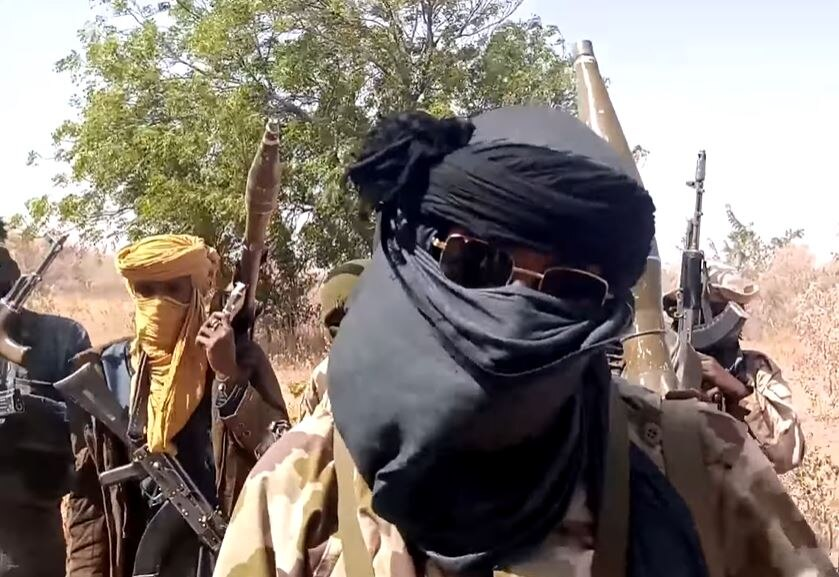
In a significant development, several notorious bandit leaders in Dan Musa Local Government Area (LGA) of Katsina State have surrendered their weapons and released kidnapped victims as part of a disarmament initiative.  

The operation, led by Operation Fasan Yamma in collaboration with stakeholders, saw the voluntary surrender of key terrorist kingpins, including Kamulu Buzaru, Manore, Nagwaggo, Lalbi, Alhaji Sani, Dogo Baidu, Dogo Nahalle, and Abdulkadir Black. The suspects renounced banditry and pledged to embrace peace.  

As a goodwill gesture, the group freed 16 kidnapped victims—seven women and nine children and promised to release the remaining captives by today, June 15, 2025. The freed individuals have been handed over to local authorities.  

Security forces have secured the surrendered arms and maintained a strong presence in the area to ensure stability. The situation remains calm, with continuous monitoring to sustain peace in the region.

How I shook hands with a bandit leader and lived to spill the tea

By Abdulrahman Sani  

It started like any other routine assignment. A simple task in a place that, on paper, seemed no different from the others. I was sent to a remote village in the heart of the North West, tasked with completing an enumeration in a region that was increasingly known for its volatile security situation. But what I didn’t realise then was that this seemingly innocuous assignment would lead me straight into the heart of danger.

The village, Rugar Yashi, sat on the fringes of the wilderness, far from the usual path of most travellers. The journey had been long, but I arrived early enough to begin work without delay. The protocol for entering any enumeration area was clear. 

Before stepping foot into the village, I was to call my security contact to get a briefing, obtain clearance, and receive a pass that would ensure my safety. I dialled his number repeatedly, but there was no answer. I tried once more, but the line remained dead. Frustration rose within me, but it was quickly overshadowed by the realisation that I had no choice but to proceed.

I wasn’t new to the idea of security checks. Over time, I had come to view the process as a mere formality, a minor inconvenience in the grand scheme of things. Security clearance was just another uncomfortable routine, a small hurdle before getting to the heart of the work. The reality of how precarious the situation honestly was hadn’t fully sunk in. In my mind, it was just another remote village, no different from the countless others I had visited. Little did I know, I was about to step into the lion’s den.

The Village on the Edge of a Whisper

Rugar Yashi wasn’t on any tourist map. You wouldn’t stumble upon it unless you were sent there or running from something.

The place looked serene, almost cinematic. It was tucked neatly between rustling trees and the distant hum of wilderness. I walked in alone, unseen by the world, accompanied only by a curious blend of optimism and unawareness.

I didn’t meet him in the village.

I met him at a farm by accident.

He was tending to something near a stand of goruba trees. I greeted him and mentioned I needed a cutlass to slice through one of the fruits. Without hesitation, he handed me his.

It was only after I introduced myself, explaining why I had come and what I was doing, that he nodded and said simply,

“I’ll guide you.”

That was it.

No suspicion. No resistance. Just a quiet offer that, in hindsight, held far more weight than I realised.

And so we began.

He led. I followed.

At first, he was nothing more than a helpful local. His voice was calm, measured. He spoke sparingly, and when he did, it was often with a faint, unreadable smile. The villagers treated him with a mixture of casual reverence and respect. Nothing overt. Just the kind of nods, glances, and silences that said more than words ever could.

Of Questions and Rifles

As we walked through Rugar Yashi, I quickly noticed something odd. The men around us were armed. Their rifles glinted in the sun as they moved with deliberate ease. Their eyes darted around, scanning the horizon as if waiting for something—anything—out of the ordinary. Some of them offered brief nods of acknowledgement to my guide, a quiet understanding passing between them that I couldn’t quite place.

At first, I dismissed it. I assumed they were simply vigilantes, locals tasked with protecting their community. The village seemed peaceful. The people were humble. And my task was simple. What could go wrong?

We continued through the village, and I conducted my enumeration with the usual questions—family members, occupations, and living conditions. He knew exactly where to take me. At one point, I inquired about his family, which was part of the enumeration form. He smiled and said that his brother, Aliyu, was studying at ABU Zaria. I nodded and moved on.

It sounded plausible enough.

After the work was done, he walked me to the edge of the village where a group of armed men stood, exchanging hushed words and scanning the trees. As we passed, they gave us more than a passing glance. He shook my hand, gave me his contact information, and said casually,

“Call me next time before you come. It’s safer that way.”

I smiled, nodded, and walked away. The road back to the main track was quiet. Just a few goats, wind in the trees, and my own footsteps.

The Call

Then my phone rang.

It was the security contact I had been trying to reach all morning. His voice came through tense and unfiltered.

“Where are you?”

“Done. Just leaving Rugar Yashi.”

There was a pause, and then his voice dropped.

“Who did you work with?”

I gave a brief description. His voice turned sharp.

“That man you were with, Labbo Jauro? He’s one of the most notorious bandit leaders in the region. His brother isn’t at Zaria. He was killed months ago. Deep in the forests of Niger.”

Silence.

The kind that makes your spine go cold.

I had shared a blade with him and walked through the village under his protection. Sat beside him in quiet moments. All while unknowingly under the watchful eyes of armed men who could have changed the course of my story in an instant.

The glances. The nods. The stillness in the air. It all made sense now.

But at the time, I thought I was just doing my job.

Reflection on the Edge

Looking back, I wonder whether he knew what I didn’t. Whether he had already decided for me before I’d even finished cutting that goruba fruit. Or whether, by some strange twist of fate, I had walked straight into danger and was spared not by wisdom or caution, but by simple, Divine grace.

That day in Rugar, Yashi changed how I saw the work. It blurred the line between routine and risk. It reminded me that, sometimes, the man offering help in the fields may be more than just a friendly farmer.

Sometimes, he’s the one everyone else fears.

And sometimes, he’s the reason you make it back home alive.

Postscript: This story is based on a true account. The subject’s name has been omitted, and the narrative is told in the first person by the author. Specific details have been altered or excluded to protect privacy and ensure safety.

Abdulrahman Sani can be contacted via Twitter @philosopeace.

How police rescue passengers from kidnappers on Kogi highway

By Uzair Adam

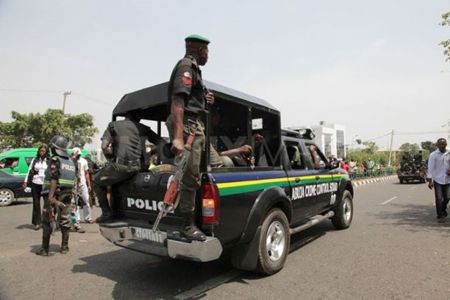
The Kogi State Police Command says its operatives from the Police Mobile Force, 70 Squadron, Kabba, have rescued passengers from an attempted abduction along the Kabba-Ayere Road.

Police Public Relations Officer in the state, ASP William Aya, told reporters in Lokoja on Saturday that the incident occurred on Friday.

He explained that upon receiving a distress call, reinforcement teams from Sharper Corner pindown were swiftly deployed to the scene.

The officers engaged the kidnappers in a gun duel, forcing them to flee into the bush and abandon their victims, who were subsequently rescued.

The Commissioner of Police in Kogi, CP Miller G. Dantawaye, has ordered the deployment of additional tactical and operational assets to comb the surrounding bushes and apprehend the fleeing suspects.

Dantawaye commended the officers for their swift response and reiterated the commitment of the command to ensuring the safety of residents and travelers in the state.

FCT Police recover ₦409m from kidnappers, others in 2024

By Anwar Usman

The Nigeria Police Force, Federal Capital Territory Command, recovered a total of ₦409,992,000 from criminals during various operations in 2024.

A breakdown of the recovered sum, according to the command’s scorecard made available to journalists on Wednesday by the command’s spokesperson, Josephine Adeh, revealed that ₦36,850,000 was recovered from kidnapping suspects; ₦68,552,000 from armed robbery suspects; ₦19,590,000 from burglary cases and ₦285,000,000 from fraud cases.

Also, in 2024, Adeh stated that 1,426 cases were reported, leading to the apprehension of 1,077 suspects.

According to the scorecard, fraud cases were the most reported, with 385 cases and 422 suspects arrested. This was followed by armed robbery, with 268 cases and 132 suspects arrested.

One-chance robbery ranked third, with 263 cases leading to 71 arrests. Car theft came next, with 127 cases and 64 suspects arrested. Kidnapping took the top five position with 104 cases, resulting in the arrest of 216 suspects.

“For cybercrime, 32 cases were reported, and 15 suspects were arrested. For homicide, 68 cases were reported, leading to 78 arrests. Burglary saw 73 cases, with 20 suspects arrested, while cultism recorded 38 cases, leading to 59 arrests,” the scorecard stated.

The report also indicated that 376 firearms, including 13 AK-47 magazines and 187 rounds of live ammunition, were recovered.

The report further revealed that “Seventy-three vehicles were recovered from car theft cases, 24 from one-chance robbery cases, and two from cultism cases. The above statistics show a 15.1% reduction in crime incidents within the FCT, recorded between 2023 and 2024. Additionally, 68 kidnapping victims and 19 one-chance robbery victims were rescued”.

While highlighting the command’s readiness for 2025, Adeh explained that efforts would focus on enhancing community policing and conducting targeted operations.

“Building on the successes of 2024, the Command will intensify: Community policing engagements—intelligence-led policing strategies. Targeted clearance operations and public enlightenment initiatives were used to address the evolving security demands of the FCT.

“With a significant reduction in crime rates and a stable, peaceful atmosphere in the FCT, the Command is committed to sustaining the momentum in fighting against criminal activities,” she said.

Police kill two suspected kidnappers in rescue operation

By Uzair Adam Imam 

In a decisive operation on the Sagamu-Ijebu Ode-Benin expressway, the Ogun State Police Command has neutralized two suspected kidnappers in a shootout, as announced by Omolola Odutola, the command’s spokesperson.

According to Ms Odutola, the suspects met their fate during a daring rescue mission executed by police personnel to liberate abducted Indian nationals. 

The successful operation, aided by local vigilantes, led to the safe recovery of the hostages.

Identified as Tejaram Chauhan, Kaduwal Pradhan, and Medani Kathiwada, the Indian nationals had fallen victim to abduction on Friday. 

Alongside their rescue, authorities seized a substantial sum of N7.9 million, along with 1,500 Indian Rupees, believed to be part of the ransom extorted by the kidnappers.

The ordeal began when the Manager of Breeze Company Nigeria Limited, situated on the Ibadan-Lagos expressway, reported an attack to the Divisional Police Officer, Mowe Divisional Headquarters. 

The incident involved gunfire directed at vehicles transporting the manager’s principals at Kajola junction along the Sagamu-Siun-Abeokuta expressway.

While the police escort accompanying the first vehicle managed to repel the assailants and safeguard all occupants, three Indian nationals in the second vehicle were abducted. 

Prompt response from the anti-kidnapping section, in collaboration with local security units, initiated a thorough search of the area.

A fierce confrontation ensued in the forest along the Benin-Sagamu Papalanto route, resulting in the rescue of the hostages unharmed. 

Two of the six kidnappers were incapacitated during the exchange of fire, with authorities recovering two AK-47 rifles, a single-barrel locally made gun, a sword, cell phones, criminal paraphernalia, and 65 rounds of ammunition.

The deceased suspects have been transferred to the public mortuary while intensive efforts are underway to apprehend the remaining members of the gang.

Crowdfunding for ransom payment is a double-edged sword that cuts everyone but bandits

By Bello Hussein Adoto 

At last, the Al-Kadriyar family has raised the 60-million-naira ransom to free their loved ones. Asiya Adamu, a relative of the family and the de facto champion of the fundraising campaign, wrote on X, “The donation has been received. We’ve now officially put a stop to any crowdfunding concerning #Najeebahandhersisters.” 

The Al-Kadriyar family had a rude welcome into 2024 when armed men stormed their Bwari home on the night of January 2 to kidnap the father, Alhaji Mansoor Al-Kadriyar, his children, and a niece. A relative who went with the police to rescue the family was shot dead.

The father was released two days later to source for 60 million naira before January 12, or else his children would be killed. January 12 arrived, and what seemed to be a frighteningly regular occurrence snowballed into a national sensation when the kidnappers killed Al-Kadriyar Nabeeha, one of the girls in captivity. The killing incensed the nation and brought greater attention to the fundraising campaign for the ransom. 

Hours later, former Minister of Communications and Digital Economy, Prof. Isa Pantami, announced on X, via his verified handle, that he “spoke with a friend and a brother who offered to pay the remaining 50 million Naira of the 60m immediately.” 

The minister’s announcement is a relief to the troubled family. But for the crowdfunding campaign and the eventual contribution of the minister’s friend, the family would have needed at least 151 years to raise the 60-million-naira ransom if they were on the national minimum wage. However, the family’s crowdfunding success is a loss for everyone but the bandits. 

Kidnapping for ransom has become a lucrative business for bandits, terrorists, and other strains of daredevils in Nigeria. A report by Voice of America shows that kidnappers demand between 1,000 to 5,000 dollars, depending on their evaluation of the victims.

SBM Intelligence, a Lagos-based risk analysis firm, reported that Nigerians paid about 18.3 million dollars or 13.7 billion naira in ransom between June 2011 and March 2020. Some victims paid as low as 4,000 naira. The largest was 190 million. 

The latest data from SBM Intelligence, released in August 2023, showed that the kidnappers are still cashing out from the business. They kidnapped more than 3,600 people in Nigeria between July 2022 and June 2023, and demanded about five billion naira in ransom. The outcome was a 302 million naira ransom. 

Most of these payments came out of pocket. Some families of the victims had to sell their properties. A young man in Ilorin sold his car to pay ransom after his two daughters were kidnapped in 2022. Isyaka Labaran, a veterinary drugs seller in Kwali, Abuja, had to sell his three-bedroom apartment to fund his release after he was kidnapped in September 2023. 

But these pockets are running dry, and many families don’t have more to sell. The 2022 Multidimensional Poverty Index (MPI) survey by the National Bureau of Statistics (NBS) showed that more than 133 million Nigerians, 63% of the population, are multidimensionally poor, with low income and lack access to basic amenities. These are some of the people bandits compel to pay millions in ransom. Where will they get the money from? 

That Nigerians are turning to crowdfunding for ransom shows the helplessness of the situation. Late last year, parents of the 11 remaining Yauri schoolgirls started a crowdfunding campaign for the 100 million naira bandits demanded to release the students. The students had been in captivity for 19 months. The campaign started after government interventions and negotiations failed to secure their release. 

This helplessness has further encouraged a collection of savages to kidnap and maim at will, funded by the millions of ransoms hapless victims pay, and the casual complicity of the government for not providing enough deterrence.

We can debate the morality of contributing to a ransom and arming bandits to wreak even more havoc, shatter more dreams, and take more lives, or calling their bluff at the risk of losing more lives to their cold, indifferent hands, but to what end? 

Al-Kadriyar family had little option than to pay the ransom. One of their daughters had been killed; more lives were at stake. The risk of flouting the federal government’s criminalisation of ransom payment and the chilling prospect of funding terrorism was not going to be enough to deter them, especially when the government has not been able to deter kidnappers. 

Meanwhile, bandits are raking in billions. In 2023, the Nigerian Financial Intelligence Unit (NFIU) reported that two self-appointed negotiators facilitated two billion naira transactions for bandits between November 2021 and August 2022. Most of these monies were paid by the families of the kidnapped victims. 

The monies, according to the NFIU, are often used to “purchase the terrorists’ weapons and motorcycles, logistics, and further their terrorist campaign/recruitment of new members.”

Armed with hundreds of millions of naira from ransom, the bandits have graduated from attacking villagers and herders to hijacking cars on the highways, abducting children from schools, and attacking homes, trains, civilians, and security operatives. What they will do with the tens of millions they will get now from crowdfunded ransom is anybody’s guess.

The fiasco of the rampant kidnapping, the crowdfunding campaigns it inspired, and the brazen savagery of the bandits are a sad indictment of our government and a call for them to do more to secure fellow Nigerians and win citizen confidence. No amount of criminalisation or moral judgements will disincentivise families from paying ransoms or crowdfunding for it. 

For the victims and their families, the pain of captivity is raw, the threat of a repeat experience is haunting, and the horrors of the old are ever-present. They may never find closure. 

The rest of us are now wary of being the next victims of better-funded bandits with more weapons, members, and greater reach. The government is struggling to contain the crisis. 

And the bandits, basking in the success of their most recent propaganda and incoming million, lick their lips: there is more to come.

Bello Hussein writes from the University of Ilorin via bellohussein210@gmail.com.

Bandits hold newborn baby, mother in captivity

By Uzair Adam Imam

Reports from Kaduna disclosed that a pregnant woman abducted July this year has put to bed while in captivity.

The victim reportedly called on her ailing mother when bandits abducted her alongside her two sisters.

The victim’s husband, Muhammad Alabi, decried the traumatic development, adding that his wife was maltreated and severally flogged.

He stated that, “My wife gave birth at the kidnappers’ camp on 2nd August, 2022 and since then, both mother and child have not received any medical attention and to make matter worse, we learnt they were being maltreated and flogged.

“We are all dying emotionally and physically, that is why we are appealing to whoever God will use to secure their release to please help us free them.”

Recounting the family’s ordeal, father of the victims, Malam Abdulwahab Yusuf said the bandits broke into their Mando home around 1:05 am on the day of the attack.

“My two daughters used to take care of their mother who is sick, but unfortunately, that day their elder sister, who is pregnant came from her husband’s house to look after her mother when the bandits broke into the house and kidnapped my three daughters.

“They initially asked for N140 million, but now they have reduced the ransom to N50 million. The family has been adversely affected by the trauma. My wife, who was able to walk unaided before the incident, now uses wheelchair.

“We just carried out a surgery on her. I have not been myself, I cannot sleep, once it is night I don’t know how my body feels.”

Publicizing privacy: How our personal information hunts us

By Sulaiman Badamasi (Mahir)

Social engineering (also known as human hacking) is the art of psychological manipulation of human beings to trick them into making privacy blunders to giving out delicate confidential information. The perpetrator (social engineer) digs background information of the potential victim to identify key necessary weak points and possibly gain the victim’s trust to use the information against them. Before the emergence of social media, it took social engineers a long, frustrating time to acquire as much information as possible about their targets.

However, the dawn of technology saw the 21st century as the swiftest ever in terms of information circulation. The world has appeared at a height where a single tweet (for example) reaches a billion people in seconds. Thus, information runs fast, businesses nurture, distances diminish, causes foster, coverage enlarges, relationships are created/strengthened, thus making us and our lifestyles more publicized and learned about.

Despite its tremendous impact on making life more relaxed, social media compels us to unconsciously reveal vital personal information about ourselves, families, friends, etc., which could be easily used against us. In other words, what you need to know about people to trigger any havoc on them and their close ones is almost certainly on social media. People’s personal info has become so plentiful that they have a copy of their voter card, national ID card, and driver’s license posted on social media.

Moreover, people reveal their workplaces, positions, type and colour of their vehicles, wives and children (by number, names & faces), schools where their children attend (including class, level, course, location), the colour of their children’s uniforms, favourite food, the interior of their rooms, the kind of electronic devices they own/use, current location, movement plans and means of transportation (motorcycle, car, truck, train, plane) with picture evidence. You know when they sleep/wake, to mention a few.

The recent #KanuTrain attack is a decent scenario of how our personal information can be used against us. The intruders appeared to have readily gathered background details of some of the passengers, including their sitting positions on the train and their social profiles. In a video interview, the killer of Hanifa, the primary school pupil who was allegedly abducted and murdered by her teacher, explained how he took his time, gathered adequate information, and built up his fraternity before executing the unfortunate assault.

The fact is, no ill group/individual strategizes and carries out a successful attack devoid of having sufficient information, which of course, we give generously. Without data, plans go wrong, and they (perpetrators) hardly take these risks nowadays. Repeated evidence has struck our screens on how ill-doers use human informants, drones, and social media accounts to gather information about target victims before carrying out attacks on them, including military bases.

Ethical hackers do not just attack or penetrate internet environments or webservers. Instead, they do footprinting and reconnaissance to know the strengths and identify weaknesses in the system they plan to attack and then exploit them.

Have you ever wondered how your profile pictures can be grilled to reveal more information about you? We often change profile pictures on several occasions. Let us assume you have been on Facebook for ten years and have changed your profile picture ten times (once each year). These ten naturally varying images can be processed using deep learning and natural language processing to understand, for instance, the rate at which you are ageing, how happy/angry/suspicious/innocent you are looking, how healthy or otherwise, to mention a few.

A 30-minute walkthrough of the pictures you have uploaded in the last five years reveals what calibre of people you do mingle with, the state of structure your house is in, the number of countries, states, or towns you have visited, conferences you have attended, how beautiful your wife looks like, which of your siblings/parents/children you love the most, and more. Do you know that a data scientist who knows where you have been going for one year or less can use that data to predict where you will possibly be going next?

All these can be used to perpetrate evils against you/us, thus, informing a possible abductor/kidnapper whether you look like someone who/whose family can afford a ransom payment. Knowing a lot about your family tells them of the softer target amongst them. Of course, they would find it easier to abduct that daughter of yours whose school name, picture, name, age, the colour of the uniform, time to and from school you have made available than you.

Unless we have underlying valid reasons to do so, making our private information and our families public could make them more vulnerable to unnecessary access. Life now looks as if the more your sensitive information is made private, the less you are prone to some unfortunate events.

So, beware!

Sulaiman Badamasi (Mahir) can be reached via sulaimanmahir@gmail.com.

Banditry: Custom officer shot dead, six others abducted in Kaduna

By Uzair Adam Imam 

Bandits have shot ASCII Muhammad Maradun, a Customs officer with Federal Operations Unit (FOU), to death in Kaduna.

The Daily Reality gathered that six people, among whom was a bride-to-be, were abducted in the process. 

It has been discovered that the bandits had stormed his house at Rogachikun Community of Igabi local government, Kaduna, in the early hours of Wednesday.

The deceased, Mr Maradun, was reported to have sustained gunshot injuries.

The FOU Chief Public Relations Officer (CPRO), M.A Magaji, confirmed the victim’s death.

However, the deceased was said to have died while undergoing surgery, putting all attempts to save his life in vain.