Kebbi State

Governor Nasir Idris’ mixed approach to governance

By Zayyad I. Muhammad 

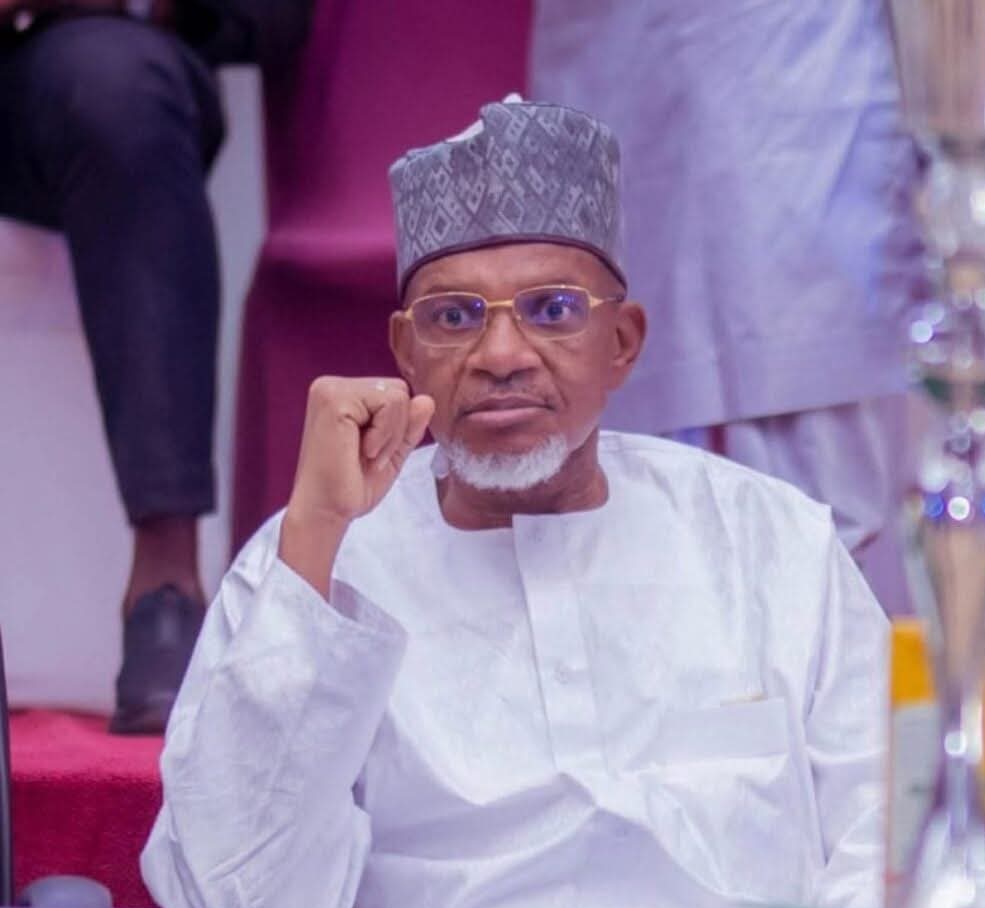
Kebbi State is no stranger to complex and sophisticated politics. To govern this dynamic state requires more than charisma; it demands deep sociopolitical mastery and a pragmatic grasp of socioeconomic realities. Governor Comrade Dr. Nasir Idris, Kauran Gwandu, has emerged as a leader who embodies both politics and development, weaving them into a single, effective strategy that is rapidly reshaping Kebbi’s political landscape and developmental trajectory.

In a state once defined by fragmented interests and rivalries, Governor Nasir Idris has achieved what many thought impossible: unity. Today, all Kebbi senators, legislators, and major political stakeholders are firmly in the All Progressives Congress (APC). Former governors who once stood on different political lines now speak with one voice. Elections that once tested the party’s strength are now won seamlessly, reflecting a politics of representation, inclusiveness, and acceptability.

This new sense of belonging has left no major stakeholder uninvolved. As one political observer put it: “In Kebbi today, everyone that matters has a seat at the table of decision-making that transforms the lives of the common man.”

That is why analysts argue that the once-ambitious former Minister of Justice and Attorney General of the Federation, Abubakar Malami, may have lost political relevance, with 2027 looking like a closed road for him.

However, politics is only one aspect of Governor Nasir Idris’ multifaceted approach. On the other hand, there is a clear, tangible commitment to socioeconomic transformation that cuts across all 21 local government areas of Kebbi, both rural and urban.

The results in just 20 months are staggering. In education: 1,954 schools have either been built or renovated, with 336 new schools constructed and 1,618 renovated. Teachers now earn wages aligned with national benchmarks, with the state implementing the ₦70,000 minimum wage categories.

On infrastructure, the administration has embarked on massive projects, including the dualization of the Birnin Kebbi–Ambursa Road, the construction of the Birnin Kebbi Ultra-Modern Motor Park, the rehabilitation of Birnin Kebbi city roads and Yauri township roads, the Koko-Mahuta-Dabai Road linking seven LGAs in Kebbi South, bridge repairs on Bunza–Dakingari Road, and culverts along Birnin Kebbi–Makera Road.

Healthcare delivery has seen the renovation of Argungu General Hospital, the rehabilitation of health centres, and the expansion of medical facilities across the state. In public institutions, the government has overseen the construction of the State Ultra-Modern Secretariat in Gwadangaji, the remodelling and furnishing of the Government House, and the expansion of the Pilgrims Welfare Agency. Other key projects include the construction of a fuel dump at Sir Ahmadu Bello International Airport and the dualization of Argungu’s Old Bypass Road.

Governor Nasir Idris has also prioritised building strategic international partnerships. By engaging with donor agencies and development partners, Kebbi is not only attracting new funding but also becoming an integral part of global development conversations.

The “Nasir Idris formula” is clear: politics without rancour, governance without neglect, and development without bias. His administration has combined inclusiveness in politics with an aggressive rollout of life-changing projects, creating a blend of stability and growth.

In Kebbi today, the once-elusive dream of a government that unites political forces while delivering practical, people-centred development is now a reality. With this trajectory, Governor Nasir Idris has not just set the pace for his state; he is redefining what effective governance looks like in Northern Nigeria.

Zayyad I. Muhammad writes from Abuja via zaymohd@yahoo.com.

FUBK holds strategic retreat to chart path for growth and governance

By Muhammad Abubakar

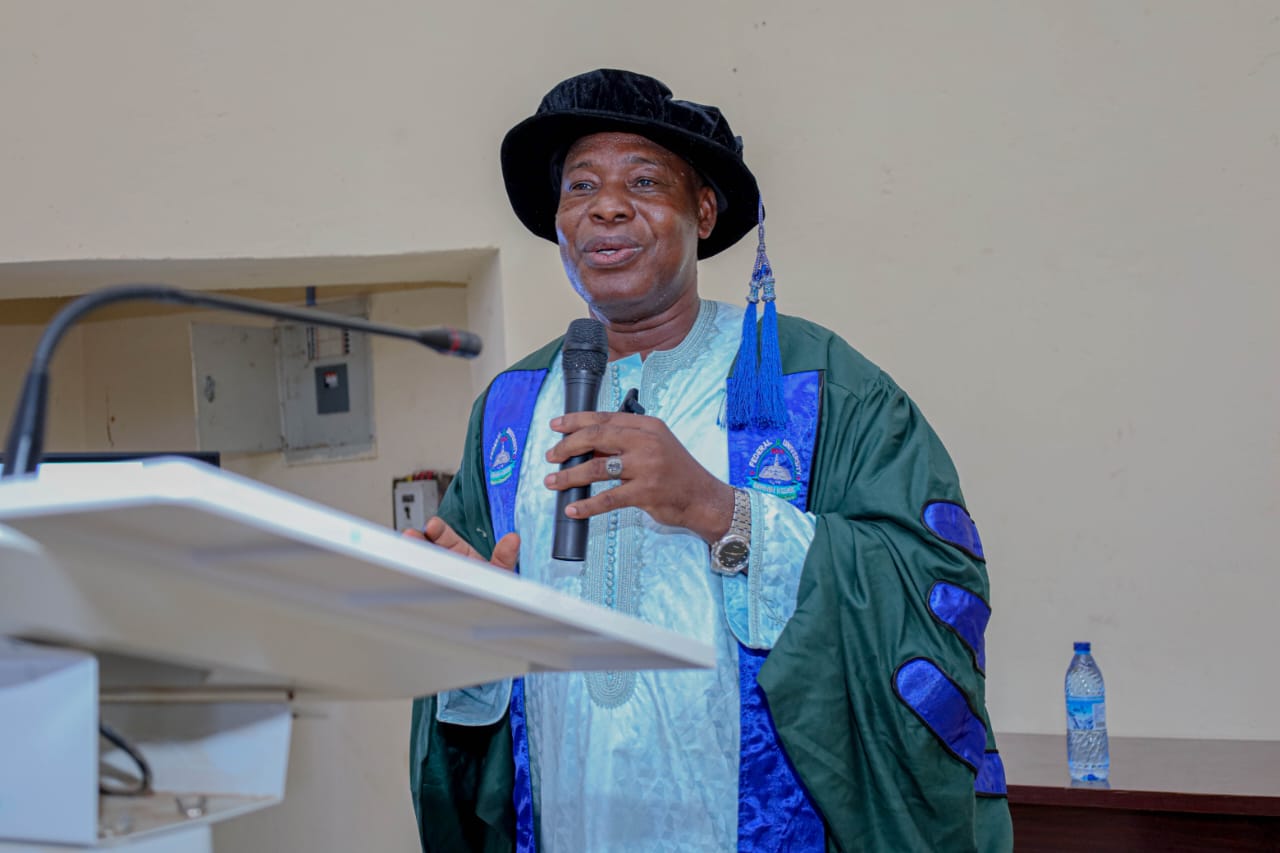
SOKOTO — The Federal University Birnin Kebbi (FUBK) has held its first-ever strategic retreat for the institution’s Governing Council and Management staff, aimed at enhancing governance, innovation, and institutional development.

The retreat, which took place from July 13 to 16, 2025, at the Army Officers’ Mess and Suites in Sokoto, was convened on the sidelines of the 30th Governing Council meeting chaired by the Pro-Chancellor, Col. Abdulmumini Aminu (Rtd.).

A statement issued by the Head of Information and Public Relations of the University, Jamilu M. Magaji, noted that the retreat served as a platform for reflection, planning, and strategic alignment between Council members and University Management.

Col. Aminu, in his opening remarks, stressed the importance of synergy between leadership organs of the university in achieving long-term success. Vice Chancellor Prof. Muhammad Zaiyan Umar described the retreat as timely and vital for institutional sustainability and improved service delivery.

The retreat featured four insightful paper presentations. Among them was a security-focused presentation by Mr. Lawal Yusuf Yashi of the Department of State Services (DSS), who called for proactive intelligence and collaboration to address evolving threats in tertiary institutions.

Prof. Yahaya Tanko Baba of Usmanu Danfodiyo University, Sokoto, spoke on the role of governing councils in university governance, while Prof. Maryam Abubakar Koko presented strategies for sustainable revenue generation through innovation and partnerships.

The final paper, delivered by Mal. Ahmad Shehu, Registrar of Usmanu Danfodiyo University, explored strengthening university-community ties through “Town and Gown” partnerships.

Participants concluded the retreat with a renewed commitment to improving institutional performance, fostering innovation, and building collaborative relationships to enhance FUBK’s academic and societal impact.

Federal University Birnin Kebbi gets new registrar, four professors

By Muhammad Abubakar

The Governing Council of Federal University Birnin Kebbi (FUBK) has approved the appointment of Barrister Abdulkadir Abubakar as the new Registrar of the University for a five-year term.

The decision was made at the Council’s 29th meeting held on Thursday, May 22, 2025, under the leadership of the Pro-Chancellor and Chairman of Council, Col. Abdulmumini Aminu (Rtd.). The appointment follows the recommendation of the Joint Senate and Council Selection Board.

Barr. Abdulkadir brings to the position 18 years of experience in university administration. He joined FUBK in 2015 as a Senior Assistant Registrar and became Deputy Registrar in 2022. Before this, he served at Kebbi State University of Science and Technology, Aliero, and at the College of Basic and Advanced Studies, Yelwa-Yauri.

A legal practitioner with a Master’s degree in Petroleum Law and Policy from the University of Dundee, UK, Abdulkadir also holds a Bachelor of Law in Common and Islamic Laws from Usmanu Danfodiyo University, Sokoto. He was called to the Nigerian Bar in 2009.

Until his recent appointment, he headed the Legal Unit of FUBK and served in various administrative capacities, including TETFund Desk Officer and Assistant Secretary to the Council.

In a related development, the Council also approved the promotion of four academic staff to the rank of Professor and three others to Associate Professor. The newly promoted Professors include Dr. Bello Bala Diggi (Intellectual History), Dr. Mohammed Bashar Danlami (Virology), Dr. Muhammad Muazu Yusuf (Development Economics), and Dr. Yahaya Tajudeen Olarenwaju (Cell Biology and Genetics).

The new Associate Professors are Dr. Halima Muhammad Bande (Business Administration), Dr. Abdullahi Umar (Geography), and Dr. Ali Sherrif Kabara (Accounting).

The appointments of Professors Diggi and Danlami are effective from January 1, 2024, while those of Professors Yusuf and Olarenwaju take effect from January 1, 2025.

Kidnappers demand N20m ransom for abducted Kebbi woman

By Abdullahi Mukhtar Algasgaini 

Bandits have kidnapped Nafisa Usman, a married woman, from her home in Gayi village, Kalgo Local Government Area of Kebbi State.  

The attackers reportedly invaded her residence around 2:00 a.m. on Friday, broke into her room, and took her away without harming others.  

Family sources said the kidnappers, believed to be herdsmen, are demanding N20 million for her release.  

Alhaji Yahya Kuka, Chairman of Kalgo LGA, condemned the abduction and pledged efforts to secure her safe return.  

The Kebbi State Police Public Relations Officer, Nafiu Abubakar, could not be reached for comment at press time.

The birth of performance-based politics in Jega  

By Bilyamin Abdulmumin, PhD

There is much to learn from the politics currently unfolding between the Jega community, their constituency representative, and the Kebbi State government. 

It all began with rising criticism directed at the state government over the glaring lack of infrastructure development in the community. What made the criticism particularly serious was the surprise and visible projects by Hon. Mansur Musa Jega, the National Assembly member representing Jega, Gwandu, and Aliero. Unarguably, since the return of democracy, this constituency has never witnessed such a scale of project delivery. So, unsurprisingly, prayers and praise were poured in from all quarters.

With Senator Muhammad Adamu Aliero of Kebbi Central also delivering notable developments, public frustration quickly turned toward the state government—the governor, the state assembly member, and the local government chairman. During the latest Eid prayer, one fierce Imam echoed the sentiment in his sermon before thousands of faithful. 

In a bold rhetorical salvo, the Imam asked: “Where are the capital projects from the state governor? Or from the local government chairman? Has governance been reduced to merely paying salaries?” 

On the other hand, the Imam turns to the constituency member to invoke Allah’s blessings on him for conspicuous township developments. These prayers were the straw that broke the camel’s back. The video went viral, sending shockwaves through the state government and its supporters.

But then, almost immediately, something interesting happened. Based on the advice, the government mobilised contractors to immediately mark for dualisation one of the busiest roads (leading to the house of the town chief). Behold, performance-based politics (which should have been the case) has given birth. 

One interesting lesson from this development is that a politician’s performance speaks louder and travels faster than any political campaign: A politician’s performance becomes an automatic means of political campaigning. Imagine an Imam on Eid grounds before thousands campaigning for one candidate. That’s the power of visible performance.

Another interesting piece revealed by the saga was the political influence of the population. Jega is among the few local governments in Kebbi State with the highest population, hence one of the most influential politically. The old town forms what would be called a swing state in America for its political dynamism or K states in Nigeria for its sheer number of electorates, so winning it is a sign of success in Kebbi State. A reason why the state governor didn’t joke with the Imam and the electorate’s outcry. This shows that a large population, when strategically mobilised, can become a political asset.

 While delivering constituency projects also depends on what committees a representative belongs to, Mansur still deserves credit because there are allegations of constructors conniving with constituency members to divert billions of naira from constituency projects. 

We criticise politicians when they fail; we should also encourage them when they try.

Inside NYSC Permanent Orientation Camp

By Usman Mujtaba Shehu

The National Youth Service Corps scheme idea was to expedite contacts across cultural zones and bridge the cultural gaps, and surmount cultural stereotypes.

Being in an NYSC dress is a dream come true for me. Having visualized how it would feel or how I would look in it about two decades ago, I’m thrilled to experience it finally. When I was younger, I used to wear my father’s NYSC ceremonial shirt. Although it was oversized, the tip reaching my knee sparked my interest in the NYSC program.

The question isn’t just about the dress but about the experience and feeling of being a Corp member. That’s what many people long for. During the registration process, I didn’t encounter many hitches. The main challenge was the duration of my university program, which was prolonged due to the long ASUU strike and the emergence of the COVID-19 pandemic.

Apart from these two reasons, all the delays were natural, stemming from the nature of my school’s (ATBU) calendar. The NYSC registration, receiving my call-up number, and anticipating my state of deployment were challenging. I spent 13 hours in the CAFE in the queue waiting to be registered. Additionally, I waited several more hours to receive my call-up number and was eventually deployed to Dakin Gari Orientation Camp in Kebbi State.

When I saw the call-up letter, I was sad, and my mind wandered to the 1-day, almost 12-hour journey ahead. After arriving at Birnin Kebbi, I had to find a taxi to the camp, which was a struggle. It took me 4 hours to get a cab and another 2 hours to reach my destination. I arrived at the camp in the evening, around 5:30 pm. Luckily, the registration queue had been reduced, so I didn’t have to wait.

After checking my bag, I proceeded to the admin block for registration. I discovered my platoon from my state code, which was like a registration number. And from the last digit, I knew I was in platoon 4. I collected my meal ticket, which served as a food ID, and was given a mattress and bed space in the Boys’ Hostel (3).

After settling in, I attended another registration session conducted by the platoon officer. Once completed, I received a set of light-green khaki, the NYSC ceremonial shirt, an orange boot, a white cover shoe, a customized cap, and two pairs of short white trousers and shirts. I felt mixed emotions, reflecting on the future and how it would unfold.

Is it true that the orientation is difficult? In the NYSC Orientation Camp, you feel a sense of belonging regardless of your background or who you are. This is rooted in the NYSC act and the orientation design, which aligns with their motto of “humility and service.” The process is humbling, bringing together people from diverse tribes, such as Yoruba, Hausa, Igbo, Ebra, Tiv, and Fulani.

Religious activities are also accommodated, with three Christian prayer points and one mosque. This allows Corp members to practice their faith without discrimination.

The sense of togetherness is reinforced by the uniform dress code, which includes white shirts and trousers, customized shirts with NYSC alphabets emblazoned on the front, and khaki trousers with boots and customized caps for ceremonies. Trust among Corp members develops quickly as they view themselves as similar or familiar, united by their platoons.

Platoons unite Corp members, and my platoon (platoon 4) leader, a Yoruba from Lagos, exemplified this unity. With 10 platoons, each comprising over 100 Corp members from different states, backgrounds, languages, and cultures, we were united under a shared platoon identity designed by NYSC to foster unity and patriotism.

People tend to trust those within their in-group, and belonging is a primal instinct. When Corp members display attitudes, beliefs, or platoon membership, others tend to like and trust them more. My response to lowering the Nigerian flag every 6:00 pm still amazes me. Every activity would come to a halt when the trumpet was blown.

My new identity became my platoon. I made new friends across all platoons, but Platoon 4 became like family. Competitions were organized to strengthen bonds within platoons. I participated in the football competition and cheered for my platoon in the parade competition, cooking, cultural dance (Edo Dance), and other events.

I attended over 30 lectures and sensitization sessions with my platoon, covering education, health, relocation, finances, and more topics. I only separated from my platoon during the Skill Acquisition and Entrepreneurship Development (SAED) launch. Corp members were allowed to choose their training. I attended and listened to about 30 lectures and sensitization sessions with my platoon. The lectures cover almost all areas, including education, health, relocation, finances, etc.

That was how we were shared with eight different skills Acquisition classes. I chose ICT and learned basic Data analysis and graphic design using pixels.

The orientation is rigorous and tedious. But when I reflect on the whole objective of the NYSC initiative itself, it’s worth it. It’s not a pointless activity but a scheme meant to instil discipline, love of country, and love of one another. As mentioned in the national anthem: ‘Though tribes and tongue may differ, in brotherhood we stand’.

Usman Mujtaba Shehu wrote via usmanmujtabashehu@gmail.com.

Kauran Gwandu: The architect of modern Kebbi State

By Jamilu Magaji Ambursa

Barely two years after a new political era emerged in Nigeria, Kebbi State has witnessed a remarkable transformation under Comrade Dr. Nasir Idris (Kauran Gwandu). His administration has focused on infrastructural development and prioritised groundbreaking educational reforms, social empowerment and security enhancements. These pivotal changes have redefined the landscape of Kebbi State, positioning it as a model for progressive governance in the country.

Dr. Nasir Idris was declared the winner of the 2023 Kebbi State gubernatorial election by the Independent National Electoral Commission (INEC) on April 17, 2023. Before becoming governor, Comrade Dr. Nasir Idris had a distinguished career as a teacher, unionist and politician. He served as the National President of the Nigerian Union of Teachers (NUT) and Deputy President of the Nigeria Labour Congress (NLC). As governor, Kauran Gwandu has focused on various development projects, including infrastructure development, education, healthcare, social empowerment, security and agriculture.

To start with, there is no gainsaying that one of the cornerstones of Kauran Gwandu’s administration has been the extensive focus on infrastructural development. For the first time, Birnin Kebbi has taken its shape as the State capital, witnessing massive unprecedented infrastructural reforms. Major investments have been made in road networks, healthcare facilities, and public utilities, significantly improving access and quality of life for residents.

Notable projects include rehabilitating key highways connecting rural and satellite communities to urban centres, facilitating trade and boosting local economies. Additionally, constructing a modern Motor Park and completing an ultra-modern secretariat would stimulate local economies and provide a conducive atmosphere and access to state-of-the-art facilities for civil servants.

Meanwhile, as a seasoned educationist and labour leader, Kauran Gwandu has recognized the critical role of education in driving sustainable development. His administration has focused on upgrading educational infrastructure, providing training for teachers, and ensuring that schools are equipped with modern learning resources. Steps have been taken to enhance access to quality education for girls and disadvantaged youth, thereby striving for inclusivity. These measures aim to cultivate a new generation of skilled individuals capable of contributing to Kebbi State’s development.

It is evident that the focus on educational reforms has not only boosted enrollment figures but has also significantly enhanced student performance across various educational levels. Kauran Gwandu’s commitment to education showcases his belief that an educated population is crucial for the socio-economic progress of Kebbi State.

The emphasis on training and re-training teachers, a new law raising the retirement age for educators from 60 to 65 years and extending the service limit from 35 to 40 years, along with the recruitment of 2000 new teachers and the awarding of contracts for the construction of four mega schools, underscores this commitment.

Furthermore, another unique aspect of Kauran Gwandu’s administration has been his ability to maintain a harmonious relationship with past governors of Kebbi State. This collaborative spirit has fostered an environment of continuity and shared vision for development. The Governor has been able to leverage the experiences and insights on the forebears while working towards achieving common goals that benefit the entire state. This collaborative governance model has helped streamline various developmental projects and create a unified front for the progress of Kebbi State.

To corroborate this, the Sultan of Sokoto, His Eminence, Alh. Sa’ad Abubakar III in his address at the maiden edition of Sheikh Abdullahi Fodio Public Lecture, disclosed that the Sultanate has conferred on Kauran Gwandu the title of Gwarzon Daular Usmaniyya (Knight of the Caliphate) based on recognition of merit, selfless service to humanity and clear demonstration of ability to considerably embraced unity of purpose, fairness, equity and transparency in governance as preached by Sheikh Abdullahi Fodio. The Sultan commended Kauran Gwandu for uniting with all his predecessors for the common interest of the state, involving religious and traditional leaders in governance through consultations, and operating an all-inclusive government.

In the area of social welfare, the administration has placed a strong emphasis on the welfare of Kebbi State citizens. The Governor has initiated various social programs aimed at improving living conditions, particularly for marginalized groups and vulnerable populations. Through microfinance initiatives, skills acquisition programs, and direct aid, many individuals have been empowered to pursue entrepreneurial ventures, thereby reducing poverty levels in the state. The commitment to social welfare reflects a holistic approach to governance, ensuring that economic opportunities are accessible to all.

The healthcare and agricultural sectors have also received the needed impulse. The administration provided medical treatment to patients with mental health problems and related illnesses, renovated general hospitals, and increased entitlements of doctors and nurses. The distribution of palliatives, fertilizers, and solar-powered water pumps to farmers to improve agricultural productivity is also afresh to all discerning individual in the State. These are indelible marks for Kebbi State in the last 18 months. 

In an era where security concerns pose significant challenges across Nigeria, Kauran Gwandu has prioritised the safety of Kebbi State residents. The Governor has taken proactive steps to address the security challenges in the state, particularly in the southern parts. His approach has been both curative and proactive, focusing on strengthening security measures and addressing the root causes of insecurity.

This administration has worked closely with security agencies to implement strategies that address crime and communal conflicts, fostering a safer environment in the State. The unprecedented support given to security agencies, enhanced policing initiatives, and regular security forums has heightened vigilance and encouraged public participation in maintaining peace and order. As a result, the state has seen a reduction in criminal activities, allowing citizens to go about their daily lives with greater peace of mind.

To conclude, let me reiterate that Kauran Gwandu’s transformative leadership has laid a solid foundation for the advancement of Kebbi State. As his administration continues to work towards building a better future for all, Kebbi State stands as a testament to the significant impact of dedicated and visionary governance.

Kauran Gwandu has demonstrated his inclusivity as a driver of a mass socio-political movement and architect of modern-day Kebbi State. He turned the state into an infrastructure development site and remodelled and redefined the political landscape. Therefore, it behoves every well-meaning citizen to support his administration in its determination to deliver democratic dividends to all in the State.

Jamilu Magaji, a public affairs analyst in Birnin Kebbi, can be reached via mjmagaji@gmail.com.

The dilemma within the College of Health Jega

By Bilyamin Abdulmumin, PhD

Whenever I am in my community, I usually go to Kebbi State College of Health Technology, Jega, for computer business services. But suddenly, this Thursday, I encountered violent rioting students, blocking the road with what usually signals tension: burning tyres. When I noticed the school gate ablaze, I realised the situation was out of hand.

Later in the evening, I learned about even more harrowing stories, as the house and vehicles of the school provost, Haruna Saidu-Sauwa, were destroyed beyond imagination. The provost was barely said to have escaped lynching. This is the part of the country where even a peaceful demonstration is culturally and morally avoided, so bringing such riots of this magnitude called for reckoning.

The students reached the breaking point when they felt utterly swindled by the school management. According to some of them who spoke with correspondent of Radio Nigeria Equity FM Birnin Kebbi, they were admitted to study various newly introduced courses for national diploma, boldly indicated by their admission letters. But, unknowing to them, they would be given certificates because their courses were not accredited. What made the matter bitter was spending two years waiting for a ship that never came and the ultimatum to meet the deadline for registration fees or miss the national exam, so through the sweat of their brows, they cough up the 65k examination fee. One student’s story paints the extent of their predicament. According to this student, his father was due for an eye operation, but because of this dateline, the operation had to be delayed.

Penultimate to the incident, the students have been giving excuses, especially by the person they channel their anger the most: the school provost. When one-on-one with him, having exhausted all possible excuses, he allegedly steered up the honest net: “We have nothing to do for you; you can do your worst if you cannot accept certificates (instead of national diplomas). 

Why the student could not settle for state certificates? According to one graduate of the school, only the national diploma gets recognition countrywide, and the state certificate is the lowest pecking order, which is looked down upon even within Kebbi State. When the first set was introduced for employment this year, they were told such certificates didn’t exist.  Thus, one student bore his frustration about this turn of events: the management just wanted, at all costs, to reduce us to roadside hawkers by giving us state certificates.

This turn of events was not all the reason behind the escalation of the matter, just the straw that broke the camel’s back. The school students’ cries have been echoed offline for a long time, and only a few courageous people have taken their cries to social media. The situation of running the school was dire; the light availability, water supply, and environmental sanitation were all allegedly pathetic—these factors, together with the latest lack of accreditation, combined to culminate into the time bomb.

This matter escalated because loyalty wins over competence. Another allegation was that the current provost of the school was chosen over Sadiq Noma, an upright, principled scholar who upholds due process. He was appointed for several days, and even a Walima (eating party) took place to celebrate his appointment. However, the appointment was suddenly terminated in favour of the current provost.

But reading about the predicament of other schools and colleges of health, especially through Dr Muhsin Ibrahim’s posts and the trove of comments that followed them, I realised that the malaise in health colleges in Nigeria is widespread. The sale of admissions has been normalised; benefits for grades are rampant, and now a new layer of irregularity has been introduced: ghost courses.

Health-related courses have the tradition of graduating self-employed students, so unarguably, the reason behind desperation to get admission in such institutions at all costs. Unfortunately, this is the weakness that the officials exploited across the country. Therefore, it is imperative for his excellency, the Kebbi State governor (and, of course, over Nigerian governors) Dr Nasir Idris, as an educationist, to arrest the situation to avoid losing the benefits that come with health-related schools: providing sought-after health staff in the state as well as serving as a source for self-employment.

Bilyamin Abdulmumin, PhD, wrote via bilal4riid13@gmail.com.

FUBK secures NUC accreditation for 12 programmes

By Jamilu Mohammed Magaji

This is to inform the University community and the public that the National Universities Commission (NUC) has accredited 12 undergraduate programmes of the Federal University Birnin Kebbi (FUBK). Out of this number, 11 programmes were fully accredited, while one programme got interim accreditation.

The development is contained in the results of the accreditation exercise conducted by the NUC between November and December, 2023 signed by Ag. Director of Accreditation, Engr. Abraham Chundusu on behalf of the Executive Secretary and issued to the University.

The report disclosed that the accredited programmes cut across Faculties of Arts, Social and Management Sciences, and the Faculty of Science. It also highlighted that while full accreditation status is valid for five years, interim status lasts for two years, after which the programmes would be revisited.

The programmes that secured full accreditation include: Business Administration, History and International Studies, Demogragraphy and Social Statistics, Economics, Political Science and Sociology. The rest are Applied Geophysics, Biochemistry, Computer Science, Mathematics and Statistics. On the other hand, the programme with interim accreditation would be fully accredited in the next two years.

While speaking on the development, the Vice Chancellor of the University, Prof. Muhammad Zaiyan Umar, “expressed delight over the results. He was optimistic that the other programme with interim accreditation would achieve full accreditation in the next two years.”

The Vice Chancellor “expressed gratitude to all stakeholders who participated in the exercise. He thanked the Management of FUBK, Deans, Directors and Heads of Department. He also appreciated staff and students of the University for their support and cooperation which contributed to the success of the exercise.”

FUBK Bulletin reports that the NUC report revealed that “Section 10 (1) of the Education (National Minimum Standard and Establishment of Institutions) Act CAP 3LE3, Laws of the Federation of Nigeria 2004, empowers the NUC to lay down Minimum Academic Standards for all academic programmes taught in Nigerian Universities and also to accredite such programmes.”

“The implementation of the Core Curriculum Minimum Academic Standards (CCMAS) commenced in 2023/2024 academic session. The University is expected to ensure compliance in the utilization of the CCMAS for all programmes.”

Kebbi deputy governor lauds FUBK management

By Jamilu Magaji Mohammed

The Kebbi State Deputy Governor, Senator Umar Abubakar Tafida, has commended the Management of the Federal University Birnin-Kebbi (FUBK) for maintaining high academic standards despite many operational challenges. The Deputy Governor made the commendation when the Management of FUBK, led by the Vice Chancellor, Professor Muhammad Zaiyan Umar, paid him a courtesy visit in his Office on Wednesday.

Senator Umar Tafida expressed the State Government’s concern over the problems of transportation, hostel facilities and land disputes affecting the University. He assured that these would be forwarded to the Governor for intervention and solution. He stressed the need for the institution to maintain an open communication channel with the State Government and continue to have cordial relationships with the host community as part of its corporate social responsibility.

Speaking earlier, the Vice Chancellor, Professor Muhammad Zayyanu Umar, told the Deputy Governor that the Federal University, which was set up in 2013, is planning its first Convocation of 5 sets of graduands before the end of this year. 

He said the institution, which has over 8,000 students, 70 per cent of them from Kebbi State, is facing challenges such as an acute shortage of transportation system, hostel facilities, power supply and non-payment of a parcel of land with its host community. He, therefore, appealed to the State Government to support the University towards hosting its very first combined Convocation coming up before the end of the year.

Prof. Umar said inadequate transport is seriously affecting the University, which is located 15 kilometres from Birnin Kebbi township, adding that only four buses jointly donated by Tetfund, Zamfara State Government and former Chief of Army Staff are presently serving the students of the institution.  

The Vice-Chancellor implored the State Government to come to the aid of the University with additional buses,especially now that the rainy season is fast approaching. He also urged the State Government to help in alleviating the 

acute shortage of hostel facilities, as well as interventions on settlement of land disputes with the host community to enable the University to put some development projects in the area. 

Highlights of the visit include the presentation of published materials of the University to the Deputy Governor by the Vice Chancellor and group photography.