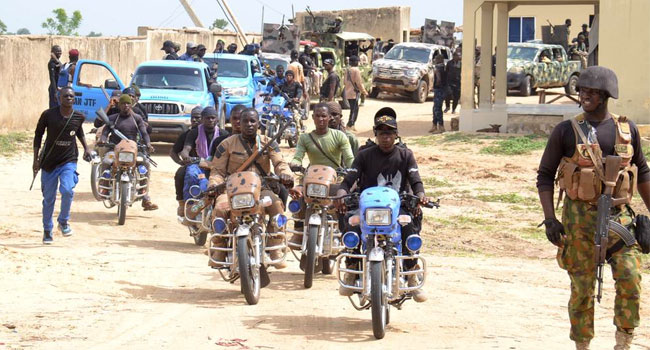
Katsina State

Kano Emir calls on Katsina counterpart for closed-door meeting

By Uzair Adam Imam 

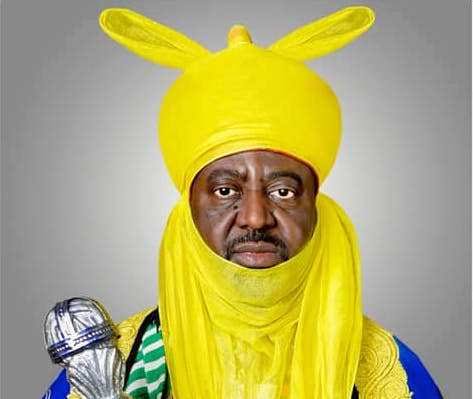
The Emir of Kano, Alhaji Aminu Ado Bayero, has called on his Katsina counterpart, Alh. Abdulmumini Kabir Usman, this afternoon for a closed-door meeting.

Reports disclosed that the meeting, which started at 12:30 pm at the palace of the Katsina Emir, lasted for more than one and half hours.

Although the details of the meeting were not made public at the time of filing this report, there were speculations that it was about the resignation of Wazirin Katsina,  Prof. Sani Abubakar Lugga.

Recall that Prof Lugga signed his resignation after responding to the query by the Katsina State Emirate Council over statements he made about the menacing security challenge in the North.

Lugga, in a statement to the Katsina State Emirate Council, argued that he did not speak on the matter on behalf of the emirate council but as a citizen of the country.

Nigeria’s border closure and its socio-economic hangover

By Salisu Yusuf

Since August 2019, when Nigeria decided to close its border with neighbouring Benin, Cameroon, Chad and Niger, the Nigeria-Niger border has become a boundary for smuggling of especially arms and massive adornment of corruption. Officials of the Federal Government have turned the borderline into a business venture where collecting and giving unearned rewards are the order of the day.

A haulier recently told me that from Maigatari (in Jigawa State), Babban Mutum and Kongolam (in Katsina), there are no fewer than 30 border outposts where officers wave down passing motorists to collect kickbacks. This has resulted in creating more alternate routes where hauliers circumvent border posts.

To fully understand the level of corruption in our border guards, go to the length and width of the borderline between, say, Daura and Babban Mutum. You will easily see bits of laterite earth inlets going north, where these illegal hauliers transport goods in cars and trucks to avoid sandy earth on their way to Magaria in the Niger Republic.

In the midst of this, the new Nigeriene President, Bazoum Mohammed, introduced a free trade route-policy for the teeming youth. Formerly, Niger operated a protectionist economic policy under former President Tandja Muhammadu. Then, importing goods, especially petroleum products, was prohibited, and culprits were duly punished under strict laws. But, don’t forget that Niger, like its counterpart, also exports petroleum products.

Mr Bazoum, I think, implements his free trade policy, where youth are allowed to import goods from Nigeria due mainly to socio-political issues in the neighbouring countries; the raging civil war in Libya and insurgency in Nigeria and Mali. The President wants crime-free youth. Moreover, issues surrounding his election. He was labelled a Western stooge before his election. His policy might have changed that perception.

The free trade policy has given thousands of youth free access to illegally enter Nigeria, buy these products at a subsidized price as we buy, and export them on motorbikes to sell at a higher price. It’s indeed a gain. 

You see them in our filling stations with jerricans queuing for the products daily. The spectre from the filling station to their convoy with a load of jerricans inside huge sacks, their high-velocity speed is so chaotic. They create a scene. Cases of collisions among motorcyclists, knocking down passersby, especially children, result in massive injuries and deaths. Wàllahi, there’s nothing like a border in those areas, only passages!

In addition, daily cases of traversing over the people’s farmlands by these marauding smugglers (because they don’t tread normal paths) pose a threat to possible tillage erosion. Their constant comings and goings leave no hope for agricultural sustainability. 

Recently, smuggling has reached another dimension. Gendarmes in Niger have apprehended smugglers with huge caches of armaments trying to cross the border. Villagers discovered a cache of arms near Daɗin Sarki in Niger. Those who had kept the cache were possibly waiting for the cover of night to take it into Nigeria – a dumping ground for every malfeasance.

The clip of the arms is still viral on the WhatsApp application. Now I retrospectively see sense in former President Trump’s border wall with Mexico in order to evade criminals. Likewise, it’s high time Nigeria erected a border wall with Niger because their leaders, like their French counterparts, stocked in an international conspiracy, are after their country’s survival than the stability of Nigeria.

 Nigeria misses millions of Naira in revenue from closing its borders and the hauliers’ ploys. When you tell the government this sad reality, some government economic mouthpieces put forward classroom economic theories to defend their economic policies. To understand this point, visit an excise office in the outskirts of Magaria in the Niger Republic and see lines of cars and trucks with loads of Nigerian goods. You will swear they all pass through the sky – alas, they pass through alternate routes that are discovered and explored by Nigeriene motorists and their local guides after the border closure.

The recent surge in kidnappings in Gumel and Suletankarkar in Jigawa State is a pointer to a grim future. However, there’s more to this border issue than meets the eye. It’s high time authorities in Nigeria nipped it in the bud before the Nigeria-Niger border becomes a threat not only to Nigeria but Africa. May we see a better Nigeria.

Salisu Yusuf wrote from Katsina via salisuyusuf111@gmail.com.

The most dreadful experience of my life

By Yahuza Abdulkadir

Many a time, I listen to people expressing their feelings and emotions, telling their beautiful and ugly stories, talking about the experiences they encountered through their journeys.

But then, there’s this story I wanted to write, but I couldn’t. Whenever I tried to, fear overwhelmed me. So, I overcame my fears and summoned the courage to write this story today.

In April 2021, while travelling to Funtua in Katsina State, I had a dreadful experience that left a big scar on my heart.

On that day, I reached Kano at around 6:30 PM and boarded the ‘Adaidata Sahu’ tricycle to Rijiyar Zaki Park because I was told that it’s only there I could get a car that would take me to Funtua by that time.

We started the journey to Funtua at around 9:00 PM. It was late and a lovely friend who happened to know how the road used to be at night advised me to stay till morning. But I couldn’t heed her advice because I wanted to reach Funtua that night and complete my assignment the following day.

I started regretting why I embarked on the journey when our car spoiled at Malumfashi. The driver tried to get the car back to work for almost an hour but no progress. Finally, he decided to walk a few metres away to get a mechanic. And we were lucky that he came back with one. After several trials, the car engine started, and it got back to work.

I can still echo the voices of the two women seated at the back, pouring blessings upon the mechanic who helped fix the car’s problem. He really tried, but God’s miracle has taken place, I believe.

As we continued the journey – chatting and listening to other passengers telling their stories, I fixed my eyes on the road, and many thoughts knocked me on the head. When I noticed no car coming from the other side of the road, fear robbed my mind. My heart kept beating. I wanted to tell the driver that I was uncomfortable with this journey, but silence kissed my lips. I kept mute for some minutes. But deep inside of me, I wasn’t feeling okay.

A few kilometres to Bakori, we spotted torchlights reflecting from a close distance. And I heard the driver saying, “Inna-lillahi Waa Inna Ilaihir-rajiun,” meaning: “From Allah we are, and unto him is our return.” He tried turning the car to escape the trap in our front, but the sound of gunshots flying in the air made him stop the car.

I couldn’t remember what happened, but I saw people with guns and torchlights telling us to get out of the car. We went out, and I was terrified. Some voices began to whisper into my ears, “Had I known, I could have stayed in Kano till the following day like my friend said, but my stubbornness got me into this, it’s not my fault; this is my fate.”

That night we were robbed. “The Children of the Night” collected all our money and that of the driver. Then, they took away our cell phones and walked into the bush, shooting in the air.

When they left, I got into the car, shivering. Then, I realized that my smartphone was inside my small travelling bag, which I kept close to where I sat. I put the phone into the bag earlier because its battery was flat. So, I was lucky that my smartphone was still with me, though they took my small phone I used for calls. I know that we were lucky enough to be alive that night.

We stayed there till dawn because our car couldn’t get back to work again. We were thinking of what to do next when a car carrying bags of maize showed up. We waved hands for the driver to stop. And he did. He got out of the car and headed to where we stood. We told him about the incident, and he showed his concern, sympathizing with us. He told our driver that he was rushing to get to his destination. Then I saw him removing some money from his pocket and offering it to our driver. The driver thanked him and asked us to do the same. This man is very kind. Humanity lies in his heart, I whispered.

We kept waiting there till an empty commercial bus came. Then, after discussing with its driver, he asked us to get in. And we headed to Funtua. Our driver left his car with the intention to get a mechanic at Funtua who could repair it.

When we reached Funtua, I wished the other passengers well and prayed for their safety everywhere they would be. Then, I took my travelling bag and walked to my destination.

Although I have been travelling along the Damaturu-Maiduguri highway, I have never felt shocked and frightened like this before.

This was the most dreadful experience of my life. It’s a memory I can never forget.

Yahuza Abdulkadir wrote via yahuzaabdulkadir50@gmail.com.

Terrorist bandits kill security officers in Katsina attack

By Muhammad Sabiu

Bandits raided a military base in the Shinfida community, Jibia Local Government Area, Katsina State, killing one soldier and an official of the Nigeria Security and Civil Defence Corps (NSCDC).


By 10 p.m. Tuesday, the bandits were said to have stormed the base, shooting indiscriminately.


During the attack, they set fire to two patrol vehicles and utilized another patrol vehicle to transport food from nearby villages.


DSC Muhammad Abdara, a spokeswoman for the NSCDC in the state, verified the attack and the number of people killed.


According to reports, the officers who were shot died instantaneously, while those who sustained gunshot wounds were being treated at an unidentified hospital.


“The terrorists attacked the military base located within Government Day Secondary School Shinfida last Tuesday. They killed one soldier and one NSCDC officer on the spot and left many others injured.


“They attacked the military base on their motorcycles. Despite the efforts of the military personnel, the terrorists killed the two victims and set ablaze two patrol vehicles and drove away one with food items stolen from neighbouring villages,” the source was quoted as saying.

Military: Bandits should have no space to breathe

By Kabir Mukhtar Galadanchi

It gladdens our hearts how our brave military has been intensifying offensives and operations to root out bandits and banditry in the North-West, particularly in Zamfara and Sokoto, to bring back normalcy and peace to the banditry ravaged states and communities in northern Nigeria.

The military’s recent Ariel bombardments and ground offensive that resulted in the elimination of some bandits’ leaders have boosted the fight against banditry and the confidence of all the concerned stakeholders adamantly and consistently speaking about the rising level of banditry and general insecurity in the region.

In the past weeks, many notorious bandits’ leaders and other terrorists who specialised in kidnapping for ransom and killing innocent civilians were sent to their Maker. Thanks to the well-coordinated aerial bombardment by some section of the NAF launching successful aerial attacks and unleashing serious damage to the now jittery and fear-stricken bandits running for their lives to avoid the currently sustained military bombardments and offensives.

The elimination of notorious Alhaji Auta scared other bandits’ leaders to be on their heels, especially the ferocious Bello Turji, the de factor governor-cum-administrator in those areas. He collects taxes and imposes rules which all must obey to save their souls. This is an embarrassment to our leaders and our security forces, to say the least, and has become a usual trend that is still occurring unabated.

Bello Turji has continued to dare the authorities and positioned himself as a somewhat invincible and unchallengeable criminal that can do and undo whatever he so desires in the communities he’s unleashing his inhumane activities and savagery.

But the recent killing of Alhaji Auta has sent jittery and panic into his camp. He’s now coming to terms with the reality and shamelessly calling and appealing for dialogue and conciliation.

Our military must not in any way give this vermin a space to breathe and must not relent in sustaining those assaults until Bello Turji and his bloodthirsty lieutenants are eliminated. Instead, the military should give them their deserved justice with the barrel of their guns, aerial attacks or through whatever lethal way that will ensure their permanent neutralisation.

Nobody can deny that the unconditional release of some 52 captives by Turji resulted from the intensified military assaults. Eliminating him (Turji) will send fear to hundreds of notorious bandits leaders operating in Zamafara, Sokoto, and Katsina and reduce their activities.

Credible reports have it that Duna Baleri, Dogo Gide, and a host of other bandits leaders are now hiding and running from their devilish camps to avoid our military’s ongoing pressure and offensives. We pray that their nemesis will soon catch up with them in no distant time inshaAllah.

While saluting our military’s efforts, bravery and gallantry, we also pray that they should continue to be determined, persistent, and maintain doggedness in flushing and neutralising these enemies of the state that made life hellish and turbulent through their primitive violence and atavistic barbarism.

On our part as civilians, let us unite and confront this huge challenge collectively without sentiment or regard to religious, ethnic and political affiliations and underpinnings. Let us also cooperate with the military in providing credible information that will help them uncover and eliminate these evils once and for all.

Kabir Mukhtar Galadanchi wrote from Katsina. He can be contacted via kmgaladanchi20@gmail.com.

Governor Masari: Right decision, wrong approach

By Ahmadu Shehu, PhD.

The comments by the Governor of Katsina State, Rt. Hon. Aminu Bello Masari encouraging local populations to rise and defend themselves have mixed reactions. Governor Masari’s comments betray the frustration of state governments in curbing the incessant killings, kidnappings and wanton terrorism that has overtaken most parts of northern Nigeria, especially the northwest. This also portrays the disgustingly shameful inability of the current administration to secure the lives and properties of its citizens.  

In my opinion, Masari’s call to self-defence is the only option left for defenceless citizens who their governments leave at the mercy of terrorists. After many years of terror and horror, it is now apparent that Nigerians can no longer rely on the government for security and protection. As a result, Nigerians are in constant fear and uncertainty at home, on the road, in hotels, awake or asleep.

For one, the Nigerian police are grossly understaffed, ill-equipped and unmotivated to deal with the least of crimes in our society. Secondly, our last line of defence, the Nigerian armed forces, are overwhelmed. Despite its historical doggedness and glory, the Nigerian army has fallen victim to the Nigerian endemic corruption, nepotism and malfunction.

This, coupled with the fact that the country has been continuously militarized for decades, has oversaturated and weakened the numerical, financial and material strength of the armed forces. From Baga to Yenagoa, Seme to Mubi, Port Harcourt to Sokoto, the Nigerian military struggles with one threat or another within our borders.

Facing serious national threats such as IPOB and Oduduwa separatists, terrorist organizations such as Boko Haram, ISWAP, Ansaru, etc., rampant and rampaging bandits and kidnappers, have disorganized, disoriented and crippled the efficiency and efficacy of the Nigerian armed forces. There is certainly a limit to strength and power.

The Nigerian judiciary, which should have been a deterrent to criminals and the last resort for the masses and the poor, has been an easy, cheap tool for the wealthy. The weak, vulnerable citizens have mostly been on their own. They have resigned to fate and forsaken the course of justice, hoping only to get justice in the hereafter.

While the above is an absolute truth, Gov. Masari’s call is misplaced, ill-timed and counterproductive. My disagreement is not in the principle of what he said but in the approach and implementation. Masari is simply calling for absolute anarchy.

Now that the nation cannot deal with a few unorganized armed zealots, how do we imagine a situation where citizens are armed to the teeth? America, the world superpower, is consumed by this law of necessity. How much more of a country which cannot prosecute the smallest of its criminals?   

How would Gov. Masari deal with thousands of unemployed, illiterate, impoverished youth with arms and ammunition at their disposal? If all communities are armed as the Governor envisages, who will be the law in the state? Does Masari think that people with uncontrolled access to firepower equate to an organized police force? Does he understand that the only difference between the current bandits and yet-to-be-bandit youth is access to weapons and freedom from the law? 

I do not know who is responsible for educating our political leaders about the relationship between poverty, illiteracy and poor governance with the current situation in the north. But, still, whoever it is, they must be doing an awful job.

The simple truth is that most of our youth populations are idle, uneducated and miserably poor. Another fact is that the alternatives to gainful employment, hope and prosperity is despair, criminality and social crises.

There is still Katsina government house where the Governor lives in peace because the majority have no access to lethal weaponry. That scarcity is because of the restraint ensured by the law and order that is still in place.

While I disagree with Masari’s approach to this solution, I still believe that this is our only option to ending this madness in the short term. But, to succeed in this, there must be a workable framework.

First, the federal government must decentralize our police force. Secondly, each community must be led by the officials of our security forces to establish a community-based security outfit responsible for securing the immediate and broader community. Finally, all weapons must be registered and deployed through the security personnel in each community.

All participating community members must be registered with biometrics accessible to all Nigerian security agencies. In addition, all participating individuals must be given a short training on the use of firearms. The local and state authorities must provide ammunition, and all participating individuals must be assessed and be accessible to security and local authorities.

When this collaborative network of locals and state security forms a cohesive, functional security outfit, these devils will doubtlessly be defeated in no time.

However, the essential requirement for this to happen is a national leadership capable of mobilizing the citizens to confront local and national threats. Until this is achieved, all solutions are hanging on the balance. The Fulani say “hoore nastii hooraare, Allah yidoo gite”.

Dr Ahmadu Shehu is a herdsman, a social commentator, and passionate about the Nigerian project. He can be reached via ahmadsheehu@gmail.com.
Banditry: Governor Masari commands civilians to get firearms

By Uzair Adam Imam

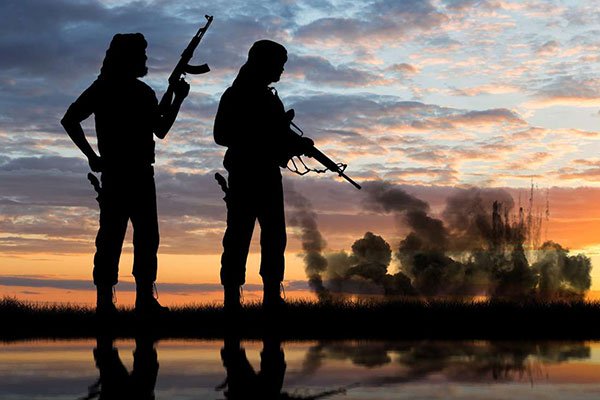
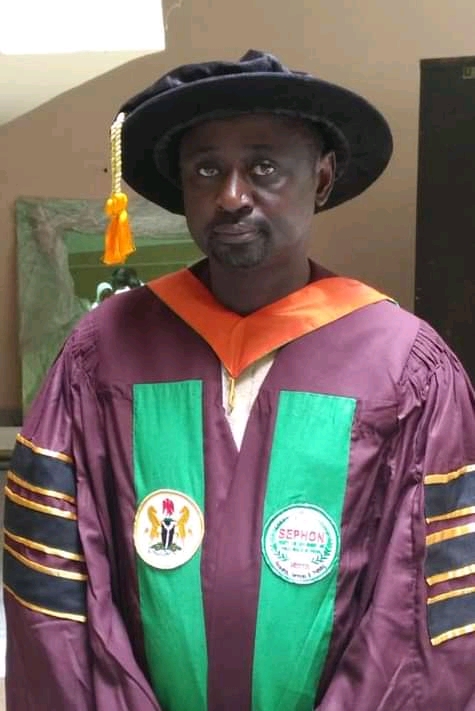
Governor Aminu Masari of Katsina State has called on residents of the state to arm themselves and confront bandits, reiterating that it is “Islamically allowed for one to defend himself against attack.”

Masari said the state government would help those who are ready to own arms with the view to help end the menace. The governor lamented that the security officials alone could not tackle insecurity in the state.

Katsina State is one of the states in the northwestern part of the country that has witnessed incessant attacks by bandits. Reports disclosed how hundreds of people had been injured, killed or kidnapped in Katsina this year, with thousands more displaced from their homes.

Governor Masari made the call while speaking during a media parley with journalists at the Muhammadu Buhari House in Katsina. He added that the number of security personnel they have is insufficient to tackle the situation.

Masari was quoted as saying: “It’s Islamically allowed for one to defend himself against attack. One must rise to defend himself, his family and assets. If you die while trying to defend yourself, you’ll be considered a martyr.

“It’s surprising how a bandit would own a gun while a good man trying to defend himself and his family doesn’t have one,” the governor said.

“We’ll support those who come with the initiative to procure arms because residents need to also complement the efforts of security agencies. These people (security agents) don’t have the number to protect the people.

When President Buhari came, he even tried by increasing the number of our security agents, but it’s inadequate. Count it yourself, how many policemen do we have in this country? How many soldiers do we have?

“Even if we say every policeman should go back to his home state, it’ll still not be enough. So, if we fold our arms and decide to do nothing, we’ll be the ones to suffer most,” he lamented.

However, Masari added that the police would register all guns bought by the residents to ensure they are put to the right use.

Civilian JTF: A remedy the Northwest needs

By Adamu Bello Mai-Bodi

The success stories emanating from the Boko Haram epicentre in Nigeria’s north-eastern states, particularly Borno and Yobe, must not be separated from the combination of unwavering military operations and the assistance given by the tactically planned Civilian Joint Task Force (CJTF). CJTF is a local group founded in 2013 to support the Nigerian military’s operations against extremists and defend local populations from attacks like the ones currently taking place in Kaduna, Niger, Sokoto, Zamfara and Katsina.

Recent events in Nigeria reveal that the region’s indigenes primarily carry out terror activities. The Northwest is no exception. To put an end to this brutality, the authorities in the Northwest should take a page out of Borno State’s book and organize a local militia to work alongside the military. Locals know their communities’ lows and highs, nooks and crannies way better than military personnel. Therefore, involving them would boost the chances of conquering non-state actors and their partners in crime.

The people of Hausa land have a history of bravery and, if given a chance, many will volunteer to work in the task force to bring respite to and rid their community of murderous bandits. On this note, Nigerian authorities should give Northwest people a chance to work with the military and salvage the region. In addition, the loose group should possess basic weapons and must have female members to help with handling women and children. When this is done, I’m optimistic about having Borno-esque results.

The going is now rough in the Northwest, and the people are willing to fight back, but the constituted authorities don’t allow that. This region is densely populated. Every state can recruit at least thirty thousand vigilantes and pay each member a twenty-thousand naira incentive per month. Notwithstanding, authorities should be very observant during the recruitment of this recommended vigilante group to avoid engaging the bandits’ Trojan horses.

Gathering intelligence would be easier with the CJTF in place. The locals hired would quickly identify criminals and their enclaves, resulting in more successful security operations. Apart from increasing security, another positive aspect of the CJTF concept is that it provides people with temporary jobs to keep them occupied and provide food for their families. Instead of governments and individuals paying large sums of money as ransom to bandits, the money could be utilized to pay vigilantes a monthly stipend.

Adamu Bello Mai-Bodi writes from Azare, Bauchi State. He can be reached via admabel86@gmail.com.

Police arrest man for assassinating Katsina monarch

By Uzair Adam Imam

The police in Katsina State have confirmed the arrest of one of the suspected killers of Alhaji Abubakar Atiku Maidabino, the former District Head of Yantumaki.

Recall that late Maidabino was shot to death on June 1, 2020, alongside his night watchman.

The police spokesman in the state, SP Gambo Isah, made confirmation Tuesday while parading the suspect, Yusuf Abdulla.

He said: “In the course of an investigation, the suspect confessed to have participated in the crime along with the following suspected bandits: Shamsu, Ibrahim, Salmanu and Kabir (now at large, hibernating in the forest).

“The suspect would be charged with terrorism, murder, kidnapping, criminal trespassing and other related offences as soon as the investigation was concluded,” the SP added

In another development, reports have indicated that the command yesterday revealed that it succeeded in smashing a notorious gang of “transborder car thieves” which operated in Kano, Jigawa, Kaduna and Katsina states and transporting them to the Niger Republic for sale.

“Nemesis caught up with members of the gang when they were accosted with a stolen motor vehicle, Toyota Camry, light blue, with registration number JJJ 340 EF and another motor vehicle, Honda CRV, ash in colour, with registration number DKA 980 AH at a mechanical workshop at Kofar Sauri-Kaita Road, Katsina,” Isah said.

He added that the names of the suspects include: Usman Sani, 50, Lukman Magaji, 20, and Yakubu Ismail, 25.

“In the course of the investigation, suspects confessed to have stolen the motor vehicles from Kano and on their way to dispose of them at the Niger Republic. Suspects confessed to having disposed up seven motor vehicles at the same Niger Republic,” he added.

Katsina Government set to move tax payment and others “electronic”

By Hussaina Sufyan Ahmad

The new development by Katsina State Internal Revenue Service (KIRS) has been an immediate stoppage of all cash payments and collection of revenues, taxes and other levies due.

The Executive Chairman of KIRS, Mustapha Muhammad Sirajo, on Sunday in a statement issued to journalists added:

“The stoppage of the cash payments takes effective from Monday, November 8, 2021. As part of the modernization project of its service, Katsina State Internal Revenue Service (KIRS) is reviewing the process of collection of revenues, taxes and levies due to Katsina State’s Developments.”

“The commercial banks are First Bank, Access Bank, Eco Bank, First City Monument Bank, Fidelity Bank, Guaranty Trust Bank, Keystone Bank, Polaris Bank, Stannic Bank, Sterling Bank, Union Bank, United Bank of Africa and Zenith Bank.”

“The public is hereby informed that all cash payments and transactions have been halted and e-payment effective from Monday 8th Nove mber 2021.”