By Abubakar A. Bukar
In an attempt to demystify what he regards as Salafists’ deification of Bukhari, ‘Jabbar ended up with this raw Rushdification of the Prophet (SAW). All these references and inferences of indecency attributed to the Prophet (wa’iyaz billah, except for the debate, very few knew that the profanity is such great in its filthiness) remind one of many passages in the Satanic Verse. To which, Kano cannot keep silent. To which, the North cannot be indifferent. Nay, nor the Muslim world as a whole. When Rushdie attempted, the Ummah reacted. No less when similarly caricatures oozed with the stench from Denmark. While France’s Charlie Hebdo got more than what it bargained. Of recent when Macron assented to such insanity, we’re all appalled and nearly went berserk in search of lines from Namangi’s Wakokin Imfiraji:
Wa ya kai, wa yai kamarka?
Wa ya san asali ya naka?
Wa ya san matukar rabonka?
Tun da Allah ya yabe ka,
Duk wanda ya ki ka ma yi gaba
Where the honour of the Prophet is at stake, an average Muslim would accept being intolerant, antediluvian and worse descriptions far readily than expected in lieu of the desecration. The interrelation of the Prophet’s personality and its sanctity with a Muslim devout is beyond mere belief, obedience and homage. It’s about the latter’s existential significance. It is on this note the Muslim relates with any threat thus – which appears incomprehensible to non-Muslim. This signification is beautifully captured by the American anthropologist Saba Mahmoud in her engagement with Judith Butler. See Religious Reason and Secular Affect:…where she says, ‘the Aristotlean term schesis captures this living relation because of its heightened psychophysiological and emotional connotations and its emphasis on familiarity and intimacy as a necessary aspect of the relation.
What interests me in this iconophile tradition is not so much the image as the concept of relationality that binds the subject to the object of veneration. Those who profess love for the Prophet do not simply follow his advice and admonition to the umma (that exist in the form of the hadith) but also try to emulate how he dressed; what he ate; how he spoke to his friends and adversaries; how he slept, walked, and so on. These mimetic ways of realising the Prophet’s behaviour are lived not as commandments but as virtues where one wants to ingest as it were, the Prophet’s persona into oneself… Muhammad, in this understanding, is not simply a proper noun referring to a particular historical figure but the mark of a relation of similitude… The sense of moral injury that emanates from such a relationship between the ethical subject and the figure of exemplarity (such as Muhammad) is quite distinct from one that the notion of blasphemy encodes. The notion of moral injury I am describing no doubt entails a sense of violation, but this violation emanates not from the judgment that “the law” has been transgressed but from the perception that one’s being, grounded as it is in a relationship of dependency with the Prophet, has been shaken’.
And I think it is from this prism Bala Mohammed, former Trust columnist, wrote that where the Prophet is involved, we are fanatics or something of that import in his reaction to the Danish cartoons.
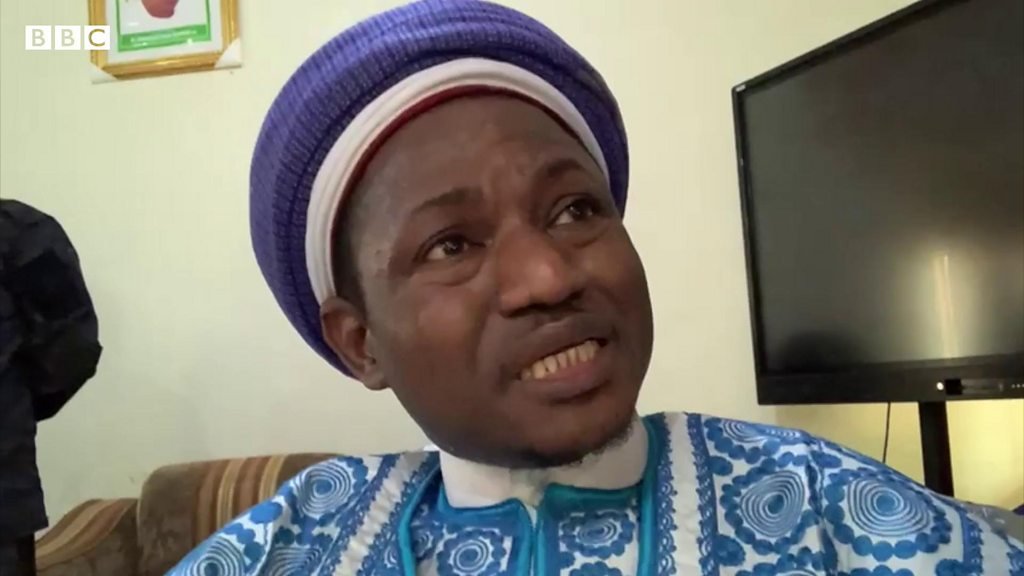
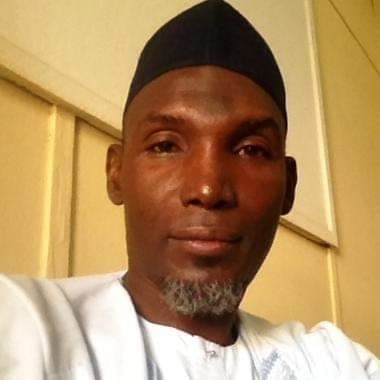
The Sheikh in question obviously feels so much saturated (if not intoxicated) with counter-argument that he severally warned his interlocutors not to send a “tiny” representative, which he would bulldoze in a matter of seconds. But they defied by seemingly playing out this logical David-Goliath with him. I have never heard of this Rijiyar-Lemu Jnr. beforehand. And since the Sheikh’s encounter with Alkasim Hotoro, one could notice his ill-preparedness for conventional debate; that he’s more well-exercised and blabbermouth only in the absence of an antagonist. In a word, he’s a disappointment to the usual assertiveness of dissident voice. This becomes clearer when one juxtaposes Tal’udis vs Ja’far Adams debate. You may argue that besides the clerical establishment, the government too is posed against the dissenting Sheikh, making it nearly impossible to win the card. The fact of the matter is that since Socrates and Milton, dissidents grapple in/with the same circumstances. It’s the power of their argument, the logicality of the presentation of their stand – which considers and surmounts their opponents’ in Millian fashion – that extricate and exonerate them at least in the view of current sympathisers and later generation of dispassionate examiners.
In all this, the biggest lesson is on the centrality of humility and sincerity in the acquisition and transmission of knowledge.
Similarly, I’d also felt our teacher shouldn’t have been the moderator in this debate. But upon listening through the 5 hours of exchanges, nothing could be fairer than Professor Salisu Shehu’s handling of the interlocking scenario. Partisan, yes he is, but I think he has ably transcended that with calmness and justice. After all, it was not a stark case of the Sufi-Salafi divide as many framed it to be, misleadingly. Among Sheikh Jabbar’s interrogators are representatives of Tijjaniya, Qadiriya, JIBWIS and Salafi.
Beyond winning and losing, the debate, to me, raises more questions than answers which calls for re-debate, or, once more, putting ‘Jabar on the dock – as it was. The Sheikh was, for instance, caught complaining that what was presented to the public by his debaters as his scholastic stand on the controversy was only a ‘text’ – with utter disregard to the context. In the name of fairness, could he be granted, in hindsight, the chance to hear him out through and through on the context? Or he just be asked to produce a book exhausting whatever burhan he has on this? Wouldn’t it be creditable if the classical Baytul Hikmah is reincarnated thus? To what extent is our toleration of dissent and dissidents in the name of freedom of opinion and expression thereof? Or are these concepts alien in our tradition? To what extent are the canons open to critique? What are the political and economic dimensions of these blasphemous shenanigans? And the international connections – how does it lubricate the engine of globalisation? Is it true that all the ahadith wherein the Prophet prescribed capital punishment were mere fabrication and distortions as the Sheikh lately claimed? Is the Sheikh alone in this, especially with regard to blasphemy? In the power asymmetry and contestation between the fringe and the mainstream, how do we save the truth from being the first casualty – with apologies to Phillip Knight? Ad infinitum.
Bukar wrote in from ABU’s Mass Communication and can be reached via aabukar555@gmail.com.