Kano

Abduljabbar remains in police custody, awaits trial

By Uzair Adam Imam


The embattled Islamic cleric, Sheikh Abduljabbar Nasiru Kabara, remains in police custody since his arrest yesterday (Friday) evening.


Kabara is a famous Kano-based controversial cleric whose commentaries and preaching the Coalition of Kano Ulama describe as blasphemous. On July 10, 2021, Kano State Government organised a debate between Kabara and some of the state’s scholars to defend himself.


However, according to the statement made by the judge of the debate, Professor Sani Shehu, Kabara failed to clear his name or defend his utterances.


The Sheikh was charged for blasphemy, incitement and insulting Prophet Muhammad (SAW), his companions, among others. A statement issued by the Commissioner of Information, Malam Muhammad Garba, on Friday states that Abduljabbar will remain in police custody until Monday, when he would be sent to prison.


The statement, in parts, reads: “The development followed the receipt of the First Information Report from the police by the Office of the Attorney General and Commissioner for justice which prepared charges against the cleric.


“Abduljabbar was subsequently arraigned on Friday, July 16, before an Upper Sharia Court Judge, Kofar Kudu, Alkali Ibrahim Sarki Yola, where the charges that included blasphemy, incitement, and sundry offences were mentioned.”

20 suspected internet fraudsters arrested in Katsina — EFCC

By Muhammad Sabiu

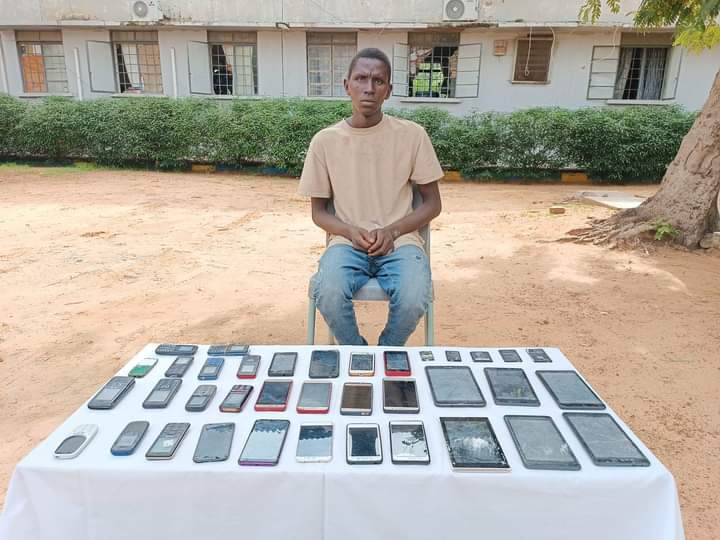
Twenty suspected internet fraudsters, otherwise known as Yahoo! Boys, have on Friday been nabbed by the Kano Zonal Office of the Economic and Financial Crimes Commission in Katsina State’s Dutsinma Local Government Area.

Announcing the apprehension via its official Facebook handle, the Commission said, “The suspects who were mostly youth in their early twenties were arrested by a team of operatives of the Commission following intelligence indicating that some Internet fraudsters were perpetrating fraudulent activities around Dutsinma.”

Investigations into the matter are ongoing as, according to the Commission, the suspects would be charged to court in due course.

There has been an increase in cybercrimes in recent times as the Commission has on several occasions made similar raids and apprehension in different parts of the country.

AbdulJabbar and the free speech conundrum

By Muhammad Mahmud

The recent debate between AbdulJabbar and representatives of Kano Ulama on the former’s reprehensible method of uttering unprintable words on the person of the Messenger of Allah (Peace be Upon Him) on the pretext of deduction and/or inference has opened yet another question on the freedom of expression. Some few supporters of AbdulJabbar decided to hinge their support on the hype of freedom of expression, saying that they are supporting him because he represents their free speech advocacy.

Nevertheless, a simple glance will expose this fallacy because if criticising other ideas is sanctioned by the freedom of speech article, AbdulJabbar himself does not seem to believe in it given his radical stance on the right of different sects to propagate their understanding. He condemns other people (sometimes using all available invectives) for no reason other than expressing opinions that contradicts his stance. He attacks other sects with impunity, descending on the personalities of many revered sheikhs, who were not even aware of his existence, in order to hurt emotionally and psychologically injure their admirers who disagree with him on one issue or another.

It is, therefore, hypocritical to premise supporting the man on the shaky ladder of free speech advocacy. This is even more evident as the peddlers of this chicanery never, even for once, voiced their dissatisfaction with the man’s assault on others who spoke their minds.

Now that the issue of freedom of expression is introduced into the unfolding drama, it is pertinent to ask what precisely this freedom of expression is? What is its scope, length and breadth? To what extent is it applicable? Who determines what it is and who will decide who is guilty of violating its principles?

We must address this because without fully knowing and understanding these, we may never have the much sought “liberty” to express ourselves. Unfortunately, many questionable elements will hide under it to deny us our own right to express ourselves.

It looks like almost every blasphemer or assaulter of people’s sacred places and/or scripture will find a supporter among the advocates of freedom of expression. Are the majority of people whose religion is attacked NOT free to express their anger? Why the intolerance against intolerance? It seems we are faced with what we can call a tyranny of the minority.

Section 39 (1) of the Nigerian constitution says: “Every person shall be entitled to freedom of expression, including freedom to hold opinions and to receive and impart ideas and information without interference.” Why should this only be applicable when those opinions are from the minority?

Am I not free to hate and despise anyone who infringes on my liberty and attack me, my religion or culture? Put aside those reasons, am I not free to hate anyone, including AbdulJabbar, for no reason at all? Why should someone then try to gag me when I have a reason to hate and express my anger towards him when he attacks what I hold dear?

Some of them used to argue that we abhor dissent. This is also not true. We have been living with dissent throughout our history. Even after Sheikh Dan Fodio’s Jihad, there were non-Muslims who went about their businesses without any harassment. Throughout our towns, there are a handful of brothels known as Gidan Magajiya. There were singers and dancers. There were even ‘yan daudu in addition to prostitutes. They live here. None of them was reported to have been attacked by the people or the authorities, to the best of my knowledge.

Also, the Ulama differ. They write books for and against what they believe and what they do not believe. People follow any sect they feel they are more at home with. They form and join groups. All these existed in Arewa before Nigeria even existed; they still exist. What gave the impression that we hate dissent is yet to be enumerated. Therefore, this is not about disagreement; it is about attacking and insulting what people hold dear and sacred while waving the card of free speech.

Before the next ‘AbdulJabbar’ rears his ugly head

By Abubakar Suleiman

No thanks to his polemics, fiery tongue and boastfulness, AbdulJabbar Nasiru Kabara, the scion of the famous and revered Islamic scholar Shaykh Nasiru Kabara, has dominated the tongue and pens (though in the negatives) of most Hausa-speaking Muslims after the long-awaited debate has been laid to rest. He stirred the hornet nest and got stung from all directions.

Over the years, he has gained currency due to his unrestrained and unhinged attempts during preachments to create a hole in the validity of the Sunni Canons, especially Sahih al-Bukhari and Sahih al-Muslim. Plus, he has also never relent efforts in casting doubts into the minds of his gullible and unsuspecting followers on the narrative integrity of the Companions of the Prophet Muhammad (SAW). He is actually not the first to cast doubts on authentic Prophetic traditions, but he is the most reckless one I have come across.

Tellingly, in all his attempts, AbdulJabbar bucked context, methodological principles in the science of Hadith, Arabic nuances and even cultural conceptualisations or idiosyncrasies, especially in translations. And these translations ended up impugning the sacredness of the Prophet. Moreover, save for Allah’s intervention through the Kano state government, his dogmatism and preachings might have led to bloodshed and loss of lives and property.

This saga should once again bring to the front burner the issue of regulating preachers and preaching in Nigeria. One’s ability to translate Arabic text or to graduate from an Islamic university or a Christian theological seminary in Nigeria or abroad should not automatically confer on anyone the authority or absolute freedom to preach or use media houses to propagate ANY kind of religious ideology devoid of a vetting process.

There is no gainsaying that some religious clerics have exploited or abused the freedom of religion or expression for both personal and even political gains through dangerous indoctrination, misinterpretation of religious diktats and the preaching of skewed versions of religion. AbdulJabbar is a good specimen of how to throw decency to the dogs with the help of jarring sounds from a cheering and unsuspecting crowd in preference for personal gains.

Unfortunately, as a society, we most times abhor regulations on seemingly everything. Unfortunately, this nonchalant attitude has often come with a huge and devastating price, as we have witnessed in the case of Maitatsine and, now witnessing in the aftermath of Muhammad Yusuf’s death and the subsequent upsurge of the Boko Haram insurgency and, also AbdulJabbar’s preachments.

Regulation in religious matters is a sensitive issue. Still, it is a pertinent key in taming extreme tendencies, reducing margins of errors in religious fatwas and enhancing positive social policy and social integration. Yes, we can contemplate the government’s tendency to enact laws on preaching in erecting barriers that would insulate them from accountability or criticisms as humanly possible. However, we cannot underestimate the effects or the grave consequences of leaving preachers of any kind unchecked in our current realities.

The government at all levels should, as a matter of urgency, collaborate with relevant religious organisations in building or tweaking existing institutions which shall be backed by law. The institution should be shouldered with the responsibilities of, among others, screening and issuing a licence to preachers, judiciously and sincerely implementing the enacted rules and periodically revising and amending the laws in tandem with current realities or evolving peculiarities.

The solution, as mentioned earlier, is not a one-size-fits-all. Still, we desperately need a system or mechanism to check religious excesses and undue preachments before the next ‘AbdulJabbar’ or religious demagogue rears his ugly head and throws us into another quagmire that may be costly to our lives, religion, time and wealth.

Abubakar Suleiman writes from Kaduna and can be reached via abusuleiman06@yahoo.com.

More takeaway from the Kano Debate

By Abubakar A. Bukar

In an attempt to demystify what he regards as Salafists’ deification of Bukhari, ‘Jabbar ended up with this raw Rushdification of the Prophet (SAW). All these references and inferences of indecency attributed to the Prophet (wa’iyaz billah, except for the debate, very few knew that the profanity is such great in its filthiness) remind one of many passages in the Satanic Verse. To which, Kano cannot keep silent. To which, the North cannot be indifferent. Nay, nor the Muslim world as a whole. When Rushdie attempted, the Ummah reacted. No less when similarly caricatures oozed with the stench from Denmark. While France’s Charlie Hebdo got more than what it bargained. Of recent when Macron assented to such insanity, we’re all appalled and nearly went berserk in search of lines from Namangi’s Wakokin Imfiraji:

         Wa ya kai, wa yai kamarka?

         Wa ya san asali ya naka?

        Wa ya san matukar rabonka?

        Tun da Allah ya yabe ka,

        Duk wanda ya ki ka ma yi gaba

Where the honour of the Prophet is at stake, an average Muslim would accept being intolerant, antediluvian and worse descriptions far readily than expected in lieu of the desecration. The interrelation of the Prophet’s personality and its sanctity with a Muslim devout is beyond mere belief, obedience and homage. It’s about the latter’s existential significance. It is on this note the Muslim relates with any threat thus – which appears incomprehensible to non-Muslim. This signification is beautifully captured by the American anthropologist Saba Mahmoud in her engagement with Judith Butler. See Religious Reason and Secular Affect:…where she says, ‘the Aristotlean term schesis captures this living relation because of its heightened psychophysiological and emotional connotations and its emphasis on familiarity and intimacy as a necessary aspect of the relation.

What interests me in this iconophile tradition is not so much the image as the concept of relationality that binds the subject to the object of veneration. Those who profess love for the Prophet do not simply follow his advice and admonition to the umma (that exist in the form of the hadith) but also try to emulate how he dressed; what he ate; how he spoke to his friends and adversaries; how he slept, walked, and so on. These mimetic ways of realising the Prophet’s behaviour are lived not as commandments but as virtues where one wants to ingest as it were, the Prophet’s persona into oneself… Muhammad, in this understanding, is not simply a proper noun referring to a particular historical figure but the mark of a relation of similitude…  The sense of moral injury that emanates from such a relationship between the ethical subject and the figure of exemplarity (such as Muhammad) is quite distinct from one that the notion of blasphemy encodes. The notion of moral injury I am describing no doubt entails a sense of violation, but this violation emanates not from the judgment that “the law” has been  transgressed but from the perception that one’s being, grounded as it is in a relationship of dependency with the Prophet, has been shaken’.

And I think it is from this prism Bala Mohammed, former Trust columnist, wrote that where the Prophet is involved, we are fanatics or something of that import in his reaction to the Danish cartoons.

The Sheikh in question obviously feels so much saturated (if not intoxicated) with counter-argument that he severally warned his interlocutors not to send a “tiny” representative, which he would bulldoze in a matter of seconds. But they defied by seemingly playing out this logical David-Goliath with him. I have never heard of this Rijiyar-Lemu Jnr. beforehand. And since the Sheikh’s encounter with Alkasim Hotoro, one could notice his ill-preparedness for conventional debate; that he’s more well-exercised and blabbermouth only in the absence of an antagonist. In a word, he’s a disappointment to the usual assertiveness of dissident voice. This becomes clearer when one juxtaposes Tal’udis vs Ja’far Adams debate. You may argue that besides the clerical establishment, the government too is posed against the dissenting Sheikh, making it nearly impossible to win the card. The fact of the matter is that since Socrates and Milton, dissidents grapple in/with the same circumstances. It’s the power of their argument, the logicality of the presentation of their stand – which considers and surmounts their opponents’ in Millian fashion – that extricate and exonerate them at least in the view of current sympathisers and later generation of dispassionate examiners.

In all this, the biggest lesson is on the centrality of humility and sincerity in the acquisition and transmission of knowledge.

Similarly, I’d also felt our teacher shouldn’t have been the moderator in this debate. But upon listening through the 5 hours of exchanges, nothing could be fairer than Professor Salisu Shehu’s handling of the interlocking scenario. Partisan, yes he is, but I think he has ably transcended that with calmness and justice. After all, it was not a stark case of the Sufi-Salafi divide as many framed it to be, misleadingly. Among Sheikh Jabbar’s interrogators are representatives of Tijjaniya, Qadiriya, JIBWIS and Salafi.

Beyond winning and losing, the debate, to me, raises more questions than answers which calls for re-debate, or, once more, putting ‘Jabar on the dock – as it was. The Sheikh was, for instance, caught complaining that what was presented to the public by his debaters as his scholastic stand on the controversy was only a ‘text’ – with utter disregard to the context. In the name of fairness, could he be granted, in hindsight, the chance to hear him out through and through on the context? Or he just be asked to produce a book exhausting whatever burhan he has on this? Wouldn’t it be creditable if the classical Baytul Hikmah is reincarnated thus? To what extent is our toleration of dissent and dissidents in the name of freedom of opinion and expression thereof? Or are these concepts alien in our tradition? To what extent are the canons open to critique? What are the political and economic dimensions of these blasphemous shenanigans? And the international connections – how does it lubricate the engine of globalisation? Is it true that all the ahadith wherein the Prophet prescribed capital punishment were mere fabrication and distortions as the Sheikh lately claimed? Is the Sheikh alone in this, especially with regard to blasphemy? In the power asymmetry and contestation between the fringe and the mainstream, how do we save the truth from being the first casualty  – with apologies to Phillip Knight? Ad infinitum.

Bukar wrote in from ABU’s Mass Communication and can be reached via aabukar555@gmail.com.

Abduljabbar Dialogue: ‘My emergence as judge’ – Prof. Salisu Shehu

Prof. Salisu Shehu, who is the Director of the Centre for Islamic Civilization and Interfaith Dialogue of Bayero University, Kano, in an exclusive interview with The Daily Reality (TDR), described how he emerged as the presiding judge of the dialogue between Sheikh Abduljabbar Nasiru Kabara and some Islamic scholars in Kano state.

“I want to believe that it was made by the grace of God. I know that several senior, elderly and important personalities were pencilled down and contacted, but some of them declined while others, unfortunately, were out of town. My name was among those that were suggested as options. And, by the grace of Allah, my name was anonymously accepted by the committee and therefore was presented to the Kano State Government. I received my appointment letter a day before the fixed date for this dialogue. I, too, have actually tried to decline because there are many people that are more deserving and competent. Still, the committee insisted and persuaded me to accept this appointment since State Government has approved it.”

There were speculations that those who rejected the offer to chair the session or refused to participate did that due to the gravity of the blasphemous remarks on the person of Prophet Muhammad (S.A.W). They, thus, and see the whole issue as needless and a waste of time.

“Of course, these are terrible, sacrilegious statements and utterances. And it is disturbing listening to them because they are horrible and disrespectful to the Prophet (S.A.W). But from the perspective of a jurisdiction maxim: “Addarurat tubihul mahzurat“, we have to do something to bring an end to it. And I have seen how this person has been boasting and bragging that all his claims are valid and no one can face him. So I felt it was necessary to accept and participate in this capacity to bring an end to his misguidance That was how I convinced myself,” Prof. Shehu said.

Sheikh Abduljabbar has complained about the time given and has tried several times to provoke you. How did you manage his provocations?

“You see, dialogue should not just be conducted for an unlimited time. We don’t have to stay the whole day. Unless there is no orderliness and good organisation, he was the only one complaining about time. You have all seen how one of the participants open about five books or more in his ten minutes. Abduljabbar had a system [mobile phone or laptop] with him together with two of his disciples. What was their function? Why did he bring them there? Why they were not opening the pages of those books, he was asked to? It was obvious. So it was quite challenging in the sense that you have to control yourself. You have to exercise a great deal of patience because one can easily be provoked.”

The onset of 2021 rainy season in Kano

Nazifi Umar Alaramma,

This year, 2021, had experienced a late onset of rainfall in Kano and surrounding. Therefore, the onset of rain in Kano and surrounding was computed to be five days with 83 millimetres of rain fall.

83mm is equivalent to 9.2% of the mean annual rainfall of Kano state. However, the duration of the rainy season in Kano is between mid-May to early October. Nevertheless, the rain may delay until June. This means the rainy season could not begin before mid-May in Kano and surrounding. Likewise, it will not extend to November.

As per the climate of Kano, the region falls within 100 rainy days in West Africa. Therefore, rain may fall earliest in mid-May, never before. However, it could delay up to July.

In 2021 the rain had delayed to very late June due to natural and anthropogenic factors. The natural characteristics are the routine of delay rainy seasons that happen to entire Sudano-Sahelian environments, some every five years, like parts of Mali and Ethiopia and some for many years like Kano in Nigeria.

This year could have followed the suit of those who predate it to bring rainy season late. However, it is significant to note that delaying the rainy season and frequency of drought in Kano and surrounding had reduced following the construction of Tiga, Challawa and other more than 30 dams in the state. These dams increased the recharging of clouds. Hence, no frequent drought in Kano and surrounding since the 1970s. However, a delay of the rainy season has not been totally hampered yet. 

The human factor in delaying the rainy season this year may be human-induced climate change. We believe it originates from outside Nigeria. It is linked to the general circulation of the atmosphere, which alters Africa’s condition even if the major polluters are from Europe, America, and Asia.

Nazifi Alaramma is a lecturer at the Department of Geography Yusuf Maitama Sule University, Kano. He can be reached via alaramma12@gmail.com or nazifiumar@nwu.edu.ng.

Kano has the best emirate in northern Nigeria – Prof Abdalla Uba Adamu

Adamu speaking at the Coronation Lecture of his highness, the emir of Kano, Alhaji Aminu Ado Bayero, which Kano Emirate Council organized in conjunction with the Bayero University, Kano held at the Convocation Arena of BUK on Thursday, July 1, 2021.

While delivering his paper titled “Kano Emirate: Yesterday, Today and Tomorrow”, Prof. Abdalla Uba Adamu argued that “Of all the grand emirates of northern Nigeria, none has the spectacular and expansive history and cultural anthropology recorded like the emirate, now the emirates of old Kano.”

In the historiography of Kano, Adamu traced that “Kano was founded in the 7th century by a group of wandering blacksmith seeking for iron ore from Gaya Town.” The versatile scholar used the typology of urban cultures developed by Fox (1977).

Adamu classified Kano as a ritual city, administrative city, mercantile city, scholastic city, colonial city, industrial city, and a bustling hub. He reiterated that it maintains the famous cultural jingle “Kano ko da me ka zo an fi ka”, loosely meaning: Kano is simply the best. 

Despite its greatness, Adamu lamented the increase in crimes and other social vices in Kano, adding that “these are the characteristics of any prosperous urban state.”

In his welcome address, the Vice-Chancellor of Bayero University, Prof. Sagir Adamu Abbas, said that it was a privilege to choose the University to host this maiden lecture. “It was a wise decision to introduce a public lecture into the activities of the coronation as it signals [a] new archetype in the affairs of Kano Emirate Council.”

Abbas commended the decision of the Kano State Government to formalize the Coronation of Sarkin Kano as that “demonstrates love and commitment towards ensuring a stable society and hopes Sarki Aminu Ado will use this opportunity to move Kano and the traditional institution to greater heights.”

Also speaking, the chairman of the occasion, His Eminence, The Sultan of Sokoto, Alhaji Muhammad Sa’ad Abubakar, reminded the audience of the significance of traditional leaders as the custodian of cultural heritage. 

In his remark, His Royal Highness, Alhaji Dr Aminu Ado Bayero, the emir of Kano and the 15th Fulani ruling amir, described the relationship between Kano Emirate and Bayero University as that of “hanta da jini” [blood and liver]. Being a former student of Bayero University, mass communication programme, Sarki Aminu was delighted to see his former teacher, Prof. Cecil Blake, in the audience. 

In his speech, the Executive Governor of Kano State, His Excellency, Dr Abdullahi Umar Ganduje, said the title of the paper presented by Prof. Adamu “is apt.” Ganduje expressed happiness with the current peace in Kano State when many northern states are fighting insecurity. 

The event was attended by many politicians, academics, business people, traditional and religious leaders from and outside Kano State.