Kano State

Late Dr Ahmad Ibrahim Bamba: The exit of an icon

By Bin Isah

Of all events, death stands the best chance to hold the most central attention. It’s gripping, and its grasp strong. It resembles gravity, but its force is more powerful. And it always provokes shock, pain and grief. And no matter the frequency of its happening, it is still not a normalcy. Upon its occurrence, people will respond with the same reaction as ever before. Allah SWT put it as a test, a warning and a path to the final home. But some deaths hit harder than some, and some leave deeper scars than the ordinary.

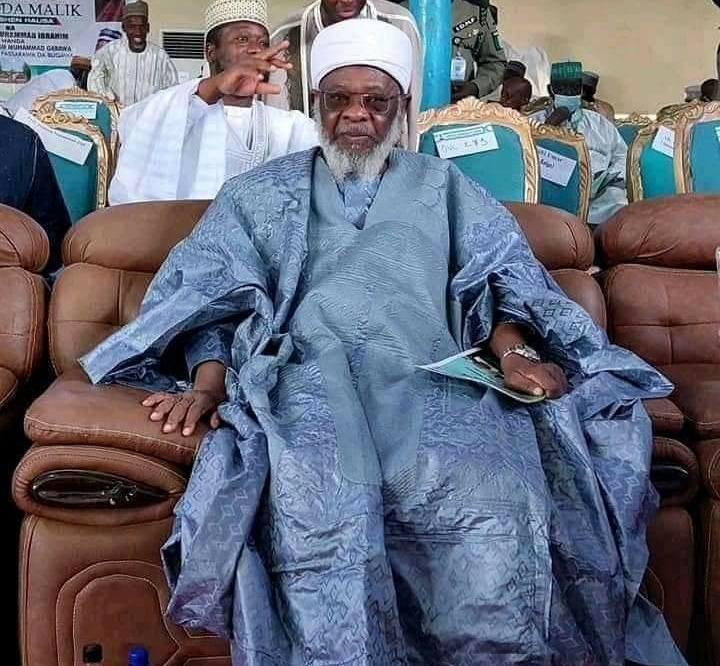
On 7th of January, death had dawned upon us with its darkness. It took a light, that is what knowledge represents. A knowledgeable mind of higher erudition, a paragon of wisdom and virtue, an epitome of Islamic scholarship and understanding, Dr Ahmad Bamba, BUK, Kala Haddasana, is gone. And that means a chasm has been created, a gap that can never be refilled.

When I first heard him in our home in my more younger days, I asked about him. I was curious to know, for something about him was indeed captivating. An elder brother of ours that used to bring his audio tapes to our abode said he was a teacher to Mallam Ja’afar. That’s the description that cut a long story short. We already knew Mallam Ja’afar, so he was the teacher of teachers, a scholar that produces scholars.

Dr Ahmad Bamba, was said to have appeared as a public preacher for three decades, that is, since his return from the Islamic University of Madina in 1991. In these periods, no any occupation had seduced him away from his devotion to his Islamic teaching and preaching. And this long time of service, on the path of Allah SWT and for the guidance of the people, is sufficient to provide a picture of a man with purpose, dignity and piety. His pleasure in the work had penetrated him so much that no any stress could disrupt it.

Even at 82, Dr Ahmad did not retire. His life had no any ambition but Da’awa service, informing people on how to live in the light of Divine Pleasure under the guidance of His Prophet, Muhammad SAW. He believed that people need to lead a righteous life, and in as much as he breathed he would have no any other endeavour. And it is clear that his life has been a blessed, graceful one. The grace that Allah SWT placed in his work is apparent. He lived with his faculties in function, and with such a vigor that scares even the energetic young. His thinking remained acute, his voice sounding, and his movement full of life. It’s the blessing of Allah SWT.

And what is more wonderful about Dr Ahmad Bamba is the way his style touches upon the tastes of all ages. The young and the old, men and women will tell you they like him. His Hausa language is original, his explanation lucid, and his treatment of matters loose, and that makes people listen to him with passion. He has a special knack for making the complex simple, and his grasp of social experience puts him at another edge. And his preaching is not boring, it’s full of fun.

Whoever remembers Dr Ahmad BUK will tell you that it’s by his reading of “isnad” he recognises him. In fact, “Kala Haddasana” is another name for him. Here is the man that spent his best time at service to the Prophetic Sunnah, teaching people the times and life of the Prophet SAW, as exemplified in his words and actions, at home and at away, making the Prophet SAW more accessible to the seeker. The prophet’s relationship with Allah SWT, with his wives, with other people across different paths and faiths, etc, Dr Ahmad leaves no any aspect without a word on its meaning and value based on the acceptable accounts.

The most popular, most reliable and well documented six books of hadith that are called “kutubus sitta” have been taught by him, and with such a precision that goes within the public purview. And Scholars that learn from him never miss his technical analysis of the . Both the public and the scholars are carried along, and this could only be done by an exceptionally phenomenal teacher. And Dr Ahmad is one. And that’s the greatest achievement that no one could beat him in its regard. He is the only champion in his league. His “Mawatta Malik” is even published into a voluminous, enriching book, and in the living language of the people, and that shows that his legacy will dance to the music of time.

Sheikh Muhammad bin Othman observed a moving Khubta, with tears breaking out of his eyes, and his breath choking him at throat. He recounted the condition in which he found Dr Ahmad at hospital, and described it as the most traumatizing one, but what Allah SWT decreed is the most prevailing. He said, “I saw knowledge before me, lying on the bed —ga ilimi kwance. Inna Lillahi Wa Inna Ilaihi Rajiun.” I could not do anything, we could do nothing about it, he added. “Dr was not even conscious. I left with a heavy heart, and the whole night I couldn’t sleep well.” In the morning, around 10:58, he was informed that Dr Ahmad was no more. Inna Lillahi Wa Inna Ilaihi Rajiun.

The death of Dr Ahmad recalls to life the life he has lived, and that its mark shall remain upon the mind of the living. It is however a void that stimulates remorse at the recess of people’s hearts, because such a loss is irreplaceable. Though his knowledge shall continue, and his wisdom be applied in the art living, discussing and teaching, his absence will leave many questions unanswered and many problems unsolved when they surface. There are gifts that leave with those that bear them. And Dr Ahmad is gone.

While being interviewed after the funeral prayer, Dr Sani Umar R/Lemo described the loss as huge, a bleak sign that knowledge is precipitating. He said that people will indeed feel the emptiness occasioned by Dr Ahmad’s leaving. Of all their lives, they know Dr Ahmad with teaching and preaching. He is a guide, a father, a guardian, as Sheikh Dr Abdallah G/Kaya put it. To all scholars, he is a role model, an example to be emulated. And scholars from different parts of the world have expressed their sadness over the loss. And to Allah SWT we all belong, and to him is our return.

I was at the graveyard, close to his grave, and what I saw and felt in that moment will stay with me for a longest while. In fact, the entire experience shall be memorable. People were swallowed by grief, held by remorse and chained by love. Upon the arrival of his body, I found myself frozen with words and motions. I remained silent, only feeling the sensation of the pain that engulfed me. I shed tears, and over the fact that Dr Ahmad was truly gone. Here is a knowledge in shroud, a remarkable personality buried, a pious scholar being laid to rest. Only “Allahu Akbar” and “Inna Lillahi Wa Inna Ilaihi Rajiun” that filled the air held me, but I could have fallen aground. Finally, Dr Ahmad was in his grave, closed and gone, forever. Inna Lillahi Wa Inna Ilaihi Rajiun.

Bin Isa writes from Kano State and he’s a desciple of the late Dr Ahmad Ibrahim Bamba.

The voice of moderation and reason is lost: Tribute to Dr Ahmad Muhammad Ibrahim, 1940-2022


By Kabiru Haruna Isa


“The death of a scholar is the departure of knowledge”.~Yahya b. Ja’far


In the afternoon of Friday, January 7, 2022, Dr Ahmad Muhammad Ibrahim, who was popularly and variedly known as Dr Ahmad Bamba; Dr Ahmad BUK; and Кala Haddasana, succumbed to the cold hands of death. Whoever attended the Muslim traditional funeral prayer did not need to specialize in Thanatology or the assistance of any thanatologist to decipher that his passing on has shocked not only the northern Nigerian Muslims but perhaps the entire Muslim world.

Hundreds and thousands of mourners from different nooks and crannies of northern Nigeria trooped to his mosque, Darul Hadith Masjid, at Tudun Yola quarters in Kano Metropolis to observe his Salat al-Janazah (funeral prayer). Based on my personal observation, the congregants comprised adherents of different doctrinal and ideological groups who were deeply touched by his death.

Dr Ahmad was one of the elder statesmen of the Muslim North who chose to be independent-minded, honest, forthright, focused and overtly apolitical. Those who grew up in Kano can vividly remember his educational sessions in the 1990s when he read a series of hadiths (narrative records of the sayings and customs of the Prophet Muhammad), which were aired on CTV (now Abubakar Rimi Television, ARTV), Radio Kano and other broadcast media.

What distinguished his educational sessions from those of other Islamic scholars were his sonorous voice, interactive dialogue, active learning process, and the constant prodding of his audience to debate jurisprudential issues. He created a convivial and liberal atmosphere for his students to either agree or disagree with his interpretations of holy texts without necessarily derailing from the subject matter, which demonstrated his deep knowledge of theological hermeneutics. 

Even though a Salafi, Dr Ahmad was a bridge-builder between Sufis and Salafis in northern Nigeria ostensibly due to his old age, maturity, accommodation and toleration. He always tried as much as possible to avoid deployment of insulting and libellous language to either demonize or hereticize those whose doctrines differed from his.

To err is human. As a human being, he might have wronged others, especially during his formative years, but he personified moderation and toleration as a fully accomplished and elder-scholar. Muslims will surely miss his fatherly voice of moderation, reason, truth and honesty. 

Despite his erratic temperament, Dr Ahmad was a forgiving person who never intended to hold animosity beyond the grave. I remember my personal interaction with him when Malam Babangida Namadi introduced me to him sometime in 2020. I pleaded with him to document his life narrative as some scholars did, such as Shaykh Abubakar Mahmoud Gumi in his autobiography, Where I Stand.

Dr Ahmad responded that he had a lot of stories to pass on to the younger generations based on varied phases of his life, bitter and positive experiences, social networks, scholarly itineraries and odysseys, family life, marriage counselling, pedagogy, university and national politics, truce and reconciliations and intra-faith relations. He further said that he would never write an autobiography because many people offended him and had already forgiven them; therefore did not want anything that would trigger his emotions.

The death of Dr Ahmad has created a vacuum that will take time to be filled because of his dedication and contributions to scholarship and the study of hadith in the Muslim world. To produce a scholar of his calibre is not an easy task, especially in the 21st century when young people exhibit hedonistic tendencies and many societies experience a systemic educational decline.

I will conclude with a famous quote of Umar “the death of a thousand worshipers is easier to bear than the death of a scholar who has knowledge of what Allah has permitted and forbidden”.

It will take us a long time to come to terms with the departure of Dr Ahmad. May Allah admit him into Jannatul Firdaus, amin.

Gmail: khisa.his@buk.edu.ng Department of History Bayero University, Kano.

Restructuring Northern Nigerian divorces’ mindsets

By Hussaina Sufyan Ahmed

We can categorically define a divorcee as someone unlucky in a specific marriage. I know that I will be in the minority if I say divorcees are given less chance to develop themselves personally before getting pressured into remarrying in the Northern part of Nigeria.

I understand and appreciate the concern with threading carefully regarding resuscitated emotions and intimate urges. However, a ‘decent’ society like Northern Nigeria expects that you abide by the rules of decency in ensuring that you either preserve yourself for your next spouse or remarry to avoid falling into the traps of indecency.

In this aspect, indecency refers to the lack of adhering to the control of urges for every culturally and religiously conscious person. These traits are seen as the signs of responsibility, including sustaining oneself; ready to take up self-evaluation, focusing on goodness, and maintaining dignity.

The pressure that comes from the family, society and whatnot is justifiable. However, the pressure that comes with engaging these divorcees in personal development is a progressive vacuum seat.

A divorcee can either be a man or a woman. But statistics show that a woman is more affected by divorce financially while a man is affected mentally. But, of course, this assertion is opinionated, as there can exist other varying opinions.

Let’s take Kano State as a case study. In 2020, Dr Sabo Dambazau, in an interview with Kano Focus, said 45% of divorces in Kano are caused by co-wife rivalry. Other causes he highlighted include forced marriage, fake identity by the men before marriage, lack of catering for family financial affairs succinctly, and suspicion from either the man or the woman.

For Dambazau, a lack of trust causes suspicion. And this distrust is seen in wives taking their husbands’ phones. Often, both check each other’s phones.

According to Dambazau, couples need counselling, personality development, and consciousness of Islamic teachings through the actual practice of the teachings to reduce divorce. This can be supported by enrolling in Islamic schools. He ended with advice on staying genuine and honest during the courtship before marriage.

My scope will be Personal Development for the Divorcee. It is essential to know that learning and seeking knowledge are the two fundamental processes that every human should consciously and intentionally be involved in.

As a divorcee, the first focus should be personal development. And this cannot be achieved without being intentional about self-development. So, how do you achieve personal development?

As someone who might have gone through emotional downturns or physical battles in their marriage,  self-development evaluation is a facet to help you check yourself and correct the mistakes you might have made. Every human is fallible. Hence the premise of every divorce is that both parties have a role to play in the faults. However, one side usually weighed in as more wrong than the other. Still, there is never a party devoid of guilt(s). So, you use the experience of a failed marriage to build your knowledge about marriage if you wish to be in it again.

In trying times, maintaining spirituality is crucial. In the North, an epitomic feature is the presence of religious rooms to learn from – while you rule in self-development. You cannot rule out upgrading your belief. For instance, there are many Islamic schools for Muslim divorcees in various Northern states. And seeking the appropriate knowledge through such schools enhance and contribute to the upliftment of morale.

This sums up an inference of a child’s upbringing in a typical Northern Muslim home. Thus, before reaching the age of five, recitation of verses from the Quran begins, opening the ability to read and recite rhymes and books in western schools. So, who says learning has a boundary or specific scope?

Another aspect of personal development is acquiring soft skills. For some female divorcees, one of the reasons their families or society has pressured them is usually due to self-sustenance. A woman in a non-secular community like the North has to either sustain herself financially, be under her parents or a man. You do not have to rush into another marriage to develop yourself personally. Instead, go out and learn soft skills such as MS Office, graphic design, Corel Draw, Digital marketing, social media management, online journalism, etc. You can acquire most of these skills online or offline for free or pay a token, especially if you desire to get the certificate.

Personal development stretches out to unlearning, learning and relearning, and in this, we cannot rule out upgrading education level to the next stage. If you are a primary school certificate holder, secure a secondary admission. If you are a secondary school certificate holder, try and acquire a UTME form, sit for the exams, and pursue admission, even if it’s a polytechnic or college of education. And for a bachelor’s degree holder, it is easier though costlier, which makes it essential to personally develop the self so as far as there is determination and hard work.

In all of these, I suggest that families and society give premium corporations to divorcees to see that they are helped towards self-development and not pressured to remarry. Of course, marriage can come later but having productive and oriented divorcees instead of a new payroll of reproductions will push the nation’s economy forward.

“Read. Read in the name of thy Lord who created; [He] created the human being from a blood clot. Read in the name of thy Lord who taught by the pen: [He] taught the human being what he did not know” (Quran, 96: 1-5).

Hussaina Sufyan Ahmed wrote from Kano. She can be reached via sufyanhussainaahmed@gmail.com.

Current system of government fails Nigeria – Dantata

By Uzair Adam Imam


One of the renowned businessmen and philanthropists in Nigeria, Alhaji Aminu Dantata, has said that the current system of government has failed Nigeria.


Dantata stated this when he received a condolence visit by the Northern Elders Forum over the death of Sani Dangote and Othman Bashir Tofa.


He added that there is a need for a collaborative effort by the elders in order to bring to an end the disturbing multiple problems facing the country.


“You will agree with me that the Presidential system of government presently in operation has failed the nation; what we need now is to adopt the parliamentary system, which is less expensive,” he said.


Reports disclosed those on the entourage included General Sale Maina, Hakeem Baba Ahmed, President Coalition of Northern Groups, Nastura Shariff, Dr Sadiq Gombe, Hajiya Najaatu Mohammed, among others.


The Northern Elders Forum had also called on the Emir of Kano, Alhaji Aminu Ado Bayero, Deputy Governor Nasiru Gawuna, and Alhaji Yahya Hamma.

The other side of Kano State Hisbah Board

By AD Raula

I thought I should be one of those facilitating the spate of hatred and senseless vilification against Kano State Hisba over the runs of their functions in protecting the social mores of Kano folks. I once defied Hisba in their command office over their discriminatory treatment of poor people, after which they even locked me off and set me into trepidation of prosecution. This came after they dealt with me deftly and violated my justiciable rights. However, I was granted bail on that night as they could not take me to court after the miniature intimidation. Still, their treatment then was horrendous altogether.

The narration above had happened when I went to their state command in Sharada to pursue bail upon receiving a call from my brother, whom they arrested along with coteries in birthday function at Sharada municipality of the state.

Nevertheless, I didn’t arrive at their office in Sharada till late in the evening. They explained their inability to vouchsafe the detainees’ bail in their custody (including my brother) pending when their lawyer would be available the following day. Subsequently, the backwash of what transpired between us (me and Hisba) was the release of the then commissioner of the environment’s daughter, who was also my brother’s confederate. But we were kept (other bail seekers and me) outside the premises impotently.

My crime in the Hisba headquarters was merely unravelling what they might have forgotten that they represent Islam and that everything they do has to be in line with Islamic manners and principles. In contrast, what they did to us was the blended injustice, and that’s how everything became worst as I couldn’t withstand their ill-usage approach.

Howbeit, the honesty of the matter is that Hisba, as the morality enforcement body, has its shortcomings and lapses just as police and other military bodies have. We all know that their satisfactory moral and shari’a services within which they were established are far beyond that of other federal law enforcement agencies. But, why do we tend to transmit condemnatory gestures to them and not appreciation instead, which I believe they deserve only encouragement rather than the opposite from us as the Muslims? Also, most of these Hisba folks live with their families on low monthly earnings that you can never survive on as their denigrator.

My firm belief is that the existence of Hisba and operations reduce fornications and other social vices to certain degrees that their abolishment or nonexistence would have brought. Similarly, the extent to which they are playing justice between parties is more appealing, acceptable, and equitable if compared with other securities in the country.

In closing, people should know that no codification of laws on earth or being made favour poor folks. On the contrary, laws are always at the side of those with power and wealth. So, please, pray for Hisba, support their effort or keep silent.

AD Raula wrote from Kano. He can be reached via raulerabdul6@gmail.com.

DG NITDA, Kashifu Inuwa, visits ENGAUSA Hub, assesses its developmental ideas

By Engr. Mustapha Habu

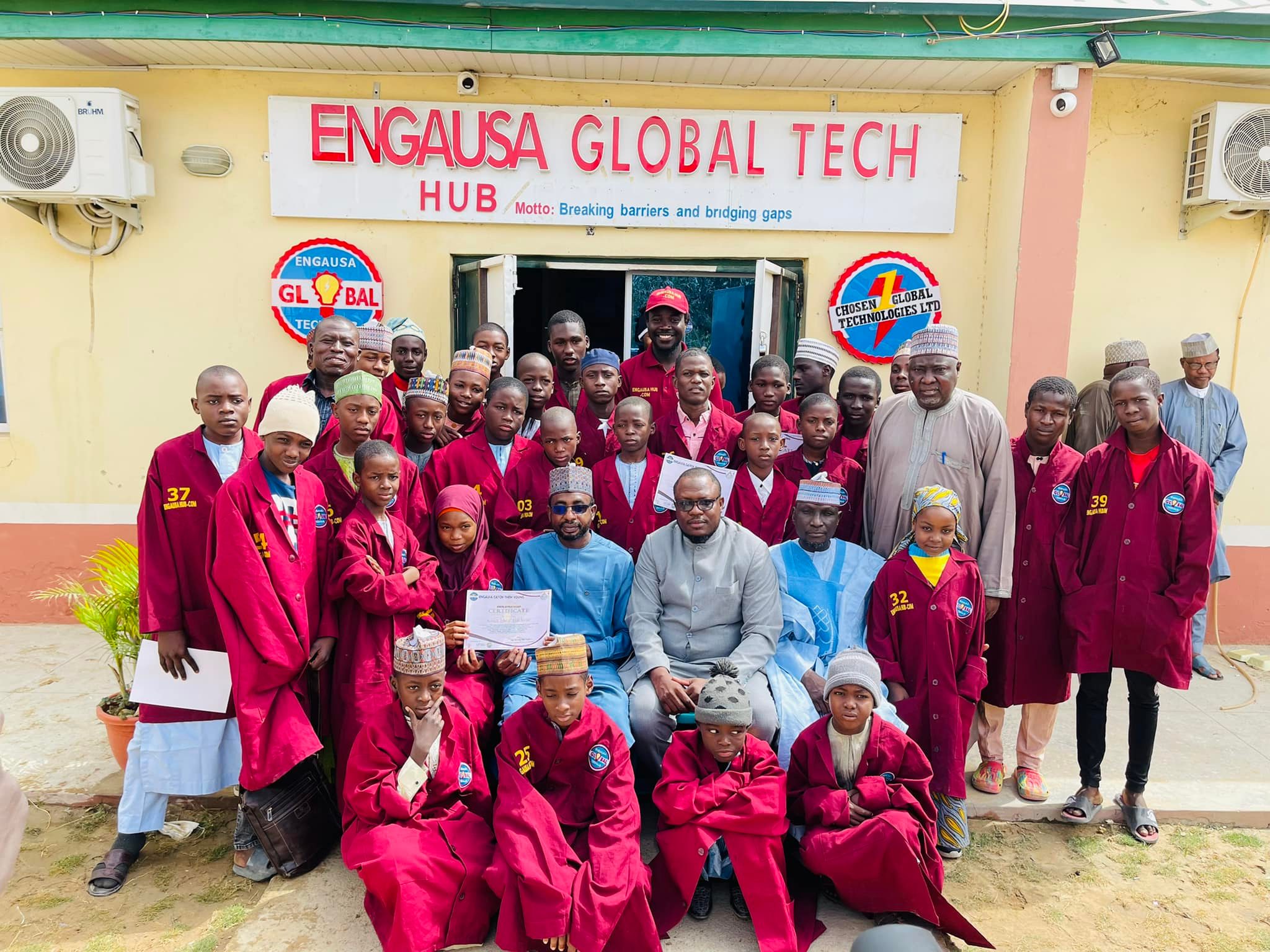
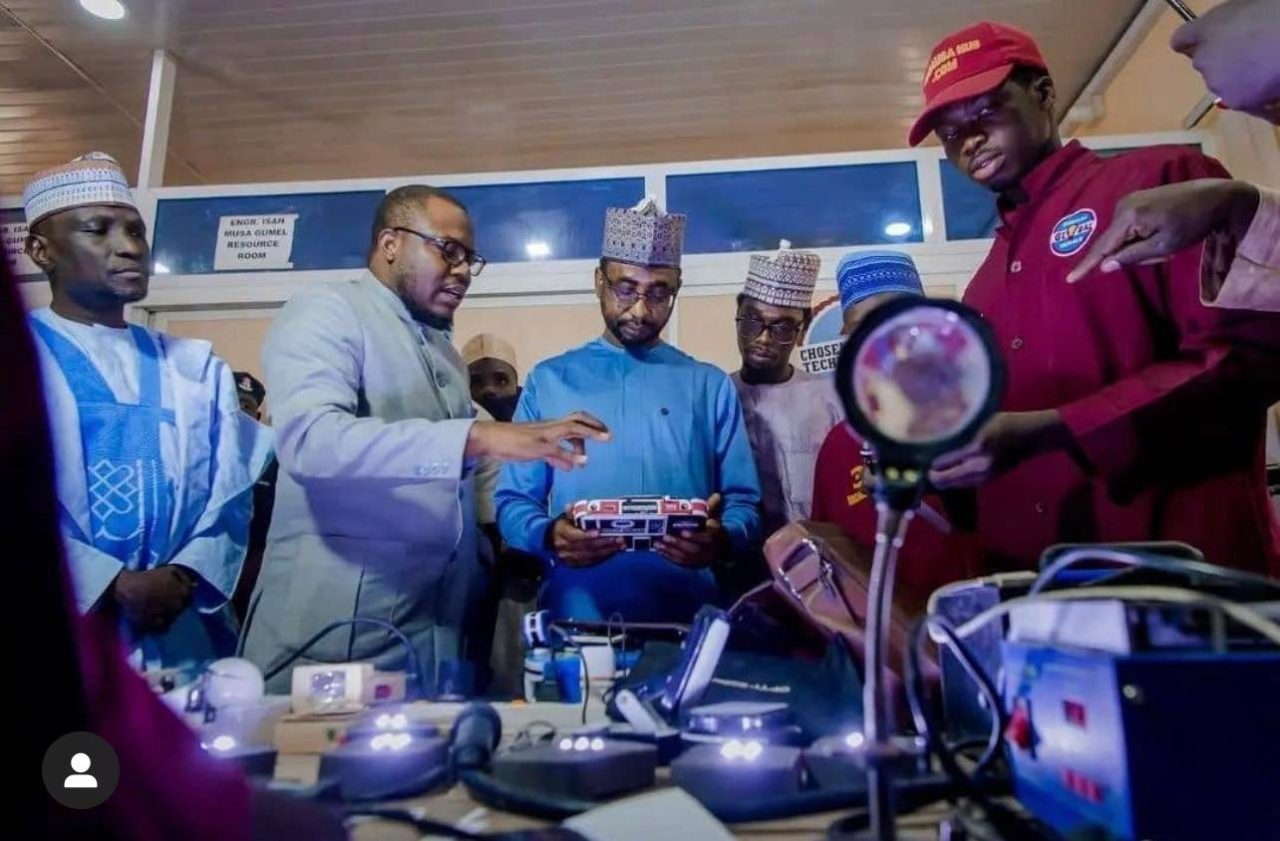
The Director-General, NITDA, Malam Kashifu Inuwa, paid an assessment visit to Engausa Global Tech. Hub to assess the level of development achieved by the Hub and the impacts of its initiatives after it emerged as a beneficiary of a grant from NITDA last year.

ENGAUSA had been able to train 313 young people within two years (2019-2020). However, after winning the grant, the number surges dramatically. Today ENGAUSA has successfully trained 800 young people in 2021. The NITDA, in conjunction with ENGAUSA, will therefore conduct an end-of-training event in January 2022.

Before the end-of-the-year break commenced, Malam Kashifu assessed the expertise of 50 primary and secondary school kids, who were trained under a theme titled ENGAUSA CARCH THEM YOUNG.

ENGAUSA presented to the DG what was being invented by young people and Almajiris at ENGAUSA HUB. He was also happy and surprised how they make inventions without having gone to higher schools—as some of them are dropouts with expertise in drawing and innovation of the modern time.

Others on SIWES from various universities and those that have not got the opportunity to further their education are already into robotics and the Internet of Things (IoT).

The Hub introduced other graduates out of the 60 who established their firms after getting trained at ENGAUSA Hub. The firms include THE D E-SERVICES, DASHERE ELECTRIC SERVICES, SD GLOBAL TECHNOLOGIES, and so on.

An outstanding mentee who invented a mathematics learning app called HausaMaths was also introduced to the DG. Another one also built a science and technology teaching app in the Hausa language called Bemitela.Africa.

The DG also met some young people employed by companies in Kano and Abuja, namely JETSON ENGINEERING (that deploys them to COSGROVE estate sites in Abuja), CHOSEN ONE GLOBAL TECH LTD, which has sites in Abuja, Kano, Kaduna, and other states in the northern part of the country.

ENGAUSA HUB presented some 10 Almajiris enrolled for the ENGAUSA CATCH THEM YOUNG and have followed the footsteps of the rest in areas of graphic design and innovation. One of the Almajiris has even been employed by ENGAUSA HUB for his outstanding performance. Alhaji Yahaya Yusuf Kwande (who is not from Kano) is the one who sponsored the registration of the Kano Almajiris.

The able DG of NITDA assured ENGAUSA HUB that his agency would collaborate with the Hub in promoting such developmental projects across the states in Nigeria.

As of the time of writing this, ENGAUSA is part of the Technology Incubation Center (of NBTI) established to work under the custody of the Federal Ministry of Science Technology and Innovation. We also have a branch on Rijiyar Zaki Gwarzo Road and other cities that we plan to collaborate with within Jigawa, Kaduna, and Abuja to enhance modern skills and ease learning initiatives.

Our door is open for anyone willing to collaborate with us in making this a reality.

Possible reasons for Hisbah’s declining public image

By Ahmad Deedat Zakari

Hisbah, particularly that of Kano State, has become a constant subject of controversies. All thanks to social media, which provide platforms for the proliferation of information channels, expression of dissents, scrutiny and analyses of actions of agencies of government and organizations. Sadly, Hisbah is at the receiving end of online trolls, and the relative goodwill it enjoys is plummeting downward. The irony of Hisbah’s dilemma is her complicity in her woes. 

Generally, Hisbah is saddled with upholding community morals based on Qur’anic injunctions. However, in the case of Kano, it is a creation of the “Hisbah Board Law of 2003”. This became a child of necessity owing to the reluctance of the police to enforce the Sharia Penal Code.

In countries around the world where moral policing with the resemblance of what is obtainable in Hisbah is practised, like Pakistan and some Islamic countries, human rights violations are always prevalent. So, it is not surprising that people express their dismay when liquor bottles conveyed in trucks are confiscated. People believe their rights and the rights of others to do liquor business are being trampled on. For example, it’s alleged that the Kano State Hisbah Board recently invited Shatu Garko’s parents because she participated in the contest that led to her emergence as Miss Nigeria. Although Hisbah denied it, it did not sit well with liberal Muslims who argued that Miss Garko’s apparel aligns with Islamic teachings.

Another possible reason people are probably tired of Hisbah is how the organization dwells on trivialities amidst the many challenges that beleaguer today’s North and the country in general. This, no doubt, has reduced Hisbah to a comical sensation in some quarters. It is laughable that in a society where many of her youths are abusing drugs and coteries of substances, an organization for upholding moral values would focus its energy on the nudity of mannequins. In today’s North, many moral concerns of overwhelming importance are left unchecked.

A Hisbah’s top commander was reported to have been found under suspicious circumstances with a married woman in a hotel room. This was no doubt a clear case of a hunter being hunted. The organization did the needful by relieving him of his job. But the incident had doubtlessly left a dent on their image. I am not saying Hisbah members are angels that cannot violate the same ideas they seemingly defend and hold others accountable for. Still, just like how police in Nigeria are often viewed with suspicion, Hisbah would not be far from such if it keeps having corps with untamed libidinal desires.

Moreover, Hisbah has been selective in her moral crusade. The powerful and their children do not always answer for what Hisbah will term morally wrong if the ordinary man did it with no power. Not everyone can be summoned; the commoner with no voice is always the victim.

A Hisbah director recently tried to explain discrimination on who is invited for questioning and counselling. He opined that in Islam, leaders are not publicly chastised for their wrong actions. He is correct, however, does this rule extends to their children? With my modest understanding of Islam, it is not. It was rather a ridiculous excuse for what they can not do for obvious reasons. Although many see his excuse as hypocrisy, I do not see any difference either. Hisbah should not operate on the parlance of some animal farms where some animals are more equal than others. That way, it loses its credibility, goodwill and legitimacy.

Ahmad Deedat Zakari is an undergraduate at the Faculty of Law, Ahmadu Bello University, Zaria. He can be reached via ahmadzakari111@gmail.com.

MURIC mourns Prof. Hussein, Dr Datti Ahmad

By Muhammad Abdurrahman

The death of two foremost Islamic scholars, Professor Hussein Akande Abdul Kareem and Dr. Ahmad Datti, has been announced. Professor Abdul Kareem died in Lagos on Sunday, December, 26, 2021, while Dr. Ahmad Datti died in Kano on Thursday December, 30, 2021. An Islamic human rights organisation, the Muslim Rights Concern (MURIC), has described them as two giant scholarly figures.  

MURIC’s reaction was contained in a statement issued by its director and founder, Professor Ishaq Akintola, on Thursday, 30th December, 2021.

MURIC said: “Islamdom in Nigeria has been hit by the loss of two great scholarly figures who died within four days of each other. Professor Hussein Abdul Kareem died in Lagos on Sunday, 26th December, 2021 while Dr. Ahmad Datti died in Kano on Thursday 30th December, 2021.

“Professor Hussein was a former president of the Muslim Students Society of Nigeria (MSSN). He was one of the founding fathers of the Islamic Welfare Foundation (IWF), the Islamic Study Group (ISGON) and many others Islamic organisations. He was a great motivator, a team player and a transparently honest man. He was a profound ascetic who shunned worldly luxuries.  

“A professor of biochemistry, he taught and researched in several local and overseas universities including the University of Khartoum, Sudan, University of Maiduguri and the Lagos State University. He retired voluntarily in 2006 and became a full time Islamic worker. He was nominated by the International Biography Centre, Cambridge, England as the International Man of the Millenium Award in 1999. Professor Hussein died at the age of 85. He has since been buried in Badagry, Lagos State.

“Dr. Ahmad Datti was an energetic Islamic activist of no small measure. A trained medical doctor, he was the president of the Supreme Council for Shariah in Nigeria (SCSN). The deceased played a prominent role in the spread of Shariah in the Northern states of the country from 1999 onwards.

“A pragmatic Muslim leader, Dr. Datti encouraged Muslims to join politics in order to bring the teachings of Islam on probity, accountability and good governance to bear on politics and Muslim politicians. He practiced what he taught by becoming an aspirant of the Social Democratic Party (SDP) in the early 90s.

“He became a household name particularly in the whole northern Nigeria. He also participated in the activities of several Islamic organisations and he was the chairman, Board of Trustees of the Usman bin Affan Islamic Trust, Gadon Kaya, Kano. He died after a protracted illness at the age of 83. He was buried at the Tarauni Cemetery, Kano. Dr. Datti has left a vacuum that will be difficult to fill.

“The death of these two giant Islamic scholars has left MURIC in deep grief. We are devastated. We pray that Almighty Allah will overlook their trespasses and repose their souls in Al-Jannah Firdaus. We also pray that Allah will give their families the fortitude needed to bear the losses.

“As we commiserate with the governor of Lagos State, Babajide Sanwo-Olu, MSSN, ISGON and the Lagos Muslim Community on the death of Professor Hussein Abdul Kareem, we equally condole with the governor of Kano State, Abdullahi Umar Ganduje, MURIC Kano Chapter and the good people of Kano, over the demise of Dr. Datti Ahmad.”

Book Presentation: Audu Bako the best Kano State governor ever – Dantata

By Ibrahim Siraj Adhama

A prominent Kano elder statesman, business mogul and philanthropist, Alhaji Aminu Dantata, has described late Audu Bako as the best governor ever in the country. Dantata was speaking at a book presentation as one of the only two surviving members of Audu Bako’s cabinet, the other being Alhaji Tanko Yakasai, who was absent due to health challenges.
The book titled “Kano State Under the Administration of Audu Bako, 1967 – 1975” was written by Dr A’isha Ni’ima Shehu of the Department of History, Bayero University, Kano.
Alhaji Dantata, who served as Audu Bako’s Commissioner of Economic Planning, said Kano owed its development to the purposeful and visionary leadership of late Audu Bako, whom he described as honest, foresighted, God-fearing and prudent in the application of resources. He said if all leaders were like Audu Bako, Nigeria would have long passed its current level of economic development.
Blaming external influence for Nigeria’s slow development, the elder statesman stated that the country would have been better if it were to be allowed to develop at its natural pace. He added that Northern Nigeria is much more endowed with natural and mineral resources than the Southern part of the country. However, he bemoaned how those resources remained largely untapped.
The book reviewer, Dr Tijjani Naniya, commended the author for writing the book. He said it contains an assessment of Audu Bako’s laudable achievements in education, infrastructure, administration and economic development.
Extolling the man he dubbed as a lover of education and agriculture, Dr Naniya said Audu Bako’s projects are too numerous to mention. He identified Tiga and Bagauda dams, Gidan Murtala, Audu Bako Secretariat, Kano Zoological Garden, Bagauda Lake Hotel, Murtala Mohammed Way, Falgore Game Reserve, Daula Hotel as some of the projects done by Audu Bako.
He mentioned others include Kundila and Gwammaja Housing Estates, WRECA, and hundreds of primary and post-primary schools. He said when late Audu Bako established the College of Arts, Sciences and Remedial Sciences, alias CAS; many governors emulated him by establishing similar colleges in their states.
Earlier in his welcome address, the Vice-Chancellor, Bayero University, Kano, Professor Sagir Abbas, who hosted the event, said the University was always willing to be part of similar scholarly efforts aimed at preserving history for upcoming leaders.
Chairman of the occasion, Alhaji Isyaku Umar Tofa, who was also one of the youngest staff of Audu Bako, said the first military governor approached leadership with great determination and that no honour can compensate for what late Audu Bako did for Kano.
On his part, Kano state governor Dr Abdullahi Umar Ganduje announced a donation of ₦10m and pledged to support the reproduction of more book copies for use by schools and libraries in the state. He lauded the visionary leadership of the first-ever Kano state governor. He commended him for the numerous projects he undertook, many of which are not only still in use but have continued to serve as the foundation for many developmental projects up to this moment.
Other donors include Alhaji Aminu Dantata with ₦5m and another ₦15m to the family to do a project in Audu Bako’s memory.
The event attracted participants from among members of the academia, politicians, traditional rulers, business community, media, as well as members of late Audu Bako’s family.

DSS invites Kaduna activist, Buhari over protest against killings in the North

By Sumayya Auwal Ishaq

The Department of State Services (DSS) has invited another convener of the #NoreMoreBloodShed protests, which have enveloped Northern Nigerian states since the immolation of escaping travellers in Sokoto State last week.

The activist, Muhammad Bello Buhari, confirmed this on his verified Facebook handle: “I have just been invited by the DSS Kaduna State — to report at their office by 10 am tomorrow.”

Buhari further said that “I shall honour their invitation. This is our country. We have no any other place other than Nigeria. Our only offence is that we asked for the lives of Nigerians to be secured. We asked for the whereabouts of the few we elected to secure our lives and properties when we are being killed daily.”

So far, Muhammed Bello Buhari is not the first organiser to receive such an invitation from the nation’s secret police.

Zainab Nasir Ahmad, a Kano-based activist, was also grilled over the same protest she convened last week. She subsequently dissociated herself from future planned protests, citing security concerns.