Kano State

Covid-19 and the parody of nose(face) mask usage in Kano

By Hussaina Sufyan Ahmed

When the coronavirus, also known as COVID-19, broke out in Nigeria in 2019, things changed, and lifestyles metamorphosed.

The virus moved from an imported case and elitist pattern to community transmission; its fatality rate stood at 2.8%, while the country recorded an upsurge of about 52% of total cases of the transmission of the virus even during the short lockdown.

The preventive measures of the virus popped out, hence the dissemination of awareness through media outlets – radio and television jingles, set up programs, sensitisation workshops, newspaper pages and even films.  

The use of facemasks, hand sanitisers and hand wash basins also became common. In addition, the practice of distance communication strengthened: no handshake, no hugs and no body contacts except with those already tested negative.

The spread of the coronavirus in Nigeria started as a sceptical phenomenon. Some towns and villages found it hard to believe a global plague could affect Africans directly. This notion is a myth that has lived in Africa for donkey years.

Some Africans believe that the Black man can hardly contact the virus because of melanin pigment in their veins, which preserves the dark skin. Therefore, for these Africans, the Black man is super strong and has immunes that fight against global pandemics and illnesses. However, with the strictness in lockdown worldwide for a year, many Nigerians and Africans who never believed Covid-19 existed were left to believe in it, hence the use of nose masks.

The nose masks market became a target for most traders. The high demand it continued to attract made it seem like the coronavirus never subsided, and this example is visible in Kano state. Nose masks became the equilibrium product of that time; demand, supply and price at active points.

The Nigeria Center for Disease Control (NCDC) reported that the total Covid-19 cases in Kano remained at seventy-three from 22nd of April to 24th of April, during the initial stage of the outbreak. These infection statistics remained at seventy-seven from the 25th of April 2020. However, there was no report from the 25th to the 27th of April 2020. This caused a gap in the state’s record of the infected and non-infected.

The reactionary steering that emanates after an opinion article is released might be expected as this introduction is achieved. So, what is next?

The rise in theft and immorality is relative; however, what is not relative is the understanding of societal norms and inscriptions. The use of nose masks has increasingly seen to the less spread of the virus. What is, however, not really questioned is the increase in crime and immorality in Kano state following the adoption of nose masks.

It is uncommonly common to find out that cheating in marriages grows by the day in Nigeria. This is because many marriages lack communication, leading to the partners engaging in extramarital relationships. However, this article is not about the reasons why couples cheat on each other, but about the narrative the nose(face)mask pushes in achieving the aim of stopping the spread of the virus.

The population of men who visit Ado Bayero Mall, Kano, is seven times higher than that of ladies. They go to woo ladies. They begin with the “I am married” and end up with “be my girlfriend” or “be my wife”. However, the girlfriend narrative is not pushed to a lady in need of marriage. It is to a lady who wants to have the fun of the relationship.

These men use nose(face) masks to shield their identity. This is not to say they are not helping reduce the spread of Covid-19, but what happened to the disapproval of vast Nigerians in accepting the coming of this virus? So, the concept of maintaining extramarital affairs with nose(face) masks is relatable and, at the same time, unrelatable. It all depends on the aim, be it to help not spread the virus or spread the virus.

The women population at the Mall is exemplary in front of the exit gate. This is because more stern security personnel man the entrance gate, so as a pedestrian or one who has no business with entering, you can only go about daily transactions in front of the exit gate.

Females who stand in front of the exit gate pass coded messages to ladies who pass through. Research showed that your nose(face) mask indicates that you want your identity shielded, so the prototype is “shielding your face is a sign that you are in for some business transactions”. This caused some people to halt the use of facemasks except during the entrance of the Mall. This is to kill the notion that they want their identities hidden from some actions they might not be proud of to be seen doing.

Since shyness is part of faith, there is a need to be shy in welcoming transactions that people will stigmatise. However, this is done in the Covid-19 era, and it makes it more serious as we need to curb the virus.

“I seek for a lady that I will take home as I am into women only. Are you game?” This was a question from a woman in a car on nose(face) masks to one of the researchers.

Over time, phone snatching and theft have increased in crowded and isolated areas of Kano state. The increase in phone snatching shows the negative side of nose(face) masks. Some of these perpetrators use nose(face) masks to shield their identities. This helps them curb the spread of Covid-19, of course, but also helps put people in despair over the loss of their treasured asset – their smartphones.

The preventive measures of Covid-19 in Kano have grown more serious as the count of infected people has reduced due to the massive increase in the purchase of nose(face) masks. But then, what about hand sanitisers to match up with this patronage? Personal research discovers that hand sanitisers have gained a decrease in demand. This is to say that the hand sanitisers market does not match up in equilibrium with the purchase of nose(face) masks anymore.

It is important to know that this article should help share the “use nose masks” tag, but the writer will not support the use of the masks while the market of hand sanitisers continue to grow low. So, there is a need to encourage hand sanitisers while the increase in the nose(face) masks increases.

Hussaina Sufyan Ahmed wrote from Kano via sufyanhussainaahmed@gmail.com.

Hanifa’s Death: Presidency commiserates with family

By Uzair Adam Imam

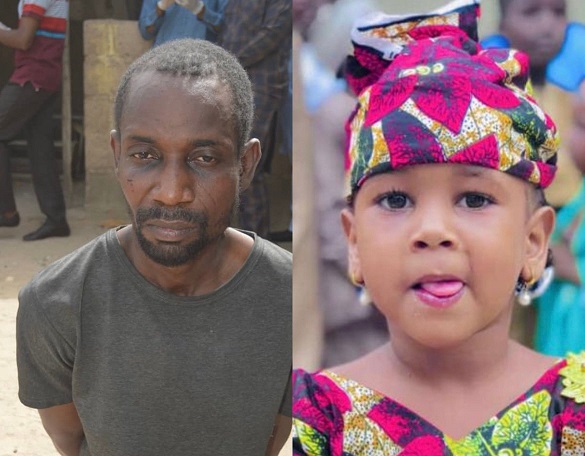
President Muhammadu Buhari has commiserated the death of a five-year-old girl, Hanifa Abubakar, whose teacher allegedly killed, in Kano on Thursday.

The Daily Reality had reported how Hanifa’s corpse was discovered dismembered and buried in a shallow grave at the premises of a certain private school in Tudun Murtala Nassarawa Local Government Area of the state.

Hanifa was a pupil of Abdulmalik Muhammed Tanko, who allegedly abducted her on her way to a school located in Kwanar Yan Gana in Tudun Murtala.

The commiseration was in a release signed Friday by the Senior Special Assistant to the President, Malam Garba Shehu.

Buhari has commended the commitment of the police and the secret service in unravelling the mystery behind the disappearance of Hanifa.

The President also prayed for the repose of the soul of the little school girl and urged her parents to bear the sad loss with courage and fortitude in God.

Shehu Sani advises Ganduje to immortalise Haneefa Abubakar


By Muhammad Abdurrahman


The former senator representing Kaduna Central Senatorial District and activist, Shehu Sani, advised Kano State Governor, Dr Abdullahi Umar Ganduje, to immortalise Haneefa Abubakar, the 5-year-old girl allegedly abducted and murdered by her schoolteacher in Kano.


He stated that in a Tweet, adding that Governor Ganduje should do that by “naming a major street or a public building or public school after her.”


Haneefa went missing while going to school in the Dakata area, Kano, in December 2021. Her abductors demanded and collected ransom from her parent.


However, fearing that she recognised one of them, he reportedly used rat poison to kill her. He mutated her body and dumped it at the school he taught in the neighbourhood.


The Kano State Police, in collaboration with the DSS, arrested the suspects yesterday, January 19, 2022. That led to the exhumation of Haneefa’s decaying remains. She has since been buried while the suspects remain in police custody.

Haneefa’s Death: A true reflection of our society today

By Usama Abdullahi

The media is filled with the tragic story of the deceased Haneefa, who was abducted a couple of months ago in Kano State and later killed in a gruesome manner by her teacher—the abductor. When I came across the story, I couldn’t help but weep for the little pretty, innocent child. The shock in me is unbelievable. But did this happen for the first time? That was the question that popped up in my mind when I first read the news of her demise. 

That wasn’t the first occurrence, and I guess it wouldn’t be the last. A lot of babies have been killed for the past years. Still, more are being killed daily too. Sometimes we don’t hear about it because the abominable act is being done in private, hence beyond the reach of media. Unfortunately, irresponsible parents discard newborns like rotten cabbages; some get abducted while others are buried alive. Moreover, others are being sold as goods meant to be exchanged.

What is this telling you? Simple; it tells you more about our society and how unsparing we are today. This is a true reflection and clear proof of our today’s society. Indeed, we are a money-driven society. We crave excessive wealth badly. And we seek to get that in such venturesome and unacceptable ways. Unfortunately, some of us have turned beasts and cannibals in the process, thereby assassinating and eating the flesh of the unfortunate victims. 

This society stoops so low beyond imagination. Disturbingly, no possible help in sight to redeem such despicable acts and to tame or neutralise the evil-minded monsters doing these. Don’t we have leaders? You may perhaps ask. Yes, we do, but they are not helpful at all. Most of our leaders don’t deserve to live with us, let alone rule us. They are mostly the ones sponsoring these evils.

Imagine a so-called leader who hires hoodlums, feed them, rent five-star hotels for them so that he could assign them to abduct or take away the lives of those he wishes dead. When I was growing up as a kid, I used to deny the existence of “ritualism”. I thought that exists in fairy tales that we were taught at schools or watched on TVs. But, contrary to my kiddish thoughts, “ritualism” truly exists. It’s, in fact, become the norm.

As kids, our parents used to caution us against strangers, that we shouldn’t even exchange words with them. Because most of them are bad, they can wile us by giving us gifts, and when we take those gifts from them, we would be unconscious shortly after, and they would disappear with us to another world where they would waste us for their devilry reasons.

Our parents are damn right. But what our beloved parents need to know today is: it’s no longer strangers but our relatives; it’s now those we trusted and confided our care to. We might even feel more secure in a stranger’s abode than in some of our relatives’. Disgustingly, an uncle rapes his niece; a father kills his daughter; a mother copulates with her biological son, all these for worldly gains.

This is what we are now. One who’s supposed to protect and cater for you now turns to be your enemy. Our society is no longer safe. There are a lot of wolves in sheep’s clothing amongst us. Thus, we need to be extra careful because human lives aren’t sacred anymore. Sadly, humans are often hunted like wild animals in the jungle. Worst still, there’s a market for human organs, where every human body organ is available for sale.

Usama Abdullahi wrote from Abuja, Nigeria. He can be reached at usamagayyi@gmail.com.

Buhari aide builds Qur’anic school for hometown in Kano

By Ahmad Deedat Zakari


Bashir Ahmad, Personal Assistant to President Muhammadu Buhari on Digital and New Media, has completed a block of flats to serve as a centre for the learning of the Qur’an and Islamic literature in his hometown.


Mr Ahmad named the school after his late grandfather and announced it on Facebook.


He wrote, “Months after the foundation laying of a newly Islamiyya, established by my Foundation the Bashir Ahmad Foundation (BAF) in my hometown, Gaya LG, Kano State. I am glad to announce that works have been completed, and the school which is named after my late grandfather, Late Ishaq Ibrahim Model Tahfiz Qur’an, will be commissioned for [the] public in the coming weeks.”

Osinbajo describes Sardauna as man of peace at memorial lecture

By Hussaina Sufyan Ahmed


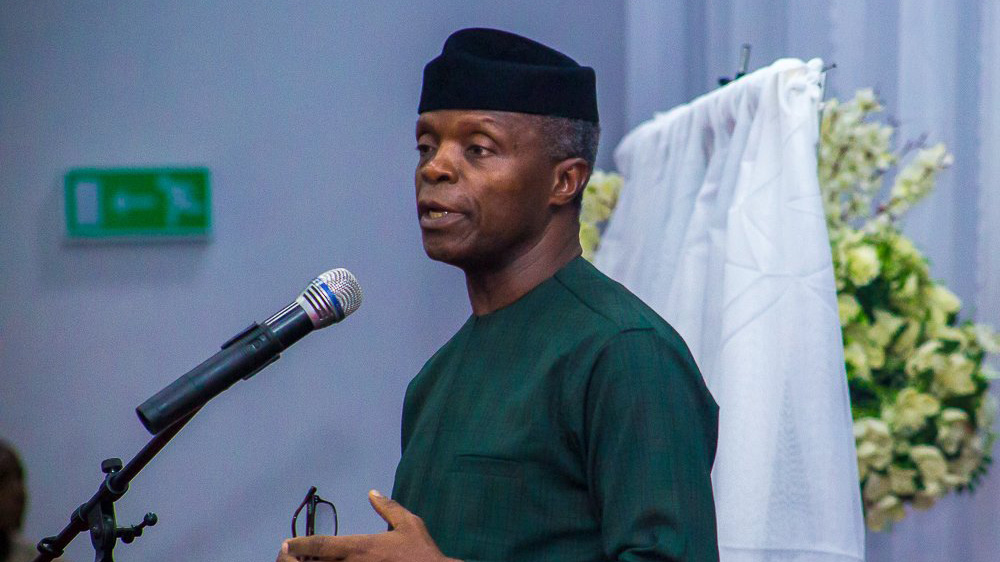
The Ahmadu Bello Memorial Leadership and Governance 2022 event hosted in Kano state government house earlier today was themed “Reviving the Northern Traditional Institutions: Imperative for Peace and Security in Northern Nigeria”. 


The Ahmadu Bello Memorial Foundation organized the event in collaboration with the Kano state government on January 18, 2022. 


During the occasion, Vice president Yemi Osinbajo (SAN) commended Sir Ahmadu Bello Sardauna, adding that “[He] was a man of peace and courage, as well as a nurturer of traditional institutions, who demonstrated fairness and justice.”


Concerning insecurity bedevilling the North, the Vice President said that the federal government would employ technology in surveillance to fight the increased terrorism and insurgency in the country effectively.


He said: “We will also continue to ensure collaboration between the Federal Ministry of Justice, state counterparts and law enforcement agencies – to ensure that those apprehended for terrorism and violent crimes are effectively and speedily prosecuted.”


“This is a fight for this nation, and we are determined to win by the grace of God. All these evil forces will be eliminated.”

On the need for mass transit in Kano

By Kabir Shariff

Kano city is the largest city for inter and intra-state migration in Nigeria. Yet, a city with over 6 million inhabitants is still scrambling for an efficient mode of transport in 2022. It is time for Kano to respond to the delinquent call for urban city mass transit. The commercial hub for Sub-Saharan states should be in a better position in terms of a good transportation network.

A significant milestone was accomplishment back in 2013 when the state government banned the operation of the reckless motorcycle taxis alias Dan Achaba. It’s time the government build upon that by making an informed decision to set the city in the right direction to improve mobility.

An efficient public transportation system is an essential social infrastructure that fast-growing cities like Kano should have to contribute to blossom economic and social activities in the state. But, unfortunately, although Kano city has become a champion in constructing flyovers, overhead and underpass tunnels in Nigeria since 2013, the city is flooded with thousands of tricycles that make life miserable for road commuters.

A prerequisite to having a good transportation system is to have a decent road network in the city. The decent road network in Kano since 1999 is the work done mainly by the state administration of 2007-2011. Although the administration did not construct any fancy flyovers, the Kanawas enjoy the roads built more than the flyovers. The central boulevard in Kano will be in good condition for some years to come, but Kano’s streets and minor roads are in poor condition.

The thousands of tricycles plying the busy roads of Kano need to be checked and regulated. Without proper transport regulation, Abuja will have been in a similar condition as Kano at the moment.

A few ideas that might assist in easing transportation difficulties is by mass transit buses. Developed cities worldwide, including London, Paris, and New York, are still using the basic mass transit buses despite several more developed alternatives like subways, trams, and cable car transport. Developing cities like Mumbai, Cairo, Pretoria and Djibouti are well known to have efficient mass transit buses. It’s time for Kano to lead the way in providing a safe and practical mobility network for the millions of Kanawas.

Firstly, the government should prioritise the rehabilitation and construction of intracity roads to ease mobility and reduce unwanted traffic in the city, especially at peak hours.  The government should also invite private investors to supply and monitor mass transit buses with operations limited to the major boulevard in Kano.

The buses should have an affordable flat rate per trip, say N50. The registered tricycles should be limited to ply only small streets and avenues. This will put Kano in a better position in commerce and transportation. A coordinated transport system will reduce the high level of criminal activities carried out on tricycles daily.  This approach can only be practical if the government can make strict laws to regulate to assure investors confidence and minimise the risk of reverting after the administration leaves office.

Kabir Shariff writes from Cherbourg, France. He can be reached via kbshariff@gmail.com.

Kano student emerges overall best, wins Gold Medal award in India

By Haidar Hasheem Kano

Kano State continues to mark its name in gold as its indigenes emerged best in different academic fields in national and foreign universities.

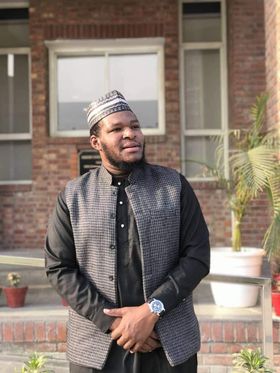
Engr. Yahaya Hassan Labaran, an indigene of Kano state from Kura local government, emerged as the overall best student for the 2020/2021 academic session with a CGPA of 9.9 out of 10, at prestigious Sharda University, India.

Engr. Yahaya graduated with first-class in Civil Engineering graduate of Kano University of Science and Technology (KUST), Wudil, in 2017. He won a fully-funded scholarship to study Master of Technology in Civil Engineering with a specialization in Construction Management in India in 2019.

In addition to being the university’s overall best student, He also won a Vice-Chancellor’s Gold Medal award for securing the 1st position in the Master of Technology course at the School of Engineering.

Engr. Yahaya stands out to be the best among hundreds of students from different countries across the globe.

According to his sighted CV online, Yahaya has numerous publications to his name and membership in professional organizations such as the American Society of Engineers, the Nigerian Society of Engineers, and 11 others. In addition, he attended over 40 conferences, seminars, and workshops.

Apart from that, he has completed numerous professional courses at various universities worldwide, including the University of California, Irvine, Georgia Institute of Technology, IE Business School, and the University of Geneva, to name a few.

Of Kano and the need for change

By Abdullahi Aminu Mudi

The intriguing question is, what makes Kano State what it is today? Coming from Kadawa on Zaria Road, into Unguwa Uku, and on Eastern By-Pass, going up to Mariri, and getting to Wudil, back to Hadejia Road, going up to Dawanau and Bichi, and finally, moving to Janguza on Gwarzo road, is a sprawling and a densely populated city. Its growth in number matches its enterprising exuberance. Kano is a commerce city with a large market covering northern, extending to many parts of central and southern Nigeria, and linking up to the Central African Republic, Niger, Cameroun, and Chad.

As business and entrepreneurial opportunities abound in Kano, due to a large population, it represents a sordid state with a grubbily degenerating condition. Its growth depicts chaotic organization, unplanned settlements, lack of, in many aspects, the absence of sanity in the society and the public system. This is the intriguing question that points to a paradox and a binary of opposites; from one angle, one sees the positive outlook of Kano, and another perspective provides insight into the deplorable and annoying situation that has engulfed the state.

The impetus for this write-up emanates from the disorganization that has become of Kano. Given its status and development, the state has metamorphosed over the years into what it is today. Therefore, setting a clear path, and for us to understand and appreciate the status of Kano, its historical and evolutionary development must be looked into. This will shed light on its present condition and the challenge of managing a cosmopolitan state. Building on this, having understood its current situation, an attempt will be made in the second part of this article to suggest pathways towards addressing such challenges and rebuilding Kano to claim its rightful position.

Like many other cities, towns and states, Kano’s evolutionary and historical development to what it has become cannot be linked to or reduced to a single factor. Cumulative actions by different actors and events, not what some historical accounts say, of the decline of Katsina as a city of commerce, or the trans-Saharan trade, have influenced and shaped Kano’s growth and ascendency. Ruled through a combination of efforts and collaboration between traditional authority, merchants, and religious leaders, over the years, from pre-colonial, through colonial and post-colonial times, Kano has transformed and developed. During the colonial era, the traditional leadership took active steps by changing key institutions and making the Native Administration a functional system in a way that key social and economic sectors were made to be responsive. Thus, industrialization and economic reinvigoration were made to match statecraft. Under Alhaji Abdullahi and Alhaji Muhammadu Sunusi (I) as emirs of Kano, the Challawa and Bompai Industrial layouts were established. These were made and established to industrialize the state. Their impacts, so enormous were they, relative self-sufficiency was achieved, jobs were created, and set Kano in an envious position.

This collaboration and the state’s central role in development and planning continued in post-colonial Kano, principally with Audu Bako’s government prioritizing agriculture and its value chain. Based on the prevailing macro-economic, social and political climates, subsequent military and civilian regimes enhanced Kano’s industrial atmosphere and production base. The state, capable of competing and compared with any other important state in Africa, became significant. As a consequence of the phenomenal economic activities, an aviation hub and centre emerged, serving the domestic market, and connecting regional and international routes.

Amid the oil boom in the early 1970s, shortly after Nigeria’s civil war, the federal government’s indigenization and nationalization policies led to the emergence of industries in many states. Manufacturing and assembly plants became catalysts for economic activities. In Kano, Bompai and Challawa became beehives of activities. With the progress made and subsequent expansion, Sharada Phase I and II came on stream serving Nigeria and many other African countries. These developments were made possible through the active interplay between various institutions, political actors, and the merchant class.

The collaboration, as stated earlier, over the years, to what prevailed in the 80s, made Kano a centre to be reckoned with, then, even with the subsequent economic decline and collapse of industries in the following years. This collapse signals the frightening condition that was to become of Kano from the 80s to the present. In the last three decades, the aftermath of this collapse from the 1980s has seen a persistent increase in unemployment, rise in social vices, failure in social and political institutions and general discontentment, coupled with excessive population growth. Kano’s position has continued to degenerate and placed it on a gargantuan precipice. Kano’s enduring decay represents a classical negation of positive and functional development. It is not the case here; it is neither growth without development but a community geared towards self-destruction and eventual destruction.   

Coming into Kano’s airspace from Lagos or Abuja, pleasing as it is, as one nears home, descending into the town, one’s happiness changes into a burning gloom, as one comes into a full glimpse of Kano as a poorly planned city or an unplanned one. From 1999, with the coming of new civilian administration, Kano witnessed drastic changes and massive development in socio-economic and commercial activities. It also heralds crystallization, from the rise of industrialization in the 60s up to the early 80s, of a downturn and further decline and collapse of manufacturing. As political leadership collaborated with the merchant class in bringing about industrialization in Kano state, their cumulative efforts and inactions derailed the state’s progress in this dispensation even against their enlightened self-interest.

It would seem, looking at the myriads of challenges, nagging and unmanageable as they have been, institutional bottlenecks might have hampered development. Indeed, institutional failure, especially in the public sector, dramatically contributes to escalating the challenges facing the state. Against itself, the public sector operates in a complete variance of its mandates, sowing discord and seeds of its destruction and weakening its sustainability. The civil service cannot be relied upon to carry out government business or regulate life in civil society. One cannot understand this failure in isolation and a vacuum.

Since 1999, Kano has been managed by four regimes belonging to different political parties. Successful implementation of policies of each administration relies on an efficient and effective civil service. However, and to our dismay, none of these regimes ever contemplated reforming the civil service so that contemporary challenges are tackled, visions translated into policies, and their implementation carried out. Expediency, which is a hallmark of utility, necessitates a system of succession that is vital and critical to the survivability of the public system. There is a need to do a lot to fix these and other problems, especially in recruitments and promotions in the civil service.

Mr Mudi sent this article via aamudi28@gmail.com.

Mother, one-year-old son, die in inferno in Kano

By Uzair Adam Imam


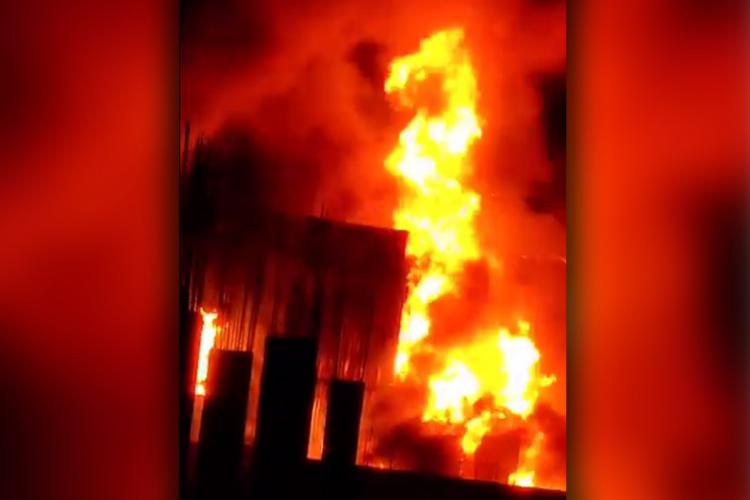
The Kano State Fire Service has confirmed the death of one Zainab Yusha’u and her one-year-old boy due to an inferno.


Zainab Yusha’u, a 25-year-old woman, and her son, Sulaiman Usaini, lived at Gwarzo Road by Gidan Kaji in Kano.


Alhaji Saminu Abdullahi, the Public Relations Officer of the service, said this in a statement issued Saturday in Kano.


He said: “We received a distress call at about 07:00 am from one Usman Nura and immediately sent our rescue team to the scene at about 07:08 am.


“With the good effort of our fire personnel, we were able to bring the fire under control so as not to spread to other neighbours’ houses,” he stated.
He added that one room slightly burnt while the parlour was completely razed down by the fire, adding that “the remains of the victims were handed over to Yushau’s husband, Malam Usaini.”


Calling the attention of people, the spokesman, however, advised the general public to comply with safety regulations in order to avoid unforeseen circumstances.