Kano State

Tension in Kano APC as Garo mulls over defection to NNPP

By Uzair Adam Imam 

Another political crisis is rocking the Kano chapter of All Progressives Congress (APC) as the endorsed deputy governorship candidate, Murtala Sule Garo, is reportedly mulling over defection to the New Nigeria People’s Party (NNPP).

Governor Abdullahi Umar Ganduje endorsed Garo to pair with the current deputy governor, Nasiru Yusuf Gawuna, as governor in the 2023 gubernatorial election.

However, Garo was said to have felt slighted following a peace parley between Governor Ganduje and his political arch-enemy, Senator Barau Jibrin.

Recall that Ganduje had reconciled with Barau and agreed to step down for him for the Kano North senatorial ticket after the senator abandoned his gubernatorial ambition. 

According to a source who preferred not to be named, Garo plans to discuss the issue with his associates for a final decision.

He said, “he is planning to meet with his associates and make [a] concrete decision, but he is still very sad about the development (Barau back in the fold), but he has not defected or abandoned the ticket,” one source, who asked not to be named, said.

Kano court restrains Sagagi-led PDP executives

By Ibrahim Nasidi Saal

A Federal High Court sitting in Kano on Tuesday granted an order of interim injunction restraining the Shehu Sagagi-led executives of the Peoples Democratic Party, PDP, in Kano from exercising any power pending the hearing and determination of the Motion on Notice.

Mr Sagagi is allegedly loyal to a former governor of Kano State and national leader of the New Nigeria Peoples Party, Rabiu Kwankwaso.

The case was filed before Justice A.M. Bichi by one Bello Bichi against INEC, PDP and 40 others.

The order is as follows:

 “That in order not to create a serious power vacuum In the party at the State level and to prevent any anarchy which could result from such a vacuum, an order of interim injunction is granted restraining the 3″‘ to 42nd Defendants from parading or continuing to parade themselves as the Party Executives of the PDP in Kano State, from exercising any power pursuant thereto, or doing anything in that purported capacity pending the hearing and determination of the Motion on Notice herewith filed, which is fixed for hearing on the 24th day of May, 2022.

“That an order for leave is granted allowing the substituted service of the Court Order and the originating and other subsequent processes on the 3rd to 42nd Defendants by leaving same with or at the office of the 25th Defendant, Mr. I. Wangida, Esq.”

The daily Reality reports that on April 28, another court of concurrent jurisdiction, the Federal High Court sitting in Abuja, had reinstated the Shehu Sagagi-led state and 44 local governments’ executives of PDP, pending the determination of the substantive case before it.

Ruling on the matter, Justice Taiwo O. Taiwo granted all the prayers of the Sagagi-led executives and warned the PDP national leadership against taking any action that would undermine them.

Kano: Government clarifies news on explosion

By Ahmad Deedat Zakari

The Kano State Government has clarified the fake news on explosion. An explosion rocked Kano at the early hours of Tuesday, May 17, 2022.

It was earlier reported that it was a bomb blast on many social media platforms. However, the State Commissioner for Information, Malam Muhammad Garba, has dismissed the erroneous claim.

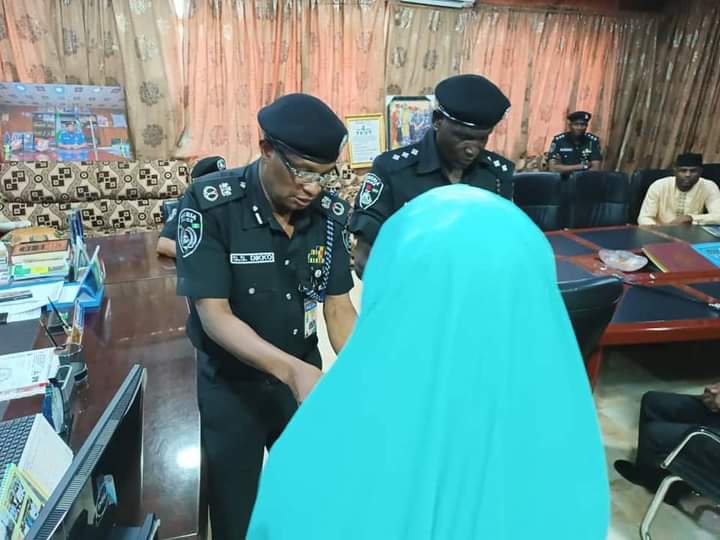
On the other hand, the Kano State’s Police Commissioner, Sama’ila Shuaibu Dikko, said it was a gas explosion.

“It was a gas explosion. There was a welder around the area and his gas cylinder exploded just very close to a private school… we have recovered four casualties, including the welder and a female. No child was affected,” Dikko told journalists after the incident.

While cautioning people to desist from sharing unsubstantiated stories, the Commissioner added that further investigations were underway.

Kano prison warder kills trader ‘over cigarette’

By Uzair Adam Imam 

An official of Goron Dutse Correctional Centre in Kano, who is yet to be identified, has gunned down a trader for refusing to give him a stick of cigarette. This development shocked people around. 

The Daily Reality gathered that the bullet fired at the trader went through his stomach and later hit another person on the leg.

The trader was confirmed dead after reaching the Murtala Muhammad Specialist Hospital, where the two victims were rushed to. 

It was gathered that there had been a misunderstanding between the two persons after the trader refused to sell the cigarette to the officer; which made him angry. 

According to a witness who spoke to the Daily Trust, “We can’t really say, but, it seemed like the officer was owing the trader and this time around, he refused to sell to him, which triggered his response as he suddenly shot him.”

Abdullahi Haruna Kiyawa, the Kano Police Public Relations Officer, confirmed the incident. 

He added that the police were still trying to ascertain the identity of the slain trader.

Kano APC Crisis: Presidency summons Ganduje, Shekarau

Ibrahim Nasidi Saal

The Presidency has stepped into the ongoing crisis in the Kano chapter of All Progressives Congress (APC) between Governor Abdullahi Umar Ganduje and Senator Ibrahim Shekarau, The Daily Reality reliably gathered.

A source familiar with the development said the Presidency dispatched a jet Friday night from Abuja to Kano to convey Ganduje and Shekarau for an emergency meeting towards resolving the crisis.

The meeting is said to be a major part of the plan to forestall the planned decamping of Shekarau to the new but fast-growing New Nigeria People’s Party (NNPP).

The NNPP is led by another former governor of Kano and leader of the Kwankwasiyya Movement, Dr Rabiu Musa Kwankwaso.

Many bigwigs of the APC and the opposition People’s Democratic Party (PDP) have been joining the party. Shekarau was expected to formally announce his decamping to the party on Saturday.

However, late Friday evening, Governor Ganduje visited the former governor at his Mudunbawa Kano residence in what sources said was a last-minute attempt to stop the planned decamping.

Sources said it was after the closed-door meeting that they started making arrangements to jet off to Abuja.

People in Kano State are keenly observing all the political moves of the giant political gladiators and are desperately waiting for the 2023 elections.

Revenue is not a substitute for healthy environment, let’s tell Baba Ganduje

By Murtala Uba Mohammed

Governor Ganduje’s romance with capital project is too obvious and apparent. Only a bias mind can deny him his love for billion of Naira capital projects such as construction of some urban roads, underpasses and flyovers which qualify the city to lead in terms of transport infrastructure all over the country. Governor Ganduje’s interest in commerce and revenue drive is quite vivid considering his bias towards conversion of every available inch of land in the metropolis into commercial property. This is in addition to the proliferation of shops created in over ten markets in Kano Metropolis. In his zeal to generate revenue, Baban Abba has transformed Kano Road Traffic Management Agency (KAROTA) from law traffic enforcement to tax collection agency!

History of Kano would definitely remember this government of converting some of the most sacred spaces such as prayer grounds, cemeteries and historical places into commercial plots. While, Colonel Idris Garba has found it wiser to relocate Kano City Animal Market from its old location to accommodate the increase demand for bigger Kano Central Eid Ground and to give the ancient city a kind of Eid ground it deserves; Ganduje felt it is necessary to downsize it to nearly one fifth of its original size in order to make way for his dearest commercial land use. In fact, governor Ganduje’s romance with commerce qualified him to have national honour award of commercial order for Niger (CON)!

It is also obvious that governor Ganduje has given Kano more than what it requires as centre of commerce by converting the remaining open spaces, green areas, blue ecosystems and city’s recreational gardens into commercial plots, leading to the emergence of multi-million plazas in all parts of the already gentrified city. The case of destruction of the last phase of the city wall along BUK road, the Freedom pond along Gwarzo Road, the Dan’agundi on BUK Road and many other smaller water bodies are just tips of Ganduje’s land conversion icebergs. A case of city garden along Maiduguri is another justification for his romance with commerce.

Also, many waste collection centres were either allocated to Ganduje’s political lieutenants to develop it for commercial use or sold to a highest bidder. No thanks to irrational desperate attitude of Kano people to land acquisition which Bandirawo capitalized upon and coupled with the creation of plots on many state’s parks located in peri-urban local government under the forestry department of Ministry of Environment. Ganduje would have converted city’s Zoological Garden to commercial plot if not for the outcry and serious pressure from good sons and daughters of the State.

While, expanding the commercial land use and (possibly) enlarging what goes into supposedly state IGR, the government action is negatively affecting the environment. The governors love for the building of commercial areas at the expense of other landuses affects the functioning of the ecosystem there by distorting the near equilibrium state of the environment. A city without parks and green areas is just like child whose nose was covered or severed; suffocation is inevitable and death is the end point. Our governor (whom the law saddled with responsibility of land protection) should be reminded that the green areas are not just for decoration, they are carbon sink meant to absorb harmful air like Carbon dioxide, Sulphur oxides, chlorofloro carbons and other pollutants which are hazardous to human health. They also help in moisture retention, groundwater recharge, check soil erosion and ecosystem stability. The importance extends to social and economic contribution by providing revenue, connecting people with past and providing shades. Kano City is already noisy, building more roads and destroying greens which this administration is supporting and encouraging, make people to own more cars and reduce the functional attenuation city’s noise. In a city where transport is not regulated and left at the mercy of highly informal private individuals, one will just end up with a growth that is going in a reverse way. Today, only God knows the number of tricycles in Kano that pollute the air and colliding with peoples’ vehicles.

Nowhere, water and blue infrastructure is as important as dryland, however, unfortunate the protector turns destroyer. The city therefore is witnessing urban drought due to water table dwindling. The city dwellers now buy water from cart-pusher, whose hygienic condition is terribly bad, at the rate of 50 to 100 naira per 25 litre jerrycan. The state’s own water supply is just a nightmare.

Kano city now witnesses intrusion of newly emerged hills, not of lava, rather of refuse. This is a clear pointer to the problem of rush in privatizing the long-time government’s REMASAB to a very little-known private company. Surprisingly, rather leasing the formal areas (where pilot testing were done through Franchisee System), the government decided to include the informal areas where residents are overwhelmingly poor and unlikely to afford commercial waste service. The government had successfully improved its revenue by not shouldering part of its social responsibilities, but it had traded-off the health and well-being of the public for worthless amount of money. The city-folk now pay the price through living in the mid of waste.

No matter how crucial it is, revenue is not in any way akin to destruction of environment. One can get good revenue without depriving the environment its decency. This can be achieved through verticalization of buildings where shop demands can be met without losing open and green areas. Also, city’s green and open spaces can be privatized in their natural state to generate more revenue. The recent proliferation of Event centres and sport Centres can utilize the city’s ponds and open spaces without necessary building up permanent structure.

While the state makes a lot of noise on domination of public transport by Adaidaita sahu tricycle where revenue was difficult to generate, not much was done to introduce more formal public mass transit such as Bus Rapid Transit and Bus Mini Transit that would fetch more revenue to the government with less damage to the environment. It is still not late for the government to reverse and rethink of best ways to manage the waste generated. Commercial, industrial and formal areas can be made to pay for waste services, but not slum and shanty areas. Let the state engage radically in educating and reorienting the citizens, this will make people to be more formal in their businesses, and which will eventually boost the state’s revenue.

It is important to note that for every city to be liveable, certain ecological services and resources must be retained at all cost. Failure to keep them is tantamount to exhibiting nonchalant attitude to nature despite that Nigeria is a signatory to most environmental treaties. It implies that one is at war with descent living. I am afraid, history will judge this administration for destroying the little it inherits of environmental heritage in the name of foolhardy capitalism. I hope His Excellency was not punishing us for someone’s faults. Other individuals might have done some wrongs to him, but let him remember that he has no place like Kano. Let us give Kano a descent ecosystem, not only for us but for the yet to be born generations.

Murtala teaches Geography at Bayero University, Kano.

Three more Kano Assembly members dump APC, join NNPP

By Ibrahim Nasidi Saal

Days after nine Kano State House of Assembly members defected from the opposition Peoples Democratic Party, PDP to New Nigeria People’s Party, NNPP, three more lawmakers have dumped the ruling All Progressives Congress APC, for the new party.

On Wednesday, a spokesman for the Assembly, Uba Abdullahi, announced their defection, citing three separate letters the legislators sent to the speaker, Hamisu Chidari.

According to the statement, the members notified the House of their defection from the ruling APC to NNPP through the letters dated May 5, officially received by the House.

The defecting lawmakers are:

Hon.Abdullahi Iliyasu-Yaryasa, member representing Tudunwada Constituency;

Hon.Muhammed Bello Butu-Butu, member representing Tofa/Rimin Gado Constituency.

Hon.Kabiru Yusuf Ismail, member representing Madobi Constituency.

Mass defection rocks Kano State House of Assembly

Ibrahim Nasidi Saal

Nine members of the Kano State House of Assembly elected on the Peoples Democratic Party (PDP) platform have defected to the New Nigeria People Party (NNPP).

The spokesperson of the Assembly, Uba Abdullahi, announced this in a statement he issued on Friday. He said the members had sent a letter to the Speaker of the House notifying the House of their defection.

He said some of the members cited a leadership tussle in the PDP at state and national levels for their action.

The affected members include:

 Isyaku Ali Danja (Gezawa Constituency), 

Umar Musa Gama (Nassarawa Constituency),

Aminu Sa’adu Ungogo (Ungogo Constituency),

Lawan Hussain Chediyar ‘Yan Gurasa (Dala Constituency)

Tukur Muhammad (Fagge Constituency).

Mu’azzam El-Yakub (Dawakin Kudu Constituency)

Garba Shehu Fammar (Kibiya Constituency)

Abubakar Uba Galadima (Bebeji Constituency)

Mudassir Ibrahim Zawaciki (Kumbotso Constituency).

Earlier on April 29, the House announced the defection of a member representing Kano Municipal, Salisu Gwangwazo, from the PDP to the ruling All Progressive Congress (APC), also citing an internal crisis in the main opposition party

However, the latest defections are widely seen to be connected to the movement of a former governor of the state, Rabiu Kwankwaso, from the PDP to the NNPP.

Mr Kwankwaso moved to the NNPP earlier this year and is expected to run for president on the party’s ticket.

Kwankwaso’s defection has triggered the mass defection of his followers from the PDP to the NNPP. Some of them have taken party positions ahead of the party’s primaries.

How Kano workers spend Sallah festivities without salaries

By Uzair Adam Imam

Amidst Sallah (Eid-el-Fitr) celebration, when people jubilate the end of Ramadan in new clothes and different sorts of delicious dishes, civil servants in Kano have seen their 4th day of a new month without salaries, the development they said has thrown them and their families into dilemma.

Reacting with dismay, the workers said the government has failed to keep to its promise of paying the salaries on the 25th of every month.

The Daily Reality learnt that some workers had to hide because they could not make any provision to welcome and host their friends and relatives as usual.

The workers who bitterly complained about the government’s carelessness towards their wellbeing said they remained indoors on the Sallah days because they were economically depressed.

Eid-el-Fitr is the period when the Muslim faithful happily celebrate the end of Ramadan. The days are usually welcomed with beautifully sewed clothes, different sorts of delicious foods, and meats of all kinds provided they are Islamically lawful, and relatives from all walks will call on their family and friends to celebrate the day.

Salary delay leaves a big hole in our minds

One of the civil servants who spoke to our reporter said that he went ahead to embrace his old craft of sewing for a living. The civil servant, who our reporter found busy sewing in a tailoring shop, said this delay has left in their minds a very big hole.

He added, “I can not do what I used to do on Sallah days. I couldn’t afford to buy a single chicken for my family. We did not cook anything nor did we have any new clothes to wear.”I used to sit with friends after Eid to exchange greetings and share pleasantries. But this time around, as I was depressed, I remained indoors until 4 pm when I came out to pray,” he added.

Another source, Ibrahim Shu’aibu, decried the experience as horrendous as they largely depend on their monthly income for a living.

Shu’aibu said, “The experience is horrendous. The effect is deep. It has affected almost all aspects of our lives as civil servants. More than half of the civil servants rely on salaries to cater for themselves, their families as well as some members of their relatives.”

In the same vein, this incident has deeply affected many businesses in many states in this country, Kano in particular.”

Personally speaking, this Eid-el-Fitr has passed like an ordinary day. I had to hide because I didn’t make any provision to welcome and host my friends and relatives as usual,” he stated.

Also, another source who pleaded for anonymity confided in our reporter that this Sallah is one of the worse situations he ever found himself in. He said, “We didn’t cook anything for this Sallah because I was broke. And I couldn’t afford to buy Sallah attire for my small kids. Here we are living like baggers.”

The worst part of it is that the government keep mute about the issue. I think the government should have addressed us. But sadly enough, what we only hear or see from the government officials is their beautifully snapped pictures at Umara.”

Another worker, Sulaiman Abdullahi, not his real name, said they found it difficult to handle the situation as they mostly live from paycheck to paycheck.

He said, “that’s why most of the workers are indebted beyond settlement. As we receive our salaries, we go ahead to pay the debt. I know you can imagine how hard we civil servants live our lives.”

Kano economy in a chain – Economist

An economist teaching in one of the Kano institutions lamented that the state economy is in a chain, leaving a lot many sectors affected. The economist said the delay in this month’s salary has affected many businesses, leading to the stop in the facilitation of goods and services in the state.

He further stated that “generally, the state economy is the dependent economy. It is dependent because it depends on workers’ salaries. When workers get paid at the end of every month, they will take their income into circulation by purchasing goods and services.

“At the end of this month, workers have not been paid. The facilitation of goods and services from various markets in the state will stop.

“The welfare of workers and their families will be affected. The state economic facilitation and activities are also stopped. And in long run, it will give a gap in which businesses will be dropped. And if it dropped it will create losses,” he said.

Could Kano State Government respond?

In line with balancing this report, our reporter contacted the Kano State Chief Press Secretary, Malam Abba Anwar, to know the cause of the delay in this month’s salary payment. However, all attempts were proved abortive despite huge complaints by the workers about the government’s silence on the issue.

Intra-religious dialogue: Let’s begin from here

By Sheikh Prof. Muhammad Babangida Muhammad

The growing trend of conflicting religious verdicts being issued these days by the Ulama in Nigeria is alarming. That they differ and argue on issues is not in itself the problem. In fact, they should differ in order to provide the people with a variety of acceptable perspectives of the secondary teachings of Islam. At the same time, there should be no cause for Muslims to differ on the fundamentals of Islam.

The problem lies in how the Ulama express the differences in their understanding and interpretation of texts. Some Ulama resort to launching abusive missiles and questioning the integrity and sincerity of the other scholar who differs from them, which is out of tune with the ethics of differences (adab al khilaf). They create an unnecessary atmosphere of distrust, tension and ill-feeling, accompanied by intolerance, lack of moderation and self-centredness.

The institution of scholarship in Nigeria is gradually being abused by intruders who lack the basic prerequisites of scholarship. Some vacuum seems to exist somewhere as people fail to recognise who genuinely is a Malam and who is ‘ pro-Malan’ – for wealth or worldly-inspired. An era of Ulamisation (crowning the ignorant as Ulama) of the ordinary uninformed people seems to be taking over as religious verdicts are issued by ‘Awaam al nas’, disrespecting the precise position of qualified Ulama.

We are in a state of ‘Kowa Malam’- everyone claiming Islamic knowledge. There are the ‘social media Malams’ and the ‘Market and roadside Malams’. We have the ‘Amulet-vendor Malams’, ‘political-opportunists Malams’ and all sets of quasi-Malams who wriggle in themselves and slug it out with the real Malams in the religious and socio-political space. They corrupt the religious environment, promote confusion and chaos and ultimately cause societal decay. Something needs to be done to stop these people and keep them away altogether.

We all recall that Maitatsine and later Boko Haram emerged out of such a situation and, fuelled with ignorance, developed into a monstrous extremist ideology. The current race by the uninformed to take over the religious garb and platform might be a fallout from the wrong perception of freedom provided by democracy or societal disequilibrium and failure or the incapability of the real Ulama to provide the needed leadership and guidance in response to emerging contemporary issues. In any case, it is an unacceptable trend that must be arrested.

In most Islamic countries, an established Central Committee of Leading Ulama (Hai’at Kibar al Ulama) or a Fatwa Council collectively deliberates on any issue requiring a verdict. Uncertified people who issue fatwa are sanctioned. Within the Fatwa Council, the majority opinion is upheld, while the minority view of any scholar is respectfully appended, but the majority view remains the official position. It is probably high time we considered instituting such a body in Nigeria, which will consist of capable and qualified Ulama who would be saddled with the responsibility of issuing fatwa based on well-informed opinion.

The Fatwa Committee of the National Supreme Council for Islamic Affairs could be expanded to include various religious tendencies within Sunni Islam. Alternatively, a university-based Islamic research Centre may constitute a broad-based non-sectarian Fatwa body (Majma’u al Buhuth wal Fatawy al Ilmiyyah). Only the most qualified (not necessarily certificate holders) would be admitted into the body. This will go a long way in arresting the seemingly uncontrollable trend of ‘Ulamitism’ or false claim to Islamic knowledge.

Only recently, during this blessed month of Ramadan, an unnecessary controversy on Inter-religious Dialogue (IRD) was blown out of proportion. Before you know it, accusations and counter-accusations were flying all around. Some ‘Ulama’ issued fatwa literally declaring those involved in IRD and any form of a committee consisting of people of other religions as apostates. Fatwa without strings or borders. A dangerous trend indeed. Something is definitely wrong somewhere, and we need to trace our steps back to do the right things in order to right the wrongs.

Let’s begin from here. First, establish an Intra- Religious Dialogue Committee, which would promote mutual respect, understanding and tolerance amongst the Ulama and, by extension, a broader atmosphere of peace and unity amongst the Muslims. It should not be an assembly of the argumentative elements who strive in controversies. If we fail to appreciate the value and significance of intra-religious dialogue and positive engagement with one another, Inter-religious dialogue will indeed appear out of order.

In a multi-religious society like Nigeria, engagement with people of other faiths for some common good is essential. Therefore, we should use sound knowledge, wisdom, sincerity and consideration of the general good of the Muslims (al Maslahah al ‘ammah) to determine any engagement of Muslims with other faiths. Ulama who are well-grounded in knowledge should be given a chance to guide how to pursue such engagement.

At the intrafaith level, the example of the Coalition of Ulama in Kano is a commendable initiative. Ulama belonging to various inclinations, came together under a Forum to pursue and tackle shared problems related to insecurity, drug abuse, child theft and trafficking, issues of IDPs and disaster-stricken communities, orphans and related problems. The Coalition established an NGO, NUSAID Humanitarian Initiative, which since 2016 has been extending assistance and community services to the needy members of the community, including the IDPs in Borno. The Kano initiative may serve as a model for Ulama in other states to adopt to promote Muslim unity, peace and mutual assistance.

May this piece not be a source of yet another controversy. Ameen, Ya Allah.

Sheikh Prof. Muhammad Babangida Muhammad is the Director Center for Quranic Studies BUK & National Amir, National Islamic Center (Ummah Movement).