Kano State

Open letter to Governor Alhaji Abba Kabir Yusuf

Accelerating Kano’s Future Through Technology and Innovation

Your Excellency, 

I write to you with profound optimism about the transformative potential of technology and innovation to position Kano State as a beacon of progress in Nigeria and beyond. As Africa’s youth population surges, Kano, rich in culture, commerce, and human capital, is uniquely poised to harness this demographic dividend by embracing technology as a catalyst for economic growth, social equity, and sustainable development.  

Your Excellency, I recognise and commend your commendable efforts and those of the Kano State Ministry of Science, Technology, and Innovation, under the visionary leadership of the Honourable Commissioner, in laying the groundwork for transformative projects already in the pipeline. The recent establishment of the Kano State Information Technology Development Agency (KASITDA) is a particularly strategic leap forward, signalling the state’s resolve to institutionalise tech-driven growth. These efforts are a critical foundation, and I urge sustained momentum to ensure their timely execution. 

The recommendations outlined herein aim to complement and accelerate these existing plans, providing additional frameworks to attract global partnerships, amplify local talent, and unlock scalable opportunities. By building upon the Ministry’s initiatives and KASITDA’s mandate, Kano can fast-track its rise as a regional leader in technology-driven development.  

Why Technology Matters

Technology is not merely a tool but a foundation for modernisation. It drives efficiency, creates jobs, and bridges gaps in education, healthcare, governance and more. For Kano, where over 60% of the population is under 25, investing in tech equips our youth with skills to compete globally while addressing local challenges like unemployment, agricultural productivity, and access to public services.  

Globally, nations such as Rwanda and India have demonstrated that prioritising tech ecosystems can spur prosperity. Closer home, Lagos’s emergence as a start-up hub highlights the power of deliberate policy and infrastructure. Kano, with its strategic location, historical significance, and entrepreneurial spirit, can surpass these models by tailoring solutions to our unique context.  

A Blueprint for Transformation

To unlock this potential, I propose the following actionable initiatives:  

1. Establish Kano Tech City

Create a dedicated innovation district with co-working spaces, labs, and incubation hubs. Partner with organisations like Google, Alison – Free Empowerment Platform, Microsoft Africa, Altmentor and more to offer training, mentorship, and funding access. This ecosystem will nurture startups in EdTech, AgriTech, FinTech, HealthTech, etc, sectors critical to Kano’s economy.  

2. Revolutionise Education

Integrate digital skills into school curricula. Launch “Kano Code Clubs” and sponsor scholarships for students pursuing careers in STEM fields. Collaborate with Universities to offer advanced degrees in emerging technologies, ensuring a pipeline of skilled talent.  

3. Upgrade Infrastructure

Prioritise broadband expansion, especially in rural areas, and deploy solar-powered tech centres to overcome energy challenges. Reliable internet and electricity are non-negotiable for attracting global investors.  

4. Enact Innovation-Friendly Policies

Offer tax breaks for tech start-ups, streamline business registration, and establish a regulatory sandbox for testing solutions. Launch a Kano Innovation Fund to provide grants and venture capital. Some Innovation-Friendly Policies are outlined below;

-Tax Incentives & Financial Support

  • 5-Year Tax Holiday: Exempt early-stage start-ups (0–3 years) from corporate income tax, PAYE, and land use charges. 
  • Investor Tax Exemptions: Offer 100% capital gains tax relief for investments in Kano-based tech start-ups. 
  • R&D Grants: Fund 50% of R&D costs for startups in priority sectors (AgriTech, EduTech, renewable energy).
  • Kano Equity Fund: Establish a state-backed venture capital fund to co-invest in high-potential startups, matching private investments 1:1.  

-Ease of Doing Business

  • 24-Hour Start-up Licensing: Create a dedicated tech desk at the Kano Investment Agency to fast-track business registration, licenses, and permits. 
  • Regulatory Sandbox: Allow start-ups in FinTech, HealthTech, and mobility to test products for 12 months without full regulatory compliance. 
  • Land Grants: Allocate subsidised land in Kano Tech City to start-ups and investors who commit to hiring at least 60% local talent.

-Talent & Immigration

  • Tech Talent Visa: Partner with the Federal Government to expedite visas for foreign founders, engineers, and investors relocating to Kano. 
  • Residency Rebates: Offer 50% discount on residency fees for startups that train and hire 100+ Kano youths annually.  

-Market Access & Growth

  • Government Procurement Quota: Mandate 20% of state procurement contracts (e.g., e-governance tools, agri-supply chains) to be awarded to local tech startups.
  • Export Incentives: Subsidise Saas (Software-as-a-Service) startups to scale across Africa by covering 30% of their cross-border marketing costs.  

-Investor Confidence & Exit Opportunities

  • Investor Matchmaking: Host quarterly pitch sessions connecting startups with angels and global VC networks.
  • Acquisition Support: Legal and financial advisory subsidies for startups exiting to foreign or local acquirers.  

-Sector-Specific Boosts

  • AgriTech Subsidies: Free state-owned farmland for AgriTech startups piloting IoT-enabled irrigation or crop-monitoring drones.
  • AI Ethics Framework: Develop Nigeria’s first state-level AI governance guidelines to attract ethical tech firms and global grants.  

-Long-Term Stability

  • 10-Year Policy Guarantee: Legislate a “Kano Innovation Charter” to lock in incentives beyond political cycles, ensuring investor confidence. 
  • Kano Tech Ambassadors: Appoint youth innovators as global ambassadors to showcase success stories in international media.  

5. Host Annual Tech Conferences

Showcase Kano’s potential through events like “Kano Innovates,” attracting investors, entrepreneurs, and thinkers. Celebrate local success stories to inspire a culture of innovation.  

Attracting Investment

A thriving tech ecosystem signals stability and opportunity. By cultivating homegrown talent and infrastructure, Kano will attract investors seeking opportunities in untapped markets. Public-private partnerships can further de-risk investments, while success stories will generate organic interest.  

A Call to Legacy

Your Excellency, this vision demands bold leadership. Imagine a Kano where farmers use drones to monitor their crops, artisans sell their products globally via digital platforms, and students use AI to solve community problems. Championing this agenda will secure Kano’s place as a hub of African innovation, creating jobs, reducing poverty, and inspiring generations.  

The time to act is now. Let us collaborate with stakeholders, businesses, educators, and youth to build a Kano that leads, not follows.  

Abubakar Sadiq Umar writes from Kano and can be reached via email at aserdeeq@gmail.com

Two NNPP lawmakers defect to APC over internal party crisis

By Uzair Adam 

Two federal legislators from Kano State have left the New Nigeria People’s Party (NNPP) and joined the ruling All Progressives Congress (APC), citing unresolved internal issues within their former party.

The defection of Kabiru Alhassan Rurum, representing Rano/Bunkure/Kibiya, and Abdullahi Sani Rogo of Karaye/Rogo federal constituency, was formally announced by the Speaker of the House of Representatives, Tajudeen Abbas, during Thursday’s plenary.

Their move adds to the recent wave of defections to the APC, with Oluwole Oke, a lawmaker from Osun State, also officially joining the party during the same session.

The sitting was attended by APC National Chairman Abdullahi Ganduje and other top party members, who were in the green chamber to receive the new members.

The House has recently witnessed a series of defections, many of which have strengthened the numerical advantage of the APC.

Kano to equip 200 schools with 50,000 computers

By Hadiza Abdulkadir

Governor Abba Kabir Yusuf has announced that 200 public schools in Kano State will each receive 250 computers, totalling 50,000 units, under a major digital education initiative supported by the World Bank through the AGILE Project.

The distribution, aimed at bridging the digital divide in education, was announced during the flag-off ceremony for instructional materials distribution held in Kano.

“Our goal is to bridge the digital divide and ensure our students are not left behind in this era of technological advancement,” the governor said.

According to Sunusi Bature Dawakin Tofa, the governor’s spokesperson, the initiative is expected to boost digital literacy among students and enhance the overall quality of education in the state.

“This is a transformational investment in our future. It will improve access to technology and empower thousands of students with the tools they need for academic success,” Bature said in a statement on Monday.

Governor Yusuf reaffirmed his administration’s dedication to promoting inclusive and innovative education through investments in digital tools and resources.

Kano Govt to solarise 200 public schools

By Hadiza Abdulkadir

In a bid to provide stable electricity and improve learning conditions in public schools, Governor Alhaji Abba Kabir Yusuf has announced plans to solarise 200 public schools across Kano State.

The initiative, unveiled during the official flag-off ceremony for the distribution of instructional materials to schools, is part of the World Bank-supported Adolescent Girls Initiative for Learning and Empowerment (AGILE) Project.

Governor Yusuf stated that the installation of solar power systems would ensure uninterrupted electricity supply, thereby creating a conducive environment for learning and digital education.

“This effort is part of our broader commitment to modernise education infrastructure and ensure that our students are learning in environments that support innovation and growth,” the governor said.

His spokesperson, Sunusi Bature Dawakin Tofa, noted in a statement issued Monday that the intervention aims to eliminate power-related challenges that have long hindered the use of technology in public schools.

The solar project is expected to enhance teaching and learning outcomes while supporting other digital initiatives planned by the state government.

Kano State Government approves ₦3 billion for NECO fees

By Hadiza Abdulkadir

The Kano State Government has approved the sum of ₦3 billion for the payment of National Examinations Council (NECO) examination fees for students in public secondary schools across the state.

This initiative, under the leadership of His Excellency Governor Abba Kabir Yusuf, aims to support thousands of students by removing financial barriers to completing their secondary education. 

Stakeholders and social media commentators have praised the decision, describing it as a significant step towards promoting educational equity and youth development in the state.

More details later…

Kano bans live political programmes

By Hadiza Abdulkadir

The Kano State Government has imposed an immediate ban on all live political programmes aired by media organisations in the state.

As Kano Times online news media reported, the decision was announced during a quarterly stakeholders’ meeting organised by the Ministry of Information and Internal Affairs. The meeting, chaired by the Commissioner for Information, Comrade Ibrahim Abdullahi Waiya, brought together government officials and media executives.

In a statement signed by Sani Abba Yola, Director of Special Duties at the ministry, the ban aims to prevent the spread of inflammatory content that could jeopardise the state’s cultural and religious harmony.

“We are not trying to stifle political dissent,” Comrade Waiya told the gathering. “Our objective is to protect the sanctity of our cultural and religious values.”

Further measures were introduced during the meeting. All individuals invited for interviews on media platforms must now sign an undertaking committing to avoid abusive, defamatory, or culturally insensitive remarks.

Presenters have also been directed to avoid provocative questions or gestures that might provoke defamatory or damaging statements against individuals or the state.

Waiya acknowledged a recent decline in the use of inflammatory language on air, crediting the ongoing collaboration between the ministry and media houses for the improvement.

He also disclosed that the government has rolled out sensitisation campaigns targeting political presenters, media commentators, and members of the Council of Friday Imams to promote responsible public discourse.

“We want to ensure that all public communication is done with integrity—free of defamation and in a way that protects the reputation of Kano State,” Waiya said.

Wearing the turban, bearing the burden: The enormous task before the new Galadiman Kano

By Huzaifa Dokaji

The promotion of Wamban Kano Munir Sanusi as Galadiman Kano today, May 2, 2025, marks an important moment in the history of Kano’s sarauta institution. More than a ceremonial instalment, it is the continuation of a title whose symbolic and administrative significance has long anchored the cohesion of Kano; first as a kingdom, and since the nineteenth century, as an emirate. This moment is charged with expectation, arriving at a time Kano Emirate is caught in a vortex of political contestation, juridical uncertainty, and generational transition. It will be the day a man who is both brother and foster son to a former Galadima, and son-in-law to another, assumes such an important office.

The title of Galadima, derived from the Kanuri galdi-ma, meaning “chief of the western front,” emerged during the administrative reforms of Kano’s second Hausa ruler, Sarki Warisi dan Bagauda, in the 11th century. Over time, it evolved into one of the most powerful and senior princely offices across Hausa land. Until Emir Abdullahi Maje Karofi (1855-1882) appointed his son Yusufu as Galadima, the title had traditionally been reserved for the king’s/emir’s uncle, eldest brother or closest male kin: typically someone older and therefore unlikely to succeed to the throne. 

Elsewhere, I have argued that Maje Karofi’s deviation from this established custom was one of the remote causes of the Kano Civil War of 1893. In essence, the appointment of a son to such a crucial position, naturally altered the institutional role of the Galadima, who historically functioned as a check on the emir’s authority. This explains Maje Karofi’s decision to depose his brother Abdulkadir, for expressing growing concern over certain decisions and practices at court the latter deemed inappropriate.

As demonstrated by the reigns of Galadiman Kano Daudu, Atuma, and the Fulani-era Galadimas Maje Karofi and Tijjani Hashim, the office has often wielded influence that paralleled or even eclipsed that of the king/emir. Until the 19th century, titles like Dan Ruwatan Kano were accorded to the kinsman or son of the galadima, while Dan Darman Kano was reserved for his cognatic kinsman.

Traditionally, the Galadima served as vizier, head of civil administration, and head of his own mini-palace, independent of the Emir’s court. Court praise-singers aptly describe bearers of the title as Daudu rakumin Kano, the camel that bears the city’s burden; Daudu gatan birni, the protector of the city; and Rumfa sha shirgi, the palace’s dust heap where disputes are deposited and resolved. In recent times, no one embodied such praise and function as the late Galadiman Kano Tijjani Hashim.

Widely regarded as the archetype of the modern Galadima, Tijjani Hashim redefined the office in an era when the sarauta was stripped of formal political power. He transformed it into a bastion of accessible influence, strategic mediation, and public service. His residence functioned as a daily court of appeals, open to aristocrats, commoners, and royal slaves alike. He was the man to whom a poor student could turn for a scholarship, a merchant for capital, a civil servant for promotion, a politician for sponsorship, and a broken family for reconciliation.

Tijjani Hashim died in 2014 and was succeeded by the charismatic Abbas Sanusi, whose reign as Galadima was cut short by a protracted illness. Abbas Sanusi was a disciplined and astute administrator, widely respected for his command of the emirate’s bureaucratic machinery. Yet his tenure was constrained by declining health, which limited his capacity to perform some of Galadima’s traditional roles, particularly inter-familial diplomacy. It is from Abbas Sanusi that the title now transitions to his younger brother, Alhaji Munir Sanusi, marking a rare case of intergenerational and intra-familial continuity, even by the standards of Kano’s dynastic politics. Their relationship was not merely fraternal; it was paternal.

Abbas raised Munir from infancy, shaping his worldview and instilling in him the refined fadanci he has mastered and discreetly used to his advantage. Adding further symbolic weight is the fact that Munir is married to Hajiya Mariya Tijjani Hashim, daughter of the very man whose name has become synonymous with the Galadima title in recent memory. Thus, the new Galadima stands at the confluence of two great legacies—bound by blood to Abbas, and by marriage to Tijjani.

Born on January 12, 1962, Munir Sanusi Bayero was the last son of Emir Sir Muhammad Sanusi I to be born in the Kano palace. Raised by his late brother, Galadima Abbas Sanusi, he later married his second cousin, Hajiya Mariya, a union that has continued to epitomise royal love and companionship. Alhaji Munir Sanusi received his primary education at Gidan Makama Primary School and his secondary education at Government Secondary School Dambatta from 1976 to 1981. He later obtained a degree in Mechanical Engineering from the Indian Institute of Technology in New Delhi.

Galadima Munir Sanusi’s career commenced in the Kano State Ministry of Social Welfare, Youth, and Sports, where he served as a Transport Officer from 1989 to 1991. He later joined Daula Enterprises Co. Ltd, Kano, from 1991 to 1993. He currently sits on the board of several companies, including Tri-C3 and Unique Leather Finishing Co. Ltd, the second-largest exporter of leather in West Africa. 

In 2014, the Emir of Kano, Khalifa Muhammad Sanusi II, appointed him as Dan Majen Kano and pioneer Chief of Staff to the Emir in the Kano Emirate. He was elevated to the position of Danburam Kano in 2016 and Wamban Kano and district head of Bichi in 2024. Today, he assumes the prestigious title of Galadiman Kano.

Galadima Munir’s loyalty to Emir Muhammadu Sanusi II has earned him considerable admiration within and beyond Kano. When the Emir was deposed in March 2020 and exiled to Loko in Nasarawa State, Munir not only followed him into banishment but remained by his side through Lagos and back to Kano. Now that the Emir has rewarded that loyalty with the emirate’s highest princely office, Munir faces a challenge no less noble than the title he inherits.

For one, loyalty is only one pillar of what I call “the burdens of the Galadima”. The office demands generosity, accessibility, discretion, and the ability to shoulder the hopes of a people whose faith in the sarauta system is repeatedly tested. Here lies Galadima’s greatest trial. Like his predecessors, he must cultivate a public image as a patron of the weak, a reconciler of royal, noble, and common feuds, and a figure of last resort to both the high and the low. He must embody rumfa sha shirgi in practice: bearing the burdens of others, not just out of obligation, but with discernment, sincerity, and grace. His word must be his bond, for zancen Galadima kamar zancen Sarki ne: the word of the Galadima is expected to be final, unwavering, and free of bitterness.

The task becomes all the more urgent against the backdrop of Kano’s current emirship crisis. While Emir Muhammadu Sanusi II’s return has been celebrated in many quarters, it remains the subject of intense legal and political contestation. In this precarious climate, the Galadima must go beyond ceremonial visibility. He must be the Emirate’s anchor, bridging palace factions and translating the noble project of restoring the sarauta back to its sense to the wider public. Galadima Munir’s early efforts at reconciling estranged branches of the royal family and diffusing internal tensions suggest a promising political instinct. But history demands more than instinct; it demands an ethic of honour and sustained human investment.

To become a Galadiman Kano today is not merely to wear a turban. It is to accept a lifetime project of prioritising the interest of the Sarauta and the talakawa over one’s. It is knowing that one’s home inevitably becomes a revolving court and one’s influence becomes public trust. Any failure to wield it generously, the memory of that failure will linger far longer than any quiet success.

Alhaji Munir Sanusi ascends the title of Galadima with the wind of history at his back and the shadows of giants before him. He is son and brother to a Galadima, and son-in-law to the most revered of them. If he can merge these legacies with his quiet resolve and proven loyalty, he may yet restore the Galadima as the most vital conduit between the emirate and its people.

The title awaits its meaning, Kano welcomes its new Galadima.

Allah ya kama, Raba musu rana da hazo

Allah ya taya riko, Daudu kwatangwalon giye.

Allah ya taimaki, tomo jiniyar gari

Huzaifa Dokaji writes from New York and can be reached via huzaifadokaji@gmail.com.

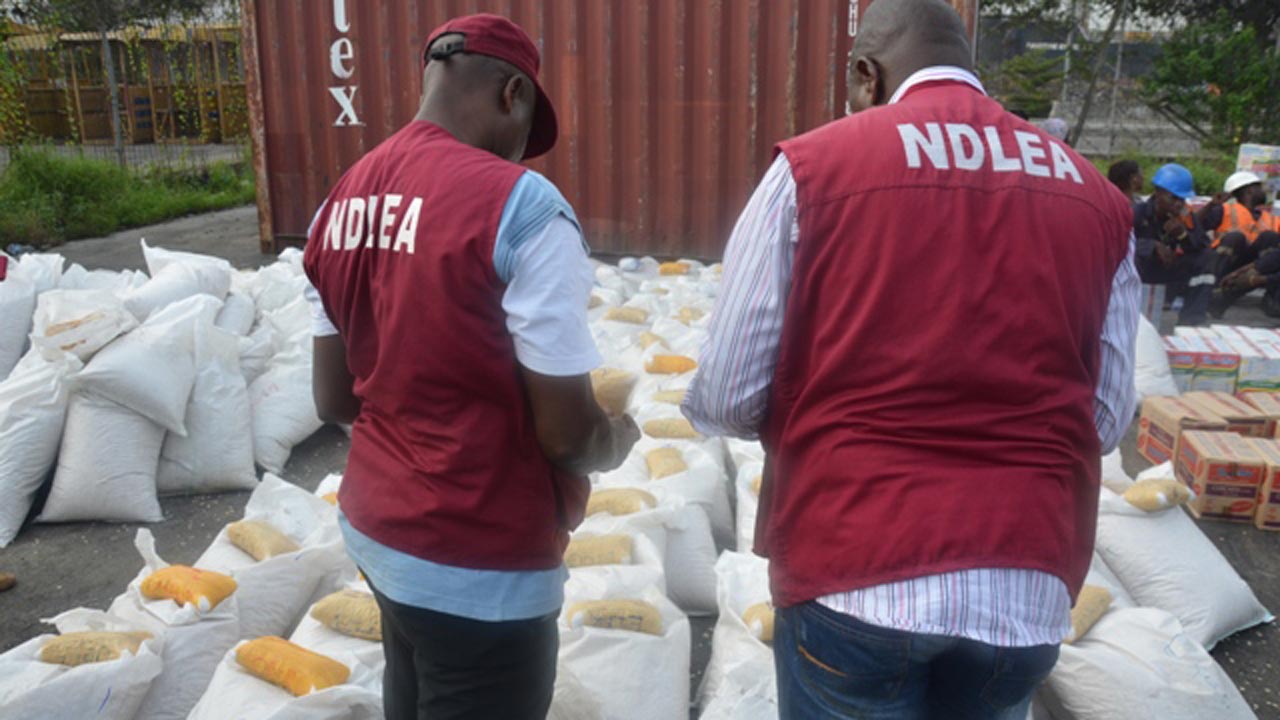
NDLEA intercepts over two million pills of Tramadol in Kano, arrests Ghanaian traffickers at Seme border

By Hadiza Abdulkadir

The National Drug Law Enforcement Agency (NDLEA) has intercepted over two million pills of tramadol and arrested multiple suspects in a sweeping operation across Kano, Jigawa, and the Seme border.

In Jigawa, NDLEA operatives acting on intelligence intercepted a Toyota Sienna vehicle along Kano-Ringim road, Gumel town, in the early hours of Wednesday, April 23.

Two suspects, Abba Ibrahim, 28, and Shuaibu Umar, 29, were arrested with 200,000 pills of tramadol and 217,500 capsules of pregabalin. A follow-up operation led to the arrest of the main supplier, Jamilu Muhammad, 41, in Kano. 

An additional 1,584,000 tramadol pills were found hidden in a Nissan bus and his residence, bringing the total haul to 2,001,500 pills.

Meanwhile, at the Seme border in Lagos, three Ghanaian women — Haziza Zubairu, 42; Samirat Mustapha, 43; and Jamila Salifu, 26 — were apprehended on Sunday, April 20, while attempting to smuggle 4.8 kilograms of “Ghana Loud,” a potent cannabis strain, into Nigeria.

In other operations, NDLEA officers uncovered 46 wraps of cocaine concealed in body cream heading to Saudi Arabia, seized drugs destined for Canada, and arrested a 60-year-old woman with 5.6 kilograms of skunk in Kano.

Brig. Gen. Mohamed Buba Marwa (Rtd), Chairman/CEO of NDLEA, praised the successful interdictions and the ongoing nationwide advocacy efforts under the War Against Drug Abuse (WADA) initiative.

Troops arrest suspected kidnap kingpin, recover arms in Kano

By Uzair Adam 

Troops of the Joint Task Force have arrested a 55-year-old man suspected to be a notorious kidnapper during a security operation in Sumana village, Tundun Wada Local Government Area of Kano State.

The arrest was disclosed in a statement issued to journalists by Capt. Babatunde Zubairu, Assistant Director, Army Public Relations, 3 Brigade, on Tuesday. According to the statement, the suspect was apprehended on April 20.

He was later paraded before the Brigade Commander, Brig.-Gen. Ahmed Tukur, during the commander’s Easter visit to troops of the Forward Operating Base (FOB) in Falgore, Doguwa LGA.

The commander commended the troops for their courage and professionalism, describing the operation as a significant success in the ongoing campaign against criminality in the region.

A cache of arms and other items were recovered during the operation. These include a fabricated AK-47 rifle, one Den gun, nine rounds of 9mm pistol ammunition, a woodland camouflage uniform, a desert camouflage outfit, a camouflage vest, and a Bajaj motorcycle seat suspected to be used for concealing weapons.

Brig.-Gen. Tukur reiterated the Nigerian Army’s commitment to working with other security agencies and local authorities to restore peace and order in troubled areas.

“The army remains dedicated to its mandate of safeguarding lives and properties. We will not relent in our efforts to bring perpetrators of criminal acts to justice,” the statement read.

The suspect is currently in custody and undergoing a preliminary investigation.

Kano to launch statewide data collection Initiative

By Muhammad Sulaiman Abdullahi

The Kano State Government is set to begin engaging volunteer ad-hoc data collectors across the state’s 484 wards as part of efforts to establish a comprehensive multisectoral data bank and dashboard. The initiative, which is nearing 70 per centcompletion, has been approved by the Executive Governor, Alhaji Abba Kabir Yusuf.

According to the State Statistician-General, Dr. Aliyu Isa Aliyu, the volunteers, who must be residents of their respective wards, will be trained by the State Bureau of Statistics on the use of digital data collection tools. 

Dr Aliyu added that their responsibilities will include collecting demographic data such as births, deaths, maternal and child mortality rates from ward head registers and graveyards, as well as statistics on education, healthcare, security, and access to water and electricity.

Dr. Aliyu emphasised the importance of collaboration between volunteers, ward heads, and community stakeholders to collect accurate and timely data. He added that school teachers and health workers are strongly encouraged to apply once the application portal is made public.

“This is a collective responsibility and an opportunity for all of us who are committed to supporting our state,” he said. “Together, we shall make Kano great.”