Kano State

Kano govt declares Monday as public holiday to mourn deceased athletes

By Abdullahi Mukhtar Algasgaini

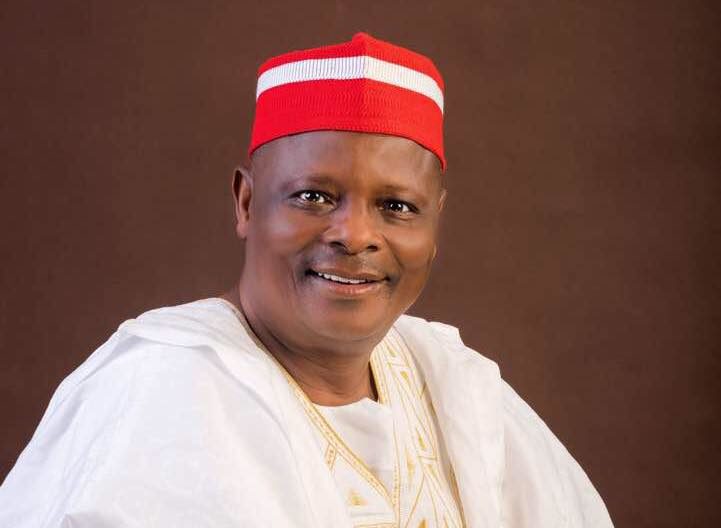
Governor Abba Kabir Yusuf has declared Monday a public holiday to sympathise with the families of the 22 Kano athletes who died in a tragic accident while on their way from Ogun State.

The governor gave the directive while still away on a pilgrimage for the 2025 Hajj.

“He directed that Monday, 2nd June 2025, be declared as a public holiday for the good people of Kano to pray and sympathise with the families of the victims.”

In a late-night statement issued by the Governor’s Spokesperson, Sanusi Bature Dawakin Tofa, the governor expressed his profound sadness over the loss and assured that all necessary support would be provided to the grieving families.

“It is with a deeply saddened heart that I received the tragic news of the unfortunate incident which claimed the lives of 22 innocent citizens and left several others injured,” the Governor was quoted as saying.

“On behalf of the government and the good people of Kano State, I extend our heartfelt condolences to the families of the deceased. We mourn with you and share in your grief,” he added

The state also called on Imams and all Muslims within and outside Kano to pray for the departed souls and for their respective families to bear the loss.

Man sentenced to death for setting mosque ablaze in Kano

By Maryam Ahmad

An Upper Shariah Court in Kano has sentenced one Shafiu Abubakar to death by hanging for setting fire to a mosque in Gadan village, Gezawa Local Government Area, leading to the death of several worshippers.

The tragic incident occurred earlier this year when Abubakar reportedly locked the mosque doors and poured petrol before setting the building ablaze during early morning prayers. The attack claimed the lives of multiple worshippers and left others with severe injuries.

Presiding over the case, the judge described Abubakar’s actions as deliberate and heinous, noting that the punishment was in line with Shariah provisions for such offences.

The sentencing has drawn mixed reactions. Some residents welcome the verdict as justice served, while others continue to mourn the devastating loss.

Authorities have urged communities to remain calm and uphold peace and coexistence.

A brief tribute to Malam Maikudi Cashman

By Muhsin Ibrahim

Talk about Kannywood and, often, some people who are scarcely literate or have little knowledge of film will dismiss the entire industry as a sanctuary for good-for-nothing folks. But that is not always true.

I first met the late Malam Umar Maikudi (also known as Cashman) at the 2019 Kano Indigenous Languages of Africa Film Market and Festival (KILAF) conference. We connected immediately, discussed various issues, and ultimately exchanged phone numbers.

Although Malam was old enough to be my father, we maintained a relatively cordial relationship. He would send me some of his writings, and I would send him mine in return. We also met a few more times during subsequent editions of the KILAF conference. I am sure Alhaji Abdulkarim, the CEO of Moving Image and the organiser of KILAF, will dearly miss Cashman.


He was among the few brilliant individuals blessed with the talent to blend theory and practice seamlessly, and he excelled in both. 

Malam was a lecturer at Nuhu Bamalli Polytechnic, Zaria, and President of the Motion Picture Practitioners Association of Nigeria (MOPPAN). 

Malam was a bridge between Kannywood and Nollywood, as he featured in films from both industries. Many Kannywood viewers may not be very familiar with him, though.

Cashman only recently started featuring in more mainstream Kannywood productions, such as Gidan Badamasi and Labarina. As a lawyer in the latter (Labarina), who is expected to code-switch and code-mix, you can tell this actor is definitely educated. He was.

His death is a significant loss to his family, of course, and to the Nigerian entertainment industry. May Allah forgive his shortcomings and grant his loved ones the fortitude to bear the loss, amin.

Muhsin Ibrahim, PhD, is an academic and writes about Nigerian films. He can be contacted via muhsin2008@gmail.com.

AVM Ibrahim Umaru’s appointment: Square peg in a square hole

By Sani Surajo Abubakar

At the commencement of the 28th Kano State Executive Council on Monday 19th of May, 2025, held at Kwankwasiyya City, Governor Abba Kabir Yusuf presided over the swearing-in of Air Vice Marshal (AVM) Ibrahim Umaru (rtd.) as the new commissioner of Internal Security and Special Services.

His nomination, screening and confirmation by the Kano State House of Assembly and subsequent swearing-in followed the resignation of the pioneer Commissioner of the Ministry some few weeks back.

The new commissioner was the immediate past Director-General of the Special Service Directorate, Kano Government House, responsible for coordinating the operations of security agencies and other engagements critical to safer living in the state.

Before his debut in the government business of Kano State, he was a retired Airforce Officer with vast experience in peacekeeping operations and national assignments both locally and internationally.

He is passionate and committed to youth empowerment and entrepreneurship skills development, with a firm belief that empowering youth will help improve the living standard of the state’s residents and boost rapid socioeconomic development and prosperity.

As a retired Air Vice Marshal, his new position as commissioner will bring a wealth of experience from his illustrious military career in curbing security challenges in the state.

 Indeed, his sojourn as Director-General of the Special Service Directorate and subsequently as commissioner underscores the state government’s commitment to harnessing expertise from various fields to drive progress.

The appointment of Air Vice Marshal (AVM) Ibrahim Umaru as Commissioner in Kano State Government has sparked widespread interest and debate. As a seasoned security expert, AVM Umaru’s induction into the state executive council is seen by many as a strategic move to leverage his expertise in bolstering security and development initiatives in the state.

Many observers view AVM Umaru’s appointment as fitting, given his background and the current security challenges facing Kano State. His experience in security matters is expected to significantly contribute to the state’s efforts in maintaining peace and stability.

The appointment seems to align perfectly with the needs of the state, making it a case of a “square peg in a square hole.”

With AVM Umaru on board, the Kano State Government will likely benefit from his strategic insight and operational expertise. His role could be pivotal in enhancing Security Measures.

He will also utilize his military background to strengthen security frameworks and responses, advise on policy matters, provide informed counsel on security and development policies, and Facilitate dialogue and cooperation between security agencies and local communities.

AVM Ibrahim Umaru’s appointment appears well-considered, aligning his skills with the state’s needs. As he takes on this new role, expectations are high for meaningful contributions to Kano State’s security and development landscape. Only time will tell how effectively he navigates the complexities of his new position, but the outlook seems promising.

Congratulations, AVM, and may your appointment yield positive results for our dear state, Kano.

Sani is the Deputy Director of Public Enlightenment at the Kano Government House.

Kano govt launches probe into suspicious salaries of 379 LG staff

By Uzair Adam

The Kano State Government has inaugurated a nine-member fact-finding committee to investigate allegations that 379 local government staff received salaries without proper identification.

This was disclosed in a statement issued on Wednesday by Aliyu Yusuf, Director of Public Enlightenment at the Office of the Head of Service.

He said the decision followed growing agitation from civil servants over salary inconsistencies, prompting the state to revamp its payroll committee.

According to Alhaji Abdullahi Musa, the Head of Service, the committee will determine whether the affected staff members are retired, deceased, or otherwise untraceable.

The situation reportedly came to light during a salary validation exercise in which dummy vouchers were distributed across MDAs to help staff cross-check their pay against official records.

Musa explained that the discovery raised serious concerns, necessitating the constitution of a committee to ascertain the status of the affected workers and recover any salaries paid in error.

The committee is also tasked with recommending measures for preventing such irregularities in the future.

He urged members to approach the assignment with sincerity, merit, and the fear of Allah.

The committee is chaired by Hajiya Kubra Iman, Permanent Secretary of the Ministry of Tourism and Culture.

Other members include Abdulmalik I. Rogo and Auwalu Saminu Sagagi from the Local Government Payroll Standing Committee; Lamido Aminu from the Office of the Head of Service; and Nura A. Baba from the Ministry for Local Government and Chieftaincy Affairs.

Also on the team are Aminu Malamijo Abdullahi of SUBEB, Aliyu Sani Muhammad from the Office of the SSG, with Sulaiman Hodi Adamu and Sadiq Faruk Yola serving as secretary and co-secretary, respectively.

The committee has been given two weeks to submit its report.

MIL Policy Integration: MAIN, in collaboration with UNESCO, trains media executives, senior editors, and content creators in Kano

By Nusaiba Ibrahim

Media Awareness and Information for All Network (MAIN) in collaboration with the United Nations Educational, Scientific and Cultural Organisation (UNESCO) has conducted training for media managers, senior editors and content creators from the Northwest region on the Integration of Media and Information Literacy (MIL). The two-day event took place in Kano State from May 19 to 20, 2025.

In his welcoming address, the Chairman of MAIN, Prof. Jide Jomoh, Lagos State University, appreciated all the participants and guests for sparing time out of their busy schedules to attend the session. He also appreciated the support of the Kano State government. Some of the objectives of the training, he said, included ensuring that editorial policies are reviewed in line with the rise of technology and the emergence of AI, as well as strengthening the capacity of journalists with the skills needed to combat information disorder.

To declare the event open, Hon. Commissioner for Information and Internal Affairs in Kano State, Alhaji Ibrahim Waiya, expressed his gratitude on behalf of the Kano State government to MAIN and UNESCO for organising the event. He said the training comes at a time when journalism is facing challenges on issues brought by information disorder. He noted that the training will surely equip the participants with the practical skills they need, especially for national development.

Also speaking during the occasion, Adamu Salisu, the State Coordinator of NBC, Kano State, who represented the Zonal Coordinator, said there are indeed blurred gaps between content creators and journalists, which make activities quite uneasy for media managers today. He added that “Integrating MIL is not merely a theoretical exercise but a practical necessity.”

Notable presentations on the first day of the event were made by Dr. Ruqayyah Yusuf Aliyu of Bayero University Kano, who spoke on MIL in Journalism – Challenges and Prospects, and Dr. Helen T. Olojede, the Head of the Department of Philosophy at the National Open University, who discussed Media and Information Literacy Responses to Generative AI. The sessions presented participants with the opportunity to discuss contemporary issues surrounding information disorder, combating misinformation, using AI and technology ethically, and how MIL can be integrated into media practice for the benefit of the public.

Also, during the session, Ms. Yachat Nuhu, from the Communication and Information sector, UNESCO Abuja, gave an overview of the organisation’s work on media and information literacy. Additionally, Dr. Oluseyi Soremekun, the National Officer of the United Nations Information Centre (UNIC), discussed extensively the issues and competencies of understanding Media and Information Literacy.

The second day of the training was focused more on discussions and active participation from the attendees. Prof. Jimoh led a discussion on MIL and national development, reviewing the editorial policies of selected media organisations. Participants were later divided into groups for in-depth discussions, and thereafter, representatives from the groups presented on the key competencies needed to support the implementation of policies and strategies on MIL in their respective media organisations.

In their various remarks, the participants stated that the program has achieved its objectives to the tune of 80 per cent. Media practitioners from The Daily Reality, the Nigerian Union of Journalists, Katsina State Television, Abubakar Rimi Television, Freedom Radio Kano, Daily Trust and the Vanguard Newspaper, as well as Hausa_Fulanii, a notable northern Nigerian blogger, among many others, participated in the session.

Finally, the session concluded with the formation of the Nigeria MIL Media Executive Network, which will be chaired by Mr. Abba Zayyan, a seasoned media professional in Nigeria. The training will also be replicated in the other zones of the country, as that of the North West was the first.

Nusaiba Ibrahim Na’abba is a freelance journalist and communication specialist from Kano, Nigeria. She can be reached via nusaibaibrahim66@gmail.com.

The fans made you: A wake-up call for Kannywood stars

By Habibu Maaruf Abdu 

The social media in Northern Nigeria was recently abuzz with reports that Kannywood actress Fati Washa allegedly ignored and embarrassed some of her fans. This incident mirrors the infamy of certain Kannywood stars who are generally known for disrespecting their supporters. And that’s truly unfortunate!

Fans are the backbone of every entertainer’s success. Without their support, applause, and attention, there would be no fame, no endorsement deals, and no screen presence. So why do some Kannywood stars treat them with such indifference, even disdain?

Take a look at how global celebrities carry themselves. When Lionel Messi visited a restaurant in Argentina, he didn’t ignore the crowd of fans gathered outside. Despite being with his family, he waved, smiled, and acknowledged their love. 

In Bollywood, big stars like Salman Khan often stop for quick selfies or a simple wave to appreciate their fans. Even Hollywood legends like Keanu Reeves are celebrated not just for their talent but for their humility and approachability.

So, if celebrities from such massive industries, with far greater global fame on a scale Kannywood can only dream of, still find it important to respect their fans, what excuse do the local stars have?

I know for sure that not all Kannywood actors are like that. I met many of the industry’s A-listers, and my interactions with them have been nothing short of respectful. Perhaps it’s because I know how to read the room; when I sense a dismissive attitude, I simply stay away. But I’ve had some memorable encounters worth sharing.

Back in 2012, shortly after graduating from secondary school, a friend of mine wrote a film script. I suggested we visit Shy Plaza in Gadon Kaya, where, at that time, Kannywood filmmakers had a significant presence, to discuss it with a renowned producer. I was familiar with the area, having lived nearby.

We went there full of hope. The producer wasn’t around, so we waited. Then we saw Sadiq Sani Sadiq walk by. We decided not to approach him. But he came over and greeted us. He smiled, shook our hands, and made us feel seen. We were both under 20 at the time, nobodies, really, yet he showed us respect. From that day on, he earned my admiration and loyalty as a fan.

Over the years, my interest in Kannywood deepened. I attended many of their events and premieres. When Filmhouse Cinema opened at ShopRite in Kano, I was a regular attendee. I saw many Kannywood personnel there during movie promotions. Still, I rarely approached anyone—except Falalu Dorayi and Nazifi Asnanic, both of whom responded warmly and even posed for pictures with me.

There was also Aisha Humaira, the recent bride. I once saw her being approached by a young girl at the cinema premises asking for a photo. I was seated nearby when she turned to me and said, “If you don’t mind, please snap us.” I was amazed at her subtle show of humility.

Later, when I gained a bit of recognition as a film reviewer, I made the conscious decision to stop attending premieres, just to avoid being compromised by familiarity with filmmakers. I even turned down invites to special screenings, keeping my professional distance. At festivals and award events, I would often avoid conversations with actors altogether.

But something remarkable happened recently. It was at a UNICEF function, and thanks to our mentor Malam Habibu Aminu Lawan, I attended alongside Amina Bako and other social media influencers. We were seated right next to Kannywood veterans like Rabi’u Rikadawa, Umma Shehu, Umar M. Sharif, and others.

Because of actors’ reputation for snobbery, we decided to “maintain our steeze,” acting like we didn’t care. Interestingly, we ended up sharing laughs and engaging in light-hearted conversations. I even had an insightful discussion with Rikadawa about his acting prowess and the industry at large.

Therefore, based on my experience, I can confidently say that there are truly humble and grounded personalities in Kannywood, especially among the educated and veteran actors. The problem primarily lies with the naive, up-and-coming actors who mistakenly believe that arrogance equates to importance. And sadly, it doesn’t. It only exposes their insecurity.

In conclusion, Kannywood actors need a serious reality check. Fame is fleeting. The same fans you ignore today can forget you tomorrow. You have to respect your fans. They made you who you are.

Habibu Maaruf Abdu wrote from Kano via habibumaaruf11@gmail.com.

Governor Abba Kabir Yusuf adopts ailing law graduate, pledges full support

By Hadiza Abdulkadir

In a touching act of compassion, Governor Abba Kabir Yusuf of Kano State has adopted Hauwa Yusuf (popularly known as Ummi), a 31-year-old woman battling a rare and debilitating illness known as muscular dystrophy.

Ummi, a law graduate of Bayero University Kano (BUK), has been living with the incurable condition for 18 years. Despite her severe physical limitations and financial hardship, she defied the odds to complete her university education. Today, she can barely walk without support.

Social media personality and academic, Dr. Muhsin Ibrahim, who has followed Ummi’s story for two years, revealed that she had previously received some assistance from Air Peace CEO, Allen Onyema, who sponsored a short medical trip to India. However, her condition remained unmanaged until a turning point came on the night of May 18, 2025.

In a desperate bid for help, Ummi reached out to Governor Abba Kabir Yusuf via text message. The Governor responded promptly and compassionately. According to Dr. Ibrahim, Governor Abba promised to take full responsibility for her well-being, saying he would do “everything a father would do for a daughter.”

In a symbolic gesture of solidarity, the Governor connected Ummi with his own daughter, also a law student, fostering a personal friendship to provide emotional support. Additionally, he directed that Ummi’s family be provided with adequate food supplies and pledged to make her upcoming Sallah celebration “memorable.”

In a further show of generosity, the Governor ordered that Amina, a lady who has spent years caring for Ummi, be placed on the Government House’s casual staff payroll with immediate effect.

The Governor’s actions have drawn widespread praise, with many Nigerians taking to social media to commend his empathy and swift intervention.

“May Allah make it easy for Ummi and reward Governor Abba Kabir Yusuf handsomely,” Dr. Ibrahim concluded in his heartfelt tribute.

Arewa24 TV: A call for moral responsibility 

By Abbas Datti

I am worried by the increasing broadcast of music videos featuring women in revealing, indecent dressing by the popular Arewa24 television station. In sum, it has reached a tipping point where women featured in music videos are sometimes half-naked, in a provocative, obscene dressing. 

Considering its audience, Arewa24, whose programming is widely accessible to viewers of all ages, must be subjected to public scrutiny for continuously airing content that contradicts the Hausa culture and traditional values of our society.

Many of these music videos not only portray women in revealing clothing but also promote gestures and themes that are inappropriate for family viewing. The consistent exposure to such content, especially during prime time when children and young adults are most likely to be watching, raises serious questions about Arewa TV’s commitment to ethical broadcasting and social responsibility. Most of those video songs are being shown during prime time.

Our society, rich in religious moral character and cultural pride, has always upheld values that protect the dignity and modesty of individuals, particularly women. The portrayal of women in such a demeaning and objectifying manner is not only an affront to Hausa Fulani’s traditions but also sends the wrong message to younger generations.

We call on the National Broadcasting Commission (NBC) and other censorship regulatory bodies to urgently investigate some content being aired by the Arewa TV station. Strict measures should be taken to ensure that all media platforms operate within the boundaries of decency, respect, and cultural sensitivity. 

Furthermore, there is a pressing need for media houses to adopt self-regulation policies and prioritise programming that promotes positive values and Hausa cultural identity. Our religion and cultural heritage must not be compromised in the name of entertainment.

The time to act is now. Authorities must rise to the occasion and safeguard the moral fabric of the Hausa people from further extinction.

Abbas Datti writes from Kano via abbasdatti448@gmail.com.

Open letter to Governor Alhaji Abba Kabir Yusuf

Accelerating Kano’s Future Through Technology and Innovation

Your Excellency, 

I write to you with profound optimism about the transformative potential of technology and innovation to position Kano State as a beacon of progress in Nigeria and beyond. As Africa’s youth population surges, Kano, rich in culture, commerce, and human capital, is uniquely poised to harness this demographic dividend by embracing technology as a catalyst for economic growth, social equity, and sustainable development.  

Your Excellency, I recognise and commend your commendable efforts and those of the Kano State Ministry of Science, Technology, and Innovation, under the visionary leadership of the Honourable Commissioner, in laying the groundwork for transformative projects already in the pipeline. The recent establishment of the Kano State Information Technology Development Agency (KASITDA) is a particularly strategic leap forward, signalling the state’s resolve to institutionalise tech-driven growth. These efforts are a critical foundation, and I urge sustained momentum to ensure their timely execution. 

The recommendations outlined herein aim to complement and accelerate these existing plans, providing additional frameworks to attract global partnerships, amplify local talent, and unlock scalable opportunities. By building upon the Ministry’s initiatives and KASITDA’s mandate, Kano can fast-track its rise as a regional leader in technology-driven development.  

Why Technology Matters

Technology is not merely a tool but a foundation for modernisation. It drives efficiency, creates jobs, and bridges gaps in education, healthcare, governance and more. For Kano, where over 60% of the population is under 25, investing in tech equips our youth with skills to compete globally while addressing local challenges like unemployment, agricultural productivity, and access to public services.  

Globally, nations such as Rwanda and India have demonstrated that prioritising tech ecosystems can spur prosperity. Closer home, Lagos’s emergence as a start-up hub highlights the power of deliberate policy and infrastructure. Kano, with its strategic location, historical significance, and entrepreneurial spirit, can surpass these models by tailoring solutions to our unique context.  

A Blueprint for Transformation

To unlock this potential, I propose the following actionable initiatives:  

1. Establish Kano Tech City

Create a dedicated innovation district with co-working spaces, labs, and incubation hubs. Partner with organisations like Google, Alison – Free Empowerment Platform, Microsoft Africa, Altmentor and more to offer training, mentorship, and funding access. This ecosystem will nurture startups in EdTech, AgriTech, FinTech, HealthTech, etc, sectors critical to Kano’s economy.  

2. Revolutionise Education

Integrate digital skills into school curricula. Launch “Kano Code Clubs” and sponsor scholarships for students pursuing careers in STEM fields. Collaborate with Universities to offer advanced degrees in emerging technologies, ensuring a pipeline of skilled talent.  

3. Upgrade Infrastructure

Prioritise broadband expansion, especially in rural areas, and deploy solar-powered tech centres to overcome energy challenges. Reliable internet and electricity are non-negotiable for attracting global investors.  

4. Enact Innovation-Friendly Policies

Offer tax breaks for tech start-ups, streamline business registration, and establish a regulatory sandbox for testing solutions. Launch a Kano Innovation Fund to provide grants and venture capital. Some Innovation-Friendly Policies are outlined below;

-Tax Incentives & Financial Support

  • 5-Year Tax Holiday: Exempt early-stage start-ups (0–3 years) from corporate income tax, PAYE, and land use charges. 
  • Investor Tax Exemptions: Offer 100% capital gains tax relief for investments in Kano-based tech start-ups. 
  • R&D Grants: Fund 50% of R&D costs for startups in priority sectors (AgriTech, EduTech, renewable energy).
  • Kano Equity Fund: Establish a state-backed venture capital fund to co-invest in high-potential startups, matching private investments 1:1.  

-Ease of Doing Business

  • 24-Hour Start-up Licensing: Create a dedicated tech desk at the Kano Investment Agency to fast-track business registration, licenses, and permits. 
  • Regulatory Sandbox: Allow start-ups in FinTech, HealthTech, and mobility to test products for 12 months without full regulatory compliance. 
  • Land Grants: Allocate subsidised land in Kano Tech City to start-ups and investors who commit to hiring at least 60% local talent.

-Talent & Immigration

  • Tech Talent Visa: Partner with the Federal Government to expedite visas for foreign founders, engineers, and investors relocating to Kano. 
  • Residency Rebates: Offer 50% discount on residency fees for startups that train and hire 100+ Kano youths annually.  

-Market Access & Growth

  • Government Procurement Quota: Mandate 20% of state procurement contracts (e.g., e-governance tools, agri-supply chains) to be awarded to local tech startups.
  • Export Incentives: Subsidise Saas (Software-as-a-Service) startups to scale across Africa by covering 30% of their cross-border marketing costs.  

-Investor Confidence & Exit Opportunities

  • Investor Matchmaking: Host quarterly pitch sessions connecting startups with angels and global VC networks.
  • Acquisition Support: Legal and financial advisory subsidies for startups exiting to foreign or local acquirers.  

-Sector-Specific Boosts

  • AgriTech Subsidies: Free state-owned farmland for AgriTech startups piloting IoT-enabled irrigation or crop-monitoring drones.
  • AI Ethics Framework: Develop Nigeria’s first state-level AI governance guidelines to attract ethical tech firms and global grants.  

-Long-Term Stability

  • 10-Year Policy Guarantee: Legislate a “Kano Innovation Charter” to lock in incentives beyond political cycles, ensuring investor confidence. 
  • Kano Tech Ambassadors: Appoint youth innovators as global ambassadors to showcase success stories in international media.  

5. Host Annual Tech Conferences

Showcase Kano’s potential through events like “Kano Innovates,” attracting investors, entrepreneurs, and thinkers. Celebrate local success stories to inspire a culture of innovation.  

Attracting Investment

A thriving tech ecosystem signals stability and opportunity. By cultivating homegrown talent and infrastructure, Kano will attract investors seeking opportunities in untapped markets. Public-private partnerships can further de-risk investments, while success stories will generate organic interest.  

A Call to Legacy

Your Excellency, this vision demands bold leadership. Imagine a Kano where farmers use drones to monitor their crops, artisans sell their products globally via digital platforms, and students use AI to solve community problems. Championing this agenda will secure Kano’s place as a hub of African innovation, creating jobs, reducing poverty, and inspiring generations.  

The time to act is now. Let us collaborate with stakeholders, businesses, educators, and youth to build a Kano that leads, not follows.  

Abubakar Sadiq Umar writes from Kano and can be reached via email at aserdeeq@gmail.com